

P0455 on 2021-2024 Kia Seltos: EVAP Large Leak Causes and Fixes
On a 2021-2024 Kia Seltos, code P0455 most often means the gas cap is loose, off, or has a bad seal. Before buying parts, tighten the cap until it clicks and wait a few days. If the light returns, the next most likely causes are a faulty purge valve or a cracked charcoal canister. A professional smoke test is the most definitive way to find the leak if these simple checks don't resolve it.
- P0455 is a large leak in the emissions vapor system; it is not a safety-critical issue and won't affect drivability.
- Always check the gas cap first. Ensure it's tight and the seal is intact. This is the most common and cheapest fix.
- If the gas cap isn't the issue, a faulty purge valve is the next most likely culprit and is a relatively inexpensive and easy part to replace.
- If you have a 2023 Seltos with a 1.6L engine, be aware of the mid-year part change for the vapor canister and check your vehicle's build date before buying.
- For leaks that aren't obvious, a professional smoke test is the fastest way to find the exact source of the problem.
What's Unique About the 2021-2024 Kia Seltos
For the Kia Seltos, the P0455 code follows the standard diagnostic path, with no 🎬 Watch: A complete diagnostic walkthrough for the P0455 code unusual manufacturer-specific causes. However, there is a critical part change to be aware of: for 2023 Seltos models with the 1.6L engine, Kia used two different vapor canisters. The changeover date was February 14, 2023. It is essential to verify your vehicle's production date before ordering a replacement canister to ensure you get the correct part. Additionally, Kia has issued TSBs for other models like the Rio (FUE040) for P0455 caused by a stuck Canister Close Valve (CCV), indicating a potential area to watch on related platforms.
Symptoms You May Notice
- Check Engine Light is on
- A faint to strong smell of gasoline, especially around the rear of the vehicle or near the fuel tank.
- Difficulty refueling (pump clicks off repeatedly) in rare cases related to canister failure or a blocked vent line.
- Slight decrease in fuel economy, though it may not be noticeable.
- Replacing the oxygen (O2) sensors. O2 sensors are not part of the EVAP system and will not cause a P0455 code.
- Replacing the fuel injectors. While fuel-related, injectors are not part of the sealed vapor system.
Most Likely Causes
- Loose, Damaged, or Incorrect Gas Cap 🔴 High Probability → Shop Fuel Tank Cap This is the most common cause for a P0455 code on all vehicles, including the Seltos, as it's the most frequently removed and reinstalled part of the EVAP system. Human error (forgetting to tighten it) or simple wear on the seal are very frequent culprits.
How to confirm: Inspect the gas cap for cracks or damage to the rubber O-ring seal. Ensure it is tightened until it clicks at least once. If the cap appears worn or damaged, it's an inexpensive replacement. After tightening or replacing, the code may take a few days of driving (multiple drive cycles) to clear as the EVAP monitor runs its self-test.
Typical fix: Tighten or replace the gas cap. Always use a genuine OEM cap, as aftermarket caps can have sealing issues and may not resolve the code.
Est. part cost: $15-$40 - Faulty Canister Purge Valve (or Purge Solenoid) 🟡 Medium Probability → Shop Vapor Canister The purge valve is an electromechanical part that cycles frequently and can get stuck open, creating a large leak path. This is a common failure point across many Kia and Hyundai models.
How to confirm: The purge valve is located in the engine bay, typically near the intake manifold. With the engine running at idle (from a cold start), disconnect the vapor line from the valve and feel for vacuum. A normally closed valve should have no vacuum at idle. If there is constant suction, the valve is stuck open and needs to be replaced.
Typical fix: Replace the canister purge valve.
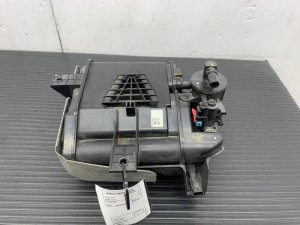
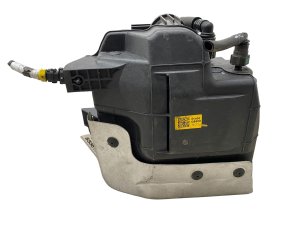
Est. part cost: $25-$60 - Cracked or Damaged Charcoal Canister 🟡 Medium Probability → Shop Vapor Canister The canister is a plastic box located near the fuel tank, making it susceptible to damage from road debris or cracking over time due to stress or material fatigue. Kia has issued service campaigns for other models due to canister brackets causing cracks in salt-belt states (TSB SC135), highlighting a potential vulnerability.
How to confirm: Visually inspect the charcoal canister for any visible cracks or damage. A smoke test is the definitive way to confirm a leak in the canister body. This involves injecting smoke into the EVAP system and looking for where it escapes. Sometimes, if the internal structure fails, you may see charcoal pellets in the vent lines.
Typical fix: Replace the charcoal canister assembly. Note the 2023 mid-year part change for 1.6L models.
Est. part cost: $180-$475 - Cracked or Disconnected EVAP Hose ⚪ Low Probability Rubber hoses can become brittle and crack over time, or connections can become loose, especially at connection points to the purge valve, canister, or fuel tank.
How to confirm: Visually inspect all accessible EVAP hoses between the engine, canister, and fuel tank for obvious cracks, rot, or loose connections. A professional smoke test is the most effective way to find a small crack in a hard-to-see location.
Typical fix: Replace the damaged section of hose or reconnect it securely.
Est. part cost: $10-$50
Rare But Worth Checking
- Faulty Canister Vent Valve/Solenoid (CCV): → Shop Vapor Canister The vent valve is normally open and closes to seal the system for testing. If it fails to close when commanded, it can cause a large leak code. This failure often, but not always, sets its own specific circuit code (e.g., P0449). A TSB for the Kia Rio (FUE040) specifically addresses P0455 caused by a stuck-open CCV.
- Damaged Fuel Filler Neck: → Shop Fuel Filler Neck Rust or damage to the metal filler neck where the gas cap seals can prevent a proper seal, causing a large leak. This is more common on older vehicles or those in rust-prone areas.
- Faulty Fuel Tank Pressure Sensor: → Shop Fuel Tank If the sensor itself fails and incorrectly reports a large leak to the ECM, it can trigger P0455. This is rare and usually accompanied by other sensor-specific codes (like P0452).
Diagnosis Steps
- Read the code with an OBD-II scanner to confirm P0455 is present.
- Inspect the gas cap. Remove it, check the seal for cracks or wear, and reinstall it, ensuring it clicks several times. Clear the code and drive for a few days to see if it returns. This is the most common fix.
- If the code returns, perform a visual inspection of the EVAP system. Look for any obviously cracked, disconnected, or damaged hoses, particularly around the purge valve in the engine bay and the charcoal canister near the fuel tank.
- Test the purge valve. With the engine running at idle, disconnect the hose running from the valve to the canister and check for suction. If suction is present, the valve is stuck open and needs replacement.
- If the gas cap and purge valve are good, the next step is a professional smoke test. This involves injecting pressurized smoke into the EVAP system to precisely locate the source of the leak, which could be the canister, a hose, or the fuel tank itself. This is the most reliable method for finding the leak source.
Parts You'll Likely Need
- Gas Cap
(OEM #31010-S4000 (example, verify by VIN))— This is the most common failure point due to frequent use and wear on the seal. It is also the cheapest and easiest part to replace first.
Trusted brands: Kia (OEM)
OEM price range: $20-$40
Aftermarket price range: $15-$25 - Vapor Canister Purge Valve
(OEM #28910-22040 (for 2.0L), 28910-3L000 (for 1.6T) - Verify by VIN)— This valve cycles frequently and can get stuck open, causing a large leak. It is a common point of failure for EVAP systems across the Hyundai/Kia family.
Trusted brands: Genuine Kia, Standard Motor Products
OEM price range: $50-$80
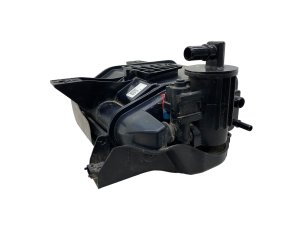
Aftermarket price range: $25-$50 - Vapor Canister
(OEM #31410-Q5600 (1.6L, up to 02/14/2023), 31410-Q5500 (1.6L, from 02/14/2023; and 2.0L))— The canister can be damaged by road debris or develop internal faults, leading to leaks. Overfilling the fuel tank can also saturate and damage the canister. A used part with a matching number is 31400-Q5500.
Trusted brands: Genuine Kia
OEM price range: $185-$475
Related Codes That Often Appear With This One
- P0442 — A P0442 (Small EVAP Leak) might appear alongside a P0455 if the system has multiple leaks of different sizes or if a component is failing intermittently.
- P0456 — A P0456 (Very Small EVAP Leak) can sometimes accompany a P0455 if there are multiple leak points or a failing component that is creating leaks of varying sizes under different conditions. TSB FUE040 for the Kia Rio notes that a faulty CCV can cause both P0455 and P0456.
Technical Service Bulletins (TSBs) & Recalls
- TSB FUE040 (for Kia Rio): While not for the Seltos, this TSB is relevant as it documents a known issue on a related platform where a stuck Canister Close Valve (CCV) causes P0455 and P0456 codes. It indicates a potential failure pattern for this component family.
- TSB SC135 (for various models): This TSB addresses EVAP canister cracking in salt-belt states due to bracket corrosion, leading to P0442 or P0455 codes. This provides context for how environmental factors can lead to this specific failure.
- TSB Bulletin #PS469: This manufacturer service bulletin notes that if the MIL is illuminated with DTC P0455 and the EVAP leak self-test results in "No Trouble Found" (NTF), a manual EVAP test is recommended to locate hard-to-find leaks.
Platform-Specific Known Issues
- For 2023 Kia Seltos models with the 1.6L Turbo engine, there was a mid-year change for the vapor canister. Vehicles built up to February 14, 2023, use part number 31410-Q5600. Vehicles built on or after this date use part number 31410-Q5500. Verify your vehicle's production date on the driver's door jamb sticker before ordering.
Mechanic-Grade Diagnostic Values
- Purge Control Solenoid Valve (PCSV) coil resistance — expected: Approximately 26 Ω at 68°F (20°C) for many 2.0L/2.4L engines. Note: Some models like the Niro may use a valve with a ~14.5 Ω resistance. Always verify specs for the specific engine.. Failure: A reading of 0 Ω indicates a short; an infinite (OL) reading indicates an open circuit. A reading significantly outside the specification (e.g., 10 Ω) indicates an internal fault even if the valve still clicks.
- Canister Close Valve (CCV) coil resistance — expected: 19.5 - 22.5 Ω at ~73°F (23°C).. Failure: A reading outside this range indicates a faulty solenoid coil.
- Fuel Tank Pressure Sensor (FTPS) signal voltage — expected: With Key On, Engine Off and gas cap removed (atmospheric pressure), the signal wire should read ~2.5V.. Failure: When a slight vacuum is applied to the sensor with a hand pump, the voltage should drop (e.g., towards 1.6V). If the voltage does not change, goes up, or is stuck high (near 5V) or low (near 0V), the sensor is faulty.
- PCSV Connector Power Supply — expected: With Key On, Engine Off, one pin on the harness connector should have battery voltage (~12V).. Failure: 0V indicates a blown fuse or an open circuit in the power supply wire from the main relay.
Scan Tool Commands That Help
- Kia GDS (Global Diagnostic System): EVAP System Leakage Test — This is the factory-level automated test that forces the EVAP monitor to run. It seals the system by commanding the Canister Close Valve (CCV) shut and monitors the Fuel Tank Pressure Sensor (FTPS) to check for a pressure drop, confirming if a leak condition is currently present.
- Kia GDS (Global Diagnostic System): Actuation Test (Bidirectional Control) — Allows for manually commanding the Purge Control Solenoid Valve (PCSV) and Canister Close Valve (CCV) on and off. This is critical for isolating a failed component from a wiring problem. For example, if the CCV doesn't close during the actuation test but has correct power and ground, the valve itself is bad.
- Kia GDS (Global Diagnostic System): Reset Adaptive Values — After replacing an EVAP system component like a purge valve or sensor, resetting the ECM's learned fuel trim and emissions values can help the system adapt to the new part more quickly and prevent the code from returning erroneously.
Wiring & Ground Locations
- PCSV Power/Control — The Purge Control Solenoid Valve is in the engine bay. The connector has two wires: one is a 12V power feed from a fuse/relay, and the other is a ground-side control wire from the ECM.. If the PCSV is stuck open, it could be due to a short-to-ground on the control wire, causing it to be energized constantly. Technicians must check for ~12V on the power side and check the control wire for shorts before replacing the valve.
- FTPS Wiring — The Fuel Tank Pressure Sensor is typically on the fuel tank or charcoal canister. It has a three-wire connector: a 5V reference from the ECM, a sensor ground (also from the ECM), and a signal wire back to the ECM.. A loss of the 5V reference or ground will cause incorrect readings, potentially triggering a false P0455. On some Kia models, this 5V reference circuit is shared with other sensors (like the A/C pressure sensor), so a problem elsewhere can affect the FTPS.
Real Owner Repair Stories
- r/MechanicAdvice user citing a 2015 Kia Soul (2015 Kia Soul) — Check Engine Light with EVAP code.
❌ Tried (didn't work) A functional test where 12V was applied to the purge valve, which produced an audible 'click', suggesting it was working.
✅ What actually fixed it The technician tested the purge valve's resistance with a multimeter and found it was 10.5 ohms, which was out of the specified range of ~26 ohms. Replacing the purge valve based on the incorrect resistance reading resolved the code. - Owner report NHTSA ODI #11519719: An owner reported that after their check engine light illuminated, a dealer found a P0455 code and suggested the gas cap was not installed properly.
- Owner report NHTSA ODI #10150202: A report describes a vehicle where the dealer identified P0442 (gas cap not sealing) and P0455 (canister not sealing), resulting in the replacement of both the gas cap and the canister.
- Owner report NHTSA ODI #11594618: A complaint notes the presence of code P0455 along with P0420, listing potential causes as damaged electrical wiring or emission system problems.
"I Checked Everything" — The Actual Cause
- In some cases, a P0455 code can be set with no physical leak present. If a smoke test shows the system is sealed, the cause is likely electrical. A common culprit is a faulty Fuel Tank Pressure Sensor (FTPS) that is sending incorrect data to the ECM. The sensor may report a pressure drop (indicating a leak) when none has occurred. This is confirmed by testing the sensor's voltage output while applying a known, steady vacuum and seeing if the readings are erratic or incorrect.
- Another rare cause is a faulty driver circuit within the Engine Control Module (ECM). The ECM may fail to properly command a valve closed, or a shorted driver may hold a valve open, creating a leak path. This is suspected when a valve (like the PCSV) hums, gets hot, or has incorrect voltage on its control wire when it should be inactive.
OEM Part Supersession History
Unknown (Black port)→31453 3K600FFF (Tan port)— An improved Canister Close Valve (CCV) was released to address sticking issues causing P0455/P0456 codes. The new part features an improved rubber seal material.314352D501→314351EA00— Standard part number update for the Fuel Tank Pressure Sensor.
Model Year Variations Within This Range
- 2023 (1.6L Engine Only): A mid-year change occurred for the vapor canister. Vehicles built up to Feb 14, 2023 use PN 31410-Q5600, while vehicles built after use PN 31410-Q5500. The 2.0L engine uses 31410-Q5500 for all years.
Diagnostic Flowchart
Other Known Issues on This Vehicle
Issues unrelated to this code that are worth knowing about as an owner of this generation:
- Excessive Oil Consumption / Engine Failure (2.0L Nu MPI) 🔴 High — Widespread enough to trigger multiple recalls (e.g., NHTSA 21V259, SC209) affecting 2021-2023 models. Caused by improperly heat-treated piston oil rings. (Ref: Recall SC209, NHTSA 21V259, 25V099)
- Intelligent Variable Transmission (IVT) Failure/Hesitation 🟠 Medium — Common complaints of hesitation, slipping, or complete failure on 2021+ models with the 2.0L engine. A service campaign (SC199/FL301) was issued for a TCM software update and potential transmission replacement if damage is found. (Ref: Service Campaign SC199 / FL301)
- Idle Stop & Go Oil Pump Failure 🟠 Medium — Affects 2023-2024 models. A recall was issued (NHTSA 23V-531) because damaged electrical components in the oil pump controller can cause overheating and a fire risk. (Ref: Recall NHTSA 23V-531)
- Engine Fire Risk (2.0L Nu MPI) 🔴 High — Directly related to the oil consumption issue. Leaked oil can contact hot exhaust components, leading to a fire. This is a stated risk in the associated engine recalls. (Ref: Recall SC209, NHTSA 21V259)
Used vs. New Parts: Buying Guide for This Vehicle
When a used part is the smart pick: Used parts can be a cost-effective option for larger mechanical components like the charcoal canister assembly or the fuel filler neck, provided they are from a low-mileage, non-corroded donor vehicle. Simple hoses and brackets are also excellent candidates for used parts.
Donor-vehicle mileage cap: roughly under 60000 miles for the part to have meaningful remaining life.
What to inspect on the donor part:
- For a charcoal canister, inspect the plastic housing thoroughly for any hairline cracks, especially around mounting tabs and hose ports.
- Check that all hose connections on the donor part are clean and free of debris or broken plastic.
- Avoid parts from vehicles located in the salt belt, as corrosion can damage the canister and related valves.
- For any electronic part (valve or sensor), check that the electrical connector pins are clean, straight, and free of any green or white corrosion.
OEM-only on this vehicle (don't cheap out):
- Gas Cap: Aftermarket gas caps are a frequent cause of persistent EVAP codes due to improper sealing. It is strongly recommended to use a genuine OEM Kia cap to ensure a correct fit and seal.
- Fuel Tank Pressure Sensor (FTPS): While some aftermarket sensors work, they can occasionally have different voltage calibrations, leading to incorrect readings. OEM is the safest choice to avoid misdiagnosis.
Aftermarket brands forum-validated for this vehicle:
- Standard Motor Products (SMP)
- Wells
- Bosch
Real Owner Stories
Aggregated from forums and TSBs cited above. Mileages and costs reflect what owners reported in those sources.
2024 Kia Seltos
Symptoms: Check engine light appeared. A user identified the code as P0455, a large EVAP Emissions leak.
What fixed it: A commenter suggested it was likely a purge valve or vent valve and advised taking it to the dealership since it's under warranty.
Source hint: reddit.com/r/kia
2020-2024 Hyundai Kona (Platform Mate)
Symptoms: Check engine light for P0455; diagnostic patterns identical to the Seltos.
What fixed it: Replacing the gas cap or the purge valve were the most common successful repairs.
Source hint: General Kia/Hyundai Forums
Related OBD-II Codes
Frequently Asked Questions
I have a 2023 Kia Seltos 1.6L Turbo; does it matter which charcoal canister I buy?
Could the P0455 code on my Seltos be related to the bracket corrosion issues seen in other Kia models?
My Seltos is also having trouble refueling; is this related to the P0455 code?
Is there a known issue with the purge valve on Kia vehicles like the Seltos?
Can I use an aftermarket gas cap to fix this code?
Does the Kia Rio TSB FUE040 apply to my Seltos P0455 code?
Helpful Videos
![How to Fix HYUNDAI P0455 Engine Code in 3 Minutes [2 DIY Methods / Only $4.61]](https://img.youtube.com/vi/rV9hfswBA_4/mqdefault.jpg)
![How to Fix KIA P0455 Engine Code in 3 Minutes [2 DIY Methods / Only $4.61]](https://img.youtube.com/vi/v3j7s1R1NhY/mqdefault.jpg)

Used OEM Parts in Stock
New Aftermarket Parts Available


The information in this article is provided for general reference and educational purposes only. Vehicle specifications, procedures, and part compatibility can vary by production date, trim level, and region. Always consult your vehicle's factory service manual and verify part numbers before purchasing or performing repairs. Safety-critical components such as airbags, seat belts, and braking systems should be installed by a qualified professional.
- Kia Seltos:
- 🧭 Diagnostic Flowchart
- 🎬 Helpful Videos
- 🛍️ Shop This Part
- What's Unique About the 2021-2024 Kia Seltos
- Symptoms You May Notice
- Most Likely Causes
- Rare But Worth Checking
- Diagnosis Steps
- Parts You'll Likely Need
- Related Codes That Often Appear With This One
- Technical Service Bulletins (TSBs) & Recalls
- Platform-Specific Known Issues
- Mechanic-Grade Diagnostic Values
- Scan Tool Commands That Help
- Wiring & Ground Locations
- Real Owner Repair Stories
- "I Checked Everything" — The Actual Cause
- OEM Part Supersession History
- Model Year Variations Within This Range
- Other Known Issues on This Vehicle
- Used vs. New Parts: Buying Guide for This Vehicle
- Real Owner Stories
- 2024 Kia Seltos
- 2020-2024 Hyundai Kona (Platform Mate)
- Related OBD-II Codes
- Frequently Asked Questions
- 🎟️ Get 5% Off