

P0455 on 2012-2015 Kia Sorento: EVAP Large Leak Causes and Fixes
For a 2012-2015 Kia Sorento, a P0455 code is most commonly caused by a loose or faulty gas cap. If tightening or replacing the cap doesn't work, the next most likely culprits are the canister close valve (CCV) or the purge control solenoid valve (PCSV). A key symptom of a faulty PCSV is difficulty starting the engine right after refueling.
- Always start with the simplest fix: check that your gas cap is tight and its seal is intact. Replace it with an OEM part if it's old or damaged.
- If the gas cap isn't the issue, the two most likely failed components are the Purge Control Solenoid Valve (PCSV) in the engine bay or the Canister Close Valve (CCV) under the car.
- A smoke test is the most effective diagnostic tool to quickly and accurately find the source of a P0455 leak if it's not the gas cap.
- Be aware of Kia's Technical Service Bulletins (TSBs), which point to specific known issues with the purge valve and an internal fuel tank valve, potentially saving you from unnecessary, expensive repairs like replacing the whole fuel tank.
What's Unique About the 2012-2015 Kia SORENTO

The 2012-2015 Kia Sorento (part of the 'XM' generation) has specific Technical Service Bulletins (TSBs) related to this code. One TSB (TT051) points directly to testing the purge solenoid valve (PSV) on the 2.4L engine. Another, TSB-FUE033, addresses a specific issue with the Fill Level Limit Valve (FLLV) inside the fuel tank on 2014-2015 models that can cause a P0455 code, providing a repair procedure that avoids replacing the entire tank.
Diagnostic Flowchart

Tap your situation to follow the diagnostic path that matches what you're seeing on this vehicle.
Symptoms You May Notice
- Check Engine Light is on
- A faint smell of fuel, possibly near the gas cap area or around the vehicle.
- Slight decrease in fuel economy
- Difficulty starting the engine, especially right after refueling.
- Replacing the fuel tank. TSB-FUE033 explicitly states that for a leak caused by the Fill Level Limit Valve (FLLV), replacing the entire fuel tank is not necessary.
Most Likely Causes

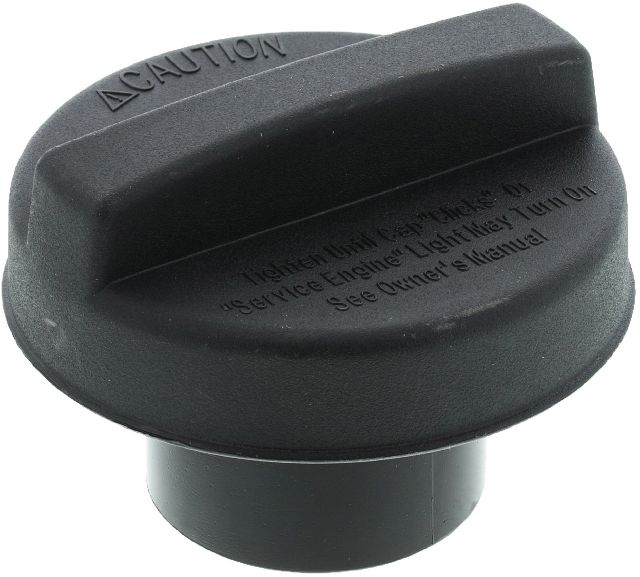
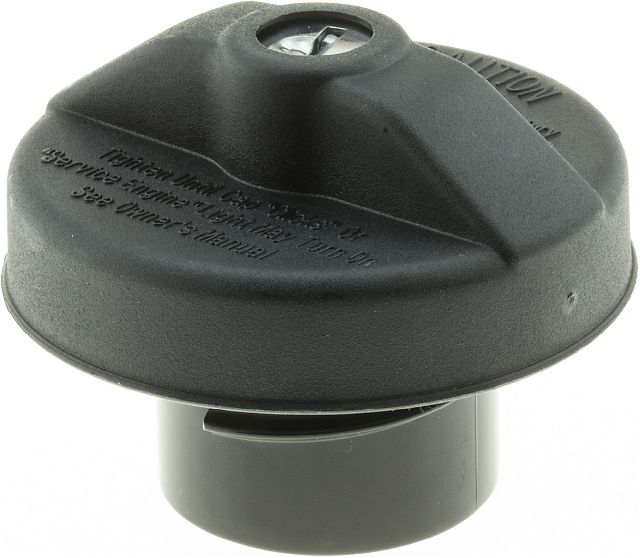
- Loose or Faulty Gas Cap 🔴 High Probability → Shop Fuel Tank Cap This is the most common cause for any vehicle, as the cap is frequently removed and its seal can wear out or it can be left loose by mistake. It is often the first and cheapest part to replace.
How to confirm: Check that the gas cap clicks when tightened. Inspect the rubber O-ring on the cap for cracks, dirt, or damage. If the light returns after tightening, the seal is likely bad.
Typical fix: Replace the gas cap. It is highly recommended to use a genuine OEM Kia part, as some aftermarket caps do not seal correctly and can continue to cause the code.
Est. part cost: $15-$40 - Failed Purge Control Solenoid Valve (PCSV) 🟡 Medium Probability → Shop Vapor Canister Purge Solenoid Kia issued a Tech Tip (TT051) specifically advising technicians to test the functionality of the purge solenoid valve for this code on the 2012 Sorento with the 2.4L engine. The valve can get stuck open, causing a constant vacuum leak and often leading to difficulty starting the car immediately after filling the gas tank.
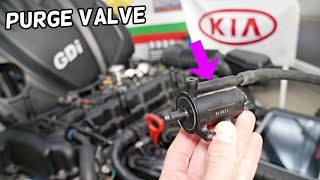
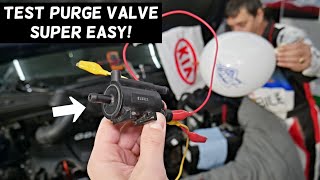
How to confirm: The valve is normally closed. A key symptom is the engine struggling to start after refueling. To test, locate the valve in the engine bay (on the 2.4L, it's near the intake manifold and may require removing the air filter box for access). With the engine off, remove the valve and try to blow through it. If air passes through, it is stuck open and has failed. 🎬 Watch: How to test the purge solenoid valve yourself. A mechanic can also command it open and closed with a scan tool or apply a 12-volt source to hear it click.
Typical fix: Replace the purge control solenoid valve.
Est. part cost: $40-$90 - Failed Canister Close Valve (CCV) / Vent Valve 🟡 Medium Probability → Shop Vapor Canister This valve is located underneath the vehicle near the charcoal canister and is exposed to the elements, making it susceptible to corrosion and failure, especially in 'salt belt' states. It can get stuck open, preventing the EVAP system from sealing for its pressure test.
How to confirm: The valve is normally open. A mechanic can command it closed with a scan tool and perform a smoke test. If smoke escapes from the valve when commanded closed, it has failed. It can also be tested with a 12-volt source; it should close and hold vacuum when power is applied.
Typical fix: Replace the canister close valve. The part is often sold as a unit with the charcoal canister but can be replaced separately.
Est. part cost: $50-$125 - Cracked or Disconnected EVAP Hose ⚪ Low Probability Rubber hoses can become brittle and crack over time due to age and heat cycles in the engine bay or exposure under the vehicle.
How to confirm: A visual inspection may reveal obvious cracks or disconnected lines. The most effective method is a smoke test, 🎬 See how to find large EVAP leaks using a smoke machine. which forces smoke through the EVAP system, making any leaks visible.
Typical fix: Replace the damaged section of hose.
Est. part cost: $10-$50
Rare But Worth Checking
- Faulty Fill Level Limit Valve (FLLV): Kia TSB-FUE033 specifically addresses this internal fuel tank component for 2014-2015 Sorento models produced from Dec. 2012 to Dec. 2014. It can cause a P0455 without any other symptoms. The fix requires removing the fuel pump assembly to access and replace the valve, but avoids replacing the entire fuel tank.
- Cracked Charcoal Canister: → Shop Vapor Canister The canister itself can develop cracks, especially from road debris impact or corrosion of its mounting hardware in rust-prone areas. A smoke test is the best way to confirm a leak from the canister body.
- Cracked Fuel Pump Housing or Locking Ring: → Shop Fuel Pump Based on owner experiences, the plastic locking ring that secures the fuel pump assembly to the gas tank can develop cracks, creating a large EVAP leak. This may be accompanied by a strong fuel smell when the gas tank is full. A smoke test is required to pinpoint this leak.
- Cracked or Corroded Fuel Filler Neck: → Shop Fuel Filler Neck The metal pipe leading from the gas cap to the fuel tank can rust and develop holes, particularly in regions that use road salt. This will create a large, persistent EVAP leak. A visual inspection and smoke test can confirm this failure.
Diagnosis Steps

- Check the Gas Cap: Ensure it is tight and clicks several times. Remove it and inspect the seal for any cracks, dirt, or damage. If in doubt, it's an inexpensive first replacement.
- Scan for Other Codes: Check if other EVAP-related codes are present, as they can help pinpoint the faulty component (e.g., a purge valve circuit code).
- Check for Post-Refueling Issues: Note if the engine is hard to start immediately after filling the gas tank. If so, the Purge Control Solenoid Valve (PCSV) is the primary suspect.
- Inspect the Purge Control Solenoid Valve (PCSV): Locate the PCSV in the engine bay. With the engine off, disconnect the hoses and try to blow through it. If air passes, the valve is stuck open and needs replacement.
- Visually Inspect Hoses: Check all accessible EVAP hoses in the engine bay and under the vehicle for obvious cracks, disconnections, or damage.
- Perform a Smoke Test: This is the most reliable way to find the source of the leak. A smoke machine is connected to the EVAP system, and smoke will be visible escaping from the cracked hose, canister, valve, or even the fuel pump locking ring.
- Inspect the Canister Close Valve (CCV): During the smoke test, pay close attention to the CCV located near the charcoal canister under the car. If smoke exits the valve, it has failed.
- Consider TSBs: If no external leak is found, review TSB-FUE033 regarding the internal Fill Level Limit Valve, especially on 2014-2015 models.
Parts You'll Likely Need
- Gas Cap
(OEM #31010-3L600)— This is the most frequent cause of P0455 due to being left loose or having a worn-out seal. Using an OEM cap is recommended for a proper seal.
Trusted brands: Kia (Genuine OEM)
OEM price range: $25-$40
Aftermarket price range: $15-$30 - Canister Close Valve (CCV)
(OEM #31453-3Q500)— This valve is a common failure point due to its location under the vehicle, where it's exposed to moisture and corrosion, causing it to stick open. It fits a wide range of Sorento model years.
Trusted brands: Kia (Genuine OEM), Dorman, Standard Motor Products
OEM price range: $85-$125
Aftermarket price range: $45-$70 - Purge Control Solenoid Valve (PCSV)
(OEM #28910-2S000)— This valve can get stuck open, creating a constant vacuum leak into the intake manifold. Kia TSB TT051 specifically mentions testing this part 🎬 Watch: Step-by-step guide to replacing the purge control valve. for P0455 on the Sorento. A failure often causes hard starting after refueling.
Trusted brands: Kia (Genuine OEM), Bosch, Delphi
OEM price range: $60-$90
Aftermarket price range: $30-$50
Related Codes That Often Appear With This One
- P0456 — P0456 indicates a 'small' EVAP leak. Sometimes a component is beginning to fail and may initially set a small leak code before worsening and triggering the 'large' leak code P0455.
- P0442 — Similar to P0456, this code indicates a 'medium' EVAP leak and can appear for the same reasons as the system's leak detection thresholds are crossed.
- P0447 — This code for 'EVAP System Vent Control Circuit Open' can appear alongside P0455. It points more specifically to an electrical issue with the canister close valve (CCV) or its wiring, which would prevent the system from sealing and cause a large leak test to fail.
Technical Service Bulletins (TSBs) & Recalls
- TSB-FUE033
- TT051
Platform-Specific Known Issues
- TSB TT051 - Purge Solenoid Valve Test: → Shop Vapor Canister This Tech Tip advises technicians to specifically test the Purge Solenoid Valve (PSV) when diagnosing a P0455 code on the 2012 Sorento (XMa) with the 2.4L engine.
- TSB-FUE033 - Internal Fuel Tank Valve: → Shop Fuel Tank This TSB identifies a potential issue with the Fill Level Limit Valve (FLLV) inside the fuel tank on 2014-2015 models (produced Dec 2012 - Dec 2014), providing a specific repair procedure to replace the valve without costly fuel tank replacement.
Mechanic-Grade Diagnostic Values
- Canister Close Valve (CCV) Harness Voltage — expected: Approximately 12 volts (battery voltage). Failure: A reading of 0 volts or significantly less than battery voltage indicates a wiring issue, blown fuse, or problem with the Engine Control Module (ECM).
Scan Tool Commands That Help
- Kia GDS (Global Diagnostic System) or equivalent advanced scanner: EVAP System Leak Test (Actuation Test) — This is a dealer-level function that manually initiates the EVAP system's self-test. The scanner commands the vent valve closed and the purge valve to cycle, then monitors the fuel tank pressure sensor to see if the system can hold a vacuum. This is the most direct way to confirm the presence of a leak without a smoke machine.
- Advanced OBD2 Scanner with Bi-Directional Control: Vent Valve Control (On/Off) — This command allows the technician to manually close the canister close valve (vent valve). It is used during a smoke test to seal the system. If smoke is still seen escaping the vent valve when it is commanded closed, the valve is confirmed to be faulty.
- Advanced OBD2 Scanner with Bi-Directional Control: Purge Valve Control (On/Off or Duty Cycle %) — This command manually opens the purge control solenoid valve. A technician can use this to check if the valve is physically stuck. With the engine running, commanding the valve open should cause a noticeable change in idle quality or fuel trims. If there is no change, the valve may be stuck closed or the line is blocked.
Real Owner Repair Stories
- Reddit user in /r/KiaSorento (2013 Kia Sorento, V6, 150k miles) — Check engine light with codes P0455 and P0447. Drastic fluctuations in calculated MPG and poor actual fuel economy (15.5 MPG).
❌ Tried (didn't work) Replaced gas cap with OEM part, Replaced Canister Purge Valve, Replaced Purge Control Valve (PCSV), Replaced PCV Valve, Resetting computer by disconnecting battery
✅ What actually fixed it The user did not post a final resolution, but the combination of a P0455 (large leak) and a P0447 (Vent Control Circuit Open) strongly points to an electrical failure in the canister close valve circuit, a bad canister close valve itself, or a wiring harness issue near the valve, which was the next logical step after all other parts were replaced.
"I Checked Everything" — The Actual Cause
- In some cases, a P0455 code can be triggered intermittently. If a smoke test is performed and no leak is found, the issue could be a canister close valve (CCV) or purge valve (PCSV) that is sticking only under certain temperature or electrical conditions. The component may test fine on the bench but fail during a drive cycle. This can also occur if the fuel tank pressure sensor is providing erratic readings to the ECM, causing a failed test, even if no physical leak exists.
OEM Part Supersession History
28910-2S000→28910-2S000 (current)— This part number remains current but has been applied to a very wide range of Kia and Hyundai vehicles over many years, from the 2012 Sorento up to current models like the 2024 Carnival and Stinger.
Heads up: While the part number is consistent, always verify fitment with the vehicle's VIN. There may be minor revisions to the housing or connector that are not reflected in a part number change.
Helpful Videos
We Have This Part in Stock


The information in this article is provided for general reference and educational purposes only. Vehicle specifications, procedures, and part compatibility can vary by production date, trim level, and region. Always consult your vehicle's factory service manual and verify part numbers before purchasing or performing repairs. Safety-critical components such as airbags, seat belts, and braking systems should be installed by a qualified professional.
- Kia SORENTO:
- 🧭 Diagnostic Flowchart
- 🎬 Helpful Videos
- 🛍️ Shop This Part
- What's Unique About the 2012-2015 Kia SORENTO
- Symptoms You May Notice
- Most Likely Causes
- Rare But Worth Checking
- Diagnosis Steps
- Parts You'll Likely Need
- Related Codes That Often Appear With This One
- Technical Service Bulletins (TSBs) & Recalls
- Platform-Specific Known Issues
- Mechanic-Grade Diagnostic Values
- Scan Tool Commands That Help
- Real Owner Repair Stories
- "I Checked Everything" — The Actual Cause
- OEM Part Supersession History
- 🎟️ Get 5% Off