

P0455 on 2018-2023 Kia Stinger: EVAP Large Leak Causes and Fixes
For a 2018-2023 Kia Stinger, a P0455 code is most often caused by a loose or faulty gas cap. If tightening or replacing the cap doesn't fix it, the next most likely culprit is a failed canister purge valve. An OEM gas cap costs around $25, and a purge valve is about $60-$90.
- Always check your gas cap first for a P0455 code. Make sure it's tight and the seal is intact. An OEM replacement is a cheap and easy first step.
- If the gas cap isn't the issue, the canister purge valve located in the engine bay is the next most likely part to fail.
- Do not replace the expensive charcoal canister without confirming it's the source of the leak, preferably with a professional smoke test.
- Continued driving will not harm the engine, but you will be releasing excess emissions and will not pass a smog check.
- When ordering parts, always verify the correct part number for your Stinger's specific engine and model year using your VIN.
What's Unique About the 2018-2023 Kia Stinger
The Kia Stinger (generation CK) does not have a widely documented, single systemic flaw causing P0455, unlike some other vehicles. The causes are typical for most modern EVAP systems. However, owners should be aware that different part numbers exist for components like the vapor canister and purge valve depending on the specific engine (2.0L, 2.5L, 3.3L) and model year splits (e.g., 2018-2021 vs. 2022+). For example, the vapor canister for 2018-2021 models is part number 31410-J5500, while 2022+ models use 31410-J5550. Always verify the part number with your vehicle's VIN before ordering.
Symptoms You May Notice
- Check Engine Light is on
- A distinct smell of gasoline, often around the rear of the vehicle or near the gas cap.
- In rare cases, a slightly rough idle or difficulty starting after refueling.
- Replacing the charcoal canister when the actual problem is a small, hard-to-see cracked hose or a faulty purge valve. A smoke test is crucial before replacing expensive components like the canister.
- Replacing other EVAP components when the issue is a cheap, non-OEM gas cap that isn't sealing properly.
Most Likely Causes
- Loose, Damaged, or Incorrect Gas Cap 🔴 High Probability → Shop Fuel Tank Cap This is the most common cause on virtually all vehicles, accounting for many P0455 cases. The rubber seal on the cap can degrade over time, or the cap may not have been tightened properly after refueling. Aftermarket caps are a frequent source of sealing issues.
How to confirm: Inspect the gas cap's rubber O-ring for cracks, stiffness, or damage. Ensure it is tightened until it clicks at least once. If the cap is old or not an OEM part, replacement is a cheap and effective first step. 🎬 Watch: Simple checks to confirm a large EVAP leak.
Typical fix: Replace the gas cap with a new, genuine Kia part. Clear the code and drive for a few days to see if it returns.
Est. part cost: $20-$35 - Faulty Canister Purge Valve (Purge Solenoid) 🟡 Medium Probability → Shop Vapor Canister This valve is electro-mechanical and cycles frequently, leading to eventual failure where it can stick open, creating a permanent leak path from the EVAP system to the intake manifold.
How to confirm: The purge valve is located in the engine bay. It is a normally-closed valve. Disconnect it and try to blow through it. If air passes through, the valve is stuck open and has failed. You can also check for a clicking sound when applying 12V power and test its coil resistance.
Typical fix: Replace the canister purge valve. Part numbers are engine-specific. For the 3.3L V6, use 28910-3L270. For the 2.0L (2018-2021), use 28910-3L000. Always verify with your VIN. 🎬 See two quick DIY methods to fix this engine code.
Est. part cost: $60-$90 - Cracked or Disconnected EVAP Hoses/Lines 🟡 Medium Probability Rubber and plastic hoses become brittle with age and exposure to heat and elements, leading to cracks. A disconnection can also happen during other maintenance. The EVAP components are located under the rear of the car and can be vulnerable to road debris.
How to confirm: Visually inspect all accessible EVAP lines running from the engine bay to the charcoal canister near the tank. The most definitive method is to have a mechanic perform a smoke test, which fills the system with vaporous smoke to reveal the exact location of any leaks.
Typical fix: Replace the cracked section of hose or reconnect a loose line. A smoke test is often required to find the specific leak point.
Est. part cost: $10-$50 for hoses, plus diagnostic time. - Faulty Canister Close Valve (Vent Solenoid) ⚪ Low Probability → Shop Vapor Canister This valve, located near the charcoal canister, is normally open and must close to seal the system for a leak test. It can fail to close due to dirt, debris, or electrical failure. A manufacturer service bulletin for other Kia models, TSB Bulletin #TSBFUE040, notes that vehicles may exhibit P0455 and P0456 due to the Canister Close Valve (CCV) being stuck open.
How to confirm: The valve can be tested with a capable scan tool that can command it to close. Alternatively, it can be removed and tested manually. It should allow air to pass when unpowered and should seal completely when 12V is applied.
Typical fix: Replace the canister close valve. Part numbers for the Stinger include 31430-B1500 or 31453-AA000, which fits multiple engines and years.
Est. part cost: $70-$120 - Cracked Charcoal Canister ⚪ Low Probability → Shop Vapor Canister The canister can be damaged by road debris or, more commonly, saturated with liquid fuel from habitually overfilling the gas tank (topping off after the pump clicks off). This is a known issue on Kia/Hyundai platforms. NHTSA ODI #10150202 describes a case where a dealer replaced both the gas cap and the canister to resolve P0442 and P0455 codes.
How to confirm: Visually inspect the canister (located near the fuel tank) for physical cracks. If a smoke test shows smoke emitting from the canister body itself, it needs replacement.
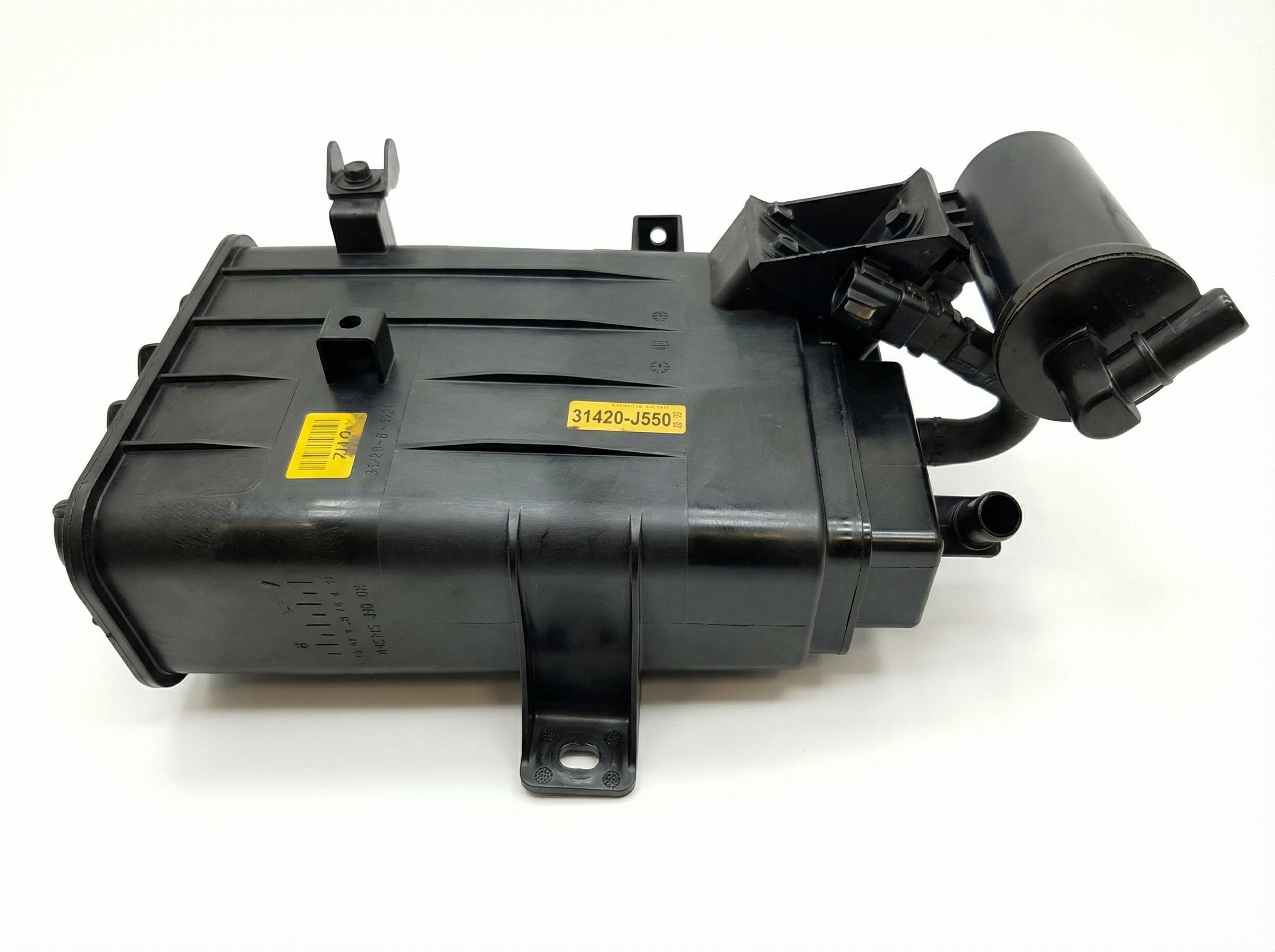
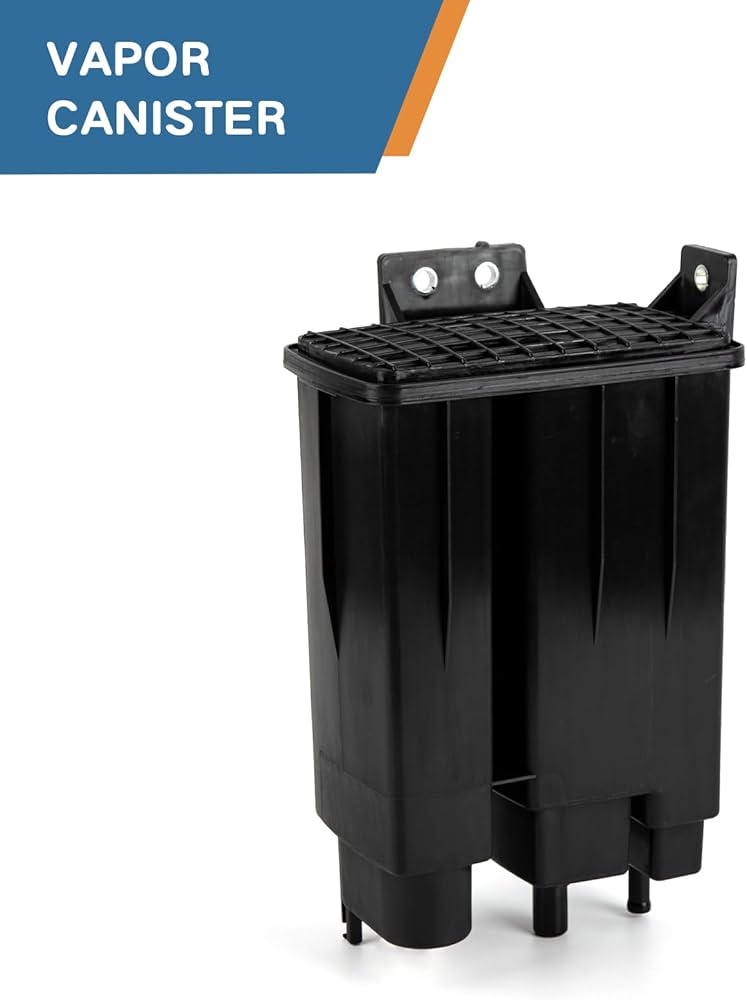
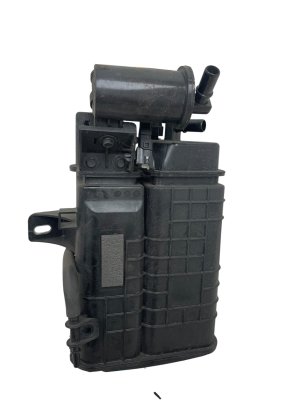
Typical fix: Replace the charcoal canister assembly. Part numbers differ by model year (e.g., 31410-J5500 for 2018-2021, 31410-J5550 for 2022+).
Est. part cost: $250-$350
Rare But Worth Checking
- Faulty Fuel Tank Pressure Sensor: → Shop Fuel Tank This sensor tells the computer the pressure in the EVAP system. While a failure is possible, it typically triggers other specific codes (like P0451, P0452, P0453) along with or instead of P0455.
- Cracked Fuel Filler Neck: → Shop Fuel Filler Neck Rust or damage to the metal pipe leading to the gas tank can cause a leak that the system will detect. This is more common in older vehicles or those from rust-prone climates.
- Electrical Wiring Damage: As noted in NHTSA ODI #11594618, damaged electrical wiring can sometimes be a root cause for emission system problems including P0455.
Diagnosis Steps
- Read the code with an OBD-II scanner to confirm P0455 is the primary code.
- Inspect the gas cap. Ensure it's tight and clicks. Check the seal for cracks or wear. If in doubt, replace it with an OEM cap, clear the code, and drive for a few days to see if it returns.
- Perform a thorough visual inspection of all EVAP hoses in the engine bay, particularly around the purge valve, and underneath the car near the fuel tank and charcoal canister. Look for obvious cracks, damage, or loose connections.
- Test the purge valve in the engine bay. Disconnect the electrical connector and hoses. Try to blow through it; if air passes, it is stuck open and must be replaced.
- If the previous steps do not reveal the issue, the most effective next step is a professional smoke test. Manufacturer Bulletin #PS469 suggests a manual EVAP test for hard-to-find or small leaks if the MIL is illuminated with P0455 but the self-test results in "No Trouble Found" (NTF).
- Based on the smoke test results, inspect the indicated component, which could be the canister close valve, the charcoal canister itself, or a less obvious hose leak.
- After replacing any parts, clear the code and perform a drive cycle to allow the vehicle's computer to re-run the EVAP system test and confirm the fix.
Parts You'll Likely Need
- Gas Cap
(OEM #31010-3L600)— This is the most frequent and cheapest fix. The seal fails over time, causing a large leak.
Trusted brands: Kia (Genuine OEM)
OEM price range: $20-$35
Aftermarket price range: $15-$25 - Canister Purge Valve / Solenoid
(OEM #28910-3L270)— A very common failure point that gets stuck open. Part number is for the 3.3L V6; verify for other engines.
Trusted brands: Kia (Genuine OEM), Bosch
OEM price range: $60-$90
Aftermarket price range: $40-$70 - Vapor Canister
(OEM #31410-J5500)— Can crack from road debris or become saturated from overfilling the fuel tank. Part number is for 2018-2021 models; 2022+ models use 31410-J5550.
Trusted brands: Kia (Genuine OEM)
OEM price range: $250-$350
Related Codes That Often Appear With This One
- P0442 — P0442 indicates a small EVAP leak. If a small leak worsens over time, it can eventually become large enough to trigger P0455.
- P0456 — P0456 indicates a very small EVAP leak. Seeing it with P0455 could suggest multiple leak points or an intermittent fault with a valve.
Technical Service Bulletins (TSBs) & Recalls
- SC279 — Voluntary Emissions Service Campaign: Theta 2.0L T-GDI ECM Software Logic Improvement — An ECM software update for 2018-2021 Stingers with the 2.0L engine to optimize emissions calibrations. While not directly for P0455, it relates to the overall emissions control system and is a good update to have performed.
- TSB Bulletin #TSBFUE040 — This bulletin notes that some Kia vehicles may exhibit P0455 and P0456 due to the Canister Close Valve (CCV) being stuck open.
- Bulletin #PS469 — Provides guidance for a manual EVAP test for hard-to-find leaks when DTC P0455 is present but standard self-tests do not yield a definitive result.
Platform-Specific Known Issues
- Kia issued a Voluntary Emissions Service Campaign (SC279) for some 2018-2021 Stinger 2.0L models for an ECM software update. While this does not directly fix a P0455 leak, it relates to the overall emissions system logic and is worth checking if your vehicle is eligible.
Mechanic-Grade Diagnostic Values
- Fuel Tank Pressure Sensor (FTPS) Signal Voltage — expected: Approximately 2.5V with Key On, Engine Off (KOEO) and gas cap removed (atmospheric pressure).. Failure: Voltage is stuck high (e.g., 5V), low (e.g., 0V), or does not change when pressure/vacuum is applied.
- Canister Purge Valve (PCSV) Coil Resistance — expected: Approximately 15 - 30 Ohms.. Failure: Reading is significantly outside this range, or shows an open circuit (infinite resistance).
- Canister Close Valve (CCV) Coil Resistance — expected: Approximately 20 - 30 Ohms.. Failure: Reading is significantly outside this range, or shows an open circuit.
- Manual EVAP Test - PCSV Grounded — expected: FTPS signal voltage should be greater than 1.5V after grounding the PCSV control wire for 25 seconds.. Failure: Voltage drops below 1.5V, indicating a restriction in the EVAP system.
Scan Tool Commands That Help
- Kia GDS/KDS (or compatible advanced scanner): EVAP System Leak Test (Actuation Test) — This is a primary diagnostic function. The tool commands the Canister Close Valve (CCV) to close and the Purge Valve (PCSV) to seal the system, then monitors the Fuel Tank Pressure Sensor (FTPS) to see if pressure holds. This confirms a leak is present without a smoke machine.
- Kia GDS/KDS (or compatible advanced scanner): Purge Valve Control — To test for a stuck-open purge valve. With the engine running, command the purge valve OFF and the vent valve ON (closed). If the FTPS shows vacuum building in the tank, the purge valve is leaking engine vacuum into the EVAP system.
- Kia GDS/KDS: Resetting Adaptive Values — After replacing an emissions component like a purge valve or sensor, this function in the 'Vehicle S/W Management' or 'Special Function' menu resets the ECM's learned values to factory defaults, which can be necessary for the system to operate correctly with the new part.
Wiring & Ground Locations
- EVAP System Fuses — The fuse for the EVAP system components is typically located in the engine compartment fuse box.. A blown fuse can cause a valve to fail to actuate, potentially leading to a leak code if the system cannot seal for its self-test. Always check for related blown fuses before replacing components.
- General Chassis Ground — A common grounding point for interior and dash-related components is a bolt located to the side of the instrument panel fuse box.. While not specific to the EVAP system, poor grounds are a common source of erratic sensor readings. If the FTPS or other sensors provide strange values, verifying a clean and tight ground connection for the relevant harness is a valid diagnostic step.
Real Owner Repair Stories
- Reddit user on r/kiastinger (2021 Kia Stinger GT1, 19k miles) — Persistent P0456 (very small leak) code, check engine light, ISG (Idle Stop & Go) system disabling itself.
❌ Tried (didn't work) Clearing the code (light returned in 24-48 hours)., Dealer leak testing (found nothing)., Dealer replaced the canister purge valve.
✅ What actually fixed it The issue was ongoing at the time of the post, but the owner's experience demonstrates that replacing the purge valve—a common fix—is not always the solution. Other forum members suggested the root cause was likely a bad gas cap seal or a faulty Fuel Tank Pressure Sensor (FTPS) giving false readings, highlighting the need for deeper diagnosis when the obvious fix fails. - NHTSA ODI #11519719 — An owner reported that after a check engine light illuminated, a dealer found a P0455 code and suggested the gas cap was not installed properly. The dealer cleared the code, but the light returned several months later.
OEM Part Supersession History
31410-J5500→31410-J5550— Part design change corresponding with the 2022 model year facelift and introduction of the 2.5L engine option.
Heads up: The 2018-2021 and 2022-2023 vapor canisters are not interchangeable. Installing the wrong canister will result in a Check Engine Light and EVAP system faults.28910-3L270→No supersession found.
Heads up: This purge control valve part number appears to be consistent for the 3.3L V6 across the entire 2018-2023 model range.
Model Year Variations Within This Range
- 2022-2023: Vehicles from the 2022 model year refresh (which introduced the 2.5L engine) use a different vapor canister (Part No. 31410-J5550) than the earlier 2018-2021 models. The parts are not interchangeable.
Diagnostic Flowchart
Other Known Issues on This Vehicle
Issues unrelated to this code that are worth knowing about as an owner of this generation:
- Paint Chipping/Flaking 🟠 Medium — Commonly reported on early models (2018-2019), especially on the front bumper and roof pillars. Some owners claim poor paint prep from the factory. (Ref: Paint warranty is typically 3 years/36,000 miles, and claims for chipping are often denied as environmental damage.)
- Tailgate/Hatch Rattle 🟡 Low — Very common on 2018 models. A rattling or clunking noise comes from the rear hatch area when driving over bumps. (Ref: TSB SA322 and SA347 were issued to address this by adjusting bumpers and the striker.)
- Differential Noise (AWD & RWD) 🟡 Low — Owners report a groaning or grinding noise from the rear (RWD) or front (AWD) differential during slow, tight turns. Also, a constant humming noise may be present while driving. (Ref: No TSB. Owners on forums report that changing the differential fluid, sometimes with an additional friction modifier, can resolve the issue.)
- Interior Rattles and Noises 🟡 Low — Widespread reports of various rattles and buzzing noises from the dash, door panels, and center console area.
- HECU Fire Risk (Recall) 🔴 High — Affects 2018-2021 models. An electrical short in the Hydraulic Electronic Control Unit (HECU) for the brakes can cause an engine compartment fire. (Ref: NHTSA Recall 20V504000)
- Turbo Oil Feed Pipe Leak (Recall) 🔴 High — Affects 2018-2023 models with the 3.3L engine. The left turbocharger oil feed pipe and hose may deteriorate and leak oil, increasing fire risk. (Ref: NHTSA Recall 24V169000)
Used vs. New Parts: Buying Guide for This Vehicle
When a used part is the smart pick: Used electronic components like the purge valve, canister close valve, or fuel tank pressure sensor can be a cost-effective option if sourced from a low-mileage, accident-free donor vehicle. These parts either work or they don't, with less risk of gradual degradation compared to mechanical wear items.
Donor-vehicle mileage cap: roughly under 50000 miles for the part to have meaningful remaining life.
What to inspect on the donor part:
- Verify the part number on the used component matches your original part exactly.
- Inspect plastic housings for any hairline cracks or brittleness.
- Check electrical connectors for corrosion, bent pins, or damage.
- For valves, ensure there is no visible debris or rust inside the ports.
OEM-only on this vehicle (don't cheap out):
- Gas Cap: Aftermarket gas caps are a notorious source of EVAP codes due to improper sealing. It is strongly recommended to use a genuine Kia (OEM) gas cap to ensure a perfect fit and avoid a repeat code.
- Vapor Canister: Given the high cost and critical function, and the lack of reputable aftermarket options, an OEM canister is the safest choice to ensure compatibility and longevity.
Aftermarket brands forum-validated for this vehicle:
- Bosch: Often an OEM supplier, Bosch is a reputable brand for components like purge valves.
Brands owners have reported issues with on this vehicle:
- No-name/unbranded parts from online marketplaces: While cheap, these parts often have high failure rates and may not meet the precise specifications required for the EVAP system, leading to persistent codes.
Real Owner Stories
Aggregated from forums and TSBs cited above. Mileages and costs reflect what owners reported in those sources.
2018-2023 Kia Stinger
Symptoms: Check engine light on for the 4th time; persistent EVAP leak issues.
What fixed it: The owner noted that even after a dealer replaced the purge valve, the issue could persist, suggesting the need to check the gas cap seal or the Fuel Tank Pressure Sensor.
Source hint: r/kiastinger - Check engine light on for 4th time (P0456)
Kia Owner Experience
Symptoms: Check engine light with codes P0442 and P0455.
What fixed it: As described in NHTSA ODI #10150202, a dealer replaced the gas cap and the charcoal canister, and also ordered a new ECM to resolve the sealing issues.
Related OBD-II Codes
Frequently Asked Questions
Does the Voluntary Emissions Service Campaign SC279 apply to my 2019 Kia Stinger 2.0L?
What is the specific purge valve part number for my 3.3L V6 Stinger?
I have a 2022 Stinger; is the charcoal canister the same as the earlier models?
Can I use an aftermarket gas cap to fix the P0455 code on my Stinger?
Where is the canister close valve located on the Stinger, and what part do I need?
Is it true that overfilling my gas tank can cause this EVAP code?
Helpful Videos
![How to Fix KIA P0455 Engine Code in 3 Minutes [2 DIY Methods / Only $4.61]](https://img.youtube.com/vi/v3j7s1R1NhY/mqdefault.jpg)
Used OEM Parts in Stock
New Aftermarket Parts Available


The information in this article is provided for general reference and educational purposes only. Vehicle specifications, procedures, and part compatibility can vary by production date, trim level, and region. Always consult your vehicle's factory service manual and verify part numbers before purchasing or performing repairs. Safety-critical components such as airbags, seat belts, and braking systems should be installed by a qualified professional.
- Kia Stinger:
- 🧭 Diagnostic Flowchart
- 🎬 Helpful Videos
- 🛍️ Shop This Part
- What's Unique About the 2018-2023 Kia Stinger
- Symptoms You May Notice
- Most Likely Causes
- Rare But Worth Checking
- Diagnosis Steps
- Parts You'll Likely Need
- Related Codes That Often Appear With This One
- Technical Service Bulletins (TSBs) & Recalls
- Platform-Specific Known Issues
- Mechanic-Grade Diagnostic Values
- Scan Tool Commands That Help
- Wiring & Ground Locations
- Real Owner Repair Stories
- OEM Part Supersession History
- Model Year Variations Within This Range
- Other Known Issues on This Vehicle
- Used vs. New Parts: Buying Guide for This Vehicle
- Real Owner Stories
- 2018-2023 Kia Stinger
- Kia Owner Experience
- Related OBD-II Codes
- Frequently Asked Questions
- 🎟️ Get 5% Off