

P0455 on 2020-2022 Lincoln Aviator: EVAP Gross Leak Causes and Fixes
For a P0455 code on a 2020-2022 Lincoln Aviator, the most likely cause is a wiring issue at connector C1198 on the driver's side frame rail, as noted in a manufacturer TSB. Before replacing any parts like the purge valve, inspect this connector for corrosion or damage. The second most common cause is a poor seal at the capless fuel filler neck.
- For P0455 on a 2020-2022 Aviator, check wiring before parts. The issue is very likely electrical.
- Inspect connector C1198 on the driver's side frame rail for corrosion. This is the most probable cause according to manufacturer bulletins.
- Do not replace the purge valve unless it has been specifically tested and confirmed to be faulty.
- Check the seal on the capless fuel filler neck for debris or damage as a secondary cause.
- A smoke test is the most reliable way to find the leak if a visual inspection of the connector and fuel filler neck does not reveal the problem.
What's Unique About the 2020-2022 Lincoln AVIATOR
Unlike many vehicles where a P0455 code points directly to a loose gas cap or a failed purge valve, the 2020-2022 Aviator and its Ford Explorer sibling have a well-documented history of wiring problems causing this code. Manufacturer bulletins specifically warn against unnecessarily replacing the canister purge valve and instead direct technicians to inspect a specific wiring harness connector (C1198) that is prone to moisture and corrosion. This connector carries critical 5-volt reference (VREF) signals for multiple sensors; corrosion here disrupts those signals, causing the computer to receive illogical data and set various codes, including P0455. This makes an electrical check a primary, not secondary, diagnostic step.
Diagnostic Flowchart
Tap your situation to follow the diagnostic path that matches what you're seeing on this vehicle.
Symptoms You May Notice
- Check Engine Light is on
- A faint smell of fuel, especially near the rear of the vehicle.
- Difficulty refueling (gas pump clicks off repeatedly), though this is more common with a vent valve issue or the fuel filler pipe design issue addressed in TSB 22-2433.
- A 'Check Fuel Fill Inlet' message may appear on the dashboard.
- Replacing the EVAP canister purge valve without first inspecting the wiring at connector C1198. TSB SSM 50306 specifically warns against this, as many functional valves are replaced needlessly.
Most Likely Causes
- Corroded or Damaged Wiring at Connector C1198 🔴 High Probability This is a known issue documented in Ford/Lincoln Technical Service Bulletins (TSBs) SSM 50348 and SSM 51247. The connector is located on the driver's side lower frame rail, an area susceptible to water and road salt, leading to corrosion that disrupts sensor signals.
How to confirm: Locate connector C1198 on the driver's side lower frame area, underneath the brake lines that route near the electric brake booster (EBB). Disconnect the battery, then unplug the connector and inspect both ends for green or white corrosion, bent pins, or water intrusion.
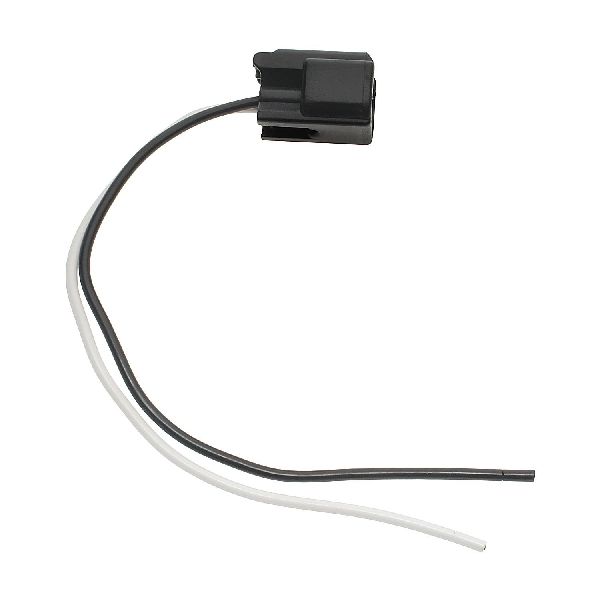
Typical fix: Clean the connector pins if corrosion is minor. If damage is significant, repair the affected wires or replace the connector with a pigtail harness (Motorcraft part WPT-1198).
Est. part cost: $10-$70 - Faulty Capless Fuel Filler Neck Seal 🟡 Medium Probability → Shop Fuel Filler Neck The capless system's internal spring-loaded door must create a perfect seal. Debris, wear, or damage can prevent it from closing properly, creating a large leak. TSB 22-2433 also addresses issues with the fuel filler pipe design on these vehicles, and recall 22C02 was issued for 2022 models for a fuel filler tube that may detach, both indicating this is a sensitive area.
How to confirm: Visually inspect the opening of the capless filler neck for any debris holding the seal open. Check for damage to the seal. A smoke test is the definitive way to confirm a leak at this location.
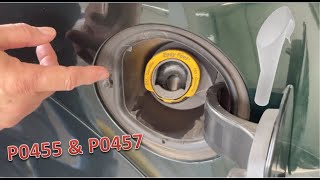
Typical fix: First, try cleaning the seal area. Use the vehicle's emergency fuel funnel and a cloth with a cleaner like WD-40 to wipe the internal sealing surface. 🎬 See how to quickly clean and fix a capless filler neck. If that fails, the entire fuel filler neck assembly must be replaced. The part number for the updated pipe per TSB 22-2433 is L1MZ-9034-AJ.
Est. part cost: $150-$350 - Failed EVAP Canister Purge Valve ⚪ Low Probability → Shop Vapor Canister While a common failure on many cars, TSB SSM 50306 explicitly states that returned purge valves from this platform were tested and found to be fully functional, indicating it is often misdiagnosed. However, it can still fail by getting stuck open. A technician on YouTube noted they replace them frequently on Aviators for EVAP leaks.
How to confirm: With the engine off, remove the purge valve (located in the engine bay) and try to blow through it. If air passes through, it is stuck open and faulty. A scan tool can also be used to command it open and closed while monitoring system pressure.
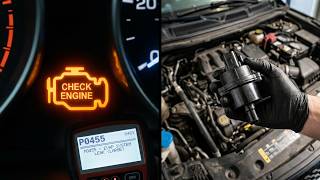
Typical fix: Replace the canister purge valve. A YouTube video exists showing the replacement on a 2021 Aviator. 🎬 Watch this step-by-step guide on replacing the Aviator purge valve.
Est. part cost: $40-$90 - Failed EVAP Canister Vent Solenoid ⚪ Low Probability → Shop Vapor Canister This valve, located near the charcoal canister under the vehicle, can get stuck open or closed. If stuck open, it will cause a large leak.
How to confirm: A smoke test will show smoke exiting the vent solenoid when it should be commanded closed by a scan tool. It can also be tested for electrical function with a multimeter or power probe.
Typical fix: Replace the vent solenoid.
Est. part cost: $50-$100
Rare But Worth Checking
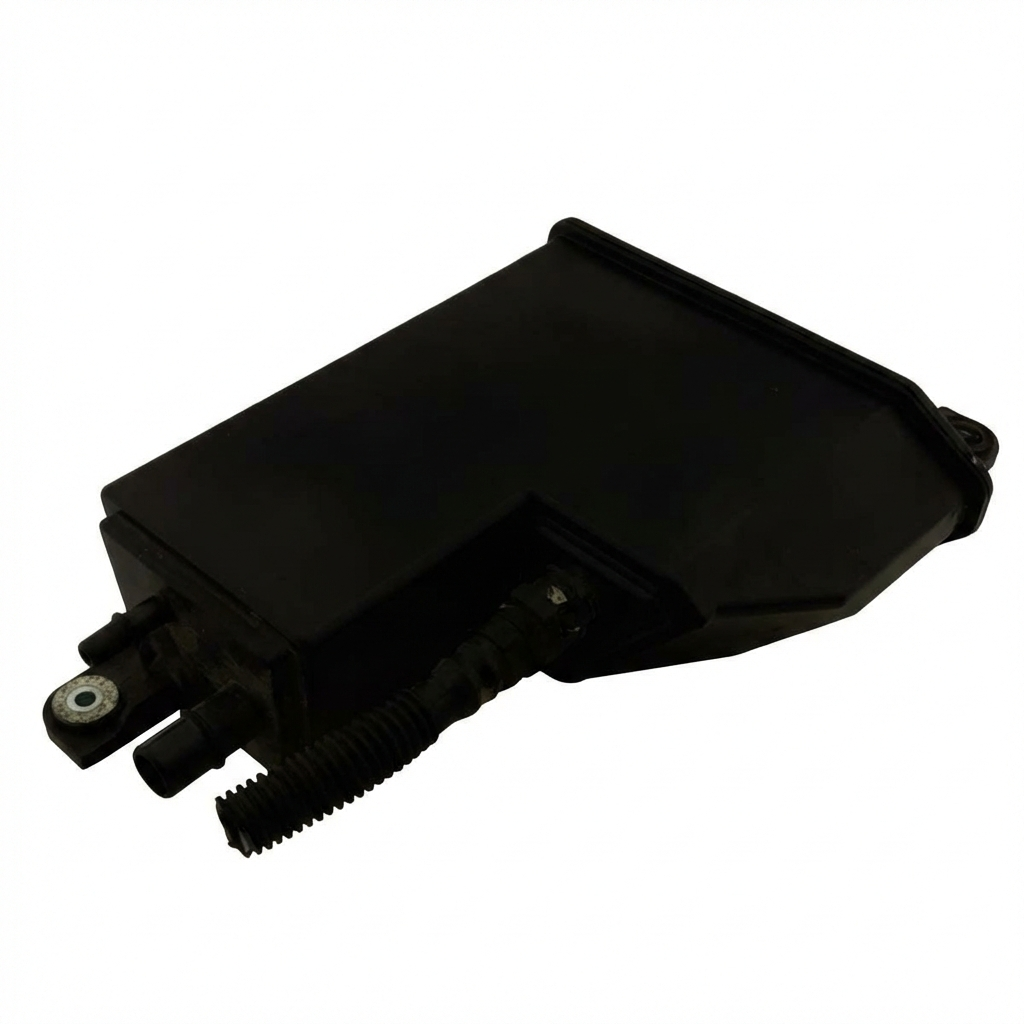
- Cracked EVAP Charcoal Canister: → Shop Vapor Canister Physical damage from road debris or age can cause the plastic housing of the canister to crack, creating a large leak. This is usually found during a smoke test.
- Damaged EVAP Hose: A hose could be cracked, disconnected, or chewed through by rodents. This is usually found during a visual inspection or with a smoke test.
Diagnosis Steps
- Read all diagnostic trouble codes (DTCs) with an OBD-II scanner. Note any other codes present, especially those listed in the TSBs (P04F0, P0451, P0456, P0496, P018C).
- Inspect the capless fuel filler neck. Ensure the internal door is closed and that there is no debris or damage preventing a seal. Try cleaning the inner seal with a cloth and the emergency funnel.
- Crucial Step: Locate connector C1198 on the driver's side lower frame rail, below the brake lines near the electric brake booster. Disconnect the battery, then carefully unplug C1198 and inspect for any signs of green or white corrosion, moisture, or damaged pins. Repair as needed.
- If C1198 is clean and undamaged, perform a visual inspection of all accessible EVAP hoses between the engine bay and the fuel tank for obvious cracks or disconnections.
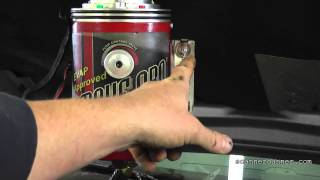
- If no visual faults are found, the next step is an EVAP smoke test. This involves injecting smoke into the EVAP system and looking for where it escapes. This is the most effective way to find the exact location of a leak. 🎬 Watch a professional technician perform an EVAP system smoke test.
- While the smoke test is running, use a scan tool to command the canister vent solenoid closed to ensure it's sealing properly. Smoke exiting the vent solenoid indicates a failure.
- Test the purge valve in the engine bay to ensure it is not stuck open by removing it and attempting to blow through it.
Parts You'll Likely Need
- Connector Pigtail
(OEM #WPT-1198)— This is the repair part for the frequently corroded C1198 connector, as identified in TSBs.
Trusted brands: Motorcraft
OEM price range: $40-$70
Aftermarket price range: $20-$40 - Capless Fuel Filler Neck
(OEM #L1MZ-9034-AJ (per TSB 22-2433); also see L1MZ-9034-X / AN)— If the internal seal fails and cannot be cleaned, or if the vehicle suffers from the slow-fill issue, the entire assembly must be replaced to fix the leak.
Trusted brands: Motorcraft, Dorman
OEM price range: $200-$320
Aftermarket price range: $150-$220 - EVAP Canister Purge Valve
(OEM #9U5Z-9C915-H)— Though often misdiagnosed, it can fail and get stuck open, causing a large leak.
Trusted brands: Motorcraft, Bosch, Dorman, Standard Motor Products
OEM price range: $50-$90
Aftermarket price range: $30-$60
Related Codes That Often Appear With This One
- P0456 — Small EVAP Leak. Often appears with P0455 if the underlying issue (like the C1198 connector) is intermittent or affects multiple sensor readings.
- P04F0 — EVAP System High-Pressure Purge Line Performance. This code is explicitly mentioned in TSBs SSM 50348 and SSM 51247 alongside P0455, pointing to the C1198 connector issue.
- P0451 — EVAP Pressure Sensor Range/Performance. This sensor's signal runs through the C1198 connector, so a bad connection will cause this code.
- P0496 — EVAP Flow During a Non-Purge Condition. Also listed in the TSBs as being related to the same root causes.
- P018C — Fuel Pressure Sensor 'B' Circuit Low. This is another code explicitly listed in TSBs SSM 50348 and 51247 as being caused by the C1198 connector issue.
Technical Service Bulletins (TSBs) & Recalls
- SSM 51247: Supersedes 50348. Points to wiring at connector C1198 on the driver's side frame rail as the cause for P0455 and other EVAP/fuel codes, especially on 2.3L models.
- SSM 50348: An earlier TSB identifying connector C1198 as a likely cause for multiple EVAP DTCs on 2020-2022 Explorer/Aviator.
- TSB 22-2433: Addresses a slow fuel fill or spit-back condition due to the fuel filler pipe design on Aviators built on or before 07-Feb-2022. Recommends replacing the pipe.
- SSM 50306: Warns technicians that many returned EVAP canister purge valves test functional and to perform proper diagnostics before replacement.
- Recall 22C02: Affects some 2022 Aviator/Explorer models for a fuel filler tube that may detach in a crash, which can also cause EVAP codes. The fix is to install a redundant locking clip.
Platform-Specific Known Issues
- TSB SSM 50348 / 51247: Points to the wiring harness connection at connector C1198 as a primary cause for P0455 and other EVAP codes. TSB 51247 gives a precise location: 'on driver's side lower frame area underneath the brake lines that route near the electric brake booster (EBB)'.
- TSB SSM 50306: Warns that EVAP canister purge valves are often replaced unnecessarily and that returned parts test as fully functional, advising proper FDRS scan tool tests first.
- TSB 22-2433: While not a direct cause of P0455, this bulletin addresses a related problem of slow fuel filling on models built before Feb 7, 2022, by replacing the fuel filler pipe, highlighting the sensitivity of this area.
- Recall 22C02: Some 2022 models were recalled because the fuel filler tube could detach, causing a fuel leak and potentially triggering EVAP codes like P0455.
Mechanic-Grade Diagnostic Values
- Fuel Tank Pressure (FTP) Sensor Voltage — expected: Approximately 2.5 Volts (corresponding to 0 inches of water) when the system is open to atmosphere (e.g., fuel filler neck open).. Failure: A reading that is stuck high or low, or fluctuates erratically, when the system pressure is known to be at atmospheric.
Hidden / Shadow Codes Worth Checking
- Mode $06 System Logic: This is not a code, but diagnostic logic. On Ford systems, if a gross leak (P0455) or a purge flow fault (P1450) is detected, the PCM will not continue with the subsequent phases of the small leak check. This means a large leak can mask the presence of a smaller one until the large leak is fixed. (see via This is observed by monitoring Mode $06 test results with an advanced scan tool.)
Scan Tool Commands That Help
- Ford IDS/FDRS or equivalent professional scan tool: EVAP System Leak Test — This is a guided test that commands the vent and purge solenoids to seal the system, then monitors the FTP sensor to verify if the system can hold a vacuum. It's the primary software-based method to confirm a leak exists before performing a smoke test.
- Power Probe or Multimeter: Manually activate Purge/Vent Solenoid — To test the mechanical function of a solenoid outside of the vehicle's control. By applying power and ground directly to the solenoid's pins, a technician can listen for a click and attempt to blow through it to confirm if it's opening and closing correctly.
Wiring & Ground Locations
- C1198 — On the driver's side lower frame rail, located underneath the brake lines that route near the Electric Brake Booster (EBB).. This is the primary failure point identified in Ford TSBs SSM 50348 and 51247. It carries multiple 5-volt reference (VREF), signal, and ground wires for the EVAP and fuel systems. Corrosion here disrupts signals from the Fuel Tank Pressure (FTP) sensor, causing false EVAP codes.
- Wiring Diagram Cell 22-12 — This is a reference within the official Ford/Lincoln wiring diagrams.. TSB SSM 51247 specifically directs technicians to this diagram cell to identify the three critical Voltage Reference (VREF) wires that pass through connector C1198, which are essential for diagnosing the electrical fault.
- G104 — On the right side of the engine compartment, near the front corner.. This is a major chassis ground point for several engine compartment components. While C1198 is the primary suspect, a poor ground at G104 could cause similar erratic sensor readings and is a good secondary check if C1198 appears clean.
Real Owner Repair Stories
- YouTube video by 'Fix it Angel' (2013 Ford Explorer (platform mate with same capless fuel system)) — Check Engine Light with codes P0455 and P0457 (gas cap related).
❌ Tried (didn't work) Initially just reading the codes.
✅ What actually fixed it The capless fuel filler neck seal was dirty. The fix was to spray WD-40 on the vehicle's emergency fuel funnel, insert it into the filler neck, and twist it around to clean the internal sealing surface. After clearing the codes, they drove 150 miles and the codes did not return. - YouTube video by 'That's an Easy Fix' (2021 Lincoln Aviator) — Check Engine Light for a small EVAP leak (P0456).
❌ Tried (didn't work) The technician states they did not perform a full smoke test diagnosis.
✅ What actually fixed it Based on experience with frequent failures, the technician proactively replaced the EVAP canister purge valve located in the engine bay. He states, 'we see so many of these go out that we just usually throw the purge valve at it.' This provides real-world context that even though TSBs warn against it, some shops replace this part based on high failure rates.
OEM Part Supersession History
L1MZ-9034-A, L1MZ-9034-AM, L1MZ-9034-E, L1MZ-9034-K, L1MZ-9034-M, L1MZ-9034-V, L1MZ-9034-W→L1MZ-9034-AJ— Part has been updated multiple times by the manufacturer, likely to improve sealing or address the slow-fill issue noted in TSB 22-2433.
Heads up: L1MZ-9034-AJ is noted as fitting vehicles built up to 08/10/2020, implying a potential change for later 2020 or 2021+ models, requiring VIN verification when ordering.9U5Z-9C915-H→9U5Z-9C915-J— Standard part revision and update by the manufacturer.
Heads up: While 9U5Z-9C915-H is listed as the common part number in Pass 2, parts catalogs show it is replaced by the -J revision. Both are generally compatible, but using the latest revision is best practice.
Model Year Variations Within This Range
- 2020: The 2020 model year, being the first year of the generation, is reported by owners to have more initial electrical glitches and transmission complaints. Reliability ratings improved for the 2022 and later models as these early issues were addressed through production changes and software updates.
- 2020: The fuel filler neck part number L1MZ-9034-AJ is specified for vehicles built up to August 10, 2020. Vehicles built after this date may use a different part, indicating a design change mid-cycle.
Helpful Videos

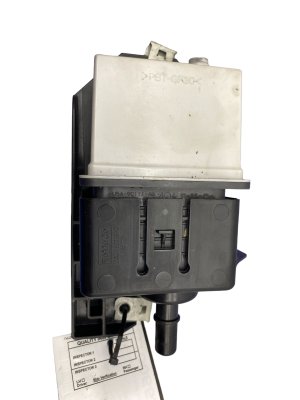
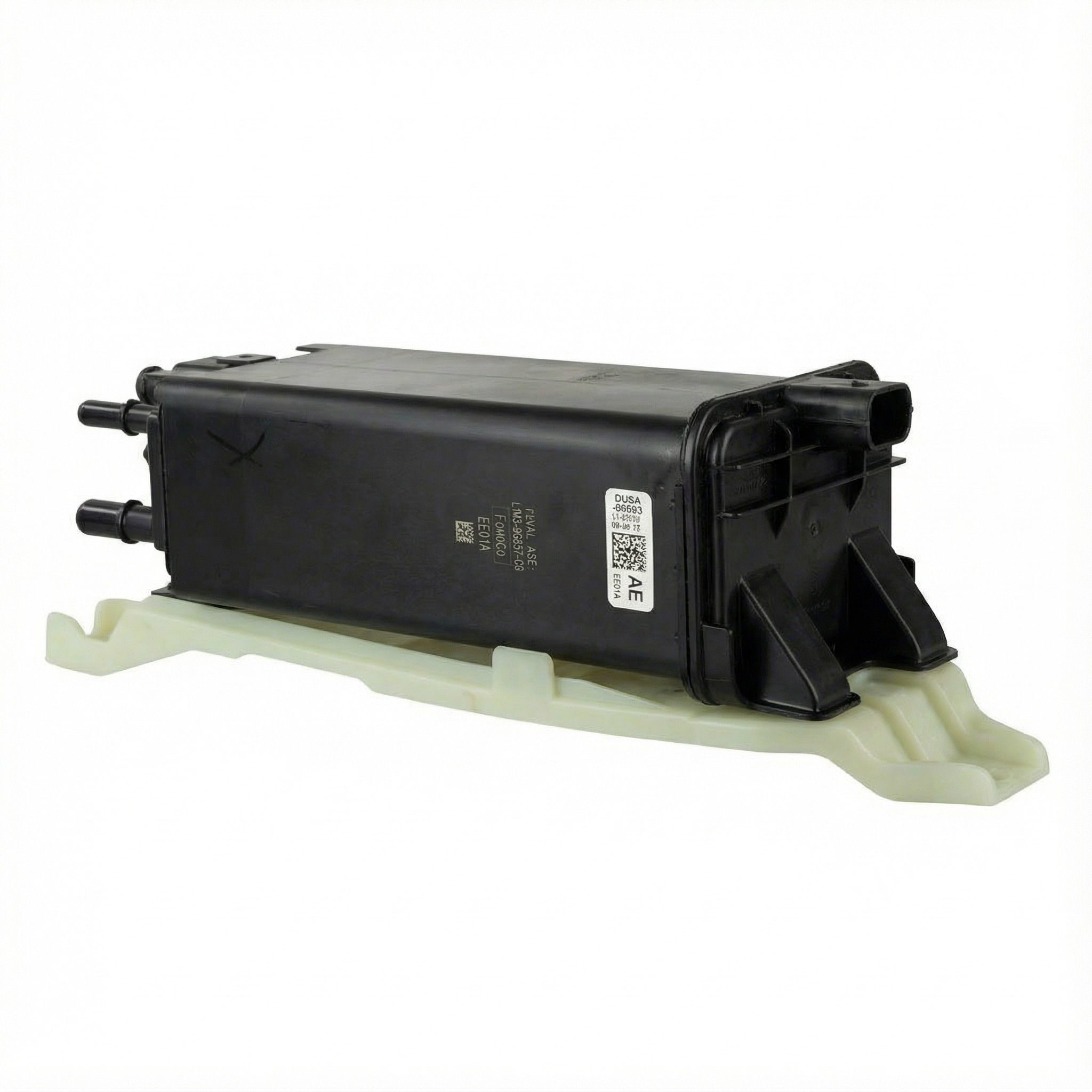
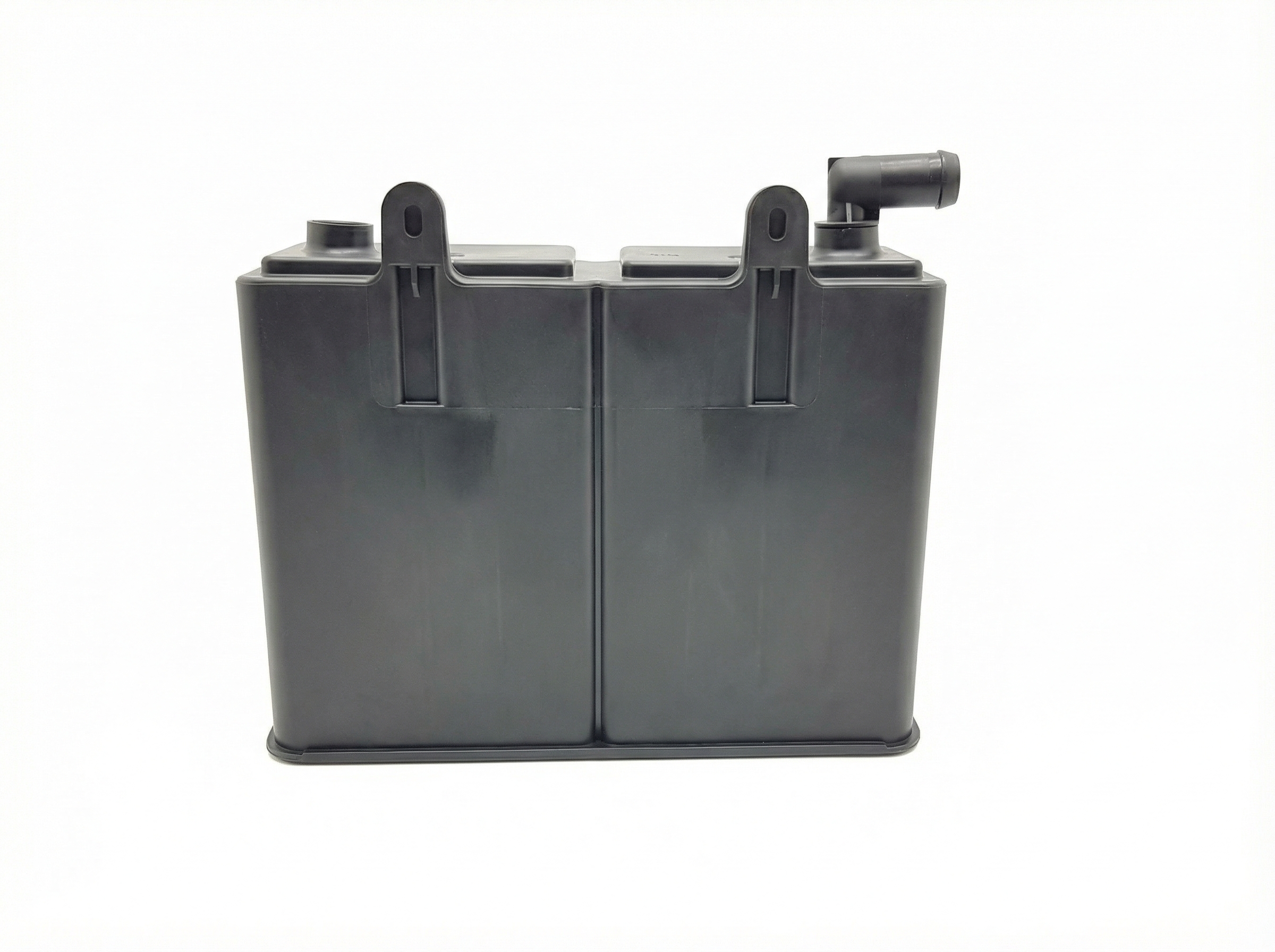
Used OEM Parts in Stock
New Aftermarket Parts Available


The information in this article is provided for general reference and educational purposes only. Vehicle specifications, procedures, and part compatibility can vary by production date, trim level, and region. Always consult your vehicle's factory service manual and verify part numbers before purchasing or performing repairs. Safety-critical components such as airbags, seat belts, and braking systems should be installed by a qualified professional.
- Lincoln AVIATOR:
- 🧭 Diagnostic Flowchart
- 🎬 Helpful Videos
- 🛍️ Shop This Part
- What's Unique About the 2020-2022 Lincoln AVIATOR
- Symptoms You May Notice
- Most Likely Causes
- Rare But Worth Checking
- Diagnosis Steps
- Parts You'll Likely Need
- Related Codes That Often Appear With This One
- Technical Service Bulletins (TSBs) & Recalls
- Platform-Specific Known Issues
- Mechanic-Grade Diagnostic Values
- Hidden / Shadow Codes Worth Checking
- Scan Tool Commands That Help
- Wiring & Ground Locations
- Real Owner Repair Stories
- OEM Part Supersession History
- Model Year Variations Within This Range
- 🎟️ Get 5% Off