

P0455 on 2010-2013 Mazda 3: EVAP Gross Leak Causes and Fixes
For a 2010-2013 Mazda 3, a P0455 code is most often caused by a loose or faulty gas cap. If the cap is secure, the next most likely culprit is a failed purge solenoid valve. A new OEM gas cap costs around $25-$40, while a purge valve is typically $50-$100. A less common but well-documented issue on this platform is a cracked fuel pump lock ring.
- Always check the gas cap first for P0455. Ensure it's tight and the seal is intact. This is the most common and cheapest fix.
- If a new gas cap doesn't resolve the issue, the purge solenoid valve in the engine bay is the next most likely part to have failed.
- A strong smell of gasoline that accompanies the check engine light may point to a more significant leak, such as a cracked fuel pump lock ring under the rear seat.
- While you can drive with this code, you will not pass an emissions inspection, so repair is necessary in states that require it.
- If the cause isn't obvious after checking the cap and purge valve, a professional smoke test is the fastest way to find the leak and avoid replacing unnecessary parts.
What's Unique About the 2010-2013 Mazda 3
While the causes for P0455 are common across many vehicles, the second-generation Mazda 3 (2010-2013) and its predecessor are noted for a few specific failure points. Beyond the universal gas cap issue, the purge solenoid valve is a frequent culprit. Additionally, many owners have discovered cracks in the plastic fuel pump lock ring on top of the gas tank, which creates a large leak and often a noticeable fuel smell. This lock ring issue is a well-documented weak point on this platform, confirmed by numerous forum posts and even an NHTSA complaint for the previous generation which shares similar parts. For instance, NHTSA ODI #11439442 describes a failure of the fuel pump lock ring that caused both P0442 and P0455 codes, accompanied by a strong smell of gasoline fumes around the rear of the car after driving.
Generation note: The 2010-2013 model years are all part of the second generation (codename BL) of the Mazda 3. Many EVAP system issues, particularly the cracked fuel pump lock ring, are also common on the first generation (2004-2009) as they share similar designs and parts.
Symptoms You May Notice
- Check Engine Light is on
- A noticeable smell of fuel, especially after refueling or when the car is parked. This is a strong indicator of a cracked fuel pump lock ring.
- In rare cases, difficulty starting after filling the gas tank if the purge valve is stuck open.
- Difficulty refueling (gas pump nozzle clicks off repeatedly) can be a sign of a faulty or stuck-closed canister vent valve.
- Replacing the charcoal canister when the actual fault is a simpler, cheaper part like the gas cap or purge valve.
- Repeatedly replacing the gas cap when the true issue is a cracked fuel pump lock ring, which can present with similar symptoms.
- Replacing the purge valve in the engine bay when the fault is actually the canister vent valve at the rear of the vehicle.
Most Likely Causes
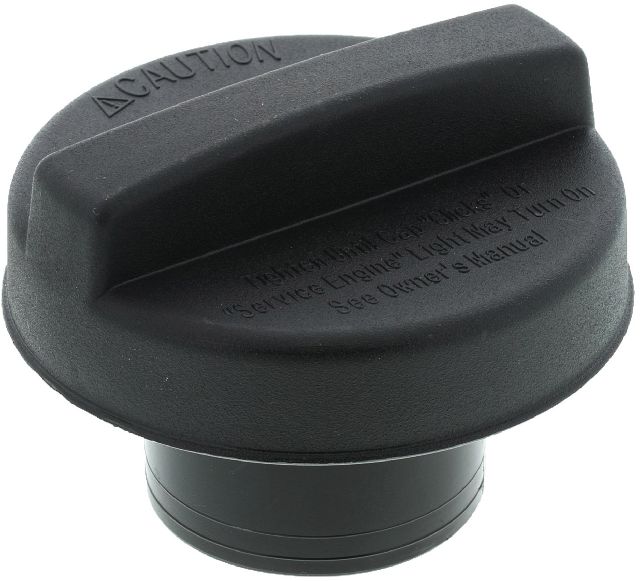
- Loose or Faulty Gas Cap 🔴 High Probability → Shop Fuel Tank Cap This is the most common cause on virtually all vehicles. The cap's rubber O-ring seal degrades over time, becoming hard and cracked, preventing a proper seal. It is highly recommended to use an OEM cap, as some aftermarket caps are known to cause leak codes.
How to confirm: Ensure the cap is tightened until it clicks at least once (some owners recommend three or more clicks). Visually inspect the rubber seal for any cracks, stiffness, or damage. If the seal looks worn or you have any doubt, replacement is the easiest first step.
Typical fix: Tighten the cap. If the seal is damaged or the code returns, replace the gas cap with a new OEM part.
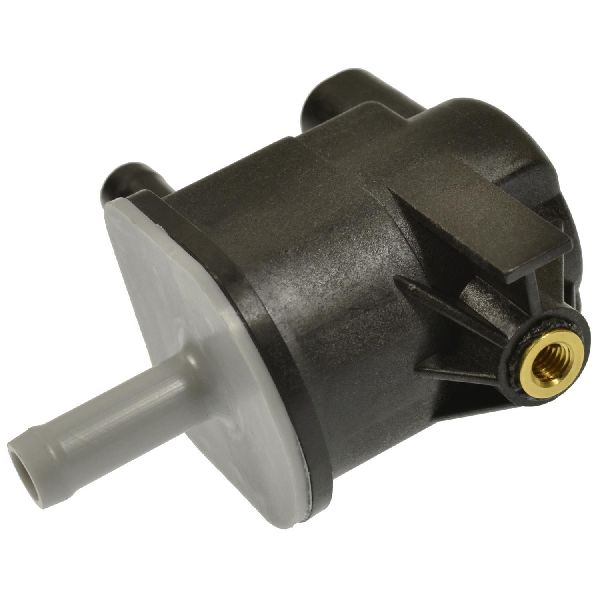
Est. part cost: $25 - $40 - Faulty Purge Solenoid Valve 🟡 Medium Probability → Shop Vapor Canister The purge valve is a common failure item on many vehicles, including the Mazda 3. It can get stuck open, creating a constant vacuum leak in the EVAP system. NHTSA ODI #11331433 notes a case involving a canister purge valve leak resulting in codes P0455 and P0457.
How to confirm: The valve is located in the engine bay and is easily accessible. When removed from the vehicle, it should be in a normally closed state. If you can blow air through it, it's stuck open and needs replacement. You can also test it by applying 12V power to its pins; it should click open and allow air to pass.
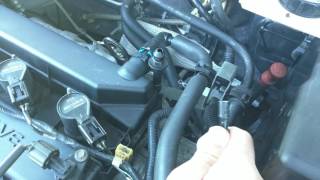
Typical fix: Replace the purge solenoid valve. This is a simple DIY job that typically takes less than 30 minutes. 🎬 See this quick walkthrough for replacing the purge valve.
Est. part cost: $40 - $80 - Cracked Fuel Pump Lock Ring 🟡 Medium Probability → Shop Fuel Pump As documented in numerous owner forums and even NHTSA complaints for the prior generation, the plastic lock ring securing the fuel pump to the tank is a known failure point. It becomes brittle with age and cracks, creating a large leak.
How to confirm: A very strong fuel smell from the rear of the car, particularly under the rear seat cushion where the fuel pump access panel is located, is the primary symptom. A smoke test performed by a shop will definitively identify this leak. Visual inspection after removing the rear seat may reveal fuel residue or a visible crack on the ring.
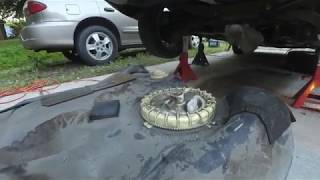
Typical fix: The rear seat cushion is removed to access the fuel pump panel. The cracked lock ring and its O-ring gasket must be replaced. OEM part numbers for the similar first generation are BN8F-42-167 (Lock Ring) and BN8F-42-166 (O-ring). 🎬 Watch: How to replace a cracked fuel pump lock ring.
Est. part cost: $20 - $65
Rare But Worth Checking
- Faulty Canister Vent Valve/Solenoid: → Shop Vapor Canister This valve is located near the charcoal canister by the fuel tank. It is normally open and closes when the system runs a self-test. If it fails to close, it will cause a large leak code. On the 2010-2013 Mazda 3, this part is notoriously difficult to access, as it sits above the rear subframe, often requiring the subframe to be lowered for replacement.
- Cracked or Disconnected EVAP Hoses: Rubber hoses can become brittle and crack with age and exposure to heat and elements. A visual inspection is a first step, but a smoke test is the most effective way to find a small crack in a hose line. NHTSA ODI #10096503 mentions a diagnostic P0455 (EECS large leak) and a strong gasoline smell following a repair or physical impact to the vehicle's underside.
- Cracked Charcoal Canister: → Shop Vapor Canister The canister itself can be damaged by road debris or develop cracks over time, leading to a leak. This is less common than valve or cap failures, and replacement is difficult due to its location above the rear subframe.
Diagnosis Steps
- Check the Gas Cap: Ensure it is tight and clicks multiple times. Remove it and inspect the rubber seal for any cracks or damage. If in doubt, replace it with an OEM cap (Part No. BNYF-42-250 is a common part number that supersedes older versions).
- Clear the Code: After checking/tightening the cap, clear the code with a scanner and drive for a few days to see if it returns.
- Visual Inspection & Purge Valve Test: If the code returns, locate the purge valve in the engine bay. Visually inspect its connecting hoses. Disconnect the valve and try to blow through it. If air passes through, the valve is stuck open and must be replaced.
- Smell Test: Check for a strong fuel odor inside or around the rear of the car, especially under the back seat. A strong smell points towards the cracked fuel pump lock ring.
- Inspect Under the Vehicle: Check the hoses around the charcoal canister and fuel tank (located at the rear of the car) for any visible damage. This area is difficult to see without lifting the car.
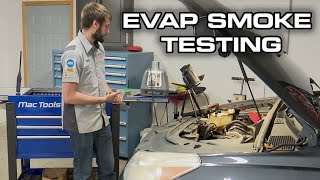
- Perform a Smoke Test: If the leak source is not obvious, the most effective diagnostic step is to have a smoke test performed. A machine fills the EVAP system with a harmless, visible smoke, and the leak will be revealed by where the smoke escapes. 🎬 Watch: How to perform a smoke test for EVAP leaks. This is the best way to find cracked hoses or confirm a leak at the fuel pump lock ring or canister. Manufacturer Bulletin #01-002-18-3417 advises following specific repair procedures to determine the location of the evaporative system leak when P0455 is stored.
Parts You'll Likely Need
- Fuel Cap
(OEM #BNYF-42-250 (supersedes multiple previous numbers))— This is the most frequent cause of a P0455 code due to the seal wearing out over time. It's the first, easiest, and cheapest part to check and replace. Using an OEM cap is strongly recommended.
Trusted brands: Mazda OE
OEM price range: $25-$40
Aftermarket price range: $15-$25 - Vapor Canister Purge Valve / Solenoid
(OEM #LF3T-18-741 or PE01-18-751 (verify by VIN))— This valve is a common failure point that gets stuck open, causing a large leak. It is a likely culprit if a new gas cap does not solve the issue.
Trusted brands: Mazda OE, Dorman (911-701 for valve only on some models), Standard Motor Products (CP620)
OEM price range: $80-$120
Aftermarket price range: $40-$80
Related Codes That Often Appear With This One
- P0442 — This code indicates a small EVAP leak. It can appear if there are multiple leaks of different sizes or if a small leak worsens into a large one.
- P0441 — This code for 'Incorrect Purge Flow' often points directly to a malfunctioning purge solenoid valve, which is also a primary cause of P0455.
- P2187 — This code means 'System Too Lean at Idle'. A purge valve stuck open can cause a vacuum leak, allowing unmetered air and fuel vapor into the engine, leading to a lean condition.
- P0446 — This code for 'Evaporative Emission System Vent Control Circuit' often points to a problem with the canister vent solenoid, which, if stuck open, can also cause a P0455.
Technical Service Bulletins (TSBs) & Recalls
- TSB 01-020/10: Mentions loose fuel filler caps causing P0442, P0455, and P0456, and advises replacement with an improved part.
- TSB 01-002-18-3417: Groups P0441, P0455, and other EVAP codes together for diagnosis. This bulletin notes that some vehicles may have MIL illumination with these DTCs stored in memory and provides a procedure to determine the leak location.
Platform-Specific Known Issues
- Cracked Fuel Pump Lock Ring: → Shop Fuel Pump A well-documented failure point on both first and second-generation Mazda 3s. The plastic ring becomes brittle and cracks, breaking the fuel tank seal and causing a P0455 code with a strong fuel smell. Access is under the rear seat.
- Difficult Canister Vent Valve Replacement: → Shop Vapor Canister The canister vent valve solenoid is located above the rear subframe, making access extremely challenging. Replacement often requires lowering the subframe, turning a simple part swap into a multi-hour job.
Mechanic-Grade Diagnostic Values
- Canister Vent Solenoid Coil Resistance — expected: 20 to 30 Ohms. Failure: A reading outside this range indicates a damaged solenoid winding.
- Fuel Tank Pressure (FTP) Sensor Voltage (Key On, Engine Off) — expected: Approximately 2.6V - 2.65V (on similar Ford/Mazda systems). Failure: A significant deviation from this static voltage, or a rapid drop upon starting the engine, can indicate a purge valve stuck open.
Scan Tool Commands That Help
- Mazda IDS, FORScan, or equivalent bidirectional scanner: EVAP Canister Vent Valve - Active Command — Used during a smoke test to command the normally-open vent valve to close, which seals the EVAP system. This allows the system to be pressurized with smoke to find leaks.
- Mazda IDS, FORScan, or equivalent bidirectional scanner: EVAP Purge Valve - Active Command — Used to manually open and close the normally-closed purge valve. A technician can monitor the Fuel Tank Pressure (FTP) sensor data while cycling the valve to confirm it is not stuck and is functioning correctly.
- Mazda IDS, FORScan, or equivalent bidirectional scanner: EVAP System Test — This is an automated test sequence run by the scan tool that commands the vehicle's PCM to perform its onboard EVAP leak test. It's used to verify a repair is successful or to confirm an intermittent fault exists if it fails the test.
Wiring & Ground Locations
- Purge Solenoid Valve Connector — In the engine bay, on the purge solenoid valve itself, typically near the intake manifold.. This connector provides power and control signals to the purge valve. Damaged wires or a poor connection here can cause a P0443 (Purge Control Circuit) code and may prevent the valve from operating, indirectly contributing to a P0455 if the valve fails open.
- G08 — Under the left (driver's side) end of the dashboard.. This is a primary interior ground point. A fault at this ground could potentially affect the Body Control Module (BCM) or Powertrain Control Module (PCM), which are responsible for monitoring and controlling the EVAP system.
- G14 — Under the driver's seat.. This is a major chassis ground point. While not exclusive to the EVAP system, a poor connection here can cause a wide range of difficult-to-diagnose electrical issues for various vehicle components.
Real Owner Repair Stories
- Reddit user, r/mazda3 (2008 Mazda 3 2.0L with 202,000 miles (First generation, but shares the same common failure parts)) — Persistent P0455 code that would appear intermittently for years.
❌ Tried (didn't work) Cleaned Mass Air Flow (MAF) sensor, Replaced purge canister (purge valve), Replaced PCV valve
✅ What actually fixed it A Mazda dealer performed a smoke test and found the fuel tank locking nut (fuel pump lock ring) was cracked and leaking. Replacing the lock ring resolved the code. - Mazda3Club.com user 'nejuza' (2005 Mazda 3s Hatchback (First generation)) — Recurring P0455 Check Engine Light.
❌ Tried (didn't work) Replaced gas cap, Replaced Purge Solenoid Valve with Hose, Performed a smoke test which found no leaks
✅ What actually fixed it The user found a temporary fix by physically tapping on the new purge solenoid valve, which would cause the light to stay off for a couple hundred miles, indicating the replacement valve was also sticking. The long-term fix was not explicitly stated, but the diagnosis pointed to repeated failure of the purge solenoid valve itself. - NHTSA ODI #11128161 — An owner reported that their check engine light comes on every few weeks with various OBD codes including P0455, P2402, and P2407. Despite the selling dealer replacing the filler cap twice, the issue persisted.
"I Checked Everything" — The Actual Cause
- In one documented case on a similar Mazda 3, a shop performed a smoke test and found no leaks, yet the P0455 code persisted. The issue was ultimately traced to broken wires at the purge solenoid connector, which prevented the valve from being controlled properly.
OEM Part Supersession History
Various older Mazda fuel cap part numbers→BNYF-42-250— Consolidation of part numbers and potential design improvements to the seal.
Heads up: BNYF-42-250 is the widely accepted correct replacement for most 2004-2013 Mazda 3 models, ensuring proper fit and seal.LF3T-18-741→PE01-18-751— Part revision for non-SKYACTIV engines.
Heads up: These purge valve part numbers may vary by production date and specific engine (2.0L vs 2.5L). It is critical to verify the correct part number by VIN before ordering.
Model Year Variations Within This Range
- 2012-2013: A mid-cycle facelift occurred for the 2012 model year. While the 2.5L MZR engine remained, the base 2.0L MZR engine was largely replaced by the new, more efficient 2.0L SKYACTIV-G engine. EVAP system components, particularly the vapor canister, can differ between Federal (non-SKYACTIV) and California/SKYACTIV models, making part selection critical.
- 2012-2013: The Bluetooth module was updated in 2012 (or late 2011) to support music metadata, a non-mechanical change but indicative of the model year refresh.
Diagnostic Flowchart
Other Known Issues on This Vehicle
Issues unrelated to this code that are worth knowing about as an owner of this generation:
- Melting/Sticky Dashboard 🟠 Medium — Very common in regions with high heat and humidity. The dashboard surface deteriorates, becoming shiny and sticky. (Ref: Mazda issued a warranty extension program (SSP 97) covering dashboard replacement for 10 years from the original warranty start date.)
- Premature Clutch Failure (Manual Transmission) 🔴 High — A significant number of owners reported premature clutch wear and failure, sometimes in as few as 12,000-30,000 miles. This led to a class-action lawsuit. (Ref: A class action lawsuit was filed alleging a design defect. Mazda also had a reimbursement program (CSP09) for some 2.5L models.)
- Failing Electro-Hydraulic Power Steering Pump 🔴 High — The power steering pump can fail intermittently or completely, causing a sudden loss of power steering assist, which is a significant safety concern. This is an expensive repair. (Ref: While earlier models had a recall, many 2010 owners report the same failure without official recall coverage.)
- Defective Passenger Motor Mount 🟡 Low — The passenger-side hydraulic motor mount is prone to leaking and collapsing, causing excessive engine vibration and noise to be felt in the cabin, especially at idle or during acceleration.
- Warping Instrument Panel 🟡 Low — The instrument panel above the central information display can warp in high heat, creating a gap. (Ref: Mazda issued a warranty extension program (7 years/84 months) to cover the replacement of the instrument panel for this specific issue.)
Used vs. New Parts: Buying Guide for This Vehicle
When a used part is the smart pick: Used parts can be a cost-effective option for purely mechanical or structural components like EVAP hoses, the charcoal canister (if visually inspected for cracks), or the fuel filler neck. These parts have no complex electronics and their condition is easy to assess.
Donor-vehicle mileage cap: roughly under 80000 miles for the part to have meaningful remaining life.
What to inspect on the donor part:
- For hoses, check for any signs of dry rot, cracking, or hardening. The hose should still be pliable.
- For plastic components like the canister or lock ring, inspect carefully under bright light for hairline cracks, especially around seams and mounting points.
- Ensure any included seals or gaskets are soft and free of cracks. It's often best to use a new gasket regardless.
- Check that electrical connectors on used solenoids are free of corrosion or broken locking tabs.
OEM-only on this vehicle (don't cheap out):
- Fuel Cap: Due to the sensitivity of the EVAP system test, aftermarket gas caps are a frequent cause of new P0455/P0456 codes. It is strongly recommended to use a genuine Mazda OEM cap (BNYF-42-250) to ensure a perfect seal.
Aftermarket brands forum-validated for this vehicle:
- Dorman (for purge valves, e.g., 911-701)
- Standard Motor Products (for purge valves and connectors, e.g., CP620)
Brands owners have reported issues with on this vehicle:
- Unbranded, no-name gas caps from online marketplaces are a common source of problems and should be avoided.
Real Owner Stories
Aggregated from forums and TSBs cited above. Mileages and costs reflect what owners reported in those sources.
2010-2013 Mazda 3
Symptoms: Check engine light for P0455; owner attempted to fix it by replacing the gas cap and then the purge solenoid valve without success.
What fixed it: A shop performed a smoke test which led to a dealer visit to resolve the leak.
Source hint: Mazda3Club.com: A user detailed a multi-step repair attempt for P0455
2010-2013 Mazda 3
Symptoms: P0455 code present; owner had already replaced other parts but the code remained.
What fixed it: A dealer smoke test diagnosed a cracked fuel tank locking nut (lock ring).
Source hint: reddit.com/r/mazda3: A user with a P0455 code ultimately had a dealer smoke test diagnose a cracked fuel tank locking nut
Mazdaspeed 3
Symptoms: The smell of gas after fill-ups which got progressively worse over a period of 6 months, accompanied by a P0455 code.
What fixed it: Replacement of the fuel pump locking ring.
Source hint: reddit.com/r/mazdaspeed3: A thread discussing P0455 where an owner confirms their issue was the fuel pump locking ring
Related OBD-II Codes
Frequently Asked Questions
Does TSB 01-020/10 apply to my Mazda 3 if I have a P0455 code?
I have a strong smell of gas after refueling my Mazda 3; what is the likely cause?
Is there a specific OEM gas cap part number I should use for my 2010-2013 Mazda 3?
Why does the gas pump nozzle keep clicking off when I try to fill my tank?
Can I replace the purge solenoid valve myself on a Mazda 3?
Is the canister vent valve easy to replace on this model?
Helpful Videos
We Have This Part in Stock


The information in this article is provided for general reference and educational purposes only. Vehicle specifications, procedures, and part compatibility can vary by production date, trim level, and region. Always consult your vehicle's factory service manual and verify part numbers before purchasing or performing repairs. Safety-critical components such as airbags, seat belts, and braking systems should be installed by a qualified professional.
- Mazda 3:
- 🧭 Diagnostic Flowchart
- 🎬 Helpful Videos
- 🛍️ Shop This Part
- What's Unique About the 2010-2013 Mazda 3
- Symptoms You May Notice
- Most Likely Causes
- Rare But Worth Checking
- Diagnosis Steps
- Parts You'll Likely Need
- Related Codes That Often Appear With This One
- Technical Service Bulletins (TSBs) & Recalls
- Platform-Specific Known Issues
- Mechanic-Grade Diagnostic Values
- Scan Tool Commands That Help
- Wiring & Ground Locations
- Real Owner Repair Stories
- "I Checked Everything" — The Actual Cause
- OEM Part Supersession History
- Model Year Variations Within This Range
- Other Known Issues on This Vehicle
- Used vs. New Parts: Buying Guide for This Vehicle
- Real Owner Stories
- 2010-2013 Mazda 3
- 2010-2013 Mazda 3
- Mazdaspeed 3
- Related OBD-II Codes
- Frequently Asked Questions
- 🎟️ Get 5% Off