

P0455 on 2004-2010 Mazda MAZDA3: EVAP Gross Leak Causes & Fixes
For a 2004-2010 Mazda 3, code P0455 is most often caused by a loose or faulty gas cap. Always check the cap first before inspecting other parts. If the cap is good, the next most likely causes are a failed purge solenoid valve or a cracked fuel pump lock ring. A new gas cap is an inexpensive first step, costing around $15-$30.
- Always check the gas cap first; it's the easiest and most common fix for P0455.
- If you smell fuel, especially after filling the tank, the most likely culprit on this specific car is the cracked fuel pump lock ring under the rear seat.
- A faulty purge solenoid valve is another common cause and is an easy DIY replacement in the engine bay.
- If the cause isn't obvious, a professional smoke test is the fastest way to find the leak and avoid replacing unnecessary parts.
- This code will cause an automatic failure on an emissions test, so it cannot be ignored if you live in an area with vehicle inspections.
What's Unique About the 2004-2010 Mazda MAZDA3
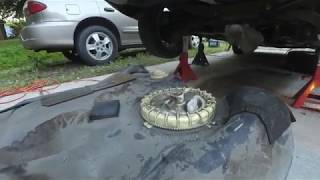
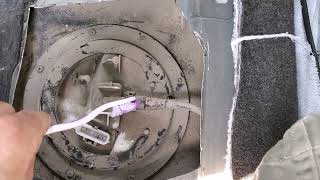
For the 2004-2010 Mazda 3, a unique and well-documented weak point is the fuel pump lock ring on top of the gas tank. This plastic ring is known to become brittle and crack over time, causing a P0455 code, often accompanied by a strong fuel smell after refueling. This issue was cited in an NHTSA owner complaint (ODI #11439442) for a 2009 model and is frequently discussed in owner forums as the root cause after other common parts have been replaced. One Reddit user noted a Mazda dealer smoke test identified the cracked lock nut as the culprit 🎬 Watch: How to find and repair this major fuel leak. after they had already replaced other parts.
Diagnostic Flowchart
Tap your situation to follow the diagnostic path that matches what you're seeing on this vehicle.
Generation note: This year range covers the entire first generation (BK, 2004-2009) and the first model year of the second generation (BL, 2010). While many EVAP system components are similar, always verify part numbers for your specific year, as some parts like the canister vent solenoid may differ in location or design between generations. For example, the fuel pump lock ring is a known issue across the first generation. The second generation (starting 2010) was an evolution of the first, with tweaks to the engine, transmission, and suspension, but the core EVAP system layout remained similar.
Symptoms You May Notice
- Check Engine Light is on
- A noticeable smell of gasoline, especially after filling the tank or around the rear of the car.
- In some cases, a rough idle or difficulty starting immediately after refueling if the purge valve is stuck open.
- Difficulty filling the fuel tank (gas pump nozzle clicks off repeatedly), which can point to a stuck-closed canister vent solenoid or a blockage in the system.
- Replacing the charcoal canister when the actual fault is a less expensive part like a hose, the vent solenoid, or the fuel pump lock ring.
- Replacing the gas cap repeatedly when the issue is the fuel pump lock ring, which presents similar symptoms (fuel smell, P0455).
- Replacing the purge solenoid valve when the gas cap seal is the actual problem. Many owners replace the purge valve only to have the code return.
Most Likely Causes
- Loose or Faulty Gas Cap 🔴 High Probability → Shop Fuel Tank Cap This is the most common cause for a P0455 code on any vehicle. The rubber seal on the cap can degrade over time, preventing a proper seal. It's always the first and cheapest part to check.
How to confirm: Ensure the cap is tightened until it clicks at least once. Inspect the rubber O-ring on the cap for cracks, stiffness, or damage. Some owners report needing to click it multiple times.
Typical fix: Tighten the cap. If the code returns or the seal is visibly damaged, replace the gas cap. It is often recommended to use an OEM cap, as some aftermarket caps may not seal correctly.
Est. part cost: $15-$35 - Cracked Fuel Pump Lock Ring 🟡 Medium Probability → Shop Fuel Pump As documented in NHTSA complaints and numerous owner forums, the plastic lock ring that secures the fuel pump assembly to the top of the tank is a known failure point on this platform. It becomes brittle and cracks, creating a large leak. A Reddit user with a 2004 Mazda 3 confirmed this was their issue, noting a strong fuel smell and a visible crack.
How to confirm: A strong fuel smell from the rear of the car, especially under the back seat where the fuel pump access panel is located. Visual inspection will reveal cracks on the ring or fuel residue around it. This was the specific cause cited in NHTSA ODI #11439442.
Typical fix: The fuel tank must be accessed (often by removing the rear seat cushion) and the cracked lock ring and its O-ring gasket must be replaced. OEM part numbers for a 2004 model are BN8F-42-167 (Lock Ring) and BN8F-42-166 (O-ring). This part number is confirmed by multiple Mazda parts dealers.
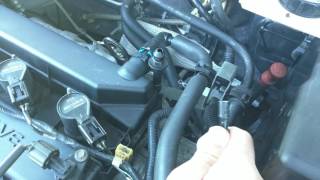
Est. part cost: $20-$65 - Failed Purge Solenoid Valve 🟡 Medium Probability → Shop Vapor Canister The purge valve can become stuck open or closed, which is a common failure on many vehicles. A stuck-open valve creates a constant vacuum leak and can cause hard starting after refueling. This part is located in the engine bay and is relatively easy to access.
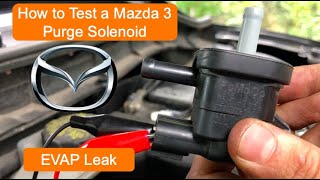
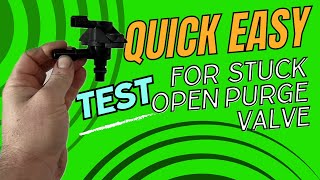
How to confirm: The valve is located in the engine bay. It is a normally closed valve. With the engine off, disconnect the electrical connector and the hose leading from the charcoal canister. Try to blow through it; if air passes, it's stuck open and faulty. You can also test for a clicking sound by applying 12V power.
Typical fix: Replace the purge solenoid valve. This is a simple repair located in the engine bay, typically taking less than 30 minutes. A popular aftermarket part is Dorman 911-701. The OEM part number is PE01-18-751, though other numbers like LF15-18-741 may apply to certain years.
Est. part cost: $30-$100 - Cracked or Disconnected EVAP Hoses ⚪ Low Probability Rubber hoses become brittle and crack with age and exposure to heat and fuel vapors.
How to confirm: Visually inspect all accessible EVAP lines running from the engine bay to the charcoal canister at the rear of the car. The most definitive method is to have a smoke test performed, which will force smoke through the system and make any leaks visible.
Typical fix: Replace the cracked section of hose or reconnect any loose fittings.
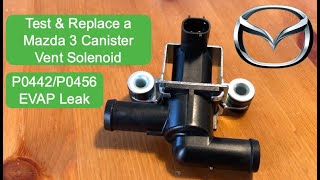
Est. part cost: $5-$25 - Failed Canister Vent Solenoid ⚪ Low Probability → Shop Vapor Canister This valve is normally open and closes to seal the system for testing. It can fail or get stuck due to dirt and rust, especially given its location near the rear subframe. Its failure can also cause difficulty when refueling.
How to confirm: This part is notoriously difficult to access, located on top of the rear subframe near the gas tank. Testing involves checking if it closes when 12V is applied. Because it's normally open, you should be able to blow through it when unpowered. Due to its location, a smoke test is the most practical way to confirm it's the source of the leak.
Typical fix: Replacement is labor-intensive as it may require lowering the rear subframe for access, a job that many DIYers find frustrating.
Est. part cost: $40-$90
Rare But Worth Checking
- Cracked Charcoal Canister: → Shop Vapor Canister The plastic housing of the canister itself can develop cracks from age or impact from road debris, creating a large leak. One owner on Reddit reported that after replacing the gas cap and purge valve, a smoke test revealed a bad charcoal canister was the ultimate cause, costing $600 at a mechanic.
- Rusted Fuel Filler Neck: → Shop Fuel Filler Neck The metal pipe leading from the gas cap to the tank can rust through, especially in regions that use road salt, causing a large leak. This is a known issue on many older vehicles and will typically be found during a smoke test.
Diagnosis Steps
- Read the Code: Confirm P0455 is present and check for any other related EVAP codes like P0441, P0442, or P2187.
- Inspect the Gas Cap: Remove the gas cap. Check for visible cracks on the seal. Reinstall it and ensure it clicks several times. Clear the code and drive for a few days to see if it returns.
- Perform a Smell Test: After filling the fuel tank, check for any strong gasoline odors around the rear wheel wells or under the rear seat. A strong smell points towards a physical leak, very likely the fuel pump lock ring or a cracked hose.
- Test the Purge Solenoid Valve: Locate the valve in the engine bay. With the engine off and electrical connector unplugged, disconnect the hose from the canister side and try to blow through the valve. If air passes, it's stuck open and needs replacement. You can also check for a click by applying 12V power to its pins.
- Visual Inspection: Visually inspect all accessible EVAP hoses in the engine bay and around the fuel tank for obvious cracks, disconnections, or damage.
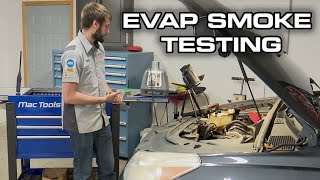
- Perform a Smoke Test: If the above steps do not reveal the cause, a smoke test is the most effective diagnostic procedure. A mechanic will inject pressurized smoke into the EVAP system via the service port. The smoke will exit from the location of the leak, making it easy to pinpoint, whether it's a cracked hose, a faulty valve, the charcoal canister, or the fuel pump lock ring.
Parts You'll Likely Need
- Fuel Cap — This is the most frequent and cheapest fix for a P0455 code. The seal wears out over time.
Related Codes That Often Appear With This One
- P0442 — Stands for a small EVAP leak. A deteriorating component, like the fuel pump lock ring mentioned in ODI #11439442, can initially cause a small leak (P0442) before worsening into a large leak (P0455).
- P0456 — Stands for a very small EVAP leak. This can appear alongside P0455 if the system has multiple leak points of varying sizes or as a precursor to a larger leak.
- P0441 — Stands for Incorrect Purge Flow. This often points directly to a malfunctioning purge solenoid valve, which can also be a cause for P0455. The Mazda TSB #01-002-18-3417 also groups these codes together.
- P2187 — Stands for "System Too Lean at Idle." A purge valve stuck open can create a vacuum leak, allowing unmetered air and fuel vapor into the engine, which can lead to a lean condition at idle.
Technical Service Bulletins (TSBs) & Recalls
- Bulletin #01-002-18-3417 (Dated 2018-01-30): Titled 'MIL ILLUMINATION WITH DTC P0441, P0442, P0455, OR P0456'. This bulletin provides a diagnostic procedure for determining the location of an evaporative system leak when any of these codes are present.
Platform-Specific Known Issues
- A cracked fuel pump lock ring is a well-documented issue for this vehicle generation, causing both a P0455 code and a hazardous fuel leak/smell. This was reported in NHTSA ODI complaint #11439442 for a 2009 model and is frequently discussed in owner forums.
- The canister vent solenoid on second-generation models (2010+) is in a very difficult-to-access location above the rear subframe, making replacement a labor-intensive job that may require lowering the subframe.
Mechanic-Grade Diagnostic Values
- Purge Solenoid Valve Coil Resistance — expected: 15 to 30 Ohms. Failure: A reading far outside this range indicates a damaged internal circuit.
- Canister Vent Solenoid Coil Resistance — expected: 20 to 30 Ohms. Failure: A reading outside this range suggests the solenoid winding is damaged.
Scan Tool Commands That Help
- Mazda IDS (or equivalent bidirectional scanner): Active Command: EVAP Canister Vent Valve — Used during a smoke test to command the normally-open vent valve to close, sealing the system. This allows the smoke to build pressure and reveal leaks.
- Mazda IDS (or equivalent bidirectional scanner): Active Command: EVAP Purge Valve — Used to command the normally-closed purge valve to open and close. While monitoring fuel tank pressure (FTP) sensor data, a technician can verify the valve is functioning and not stuck.
Wiring & Ground Locations
- G11 — Below driver's seat.. This is a major chassis ground point. While not directly tied only to the EVAP system, poor grounding here can cause a variety of electrical issues with components throughout the vehicle.
- G8 — Behind the right end of the dashboard.. This is another key interior ground point. A fault here could potentially affect the PCM or other control modules that monitor the EVAP system.
- EVAP System Leak Detection Pump — Under the rear of the vehicle, near the charcoal canister.. This component is part of the EVAP system itself. Knowing its location is critical for visual inspection of hoses and connectors in the area.
- Fuel Pump Electrical Connector — Under the rear seat, beneath a metal access cover.. This connector provides power to the fuel pump and sends the fuel level signal. It must be disconnected to service the fuel pump or the lock ring.
Real Owner Repair Stories
- Reddit user in r/mazda3 (2008 Mazda 3 2.0L with 202,000 miles) — Persistent P0455 code that would come and go for years.
❌ Tried (didn't work) Cleaned Mass Air Flow (MAF) sensor, Replaced purge canister (purge valve), Replaced PCV valve
✅ What actually fixed it A Mazda dealer performed a smoke test and found the fuel tank locking nut (fuel pump lock ring) was cracked. Replacing the lock ring resolved the issue. - YouTube channel Tepco Cycle Repair (2004 Mazda 3) — P0455 code and a strong smell of gas.
❌ Tried (didn't work) The video directly identifies the lock ring as the problem after smelling gas.
✅ What actually fixed it The plastic fuel pump lock ring was visibly cracked, preventing the fuel pump O-ring from sealing. Replacing the lock ring (BN8F-42-167) and O-ring (BN8F-42-166) fixed the gross leak. - Reddit user in r/mazdaspeed3 (Gen 1 Mazdaspeed3 (2007-2009)) — P0455 code, which eventually led to a gas smell and visible fuel leakage after filling the tank.
❌ Tried (didn't work) The user did not list other attempted fixes, but directly identified the common failure.
✅ What actually fixed it The fuel pump locking ring was cracked. This is stated as a known history for the Gen 1 models.
OEM Part Supersession History
LF66-18-740 (or similar)→PE01-18-751— Part consolidation and design updates across multiple Mazda models.
Heads up: Dorman aftermarket part 911-701 is often cited as the correct valve-only replacement for the 2004-2009 Mazda 3, but Dorman's catalog incorrectly lists it for the Mazda 6. Part 911-702 is for the Mazda 6. This catalog error causes confusion.
Model Year Variations Within This Range
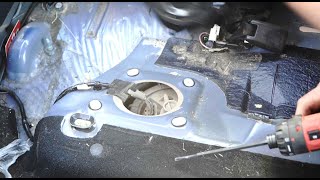
- 2004-2009 (First Gen, BK): The fuel pump access hole under the rear seat is often too small to remove the fuel pump assembly, requiring the fuel tank to be dropped for service of the pump or lock ring. Some owners have resorted to cutting a larger access hole.
- 2005 (California Emissions): One owner of a 2005 Mazda 3 with California emissions reported their car had a metal fuel pump lock ring instead of the plastic one that is known to crack. This suggests not all first-generation models are prone to the same lock ring failure.
- 2010 (Second Gen, BL): The 2010 model year marked a new generation (BL). While many core concepts are the same, there were differences in emissions systems depending on the market (Federal vs. California) and engine (2.0L/2.5L vs. later SKYACTIV). For example, the vapor canister for a Federal emissions car is different from a California emissions car.
Helpful Videos
We Have This Part in Stock


The information in this article is provided for general reference and educational purposes only. Vehicle specifications, procedures, and part compatibility can vary by production date, trim level, and region. Always consult your vehicle's factory service manual and verify part numbers before purchasing or performing repairs. Safety-critical components such as airbags, seat belts, and braking systems should be installed by a qualified professional.
- Mazda MAZDA3:
- 🧭 Diagnostic Flowchart
- 🎬 Helpful Videos
- 🛍️ Shop This Part
- What's Unique About the 2004-2010 Mazda MAZDA3
- Symptoms You May Notice
- Most Likely Causes
- Rare But Worth Checking
- Diagnosis Steps
- Parts You'll Likely Need
- Related Codes That Often Appear With This One
- Technical Service Bulletins (TSBs) & Recalls
- Platform-Specific Known Issues
- Mechanic-Grade Diagnostic Values
- Scan Tool Commands That Help
- Wiring & Ground Locations
- Real Owner Repair Stories
- OEM Part Supersession History
- Model Year Variations Within This Range
- 🎟️ Get 5% Off