

P0455 on 2016-2024 Mazda MX-5: EVAP Large Leak Causes and Fixes
On a 2016-2024 Mazda MX-5, code P0455 is most often caused by a loose or faulty gas cap. Before buying any parts, check that the cap is tight and the seal is intact. A new OEM gas cap is an inexpensive first step, costing around $30-$40.
- P0455 signifies a large leak in the EVAP (fuel vapor) system.
- Always check the gas cap first. Ensure it is tight and the seal is not cracked or worn. This is the most common and cheapest fix.
- The vehicle is safe to drive with this code, but it will not pass an emissions test.
- If a new gas cap does not solve the issue, the next most likely cause is a faulty purge valve in the engine bay, which can be tested at home.
- For hard-to-find leaks, a professional smoke test is the most reliable and cost-effective diagnostic method, preventing unnecessary replacement of expensive parts like the charcoal canister.
What's Unique About the 2016-2024 Mazda MX-5
The EVAP system on the fourth-generation (ND) Mazda MX-5 is relatively simple and not known for widespread, systemic flaws. Unlike some other vehicles where specific valves or canisters consistently fail, the most common cause of P0455 on the ND Miata remains the most basic: the gas cap. Owner forums confirm that starting with the simplest solution is highly effective for this platform. The system operates by closing both the canister vent valve (normally open) and the purge valve (normally closed) to seal the system, then monitoring for vacuum decay. A rapid loss of vacuum points to a significant leak.
Symptoms You May Notice
- Check Engine Light is illuminated.
- A faint fuel smell may be noticeable, particularly around the rear of the car or after refueling.
- In rare cases, a stuck-open purge valve may cause a rough idle or difficulty starting immediately after getting gas.
- No noticeable difference in driving performance.
- Replacing the charcoal canister before performing a smoke test. The canister is expensive and rarely the cause of the leak itself unless physically damaged.
- Replacing the purge valve without testing it first. A simple blow-through test can confirm if it's stuck open before spending money on a new part.
Most Likely Causes
- Loose, Damaged, or Incorrect Gas Cap 🔴 High Probability → Shop Fuel Tank Cap This is the most common cause for P0455 on virtually all vehicles, including the MX-5. The rubber seal on the cap can wear out, crack, or the cap may simply not have been tightened correctly after refueling. Using a non-OEM cap can also lead to sealing issues.
How to confirm: Remove the cap and inspect the rubber O-ring for any signs of cracking, stiffness, or damage. Ensure the tether is not caught under the seal. When reinstalling, tighten it until you hear it click at least once or twice. A professional smoke test will definitively show smoke escaping from a bad cap seal.
Typical fix: Tighten the cap. If the code returns or the seal is visibly damaged, replace the gas cap with a new OEM part.
Est. part cost: $30-$45 - Faulty EVAP Purge Solenoid Valve 🟡 Medium Probability → Shop Vapor Canister This valve controls the flow of fuel vapors to the engine. It can get stuck open, creating a permanent leak path that the system detects during its self-test. This part is shared across many Mazda models, including the Mazda3 and CX-5, which also report this failure.
How to confirm: The purge valve is a normally-closed valve located in the engine bay, near the oil dipstick. With the engine off, disconnect the valve and try to blow through it. If air passes through, it is stuck open and faulty. A mechanic can also command it open and closed with a scan tool to test its function.
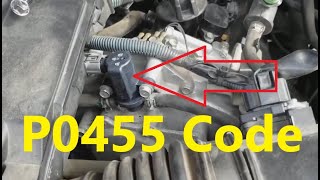
Typical fix: Replace the purge solenoid valve. It is typically held by a rubber mount and connected by two hoses and one electrical connector. The replacement is straightforward. 🎬 Watch: Step-by-step guide to replacing the purge valve solenoid.
Est. part cost: $80-$140 - Cracked or Disconnected EVAP Hoses ⚪ Low Probability Hoses can become brittle over time due to heat and age, or they can be damaged by rodents. A crack or disconnection creates a leak. This is less common on newer vehicles but still possible.
How to confirm: Visually inspect all accessible EVAP hoses in the engine bay and under the car near the fuel tank and charcoal canister. Look for obvious cracks, loose connections, or signs of chewing. A smoke test is the most effective way to find a hairline crack.
Typical fix: Replace the damaged section of hose and ensure all connections are secure.
Est. part cost: $10-$30
Rare But Worth Checking
- Faulty Canister Vent Valve/Solenoid: → Shop Vapor Canister This valve is normally open and closes to seal the system for testing. If it gets stuck and fails to close (often due to dirt or dust), it will cause a P0455 code. It is located near the charcoal canister at the rear of the car.
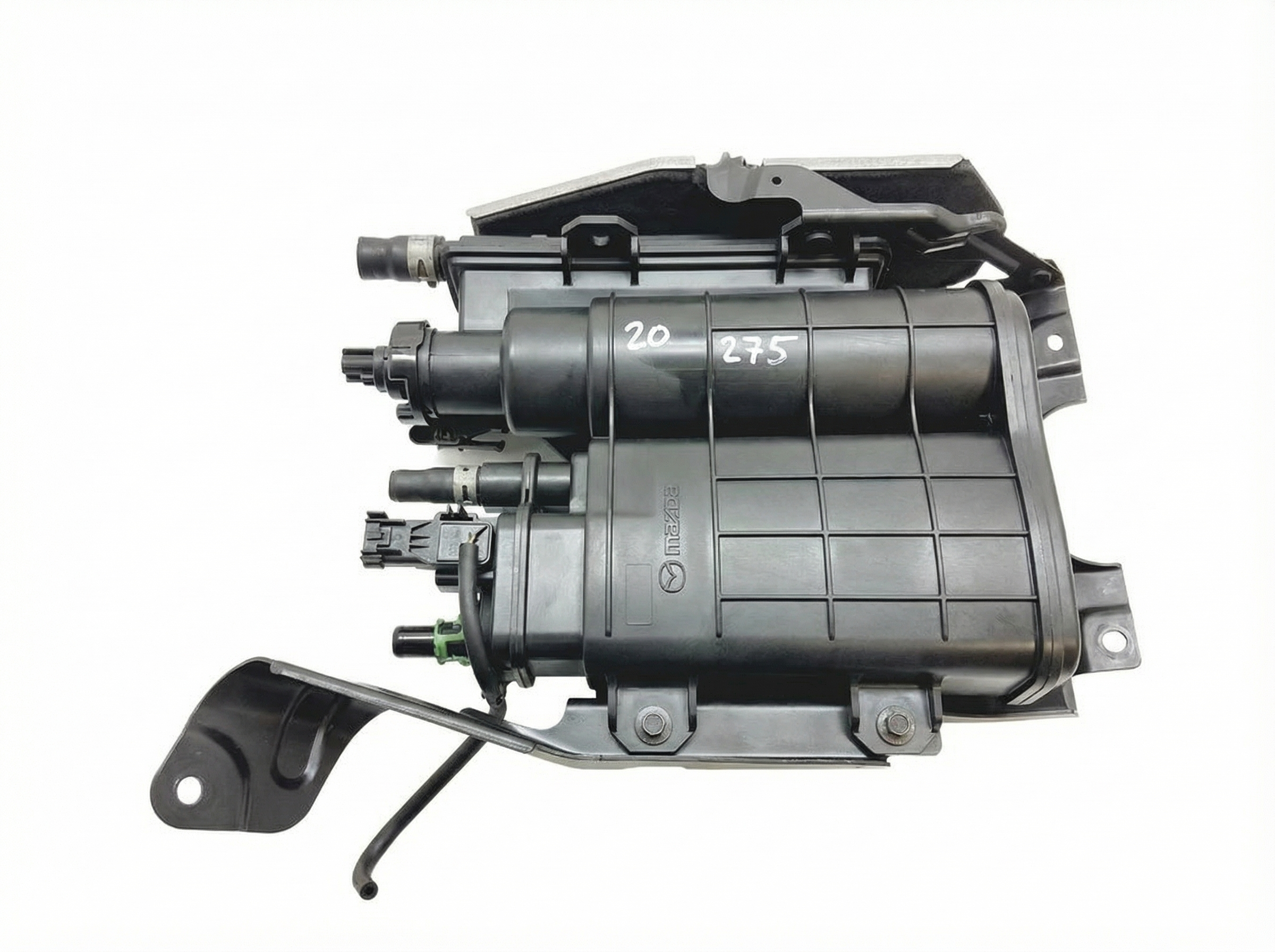
- Cracked Charcoal Canister: → Shop Vapor Canister The canister itself can be cracked by road debris, leading to a large leak. This is uncommon but possible. It is an expensive part and should only be replaced after a smoke test confirms it is the source of the leak.
- Leaking Fuel Tank Filler Neck: → Shop Fuel Tank Corrosion or damage to the metal pipe leading to the gas tank can cause a leak, though this is more common on older vehicles in rust-prone areas.
Diagnosis Steps
- Check the Gas Cap: This is the number one cause. Remove, inspect the seal for damage, and reinstall the cap, tightening it until it clicks 🎬 Watch: How to diagnose and fix a large EVAP leak. several times. Clear the code with a scanner and drive for a few days to see if it returns.
- Visual Inspection: Carefully inspect all visible EVAP hoses in the engine bay, especially around the purge solenoid, and under the rear of the car near the charcoal canister. Look for any obvious cracks, damage, or disconnections.
- Test the Purge Solenoid: Locate the purge solenoid in the engine bay (on the driver's side, near the dipstick). With the engine off, disconnect it and attempt to blow air through it. If air passes, the valve is stuck open and must be replaced.
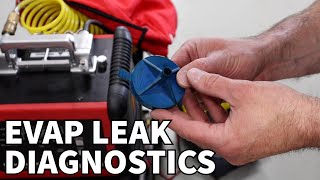
- Perform a Smoke Test: If the leak is not obvious, the most effective next step is a professional smoke test. A machine fills the EVAP system with low-pressure, UV-dyed smoke, which will escape from the exact location of the leak, making it easy to spot. 🎬 See how a professional smoke test identifies hidden leaks. This is the best way to find hairline cracks in hoses or leaks in the canister or filler neck. A diagnostic smoke test typically costs between $60 and $150.
Parts You'll Likely Need
- Fuel Filler Cap
(OEM #N3R1-42-210)— This is the most frequent cause of P0455 due to a worn or damaged seal. It is the cheapest and easiest part to replace first. Owners strongly recommend using an OEM cap as aftermarket versions can have sealing issues.
Trusted brands: Mazda (OEM)
OEM price range: $30-$45
Aftermarket price range: $15-$25 - Vapor Canister Purge Valve
(OEM #PE01-18-740 (also listed as PE01-18-751))— A common failure point that gets stuck open, creating a large leak. It is located in the engine bay and is relatively easy to replace.
Trusted brands: Mazda, Bosch
OEM price range: $80-$140
Aftermarket price range: $40-$70
Related Codes That Often Appear With This One
- P2187 — A stuck-open purge valve can sometimes cause a P2187 (System Too Lean at Idle) code to appear alongside P0455, as it creates a vacuum leak into the intake manifold.
Technical Service Bulletins (TSBs) & Recalls
- TSB 01-002/18: While not specific to just the ND MX-5, this Mazda bulletin addresses general diagnostic procedures for EVAP codes including P0455, providing dealers with a detailed flowchart to methodically locate leaks across various models, starting from the gas cap and moving to smoke testing.
- Bulletin #01-002-18-3417: This manufacturer bulletin notes that some vehicles may experience MIL illumination with DTCs P0441, P0442, P0455, or P0456 stored in memory and provides specific repair procedures to determine the location of the evaporative system leak.
Platform-Specific Known Issues
- One owner on Reddit noted that their P0455 code on an NC Miata would only appear after the car sat for an extended period in high humidity, and the code stopped returning once the car was driven regularly again. While anecdotal, this suggests that minor seal degradation could be sensitive to environmental conditions.
Mechanic-Grade Diagnostic Values
- Purge Solenoid Valve Coil Resistance — expected: 15 to 30 Ohms (general spec, not Mazda-specific). Failure: A reading significantly outside this range (e.g., infinite for an open circuit, or very low like 10 Ohms) indicates a faulty solenoid coil.
- Canister Vent Valve Solenoid Coil Resistance — expected: 20 to 30 Ohms (general spec, not Mazda-specific). Failure: A reading outside this range suggests the solenoid winding is damaged and the part needs replacement.
Scan Tool Commands That Help
- Mazda IDS, FORScan, or equivalent bidirectional scanner: EVAP System Leak Test (automated) or individual component commands — This is the primary software-based diagnostic step after a visual inspection. It allows a technician to seal the EVAP system and monitor pressure without manual intervention.
- Mazda IDS, FORScan, or equivalent bidirectional scanner: Active Command: EVAP Canister Vent Valve — Use this command to force the normally-open vent valve to close. This is the first step in sealing the system to perform a smoke or vacuum test.
- Mazda IDS, FORScan, or equivalent bidirectional scanner: Active Command: EVAP Purge Valve — Used to command the normally-closed purge valve to open and close. A technician can verify if the valve is stuck open by commanding it closed and checking if vacuum still builds in the system via the Fuel Tank Pressure (FTP) sensor.
Wiring & Ground Locations
- Engine Bay Ground — Left front strut tower in the engine bay.. Provides the ground path for various engine bay components. A corroded or loose ground here can cause erratic behavior in sensors and solenoids, including the purge valve.
- Chassis Grounds (Interior) — Behind the driver's side kick panel, screwed to the metal dashboard reinforcement structure. Also found at the right front footwell and near both rear strut towers.. These are primary grounding points for the interior wiring harness. While less likely to directly cause a P0455, a poor ground can affect the PCM or its inputs, leading to incorrect diagnostics.
- Main Power Distribution Ground — On the power distribution panel located in the trunk.. This is a critical ground for the entire vehicle's electrical system. A fault here could cause widespread, unpredictable issues.
Model Year Variations Within This Range
- 2019-2024 (ND2): The ND2 generation received a significant engine overhaul with a higher redline, lighter internal components, and a redesigned, more reliable transmission. However, the EVAP system components, including the purge valve and canister, remained functionally identical to the ND1 (2016-2018).
- 2024+ (ND3): Some owner forums note that the ND3 refresh includes a new electrical architecture. While the fundamental cause of a P0455 leak is unlikely to change, diagnostic procedures or component access could differ slightly from earlier ND models.
Diagnostic Flowchart
Other Known Issues on This Vehicle
Issues unrelated to this code that are worth knowing about as an owner of this generation:
- Early Manual Transmission Failures (ND1) 🔴 High — Primarily affects 2016-2017 models. Failures are more common with track use or modified power but have occurred during street driving. Most problematic units likely failed early in the vehicle's life. Mazda issued TSB 05-001-17-3309C for this issue. (Ref: TSB 05-001-17-3309C)
- Infotainment "Ghost Touch" and System Reboots 🟠 Medium — A widespread issue where the touchscreen registers phantom inputs, causing random app opening, calls, and navigation changes. It is common enough that Mazda created a limited warranty extension program (CSP13) to address it. (Ref: Mazda Customer Service Program (CSP) 13)
- Automatic Transmission Abrupt Downshift 🔴 High — A recall was issued for approximately 14,370 automatic transmission models from 2016-2019 due to a software problem that could cause an unexpected and sudden downshift, potentially leading to loss of vehicle stability. (Ref: Recall Campaign R201901)
- Rear Suspension Clunking Noise 🟡 Low — Affects models up to 2017 production. A clunking noise can be heard from the rear suspension over harsh bumps, caused by the top two coils of the spring contacting each other. A TSB was issued to add a protective sleeve. (Ref: Mazda TSB)
Used vs. New Parts: Buying Guide for This Vehicle
When a used part is the smart pick: For this repair, obtaining a used EVAP purge solenoid, vent solenoid, or charcoal canister from a reputable auto recycler is a reasonable choice, especially if the donor vehicle has low mileage. These components are not high-wear items and typically only fail due to electrical faults or physical damage.
Donor-vehicle mileage cap: roughly under 75000 miles for the part to have meaningful remaining life.
What to inspect on the donor part:
- Check the charcoal canister for any physical cracks, especially around the mounting tabs and hose ports.
- Inspect electrical connectors on solenoids for corrosion or broken locking tabs.
- Ensure all hose ports are clear of debris and not cracked.
OEM-only on this vehicle (don't cheap out):
- Fuel Filler Cap: It is strongly recommended to use a genuine Mazda (OEM) gas cap. Aftermarket caps are a very common cause of persistent or returning P0455 codes due to improper sealing tolerances.
Aftermarket brands forum-validated for this vehicle:
- Standard Motor Products (SMP)
- Wells
- Bosch
Real Owner Stories
Aggregated from forums and TSBs cited above. Mileages and costs reflect what owners reported in those sources.
NC Miata
Symptoms: The P0455 code would only appear after the car sat for an extended period in high humidity.
What fixed it: The code stopped returning once the car was driven regularly again.
Source hint: Reddit r/Miata - Thread 'P0455 on NC2 Miata'
Mazda MX-5
Symptoms: A shop replaced the expensive charcoal canister, but the P0455 code remained.
What fixed it: The community recommended returning to basics by checking the gas cap and performing a smoke test.
Source hint: Reddit r/Miata - Thread 'P0455 Code - Advice on common remedies? - Shop'
Mazda MX-5
Symptoms: An owner reported the check engine light coming on every few weeks with various OBD codes including P0455, P2402, and P2407.
What fixed it: The selling dealer replaced the filler cap twice as part of the diagnostic process for this known emission control system problem.
Source hint: NHTSA ODI #11128161
Related OBD-II Codes
Frequently Asked Questions
Does TSB 01-002/18 apply to my Mazda MX-5 for a P0455 code?
Where is the EVAP purge solenoid located on the ND MX-5 engine?
Can I use a generic gas cap to fix the P0455 code on my MX-5?
Is there a specific recall for the transmission on 2016-2019 MX-5 models?
My MX-5 has a 'Ghost Touch' issue on the screen; is this related to the P0455 code?
What is the part number for the purge valve if I need to replace it?
Helpful Videos

Used OEM Parts in Stock
New Aftermarket Parts Available


The information in this article is provided for general reference and educational purposes only. Vehicle specifications, procedures, and part compatibility can vary by production date, trim level, and region. Always consult your vehicle's factory service manual and verify part numbers before purchasing or performing repairs. Safety-critical components such as airbags, seat belts, and braking systems should be installed by a qualified professional.
- Mazda MX-5:
- 🧭 Diagnostic Flowchart
- 🎬 Helpful Videos
- 🛍️ Shop This Part
- What's Unique About the 2016-2024 Mazda MX-5
- Symptoms You May Notice
- Most Likely Causes
- Rare But Worth Checking
- Diagnosis Steps
- Parts You'll Likely Need
- Related Codes That Often Appear With This One
- Technical Service Bulletins (TSBs) & Recalls
- Platform-Specific Known Issues
- Mechanic-Grade Diagnostic Values
- Scan Tool Commands That Help
- Wiring & Ground Locations
- Model Year Variations Within This Range
- Other Known Issues on This Vehicle
- Used vs. New Parts: Buying Guide for This Vehicle
- Real Owner Stories
- NC Miata
- Mazda MX-5
- Mazda MX-5
- Related OBD-II Codes
- Frequently Asked Questions
- 🎟️ Get 5% Off