

P0455 on 2010-2016 Mercedes-Benz E-Class: EVAP Gross Leak Causes and Fixes
For a 2010-2016 E-Class, a P0455 code is most often caused by a loose or faulty gas cap. If the cap is secure, the next most likely culprit is a failed EVAP Purge Valve (OEM P/N 2124702493) located in the engine bay. A new OEM gas cap costs $30-$50, while a replacement purge valve is around $80-$160.
- Always check your gas cap first. Ensure it is tight and the seal is in good condition before attempting any other repairs.
- If the gas cap is not the issue, the EVAP Purge Valve is the next most likely culprit on a 2010-2016 E-Class and is a relatively simple DIY replacement.
- Avoid topping off your fuel tank after the pump clicks off. This can force liquid fuel into the charcoal canister, causing it to fail and leading to expensive repairs.
- While you can drive with this code, your car will fail an emissions test, so it's best to address it promptly.
What's Unique About the 2010-2016 Mercedes-Benz E-Class
On the W212 and C207/A207 E-Class, while the gas cap is always the first suspect, the EVAP Purge Valve is a very common failure point leading to a P0455 code. Owners report this valve, located on the driver's side of the engine, frequently gets stuck open. Another known issue is the charcoal canister or its shut-off valve failing, often due to damage or consistently overfilling the fuel tank, which can saturate the canister with liquid fuel. Some owners on forums have had to replace the purge valve to resolve the code after finding a simple gas cap replacement did not work.
Generation note: The 2010-2016 year range covers the W212 (Sedan and Wagon) and the C207/A207 (Coupe and Convertible) generations. The EVAP system architecture and common failure points are largely consistent across these platforms, especially for shared engines like the E350 (M272 and M276) and E550.
Symptoms You May Notice
- Check Engine Light is on
- A noticeable smell of fuel, particularly around the rear of the vehicle or gas cap area.
- A 'Check Fuel Cap' message may appear on the instrument cluster (if equipped).
- In some cases, a longer crank time to start the engine may be observed.
- Replacing the oxygen sensors. O2 sensors are not part of the EVAP system and will not cause a P0455 code.
- Replacing the mass airflow (MAF) sensor. The MAF sensor is unrelated to the EVAP system's integrity.
Most Likely Causes
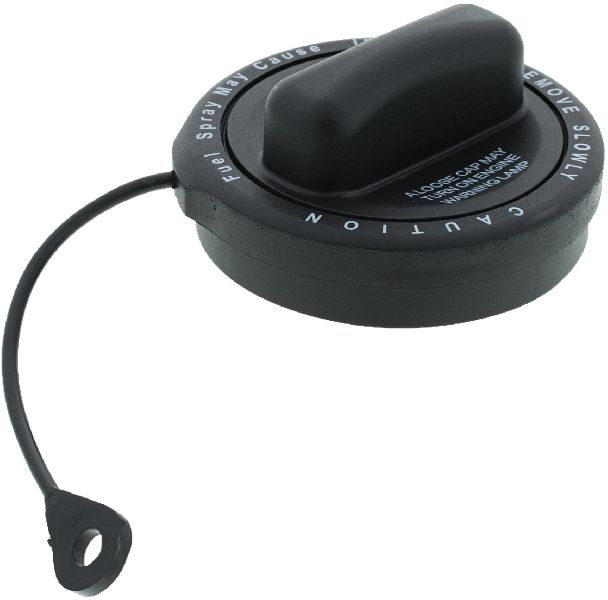
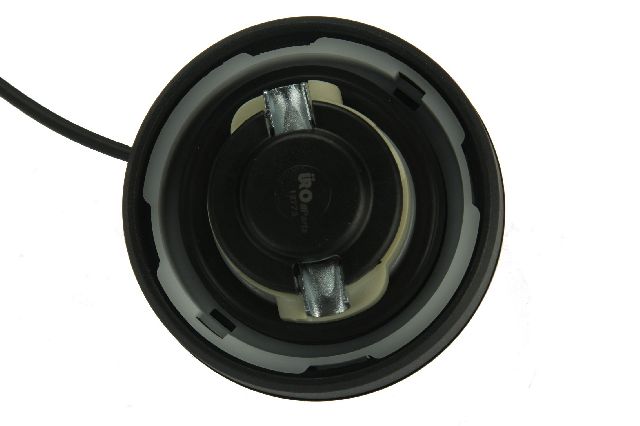
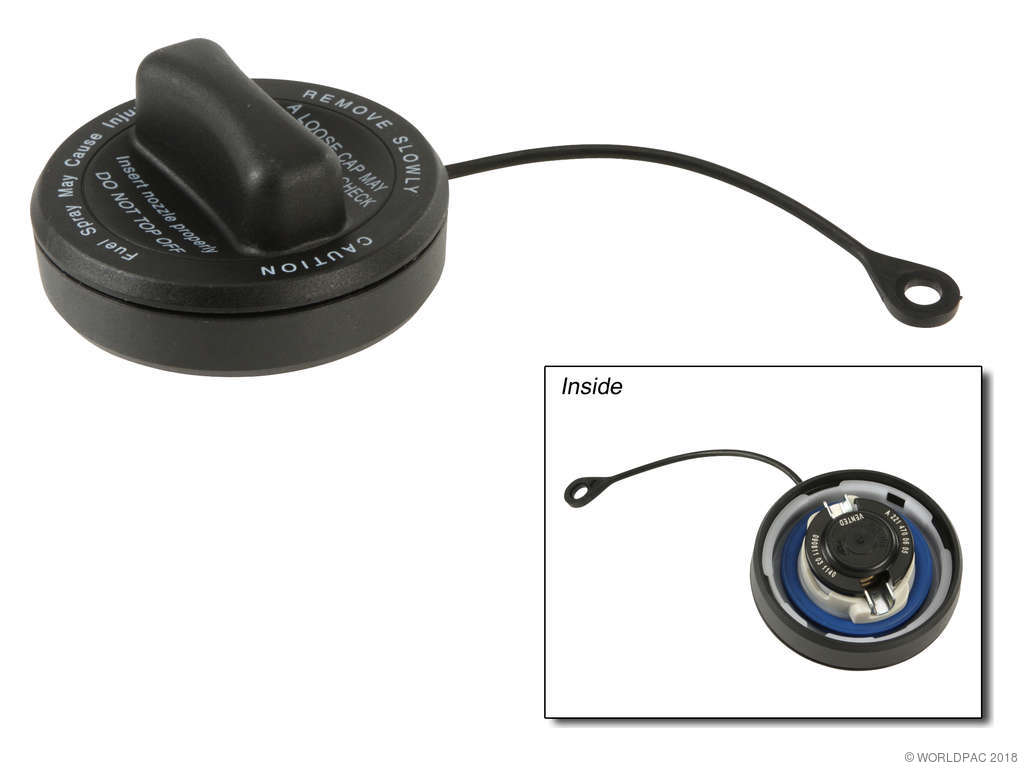
- Loose, Damaged, or Incorrect Fuel Cap 🔴 High Probability → Shop Fuel Tank Cap This is the most common cause for a P0455 code on any vehicle, as the cap seal is a critical part of the EVAP system. Aftermarket caps may not seal correctly, and the original cap's seal can degrade over time.
How to confirm: Ensure the gas cap is tightened until it clicks at least once. Inspect the cap's rubber O-ring or seal for any cracks, stiffness, or damage. If the seal is compromised, the cap needs replacement. An OEM cap is strongly recommended.
Typical fix: Tighten or replace the fuel cap. Use a Genuine Mercedes-Benz cap (P/N often starts with 221470...) for a reliable seal.
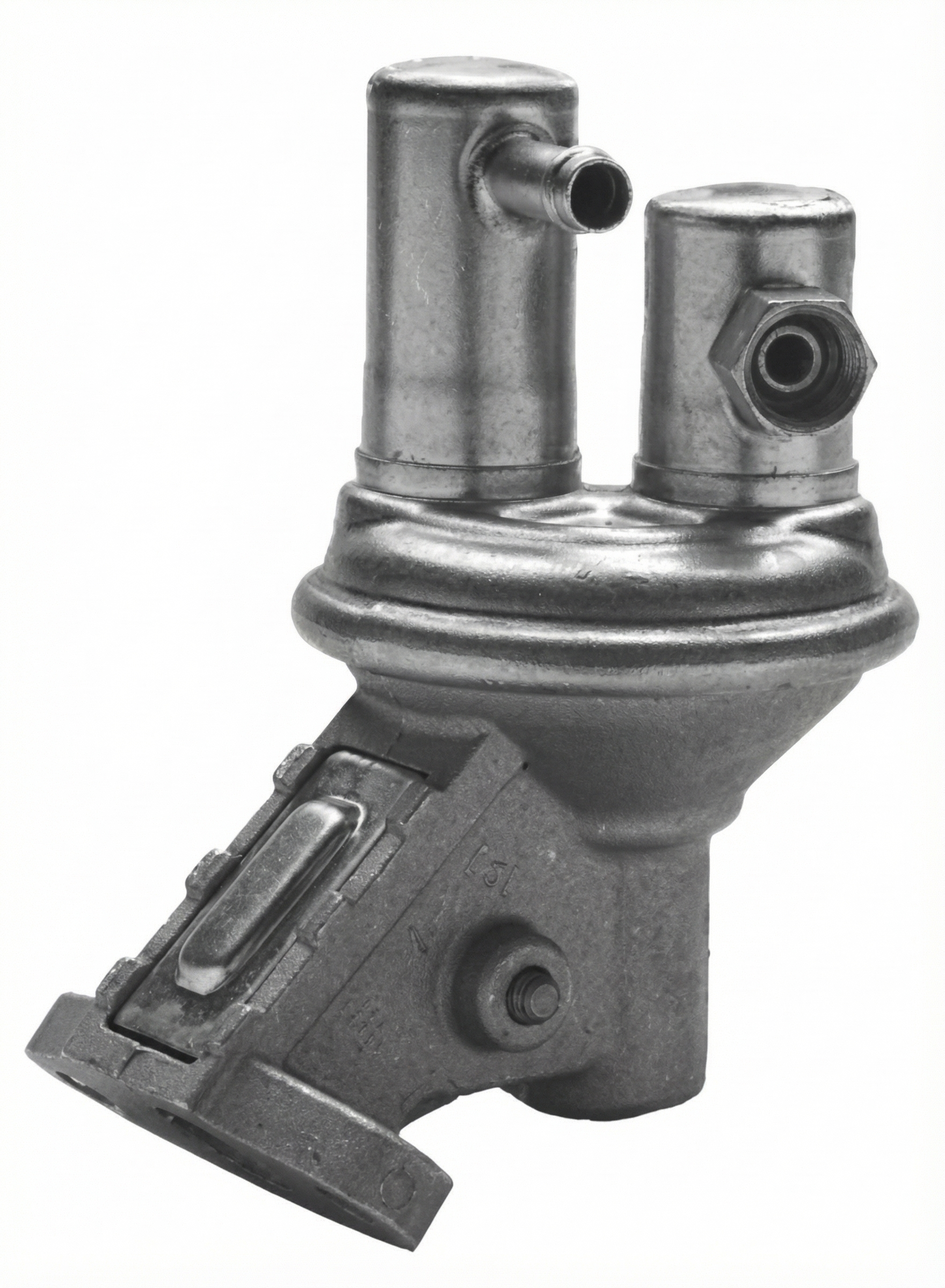
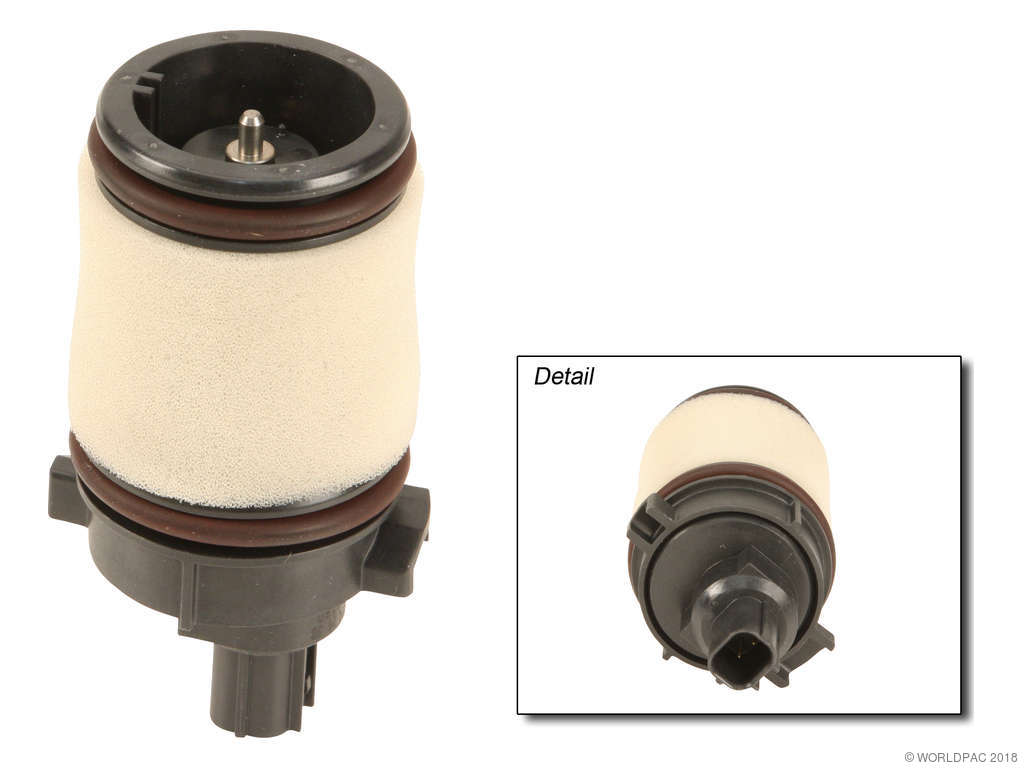
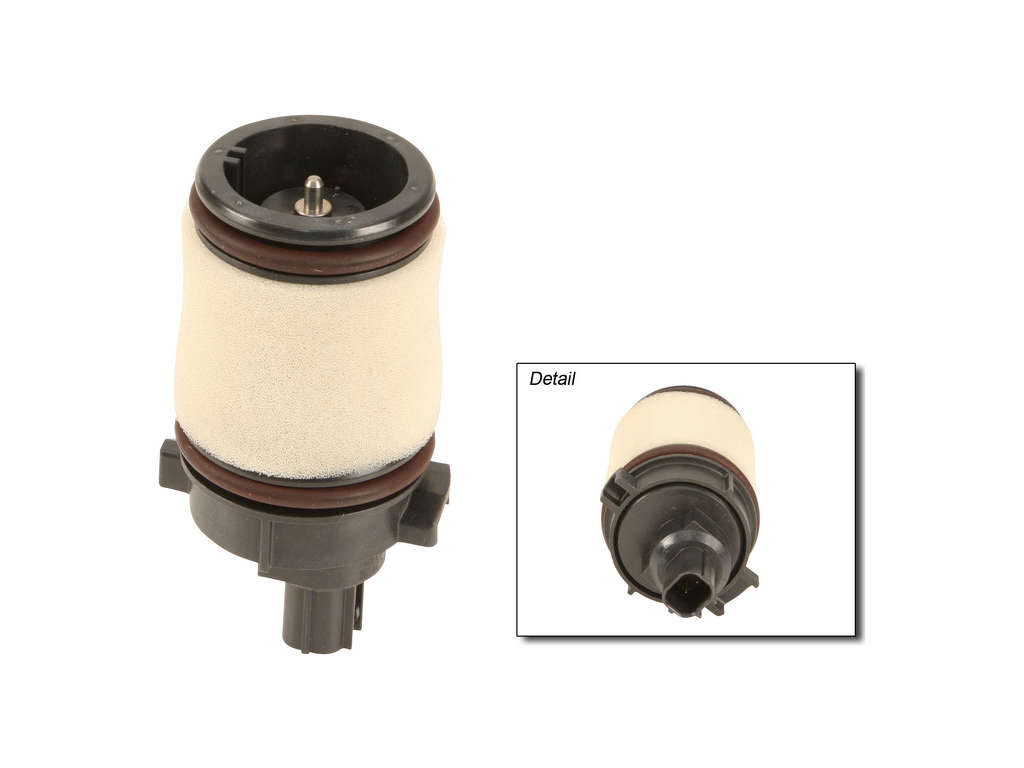
Est. part cost: $30-$50 - Faulty EVAP Purge Valve (Regeneration Valve) 🟡 Medium Probability → Shop Vapor Canister This valve is a common failure point on the W212 platform and related models. It can get stuck open, creating a permanent leak path from the EVAP system to the engine intake. Several owners on MBWorld forums have confirmed this part as the fix for their P0455 code.
How to confirm: The purge valve (P/N 2124702493) is located in the engine bay, on the driver's side. It is a normally-closed valve. Disconnect the hoses and try to blow through it with the engine off; if air passes, it is stuck open and faulty. You can also test it with a hand-held vacuum pump; it should hold a vacuum when not energized.
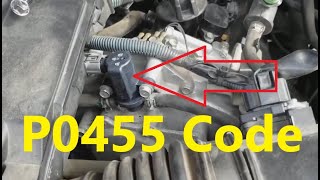
Typical fix: Replace the purge valve. It is typically held by a simple bracket and has two hoses and one electrical connector. 🎬 See this walkthrough for replacing the E350 purge valve. The hose clamps may be single-use and require replacement.
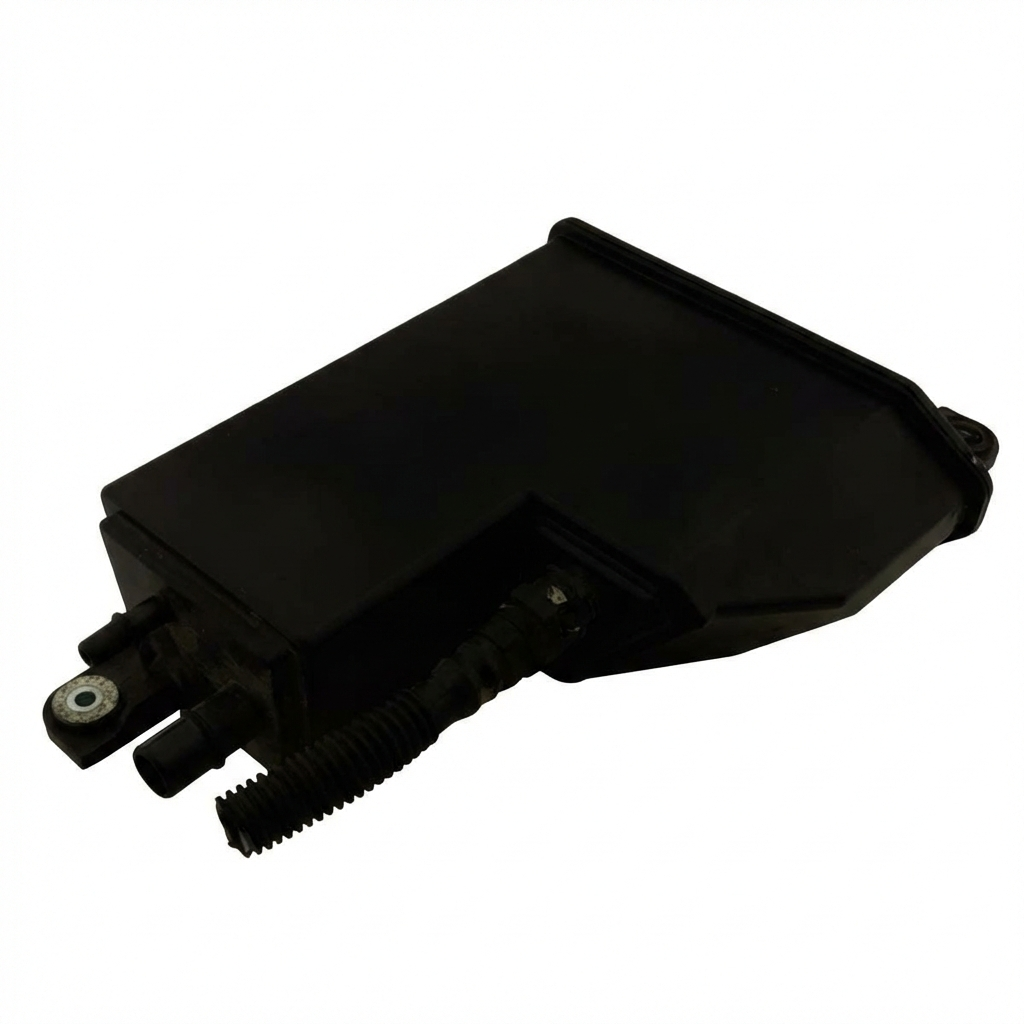
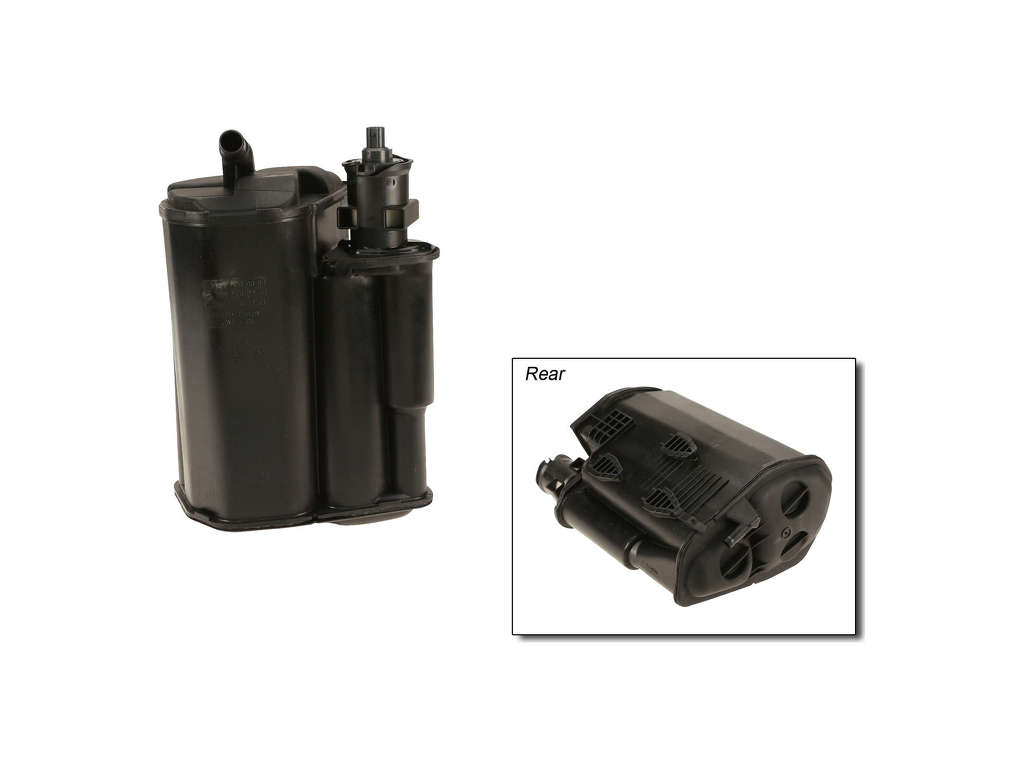
Est. part cost: $80-$160 - Cracked or Damaged Charcoal Canister ⚪ Low Probability → Shop Vapor Canister The canister is a plastic housing that can become brittle over time or get damaged by road debris. Over-topping the fuel tank can also saturate it with liquid fuel, causing it to fail and trigger a leak code.
How to confirm: The charcoal canister is located behind the right-rear wheel well liner. A visual inspection may reveal cracks. A smoke test is the most definitive way to confirm a leak from the canister body or its connections.
Typical fix: Replacement of the charcoal canister assembly. This involves removing the rear wheel and liner for access. 🎬 Watch: How to replace the charcoal canister on an E350.
Est. part cost: $200-$350 - Faulty Canister Vent Valve / Shut-Off Valve ⚪ Low Probability → Shop Vapor Canister This valve is located with the charcoal canister and is responsible for sealing the system for leak tests. It can fail to close, causing the test to register a large leak. This failure is sometimes misdiagnosed, as one owner on an MBWorld forum replaced it, only for the code to return, indicating a different issue.
How to confirm: This valve is normally open. Diagnosis requires a bi-directional scan tool to command the valve closed. If it doesn't close and seal when commanded, it is faulty. It can also be removed and tested with a 12V power source.
Typical fix: Replace the vent valve. It is often sold with or attached to the charcoal canister.
Est. part cost: $60-$120 - Cracked or Disconnected EVAP Hoses ⚪ Low Probability Rubber and plastic lines can become brittle and crack with age and exposure to heat cycles, especially in the engine bay or underneath the car.
How to confirm: Perform a thorough visual inspection of all accessible EVAP lines. The most effective method is to have a professional perform a smoke test, which will force smoke through the system and make any leaks visible.
Typical fix: Replace the specific section of cracked hose.
Est. part cost: $20-$100
Rare But Worth Checking
- Leaking Fuel Tank Filler Neck: → Shop Fuel Tank Rust or corrosion around the filler neck where it meets the tank can create a leak large enough to trigger P0455, especially on vehicles from regions where road salt is used. A smoke test is the best way to identify such a leak.
- Faulty Fuel Tank Pressure Sensor: → Shop Fuel Tank While uncommon for causing a P0455 code alone, the sensor that measures system pressure can fail and provide an incorrect reading to the ECM. This usually triggers other pressure sensor-specific codes as well, but has been mentioned in forum discussions as a possibility.
Diagnosis Steps
- Check the Gas Cap: This is the first and easiest step. Remove the cap, inspect the seal for cracks or damage, and reinstall it, ensuring it clicks shut. Clear the code and drive for a few days to see if it returns. An OEM cap is highly recommended if replacement is needed.
- Scan for Other Codes: Check for any other accompanying codes that could point to a specific component, like a purge valve (P0441) or pressure sensor.
- Inspect the Purge Valve: Locate the purge valve (P/N 2124702493) in the engine bay. With the engine off, disconnect its hoses. Try to blow through it. If air passes, the valve is stuck open and must be replaced. This is a very common failure point.
- Visual Inspection: Carefully inspect all visible EVAP hoses in the engine bay and around the charcoal canister (behind the right rear wheel) for obvious cracks, breaks, or disconnections.
- Perform a Smoke Test: If the cause is still not apparent, the most effective diagnostic step is a smoke test. A mechanic will inject pressurized smoke into the EVAP system's service port. The smoke will escape from the location of the leak, making it easy to pinpoint whether it's a hose, the canister, the filler neck, or the fuel tank itself.
Parts You'll Likely Need
- Fuel Cap
(OEM #2214700605 (Verify by VIN))— This is the most frequent cause of a P0455 code due to a worn or damaged seal. Using a non-OEM cap can also cause sealing issues.
Trusted brands: Genuine Mercedes-Benz, Blau
OEM price range: $30-$50
Aftermarket price range: $20-$40 - EVAP Purge Valve (Regeneration Valve)
(OEM #2124702493)— A very common failure item on this platform; it gets stuck open, creating a large leak.
Trusted brands: Bosch, Genuine Mercedes-Benz
OEM price range: $120-$160
Aftermarket price range: $70-$110 - Vapor Canister (Charcoal Canister)
(OEM #2124700359 (Verify by VIN))— Can crack from age or road debris, or become saturated and clogged from overfilling the fuel tank.
Trusted brands: Genuine Mercedes-Benz
OEM price range: $250-$350
Aftermarket price range: $180-$250
Related Codes That Often Appear With This One
- P0442 — Indicates a small EVAP leak. If both P0455 and P0442 are present, it may point to an intermittent or borderline leak that the computer has trouble classifying. A common cause for this on Mercedes is a failing fuel cap gasket.
- P0441 — Indicates incorrect purge flow. If seen with P0455, this strongly suggests a problem with the purge valve itself, as it may be stuck open causing both a leak and improper flow.
Technical Service Bulletins (TSBs) & Recalls
- LI68.10-P-050510: While not for P0455, this TSB addresses the known issue of fading or discoloring Burl Walnut wood trim due to inadeq
Platform-Specific Known Issues
- A user on MBWorld forums reported that after replacing the purge valve, the P0455 code was resolved, but a P0505 (Idle Air Control System) code appeared, which eventually cleared. This suggests the ECU may need time to adapt to the new, correctly functioning valve.
- Another forum member attempting to diagnose a P0455 had a shop replace the canister shut-off valve, but the code returned almost immediately, highlighting the importance of a proper smoke test to avoid replacing the wrong parts.
Mechanic-Grade Diagnostic Values
- EVAP Purge Valve (Y58/1) or Vent Valve (Y58/4) Solenoid Resistance — expected: 20 - 50 Ohms (general specification for these types of solenoids). Failure: An open circuit (infinite resistance) or a direct short (near zero resistance) indicates a failed coil.
- Fuel Tank Pressure Sensor (B4/3) Voltage Supply — expected: 4.7 - 5.3 Volts. Failure: Voltage outside this range indicates a wiring or ECU fault, not necessarily a leak.
Hidden / Shadow Codes Worth Checking
- P2013-2: Major leak in purge system. Hose in system not connected or filler cap open. This is a more descriptive Mercedes-specific fault code that can be stored alongside the generic P0455. (see via A Mercedes-Benz specific scanner like XENTRY/DAS or a high-end professional scan tool (e.g., AutoEnginuity with MB extension, Schwaben Professional for MB).)
Scan Tool Commands That Help
- XENTRY/DAS or equivalent bidirectional scanner: Actuate component Y58/4 (Activated charcoal canister shut-off valve) — This command forces the normally-open vent valve to close, sealing the EVAP system. This is a required step before performing a smoke test or a vacuum decay test with the scan tool to check for leaks.
- XENTRY/DAS or equivalent bidirectional scanner: Actuate component Y58/1 (Purge control valve) — This allows a technician to command the normally-closed purge valve to open and close while monitoring system pressure. It can confirm if the valve is physically stuck or if the control circuit is functioning correctly.
Wiring & Ground Locations
- W16/4 — In the engine bay, under or near the battery tray in the passenger side wheelhouse area.. A corroded or loose ground at this point can cause erratic behavior of various engine components, potentially including the EVAP system valves and sensors it provides a ground path for.
- W16/5 — On the car frame near the driver's side (LHD) engine mount area. This ground is notoriously difficult to locate on W212 models.. This is a critical ground point used directly by the Engine Control Module (ME-SFI). A poor connection here can lead to a host of phantom codes and incorrect sensor readings, including those from the fuel tank pressure sensor.
Real Owner Repair Stories
- MBWorld.org user (2011 E350 Wagon (W212)) — Check Engine Light with code P0455 after previously replacing a stuck-open purge valve.
❌ Tried (didn't work) A brand new, recently installed EVAP purge valve (P/N 2124702493).
✅ What actually fixed it The user discovered the *new* replacement purge valve was also faulty and failed to hold a vacuum on the fuel tank side. After cleaning and successfully un-sticking his *original* OEM valve, he reinstalled it, and the P0455 code was resolved for over 1,000 miles. - MBWorld.org user (2004 ML350 (W163, but relevant principle)) — P0455 and P2013-2 (Major leak in purge system).
❌ Tried (didn't work) Replacing the gas cap with an aftermarket one.
✅ What actually fixed it Another user reported the final fix for a similar EVAP error code was replacing a leaking gasket on the top of the fuel pump/sending unit assembly. This is a leak that would be found with a smoke test.
"I Checked Everything" — The Actual Cause
- In cases where a smoke test passes (shows no leaks), the P0455 code can be caused by a faulty Fuel Tank Pressure (FTP) sensor giving an incorrect reading to the ECU, making it 'think' there is a leak when there isn't one. Diagnosis would involve checking the sensor's voltage supply (should be ~5V) and its output signal against actual measured pressure.
OEM Part Supersession History
2304700405, 2114700405, 1684700205→2214700605— Standard part consolidation and design updates by Mercedes-Benz over time.
Heads up: While many aftermarket caps are sold for this vehicle, owners frequently report that only the Genuine Mercedes-Benz cap (2214700605) provides a reliable, long-lasting seal to prevent EVAP codes.
Diagnostic Flowchart
Other Known Issues on This Vehicle
Issues unrelated to this code that are worth knowing about as an owner of this generation:
- M276 Engine Timing Chain Tensioner Rattle 🟠 Medium — Common on earlier M276 engines (approx. 2012-2014). A rattling noise on cold startup is the primary symptom. (Ref: Mercedes issued a TSB to install new check valves and optimized chain tensioners to improve oil pressure at startup.)
- 7G-Tronic (722.9) Transmission Conductor Plate Failure 🔴 High — Common issue leading to harsh shifting, getting stuck in gear, or limp mode. Often occurs at higher mileage (60k+ miles).
- Fading Burl Walnut Wood Trim 🟡 Low — Extremely common across all model years. The wood trim fades, discolors, or develops a cloudy appearance due to inadequate UV protection. (Ref: A class-action lawsuit resulted in an extended warranty program for inspection and replacement.)
- Rear Airmatic Suspension Failure (Wagon/Optional on Sedan) 🟠 Medium — Leaking air springs or failing compressors are common, causing the rear of the vehicle to sag, especially after sitting.
- M276 Engine Oil Leaks 🟠 Medium — Leaks from the upper front timing covers and camshaft position sensors are frequently reported. Oil can wick down the wiring harness from the cam sensors, causing further electrical issues.
- Crankshaft Position Sensor Failure 🟠 Medium — Can fail without warning, causing the engine to crank but not start, or to stall while driving.
Used vs. New Parts: Buying Guide for This Vehicle
When a used part is the smart pick: For this repair, used parts are generally not recommended due to the nature of the failures. However, a complete charcoal canister assembly from a very low-mileage, accident-free donor vehicle could be a cost-effective option if the OEM part is prohibitively expensive. EVAP hoses and lines can also be sourced used if they are pliable and show no signs of cracking.
Donor-vehicle mileage cap: roughly under 50000 miles for the part to have meaningful remaining life.
What to inspect on the donor part:
- For a charcoal canister, inspect the plastic housing for any hairline cracks or signs of impact.
- Ensure all hose connection nipples are intact and not brittle.
- Verify the donor vehicle is from a dry climate to minimize the risk of corrosion on associated valves.
OEM-only on this vehicle (don't cheap out):
- Fuel Cap: Aftermarket caps are a very common cause of persistent P0455 codes. The Genuine Mercedes-Benz cap is strongly recommended for a proper seal.
- EVAP Purge Valve: While some aftermarket brands like Bosch (who is often the OEM supplier) are reliable, very cheap, unbranded valves have a high failure rate, sometimes even being faulty out of the box.
Aftermarket brands forum-validated for this vehicle:
- Bosch (for Purge Valve)
- Vemo (for Purge Valve)
Brands owners have reported issues with on this vehicle:
- Unbranded, low-cost fuel caps from general auto parts stores.
- No-name electronic solenoids/valves from online marketplaces.
Real Owner Stories
Aggregated from forums and TSBs cited above. Mileages and costs reflect what owners reported in those sources.
Mercedes-Benz E-Class (W211/W212)
Symptoms: A 'check fuel cap' message appeared along with the P0455 code.
What fixed it: Replacing the purge valve and damper cage.
Source hint: MBWorld.org Forums - 'P0455 woes': https://mbworld.org/forums/w211-amg/712349-p0455-woes.html
Mercedes-Benz E-Class (W211/W212)
Symptoms: The owner heard a popping sound accompanied by a P0455 code and a Check Engine Light.
What fixed it: Replacing the faulty evaporative emissions purge valve.
Source hint: MBWorld.org Forums - 'CEL code PO455': https://mbworld.org/forums/w211-amg/645168-cel-code-po455.html
Mercedes-Benz E-Class (W211/W212)
Symptoms: The owner experienced a P0455 code. A shop replaced the canister shut-off valve, but the code returned almost immediately.
What fixed it: The source emphasizes that a smoke test was needed to avoid replacing the wrong parts, as the shut-off valve did not fix it.
Source hint: MBWorld.org Forums - 'unsolvable (?) P0455 error - help needed desperately': https://mbworld.org/forums/e-class-w211/872477-unsolvable-p0455-error-help-needed-desperately.html
Mercedes-Benz E-Class (W212)
Symptoms: After replacing the purge valve to fix P0455, a P0505 (Idle Air Control System) code appeared.
What fixed it: The P0505 code eventually cleared on its own as the ECU adapted to the new, correctly functioning valve.
Source hint: vehicle_specific_issues
Related OBD-II Codes
Frequently Asked Questions
Where is the EVAP purge valve located on my 2010-2016 E-Class?
Can I use an aftermarket gas cap to fix the P0455 code on my Mercedes?
Does TSB LI68.10-P-050510 relate to my P0455 check engine light?
Where is the charcoal canister located on the W212 platform?
Why did my car start having a longer crank time after the P0455 code appeared?
Is the canister shut-off valve the same as the purge valve?
Helpful Videos
Used OEM Parts in Stock
New Aftermarket Parts Available

The information in this article is provided for general reference and educational purposes only. Vehicle specifications, procedures, and part compatibility can vary by production date, trim level, and region. Always consult your vehicle's factory service manual and verify part numbers before purchasing or performing repairs. Safety-critical components such as airbags, seat belts, and braking systems should be installed by a qualified professional.
- Mercedes-Benz E-Class:
- 🧭 Diagnostic Flowchart
- 🎬 Helpful Videos
- 🛍️ Shop This Part
- What's Unique About the 2010-2016 Mercedes-Benz E-Class
- Symptoms You May Notice
- Most Likely Causes
- Rare But Worth Checking
- Diagnosis Steps
- Parts You'll Likely Need
- Related Codes That Often Appear With This One
- Technical Service Bulletins (TSBs) & Recalls
- Platform-Specific Known Issues
- Mechanic-Grade Diagnostic Values
- Hidden / Shadow Codes Worth Checking
- Scan Tool Commands That Help
- Wiring & Ground Locations
- Real Owner Repair Stories
- "I Checked Everything" — The Actual Cause
- OEM Part Supersession History
- Other Known Issues on This Vehicle
- Used vs. New Parts: Buying Guide for This Vehicle
- Real Owner Stories
- Mercedes-Benz E-Class (W211/W212)
- Mercedes-Benz E-Class (W211/W212)
- Mercedes-Benz E-Class (W211/W212)
- Mercedes-Benz E-Class (W212)
- Related OBD-II Codes
- Frequently Asked Questions
- 🎟️ Get 5% Off