

P0455 on 2014-2020 Mitsubishi Outlander: EVAP Large Leak Causes and Fixes
For a 2014-2020 Mitsubishi Outlander, code P0455 is most often caused by a loose or faulty gas cap. Check that it's tight and clicks multiple times. If the light returns, the next most likely causes are a failed purge solenoid valve or a canister vent valve that is stuck open.
- P0455 signifies a large leak in the EVAP system, with the Check Engine Light being the main symptom.
- Always start by checking the gas cap. Ensure it is tight and the seal is in good condition. Replacing the cap is a cheap and common first step.
- If the gas cap isn't the issue, the problem is likely a faulty purge valve (under the hood) or vent valve (under the car).
- A smoke test is the most reliable method for finding leaks that aren't obvious from a visual inspection.
- The issue is an emissions-related fault and will not cause immediate damage or affect how the vehicle drives.
What's Unique About the 2014-2020 Mitsubishi Outlander
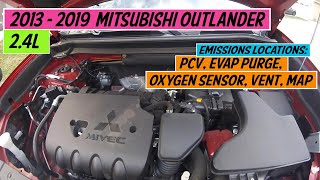
On the third-generation Mitsubishi Outlander (2014-2020), the P0455 code follows a standard diagnostic pattern with no major platform-specific defects widely reported for the EVAP system itself. The components are relatively accessible: the purge solenoid is located on the intake manifold under the engine cover, and the charcoal canister and vent valve are located underneath the vehicle near the fuel tank, to the driver's side. The most common issues are consistent with most vehicles, starting with the gas cap and moving to the EVAP valves and hoses.
Generation note: The 2014-2020 model years all fall within the third generation of the Mitsubishi Outlander. No significant differences in the EVAP system have been noted across these years for this specific code. The same EVAP components and diagnostic logic are used.
Symptoms You May Notice
- Check Engine Light is on
- A faint smell of gasoline may be noticeable, especially around the rear of the vehicle or after parking in an enclosed space like a garage.
- Difficulty filling the fuel tank, such as the nozzle clicking off prematurely, can sometimes be a symptom if the vent valve is malfunctioning.
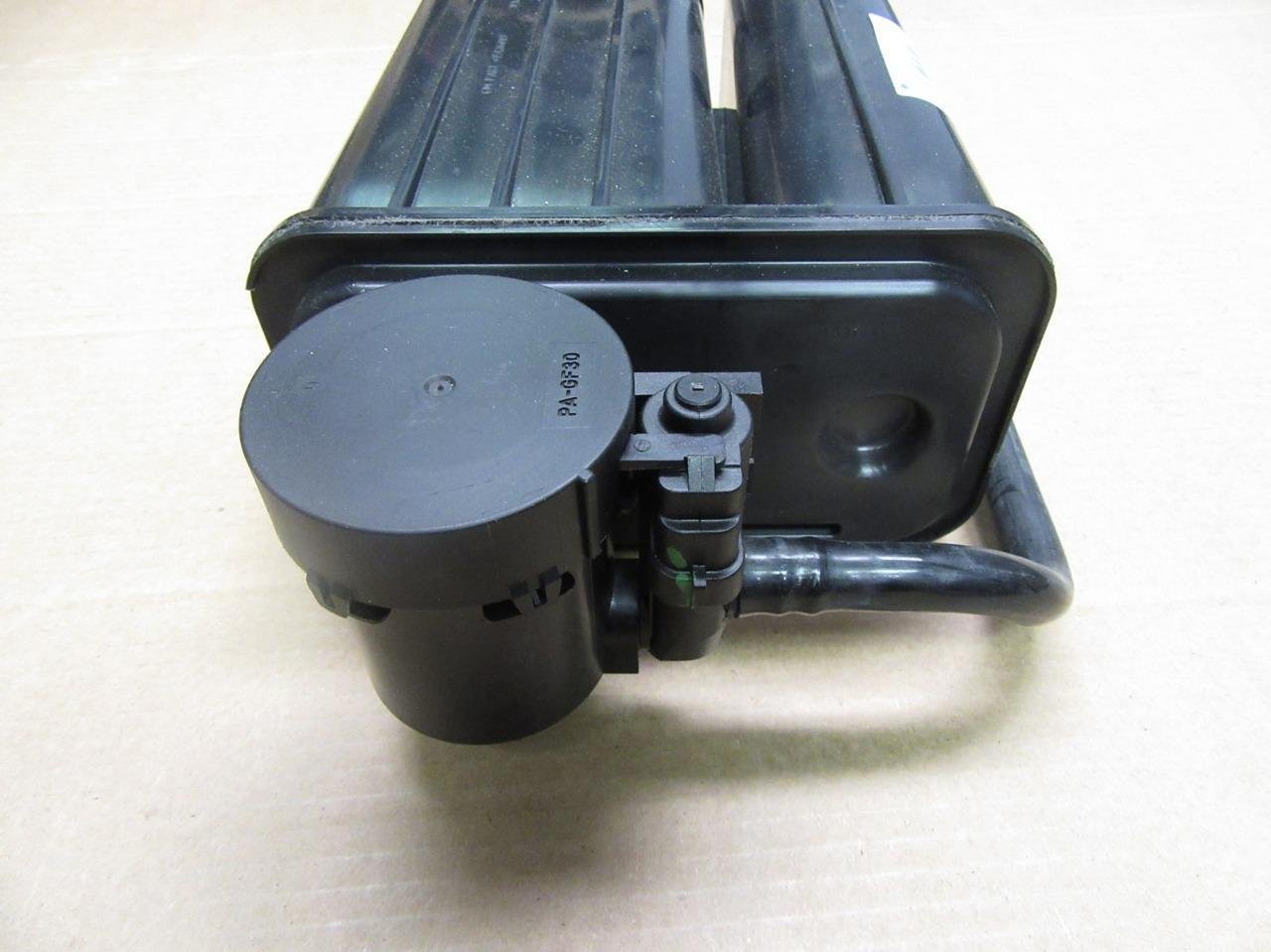
- Immediately replacing the charcoal canister. The canister itself is often just a plastic box with charcoal; it's the valves and hoses connected to it that fail much more frequently.
- Replacing the fuel tank pressure sensor. While this sensor is part of the system, a failure would typically set a different code related to the sensor's circuit or performance (e.g., P0452).
Most Likely Causes
- Loose, Incorrect, or Faulty Gas Cap 🔴 High Probability → Shop Fuel Tank Cap This is the most common cause for P0455 on all vehicles, as the cap is frequently removed and its seal can wear out, get dirty, or be improperly secured. Sometimes the tether can get caught under the cap, preventing a good seal.
How to confirm: Ensure the gas cap is tightened until it clicks several times. Inspect the rubber O-ring on the cap for cracks, stiffness, or damage. If it's an aftermarket cap, ensure it's the correct part for your Outlander. A new OEM cap is a cheap and effective diagnostic step.
Typical fix: Tighten or replace the gas cap.
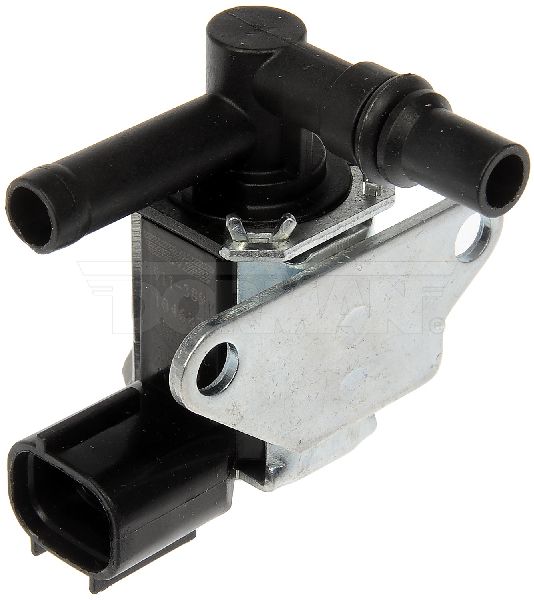
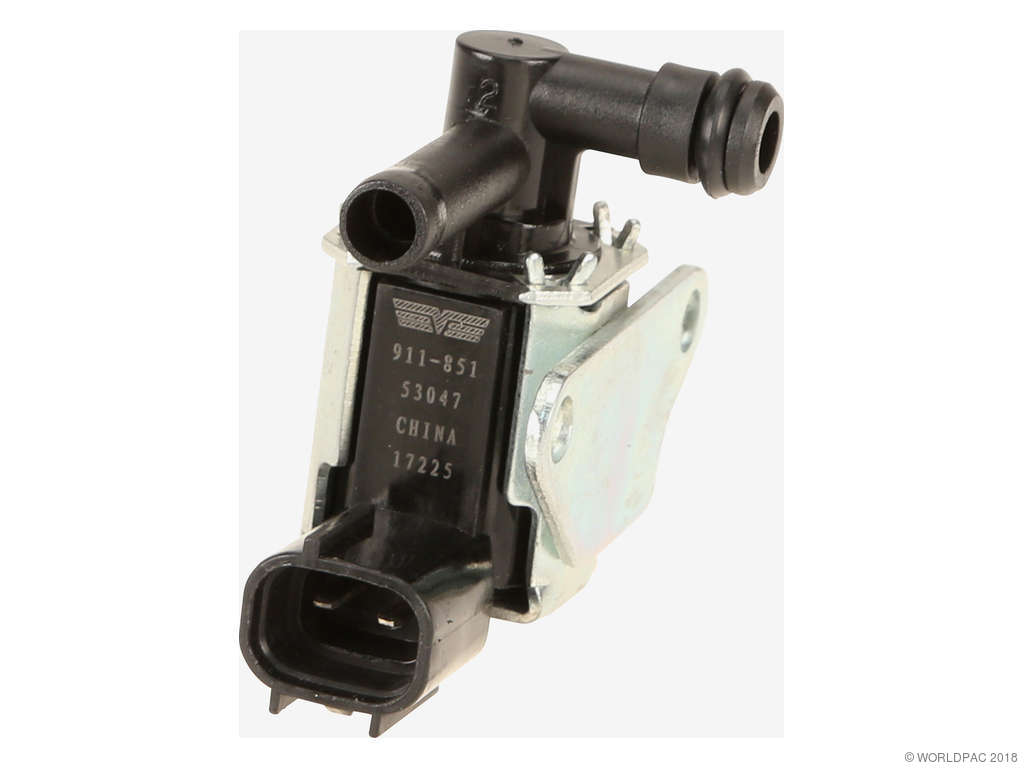
Est. part cost: $15-$40 - Failed EVAP Purge Solenoid Valve 🟡 Medium Probability → Shop Vapor Canister This valve is constantly working while the engine runs and can get stuck open, creating a large leak path to the engine intake. It's a common failure point across many Mitsubishi models that share this part.
How to confirm: The purge valve is located on the intake manifold. With the engine off, disconnect the valve and try to blow through it; it should be closed and not allow air to pass. A scan tool can also command the valve to cycle while you listen for a clicking sound.
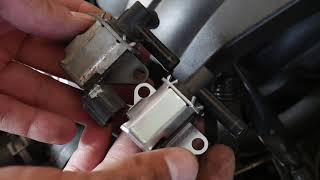
Typical fix: Replace the purge solenoid valve. 🎬 See this walkthrough for replacing the purge valve
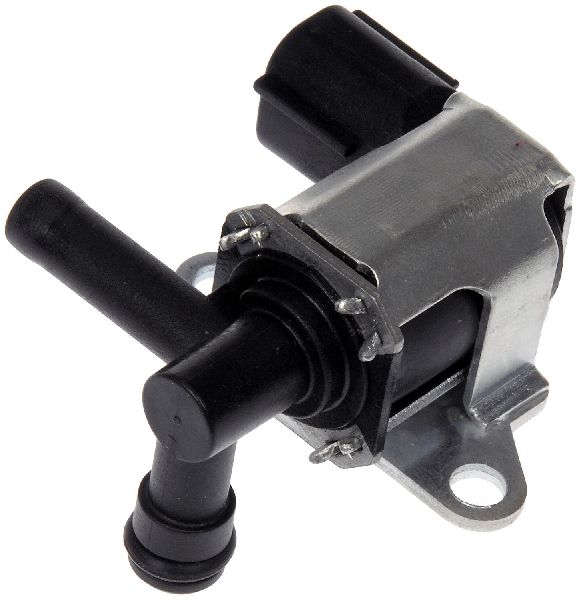
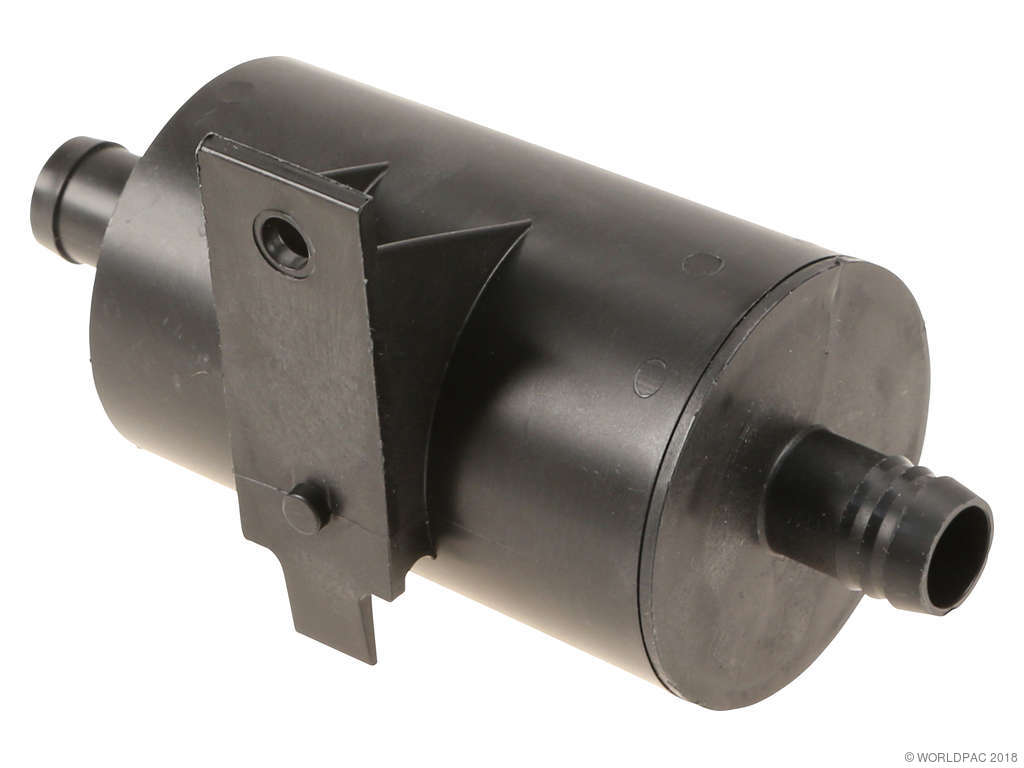
Est. part cost: $75-$120 - Failed EVAP Canister Vent Valve/Solenoid 🟡 Medium Probability → Shop Vapor Canister Located under the car near the charcoal canister, this valve is exposed to road debris and moisture, which can cause it to fail and stick open, preventing the system from sealing for its pressure test.
How to confirm: The vent valve is normally open. A scan tool is the best way to command it closed for testing. Once commanded closed, a smoke machine can be used to see if smoke escapes from the valve, indicating it's not sealing. You can also test it by applying power to see if it closes.
Typical fix: Replace the vent valve/solenoid.
Est. part cost: $50-$100 - Cracked or Disconnected EVAP Hoses ⚪ Low Probability Rubber hoses can become brittle and crack over time due to heat and age. A large hose becoming disconnected or splitting will cause a P0455 code. This is less common but a visual inspection is warranted.
How to confirm: Visually inspect all accessible EVAP hoses between the fuel tank, charcoal canister, and purge valve for obvious cracks, loose connections, or damage. A smoke test is the most effective way to find a leak in the hose network.
Typical fix: Replace the damaged section of hose or reconnect it.
Est. part cost: $10-$50
Rare But Worth Checking
- Cracked Charcoal Canister: → Shop Vapor Canister The canister itself can be damaged by road debris or develop cracks, creating a leak. This is less common than valve or hose failure but should be visually inspected, especially if you live in an area with rough roads.
- Leaking Fuel Tank or Filler Neck: → Shop Fuel Tank Rust or physical damage can cause a leak in the fuel tank or the filler neck where you insert the gas nozzle. This is a serious issue and would likely be accompanied by a strong fuel smell and possibly visible fuel leaks.
Diagnosis Steps
- Read the code with an OBD-II scanner to confirm P0455 is present. Note if any other codes like P0442 or P0456 are also present.
- Inspect the gas cap. Remove it, check the seal for damage, and reinstall it, ensuring it clicks multiple times. Clear the code and drive for a few days to see if it returns. If it does, proceed to the next step.
- If the gas cap is old or looks worn, replace it with a new OEM or high-quality aftermarket part. This is an inexpensive and very common fix.
- Visually inspect the EVAP system components. Look under the hood for the purge solenoid on the intake manifold and check its connected hoses.
- Look under the vehicle near the fuel tank for the charcoal canister and vent valve. Check for any obvious cracks, damage, or loose hoses. The canister is near the rear, driver's side.
- Test the purge solenoid. Disconnect it and test if it's stuck open by trying to blow through it (it should be closed with no power). You can also use a scan tool to command it open and closed and listen for a click.
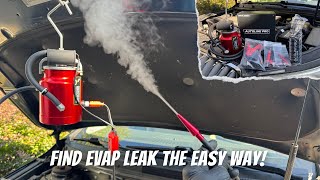
- If the above steps do not reveal the issue, the most effective next step is a smoke test. A mechanic will introduce pressurized smoke into the EVAP system via the service port. The leak will be revealed by the smoke exiting from the 🎬 Watch: How to find leaks using a smoke machine cracked hose, faulty valve, or damaged canister.
- Based on the smoke test results, replace the faulty component.
Parts You'll Likely Need
- Fuel Cap
(OEM #1711A004)— This is the most frequent cause of a P0455 code due to a worn or damaged seal, or simply not being tightened correctly.
Trusted brands: Stant, Gates, Mitsubishi Genuine
OEM price range: $30-$50
Aftermarket price range: $15-$25 - EVAP Purge Solenoid Valve
(OEM #8657A049)— This valve can get stuck open, creating a permanent vacuum leak that the system detects as a large leak. This part is shared across many Mitsubishi models.
Trusted brands: Mitsubishi Genuine, Dorman (PV731), Standard Motor Products (CP588)
OEM price range: $85-$120
Aftermarket price range: $40-$70 - EVAP Canister Vent Valve — This valve can fail to seal the EVAP system during the pressure test, causing the test to fail and trigger the P0455 code. Its location under the car makes it vulnerable to dirt and corrosion. The part number 1450A132, sometimes associated with this component, is incorrect for this vehicle as it is an Idle Air Control valve for older models.
Trusted brands: Mitsubishi Genuine, Dorman, Standard Motor Products
OEM price range: $70-$110
Aftermarket price range: $40-$80
Related Codes That Often Appear With This One
- P0442 — This code is for a small EVAP leak. If a component is beginning to fail, it might first cause a small leak (P0442) before worsening into a large leak (P0455).
- P0456 — This code is for a very small EVAP leak. Similar to P0442, it can indicate a component that is in the early stages of failure.
Platform-Specific Known Issues
- A user on MitsubishiForum.com with a 2010 Outlander (same generation) documented their P0455 diagnosis, which involved using a scan tool to check the fuel tank pressure sensor voltage and actuate the purge and vent valves to listen for clicks. This is a good example of a DIY approach before resorting to a smoke test.
Mechanic-Grade Diagnostic Values
- EVAP Canister Purge Solenoid (P/N 8657A049) resistance — expected: 30 - 38 Ohms at room temperature. Failure: A reading far outside this range (open circuit or short) indicates a failed solenoid coil.
- EVAP Canister Vent Solenoid resistance — expected: 48 - 65 Ohms. Failure: A reading significantly higher or lower than this range suggests the solenoid coil is faulty.
- Fuel Tank Differential Pressure Sensor voltage (KOEO, gas cap off) — expected: 1.5 - 3.5 Volts (1,500 - 3,500 millivolts). Failure: Voltage outside this range with the system at atmospheric pressure points to a faulty sensor or wiring issue.
- Fuel Tank Differential Pressure Sensor reference voltage — expected: 4.9 - 5.1 Volts at sensor connector pin 3 (from ECM). Failure: Lack of 5V reference indicates a wiring problem or an issue with the ECM power supply.
Scan Tool Commands That Help
- Mitsubishi M.U.T.-III SE: ENGINE -> Work support -> EVAP SYSTEM CLOSE — This command seals the EVAP system by closing the vent valve, allowing a technician to manually apply pressure with a hand pump to check if the system holds pressure, per the official diagnostic procedure.
- Mitsubishi M.U.T.-III SE: ENGINE -> Special Function -> Actuator Test -> PURG VOL CONT/V — This allows a technician to manually cycle the purge solenoid to listen for an audible click and confirm it is responding to commands from the ECM.
- Professional Scan Tool (General): Command Purge Valve OFF, Command Vent Valve ON (Closed), Monitor Fuel Tank Pressure PID — This is a powerful test for a mechanically stuck-open purge valve. With the engine running and the EVAP system sealed by the commanded-closed vent valve, there should be no vacuum drawn on the system. If the Fuel Tank Pressure sensor shows a developing vacuum (pressure dropping), it proves the 'closed' purge valve is leaking engine vacuum into the EVAP system.
Wiring & Ground Locations
- Fuel Tank Differential Pressure Sensor Connector (D-17) — On top of the fuel tank, part of the fuel pump module assembly.. This is the primary sensor for detecting the P0455 leak. Technicians can backprobe its connector for voltage tests. Pin 1: Signal to ECM (Terminal 96 or 112). Pin 2: Ground (from ECM Terminal 113 or 116). Pin 3: 5V Reference (from ECM Terminal 106 or 114).
Model Year Variations Within This Range
- 2014-2017 vs 2018-2020: Parts diagrams indicate potential differences in some EVAP system components, including the purge solenoid (P/N 8657A049), between the early (2014-17) and facelift (2018-20) years of the 2.4L Outlander. Always verify part numbers with a VIN.
Diagnostic Flowchart
Other Known Issues on This Vehicle
Issues unrelated to this code that are worth knowing about as an owner of this generation:
- CVT Transmission Failure/Issues 🔴 High — Widespread issue across multiple model years (2014-2016 are noted). Symptoms include whining, shuddering, hesitation, and overheating warnings. Often occurs outside of warranty. (Ref: A TSB was issued for a shudder/surge condition related to the hydraulic pressure circuit in the CVT-8 transmission.)
- Prematurely Chipping/Flaking Paint 🟠 Medium — Common complaint, especially on the hood and roof. Owners report the paint seems thin and not properly cured, leading to chips and scratches more easily than expected.
- Forward Collision Mitigation (FCM) Phantom Braking 🔴 High — Affects 2018-2020 models. The vehicle may suddenly brake hard for no reason due to a software flaw in the FCM ECU. (Ref: Yes, NHTSA campaign 20V563000 (Mitsubishi SR-20-004). The fix is a free software update at a dealership.)
- Premature Brake Wear 🟡 Low — Some owners of 2018 models reported needing to replace brake pads and/or rotors sooner than expected.
- Corroding Rear Brake Caliper Shafts 🟠 Medium — Affects 2014-2016 models. Water can enter the rear brake calipers, causing the parking brake actuator shafts to corrode and potentially bind or fail. (Ref: Yes, multiple recalls have been issued, including NHTSA 18V070000. The fix involves replacing the rear brake caliper assemblies.)
Used vs. New Parts: Buying Guide for This Vehicle
When a used part is the smart pick: For this repair, obtaining a used charcoal canister from a low-mileage, accident-free donor vehicle can be cost-effective, provided it is visually inspected for cracks or damage. Hoses and lines can also be sourced used if they are pliable and free of cracks.
Donor-vehicle mileage cap: roughly under 75000 miles for the part to have meaningful remaining life.
What to inspect on the donor part:
- For solenoids, check electrical connector pins for any signs of corrosion (green or white powder).
- For plastic components like the canister, inspect thoroughly for hairline cracks, especially around hose connections and mounting tabs.
- Ensure all rubber hoses are still flexible and not hard or brittle.
OEM-only on this vehicle (don't cheap out):
- Fuel Cap: Aftermarket gas caps are a frequent source of persistent, hard-to-diagnose EVAP leaks. It is strongly recommended to use a genuine Mitsubishi OEM cap (P/N 1711A004) to ensure a perfect seal.
Aftermarket brands forum-validated for this vehicle:
- Dorman
- Standard Motor Products (SMP)
Real Owner Stories
Aggregated from forums and TSBs cited above. Mileages and costs reflect what owners reported in those sources.
2010 Mitsubishi Outlander
Symptoms: Owner documented a P0455 diagnosis using a scan tool to check fuel tank pressure sensor voltage and actuate the purge and vent valves to listen for clicks.
What fixed it: Diagnostic process involved testing the purge solenoid by manually applying ground or using a scan tool to confirm operation.
Source hint: MitsubishiForum.com - 'P0455 Evaporative Emission System Leak'
2013 Mitsubishi Lancer (Platform Mate)
Symptoms: P0455 code present; owner identified the purge valve as the failure point.
What fixed it: Replacement of the canister purge valve (P/N 8657A049) using a T25 Torx tool.
Source hint: YouTube - '2013 Mitsubishi Lancer P0455 Cannister purge valve replacement' by The Car Guy
2010 Mitsubishi Outlander
Symptoms: Check engine light with P0455 code; owner performed step-by-step testing of the purge valve, canister, and vent valve.
What fixed it: Used a scan tool to command the valves and identify the leak source.
Source hint: YouTube - '2010 Mitsubishi OutLander p0455(P1)' by JL's Auto Solution
Related OBD-II Codes
Frequently Asked Questions
Is there a recall for the phantom braking issue on my 2018-2020 Outlander?
My 2015 Outlander has a P0455 code and the parking brake is sticking. Are these related?
Which purge solenoid part number should I look for to fix P0455 on my Outlander?
Where is the EVAP vent valve located on the 2014-2020 Outlander?
Can I use a Lancer repair guide to help fix the P0455 on my Outlander?
Why does the gas pump nozzle keep clicking off when I try to fill my Outlander?
Helpful Videos
Used OEM Parts in Stock
New Aftermarket Parts Available

The information in this article is provided for general reference and educational purposes only. Vehicle specifications, procedures, and part compatibility can vary by production date, trim level, and region. Always consult your vehicle's factory service manual and verify part numbers before purchasing or performing repairs. Safety-critical components such as airbags, seat belts, and braking systems should be installed by a qualified professional.
- Mitsubishi Outlander:
- 🧭 Diagnostic Flowchart
- 🎬 Helpful Videos
- 🛍️ Shop This Part
- What's Unique About the 2014-2020 Mitsubishi Outlander
- Symptoms You May Notice
- Most Likely Causes
- Rare But Worth Checking
- Diagnosis Steps
- Parts You'll Likely Need
- Related Codes That Often Appear With This One
- Platform-Specific Known Issues
- Mechanic-Grade Diagnostic Values
- Scan Tool Commands That Help
- Wiring & Ground Locations
- Model Year Variations Within This Range
- Other Known Issues on This Vehicle
- Used vs. New Parts: Buying Guide for This Vehicle
- Real Owner Stories
- 2010 Mitsubishi Outlander
- 2013 Mitsubishi Lancer (Platform Mate)
- 2010 Mitsubishi Outlander
- Related OBD-II Codes
- Frequently Asked Questions
- 🎟️ Get 5% Off