

P0455 on 2007-2014 Nissan Armada: EVAP Large Leak Causes and Fixes
For a 2007-2014 Nissan Armada, the P0455 code is most often caused by a loose gas cap or a failed EVAP canister vent control valve. Always check the gas cap first; if that's not the issue, the vent valve is the next likely culprit, costing around $60-$90 for the part. Replacement requires lowering the spare tire for access.
- Always check your gas cap first. Ensure it's tight and the seal is intact before attempting any other repairs.
- The most likely part to have failed on your Armada is the EVAP canister vent control valve, located at the rear of the vehicle by the spare tire.
- This code does not affect engine performance and is safe to drive with, but it will cause you to fail an emissions test.
- A smoke test is the fastest and most accurate professional method to find the leak if it's not the gas cap or the vent valve.
What's Unique About the 2007-2014 Nissan ARMADA

On the first-generation Nissan Armada and its platform-mates (Nissan Titan, Infiniti QX56), the P0455 code is very frequently traced back to a specific component: the EVAP canister vent control valve. This valve, located near the charcoal canister at the rear of the vehicle, is prone to failure where it gets stuck open from dirt, debris, or internal solenoid failure, creating the large leak that triggers the code. While a loose gas cap is always the first suspect, experienced Nissan technicians and owners often point to this valve as the most common part that needs replacing. One owner on an Infiniti forum described replacing the gas cap first, only to have the light return 500 miles later. Replacing the vent control valve (part number updated from 14935-AM60B to 14935-JF00B) permanently fixed the issue.
Diagnostic Flowchart

Tap your situation to follow the diagnostic path that matches what you're seeing on this vehicle.
Symptoms You May Notice
- Check Engine Light is on
- A faint to strong smell of fuel, particularly around the rear of the vehicle near the gas tank.
- In some cases, the fuel pump nozzle may click off repeatedly and prematurely when refueling, caused by the EVAP system not venting properly due to the stuck-open valve.
- In rare cases, difficulty starting the engine immediately after refueling
- Replacing the purge valve (in the engine bay) when the vent valve (at the rear) is the actual cause. This is the most common misdiagnosis due to the high failure rate of the vent valve on this platform.
- Replacing the fuel tank pressure sensor, which is unlikely to be the cause of a large leak code. A faulty sensor would typically trigger its own specific code.
Most Likely Causes


- Loose, Damaged, or Incorrect Gas Cap 🔴 High Probability → Shop Fuel Tank Cap This is a universal issue. Human error (not tightening after fueling) or simple wear of the cap's seal are very common. Nissan TSB NTB09-020F specifically calls out a loose fuel filler cap as a potential cause for P0455 on 2007-2011 models.
How to confirm: Remove the gas cap and inspect it for cracks or a worn, brittle seal. Check that the tether isn't pinched under the cap, preventing a seal. Reinstall it, ensuring you turn it until it clicks several times. Clear the code and see if it returns after a few drive cycles.
Typical fix: Tighten the cap or replace it with a new OEM-spec cap if the seal is damaged.
Est. part cost: $15-$40 - Failed EVAP Canister Vent Control Valve 🔴 High Probability → Shop Vapor Canister Vent Valve This is a widely documented failure point on many Nissan models of this era, including the Armada, Titan, and QX56. The solenoid can fail electrically or, more commonly, get stuck open from dirt and debris entering the normally-open valve.
How to confirm: The valve is located near the charcoal canister, above the spare tire. A definitive diagnosis is a smoke test 🎬 Watch: How to smoke test your Armada for EVAP leaks., where smoke will be seen exiting the failed, open valve. It can also be tested by removing it and applying 12V power to see if the solenoid clicks and closes the valve. If it doesn't actuate or is visibly stuck with debris, it has failed.
Typical fix: Replace the EVAP canister vent control valve. The part twists into the charcoal canister. 🎬 See this walkthrough on replacing the vent control valve. Access requires lowering the spare tire.
Est. part cost: $60-$90 - Cracked or Disconnected EVAP Hoses 🟡 Medium Probability Rubber hoses become brittle over time due to age and heat cycles, leading to cracks, especially at connection points.
How to confirm: Visually inspect all accessible EVAP lines running from the fuel tank to the engine bay. A smoke test is the most effective way to find a cracked hose that isn't obvious.
Typical fix: Replace the damaged section of the hose.
Est. part cost: $10-$50 - Failed EVAP Purge Valve/Solenoid ⚪ Low Probability → Shop Vapor Canister While less common for a P0455 than the vent valve, the purge valve (located in the engine bay) can stick open, causing a leak.
How to confirm: With the engine off, remove the valve and try to blow through it. If air passes through, it is stuck open and has failed. This valve should be normally closed.
Typical fix: Replace the purge valve.
Est. part cost: $30-$70
Rare But Worth Checking
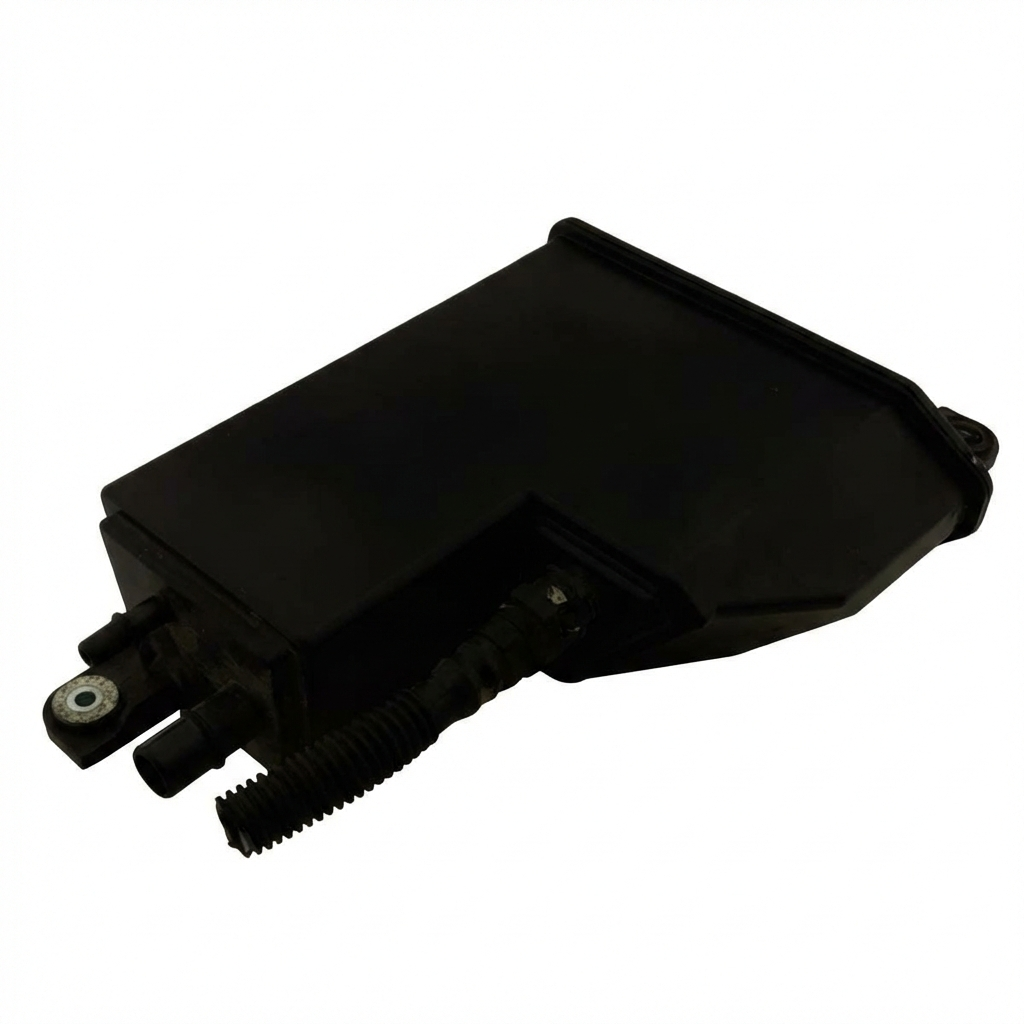
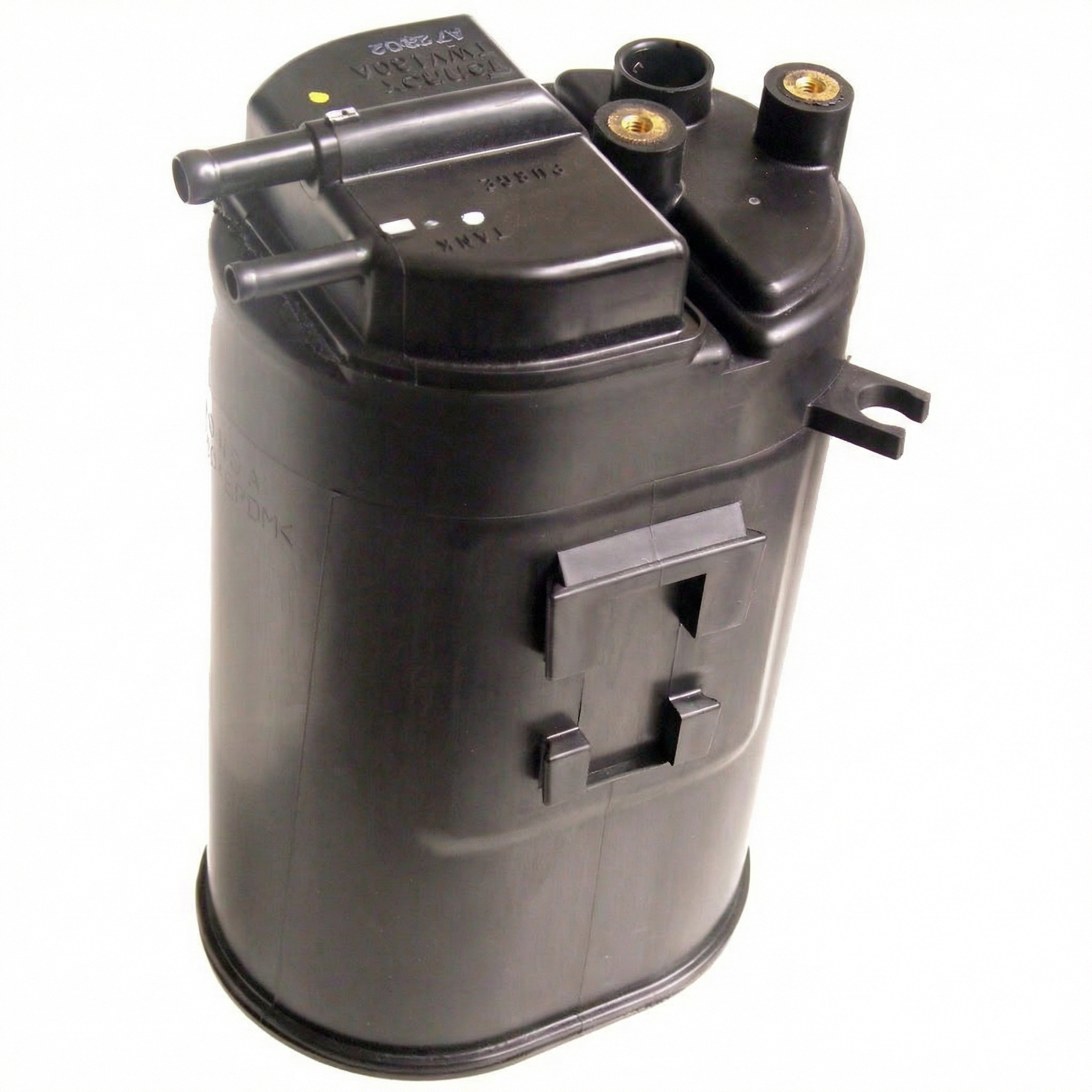
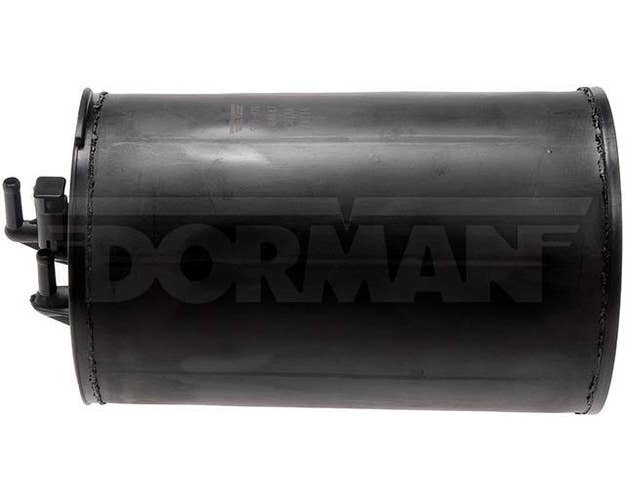
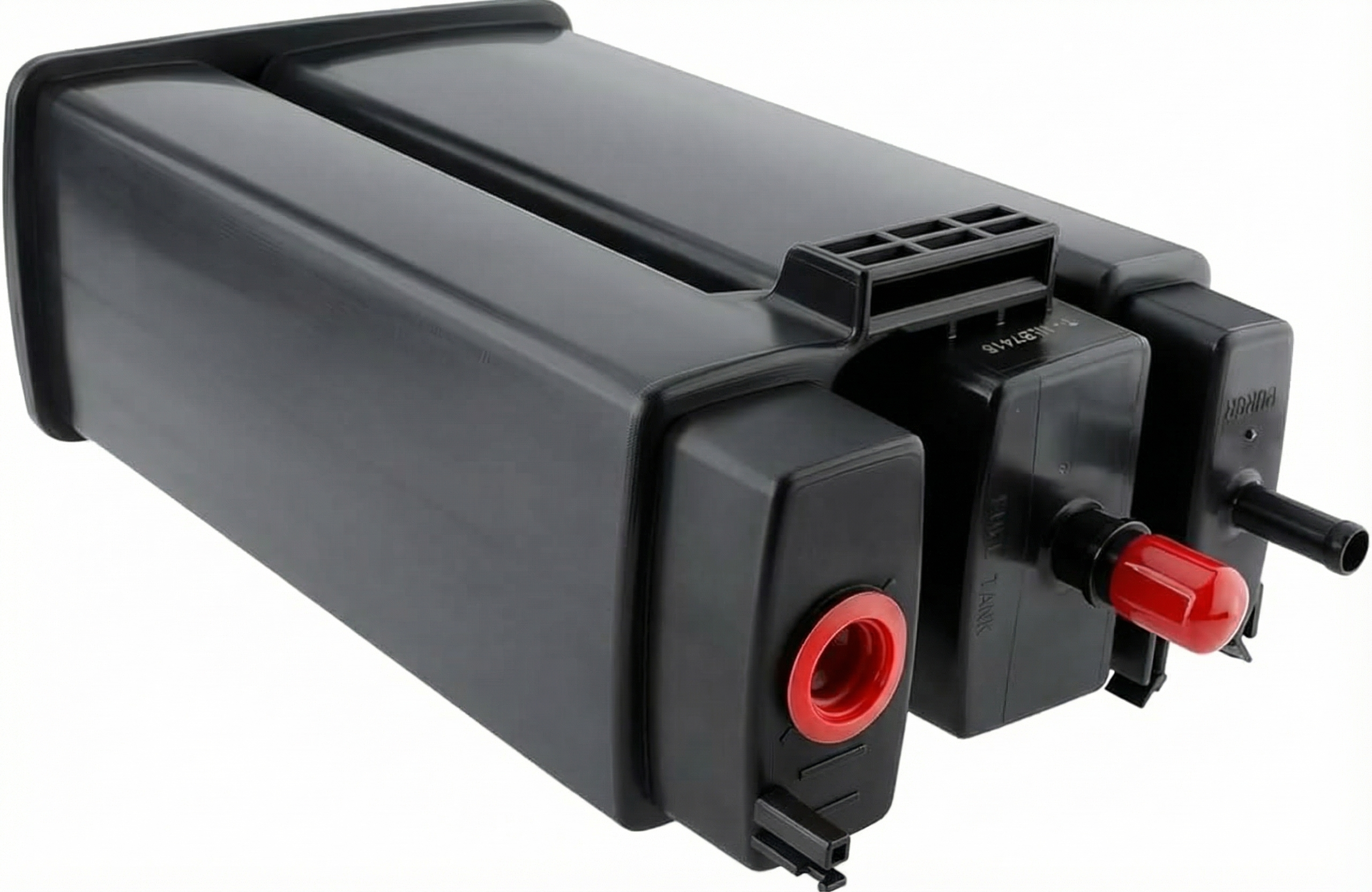
- Cracked EVAP (Charcoal) Canister: → Shop Vapor Canister Road debris can damage the plastic canister, or it can develop cracks with age. This is usually found during a smoke test if all other components check out.
- Leaking Fuel Tank or Filler Neck: → Shop Fuel Tank Rust or physical damage can cause a leak in the fuel tank or the pipe leading to it, creating a large enough leak to trigger P0455. This is a more serious issue and is often accompanied by a strong fuel smell.
- Damaged O-ring on Vent Control Valve: → Shop Vapor Canister Vent Valve Sometimes just the O-ring that seals the vent control valve to the canister can become cracked or brittle, causing a leak. Nissan issued a TSB (NTB17-082E) for a P0456 (very small leak) caused by this O-ring, but a significant failure could potentially contribute to a P0455. Many new valves come with a new O-ring.
Diagnosis Steps
- Ensure the Check Engine Light is on and the code P0455 is present using an OBD-II scanner.
- Inspect the gas cap. Remove it, check for damage to the seal, and reinstall it, tightening until it clicks multiple times. Clear the code and drive for a few days to see if it returns.
- If the code returns, perform a visual inspection of the EVAP hoses under the hood and around the fuel tank for any obvious cracks, disconnections, or damage.
- Lower the spare tire to gain access to the EVAP canister and vent control valve, located at the rear of the vehicle, typically on the passenger side.
- If a smoke machine is available, perform a smoke test. This is the most effective way to find the source of the leak. Connect the smoke machine to the EVAP service port (or disconnect and cap the purge line in the engine bay and introduce smoke there). Look for where smoke escapes. Common exit points are the vent valve, a cracked hose, or the gas cap seal.
- If a smoke machine is not available, you can test the vent valve. Unplug its electrical connector, twist the valve to remove it from the canister, and apply 12V power to its terminals. The normally-open valve should click shut. If it doesn't, or if it's visibly clogged with debris, it needs to be replaced.
- Test the purge valve in the engine bay. Remove it and attempt to blow through it. If air passes, it's stuck open and must be replaced.
Parts You'll Likely Need
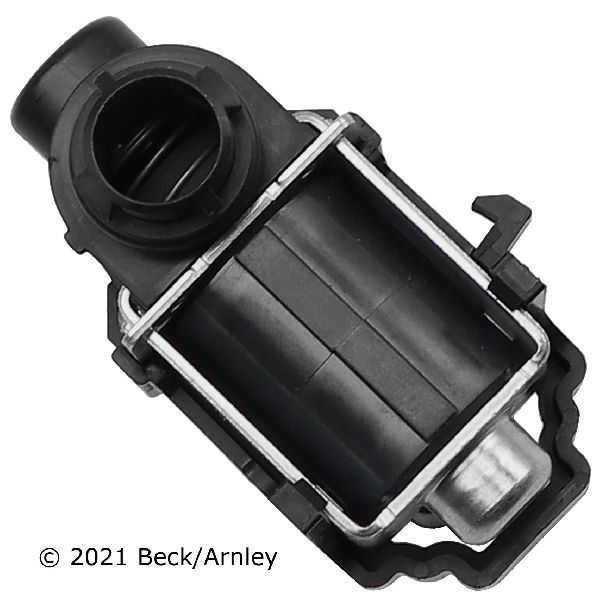
- EVAP Canister Vent Control Valve
(OEM #14935-JF00A (or superseded by 14935-JF00B/C/E))— This is the most common failure point on the 2007-2014 Armada for code P0455 after the gas cap has been ruled out. The original part number was often 14935-AM60B, which has been superseded multiple times.
Trusted brands: Nissan (OEM), Dorman (e.g., 911-503), Bosch
OEM price range: $70-$100
Aftermarket price range: $40-$80 - Fuel Cap
(OEM #17251-79960 (verify by VIN))— A worn seal on the gas cap is a very simple and common cause for all EVAP leak codes. It is the first and easiest part to check.
Trusted brands: Nissan (OEM), Stant
OEM price range: $25-$40
Aftermarket price range: $15-$25
Related Codes That Often Appear With This One
- P0442 — This code indicates a small EVAP leak. It can sometimes appear alongside P0455 if the system is borderline between detecting a small and large leak, or if there are multiple leak points.
- P0456 — This code indicates a very small EVAP leak. It's less common to see with P0455 but is part of the same family of EVAP codes mentioned in Nissan TSBs NTB13-097J and NTB09-020F.
Technical Service Bulletins (TSBs) & Recalls
- NTB13-097J: Provides a general diagnostic flowchart for EVAP codes P0442, P0455, and P0456 on 2012 and newer Nissan vehicles, emphasizing not to waste time with test drives and to follow the prescribed electronic tests.
- NTB09-020F: Specifically calls out that a loose fuel fill cap may be the cause for P0442, P0455, or P0456 on 2007 through 2011 Nissan vehicles and advises technicians to inform customers on proper cap installation.
- NTB17-082E: While this TSB is for a P0456 (very small leak), it identifies a faulty O-ring on the vent control valve as a known leak point, which could be relevant if a larger failure occurs.
Platform-Specific Known Issues
- The EVAP canister vent control valve is located above the spare tire, which must be lowered or removed for access during replacement.
- Some owners report difficulty removing the quick-disconnect hoses from the EVAP components due to age and lack of space to get leverage.
Mechanic-Grade Diagnostic Values
- Fuel Tank Pressure (FTP) Sensor Voltage — expected: Approximately 1.5V with the gas cap off (atmospheric pressure). The acceptable range is generally 1.3V to 1.7V.. Failure: A reading stuck high (near 5V) or low (near 0V) indicates a faulty sensor or wiring issue. A high reading after opening the tank points to a bad sensor.
- EVAP Canister Vent Control Valve Solenoid Function — expected: An audible click when 12V is applied to the terminals. The valve is normally open, and should close completely when energized.. Failure: No click is heard, or air/smoke can still pass through the valve when 12V is applied, indicating it is stuck open or has a failed solenoid.
Scan Tool Commands That Help
- Nissan CONSULT-II / CONSULT-III: EVAP System Leak Test (or similar active test function) — This function allows a technician to command the EVAP system's valves (purge and vent) to close, sealing the system. This is used in conjunction with a smoke machine or pressure gauge to confirm the system's integrity and pinpoint leaks without having to manually bypass components. It is the dealer-level method for efficiently diagnosing EVAP leaks.
Wiring & Ground Locations
- EVAP Canister Purge Volume Control Solenoid Valve — On the left rear of the engine for a 2010 Armada.. This is the purge valve in the engine bay. A wiring diagram confirms its location, which is critical for testing the correct component, as it's often confused with the vent valve at the rear of the vehicle.
- EVAP Control System Pressure Sensor — Located on the EVAP canister at the left rear underside of the vehicle, near the fuel tank.. Knowing the physical location of the pressure sensor is key for testing its voltage and connector integrity if the sensor itself is suspected of causing incorrect leak detection.
- Body Control Module (BCM) — Located under the driver's side dash, to the right of the steering column.. The BCM is a central hub for many electronic signals. While not a primary cause, troubleshooting complex electrical issues related to the EVAP system may require checking connections or grounds at the BCM.
- Ground Points B117, B132 — B117 is under the front passenger's seat; B132 is at the right 'D' pillar.. Poor ground connections can cause erratic behavior in electronic components. While not a common cause for P0455, checking chassis grounds is a valid step in advanced electrical diagnosis if sensors or solenoids test intermittently faulty.
Real Owner Repair Stories
- YouTube channel 'Fix It Angel' (2004 Nissan Pathfinder Armada) — Check Engine Light with code P0455, described as a 'gross leak detected'.
❌ Tried (didn't work) The owner first suspected the gas cap, a common cause, but proceeded to test the more likely component on this platform.
✅ What actually fixed it The EVAP canister vent control valve was replaced. The old valve was visually inspected and appeared to have debris inside, preventing it from sealing completely. Applying 12V power confirmed the old valve was likely stuck. Replacing the valve (Part No. 14935-AM60B, superseded by 14935-JF00A) resolved the code. - YouTube comment on a P0455 diagnostic video (2004 Nissan Pathfinder Armada) — Multiple codes including P0455 (EVAP), O2 sensor codes, and random misfires. The vehicle would sometimes stall at intersections.
❌ Tried (didn't work) The owner was preparing to replace multiple expensive parts like O2 sensors and the purge valve.
✅ What actually fixed it The owner inspected the relays in the under-hood fuse box. The contact points inside several relays were found to be burnt, blackened, and corroded. The owner disassembled the relays, cleaned the contact points with sandpaper, reassembled them, and reinstalled them. This cleared all codes, including the P0455, and resolved the stalling issue.
OEM Part Supersession History
14935-AM600, 14935-AM60A, 14935-AM60B→14935-JF00A, which was then superseded by 14935-JF00B, 14935-JF00C, 14935-JF00D, 14935-JF00E, and finally 14935-JF02C.— Part has been updated multiple times by the manufacturer to improve reliability and address the common failure mode.
Heads up: The latest part number (14935-JF02C) is the recommended replacement for all previous versions and should be used to ensure the most reliable repair.
Helpful Videos
![How to Fix P0455 Engine Code in 3 Minutes [2 DIY Methods / Only $4.61]](https://img.youtube.com/vi/b-o1a2XuVN4/mqdefault.jpg)
Used OEM Parts in Stock
New Aftermarket Parts Available


The information in this article is provided for general reference and educational purposes only. Vehicle specifications, procedures, and part compatibility can vary by production date, trim level, and region. Always consult your vehicle's factory service manual and verify part numbers before purchasing or performing repairs. Safety-critical components such as airbags, seat belts, and braking systems should be installed by a qualified professional.
- Nissan ARMADA:
- 🧭 Diagnostic Flowchart
- 🎬 Helpful Videos
- 🛍️ Shop This Part
- What's Unique About the 2007-2014 Nissan ARMADA
- Symptoms You May Notice
- Most Likely Causes
- Rare But Worth Checking
- Diagnosis Steps
- Parts You'll Likely Need
- Related Codes That Often Appear With This One
- Technical Service Bulletins (TSBs) & Recalls
- Platform-Specific Known Issues
- Mechanic-Grade Diagnostic Values
- Scan Tool Commands That Help
- Wiring & Ground Locations
- Real Owner Repair Stories
- OEM Part Supersession History
- 🎟️ Get 5% Off