

P0455 on 2007-2014 Nissan Maxima: EVAP Gross Leak Causes & Fixes
For a 2007-2014 Nissan Maxima, the P0455 code is most often caused by a loose, worn, or incorrect gas cap. Before buying any parts, retighten your gas cap until it clicks and clear the code. If it returns, a new OEM gas cap is a cheap and highly effective next step. If that doesn't work, the next most likely culprit is the EVAP vent control valve located near the charcoal canister at the rear of the car.
- Always check your gas cap first. It's the most common and cheapest fix for P0455 on a Nissan Maxima.
- If a new gas cap doesn't solve the issue, the EVAP vent control valve is the next most likely culprit.
- Do not ignore the code. While it doesn't affect drivability, it will cause an automatic failure on an emissions test.
- A professional smoke test is the fastest way to accurately find a leak if it's not one of the common, easily replaceable parts.
What's Unique About the 2007-2014 Nissan MAXIMA
The 2007-2014 Nissan Maxima spans two generations (6th and 7th), but the P0455 code points to the same common culprits across both. Nissan has issued multiple Technical Service Bulletins (TSBs) acknowledging this EVAP leak code, with NTB09020F specifically highlighting a loose fuel fill cap as a primary cause on 2007-2011 models. Owner experiences from forums like Maxima.org and NICOclub overwhelmingly confirm that the gas cap and the EVAP vent control valve are the most frequent failure points, making diagnosis more straightforward than on some other vehicles.
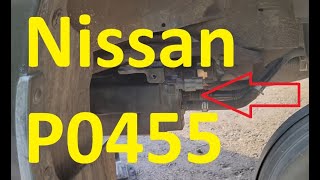
🎬 Watch: A complete overview of Nissan P0455 causes and fixes.Diagnostic Flowchart
Tap your situation to follow the diagnostic path that matches what you're seeing on this vehicle.
Generation note: This range covers the end of the 6th generation (A34, 2007-2008) and the entire 7th generation (A35, 2009-2014) Maxima. While the EVAP system components are similar, their exact location and part numbers may differ slightly. For example, the EVAP vent control valve on the 7th generation can be more difficult to access, located above the rear subframe. The underlying engine for this period is the VQ35DE.
Symptoms You May Notice
- Check Engine Light is on
- A faint to strong smell of fuel, especially around the rear of the car or when parked in an enclosed space like a garage.
- A "Loose Fuel Cap" warning on the dashboard information display (on equipped models)
- Slight decrease in fuel economy.
- No longer hearing a 'whoosh' sound of pressure releasing when opening the gas cap after driving.
- Replacing the oxygen sensor. O2 sensors have nothing to do with the EVAP system.
- Immediately replacing the charcoal canister. The canister itself is rarely the point of failure; it's more often the valves attached to it or the gas cap.
- Using a cheap aftermarket gas cap. Many owners report that only an OEM Nissan cap will properly seal and resolve the code.
Most Likely Causes
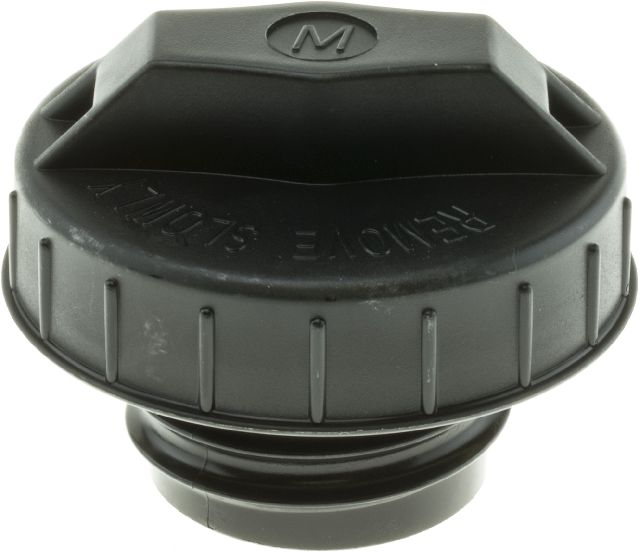
- Loose, Damaged, or Incorrect Fuel Cap 🔴 High Probability → Shop Fuel Tank Cap Nissan TSB NTB09020F specifically identifies a loose fuel cap as a likely cause for this code on 2007-2011 models. The cap's seal can wear out over time, or the tether can get caught, preventing a proper seal. Forum users repeatedly confirm that using a non-OEM cap can also cause this code, even if the cap is new.
How to confirm: Remove the gas cap and inspect the rubber seal for cracks or damage. Ensure you are tightening it until it clicks at least once. Check that the plastic tether is not caught under the cap. A user on Maxima.org noted that after replacing the cap, he no longer heard the 'pshh' sound when opening the tank, indicating the old cap was faulty.
Typical fix: Tighten the cap correctly. If the seal is worn or the cap is damaged, replace it with a new OEM (Original Equipment Manufacturer) part for best results. Aftermarket caps are a frequent source of P0455 issues.
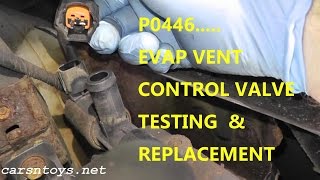
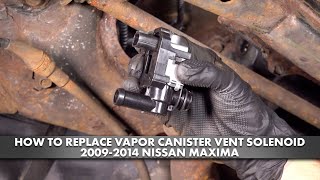
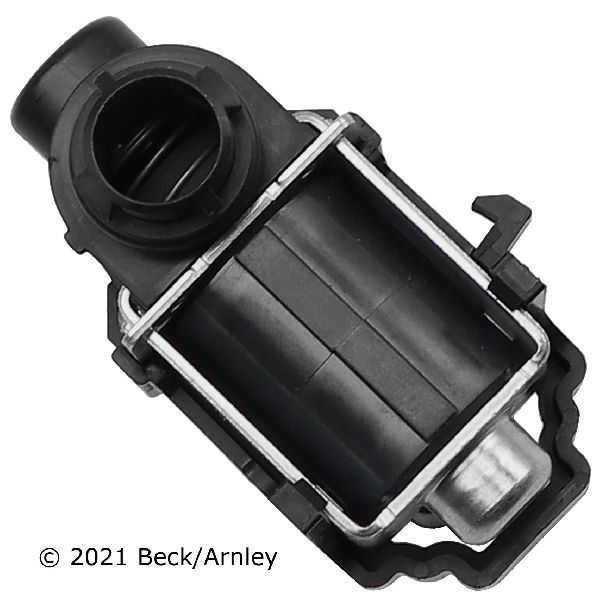
Est. part cost: $15-$35 - Faulty EVAP Vent Control Valve (Solenoid) 🟡 Medium Probability → Shop Vapor Canister Vent Valve This valve is exposed to the elements under the car and is a notorious failure point on many Nissan models. It gets stuck open due to dirt, debris, or internal corrosion, creating a large leak. Forum posts on Maxima.org are filled with owners who fixed P0455 by replacing this part.
How to confirm: The valve is located near the charcoal canister behind the driver's side rear wheel. It can be tested by applying 12V power; a working valve will make an audible click. However, it can still be faulty even if it clicks. A professional will command it closed with a scan tool during a smoke test; if smoke escapes from the valve, it has failed.
Typical fix: Replace the EVAP vent control valve. Be prepared for the two 10mm mounting bolts to be rusted solid. It is highly recommended to spray them with a penetrating lubricant like WD-40 and let them soak before attempting removal to avoid snapping them.
Est. part cost: $40-$90 - Cracked or Disconnected EVAP Hose ⚪ Low Probability Rubber hoses become brittle over time with exposure to heat and weather, leading to cracks. This is a potential issue on any aging vehicle.
How to confirm: A visual inspection of all accessible EVAP hoses between the engine bay, charcoal canister, and fuel tank may reveal obvious cracks or disconnections. A smoke test is the most effective way to find a leak in a hose that isn't easily visible.
Typical fix: Replace the cracked section of hose or the entire hose assembly.
Est. part cost: $10-$50 - Faulty EVAP Canister Purge Volume Control Solenoid Valve ⚪ Low Probability → Shop Vapor Canister This valve, located in the engine bay, can get stuck open, creating a constant vacuum leak from the EVAP system into the engine. While less common than the rear vent valve, it is still a known failure point.
How to confirm: With the engine running and the valve's electrical connector disconnected, remove the hose from the valve that leads to the intake manifold and feel for suction at the valve's nipple. There should be no suction at idle when the valve is de-energized (normally closed). A scan tool can also monitor its operation.
Typical fix: Replace the purge valve. This is typically an easier repair than the rear vent valve due to its accessibility in the engine bay.
Est. part cost: $30-$70
Rare But Worth Checking
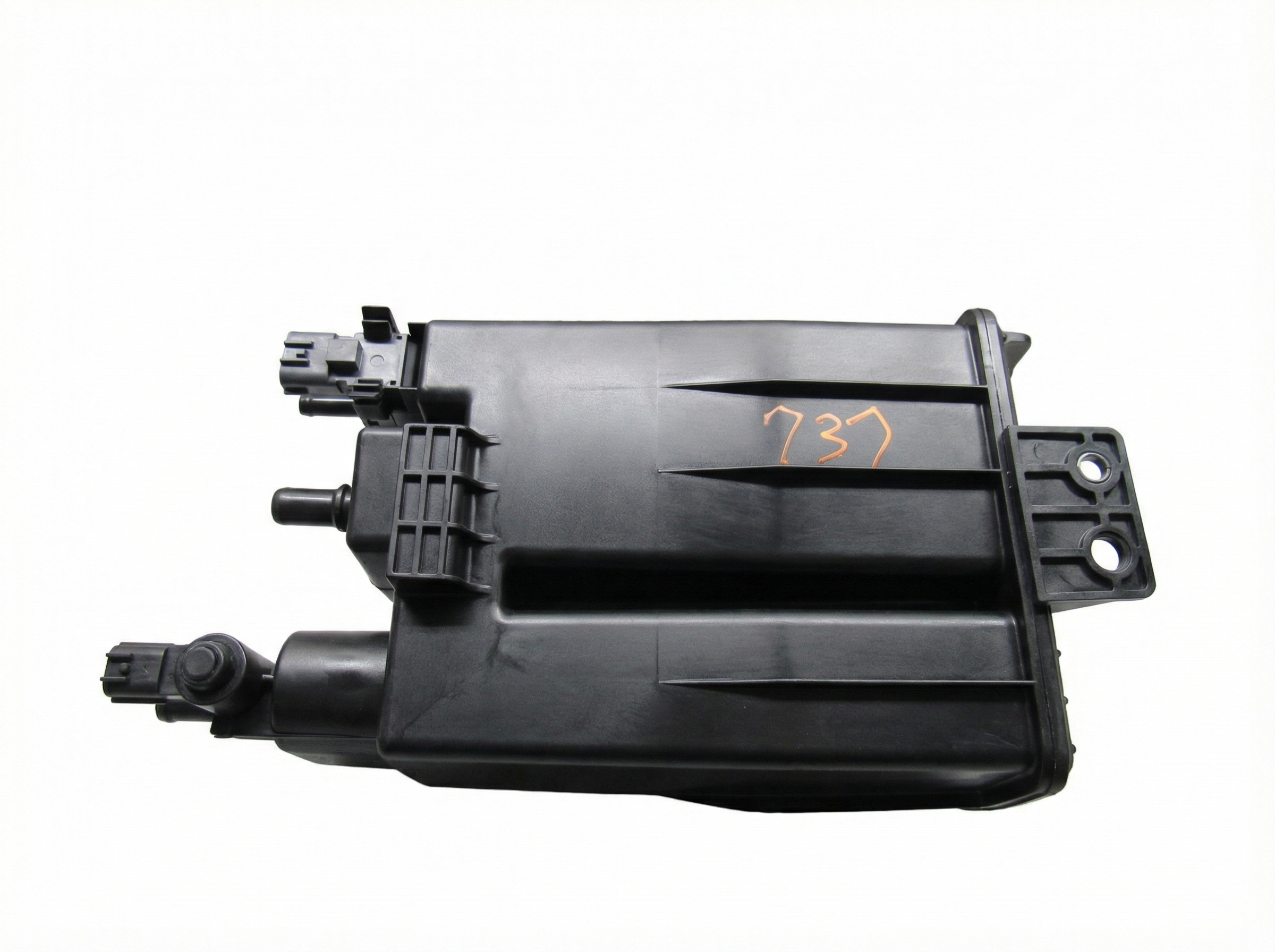
- Cracked Charcoal Canister: → Shop Vapor Canister The plastic housing of the canister itself can develop cracks from age or impact, creating a large leak. This is usually found during a smoke test. A technician on a Nissan forum noted that when a vent valve fails stuck open, it can suck dust and debris into the canister, potentially leading to its failure down the line.
- Leaking Fuel Tank Filler Neck: → Shop Fuel Tank In regions with heavy road salt use (the 'snowbelt'), the metal filler neck that the gas cap screws onto can rust and develop pinholes or larger holes. This prevents the gas cap from creating a seal, no matter how new it is, and will cause a persistent P0455 code. A smoke test will quickly reveal smoke escaping from the neck area.
Diagnosis Steps
- Read the code with an OBD-II scanner to confirm P0455 is present.
- Inspect the gas cap. Remove it, check for cracks in the seal, and ensure the tether isn't interfering. Reinstall it and tighten until it clicks several times. If it's an aftermarket cap, consider it a prime suspect.
- Clear the code with the scanner and drive the vehicle for a few days to see if the code returns. Many EVAP monitors only run under specific conditions (e.g., fuel tank between 15-85% full).
- If the code returns, perform a thorough visual inspection of all visible EVAP hoses and lines from the engine bay to the rear of the vehicle, looking for obvious cracks, breaks, or disconnections.
- Locate the EVAP vent control valve near the charcoal canister (typically behind the driver's side rear wheel). Check its electrical connector and hose for integrity. Be prepared for rust on the mounting bolts.
- If the simple checks do not reveal the problem, the most effective next step is to have a smoke test performed. A machine injects harmless, visible smoke into the EVAP system. Before starting, the vent valve must be commanded closed with a scan tool. The leak will be revealed by where the smoke escapes.
- Based on the smoke test results, replace the leaking component. Common leak points are the gas cap seal, the body of the vent control valve itself, a cracked hose, or a rusted fuel filler neck.
Parts You'll Likely Need
- Fuel Tank Cap
(OEM #17251-79960)— This is the most common cause, as stated in Nissan TSBs and confirmed by countless owner forum posts. The seal wears out, or aftermarket caps fail to seal properly.
Trusted brands: Nissan OEM
OEM price range: $20-$35
Aftermarket price range: $15-$25 - EVAP Vent Control Valve
(OEM #14935-JF00A)— This valve is a very common failure point on Nissans of this era. It gets stuck open due to corrosion, causing a permanent leak that the system detects. Part number 14935-JF00A is superseded by several numbers including 14935-JF00B, 14935-JF00C, and ultimately 14935-JF02C. It also replaces older numbers like 14935-AM60B.
Trusted brands: Nissan OEM, Bosch, Hitachi, Dorman (often comes as a kit)
OEM price range: $70-$100
Aftermarket price range: $40-$80 - EVAP Canister Purge Valve
(OEM #14930-JA00A)— Less common than the vent valve, but this can fail stuck open, creating a leak path. It's located in the engine bay and is easier to access than the vent valve.
Related Codes That Often Appear With This One
- P0442 — Indicates a small EVAP leak. Sometimes a problem can start as a small leak (P0442) and worsen to a large leak (P0455), or the computer's test parameters may fluctuate between detecting a small and large leak.
- P0456 — Indicates a very small EVAP leak. Similar to P0442, this can appear alongside P0455 if the leak is borderline or intermittent.
- P1448 — An older Nissan-specific code for the EVAP Canister Vent Control Valve. If seen with P0455, it points very strongly to a failed vent valve.
Technical Service Bulletins (TSBs) & Recalls
- NTB13-097J: EVAP LEAK DTC P0442, P0455, P0456 INFORMATION
- NTB13-097g: ALL MODEL YEAR 2012 AND NEWER NISSAN VEHICLES; EVAP LEAK DTC P0442, P0455, P0456 INFORMATION
- NTB09020F: SERVICE INFORMATION If one or more of these EVAP leak DTCs are stored (P0442, P0455, P0456) on a 2007 through 2011 Nissan vehicle, a loose fuel fill cap may be the cause.
Platform-Specific Known Issues
- TSB NTB09020F directly calls out a loose fuel fill cap as a potential cause for P0455 on 2007-2011 models.
- TSBs NTB13-097J, NTB13-097g, and NTB13-097D are general informational bulletins for dealers on how to approach EVAP leak codes P0442, P0455, and P0456 across most Nissan vehicles, indicating this is a common area for service inquiries. Full TSB text requires a subscription to Nissan's service portal.
- Extreme rust on the EVAP vent control valve bolts is a widely reported issue, often requiring cutting or drilling out the old bolts during replacement.
Mechanic-Grade Diagnostic Values
- EVAP Canister Purge Volume Control Solenoid Valve Resistance — expected: 15 to 30 Ohms. Failure: A reading far outside this range indicates a damaged internal electrical circuit in the valve.
- Fuel Tank Pressure (FTP) Sensor Voltage — expected: Should change in response to pressure/vacuum changes during an EVAP test.. Failure: A static or out-of-range voltage reading when pressure is known to be changing can indicate a faulty sensor, potentially triggering a false P0455 code.
Scan Tool Commands That Help
- Nissan CONSULT or professional bidirectional scan tool: EVAP System Leak Test / Vent Valve Control — This function is used to command the EVAP vent valve closed. This is a required first step before performing a smoke test to ensure the system is sealed for the test. If the valve doesn't close when commanded, it has failed.
- Nissan CONSULT or professional bidirectional scan tool: Purge Volume Control Valve Duty Cycle — Allows a technician to command the purge valve to open and close while monitoring its response. This can help determine if the valve is sticking or not responding to the ECM's commands.
Wiring & Ground Locations
- EVAP Canister Purge Volume Control Solenoid Valve Connector — Top rear of the engine for the 2009 Maxima.. This is the electrical connection for the purge valve. A wiring diagram for a 2009 Maxima shows a Pink/Blue wire at pin 25 of a major connector (E46) is associated with the EVAP system, which would be checked for power/signal during diagnosis.
- EVAP Canister Vent Control Valve Connector — Above the rear subframe, attached to the charcoal canister.. This connector provides power to the vent valve. Corrosion or damage to this connector or its wiring can prevent the valve from closing, causing a P0455 code.
Real Owner Repair Stories
- Maxima Forums user (2010 Nissan Maxima SV with over 200k miles) — P0455 code returned several months after being cleared.
❌ Tried (didn't work) Clearing the code (it came back)., Replacing the gas cap (code returned a week later).
✅ What actually fixed it The user inspected hoses and found no obvious breaks. Due to the difficult location of the canister and vent valve on the 7th generation Maxima, they opted to take it to a professional rather than attempting the repair themselves, implying the vent valve was the next logical step. - Maxima Forums user (5th Generation Maxima (applicable principle for snowbelt vehicles)) — P0455 and P0440 codes, corrosion on the fuel filler opening.
❌ Tried (didn't work) Initial diagnosis was uncertain due to the many possibilities in the EVAP system.
✅ What actually fixed it A senior forum member advised that in snowbelt regions, the fuel filler neck itself can rust through, creating holes that a new gas cap cannot seal. The final fix is to replace the entire fuel filler neck assembly.
"I Checked Everything" — The Actual Cause
- A faulty Fuel Tank Pressure (FTP) sensor can cause a P0455 code even if the system has no leaks. The sensor may send incorrect data to the computer, making it believe a large leak is present when the system is actually holding pressure correctly.
OEM Part Supersession History
14935-AM60B→14935-JF00A, 14935-JF00B, 14935-JF00C, 14935-JF00D, 14935-JF00E, 14935-JF02C— Part has been updated multiple times by the manufacturer. The newer parts are direct replacements.
Heads up: The older part number 14935-AM60B was used on earlier Nissan models and the 6th gen Maxima, while the 14935-JF00x series is more common for the 7th gen Maxima. They are generally interchangeable but using the latest revision (e.g., 14935-JF02C) is recommended.
Model Year Variations Within This Range
- 2009-2014 (A35 7th Gen): The EVAP canister and vent valve are located above the rear subframe, making access more difficult than on the 2007-2008 models where components are generally more exposed. A diagram for the 2009 model shows different rear EVAP piping layouts for vehicles built before and after December 2008, indicating a mid-year production change.
Helpful Videos

Used OEM Parts in Stock
New Aftermarket Parts Available


The information in this article is provided for general reference and educational purposes only. Vehicle specifications, procedures, and part compatibility can vary by production date, trim level, and region. Always consult your vehicle's factory service manual and verify part numbers before purchasing or performing repairs. Safety-critical components such as airbags, seat belts, and braking systems should be installed by a qualified professional.
- Nissan MAXIMA:
- 🧭 Diagnostic Flowchart
- 🎬 Helpful Videos
- 🛍️ Shop This Part
- What's Unique About the 2007-2014 Nissan MAXIMA
- Symptoms You May Notice
- Most Likely Causes
- Rare But Worth Checking
- Diagnosis Steps
- Parts You'll Likely Need
- Related Codes That Often Appear With This One
- Technical Service Bulletins (TSBs) & Recalls
- Platform-Specific Known Issues
- Mechanic-Grade Diagnostic Values
- Scan Tool Commands That Help
- Wiring & Ground Locations
- Real Owner Repair Stories
- "I Checked Everything" — The Actual Cause
- OEM Part Supersession History
- Model Year Variations Within This Range
- 🎟️ Get 5% Off