

P0455 on 2017-2022 Nissan Murano: EVAP Gross Leak Causes & Fixes
P0455 on a Nissan Murano indicates a large leak in the EVAP system. The most common causes are a loose or faulty gas cap (OEM Part No. 17251-3JA0A), or a failed EVAP canister vent control valve (OEM Part No. 14935-JF00E). A new gas cap is about $15-$40, while a vent valve can cost $50-$100 for the part.
- Start with the simplest fix: check that your gas cap is tight and its seal is intact. A loose gas cap is the #1 cause.
- If the gas cap isn't the issue, the most likely culprit on your Murano is the EVAP canister vent control valve located at the rear of the vehicle.
- A smell of fuel around the car is a key symptom that corroborates this code.
- While you can drive the car with this code, you will not pass an emissions test until it is fixed.
- For leaks that aren't obvious, a smoke test is the most effective way to find the exact source of the problem.
What's Unique About the 2017-2022 Nissan MURANO
For many Nissan vehicles of this era, including the Murano, Pathfinder, and Altima, the P0455 code is frequently caused by a faulty EVAP canister vent control valve. This component is located near the charcoal canister at the rear of the vehicle and is known to fail by getting stuck open, creating a large leak that the system detects. The failure is so common that Nissan has superseded the part number multiple times (e.g., 14935-AM60B to 14935-JF00A/B/C/D/E). Nissan has issued multiple technical service bulletins (TSBs) over the years related to EVAP leak codes, including P0455, which suggests this is a well-documented issue across their lineup.
Diagnostic Flowchart
Tap your situation to follow the diagnostic path that matches what you're seeing on this vehicle.
Symptoms You May Notice
- Check Engine Light is on
- A faint smell of fuel, especially around the rear of the vehicle or near the gas cap
- A "Loose Fuel Cap" warning message on the dashboard
- Difficulty starting the engine immediately after refueling (less common)
- Replacing the purge valve in the engine bay when the vent valve at the rear of the car is the actual problem. The vent valve is a much more common failure point for a gross leak code on these Nissans.
- Using a cheap, non-OEM gas cap. Aftermarket caps may not seal properly, causing the code to return.
Most Likely Causes
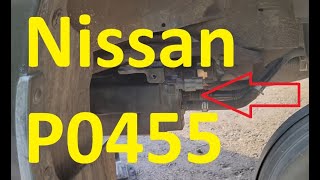
- Loose or Faulty Gas Cap 🔴 High Probability → Shop Fuel Tank Cap This is the most common cause for a P0455 code on any vehicle, including the Murano. The cap's seal can wear out, or it may not have been tightened correctly. Nissan's official TSB for EVAP leaks lists checking the cap as the very first step. 🎬 Watch: A breakdown of common P0455 causes and fixes.
How to confirm: First, ensure the gas cap is tightened until it clicks at least once. Inspect the cap's rubber O-ring for cracks, stiffness, or damage. If it looks worn, it's best to replace it with an OEM part to ensure a proper seal.
Typical fix: Tighten or replace the fuel filler cap. The OEM part number is 17251-3JA0A, which supersedes older numbers like 17251-9BD0E.
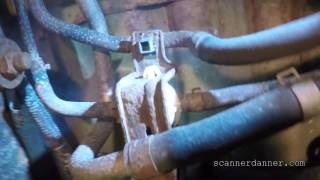
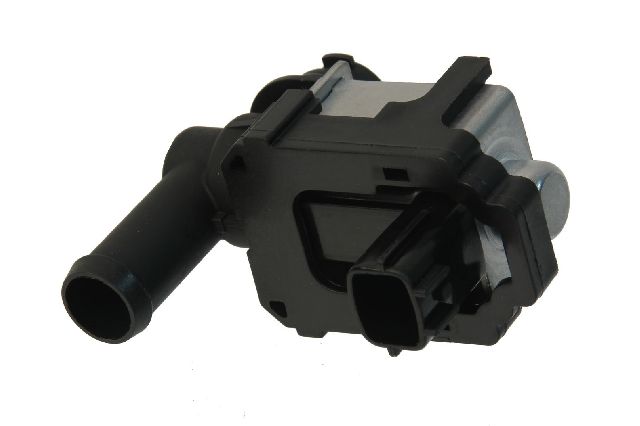
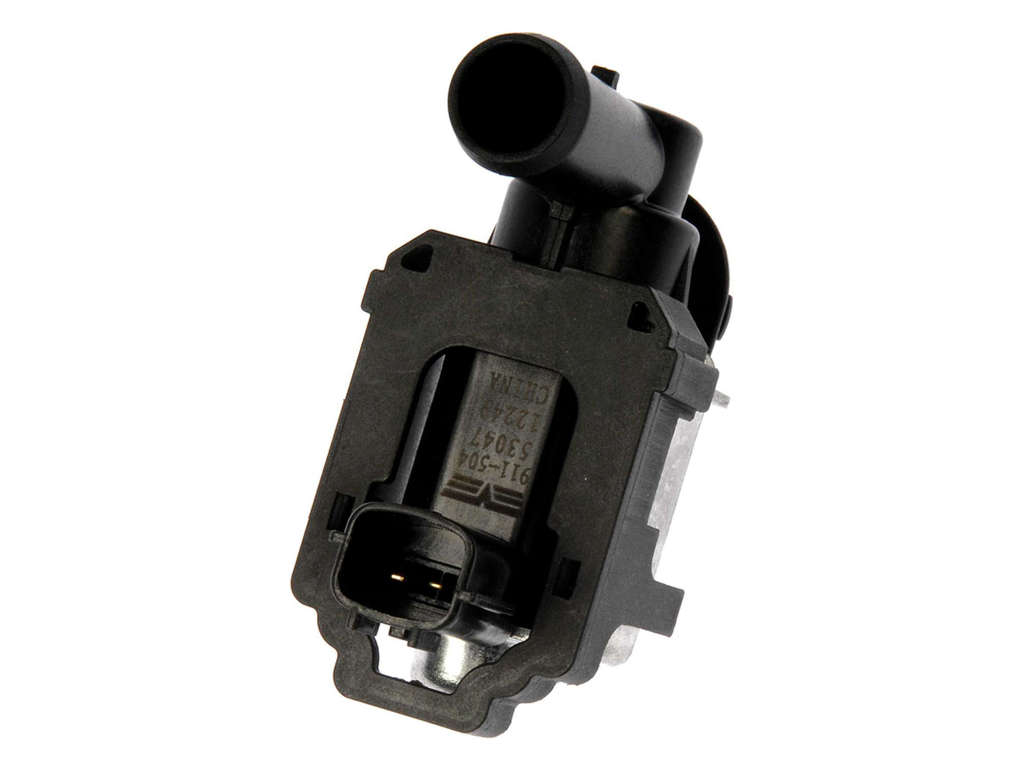
Est. part cost: $20-$40 - Faulty EVAP Canister Vent Control Valve (Solenoid) 🔴 High Probability → Shop Vapor Canister Vent Valve This is a very common failure point on Nissan vehicles. The valve is normally open and is commanded closed by the computer to test the system. It can get stuck open due to dirt, debris, or internal failure, creating the large leak detected as P0455.
How to confirm: The valve can be removed and tested. It is a normally open valve, so it should allow air to pass through when unpowered. When 12V is applied, it should click shut and stop the airflow. A mechanic can also command it closed with a scan tool during a smoke test to confirm it's the source of the leak. It is located on the EVAP canister near the rear of the vehicle. 🎬 See how to replace the common faulty vent control valve.
Typical fix: Replace the EVAP canister vent control valve. The most recent OEM part number is 14935-JF00E or a successor like 14935-JF02C. It's recommended to also replace the O-ring.
Est. part cost: $50-$100 - Cracked or Disconnected EVAP Hose 🟡 Medium Probability Hoses become brittle over time with exposure to heat and elements. A large hose connecting the filler neck to the tank or hoses around the charcoal canister are potential failure points.
How to confirm: A visual inspection may reveal a cracked, brittle, or disconnected hose. The best way to find a hard-to-see leak is with a smoke test, which forces smoke into the EVAP system and reveals the leak's location.
Typical fix: Replace the damaged section of hose and secure the connections.
Est. part cost: $10-$50
Rare But Worth Checking
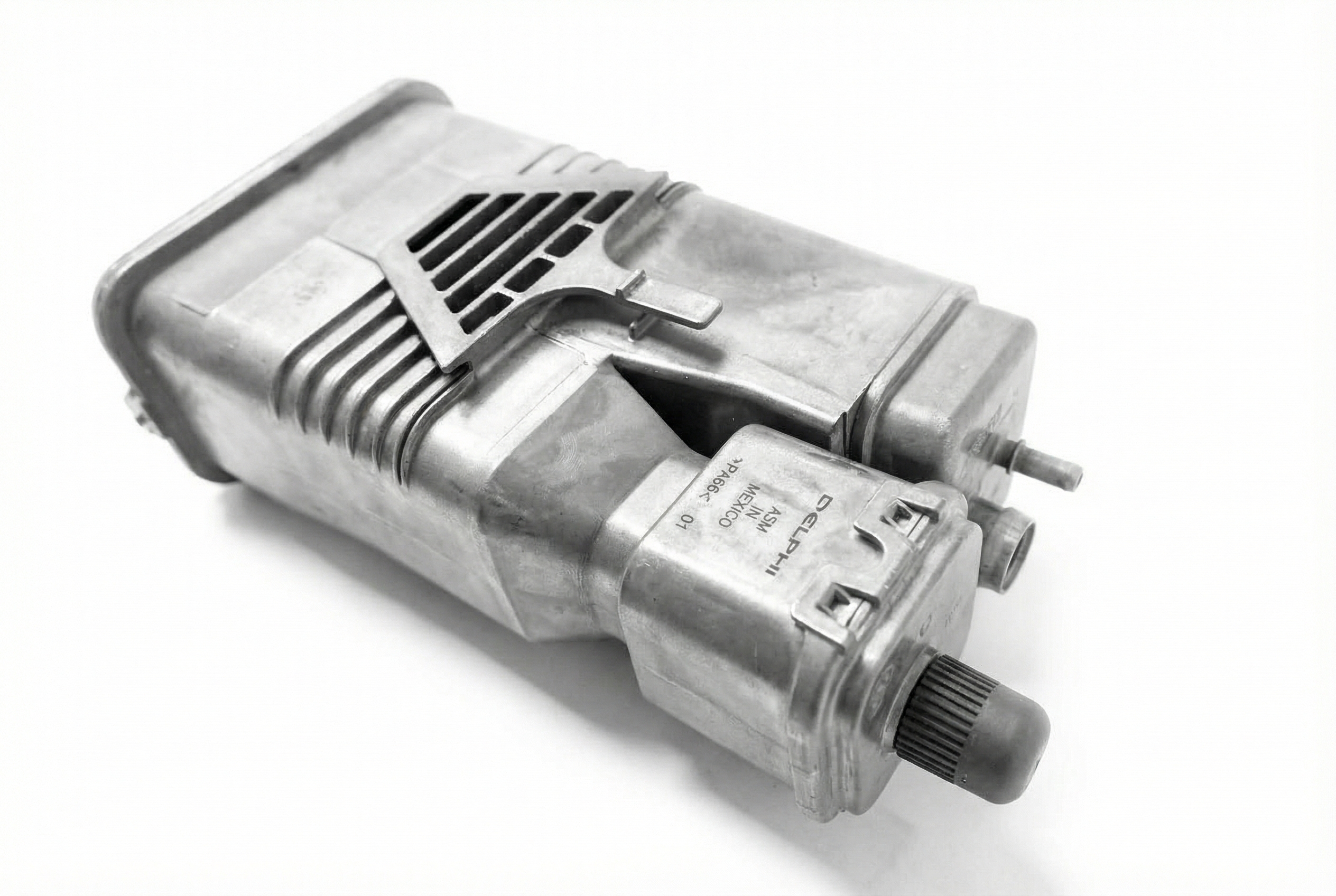
- Cracked Charcoal Canister: → Shop Vapor Canister The charcoal canister itself can develop a crack, especially from road debris impact or age. This would be found during a smoke test and is a more expensive repair.
- Leaking Fuel Tank or Filler Neck: → Shop Fuel Tank Rust or physical damage can cause a leak in the fuel tank or the filler neck where you insert the gas nozzle. This is a more serious issue and is usually found via a smoke test.
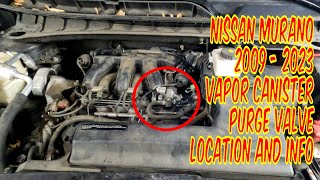
- Faulty EVAP Purge Valve (Solenoid): → Shop Vapor Canister The purge valve, located in the engine bay, is normally closed. If it gets stuck open, it can sometimes cause a P0455 code, though it's more often associated with other codes and drivability issues like a rough idle.
- Faulty Fuel Tank Pressure Sensor: → Shop Fuel Tank The sensor that measures pressure in the system could fail, leading the computer to believe there is a leak when there isn't one. This is uncommon and usually accompanied by other sensor-specific codes.
Diagnosis Steps
- Check the gas cap. Ensure it is an OEM or equivalent quality cap, that it is tightened until it clicks, and that the seal is not cracked or worn. This is the most common fix.
- Clear the code with an OBD-II scanner and drive for a few days to see if the light returns. If it doesn't, the gas cap was the issue.
- If the light returns, perform a thorough visual inspection of all accessible EVAP hoses between the engine bay and the fuel tank, looking for obvious cracks or disconnections.
- Locate the EVAP canister vent control valve near the rear of the vehicle, on the charcoal canister. Inspect it for damage and test its operation. It should be open at rest and click shut when 12V is applied. Many owners find success by replacing this part as the second step.
- If the cause is still not found, the most effective next step is to have a smoke test performed. This involves injecting low-pressure smoke into the EVAP system to visually pinpoint the source of the leak.
Parts You'll Likely Need
- Fuel Filler Cap
(OEM #17251-3JA0A (supersedes 17251-9BD0E, 17251-1VZ0D))— This is the most frequent and simplest cause of a P0455 code due to a worn seal or improper tightening.
Trusted brands: Nissan OE, Stant, Duralast
OEM price range: $25-$40
Aftermarket price range: $15-$25 - EVAP Canister Vent Control Valve
(OEM #14935-JF00E (supersedes 14935-JF00A/B/C/D))— This is a very common failure point on Nissan vehicles that directly causes a P0455 code when it sticks open.
Trusted brands: Nissan OE, Dorman (P/N: 911-504), Bosch, APA/URO Parts
OEM price range: $80-$120
Aftermarket price range: $40-$80 - EVAP Canister Purge Valve
(OEM #14930-JA10D)— Less common than the vent valve for this code, but can fail by sticking open. Located in the engine bay for easier access. 🎬 Watch: Locate and identify the purge valve in the engine bay.
Trusted brands: Nissan OE, Hitachi, Duralast
OEM price range: $70-$110
Aftermarket price range: $30-$60
Related Codes That Often Appear With This One
- P0442 — EVAP System Leak Detected (Small Leak). A component may be failing intermittently or there may be multiple leaks of different sizes.
- P0456 — EVAP System Leak Detected (Very Small Leak). Similar to P0442, this points to a general EVAP system integrity issue. Nissan has a specific TSB (ITB17-042b) that points to just the vent valve O-ring for this code.
Technical Service Bulletins (TSBs) & Recalls
- NTB13-097J: EVAP LEAK DTC P0442, P0455, P0456 INFORMATION - This is the most recent version of a long-running bulletin that provides the official diagnostic flowchart for these common EVAP codes for all 2012 and newer Nissan vehicles.
- NTB13-097g: ALL MODEL YEAR 2012 AND NEWER NISSAN VEHICLES; EVAP LEAK DTC P0442, P0455, P0456 INFORMATION - An earlier revision of the same TSB.
- NTB13-097D: ALL MODEL YEAR 2012 AND NEWER NISSAN VEHICLES; EVAP LEAK DTC P0442, P0455, P0456 INFORMATION - An even earlier revision.
Platform-Specific Known Issues
- Persistent P0455 After Multiple Part Replacements: Some owners report persistent P0455 codes even after replacing the gas cap and other parts. This often traces back to a faulty or poorly designed EVAP vent valve, which may fail again if an aftermarket version of poor quality is used.
- Official Nissan Diagnostic Procedure (TSB NTB13-097J): Nissan's TSB NTB13-097J specifically addresses diagnostic procedures for P0442, P0455, and P0456. It emphasizes checking the fuel cap first and then following a specific diagnostic flowchart. The bulletin explicitly warns technicians that test drives are not an effective way to confirm the fault and that proper leak testing with a smoke machine or CONSULT tool is required.
Mechanic-Grade Diagnostic Values
- EVAP Canister Purge Valve Resistance — expected: 15 to 38 Ohms, depending on temperature. One source cites 36 Ohms at ~55-60°F as a good reading.. Failure: An open circuit (infinite resistance) or a reading significantly outside the expected range indicates a bad solenoid coil.
- EVAP Canister Vent Control Valve Resistance — expected: 20 to 65 Ohms. A common range cited is 48-65 Ohms.. Failure: An open circuit or a reading far outside the expected range suggests the coil has failed.
- Fuel Tank Pressure (FTP) Sensor Voltage (Key On, Engine Off) — expected: Approximately 1.5V with the gas cap removed (at atmospheric pressure).. Failure: Voltage that is stuck high or low, or does not change as pressure changes, indicates a faulty sensor.
Scan Tool Commands That Help
- Nissan CONSULT III+: SRT and PDTC (System Readiness Test and Permanent DTC) Status Check — After a repair, this function is used to confirm that the EVAP monitor has successfully run and passed, which is necessary to clear permanent DTCs and pass an emissions inspection.
- Nissan Essential Tool J-42909 (EVAP Service Port Adapter): EVAP System Leak Check — This is the Nissan-specified special tool for connecting a smoke machine or pressure tester to the EVAP service port to perform the leak test procedure outlined in TSB NTB13-097g.
Wiring & Ground Locations
- EVAP Canister Purge Valve Location — In the engine bay, located on the driver's side of the intake plenum.. This is the physical location for inspection and electrical testing of the purge valve. It is normally closed and can be tested for leaks by applying vacuum.
- EVAP Canister Vent Control Valve Location — At the rear of the vehicle, mounted directly on the EVAP charcoal canister, which is typically located near the fuel tank, behind the passenger-side rear wheel.. This is the physical location of the most common part to fail and cause P0455. Its exposure under the vehicle makes it susceptible to dirt and corrosion, causing it to stick open.
- Main Engine Ground — A primary ground strap often runs from the intake manifold to the battery negative terminal or from the cylinder head to the firewall.. While not a direct cause, a poor engine ground can cause a variety of erratic sensor readings and solenoid malfunctions. Ensuring main grounds are clean and tight is a good practice when diagnosing any electrical fault.
OEM Part Supersession History
14935-AM60B (and AM600, AM60A)→14935-JF00A, 14935-JF00B, 14935-JF00C, 14935-JF00D, 14935-JF00E, and finally 14935-JF02C— This is the EVAP Canister Vent Control Valve. The frequent supersessions indicate multiple revisions by Nissan to improve the reliability of a part known for high failure rates due to sticking open or closed.
Heads up: While the parts are generally interchangeable, it is always recommended to use the latest available part number (e.g., 14935-JF02C) as it represents the most current design revision.
Model Year Variations Within This Range
- 2017-2018 vs 2019-2022: The EVAP charcoal canister part number changed around July 2018. Models built up to 07/2018 may use P/N 14950-7Y00B, while models built after use P/N 14950-7Y00C. Additionally, at least one fuel evaporation control hose changed part numbers around November 2018, coinciding with the 2019 model year facelift.
Helpful Videos

Used OEM Parts in Stock

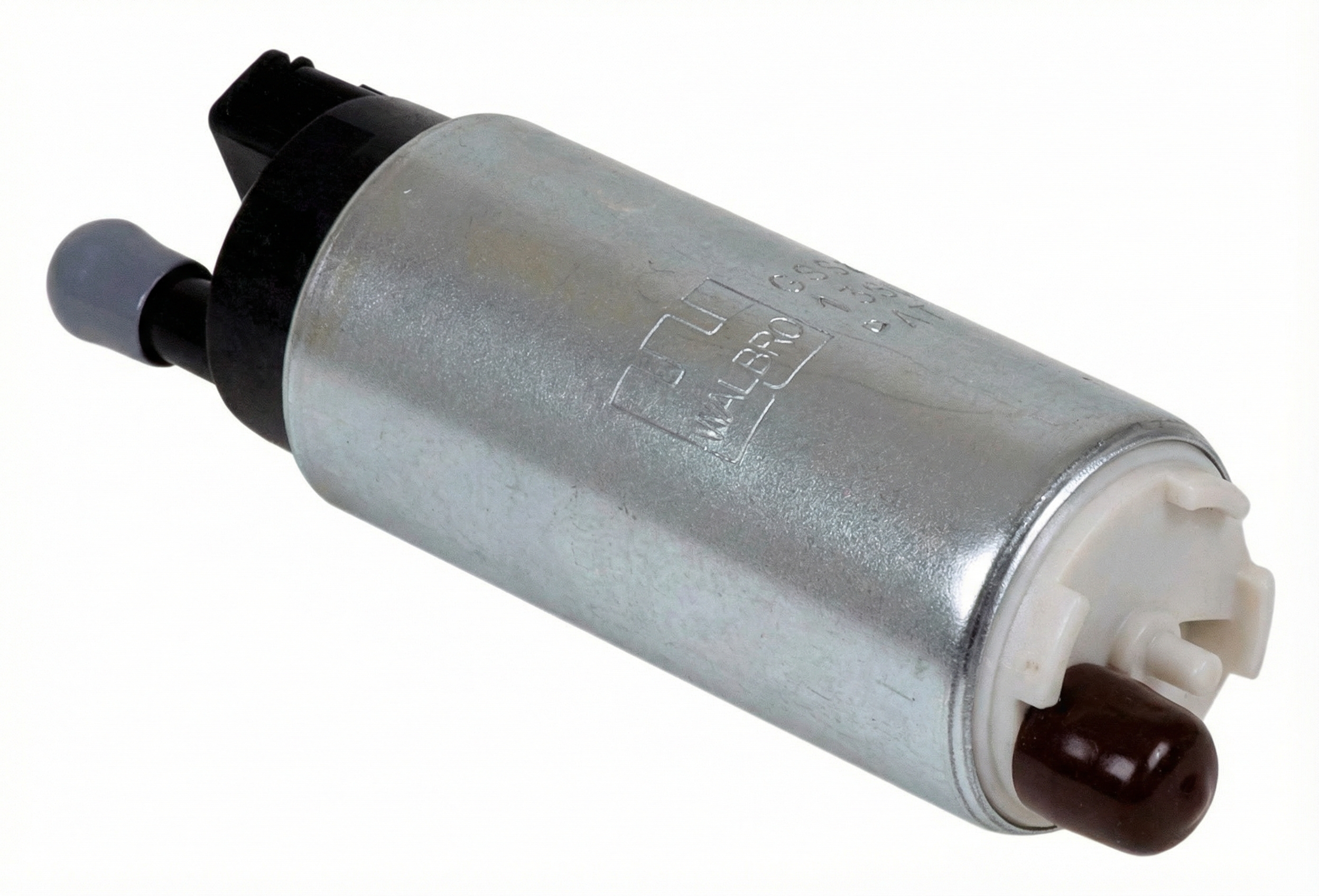
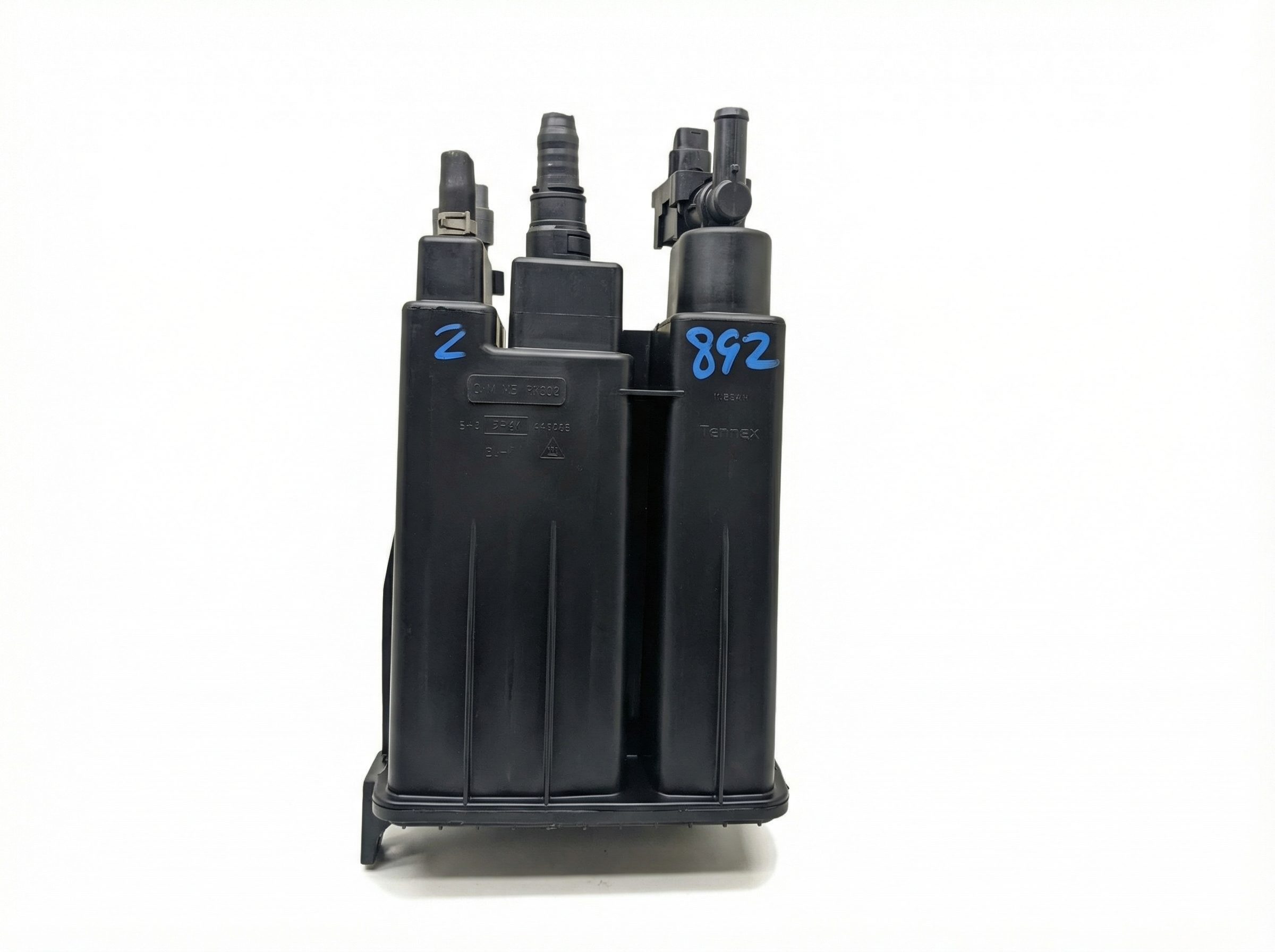
New Aftermarket Parts Available

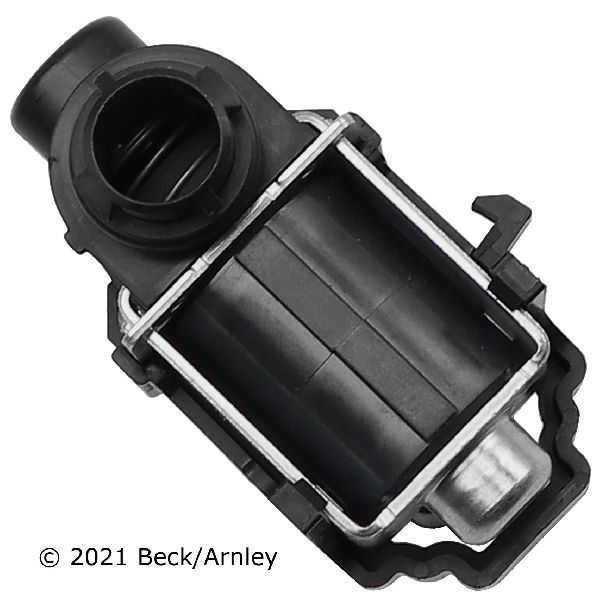
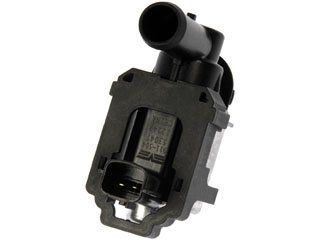

The information in this article is provided for general reference and educational purposes only. Vehicle specifications, procedures, and part compatibility can vary by production date, trim level, and region. Always consult your vehicle's factory service manual and verify part numbers before purchasing or performing repairs. Safety-critical components such as airbags, seat belts, and braking systems should be installed by a qualified professional.
- Nissan MURANO:
- 🧭 Diagnostic Flowchart
- 🎬 Helpful Videos
- 🛍️ Shop This Part
- What's Unique About the 2017-2022 Nissan MURANO
- Symptoms You May Notice
- Most Likely Causes
- Rare But Worth Checking
- Diagnosis Steps
- Parts You'll Likely Need
- Related Codes That Often Appear With This One
- Technical Service Bulletins (TSBs) & Recalls
- Platform-Specific Known Issues
- Mechanic-Grade Diagnostic Values
- Scan Tool Commands That Help
- Wiring & Ground Locations
- OEM Part Supersession History
- Model Year Variations Within This Range
- 🎟️ Get 5% Off