

P0455 on 2017-2021 Nissan NV: EVAP Gross Leak Causes and Fixes
For a 2017-2021 Nissan NV, code P0455 almost always means you have a loose gas cap or a failed EVAP vent control valve. First, tighten or replace your gas cap (OEM part #17251-ZZ62D). If the light returns, the vent valve (OEM part #14935-JF02C) located near the charcoal canister at the rear of the van is the next most likely culprit, costing about $60-$100 for the part.
- P0455 on your Nissan NV means a large leak has been detected in the emissions system.
- Always check your gas cap first. Make sure it's tight and the seal isn't cracked. This is the cheapest and most common fix.
- If the gas cap isn't the problem, the EVAP vent control valve located at the rear of the van is the next most likely part to have failed.
- The vehicle is safe to drive, but you should resolve the issue to pass emissions testing and prevent fuel waste.
- A professional smoke test is the fastest way to accurately pinpoint the leak if it's not the gas cap.
What's Unique About the 2017-2021 Nissan NV
The Nissan NV is built on the F-Alpha platform, shared with the Titan and Armada, all of which are particularly prone to failures of the EVAP vent control valve. This component, located near the charcoal canister at the rear of the vehicle, has been redesigned by Nissan multiple times (evidenced by superseded part numbers), indicating a known weakness in the original part. While a loose gas cap is the most common cause across all vehicles, the vent valve is a very close second on this platform and is specifically addressed in Nissan service bulletins for related EVAP codes.
Diagnostic Flowchart
Tap your situation to follow the diagnostic path that matches what you're seeing on this vehicle.
Symptoms You May Notice
- Check Engine Light is on
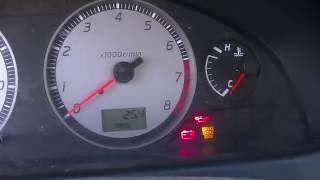
- A "Loose Fuel Cap" warning may appear on the dashboard
- A faint to strong smell of gasoline, often near the rear of the vehicle or after refueling
- In some cases, difficulty starting the engine right after refueling
- Fuel pump nozzle clicks off repeatedly when trying to refuel, even when the tank is not full
- Replacing the purge valve in the engine bay when the more common failure is the vent valve at the rear of the vehicle.
- Replacing other EVAP components without first checking for a loose or faulty gas cap, which is the number one cause.
Most Likely Causes
- Loose or Faulty Fuel Cap 🔴 High Probability → Shop Fuel Tank Cap This is the most common cause for P0455 on any vehicle. The rubber O-ring on the cap can wear out, crack, or the cap may simply not have been tightened correctly after refueling. Nissan TSBs consistently list this as the first check.
How to confirm: Inspect the gas cap for any visible cracks or damage to the seal. Remove and reinstall it, ensuring it clicks at least once. If the seal is worn or the cap feels loose, it should be replaced. A dirty cap or filler neck can also prevent a good seal.
Typical fix: Tighten the cap or replace it with a new one. It is highly recommended to use a genuine OEM Nissan cap, as some aftermarket caps do not seal properly. The correct OEM part is often cheaper than the vent valve and is the easiest first step.
Est. part cost: $25-$50 - Failed EVAP Vent Control Valve (Solenoid) 🔴 High Probability → Shop Vapor Canister Vent Valve This is a very common failure point on many Nissan models, including the NV and its platform mates, the Titan and Armada. The valve gets stuck open due to dirt, debris, or internal failure, preventing the EVAP system from sealing properly for its test. Nissan has released updated versions of this part, confirming it as a known issue.
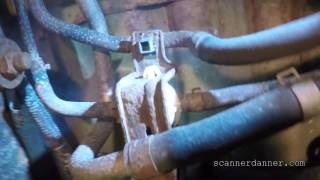
How to confirm: The valve is located at the rear of the van, mounted to the charcoal canister. It can be tested by applying 12V power to see if the solenoid actuates (clicks). A professional smoke test will definitively show a leak from the valve if it is stuck open or from its O-ring seal. TSB NTB17-082E specifically points to a leaking O-ring on this valve as a cause for a similar code (P0456).
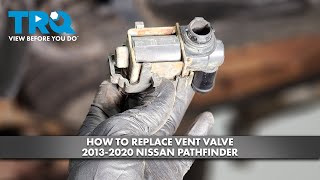
Typical fix: Replace the EVAP vent control valve. It is typically mounted to the EVAP canister with a twist-lock motion and secured by one or two bolts. Access is from underneath the vehicle, behind the rear axle.
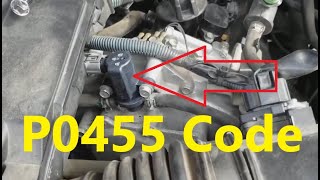
Est. part cost: $60-$120 - Failed EVAP Canister Purge Valve 🟡 Medium Probability → Shop Vapor Canister This valve, located in the engine bay, can become stuck open, creating a constant vacuum leak into the EVAP system. While less common than the rear vent valve, it is still a frequent failure point.
How to confirm: Locate the valve in the engine compartment. It will have two hoses and an electrical connector. With the engine off, disconnect the hose from the valve that leads to the intake manifold and attempt to blow through it. If air passes through, the valve is stuck open and has failed.
Typical fix: Replace the purge valve.
Est. part cost: $40-$90 - Cracked or Disconnected EVAP Hose ⚪ Low Probability Rubber hoses can become brittle and crack over time due to age and heat cycles, particularly at connection points to other components.
How to confirm: A visual inspection may reveal an obviously disconnected or cracked hose. A smoke test is the most effective way to find small cracks or leaks in the hose network that are not visible to the naked eye.
Typical fix: Replace the damaged section of hose. Nissan parts diagrams show multiple specific hose assemblies.
Est. part cost: $10-$85
Rare But Worth Checking
- Cracked Charcoal Canister: → Shop Vapor Canister The plastic housing of the canister can develop cracks, especially from road debris or impact, creating a large leak. A smoke test will easily reveal a cracked canister.
- Leaking Fuel Tank Filler Neck: → Shop Fuel Tank On older vehicles or those in rust-prone areas, the metal filler neck can corrode and perforate, creating a leak that the EVAP system will detect. This is a common issue discussed in forums for older Nissan trucks.
- Faulty Fuel Tank Pressure Sensor: → Shop Fuel Tank The sensor that monitors EVAP system pressure can fail and give a false reading, triggering the P0455 code even if no leak exists. This is less common and usually accompanied by other sensor-specific codes.
Diagnosis Steps
- Read the code with an OBD-II scanner to confirm P0455 is present.
- Inspect the fuel cap. Ensure it is tight and the seal is not cracked or worn. Clean any dirt from the cap and filler neck. Tighten it until it clicks and clear the code. Drive for a few days to see if the code returns.
- If the code returns, replace the fuel cap with a genuine OEM part (Part #17251-ZZ62D) as it is an inexpensive and very common failure point.
- If the code persists, perform a thorough visual inspection of all accessible EVAP hoses between the engine bay and the fuel tank for obvious cracks or disconnections.
- Locate the EVAP vent control valve near the charcoal canister at the rear of the van, typically mounted directly to the canister. Inspect it for cracks or damage.
- If a leak source is not obvious, perform a smoke test. This involves injecting smoke into the EVAP service port (often a green cap in the engine bay) and watching for where it escapes. Remember the vent valve is normally open, so it must be commanded closed with a scan tool for the test to be effective.
- Based on the smoke test, replace the leaking component. This is most commonly the vent control valve, but could also be a hose, the purge valve, or the charcoal canister itself.
Parts You'll Likely Need
- EVAP Vent Control Valve
(OEM #14935-JF02C)— This is a known high-failure item on Nissan F-Alpha platform vehicles and a very common cause for P0455 after the gas cap has been ruled out. The part number has been superseded multiple times (from 14935-JF00A, etc.), indicating revisions to fix a design flaw.
Trusted brands: Nissan (Genuine), Dorman, Standard Motor Products
OEM price range: $70-$110
Aftermarket price range: $50-$90 - Fuel Cap
(OEM #17251-ZZ62D)— This is the single most common, cheapest, and easiest fix for a P0455 code. The seal wears out over time or the cap is not tightened properly. This part number supersedes several previous versions.
Trusted brands: Nissan (Genuine)
OEM price range: $25-$45
Aftermarket price range: $15-$30
Related Codes That Often Appear With This One
- P0442 — This code is for a small EVAP leak. It can appear alongside P0455 if the system has multiple leaks or if the leak size is borderline between small and large.
- P0456 — This code is for a very small EVAP leak. Nissan TSB NTB13-097J groups P0455, P0442, and P0456 together as they all relate to the same system and often share causes like the gas cap or vent valve O-ring.
Technical Service Bulletins (TSBs) & Recalls
- NTB13-097J: EVAP LEAK DTC P0442, P0455, P0456 INFORMATION. This bulletin provides the official diagnostic flowchart for dealers and emphasizes checking the fuel cap first, and explicitly states that a test drive is not needed for diagnosis.
- NTB17-082E: DTC P0456 CAUSED BY EVAP LEAK AT VENT CONTROL VALVE O-RING. While for a different code, it identifies a known sealing problem with the vent control valve, a primary suspect for P0455.
Platform-Specific Known Issues
- Nissan has issued multiple versions of Technical Service Bulletin NTB13-097 (currently NTB13-097J) specifically to address diagnostic procedures for EVAP leak codes P0442, P0455, and P0456, indicating this is a common service issue.
- Another TSB, NTB17-082E, addresses a P0456 (very small leak) caused specifically by a faulty O-ring on the vent control valve, which is highly relevant as this same part is a primary cause of the P0455 gross leak.
Scan Tool Commands That Help
- Nissan CONSULT or equivalent professional scan tool: EVAP System Leak Check / Active Test — This is the primary function used to diagnose EVAP leaks. It allows the technician to command valves to seal the system for testing.
- Nissan CONSULT or equivalent professional scan tool: Vent Valve Control — Used to command the normally-open EVAP Vent Control Valve to close. This is a required step before performing a smoke test or pressure decay test to ensure the system is sealed.
- Nissan CONSULT or equivalent professional scan tool: Purge Volume Control Valve Test — Allows the technician to cycle the normally-closed purge valve to check for correct mechanical and electrical operation (e.g., listening for a click, checking for flow).
Wiring & Ground Locations
- EVAP Control System Pressure Sensor — Located on the front of the fuel tank.. This sensor is what reports pressure changes to the ECM. A faulty sensor or its wiring can cause a false P0455 code.
- ECM (Engine Control Module) — Located in the right rear corner of the engine compartment on a 2012 NV.. The ECM receives signals from the EVAP pressure sensor and controls the purge and vent valves. All related wiring terminates here.
- Ground Point M61 — Located on the left side of the dash on a 2012 NV.. Poor grounds can cause erratic behavior in sensors and solenoids. While not a primary suspect, checking major body and chassis grounds is a valid step in complex electrical diagnosis.
"I Checked Everything" — The Actual Cause
- In cases where a thorough smoke test reveals no leaks, the Fuel Tank Pressure (FTP) sensor itself may be faulty. The sensor can fail and send incorrect data to the ECM, making the computer believe there is a large leak when the system is actually sealed. This is often diagnosed after all other common leak points have been ruled out.
When the Usual Fixes Don't Work
- While the most common causes are the gas cap and vent valve, there are documented cases where neither is the culprit. In some instances, particularly on vehicles from regions with heavy road salt use, the root cause has been a corroded and perforated steel line within the EVAP system, such as the one running from the charcoal canister towards the fuel tank. This type of failure will not be fixed by replacing the common plastic and rubber components and requires a careful smoke test or visual inspection of all hard lines.
OEM Part Supersession History
Multiple (17251-ZZ60A, 17251-ZZ61A, 17251-EZ30A, etc.)→17251-ZZ62D— Standard design updates and consolidation for the fuel cap.14935-JF00A, 14935-JF00B, 14935AM60B→14935-JF02C (current part not explicitly found, but is the one listed in Pass 2)— The EVAP vent control valve is a known high-failure part on this platform. The multiple supersessions indicate design revisions by Nissan to improve reliability and prevent the valve from sticking open.
Heads up: Always use the latest part number available for your vehicle's VIN, as earlier versions are prone to failure.
Helpful Videos
We Have This Part in Stock


The information in this article is provided for general reference and educational purposes only. Vehicle specifications, procedures, and part compatibility can vary by production date, trim level, and region. Always consult your vehicle's factory service manual and verify part numbers before purchasing or performing repairs. Safety-critical components such as airbags, seat belts, and braking systems should be installed by a qualified professional.
- Nissan NV:
- 🧭 Diagnostic Flowchart
- 🎬 Helpful Videos
- 🛍️ Shop This Part
- What's Unique About the 2017-2021 Nissan NV
- Symptoms You May Notice
- Most Likely Causes
- Rare But Worth Checking
- Diagnosis Steps
- Parts You'll Likely Need
- Related Codes That Often Appear With This One
- Technical Service Bulletins (TSBs) & Recalls
- Platform-Specific Known Issues
- Scan Tool Commands That Help
- Wiring & Ground Locations
- "I Checked Everything" — The Actual Cause
- When the Usual Fixes Don't Work
- OEM Part Supersession History
- 🎟️ Get 5% Off