

P0455 on 2016-2018 Nissan NV200: EVAP Large Leak Causes and Fixes
For a 2016-2018 Nissan NV200, code P0455 is most often caused by a loose or faulty gas cap. If tightening the cap doesn't fix it, the next most likely cause is a failed EVAP vent control valve near the fuel tank. A new gas cap is about $25-$40, while the valve costs around $60-$100. This issue is also common on its rebadged twin, the Chevrolet City Express.
- P0455 indicates a large leak in the EVAP emissions system.
- Always check the gas cap first; it is the most common and cheapest fix.
- If the gas cap is not the issue, the EVAP vent control valve (solenoid) located near the fuel tank is the next most likely part to have failed.
- The vehicle is safe to drive, but the issue must be fixed to pass an emissions test.
- A smoke test is the most effective professional method to find the exact location of a leak if it is not obvious.
What's Unique About the 2016-2018 Nissan NV200
While P0455 can occur on any vehicle, Nissan has a well-documented history with this code across its lineup, including the NV200. The manufacturer has issued multiple Technical Service Bulletins (TSBs) regarding EVAP leak diagnosis. The EVAP canister vent control valve is a notoriously common failure point on a wide range of Nissan models from this era, making it a highly probable cause on the NV200 after the gas cap has been ruled out. Its location under the chassis makes it vulnerable to road dirt, debris, and moisture, which can cause the valve to stick open, creating the large leak detected by the system.
Diagnostic Flowchart
Tap your situation to follow the diagnostic path that matches what you're seeing on this vehicle.
Symptoms You May Notice
- Check Engine Light is on
- A faint smell of fuel, possibly near the rear of the vehicle or after refueling.
- Difficulty starting the engine immediately after refueling (this points specifically to a faulty purge valve stuck open, allowing fuel vapors to flood the intake).
- Gas cap feels loose, doesn't click when tightened, or the seal is visibly cracked.
- Replacing the oxygen (O2) sensors
- Replacing the mass airflow (MAF) sensor
- Replacing the catalytic converter
Most Likely Causes
- Loose or Faulty Gas Cap 🔴 High Probability → Shop Fuel Tank Cap This is the most common cause on all vehicles. The cap may not have been tightened properly after refueling, or the rubber O-ring seal can crack and wear out over time. Nissan TSBs NTB13-097J and others list this as the very first check.
How to confirm: Inspect the gas cap for any visible cracks or damage to the seal. Remove and reinstall it, ensuring it clicks at least once. A dirty or rusted fuel filler neck can also prevent a good seal. Using a non-OEM cap can sometimes cause sealing issues.
Typical fix: Tighten the cap until it clicks. If the seal is damaged or the cap is worn, replace it, preferably with a genuine OEM part.
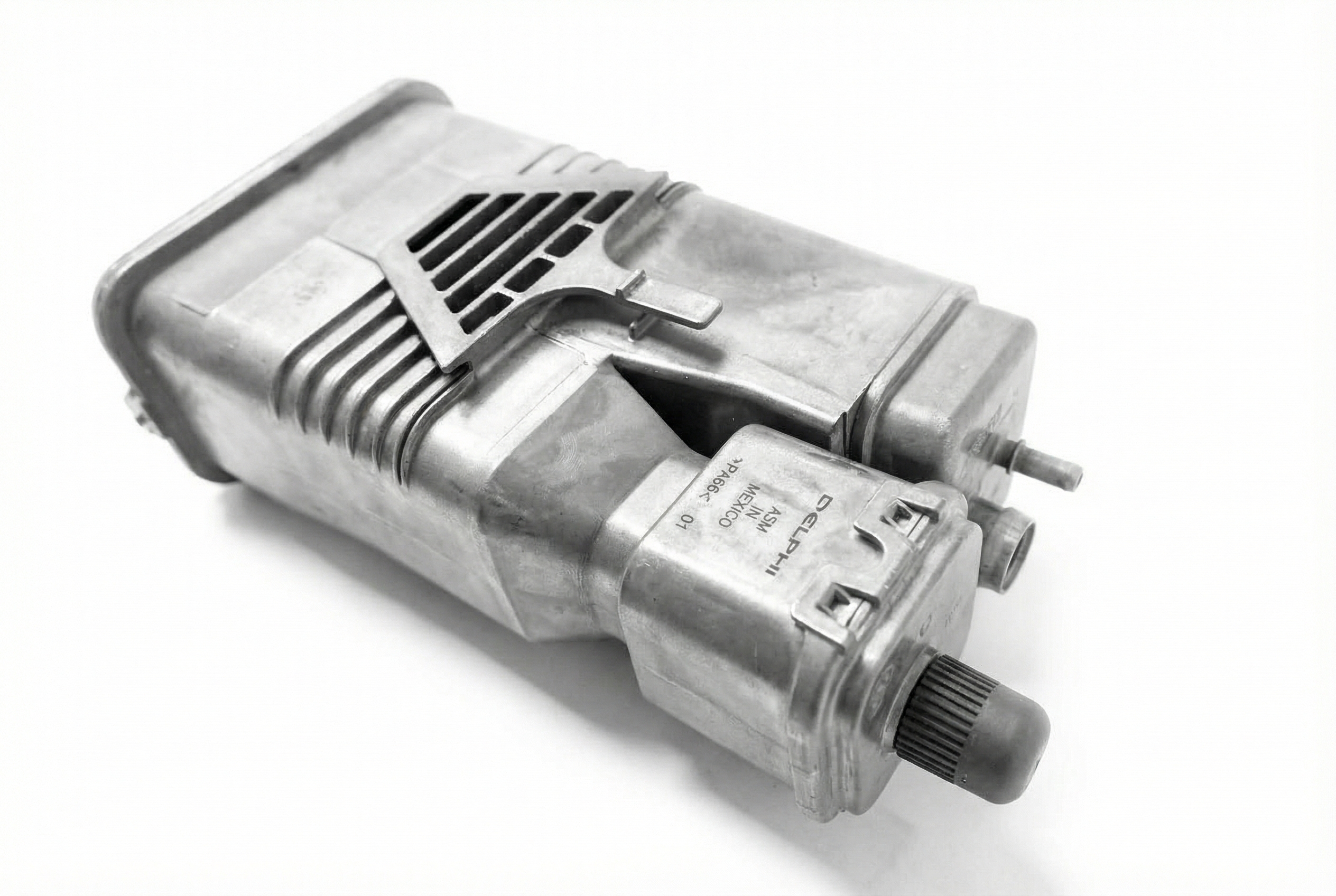
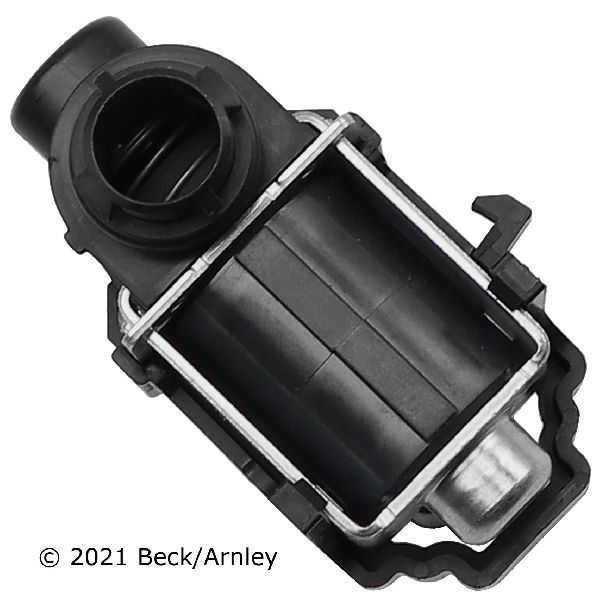
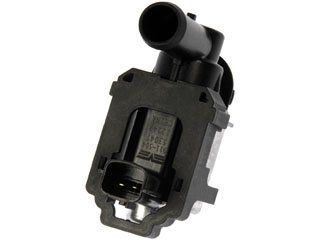
Est. part cost: $25-$40 - Failed EVAP Vent Control Valve (Solenoid) 🔴 High Probability → Shop Vapor Canister Vent Valve This is a very common failure point on many Nissan models. The valve, located near the charcoal canister by the fuel tank, gets stuck open due to dirt, debris, or internal failure, creating a large leak. Nissan has released several updated versions of this part, indicating a known design weakness.
How to confirm: The valve can be tested with a capable scan tool or by applying 12v power to see if it actuates (you should hear a click). A smoke test is the most definitive way to confirm a leak; smoke will exit the vent valve if it's stuck open. It is located at the rear of the van, mounted to the charcoal canister.
Typical fix: Replace the EVAP vent control valve. It typically twists and locks into the canister and is held by a single bolt.
Est. part cost: $60-$100 - Failed EVAP Canister Purge Valve (Solenoid) 🟡 Medium Probability → Shop Vapor Canister This valve can get stuck open, creating a constant vacuum leak in the EVAP system. This is a common failure on many modern vehicles and is the prime suspect if the vehicle is hard to start after getting gas.
How to confirm: Locate the valve in the engine bay, near the throttle body. With the engine off, disconnect the valve and try to blow through it. If air passes, it is stuck open and has failed, as it is a normally closed valve.
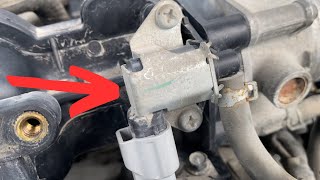
Typical fix: Replace the purge valve. It is secured 🎬 Watch: How to locate and replace the NV200 purge solenoid. by one or two bolts and has two hoses and an electrical connector.
Est. part cost: $80-$150 - Cracked or Damaged EVAP (Charcoal) Canister ⚪ Low Probability → Shop Vapor Canister The plastic body of the canister can become brittle over time and develop cracks, especially if the vehicle is operated in harsh environments or sustains an underbody impact.
How to confirm: A visual inspection may reveal obvious cracks, but a smoke test is the most effective method to find a leak in the canister body itself.
Typical fix: Replace the entire EVAP canister assembly.
Est. part cost: $200-$300
Rare But Worth Checking
- Cracked or Disconnected EVAP Hose: Rubber hoses throughout the system can become brittle and crack, or a connection could come loose. This is usually found with a smoke test.
- Damaged or Rusted Fuel Filler Neck: → Shop Fuel Filler Neck In regions with heavy road salt use, the metal pipe leading to the gas tank can corrode and develop a hole. This will cause a large, persistent leak that a new gas cap won't fix. A smoke test will quickly reveal a leak from this area.
- Faulty Fuel Tank Pressure Sensor: → Shop Fuel Tank Rarely, the sensor that detects the pressure in the system can fail and send incorrect data to the computer, making it think there is a leak when there isn't one.
Diagnosis Steps
- Retrieve the P0455 code using an OBD-II scanner.
- Inspect the gas cap. Ensure it is tight and clicks when closed. Check the rubber seal for cracks or wear. If in doubt, replace it with an OEM cap, clear the code, and drive to see if it returns.
- If the code persists, visually inspect all accessible EVAP hoses between the engine bay and the fuel tank for obvious cracks, disconnections, or damage.
- Locate the EVAP purge valve in the engine bay and test it to ensure it is not stuck open, especially if you have hard starts after refueling.
- Locate the EVAP vent control valve near the charcoal canister at the rear of the vehicle. Inspect it for damage and test its function by applying 12V power. This is a highly probable cause.
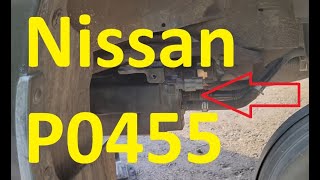
- If the leak source is still not apparent, perform a smoke test. This involves injecting UV-dyed smoke into the EVAP system's service port and watching where it escapes. This will 🎬 Watch: A helpful guide on fixing large P0455 EVAP leaks. definitively pinpoint the exact location of the leak, whether it's a hose, the canister, the vent valve, or the fuel filler neck.
Parts You'll Likely Need
- Fuel Filler Cap
(OEM #17251-3RA0A)— This is the most frequent cause of P0455 due to being left loose or the seal wearing out. It is always the first and cheapest part to check. Other compatible OEM numbers may include 17251-3JA0A and 17251-ZZ62D.
Trusted brands: Nissan OEM, Stant
OEM price range: $25-$40
Aftermarket price range: $15-$30 - EVAP Canister Vent Control Valve
(OEM #14935-JF02C)— This is a very common failure point on Nissan vehicles that causes a large leak when it sticks open. The original part has been superseded multiple times (previous numbers include 14935-JF00A, -JF00B, -JF00C, -JF00D, -JF00E), indicating a known issue with the component.
Trusted brands: Nissan OEM, Bosch, Dorman (e.g., 911-506)
OEM price range: $80-$110
Aftermarket price range: $50-$90 - EVAP Vapor Canister
(OEM #14950-6CC0A)— Replaced only if the canister body itself is confirmed to be cracked and leaking, usually via a smoke test. This is much less common than a faulty vent valve.
Trusted brands: Nissan OEM, Dorman
OEM price range: $280-$400
Aftermarket price range: $200-$250
Related Codes That Often Appear With This One
- P0442 — This code indicates a small EVAP leak. If a component is beginning to fail, it might first trigger a small leak code before worsening and triggering the large leak code P0455. Nissan's TSBs group these codes together for diagnosis.
- P0456 — This code indicates a very small EVAP leak. Similar to P0442, it can appear alongside P0455 if the system has multiple leak points or a failing component is detected intermittently.
Technical Service Bulletins (TSBs) & Recalls
- NTB13-097J: EVAP LEAK DTC P0442, P0455, P0456 INFORMATION. This TSB provides a diagnostic flowchart for dealers, stressing that a loose fuel cap is the primary suspect and that test drives are not part of the diagnostic procedure.
- NTB13-097g: ALL MODEL YEAR 2012 AND NEWER NISSAN VEHICLES; EVAP LEAK DTC P0442, P0455, P0456 INFORMATION. An earlier version of the above TSB with similar information.
- NTB13-097D: ALL MODEL YEAR 2012 AND NEWER NISSAN VEHICLES; EVAP LEAK DTC P0442, P0455, P0456 INFORMATION. An even earlier revision of the same diagnostic bulletin.
Platform-Specific Known Issues
- Nissan's TSB NTB13-097J provides a specific diagnostic flowchart for technicians to follow for P0442, P0455, and P0456 codes, starting with the fuel cap and emphasizing against test drives for confirmation.
- The under-chassis location of the EVAP vent control valve makes it highly susceptible to road dust and debris, which can clog the valve or its filter, causing it to stick open. In some cases on similar Nissan platforms, spiders have been known to build nests in the filter box, causing a blockage.
- A real-world owner experience on a similar platform with a P0455 code reported a crank-no-start condition immediately after refueling. The issue was resolved by confirming the EVAP canister purge valve in the engine bay was stuck open.
Mechanic-Grade Diagnostic Values
- EVAP Canister Vent Control Valve Solenoid Resistance — expected: 15 to 30 Ohms. Failure: A reading significantly outside this range indicates a damaged internal winding, requiring valve replacement.
- EVAP Canister Purge Valve Solenoid Resistance — expected: 12 to 130 Ohms (Varies by specific part, but generally within this range). Failure: A reading far outside the expected range for the specific part suggests an electrical fault in the solenoid.
- Fuel Tank Pressure (FTP) Sensor Voltage (Key On, Engine Off) — expected: Approximately 1.5 Volts with the gas cap off (atmospheric pressure).. Failure: Voltage stuck at 0V or 5V, or not changing when vacuum/pressure is applied, indicates a faulty sensor or wiring issue.
- FTP Sensor 5V Reference Voltage — expected: Approximately 5 Volts at the sensor connector with the key on.. Failure: No voltage indicates a wiring problem from the ECM, not a faulty sensor.
Scan Tool Commands That Help
- Nissan CONSULT (or advanced aftermarket scanner): EVAP System Leak Test (Active Test) — This function commands the vent valve to close and the purge valve to open, allowing the system to be sealed and monitored for a pressure drop. It's used to confirm the system's integrity and the function of the valves without manual testing.
- Nissan CONSULT (or advanced aftermarket scanner): Vent Valve Control (Active Test) — This bidirectional command allows a technician to manually toggle the EVAP vent control valve open and closed. It is used to confirm if the solenoid is responding to the ECM's command and is not mechanically stuck.
- Nissan CONSULT (or advanced aftermarket scanner): Purge Volume Control Valve (Active Test) — This command manually opens and closes the purge valve in the engine bay. A technician can monitor fuel tank pressure or listen for a click to confirm the valve is working electrically and mechanically.
Wiring & Ground Locations
- B63 / B64 — Body ground points located in the rear of the vehicle, near the EVAP canister and other rear components.. The EVAP vent control valve and fuel tank pressure sensor require a solid ground to function correctly. A corroded or loose ground at these locations can cause erratic sensor readings or failure of the vent valve to actuate, potentially mimicking a leak or component failure.
- EVAP control system pressure sensor connector (B62) — On the EVAP canister assembly at the rear of the vehicle.. This 3-wire connector provides power, ground, and signal for the fuel tank pressure sensor. Technicians need to access these pins to test for the 5V reference, ground integrity, and the signal voltage to diagnose a faulty sensor.
Real Owner Repair Stories
- YouTube channel 'P0455 Code Chevy Problem Solved' (2007 Chevrolet Express 2500 (rebadged twin with a similar EVAP system)) — Intermittent P0455 code for 6 months.
❌ Tried (didn't work) The owner suspected the gas cap and purge valve initially.
✅ What actually fixed it The EVAP canister vent valve was found to be seized and unable to close when 12V power was applied. Dirt was falling out of it when tapped. Replacing the vent valve resolved the P0455 code. - YouTube channel 'Finally Passed SMOG!!! Code P0455 Fixed!!!' (Nissan vehicle (model not specified, but demonstrates the common Nissan issue)) — Failed smog test due to P0455 code.
❌ Tried (didn't work) Initial research pointed to various potential vacuum leaks.
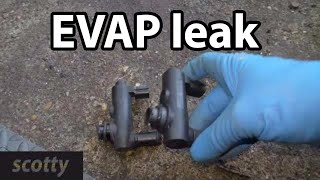
✅ What actually fixed it The EVAP canister vent valve (solenoid) was getting stuck open and not actuating properly. The video shows a side-by-side comparison where the old valve was stuck and the new one clicked when power was applied. Replacing the vent valve allowed the vehicle to pass the smog test.
"I Checked Everything" — The Actual Cause
- In cases where a smoke test shows no leaks, the issue can be a faulty Fuel Tank Pressure (FTP) sensor giving incorrect readings to the computer, making it think there is a leak.
- An intermittent failure of the EVAP vent control valve can also be the cause. It may seal perfectly during a smoke test but stick open under specific driving conditions, triggering the code. Testing the valve electrically by applying 12V power multiple times can sometimes reveal this intermittent fault.
OEM Part Supersession History
14935-JF00A, 14935-JF00B, 14935-JF00C, 14935-JF00D, 14935-JF00E→14935-JF02C— This is the EVAP Canister Vent Control Valve. The multiple supersessions indicate that Nissan made several revisions to the part over time, likely to improve its reliability and prevent it from sticking open, which is the common failure mode that causes P0455.
Helpful Videos
Used OEM Parts in Stock
New Aftermarket Parts Available


The information in this article is provided for general reference and educational purposes only. Vehicle specifications, procedures, and part compatibility can vary by production date, trim level, and region. Always consult your vehicle's factory service manual and verify part numbers before purchasing or performing repairs. Safety-critical components such as airbags, seat belts, and braking systems should be installed by a qualified professional.
- Nissan NV200:
- 🧭 Diagnostic Flowchart
- 🎬 Helpful Videos
- 🛍️ Shop This Part
- What's Unique About the 2016-2018 Nissan NV200
- Symptoms You May Notice
- Most Likely Causes
- Rare But Worth Checking
- Diagnosis Steps
- Parts You'll Likely Need
- Related Codes That Often Appear With This One
- Technical Service Bulletins (TSBs) & Recalls
- Platform-Specific Known Issues
- Mechanic-Grade Diagnostic Values
- Scan Tool Commands That Help
- Wiring & Ground Locations
- Real Owner Repair Stories
- "I Checked Everything" — The Actual Cause
- OEM Part Supersession History
- 🎟️ Get 5% Off