

P0455 on 2015-2020 Nissan Pathfinder: EVAP Gross Leak Causes and Fixes
Code P0455 on your Pathfinder indicates a large leak in the fuel vapor (EVAP) system. Before suspecting major issues, check that your gas cap is tight and the seal is not cracked; using an OEM cap is critical. The next most common cause is a faulty EVAP canister vent control valve or purge valve, which are relatively inexpensive and accessible for DIY replacement.
- P0455 signifies a large leak in the fuel vapor system; it is an emissions issue, not a direct threat to engine performance.
- Always start with the simplest fix: check that your gas cap is tight and its seal is intact. An OEM replacement is recommended if it's faulty.
- The two most common part failures are the EVAP vent control valve (at the rear of the car) and the purge solenoid (in the engine bay). Both are accessible for DIY replacement.
- If a visual inspection doesn't reveal the problem, a smoke test is the most reliable method to find the exact source of the leak.
- Ignoring this code will lead to a failed emissions test and the continuous release of fuel vapors into the atmosphere.
What's Unique About the 2015-2020 Nissan PATHFINDER
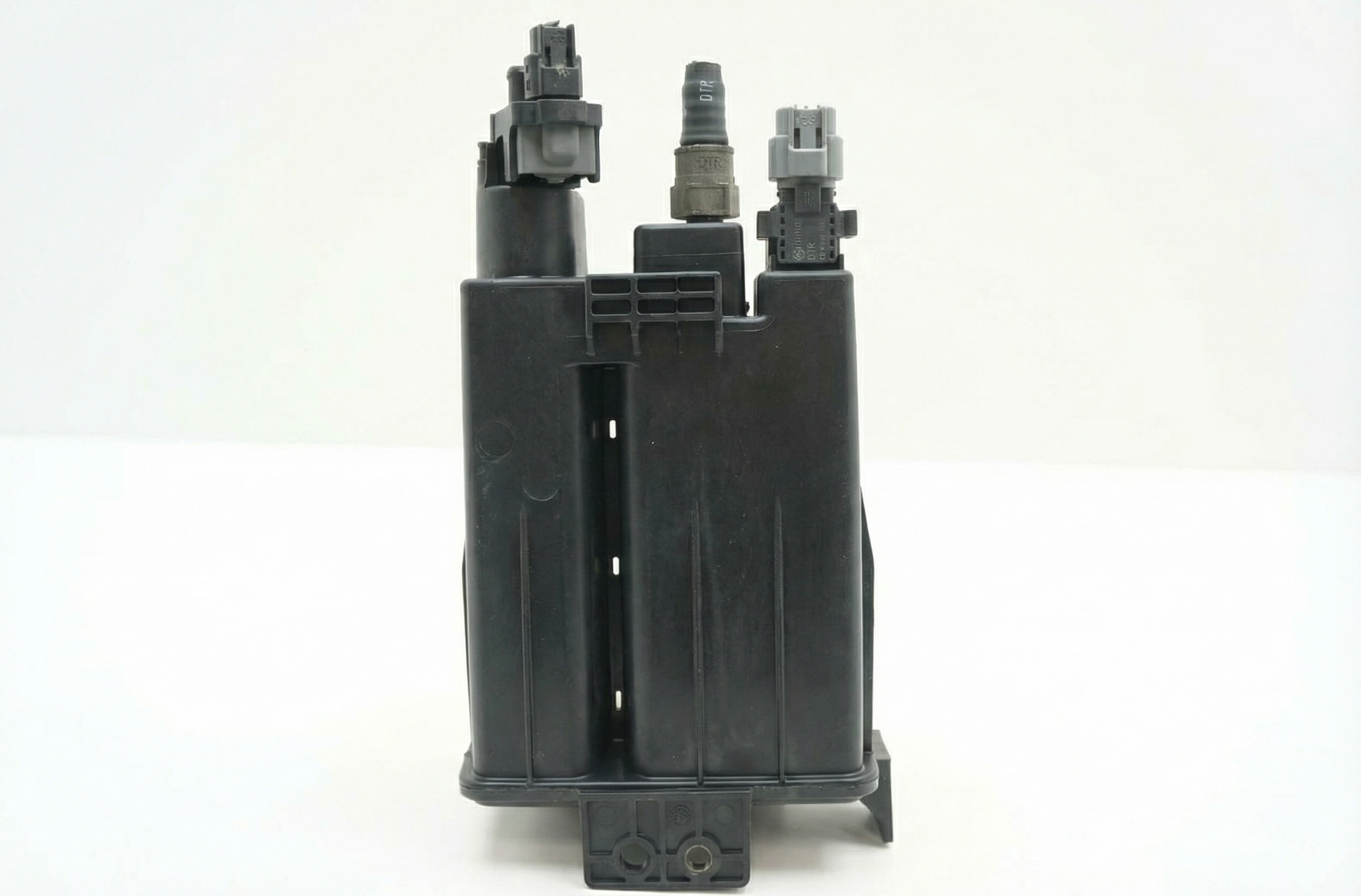
While P0455 is a universal code, Nissan has acknowledged its prevalence by issuing several Technical Service Bulletins (TSBs) for diagnosing EVAP leaks across its model line, including the Pathfinder. For the 2015-2020 Pathfinder (R52 generation) and its platform-mates like the Infiniti QX60, the EVAP canister and its associated vent control valve are common culprits. These components are located at the rear of the vehicle, specifically on the driver's side between the spare tire and the rear wheel, making them somewhat accessible for inspection and replacement.
Diagnostic Flowchart
Tap your situation to follow the diagnostic path that matches what you're seeing on this vehicle.
Symptoms You May Notice
- Check Engine Light is on
- A noticeable smell of gasoline, especially around the rear of the vehicle
- A "Check Gas Cap" or "Loose Fuel Cap" message may appear on the dashboard
- Difficulty starting the engine right after refueling (less common)
- Difficulty filling the fuel tank (gas pump nozzle clicks off prematurely)
- Replacing oxygen sensors or other unrelated emissions components before properly diagnosing the EVAP system with a visual inspection and smoke test.
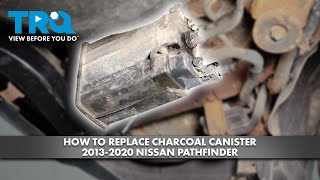
- Replacing the entire charcoal canister when only the much cheaper vent control valve or its O-ring has failed. 🎬 Watch this walkthrough if you need to replace the entire canister.
Most Likely Causes
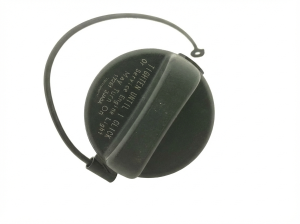
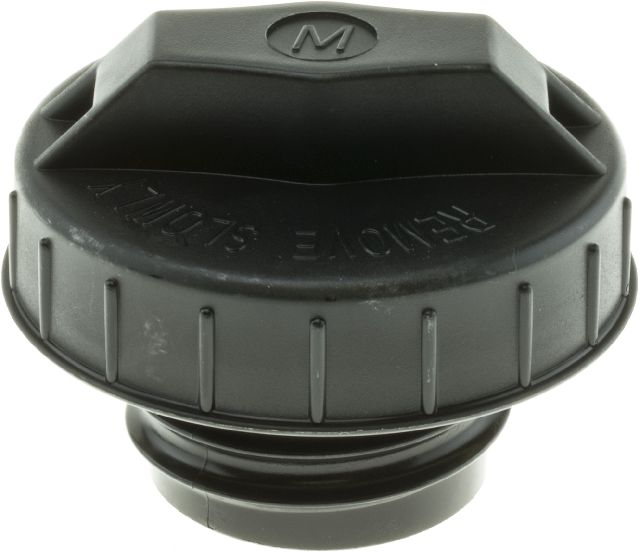
- Loose, Damaged, or Incorrect Gas Cap 🔴 High Probability → Shop Fuel Tank Cap This is the most common cause for any vehicle. The rubber seal can crack over time, or the cap may not be tightened until it clicks. Forum users have reported that some aftermarket caps fail to create a proper seal, making an OEM cap the recommended choice.
How to confirm: Remove the gas cap and inspect the rubber O-ring for cracks, dirt, or damage. Ensure it is tightened correctly (usually at least one click). Even if it looks good, the internal valve can fail.
Typical fix: Tighten or replace the gas cap. Using a genuine OEM Nissan cap is highly recommended as some aftermarket caps do not seal properly, a lesson learned by owners who tried cheaper alternatives first.
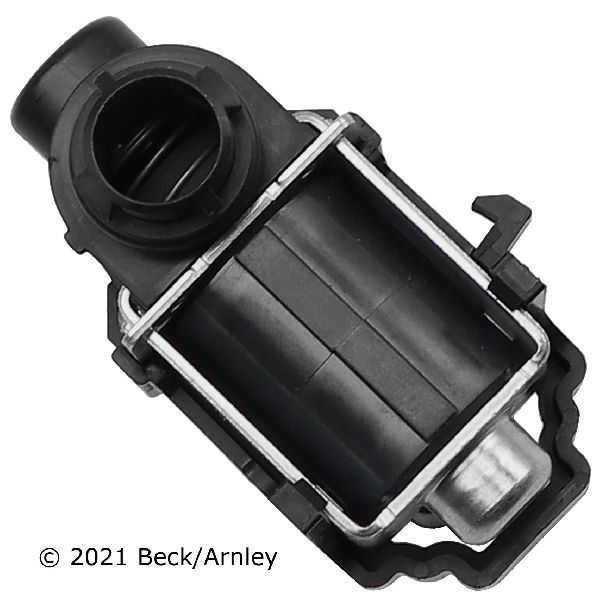
Est. part cost: $20-$40 - Faulty EVAP Canister Vent Control Valve 🔴 High Probability → Shop Vapor Canister Vent Valve This valve is a known failure point on many Nissan models. It is exposed to the elements under the vehicle and can get stuck open due to dirt, debris, or internal failure, causing a large leak. The O-ring that seals the valve to the canister is also a common failure point that can cause smaller leaks (P0456) before failing completely.
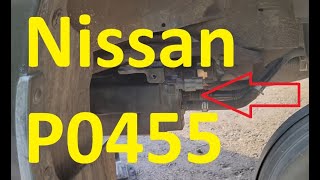
How to confirm: The valve is normally open. A technician can command it closed with a scan tool during a smoke test. If smoke exits the valve when commanded closed, it has failed. A DIY check involves applying 12V power to its terminals and listening for a click; no click indicates failure. Visually inspect the connector 🎬 See how a sticking vent solenoid causes this large leak. for corrosion, as its location near the rear wheel exposes it to water and debris.
Typical fix: Replace the EVAP canister vent control valve. It is located on the charcoal canister at the rear of the vehicle and is removed with a simple twist-and-lock motion.
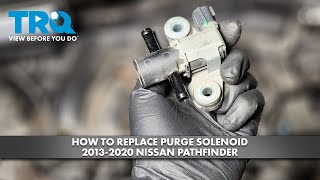
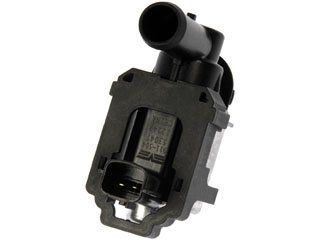
Est. part cost: $60-$100 - Faulty EVAP Canister Purge Volume Control Solenoid Valve 🟡 Medium Probability → Shop Vapor Canister This valve, located in the engine bay, can fail and get stuck open, creating a constant vacuum leak into the engine and a leak path for the EVAP system test.
How to confirm: This valve is normally closed. With the engine off, disconnect the hose leading to the intake manifold and try to blow through it. If air passes through, the valve is stuck open and has failed.
Typical fix: Replace the purge solenoid valve. On the Pathfinder's 3.5L V6, it is typically mounted on the intake manifold and is relatively easy to access after removing the engine cover.
Est. part cost: $50-$120 - Cracked or Disconnected EVAP Hoses/Lines ⚪ Low Probability Rubber hoses become brittle with age and exposure to heat and can develop cracks. One owner on a forum shared an experience where a simple, stretchy, old rubber hose connecting to the canister was the ultimate culprit after multiple parts were replaced. Plastic lines can also be damaged by road debris.
How to confirm: A visual inspection may reveal obvious cracks or disconnections. A definitive diagnosis requires a smoke test, which fills the EVAP system with visible smoke to pinpoint the exact location of the leak.
Typical fix: Replace the specific section of cracked hose or re-secure any disconnected lines.
Est. part cost: $10-$50
Rare But Worth Checking
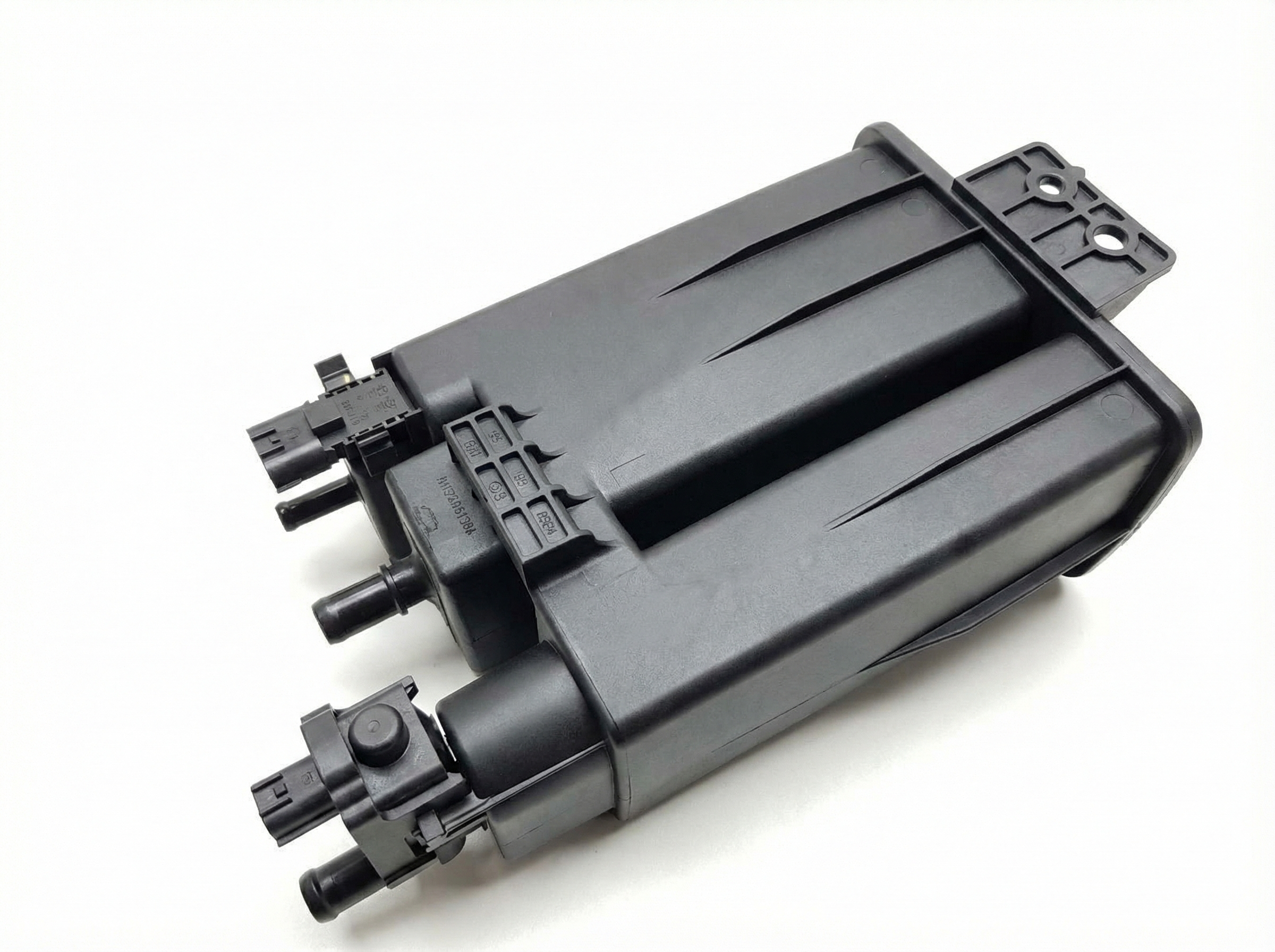
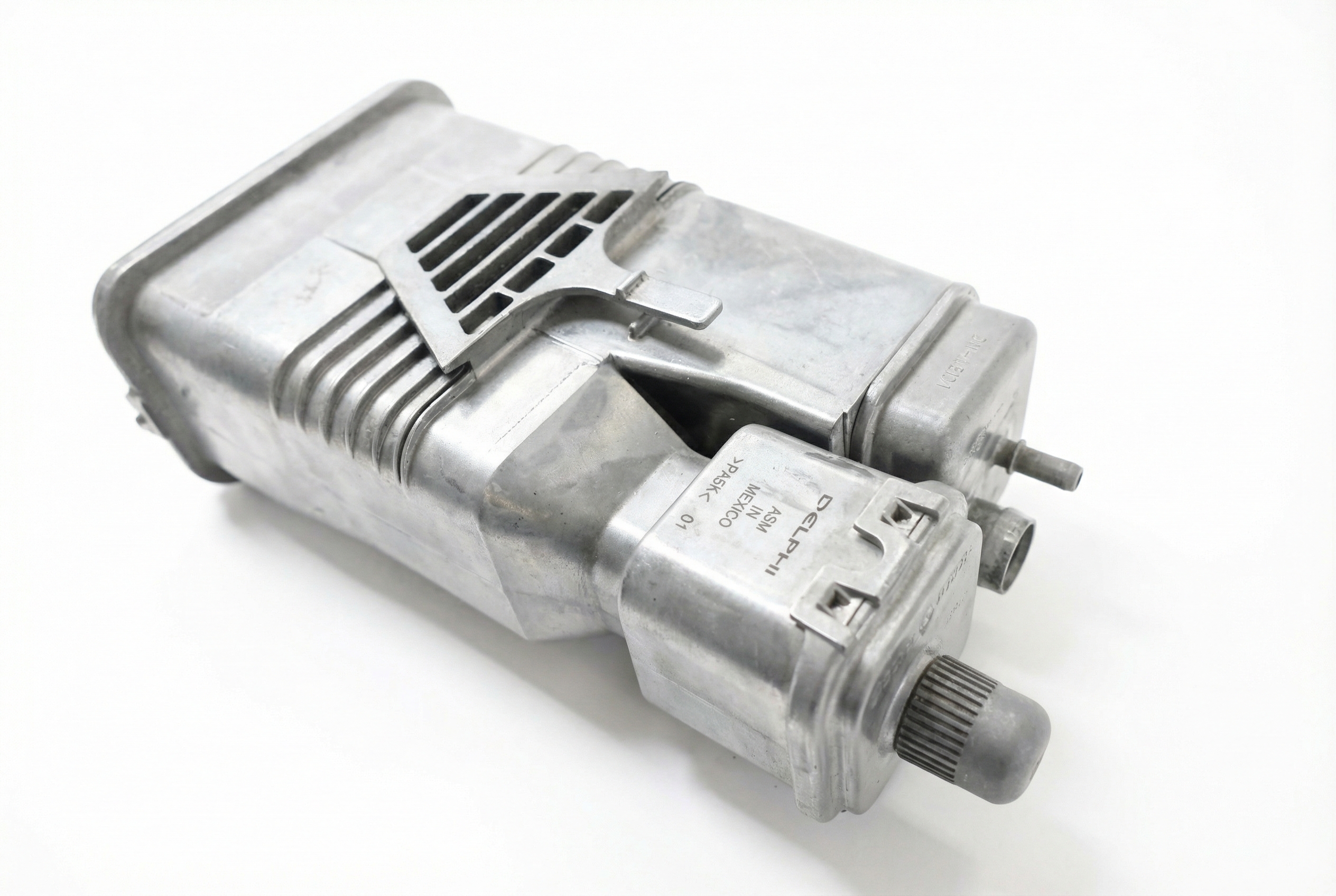
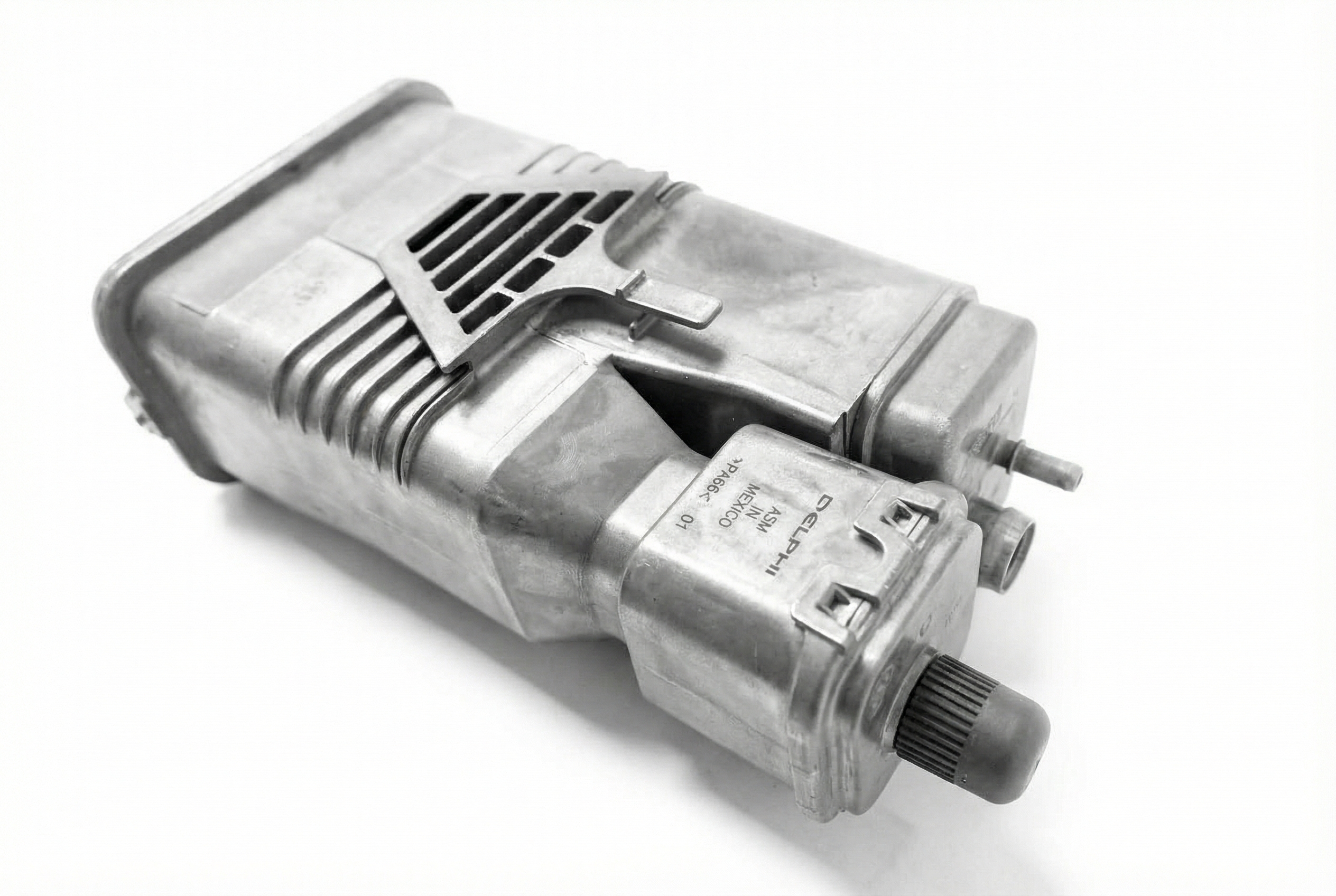
- Cracked Charcoal Canister: → Shop Vapor Canister The plastic housing of the canister itself can crack from age or impact, causing a large leak. This is often found during a smoke test.
- Leaking Fuel Filler Neck: → Shop Fuel Filler Neck The metal tube leading from the gas cap to the tank can rust and perforate, especially in regions that use road salt, preventing the gas cap from creating a proper seal. This has been a documented repair for P0455 on other vehicles.
- Faulty Fuel Tank Pressure Sensor: → Shop Fuel Tank Rarely, the sensor that measures system pressure can fail, sending incorrect data to the computer and tricking it into thinking there's a leak when there isn't one.
Diagnosis Steps
- Read the code with an OBD-II scanner to confirm P0455 is present.
- Inspect the gas cap. Remove it, check the seal for cracks or debris, and reinstall it, ensuring it clicks at least once. If in doubt, replace it with a genuine OEM part.
- Clear the code and drive for a few days to see if it returns. The EVAP monitor runs under specific conditions, so it may take several trips.
- If the light returns, perform a visual inspection of all accessible EVAP hoses in the engine bay and under the vehicle, looking for obvious cracks or disconnections.
- Locate the EVAP canister vent control valve at the rear of the vehicle. Inspect it and its wiring for damage or corrosion.
- Locate the EVAP purge solenoid in the engine bay and inspect its hoses and wiring.
- If no obvious issues are found, the most effective next step is to have a smoke test performed. This test injects harmless, visible smoke into the EVAP system, and the leak will be revealed by where the smoke escapes.
Parts You'll Likely Need
- Gas Cap — This is the most frequent and simplest fix for a P0455 code. The seal is critical for the EVAP system, and aftermarket versions are known to cause issues.
Trusted brands: Nissan (OEM), Stant
OEM price range: $30-$40
Aftermarket price range: $15-$25 - EVAP Canister Vent Control Valve
(OEM #14935-JF02C)— A very common failure point on Nissans that causes this code. It gets stuck open, creating a permanent large leak. This part number supersedes 14935-JF00A, 14935-JF00B, 14935-JF00C, 14935-JF00D, 14935-JF00E, 14935-JF01B, and 14935-JF01C.
Trusted brands: Nissan (OEM), Bosch, Dorman
OEM price range: $70-$90
Aftermarket price range: $40-$60 - EVAP Canister Purge Solenoid Valve
(OEM #14930-JA10D)— Located in the engine bay, this valve can get stuck open and is a common cause for EVAP codes. It's an easy part to access and replace. This part number supersedes 14930-JA10A and 14930-JA10B.
Trusted brands: Nissan (OEM), Hitachi, TRQ
OEM price range: $90-$120
Aftermarket price range: $30-$70
Related Codes That Often Appear With This One
- P0442 — Indicates a small EVAP leak. This code may appear alongside or intermittently with P0455 if the size of the leak varies or is on the borderline between 'small' and 'large'.
- P0456 — Indicates a very small EVAP leak. This is common on Nissans and is often caused by a failing O-ring on the vent control valve. It could precede a P0455 as the leak worsens.
Technical Service Bulletins (TSBs) & Recalls
- NTB13-097J: EVAP LEAK DTC P0442, P0455, P0456 INFORMATION
- NTB13-097g: ALL MODEL YEAR 2012 AND NEWER NISSAN VEHICLES; EVAP LEAK DTC P0442, P0455, P0456 INFORMATION
- NTB13-097D: ALL MODEL YEAR 2012 AND NEWER NISSAN VEHICLES; EVAP LEAK DTC P0442, P0455, P0456 INFORMATION
Platform-Specific Known Issues
- Nissan has issued multiple versions of Technical Service Bulletin NTB13-097 (e.g., NTB13-097J) which provide a diagnostic flowchart for EVAP leak codes P0442, P0455, and P0456 on all 2012 and newer Nissan vehicles, indicating this is a well-documented area of concern.
- A separate TSB for other models (NTB17-082b) highlights that for the related P0456 (very small leak) code, technicians should first replace just the O-ring on the vent control valve, suggesting this is a common and minor failure point that can precede a larger leak.
Mechanic-Grade Diagnostic Values
- EVAP Canister Vent Control Valve solenoid function — expected: An audible click should be heard when 12V power is applied to the terminals. Air should not pass through when energized (closed).. Failure: No click is heard, or air passes through when energized.
- EVAP Canister Purge Solenoid Valve function — expected: Valve should be closed with no power applied. No air should pass through.. Failure: Air can be blown through the valve when it is disconnected and at rest, indicating it is stuck open.
Scan Tool Commands That Help
- Nissan CONSULT, Autel, FOXWELL, or other advanced scanner: EVAP System Test (Active Test) — This function allows the user to command the EVAP system's solenoids (purge and vent) to open or close, sealing the system to check if it can hold pressure or vacuum without starting the engine. It is used to verify the electrical and mechanical function of the valves.
- Advanced Bidirectional Scanner: Vent Valve Control — Used to command the normally-open vent valve to close. This is a critical step before performing a smoke test to ensure the system is sealed for the test. If smoke escapes from the vent valve while it is commanded closed, the valve is faulty.
- Advanced Bidirectional Scanner: Purge Valve Control — Used to command the normally-closed purge valve to open. While monitoring live O2 sensor data, opening the purge valve should cause a temporary rich condition as fuel vapors enter the intake. No change in O2 sensor readings suggests a stuck-closed valve or a blockage.
Wiring & Ground Locations
- EVAP Canister Vent Control Valve Connector — On the valve itself, which is mounted to the charcoal canister at the rear of the vehicle, typically on the driver's side near the spare tire.. This connector and its wiring are exposed to road debris and moisture, making them susceptible to corrosion or damage that can cause an open or shorted circuit, leading to EVAP codes.
- EVAP Purge Volume Control Solenoid Connector — On the valve, located in the engine bay, typically on the intake manifold.. While less exposed than the rear valve, engine heat can make the connector and wiring brittle over time, leading to poor connections.
- Interior Fuse Box / Junction Block — Located in the passenger compartment, often behind a panel on the driver's or passenger's side dashboard/kick panel area.. Contains fuses for various electronic control modules, including potentially the Engine Control Module (ECM) which controls the EVAP system. A blown fuse here could disable the system.
Real Owner Repair Stories
- YouTube channel 'GarageBoys' (2013 Nissan Rogue (similar platform and components)) — Check Engine Light with code P0455.
❌ Tried (didn't work) The video advises checking the gas cap first, implying it's a common but not always successful first step.
✅ What actually fixed it The EVAP canister vent control valve was faulty and replaced. The creator states this is the cause '95% of the time' on these Nissans if the gas cap isn't the issue. - Car Talk Community forum user (2004 Nissan Sentra) — P0455 code returned after multiple attempts to fix.
❌ Tried (didn't work) Applying vaseline to the gas cap seal and clearing the code (code returned)., Replacing the gas cap with a new one (code eventually returned after 95 miles).
✅ What actually fixed it The user was still diagnosing, but the community consensus pointed strongly to the canister vent valve as the next most likely culprit, which is a common failure point on Nissans after the gas cap is ruled out.
"I Checked Everything" — The Actual Cause
- In cases where a smoke test of the EVAP system reveals no visible leaks, the issue may not be a physical leak in a hose or component. The next diagnostic steps should be to test the seal between the gas cap and the fuel filler neck specifically, and to test the Fuel Tank Pressure (FTP) sensor itself for malfunction, as it may be sending incorrect data to the ECU.
OEM Part Supersession History
14935-JF00A, 14935-JF00B, 14935-JF00C, 14935-JF00D, 14935-JF00E, 14935-JF01B, 14935-JF01C→14935-JF02C— Component revision and improvement by the manufacturer.
Heads up: Using an older, superseded part number is not recommended. Aftermarket versions are known to fail prematurely, making the OEM part a safer choice.14930-JA10A, 14930-JA10B→14930-JA10D— Component revision and improvement by the manufacturer.
Model Year Variations Within This Range
- 2017-2020: The Nissan Pathfinder received a mid-generation facelift for the 2017 model year, which included powertrain and styling updates. However, the fundamental design and common failure points of the EVAP system, as well as the diagnostic procedures outlined in TSBs, remained consistent across the 2015-2020 range.
Helpful Videos
Used OEM Parts in Stock

New Aftermarket Parts Available


The information in this article is provided for general reference and educational purposes only. Vehicle specifications, procedures, and part compatibility can vary by production date, trim level, and region. Always consult your vehicle's factory service manual and verify part numbers before purchasing or performing repairs. Safety-critical components such as airbags, seat belts, and braking systems should be installed by a qualified professional.
- Nissan PATHFINDER:
- 🧭 Diagnostic Flowchart
- 🎬 Helpful Videos
- 🛍️ Shop This Part
- What's Unique About the 2015-2020 Nissan PATHFINDER
- Symptoms You May Notice
- Most Likely Causes
- Rare But Worth Checking
- Diagnosis Steps
- Parts You'll Likely Need
- Related Codes That Often Appear With This One
- Technical Service Bulletins (TSBs) & Recalls
- Platform-Specific Known Issues
- Mechanic-Grade Diagnostic Values
- Scan Tool Commands That Help
- Wiring & Ground Locations
- Real Owner Repair Stories
- "I Checked Everything" — The Actual Cause
- OEM Part Supersession History
- Model Year Variations Within This Range
- 🎟️ Get 5% Off