

P0455 on 1999-2004 Oldsmobile Alero: EVAP Large Leak Causes and Fixes
For a P0455 code on a 1999-2004 Oldsmobile Alero, the problem is most often a loose or worn-out gas cap. If a new cap doesn't fix it, suspect a rusted fuel filler neck or a bad EVAP vent solenoid near the fuel tank. A new gas cap costs about $15-$30.
- Always start your diagnosis by checking that the gas cap is tight. If the seal looks worn, replace it with a quality part as your first step.
- If a new gas cap doesn't solve the P0455 code, the next most likely culprit on an Alero is a rusted fuel filler neck. Inspect it carefully before buying other parts.
- The EVAP vent solenoid (by the tank) and purge solenoid (on the engine) are the next most common parts to fail.
- A smoke test is the fastest and most accurate way to find the leak if it's not obvious from a visual inspection.
What's Unique About the 1999-2004 Oldsmobile Alero
The Oldsmobile Alero, built on the GM N-body platform, shares common EVAP system issues with its sibling, the Pontiac Grand Am. While the gas cap is a universal starting point, these vehicles are particularly known for two other common failures. In regions where road salt is used (the "rust belt"), the fuel filler neck is highly prone to rusting. This corrosion creates a rough, pitted surface that prevents the gas cap from sealing properly, causing a large leak code. Additionally, the EVAP vent and purge solenoids are frequent points of failure that are well-documented in owner forums.
Symptoms You May Notice
- Check Engine Light is on
- A faint to strong smell of gasoline, especially around the rear of the car or after refueling
- A gas cap that will not tighten properly, doesn't click, or feels loose
- Slight decrease in fuel economy
- Replacing the purge valve in the engine bay when the more common failure points are the gas cap, filler neck, or the vent valve at the rear of the vehicle.
- Replacing the fuel tank pressure sensor without confirming a leak at the sensor itself.
- Continuously replacing the gas cap when the actual problem is a corroded fuel filler neck that prevents any cap from sealing.
Most Likely Causes
- Loose, Damaged, or Incorrect Gas Cap 🔴 High Probability → Shop Fuel Tank Cap This is the most common cause for P0455 on any vehicle. The rubber O-ring seal degrades over time.
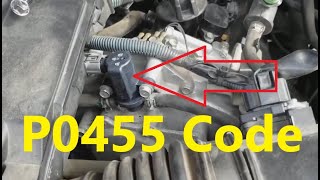
How to confirm: Ensure the gas cap is tightened until it clicks at least three times. 🎬 Watch: A quick breakdown of common P0455 causes and fixes. Remove the cap and inspect the rubber O-ring seal for cracks, stiffness, or deformities. An OEM-spec cap is highly recommended over cheaper aftermarket versions for a reliable seal.
Typical fix: Replace the gas cap with a quality OEM or equivalent part. This is the cheapest and easiest first step. Clear the code and drive for a few days to see if it returns.
Est. part cost: $15-$35 - Rusted or Damaged Fuel Filler Neck 🟡 Medium Probability → Shop Fuel Filler Neck A very common issue on the Alero and its platform mates, especially in rust-belt states. The metal neck corrodes where the gas cap seals, creating a pitted surface that prevents a tight seal, even with a new cap.
How to confirm: Remove the gas cap and visually inspect the lip and surface of the filler neck for rust, bubbling paint, pitting, or deformities. Run your finger along the sealing surface; it should be perfectly smooth.
Typical fix: The fuel filler neck must be replaced. This is a well-documented repair for this vehicle. Aftermarket replacements from brands like Dorman are widely available. 🎬 Watch: Step-by-step guide to replacing a rusted fuel filler neck.
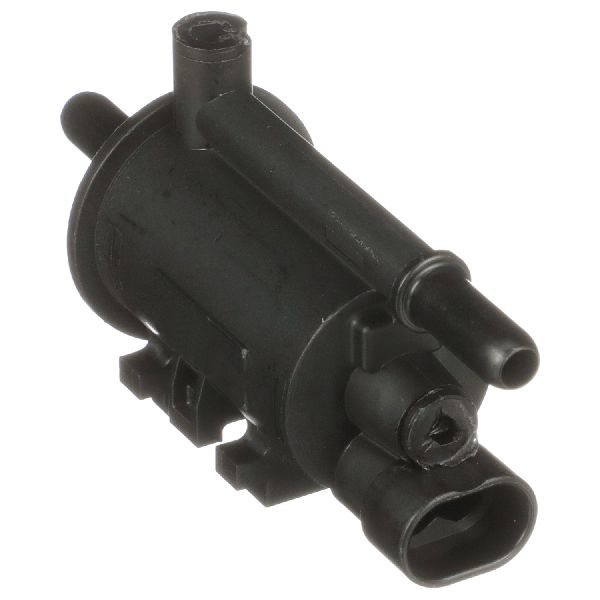
Est. part cost: $35-$85 - Faulty EVAP Vent Solenoid 🟡 Medium Probability → Shop Vapor Canister This part is exposed to the elements near the rear of the vehicle and is a known failure point. It can get stuck open or the housing can crack.
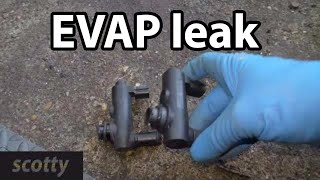
How to confirm: The vent solenoid is normally open. It is located near the charcoal canister by the fuel tank, often in front of the spare tire well. It can be tested with a scan tool that has bidirectional controls to command it closed. A definitive diagnosis often requires a smoke test 🎬 See how to find a large EVAP leak without a smoke machine. to see if it's leaking when it should be closed. Some DIYers test it by applying 12V to see if it clicks and closes.
Typical fix: Replace the EVAP vent solenoid. It is typically mounted on or near the charcoal canister.
Est. part cost: $35-$65 - Faulty EVAP Purge Solenoid/Valve ⚪ Low Probability → Shop Vapor Canister
How to confirm: The purge solenoid is normally closed and is located in the engine bay, on top of the intake manifold. Remove the valve and try to blow through it; if air passes, it is stuck open and faulty. A stuck-open purge valve can sometimes cause a rough idle or difficulty starting after refueling.
Typical fix: Replace the purge solenoid.
Est. part cost: $25-$75 - Cracked or Disconnected EVAP Hose ⚪ Low Probability
How to confirm: Visually inspect all accessible EVAP hoses between the engine, purge valve, charcoal canister, and fuel tank for obvious cracks, breaks, or disconnections. The lines can become brittle with age. A smoke test is the most effective way to find a hard-to-see leak in a hose.
Typical fix: Replace the damaged section of hose or reconnect it securely.
Est. part cost: $5-$20
Rare But Worth Checking
- Cracked Charcoal Canister: → Shop Vapor Canister The plastic body of the canister can be damaged by road debris or age, causing a large leak. This is worth checking with a visual inspection while you are examining the vent solenoid.
- Leaking Fuel Tank Pressure Sensor: → Shop Fuel Tank The sensor itself or its seal can fail, creating a leak. This is less common than a sensor that fails electrically but is possible. A faulty sensor may also report incorrect pressure readings, tricking the ECM into thinking there is a leak.
Diagnosis Steps
- Read the code with an OBD-II scanner to confirm P0455 is present.
- Inspect the gas cap. Ensure it is tight. Remove it and check the rubber seal for cracks or damage. If in doubt, replace it with a quality OEM-spec cap. Clear the code and drive for a few days to see if it returns.
- If the code returns, carefully inspect the fuel filler neck for any signs of rust or corrosion on the sealing surface. Pay close attention to the very top edge where the cap's O-ring sits.
- Perform a thorough visual inspection of all accessible EVAP hoses and lines under the hood and near the fuel tank. Look for anything that is cracked, brittle, or disconnected. Check the lines running to and from the charcoal canister at the rear of the car.
- Locate the EVAP vent solenoid near the fuel tank and the purge solenoid in the engine bay. Check their electrical connectors and look for any visible damage to the components or their associated hoses.
- If the leak source is not obvious, the most effective diagnostic method is to have a professional smoke test performed. This involves injecting harmless, vaporous smoke into the EVAP system and watching for where it escapes. This will definitively locate the source of the leak.
Parts You'll Likely Need
- Fuel Tank Cap
(OEM #19432733)— This is the most common cause. The seal wears out over time, causing a leak. Using a quality OEM cap is recommended for the best seal.
Trusted brands: ACDelco, Stant, Gates
OEM price range: $25-$35
Aftermarket price range: $15-$25 - Fuel Filler Neck — A known weak point on the Alero, prone to rusting, which prevents the gas cap from sealing. This is a very common repair in northern climates.
Trusted brands: Spectra Premium, Dorman, TRQ
OEM price range: N/A
Aftermarket price range: $35-$85 - EVAP Vapor Canister Vent Solenoid
(OEM #214-2117)— This valve, located near the fuel tank, can get stuck open or fail, creating a large leak. It is exposed to road grime and moisture. This part number is confirmed to fit the Alero.
Trusted brands: ACDelco, Dorman, Standard Motor Products
OEM price range: $50-$65
Aftermarket price range: $35-$50 - EVAP Vapor Canister Purge Solenoid
(OEM #12569751)— This valve, located on the engine, can get stuck open, creating a constant vacuum leak in the EVAP system. Multiple part numbers exist, so verify fitment by engine size.
Trusted brands: ACDelco, Dorman
OEM price range: $40-$75
Aftermarket price range: $25-$50
Related Codes That Often Appear With This One
- P0442 — A P0442 (Small Leak) may appear alongside or intermittently with P0455 if the leak is on the borderline between small and large, often seen with a deteriorating gas cap seal or a moderately rusted filler neck.
- P0440 — This is a general EVAP system malfunction code. It often appears with other EVAP codes like P0455 when the system fails its self-test.
Platform-Specific Known Issues
- cause: Corrosion of the fuel filler neck is a very common problem leading to P0455 on these vehicles, particularly in areas that use road salt in the winter. Many owners report that replacing the gas cap does not solve the issue, only to find the filler neck is the true culprit.
- cause: Owner experiences on forums like Car Talk Community frequently mention the P0455 code on Aleros. A common story involves replacing the gas cap, the code returning, and the final fix being either the filler neck or one of the EVAP solenoids.
Mechanic-Grade Diagnostic Values
- EVAP Canister Purge Solenoid Coil Resistance — expected: 30 - 38 Ohms. Failure: A reading significantly outside this range, or an open (infinite) reading, indicates a failed coil.
- EVAP Canister Vent Solenoid Coil Resistance — expected: 48 - 65 Ohms. Failure: A reading significantly outside this range, or an open (infinite) reading, indicates a failed coil.
- Fuel Tank Pressure (FTP) Sensor Voltage (Key On, Engine Off) — expected: ~1.45 - 1.7 Volts at atmospheric pressure. Failure: A voltage that is stuck high (e.g., >4.5V) or low (e.g., <0.5V), or does not change when vacuum is applied, points to a faulty sensor or wiring.
Scan Tool Commands That Help
- Tech 2 / Professional Scan Tool: EVAP System Test / Service Bay Test — Used to command the EVAP solenoids and run a system leak test without having to complete a full drive cycle. However, per TSB #02-06-04-014, this function was disabled on many 1999-2002 GM vehicles, including the Alero platform, due to diagnostic inaccuracies. On these years, manual testing or drive cycle completion is required.
- Tech 2 / Professional Scan Tool: EVAP Vent Solenoid Close Command — This bidirectional command is essential for performing a smoke test. The vent solenoid is normally open, so it must be commanded closed to seal the system and allow the smoke to build pressure and reveal leaks.
Wiring & Ground Locations
- G102 — On the 2.2L engine, it's at the left rear of the engine. On the 3.4L V6, it is located in front of the starter.. This is a primary engine-area ground. A poor connection here can cause intermittent electrical issues for various engine control components, including the PCM's ability to accurately read sensors and control solenoids.
- G103 — On the 3.4L V6, it's on a transmission stud on the left side of the engine. On the 2.2L L4, it's located on the lower front of the engine.. This is a critical engine and component ground point. A corroded or loose G103 can cause erratic behavior from engine-mounted components like the EVAP Purge Solenoid.
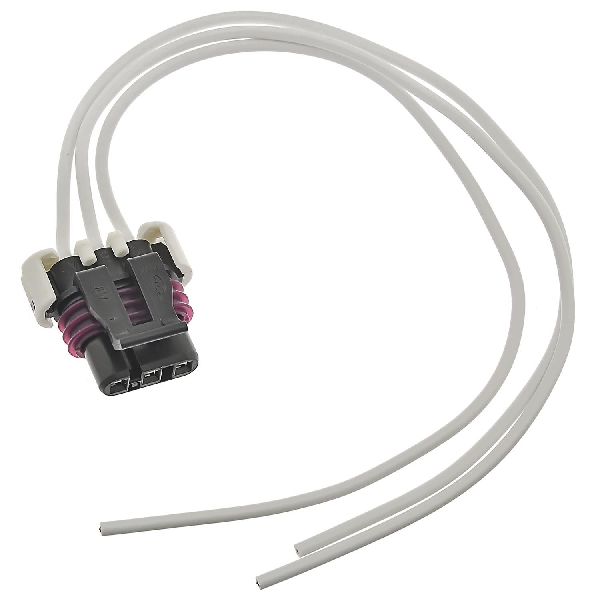
- EVAP Vent Solenoid Connector — Under the rear of the vehicle, near the charcoal canister, in front of the spare tire well.. This 2-pin connector is highly exposed to road salt, water, and debris, making it a prime location for corrosion. A bad connection here will prevent the vent solenoid from closing, guaranteeing a P0455 code.
- EVAP Purge Solenoid Connector — On top of the engine, mounted to the upper intake plenum.. While less exposed than the vent solenoid connector, a poor connection here can prevent the purge solenoid from operating. One wire should have 12V with the ignition on.
Real Owner Repair Stories
- JustAnswer user with 2001 Alero (2001 Oldsmobile Alero 2.4L 4-Cyl) — Service Engine Soon light on with code P0455.
❌ Tried (didn't work) Replaced the gas cap., Replaced the canister vent valve solenoid.
✅ What actually fixed it The issue was unresolved in the public thread, but the technician's advice pointed toward a wiring or control circuit fault, since both the old and new vent solenoids clicked when bench-tested with 12V but made no sound when installed in the vehicle with the key on. This indicates the part itself was not the problem, but rather the signal getting to it. - Car Talk Community user (2004 Oldsmobile Alero) — Service Engine Soon light on, code P0455.
❌ Tried (didn't work) Replaced the gas cap with a new original part.
✅ What actually fixed it The user was advised that for a large leak, something is likely broken or disconnected. The final resolution was not posted, but the expert advice was to visually inspect all hoses and lines connected to the EVAP canister at the rear of the car, and if nothing was obvious, to perform a smoke test.
"I Checked Everything" — The Actual Cause
- On this specific Alero/Grand Am platform, a smoke test may incorrectly show a sealed system (pass) even when a large leak exists. This is due to a check ball located at the bottom of the fuel filler neck. When pressure is applied from the engine bay service port (a common smoke test procedure), it can force this ball to seal the filler neck, preventing smoke from reaching and escaping through a faulty gas cap or rusted filler neck. A technician can be fooled into thinking the system is sealed. The correct verification step is to remove the gas cap and see if smoke is actually reaching the filler neck during the test. If no smoke appears, the check ball is likely masking the leak.
Model Year Variations Within This Range
- 2002-2004: For the 2002 model year, the base 2.4L LD9 4-cylinder engine was replaced by a 2.2L Ecotec L61 4-cylinder engine for GX and GL1 models. While the function and location of major EVAP components remained similar, wiring diagrams and specific ground locations (like G102 and G103) differ between the Ecotec, the 2.4L, and the 3.4L V6.
- 1999-2002: According to GM TSB #02-06-04-014, the 'Service Bay Test' for the EVAP system was disabled via software and removed from the Tech 2 scan tool for many GM vehicles of this era. This was due to diagnostic accuracy issues. Technicians working on these earlier models cannot rely on the automated test and must use manual methods (like commanding solenoids individually) or wait for the drive cycle monitor to run naturally.
Diagnostic Flowchart
Other Known Issues on This Vehicle
Issues unrelated to this code that are worth knowing about as an owner of this generation:
- Intake Manifold Gasket Failure (3.1L/3.4L V6) 🔴 High — Very common issue, often occurring between 70,000 and 120,000 miles. Leads to coolant leaking internally into the oil or externally.
- Passlock Anti-Theft System Failure 🔴 High — A widespread and frustrating problem where the car fails to start despite cranking, often accompanied by a flashing 'Security' light. The issue is typically with the ignition lock cylinder.
- Premature Front Wheel Bearing Failure 🟠 Medium — Hub assemblies are known to fail relatively early, causing a humming or grinding noise from the front end that increases with speed. Many owners report replacing them multiple times.
- Turn Signal / Hazard Flasher Malfunction 🟡 Low — The multifunction switch in the steering column often fails, causing turn signals to work intermittently or the hazard lights to click on their own.
- Front Power Window Regulator/Sash Failure 🟠 Medium — The plastic brackets (sash) that hold the window glass to the regulator are prone to breaking, causing the window to come off its track and fall into the door.
Used vs. New Parts: Buying Guide for This Vehicle
When a used part is the smart pick: A used fuel filler neck from a junkyard car originating in a dry, salt-free state (e.g., Arizona, California) can be an excellent, cost-effective choice, as it is unlikely to have the corrosion that causes this code. Other simple mechanical parts like brackets or undamaged hoses are also good candidates.
Donor-vehicle mileage cap: roughly under 150000 miles for the part to have meaningful remaining life.
What to inspect on the donor part:
- For a filler neck, inspect the gas cap sealing surface meticulously for any signs of rust, pitting, or bubbling paint. It must be perfectly smooth.
- For electrical components like solenoids, check for plastic cracks, and ensure connectors are free of corrosion (green or white powder).
- Look for a 'born on' date on the donor vehicle's door jamb sticker; a newer car is always preferable.
OEM-only on this vehicle (don't cheap out):
- Gas Cap - While many aftermarket caps work, the GM N-body platform can be sensitive. An OEM ACDelco cap is often recommended on forums to eliminate any doubt about sealing quality.
Aftermarket brands forum-validated for this vehicle:
- Solenoids (Purge/Vent): ACDelco (OEM), Dorman, Standard Motor Products (SMP), Delphi are all well-regarded for these parts.
- Fuel Filler Neck: Dorman, Spectra Premium
Brands owners have reported issues with on this vehicle:
- No-name, ultra-cheap gas caps from online marketplaces are frequently cited as failing to seal properly and should be avoided.
Real Owner Stories
Aggregated from forums and TSBs cited above. Mileages and costs reflect what owners reported in those sources.
Oldsmobile Alero
Symptoms: The P0455 code persisted even after the gas cap was replaced.
What fixed it: Replacing the fuel filler neck or one of the EVAP solenoids.
Source hint: Car Talk Community forum threads regarding P0455 on Aleros
Related OBD-II Codes
Frequently Asked Questions
I replaced my gas cap on my Alero but the P0455 code came back. What is the next most likely cause?
Where is the EVAP vent solenoid located on a 1999-2004 Oldsmobile Alero?
Can a bad purge valve cause my Alero to struggle to start after I get gas?
Is there a specific part number recommended for the vent solenoid on this platform?
Why is the fuel filler neck so prone to failing on the Alero?
How can I test the purge solenoid in my engine bay?
Helpful Videos

We Have This Part in Stock


The information in this article is provided for general reference and educational purposes only. Vehicle specifications, procedures, and part compatibility can vary by production date, trim level, and region. Always consult your vehicle's factory service manual and verify part numbers before purchasing or performing repairs. Safety-critical components such as airbags, seat belts, and braking systems should be installed by a qualified professional.
- Oldsmobile Alero:
- 🧭 Diagnostic Flowchart
- 🎬 Helpful Videos
- 🛍️ Shop This Part
- What's Unique About the 1999-2004 Oldsmobile Alero
- Symptoms You May Notice
- Most Likely Causes
- Rare But Worth Checking
- Diagnosis Steps
- Parts You'll Likely Need
- Related Codes That Often Appear With This One
- Platform-Specific Known Issues
- Mechanic-Grade Diagnostic Values
- Scan Tool Commands That Help
- Wiring & Ground Locations
- Real Owner Repair Stories
- "I Checked Everything" — The Actual Cause
- Model Year Variations Within This Range
- Other Known Issues on This Vehicle
- Used vs. New Parts: Buying Guide for This Vehicle
- Real Owner Stories
- Oldsmobile Alero
- Related OBD-II Codes
- Frequently Asked Questions
- 🎟️ Get 5% Off