

P0455 on 1999-2004 Porsche 911: EVAP Large Leak Causes and Fixes
For a 1999-2004 Porsche 911 (996), code P0455 is most often caused by a faulty gas cap or a failed fuel tank vent valve on the filler neck. Start by inspecting or replacing the gas cap (~$25). If the code persists, especially if you have trouble refueling or hear a 'Coke bottle' howling sound, the vent valve is the next likely culprit (~$95 for the part). Both are common and relatively simple DIY fixes.
- Always check the gas cap first for code P0455. A new cap is a cheap and easy first step that solves the problem in many cases.
- If you have trouble filling your gas tank, the fuel tank vent valve located in the front passenger wheel well is almost certainly the cause.
- Do not immediately assume you need an expensive charcoal canister; it is less likely to fail than the gas cap or vent valves.
- A smoke test is the most efficient way to find the leak if it's not the gas cap.
- This code does not affect engine performance, so the car is safe to drive while you schedule a repair.
What's Unique About the 1999-2004 Porsche 911
On the 996-generation Porsche 911, while the gas cap is a common cause for P0455 as on many cars, a frequent and platform-specific failure point is the fuel tank vent valve located on the filler neck. This valve's failure is so common that it often produces a secondary symptom of the gas pump repeatedly shutting off during refueling or a distinct 'Coke bottle' howling sound from the front passenger wheel well after the car is shut off. Owners often chase this code by replacing various parts when the issue is frequently traced back to either the simple gas cap or this specific vent valve, which is accessible after removing the front passenger-side wheel and fender liner.
Symptoms You May Notice
- Check Engine Light is on.
- Difficulty filling the fuel tank (gas pump nozzle clicks off repeatedly).
- A noticeable fuel smell around the vehicle, particularly near the front passenger side or under the front hood near the battery.
- A loud 'whoosh' sound of air rushing into the tank when opening the gas cap, sometimes lasting for several seconds.
- An audible humming or 'Coke bottle' howling sound from the front passenger wheel well area, often noticeable after shutting the engine off.
- Rough idle or stumbling immediately after filling the gas tank.
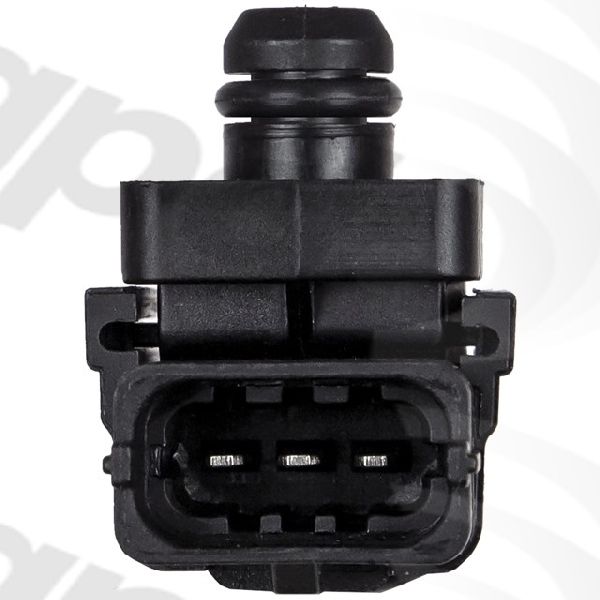
- Replacing the fuel tank pressure sensor. This sensor rarely fails and will typically set its own specific fault code if it does.
- Immediately replacing the charcoal canister. While it can fail, it's less common than the gas cap or vent valve, and much more expensive. It should be confirmed as the source of the leak via a smoke test before replacement.
Most Likely Causes
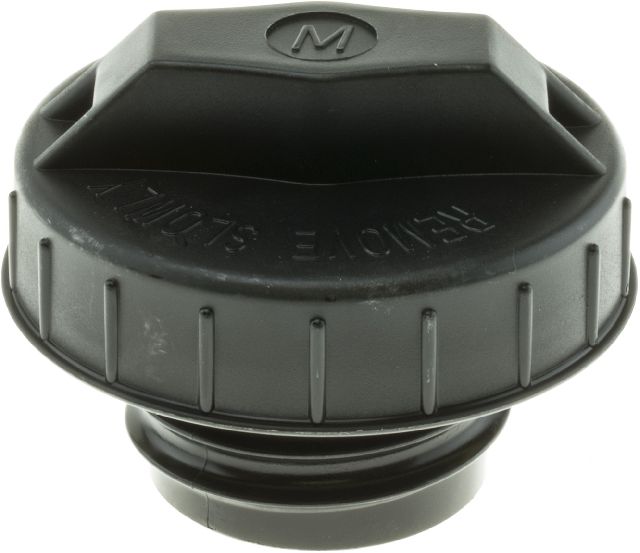
- Loose, Worn, or Incorrect Gas Cap 🔴 High Probability → Shop Fuel Tank Cap The rubber O-ring seal on the gas cap dries out, cracks, and fails over time, preventing a proper seal. Aftermarket caps are also a frequent source of issues; an OEM cap is recommended.
How to confirm: First, ensure the cap is tightened until it clicks multiple times. If the light returns, remove the cap and carefully inspect the rubber seal for any cracks, brittleness, or deformities. A temporary test can be to apply a thin layer of grease to the seal to see if it resolves the code, confirming the seal is the issue. Many owners report that only a genuine Porsche cap will solve the problem.
Typical fix: Replace the gas cap with a new OEM Porsche part.
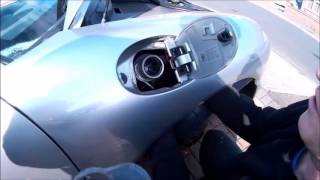
Est. part cost: $25-$40 - Faulty Fuel Tank Vent Valve (on Filler Neck) 🔴 High Probability → Shop Fuel Tank This plastic valve is a well-documented failure point on the 996 and 986 platforms. 🎬 Watch: This Boxster walkthrough shows the vent valve replacement process. It can get stuck open or closed, causing either a constant large leak (P0455) or issues with refueling and howling noises.
How to confirm: If you experience difficulty refueling or hear a 'Coke bottle' sound, this valve is the prime suspect. Otherwise, diagnosis requires removing the front passenger wheel and fender liner to access the valve, which is attached to the fuel filler neck. A smoke test is the most effective way to confirm a leak from the valve body or its connections. The valve is held by a metal bracket with three 10mm bolts.
Typical fix: Replace the fuel tank vent valve. This requires removing the front passenger wheel and wheel well liner for access. The part is held on by a bracket attached to the filler neck. 🎬 See this step-by-step guide for replacing the 911 vent valve.
Est. part cost: $85-$120 - Cracked or Disconnected EVAP Hoses 🟡 Medium Probability The plastic and rubber hoses in the EVAP system, particularly around the charcoal canister and filler neck in the wheel well, can become brittle and crack or get disconnected over time.
How to confirm: Perform a thorough visual inspection of all accessible EVAP lines in the front passenger wheel well and in the engine bay. Look for obvious cracks, loose fittings, or disconnected lines. A smoke test is the definitive method to find a hard-to-see crack or a leak from a hose connection.
Typical fix: Replace the cracked hose section or reconnect any loose fittings.
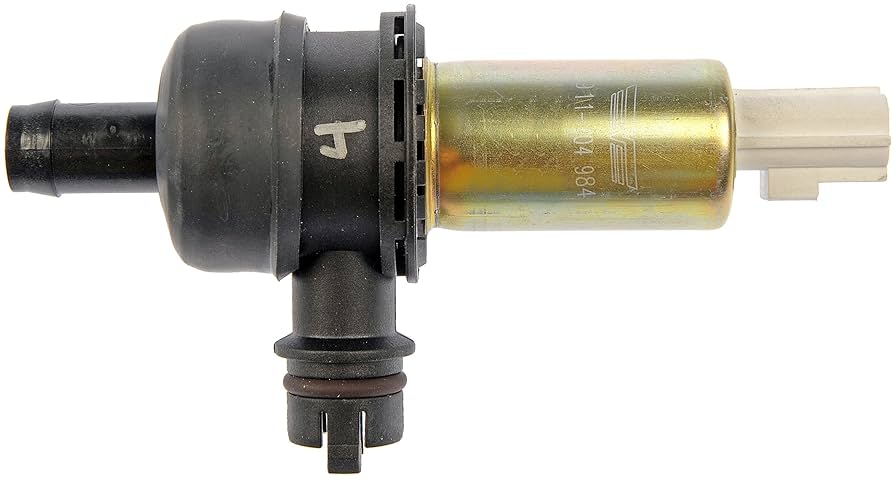
Est. part cost: $10-$50 - Faulty EVAP Canister Purge Valve (Regeneration Valve) ⚪ Low Probability → Shop Vapor Canister This solenoid, located in the engine bay on the driver's side near the throttle body, can fail and stick open, creating a large leak path to the intake manifold.
How to confirm: The valve is located on top of the engine. With the engine off, you can try to blow through it; it should be closed and not allow air to pass. If air passes, it is stuck open and needs replacement. A faulty valve can also cause a rough idle after refueling. A Porsche-specific scan tool like Durametric can be used to activate the valve; a healthy valve will make an audible click every couple of seconds during the test.
Typical fix: Replace the purge valve solenoid.
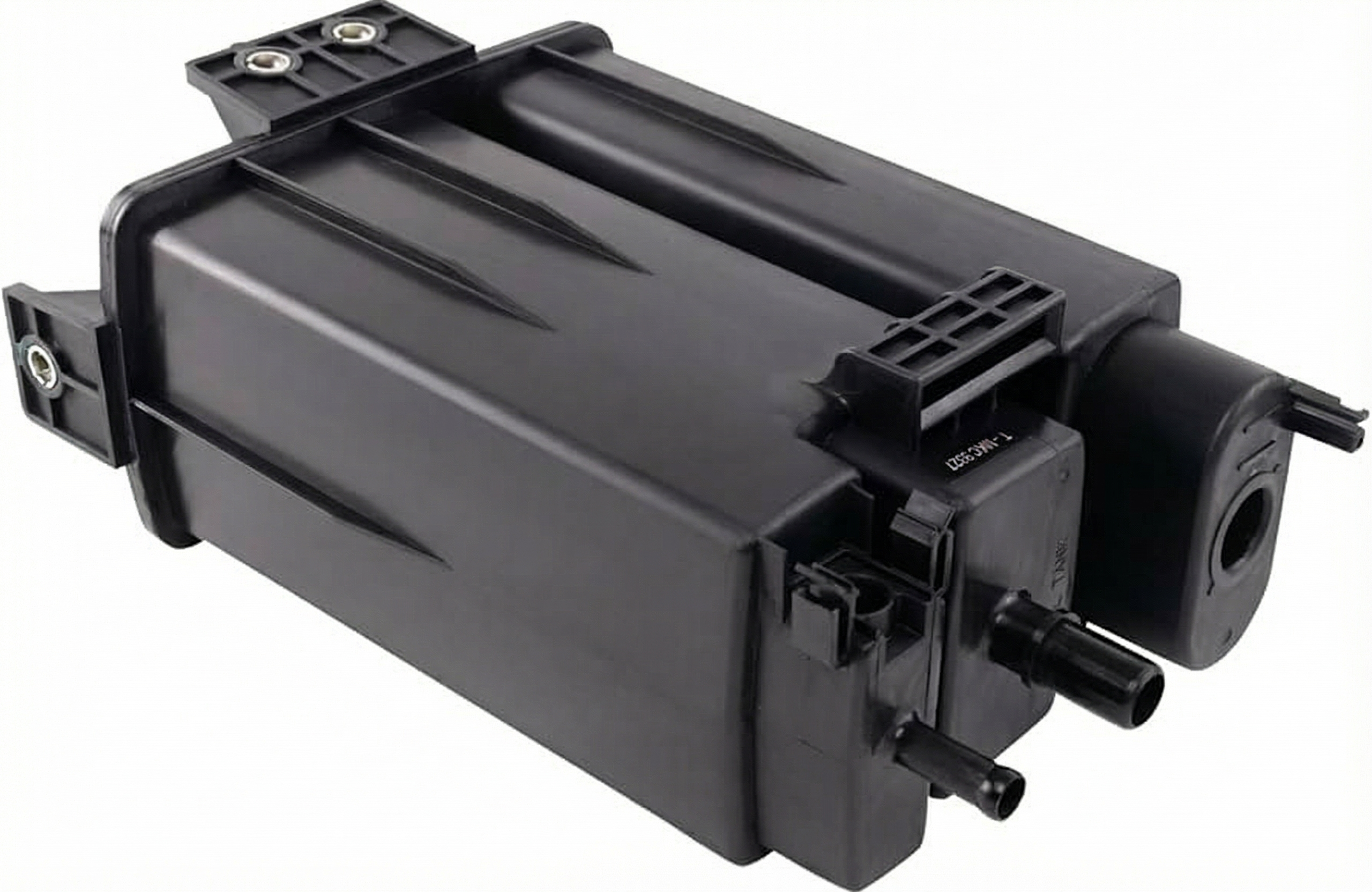
Est. part cost: $70-$120 - Cracked Charcoal Canister ⚪ Low Probability → Shop Vapor Canister Physical damage from road debris or age-related stress can crack the plastic housing of the charcoal canister, which is located in the front passenger wheel well.
How to confirm: After removing the front passenger wheel and liner, visually inspect the large black plastic canister for any cracks or damage. A smoke test will show smoke billowing from a crack if one exists.
Typical fix: Replace the charcoal canister.
Est. part cost: $200-$450
Rare But Worth Checking
- Cracked Fuel Sending Unit Nipple:
Diagnosis Steps
- Read the code with an OBD-II scanner to confirm P0455 is present.
- Always start with the gas cap. Remove it, inspect the seal for cracks or damage, and ensure it's a genuine Porsche cap. Aftermarket caps are a known issue. Tighten it until it clicks at least three times. Clear the code and drive for a few days to see if it returns.
- If the code returns, listen for a fuel smell, a 'Coke bottle' howling sound after shutdown, or a prolonged 'whoosh' sound when opening the cap. Note if you have any trouble filling the tank with fuel, as this strongly points to the filler neck vent valve.
- Safely jack up the front passenger side of the car and remove the wheel and the plastic fender liner to gain access to the EVAP components.
- Visually inspect the large black charcoal canister, the fuel filler neck, and the attached fuel tank vent valve (Part No. 996-201-143-01) for any obvious cracks or damage.
- Check all hose connections to the canister and vent valve. Ensure they are secure and the hoses themselves are not cracked or broken.
- If no visual faults are found, the most effective next step is a smoke test. A mechanic (or DIYer with a smoke machine) can introduce smoke into the EVAP system to quickly and accurately pinpoint the source of the leak. 🎬 Watch: How to perform a smoke test to find leaks. This is the best way to find hairline cracks in hoses, the canister, or the fuel sending unit nipple.
- If a smoke test is not an option and you experience refueling issues or howling sounds, the fuel tank vent valve on the filler neck is the most likely culprit and can be replaced.
- Inspect the EVAP canister purge valve (Part No. 996-605-203-01) in the engine bay. Check if it's stuck open by attempting to blow through it (it should be closed when unpowered). Use a scan tool like Durametric to command it open and closed, listening for a click.
Parts You'll Likely Need
- Gas Cap
(OEM #996-201-241-03)— This is the most frequent and cheapest cause. The seal fails over time, causing a large leak. Using a genuine OEM cap is highly recommended as aftermarket versions often fail to seal correctly.
Trusted brands: Porsche (OEM), Blau
OEM price range: $30-$40
Aftermarket price range: $15-$25 - Fuel Tank Vent Valve
(OEM #996-201-143-01)— A very common failure point on the 996/986 platform, this valve gets stuck and causes both a P0455 code and difficulty refueling. It is also the source of the 'Coke bottle' howling noise. The OEM part number supersedes 996-201-143-00.
Trusted brands: Porsche (OEM)
OEM price range: $95-$210 - EVAP Canister Purge Valve
(OEM #996-605-203-01)— Located in the engine bay, this valve can stick open, causing a constant leak. It's less common than the gas cap or vent valve but a known failure point that can also cause rough running after refueling.
Trusted brands: Porsche (OEM), Bosch
OEM price range: $70-$120
Aftermarket price range: $50-$90
Related Codes That Often Appear With This One
- P0442 — P0442 is for a 'small leak'. You might see this code intermittently before a crack or seal failure worsens and triggers the 'large leak' P0455 code.
- P0446 — This code relates to a fault in the EVAP system's vent control circuit. A problem with the vent valve or its wiring could potentially trigger both codes.
Technical Service Bulletins (TSBs) & Recalls
- Porsche Technical Service Bulletin Group 2, #9901 is mentioned for addressing P0441/P0455 on 1999 911s related to the filler cap seal.
Platform-Specific Known Issues
- A known issue on the 996 is the fuel tank vent valve (on the filler neck) failing, which directly causes P0455 and often makes it very difficult to fill the gas tank without the pump constantly shutting off.
Mechanic-Grade Diagnostic Values
- EVAP Canister Purge Valve (Regeneration Valve) Coil Resistance — expected: 26 ± 4 Ω at 20°C (68°F). Failure: A reading significantly outside this range indicates an internal electrical fault in the valve's solenoid.
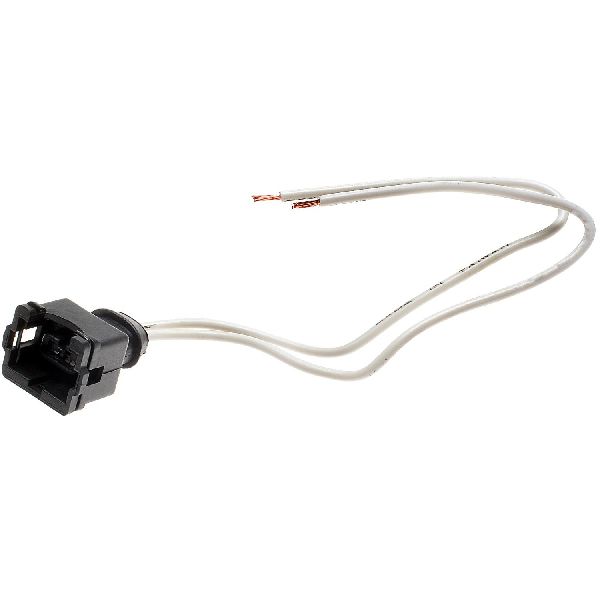
- EVAP Canister Purge Valve Voltage Supply — expected: Battery voltage at pin 1 of the connector with ignition on.. Failure: 0V indicates a problem with the power supply wiring or fuse.
- Fuel Pressure (at fuel rail test port) — expected: ~3.8 bar (55 PSI) with engine off, key on. ~3.3 bar (48 PSI) at idle.. Failure: While not a direct cause of P0455, incorrect fuel pressure can indicate other system issues. A rapid drop in pressure after shutdown could indicate a leak, though not necessarily in the EVAP system.
Scan Tool Commands That Help
- Durametric or PIWIS: Fuel Evaporative Valve (Purge Valve) Activation — Use this with the engine off to test the purge valve solenoid in the engine bay. A healthy valve will produce an audible click about once every two seconds, confirming the solenoid is functioning. No click indicates a failed valve or wiring issue.
- Durametric or PIWIS: Tank Vent Valve Activation — This command tests the vent valve located near the charcoal canister. It can be used during a smoke test to seal the system. The command will close the normally-open vent valve, allowing the system to be pressurized to find leaks. Smoke escaping from the vent valve when it's commanded closed indicates a faulty valve.
Wiring & Ground Locations
- Ground Point on Fuel Filler Neck — A ground wire is attached via one of the 10mm bolts that secures the fuel tank vent valve bracket to the filler neck in the front passenger wheel well.. Corrosion or a loose connection at this ground point can cause intermittent or total failure of the electrically operated fuel tank vent valve, leading to P0455 or refueling issues.
- Ground Point 9 — Located on the rear wall in the rear luggage compartment (behind the seats), near the DME control module.. The DME (ECU) controls the EVAP system. While not a common failure point, a poor ground here can cause a wide range of erratic engine management behavior, including false EVAP codes. The EVAP canister shutoff valve is controlled via the DME, which uses this ground point.
- DME Connector Pin 7 — This is the pin on the main ECU (DME) connector that sends the control signal to the EVAP canister shutoff valve.. A technician can test for continuity from this pin to the valve's connector to diagnose a wiring break, which would prevent the valve from operating and could trigger a fault.
Real Owner Repair Stories
- RennTech.org user 'DBJoe996' (1999 Porsche 996) — P0455 code, smell of gas.
❌ Tried (didn't work) Replacing the EVAP purge valve (regeneration valve) in the engine bay., Replacing the fuel tank vent valve in the wheel well.
✅ What actually fixed it After the code returned, the owner blew compressed air into an EVAP line and heard a leak near the battery. Upon removing the battery and tray, he found a cracked plastic nipple on the fuel pump/sending unit assembly on top of the fuel tank. Replacing the component with the broken nipple resolved the P0455 code. - Rennlist user 'Dion Houng-Lee' (Porsche 996) — P0455 code.
❌ Tried (didn't work) Replacing gas cap., Checking EVAP canister and lines., Checking lines under battery tray., Replacing fuel filler neck vent valve., Replacing fuel valve solenoid on canister.
✅ What actually fixed it The final fix was replacing the EVAP regeneration valve (purge valve) located near the throttle body in the engine bay.
"I Checked Everything" — The Actual Cause
- In one documented case on RennTech.org, a user with a P0455 code had a smoke test performed which revealed no leaks. The intermittent code persisted after replacing the gas cap and testing the charcoal canister valve. The ultimate cause was suspected to be a component on top of the fuel tank, accessible only by dropping the tank or removing the battery, which may not have been properly smoke tested or was leaking intermittently.
OEM Part Supersession History
996-201-143-00→996-201-143-01— Standard part revision by Porsche, likely for improved durability or material composition to address the common failure of this valve.996-201-241-00, 996-201-241-01, 996-201-241-02→996-201-241-03— Multiple revisions to the gas cap design, likely to improve the seal quality and longevity of the O-ring.
Heads up: While older versions may fit, the latest revision is always recommended to ensure the best possible seal and prevent recurring EVAP codes.
Model Year Variations Within This Range
- 1999-2001 (996.1) vs 2002-2004 (996.2): While the engines changed from 3.4L to 3.6L, the fundamental design and location of the key EVAP components for a P0455 code (gas cap, filler neck vent valve, charcoal canister, purge valve) remained consistent. Diagnostic procedures are identical across the entire 1999-2004 range.
- 2005+ (997): For reference, the subsequent 997 generation (starting in 2005) featured a redesigned tank ventilation system that eliminated the fuel line vent valve on the filler neck, a common failure point on the 996.
Diagnostic Flowchart
Other Known Issues on This Vehicle
Issues unrelated to this code that are worth knowing about as an owner of this generation:
- Intermediate Shaft (IMS) Bearing Failure 🔴 High — Affects all 1999-2004 M96 engines. The single-row bearing used from 2000-2005 is the most failure-prone, with reported failure rates of 8-10% under warranty. Failure can be catastrophic for the engine.
- Cylinder Bore Scoring 🔴 High — A known issue with the M96 engine's hypereutectic aluminum block. It is less common than IMS failure but requires a full engine rebuild. It is often detected by checking for oil consumption, fouled spark plugs, or by a boroscope inspection during a PPI.
- Rear Main Seal (RMS) Leak 🟡 Low — A very common oil leak from the seal between the engine and transmission. It is often a slow drip and not critical, but many owners choose to replace it preventatively when performing a clutch replacement or IMS bearing upgrade due to the labor overlap.
- Cracked Cylinder Head 🟠 Medium — Hairline cracks can develop in the cylinder heads, particularly on early 996 models, leading to intermix of oil and coolant ('milkshake'). This is less common than IMS/RMS issues but is a known failure mode.
Used vs. New Parts: Buying Guide for This Vehicle
When a used part is the smart pick: For this specific repair, buying used parts is generally not recommended due to the nature of the failures. However, a used charcoal canister could be a viable option if it comes from a low-mileage, accident-free donor car and is guaranteed to be functional and not saturated with fuel. Large structural components like the fuel filler neck could also be sourced used.
Donor-vehicle mileage cap: roughly under 60000 miles for the part to have meaningful remaining life.
What to inspect on the donor part:
- For a charcoal canister, ensure there are no visible cracks or damage to the housing or hose nipples.
- Ask the seller if the donor car had any EVAP-related check engine lights.
- Avoid parts from vehicles that have sat for a long time, as internal components may be seized or seals dried out.
OEM-only on this vehicle (don't cheap out):
- Gas Cap: The seal is the critical component. Aftermarket caps are notoriously unreliable and a frequent cause of repeat failures. Always buy a new, genuine Porsche cap.
- Fuel Tank Vent Valve: Given its high failure rate and the labor involved to access it, installing a used valve is a significant risk. A new OEM part is the wise choice.
- EVAP Hoses: Rubber and plastic hoses become brittle with age. Never install used hoses; buy new hose material and cut to length.
Aftermarket brands forum-validated for this vehicle:
- Bosch: Bosch is the original equipment manufacturer for many Porsche electronic components, including the EVAP Canister Purge Valve. A Bosch-branded part is often identical to the Porsche part, but at a lower cost.
Brands owners have reported issues with on this vehicle:
- Generic/unbranded gas caps from online marketplaces are a common source of persistent P0455 codes.
Real Owner Stories
Aggregated from forums and TSBs cited above. Mileages and costs reflect what owners reported in those sources.
1999 Porsche 911
Symptoms: Check engine light with code P0455; issues related to the filler cap seal.
What fixed it: Addressed the filler cap seal as per TSB Group 2, #9901.
Source hint: Porsche Technical Service Bulletin Group 2, #9901
Porsche 911 (996)
Symptoms: Audible humming or 'Coke bottle' howling sound from the front passenger wheel well area, often noticeable after shutting the engine off.
What fixed it: Replacement of the fuel tank vent valve (Part No. 996-201-143-01) located on the filler neck.
Source hint: 986forum.com thread titled 'Coke bottle noise fuel filler howling noise'
Porsche 911 (996)
Symptoms: Rough idle or stumbling immediately after filling the gas tank; P0455 code present.
What fixed it: Replacement of the EVAP canister purge valve (regeneration valve) located near the throttle body, which was stuck open.
Source hint: Article context
Porsche 911 (996)
Symptoms: Large EVAP leak code P0455 and difficulty filling the gas tank with the pump constantly shutting off.
What fixed it: Replaced the fuel tank vent valve on the filler neck.
Source hint: PelicanParts.com tech article 'Porsche 996/997 Carrera: Replacing Your Fuel Line Vent Valve'
Related OBD-II Codes
Frequently Asked Questions
Is there a specific Porsche Technical Service Bulletin for P0455 on my 1999 911?
Why does my 996 make a 'Coke bottle' howling sound from the front passenger wheel well after I turn it off?
Can I use an aftermarket gas cap to fix this code on my 911?
I'm having trouble filling my gas tank; the pump keeps clicking off. Is this related to P0455?
Where is the EVAP purge valve located on the 996 engine?
Does the Porsche Boxster suffer from the same P0455 issues as the 911?
Helpful Videos
Used OEM Parts in Stock
New Aftermarket Parts Available


The information in this article is provided for general reference and educational purposes only. Vehicle specifications, procedures, and part compatibility can vary by production date, trim level, and region. Always consult your vehicle's factory service manual and verify part numbers before purchasing or performing repairs. Safety-critical components such as airbags, seat belts, and braking systems should be installed by a qualified professional.
- Porsche 911:
- 🧭 Diagnostic Flowchart
- 🎬 Helpful Videos
- 🛍️ Shop This Part
- What's Unique About the 1999-2004 Porsche 911
- Symptoms You May Notice
- Most Likely Causes
- Rare But Worth Checking
- Diagnosis Steps
- Parts You'll Likely Need
- Related Codes That Often Appear With This One
- Technical Service Bulletins (TSBs) & Recalls
- Platform-Specific Known Issues
- Mechanic-Grade Diagnostic Values
- Scan Tool Commands That Help
- Wiring & Ground Locations
- Real Owner Repair Stories
- "I Checked Everything" — The Actual Cause
- OEM Part Supersession History
- Model Year Variations Within This Range
- Other Known Issues on This Vehicle
- Used vs. New Parts: Buying Guide for This Vehicle
- Real Owner Stories
- 1999 Porsche 911
- Porsche 911 (996)
- Porsche 911 (996)
- Porsche 911 (996)
- Related OBD-II Codes
- Frequently Asked Questions
- 🎟️ Get 5% Off