

P0455 on 2005-2012 Porsche Boxster (987): EVAP Large Leak Causes and Fixes
On a 2005-2012 Porsche Boxster, a P0455 code is most often caused by a loose or faulty gas cap. Before buying any parts, ensure the cap is tight and the seal is not cracked. If the cap is good, the next most likely causes are a failed purge valve or a cracked EVAP hose. A smoke test is the most effective way to pinpoint the leak.
- Always check the gas cap first for a P0455 code. Ensure it is tight and the seal is in good condition.
- A P0455 code will not cause any driving performance issues but will cause an automatic failure on an emissions test.
- If the gas cap is not the issue, a smoke test is the most reliable way to find the source of the large leak.
- Common failure points beyond the gas cap include the EVAP purge valve, cracked hoses, and the charcoal canister.
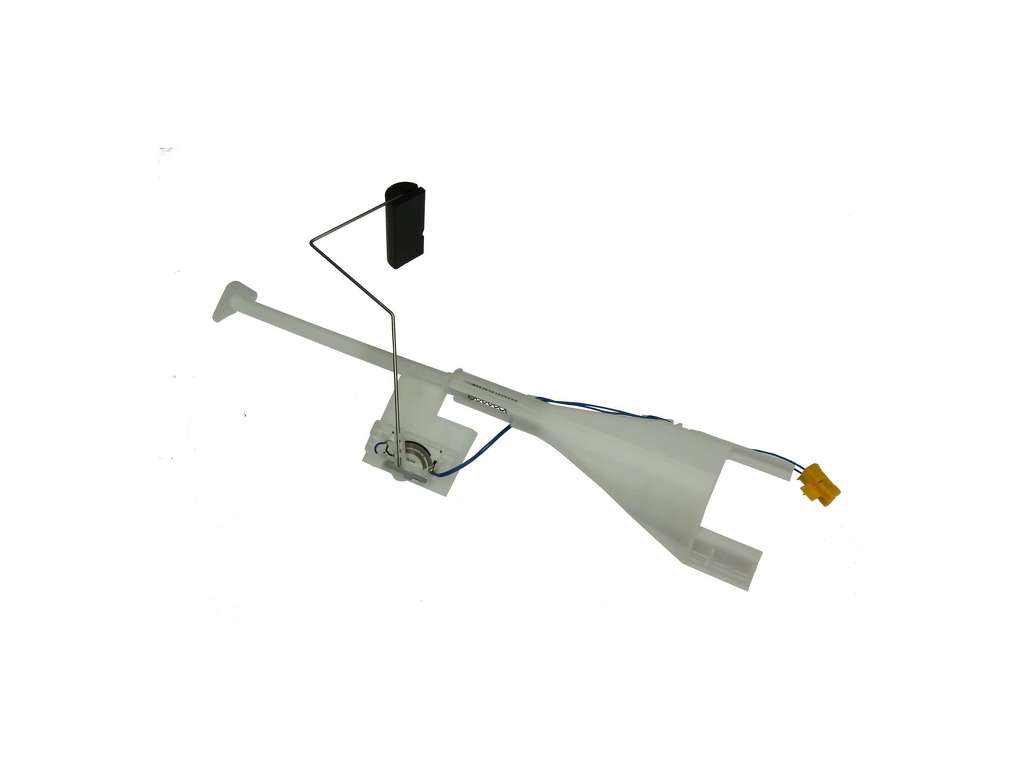
- Be aware of the rare but possible broken vent nipple on the fuel sending unit if other causes are ruled out.
What's Unique About the 2005-2012 Porsche Boxster
The 2005-2012 Porsche Boxster, known as the 987 generation, has a well-documented EVAP system with a few unique failure points. While the common loose gas cap is the primary suspect, these cars can suffer from a brittle plastic nipple on the fuel sending unit, located under the battery, which can break off and cause a persistent P0455 code that is difficult to find without a smoke test. Additionally, the charcoal canister and its associated valves are located in the front trunk ('frunk'), making access different from many other vehicles.
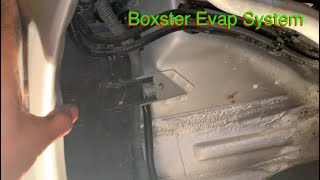
🎬 Watch: A complete overview of the 987 EVAP system layout.Generation note: The 2005-2012 year range covers the entire second generation of the Porsche Boxster, known as the 987. This includes the 987.1 (2005-2008) and the updated 987.2 (2009-2012). While there were significant engine and transmission changes between these versions (M97 vs 9A1 engines), the fundamental design of the EVAP system and the common causes for code P0455 are consistent across the generation.
Symptoms You May Notice
- Check Engine Light is on
- A noticeable smell of fuel, particularly around the car after it's been parked, sometimes stronger in the front trunk area near the charcoal canister.
- Difficulty fueling (gas pump clicks off repeatedly), which can indicate a clogged charcoal canister or faulty vent valve.
- Hard starting or rough running immediately after refueling, which often points to a purge valve stuck open.
- Replacing the oxygen (O2) sensors. O2 sensors are not related to the EVAP system.
- Replacing the catalytic converter. While other codes can be related, P0455 by itself does not indicate a catalytic converter issue.
Most Likely Causes
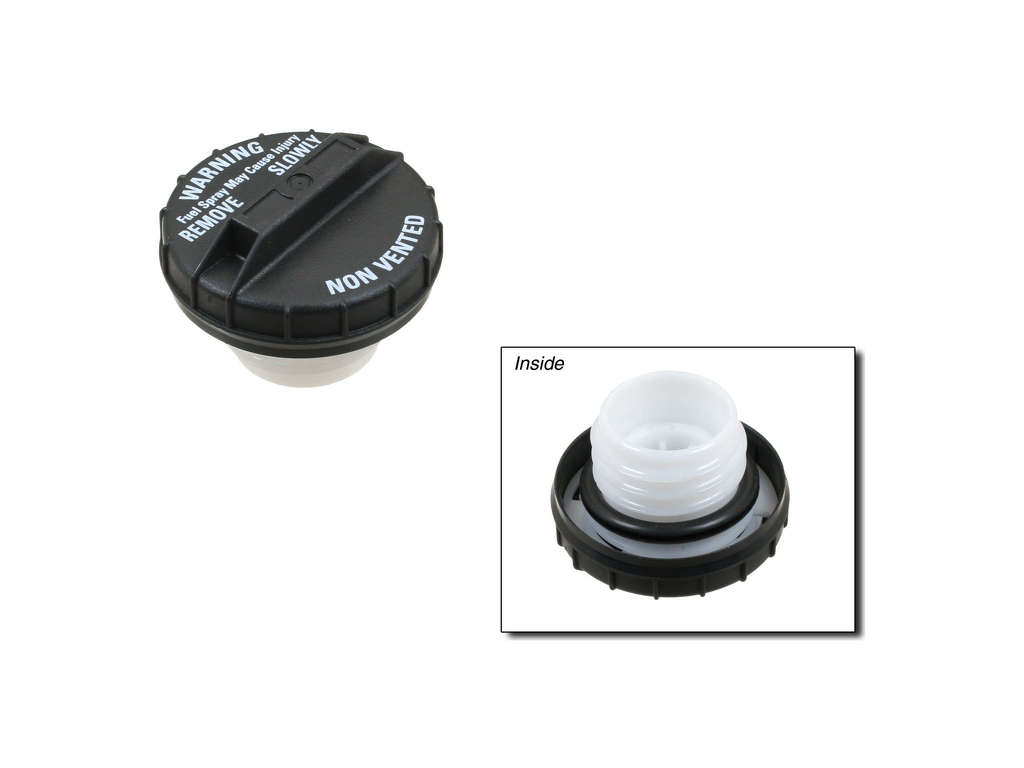
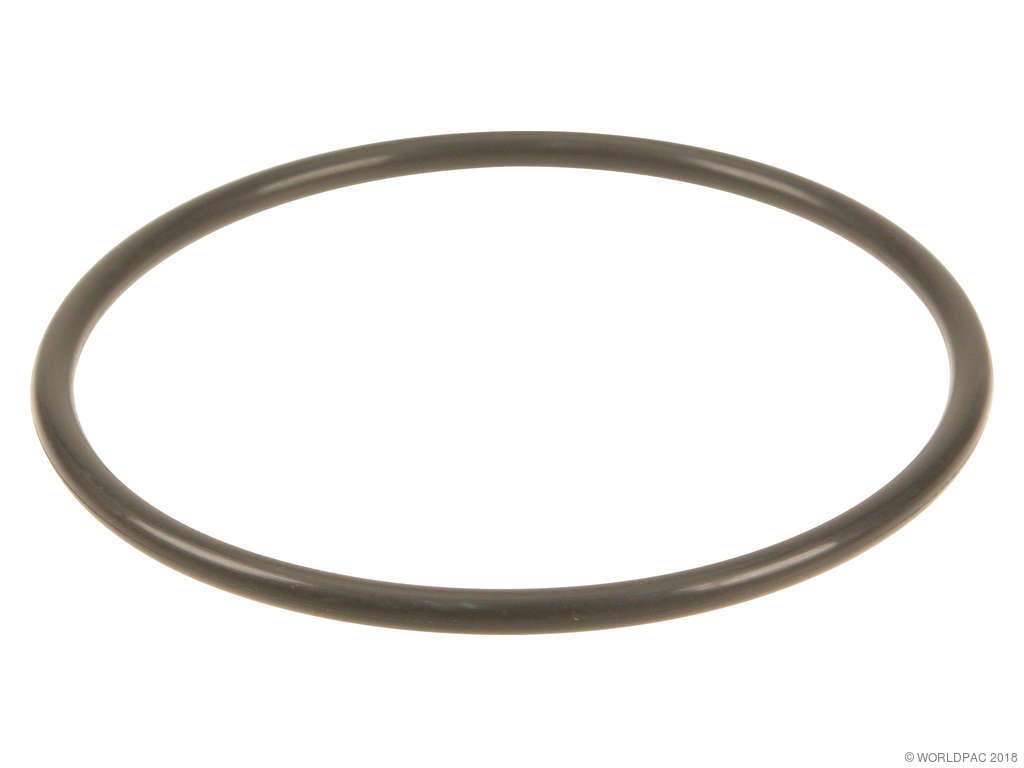
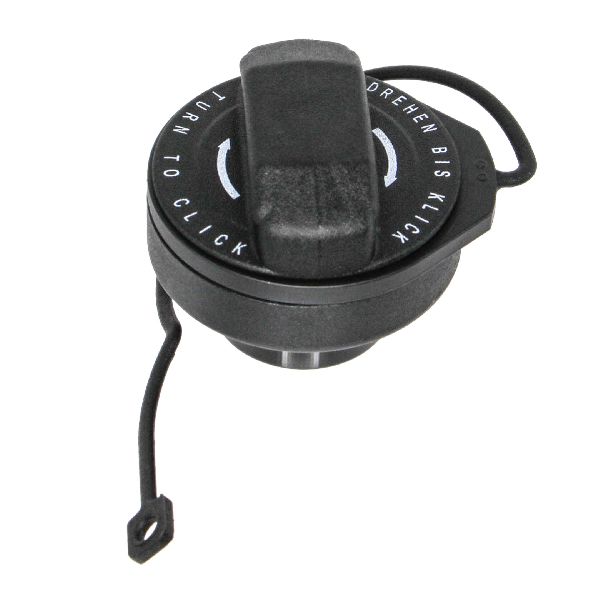
- Loose, Worn, or Incorrect Gas Cap 🔴 High Probability → Shop Fuel Tank Cap This is the most common cause for a P0455 code on any vehicle, including the Porsche Boxster. The rubber O-ring on the cap can dry out and crack over time, preventing a proper seal. The tether can also break, leading to the cap being lost.
How to confirm: Check that the gas cap is tightened until it clicks. Remove the cap and inspect the rubber seal for any cracks, tearing, or signs of deterioration. Ensure it is an OEM or equivalent quality cap.
Typical fix: Tighten or replace the gas cap.
Est. part cost: $20-$50 - Faulty EVAP Purge Valve (Tank Vent Valve) 🟡 Medium Probability → Shop Vapor Canister This solenoid valve is part of the emissions system and can get stuck open, creating a leak path. It's a common failure point on many modern vehicles and is known to cause rough running after fill-ups on the 987 platform.
How to confirm: The valve is located on the left side of the engine bay under the intake manifold. It can be tested with a handheld vacuum pump to see if it holds vacuum when closed (de-energized). A professional can also command it open and closed with a scan tool while observing system pressure. Some owners report cleaning out debris to restore function.
Typical fix: Replace the EVAP purge valve.
Est. part cost: $80-$150 - Cracked or Disconnected EVAP Hoses 🟡 Medium Probability The various plastic and rubber hoses in the EVAP system can become brittle with age and exposure to heat, leading to cracks or loose connections. Lines around the charcoal canister in the frunk and on top of the fuel tank are common culprits.
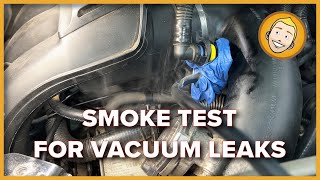
How to confirm: A visual inspection may reveal obvious cracks or disconnected hoses. However, the most effective method is a smoke test, which involves filling the EVAP system with pressurized smoke to reveal the exact location of any leaks. 🎬 See how to perform a smoke test to find hidden leaks.
Typical fix: Replace the cracked hose or reconnect a loose line.
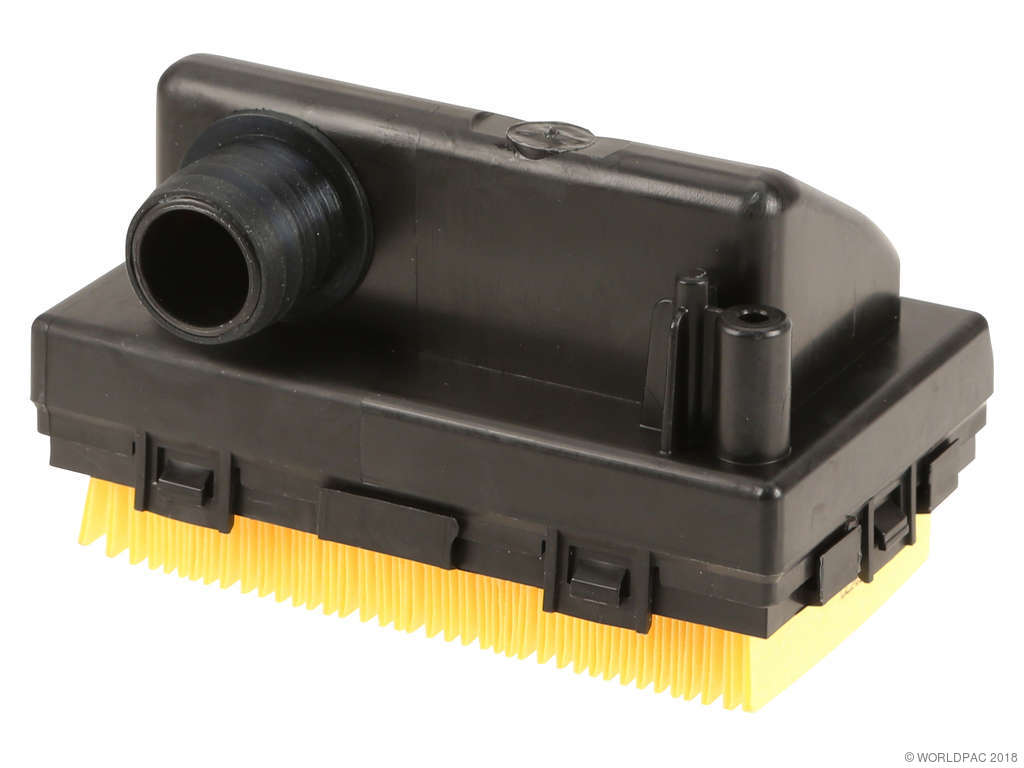
Est. part cost: $10-$100 depending on the specific hose - Cracked Charcoal Canister or Faulty Vent Valve ⚪ Low Probability → Shop Vapor Canister Overfilling the fuel tank can saturate the charcoal canister with liquid fuel, causing it to fail and sometimes crack. The canister, located in the front trunk (frunk) area near the battery, can also be physically damaged, though this is less common.
How to confirm: Inspect the canister for visible cracks or signs of fuel saturation. A strong fuel smell from the frunk is a key indicator. A smoke test is the definitive diagnostic method.
Typical fix: Replace the charcoal canister and potentially the vent valve.
Est. part cost: $300-$800
Rare But Worth Checking
- Broken Vent Nipple on Fuel Sending Unit: Multiple users on Rennlist and other forums have discovered a persistent P0455 was caused by a small, brittle plastic vent nipple breaking off the top of the fuel sending unit/fuel pump assembly. Accessing this requires removing the battery and battery tray to inspect the top of the fuel tank. This is a difficult leak to find without a smoke test pointing to that specific area. A YouTube video by 'Stark Raving Mod' titled 'Porsche 987 P0455 EVAP Leak FIXED!' documents this exact failure and repair.
- Cracked Fuel Filler Neck: → Shop Fuel Filler Neck Less common than other causes, hairline cracks can develop in the plastic fuel filler neck, typically near the top. This can cause a fuel smell when the tank is full and may be sufficient to trigger a large leak code. A smoke test is required to identify such a small crack.
Diagnosis Steps
- Verify the Check Engine Light is on and code P0455 is present using an OBD-II scanner.
- Inspect the gas cap. Ensure it is tight and clicks. Remove it and check the seal for cracks or damage. If in doubt, a new OEM cap (Part No. 99620124103) is an inexpensive first step.
- Clear the code and drive for a few days to see if it returns. Some systems require multiple drive cycles to re-run the EVAP test.
- If the code returns, perform a thorough visual inspection of all accessible EVAP hoses in the engine bay and around the charcoal canister in the front trunk. Look for obvious cracks, damage, or loose connections.
- If no obvious issues are found, the most effective next step is to have a smoke test performed. This test introduces smoke into the EVAP system, and the leak will be revealed by smoke exiting the faulty component.
- During the smoke test, pay close attention to the purge valve, the charcoal canister and its connections, and the vent lines on top of the fuel tank under the battery. The broken sending unit nipple is a well-documented 'hidden' leak source.
- Based on the results of the smoke test, replace the identified faulty component.
Parts You'll Likely Need
- Fuel Tank Cap
(OEM #99620124103)— This is the most frequent cause of a P0455 code due to the seal wearing out over time.
Trusted brands: Porsche (OEM), URO Parts
OEM price range: $25-$40
Aftermarket price range: $15-$25 - EVAP Purge Valve (Tank Bleeder Valve)
(OEM #98711012801)— A common failure item that gets stuck open, causing a constant leak in the system and often hard starts after refueling.
Trusted brands: Bosch (often the OEM supplier, part 0280142380 may be equivalent), Porsche (OEM), Kayser
OEM price range: $120-$160
Aftermarket price range: $45-$110 - Charcoal Canister
(OEM #99720122106 (supercedes earlier numbers))— Can become saturated from over-filling the fuel tank or can crack, leading to fueling issues and EVAP codes.
Trusted brands: Porsche (OEM)
OEM price range: $400-$650
Aftermarket price range: $300-$450
Related Codes That Often Appear With This One
- P0441 — P0441 indicates incorrect purge flow. If a component like the purge valve is failing, it can cause both a flow issue and a leak, triggering both codes.
- P0456 — P0456 indicates a 'small leak'. Sometimes a component is beginning to fail and may initially set a small leak code before it worsens and triggers the 'large leak' P0455 code.
Platform-Specific Known Issues
- A broken plastic vent nipple on the fuel sending unit, located on top of the fuel tank, can be a hidden cause of a P0455 code. This requires battery removal to access and is best found with a smoke test.
- The charcoal canister is located in the front trunk (frunk) on the passenger side, and replacement requires removing some plastic trim.
Mechanic-Grade Diagnostic Values
- EVAP Purge Valve Solenoid Resistance — expected: 26 ± 4 Ohms at 20°C (68°F). Failure: A reading significantly outside this range indicates a faulty internal coil in the valve.
- Voltage at EVAP Purge Valve Connector Pin 1 (Supply) — expected: Battery Voltage (approx. 12V) with ignition on.. Failure: Zero voltage indicates a wiring or fuse issue in the power supply circuit.
- Voltage at EVAP Purge Valve Connector Pin 2 (Signal) — expected: Should show voltage with ignition on, then drop to 0V when the DME commands the valve to open.. Failure: No change in voltage when activated with a scan tool points to a wiring fault or a failed DME driver.
- Purge Valve Vacuum Test — expected: When de-energized (closed), the valve should hold a steady vacuum applied with a handheld pump.. Failure: If the vacuum level drops, the valve is leaking internally and is faulty.
Scan Tool Commands That Help
- Durametric: Fuel Evaporative Valve Activation — With the engine off, this command cycles the purge valve. A healthy valve will produce an audible click about once every two seconds. The absence of a click helps confirm an electrically failed or seized valve.
- PIWIS (Porsche System Tester): EVAP System Leak Test — This is the dealer-level automated test procedure that seals the system, applies pressure or vacuum, and reports the results. It is the most comprehensive way to test the entire system electronically.
- 9V Battery: Manual Purge Valve Activation — Forcing the purge valve open with an external power source (like a 9V battery) is necessary to allow smoke to pass through it and test the rest of the EVAP system during a smoke test.
Wiring & Ground Locations
- EVAP Purge Valve Connector — On the EVAP purge valve, located under the driver's side (left side) of the intake manifold.. Pin 1 is the 12V power supply, and Pin 2 is the signal wire grounded by the DME to activate the valve. Testing these pins is critical for diagnosing electrical faults versus a failed valve.
- Fuel Pump Relay — In the relay panel located in the driver's side footwell.. While not a direct cause of P0455, knowing how to bypass the fuel pump relay by jumping pins 30 and 87 is crucial for safely emptying the fuel tank, a necessary step before replacing the fuel sending unit for a broken nipple.
- Main Ground Points — General locations include a point in the battery compartment, under the dashboard near the steering column, and on the back of the engine/bell housing.. A poor ground for the DME or EVAP system components could cause erratic behavior or false codes, although it is not a common cause for P0455 specifically.
Real Owner Repair Stories
- Rennlist user 'AMCPILOT' (2003 Porsche Boxster S (986, but a well-documented issue also seen on 987)) — Check Engine Light with code P0455.
❌ Tried (didn't work) Visual inspection of charcoal canister and surrounding lines showed no obvious leaks.
✅ What actually fixed it A smoke test revealed a leak near the top of the fuel tank. After removing the battery and battery tray, a broken plastic vent nipple was discovered on the fuel sending unit. Replacing the entire fuel sending unit (Part # 996-620-832-03 for that model) resolved the code. - RennTech.org user 'cas951' (Porsche Boxster (year not specified, 986/987 platform)) — Persistent P0455 code, needed to pass emissions.
❌ Tried (didn't work) Replacing the gas cap., A smoke test performed by an independent shop which found no leaks.
✅ What actually fixed it Convinced it was the valve despite the smoke test, the owner had the EVAP Purge Valve replaced. This fixed the problem, turned off the CEL, and allowed the car to pass emissions. - Rennlist user '997gt3rs4liter' (2006 Porsche Cayman S (987.1) with 50k miles) — Occasional P0455 code, followed by multiple attempts to start the engine immediately after refueling.
❌ Tried (didn't work) Replacing the gas cap.
✅ What actually fixed it The combination of the P0455 code and hard starting after fill-ups strongly indicated a faulty regeneration valve (purge valve), part number 987-110-128-01. The user was seeking DIY replacement advice, confirming this set of symptoms points directly to the purge valve.
"I Checked Everything" — The Actual Cause
- In a case documented on RennTech.org, a user's car passed a smoke test at an independent shop, which failed to identify any leak. The owner, suspecting a component failure rather than a static leak, proceeded to replace the EVAP Purge Valve. This resolved the P0455 code, indicating the valve was likely failing intermittently or in a way not detectable by a standard smoke test (e.g., not closing properly under specific conditions).
OEM Part Supersession History
987-110-128-00→987-110-128-01— Standard part revision by Porsche.
Heads up: The new part is a direct replacement for the old one on 987.1 models (2005-2008).997-201-221-01→997-201-221-06— Standard part revision by Porsche.
Heads up: The new part is a direct replacement for the old one and fits the entire 987 range (2005-2012).
Model Year Variations Within This Range
- 2005-2008 (987.1) vs 2009-2012 (987.2): The EVAP Purge Valve (Regeneration Valve) is different between the two generations. 987.1 models use part number 987-110-128-01. 987.2 models use a different part, typically starting with a '9A1' prefix, such as 9A1-110-093-04. The core valve component may be similar, but the attached hose assembly is different, requiring the correct part for the specific model year.
Diagnostic Flowchart
Other Known Issues on This Vehicle
Issues unrelated to this code that are worth knowing about as an owner of this generation:
- Intermediate Shaft (IMS) Bearing Failure 🔴 High — Primarily affects 987.1 models (2005-2008) with the M96/M97 engine. The single-row bearing used from 2002-2005 is most failure-prone. Later 2006-2008 models have a more robust, non-serviceable bearing with a much lower failure rate (<1%). The 987.2 models (2009-2012) with the 9A1 engine do not have an IMS bearing and are not affected. (Ref: A class-action lawsuit settlement covered some earlier model years.)
- Cylinder Bore Scoring 🔴 High — A significant issue for M96 and M97 engines, particularly the larger displacement 3.4L 'S' models (Boxster S from 2007, all Cayman S). It is less common on 2.7L base models. The issue can occur at any mileage but is often noted between 30k-80k miles. Symptoms include a rhythmic ticking noise, increased oil consumption, and a sooty tailpipe on one side. The 9A1 engine in 987.2 models is less susceptible but not entirely immune.
- Air-Oil Separator (AOS) Failure 🟠 Medium — A common failure item on M96/M97 engines. When it fails, it can cause large plumes of white/blue smoke from the exhaust on startup, a high-pitched whistling or squealing noise, and a dangerously high vacuum in the crankcase that can damage other seals. If it fails completely, it can lead to oil being sucked into the cylinders, potentially causing hydro-lock.
- Water Pump Failure 🟠 Medium — The original water pumps often used a plastic impeller that can degrade and break apart over time, leading to a loss of coolant flow and engine overheating. It is a common preventative replacement item during major services.
Used vs. New Parts: Buying Guide for This Vehicle
When a used part is the smart pick: Structural components like brackets or potentially the charcoal canister from a verified low-mileage donor vehicle that was not in a collision can be a cost-effective choice. Hard plastic lines without cracks are also viable.
Donor-vehicle mileage cap: roughly under 60000 miles for the part to have meaningful remaining life.
What to inspect on the donor part:
- For a charcoal canister, ensure there is no fuel smell or signs of saturation.
- Inspect all plastic parts for brittleness, stress marks (white discoloration), or hairline cracks.
- Verify the donor car did not have EVAP-related codes prior to being dismantled, if possible.
OEM-only on this vehicle (don't cheap out):
- Gas Cap: Forum users consistently report that aftermarket gas caps often fail to seal properly on these cars, causing the P0455 code to return. Sticking with a Genuine Porsche cap is highly recommended.
Aftermarket brands forum-validated for this vehicle:
- Bosch: Bosch is the original equipment manufacturer for the purge valve. Buying the Bosch-branded valve (part 0280142380 for the valve itself) instead of the Porsche-branded assembly can save significant money.
- Kayser: Mentioned as an aftermarket supplier for the purge valve assembly.
Brands owners have reported issues with on this vehicle:
- Unbranded or generic gas caps are a common source of recurring P0455 codes and should be avoided.
Real Owner Stories
Aggregated from forums and TSBs cited above. Mileages and costs reflect what owners reported in those sources.
Porsche Boxster (987)
Symptoms: P0455 engine code.
What fixed it: Found the fuel sending unit was cracked at the plastic nipple after inspecting under the battery.
Source hint: r/boxster
2007-2008 Porsche Boxster S 3.4L — ~55000 miles
Symptoms: Rhythmic ticking noise, increased oil consumption, and a sooty tailpipe on one side.
What fixed it: This describes Cylinder Bore Scoring, a known issue for the M97 engine in the Boxster S, though not the direct cause of P0455.
Source hint: Rennlist.com: Thread '987.1 Bore Scoring and IMS Bearing Guide'
Related OBD-II Codes
Frequently Asked Questions
Where is the charcoal canister located on my 987 Boxster?
Why does my Boxster struggle to start or run roughly only after I fill up the gas tank?
I'm having trouble at the gas station where the pump clicks off repeatedly. Is this related to P0455?
Is there a specific part number for a replacement gas cap for the 2005-2012 Boxster?
I've checked my gas cap and hoses but still have a large leak. Is there a 'hidden' leak spot on this car?
Where exactly is the EVAP purge valve located in the engine bay?
Helpful Videos
Used OEM Parts in Stock

New Aftermarket Parts Available

The information in this article is provided for general reference and educational purposes only. Vehicle specifications, procedures, and part compatibility can vary by production date, trim level, and region. Always consult your vehicle's factory service manual and verify part numbers before purchasing or performing repairs. Safety-critical components such as airbags, seat belts, and braking systems should be installed by a qualified professional.
- Porsche Boxster:
- 🧭 Diagnostic Flowchart
- 🎬 Helpful Videos
- 🛍️ Shop This Part
- What's Unique About the 2005-2012 Porsche Boxster
- Symptoms You May Notice
- Most Likely Causes
- Rare But Worth Checking
- Diagnosis Steps
- Parts You'll Likely Need
- Related Codes That Often Appear With This One
- Platform-Specific Known Issues
- Mechanic-Grade Diagnostic Values
- Scan Tool Commands That Help
- Wiring & Ground Locations
- Real Owner Repair Stories
- "I Checked Everything" — The Actual Cause
- OEM Part Supersession History
- Model Year Variations Within This Range
- Other Known Issues on This Vehicle
- Used vs. New Parts: Buying Guide for This Vehicle
- Real Owner Stories
- Porsche Boxster (987)
- 2007-2008 Porsche Boxster S 3.4L — ~55000 miles
- Related OBD-II Codes
- Frequently Asked Questions
- 🎟️ Get 5% Off