

P0455 on 2006-2012 Porsche Cayman: EVAP Large Leak Causes and Fixes
For a 2006-2012 Porsche Cayman, code P0455 is most often caused by a loose or faulty gas cap. Before buying any parts, tighten the cap until it clicks and clear the code. If it returns, a new OEM gas cap (Part No. 996-201-241-03) is an inexpensive next step (~$20-40). If that doesn't work, a smoke test is necessary to find the leak, which could be a cracked hose, a faulty valve, or a known weak point on the fuel sending unit under the battery.
- Always check that your gas cap is tight and its seal is intact before attempting any other repairs for P0455.
- If a new gas cap doesn't fix the issue, a smoke test is the most effective way to find the leak and avoid replacing unnecessary parts.
- Common leak points on the 987 Cayman include the fuel sending unit under the battery and the charcoal canister in the front passenger wheel well.
- This code does not affect how the car drives, but it will cause an automatic failure on an emissions test.
What's Unique About the 2006-2012 Porsche Cayman
The 2006-2012 Porsche Cayman (987 generation) uses a specific Diagnostic Module for Tank Leakage (DMTL) pump to test the EVAP system, a feature primarily on US-spec vehicles. While the causes are similar to other cars, owner experiences show a particular vulnerability in the plastic nipple on the fuel sending unit, located under the battery, which can crack and cause this code. Unlike many cars where the charcoal canister is near the fuel tank in the rear, on the 987 Cayman it is located in the front trunk ('frunk'), in front of the battery and slightly to the passenger side, accessed by removing the plastic cover over the brake booster. This specific location makes it susceptible to damage during front-end work.
Symptoms You May Notice
- Check Engine Light is on.
- A faint smell of gasoline, especially after parking in an enclosed space like a garage.
- Difficulty refueling (the gas pump nozzle clicks off prematurely) if the charcoal canister is saturated with fuel.
- A whooshing sound when removing the gas cap may be absent, indicating the system is not holding pressure.
- Replacing the purge valve or charcoal canister before checking the gas cap and performing a smoke test. The gas cap is the most likely culprit and a smoke test is the only definitive way to find a leak that isn't obvious.
Most Likely Causes
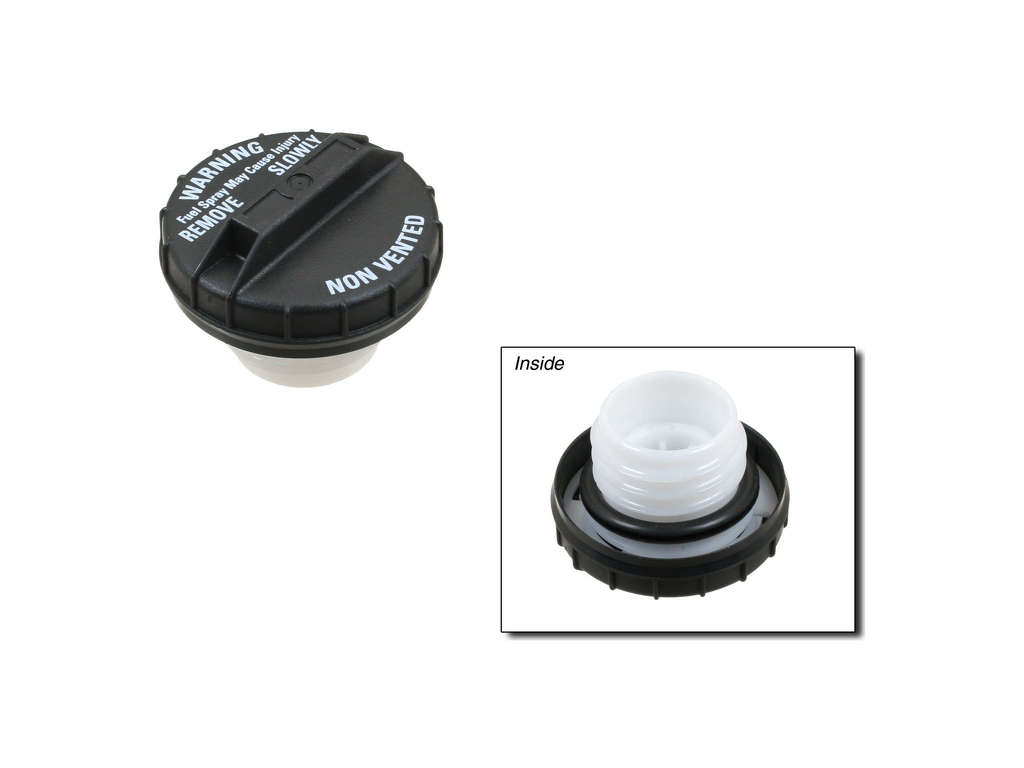
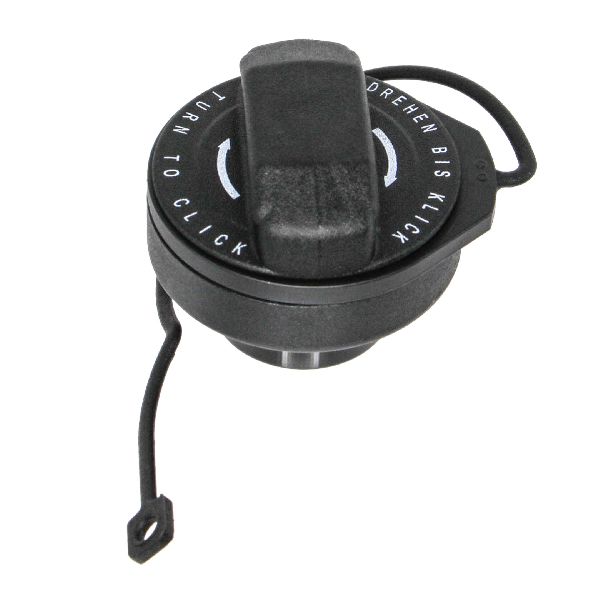
- Loose or Faulty Gas Cap 🔴 High Probability → Shop Fuel Tank Cap This is the most common cause on all vehicles. The rubber seal on the cap can degrade over time, or the cap may simply not have been tightened correctly after refueling. The tether can also get caught under the seal, preventing it from closing properly.
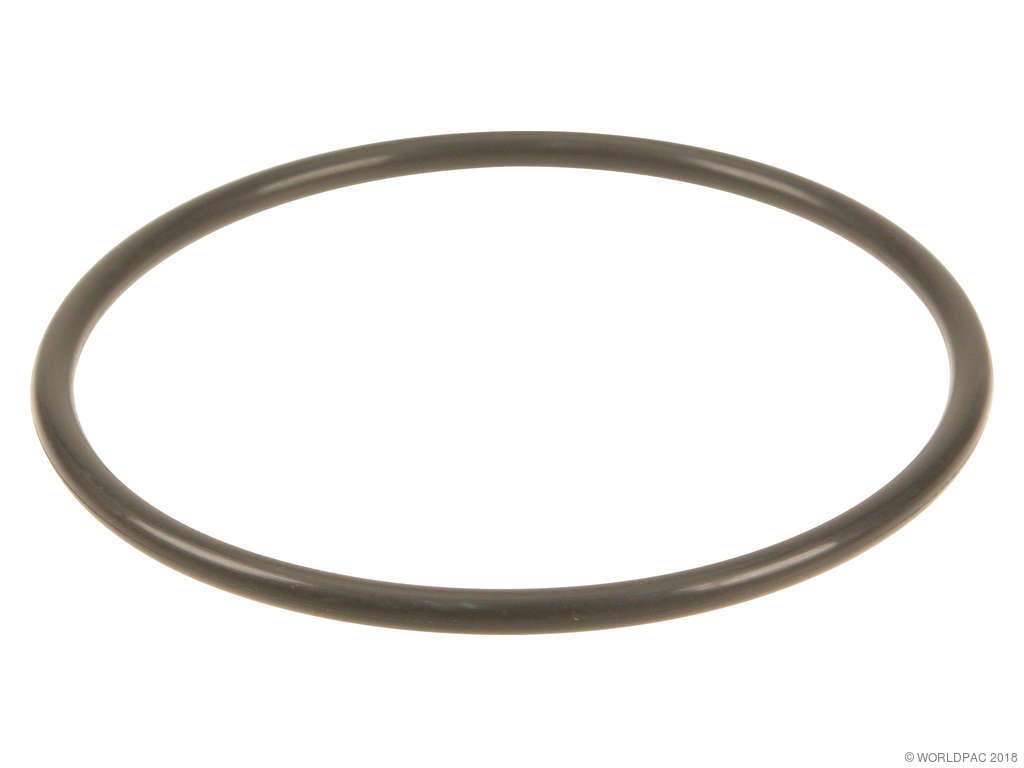
How to confirm: Ensure the gas cap is tightened until it clicks several times. Inspect the rubber O-ring on the cap for cracks, stiffness, or damage. A new OEM cap is a cheap and easy diagnostic step.
Typical fix: Tighten the cap. If the seal is bad or the cap's ratchet mechanism is broken, replace the gas cap with a new OEM part (Porsche Part No. 996-201-241-03).
Est. part cost: $20-$40 - Cracked or Disconnected EVAP Hoses 🟡 Medium Probability The plastic and rubber hoses in the EVAP system become brittle with age and heat cycles, leading to cracks, especially at connection points. A large leak is often a hose that has completely disconnected.
How to confirm: A visual inspection may reveal an obviously disconnected or cracked hose. The most effective method is a smoke test, which forces low-pressure smoke into the EVAP system to reveal the exact location of the leak.
Typical fix: Replace the cracked hose or re-secure the connection. Small plastic fittings and elbows are common failure points.
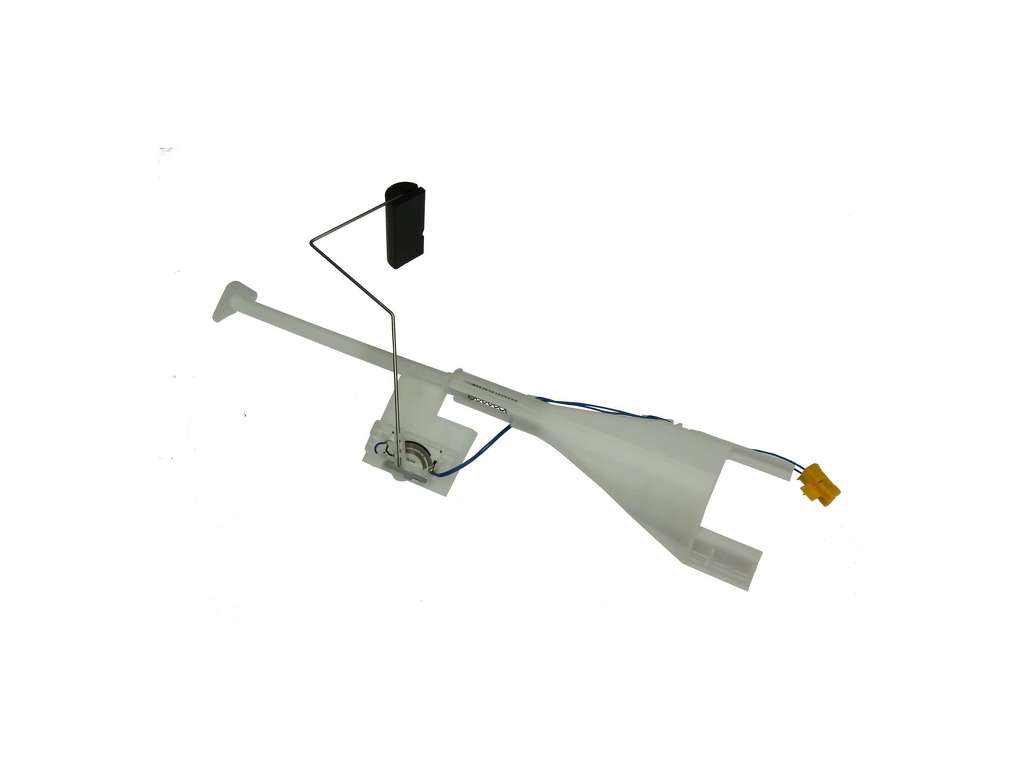
Est. part cost: $10-$100 - Cracked Fuel Sending Unit Nipple 🟡 Medium Probability On the 987 platform (Cayman and Boxster), a small plastic vent nipple on the fuel sending unit (located under the battery) is a known failure point that cracks over time, creating a significant EVAP leak.
How to confirm: This is difficult to see without removing the battery and battery tray. A smoke test is the best way to confirm, as smoke will be seen exiting from the top of the fuel tank area under the battery. A gasoline smell may also be present in this area.
Typical fix: Officially, this requires replacing the entire fuel sending unit (Part No. 996-620-832-03 for a related Boxster). Some owners have successfully repaired the nipple with fuel-resistant epoxy as a less expensive alternative. 🎬 Watch: How to find and fix the fuel sending unit leak
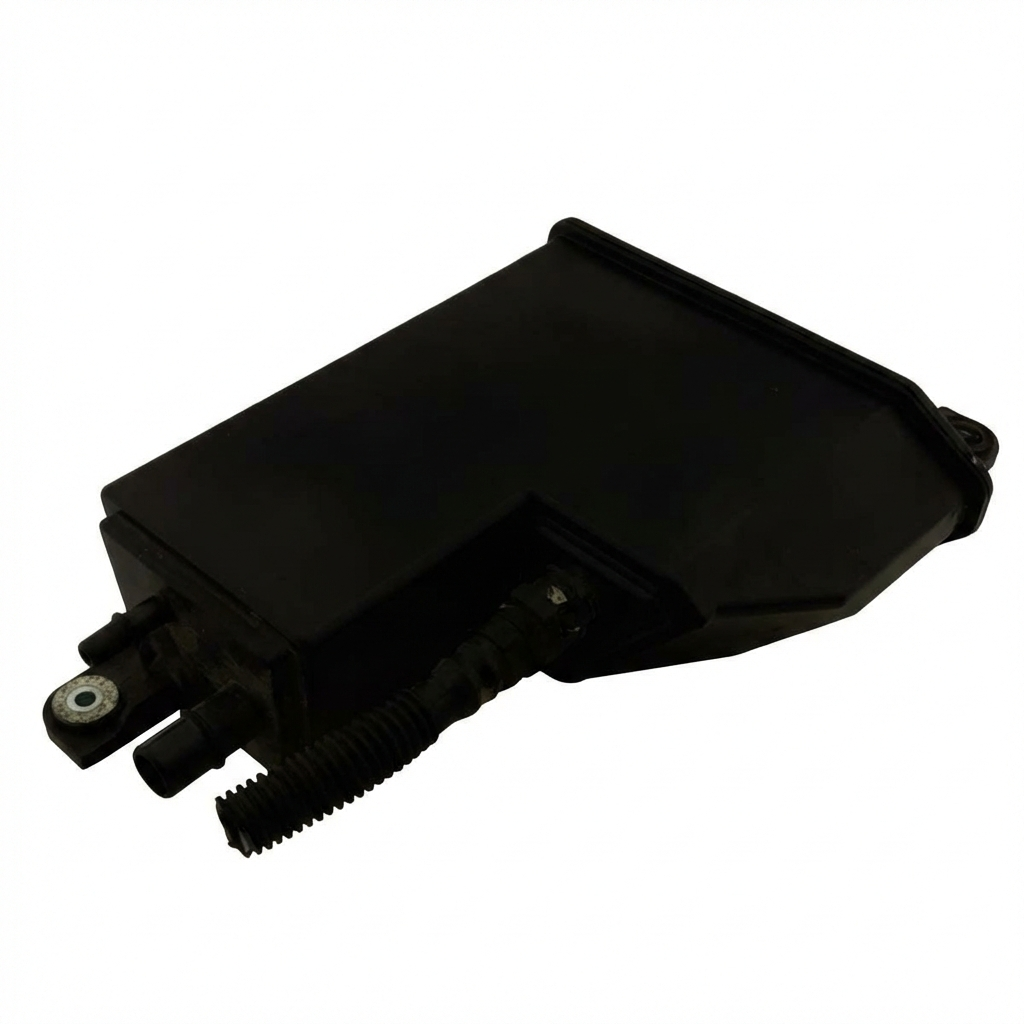
Est. part cost: $250-$400 for a new sending unit - Faulty Charcoal Canister or Vent Valve ⚪ Low Probability → Shop Vapor Canister The charcoal canister can be damaged or become saturated with liquid fuel from habitually overfilling the gas tank, which destroys the charcoal media. A cracked nipple on the canister has also been reported by a Cayman owner.
How to confirm: Visually inspect the canister (located in the front trunk) for physical cracks or damage. If you experience slow fueling (pump clicks off), the canister is likely saturated. A smoke test will show leaks from a cracked canister body or its connections.
Typical fix: Replace the charcoal canister assembly. The vent valve is often part of the canister assembly.
Est. part cost: $300-$450 - Stuck-Open Purge Valve ⚪ Low Probability → Shop Vapor Canister The purge valve (solenoid) can fail and stick open, creating a constant vacuum leak into the intake manifold that the system interprets as a large leak.
How to confirm: The purge valve is a normally-closed valve. Remove the valve (located in the engine bay, driver's side, under the intake manifold) and try to blow through it. If air passes through, it is stuck open and faulty.
Typical fix: Replace the purge valve. Owners have successfully replaced just the valve with Bosch P/N 0 280 142 380 instead of the entire Porsche hose assembly.
Est. part cost: $80-$150
Rare But Worth Checking
- Cracked Fuel Filler Neck: → Shop Fuel Filler Neck
- Faulty DMTL Pump: → Shop Evaporative Emissions System Leak Detection Pump
Diagnosis Steps
- Read the code with an OBD-II scanner to confirm P0455 is the only code present.
- Inspect the gas cap. Remove it, check the seal for cracks or damage, and retighten it until it clicks at least three times. Clear the code and drive for a few days to see if it returns.
- If the code returns, replace the gas cap with a new OEM part (996-201-241-03) as an inexpensive and high-probability fix.
- If a new gas cap does not solve the issue, perform a visual inspection of all accessible EVAP hoses in the engine bay and around the fuel filler neck for obvious cracks or disconnections.
- The next step is a professional smoke test. This involves feeding pressurized, vaporous smoke into the EVAP system's service port. Smoke will exit from the source of the leak.
- During the smoke test, pay close attention to these known failure points: the fuel sending unit under the battery (requires removing battery/tray), the charcoal canister in the front trunk, the purge valve in the engine bay, and all hose connections.
- If no leaks are found, test the purge valve for proper operation (it should be closed with no power applied). Also test its electrical circuit per the values in 'Specific Diagnostic Values'.
- If all else fails, the DMTL pump may be faulty, requiring advanced diagnostics with a Porsche-specific scanner (PIWIS) to run the dedicated 'tank leakage test' function.
Parts You'll Likely Need
- Fuel Tank Cap
(OEM #996-201-241-03)— This is the most frequent cause of a P0455 code due to a worn seal or improper tightening.
Trusted brands: Porsche (OEM)
OEM price range: $20-$40
Aftermarket price range: $15-$30 - Charcoal Canister
(OEM #997-201-221-06)— Can crack from age or road debris, or fail internally if saturated from over-filling the fuel tank. The part number is cited for 2009-2012 models, but fits many 987/997 models; verify for your specific year.
Trusted brands: Porsche (OEM), Bosch
OEM price range: $350-$450
Aftermarket price range: $250-$350 - Fuel Tank Sending Unit
(OEM #996-620-832-03)— A plastic nipple on the unit is a known weak point that can crack, requiring replacement of the whole unit. Part number is from a Boxster but the issue is common to the platform.
Trusted brands: Porsche (OEM)
OEM price range: $250-$400 - Aluminum Look Fuel Filler Cap (Optional Upgrade)
(OEM #997-201-980-00)— For owners wanting to replace their cap with a stylish OEM upgrade, this part also fits and resolves the sealing issue.
Trusted brands: Porsche (OEM)
OEM price range: $150-$180
Related Codes That Often Appear With This One
- P0441 — This code for 'Incorrect Purge Flow' can sometimes accompany a large leak code if the issue is related to the purge valve or a significant blockage/opening in the system.
- P0456 — This code for a 'Small EVAP Leak' would typically not appear with P0455, as the system identifies the leak as either large or small, not both simultaneously.
Mechanic-Grade Diagnostic Values
- EVAP Canister Purge Valve Resistance — expected: 26 ± 4 ohms (at 20°C). Failure: A reading significantly outside this range indicates a faulty valve coil.
- EVAP Purge Valve Connector, Pin 1 to Ground (Ignition ON) — expected: Battery Voltage (approx. 12V). Failure: A reading of 0V indicates a problem with the power supply to the valve.
- EVAP Purge Valve Connector, Pin 2 to Ground (Ignition ON) — expected: 0 V. Failure: If battery voltage is displayed, there is likely a short in the wiring harness from the DME.
Scan Tool Commands That Help
- Porsche PIWIS Tester: Short Test 'Tank Leakage Test' — This is the factory-level command to initiate the full DMTL pump diagnostic cycle to test for large and small leaks after the engine has been off and other conditions are met.
- Porsche PIWIS Tester: Component Actuation (EVAP Canister Valve / Purge Valve) — To manually command the purge and vent valves to open or close. A technician can then listen for the valve clicking or attempt to blow through it to confirm if it is sealing correctly when commanded closed.
- Porsche PIWIS Tester: Developer Mode (E-Mode) — For advanced diagnostics, coding, and manual programming. This mode provides deeper access to control unit functions but is complex and often in German. It can be activated in the system settings.
Wiring & Ground Locations
- Ground Points Master Sheet — The official 2006 Cayman Wiring Diagram manual contains a dedicated sheet for all vehicle ground points.. A bad ground for the DME or EVAP system components can cause erratic behavior and false codes. This document is the definitive source for locations. The specific sheet is 'Sheet 17 Ground points'.
- Main Engine Ground — On the back of the engine, and another on the bell housing.. A poor engine ground can affect all sensors and solenoids controlled by the DME, including the purge valve and DMTL pump.
- Frunk/Battery Ground Point — In the battery compartment, on the chassis body.. The DMTL pump and charcoal canister are located nearby in the front trunk; this is a likely ground point for those components.
- EVAP System Wiring — The official 2006 Cayman Wiring Diagram manual contains a sheet for the fuel tank system.. This sheet shows the wiring for the DMTL pump and related components. The specific sheet is 'Sheet 18C Fan / tank'.
Real Owner Repair Stories
- Rennlist user 'jlong2121' (Porsche 987 Cayman S) — Hard start after fueling, which is a classic symptom of a stuck-open purge valve.
❌ Tried (didn't work) The user sought to avoid replacing the entire, expensive Porsche purge valve and hose assembly (P/N 98711012801).
✅ What actually fixed it The user successfully removed the old purge valve from the factory hose, which required carefully drilling out the old barb. They then installed a new Bosch purge valve (P/N 0 280 142 380) into the original hose, saving over $200 compared to the full Porsche assembly. - Reddit user 'metric_tensor' (2008 Cayman S) — Check Engine Light with P0455 code.
❌ Tried (didn't work) The user did not list other attempts, but identified the cause directly.
✅ What actually fixed it The user had to replace the charcoal canister because it had cracked at the hose nipple, causing a large leak.
"I Checked Everything" — The Actual Cause
- A smoke test may show no leaks, but the P0455 code can persist. This can happen if a valve (like the purge valve or vent valve) is failing intermittently or is stuck open internally, creating a leak path that a static smoke test doesn't reveal. A PIWIS scan tool can actuate the valves during the test to check for this.
- On cars equipped with the optional Porsche Sport Exhaust (PSE), the vacuum line that controls the exhaust flaps is often T-connected to the EVAP system's vacuum source. A leak in this PSE-specific vacuum line or at the exhaust valve actuator can trigger a P0455 code, but may be overlooked during a standard EVAP system smoke test.
- The DMTL pump itself can develop an internal leak. In one documented case on a similar Porsche model, a smoke test of the main EVAP lines was clean, but when the tech disconnected the DMTL pump and fed smoke directly into its housing, smoke was seen pouring out of the electrical connector, indicating a failed pump housing.
When the Usual Fixes Don't Work
- While replacing the gas cap is the most common advice, multiple owners have reported that replacing the cap (even with an OEM part) did not fix their P0455 code. In one case, after two clean smoke tests and multiple gas caps, the owner suspected a faulty fuel filler neck vent valve, indicating that on these cars, the root cause is often a less obvious component failure rather than the cap.
OEM Part Supersession History
997-201-221-01→997-201-221-06— Standard part revision and update by Porsche.
Heads up: The new part is a direct replacement for the old one.
Model Year Variations Within This Range
- 2009-2012 (987.2): These models feature the newer 9A1 engine, which is a completely different design (Direct Fuel Injection, no Intermediate Shaft/IMS). While most EVAP components are shared with the 987.1, the engine bay layout, vacuum line routing, and DME software are different, which can affect diagnosis and access to parts like the purge valve.
- 2006-2012 (All 987): Despite some online confusion, forum experts state the charcoal canister on all 987 models is accessed from the front trunk ('frunk'), not from inside the wheel well. The procedure involves removing the plastic trim panel in front of the battery.
Diagnostic Flowchart
Other Known Issues on This Vehicle
Issues unrelated to this code that are worth knowing about as an owner of this generation:
- Cylinder Bore Scoring 🔴 High — More common on 3.4L 'S' models (M97 engine) than 2.7L base models. Can occur from 30k-80k miles but is possible at any mileage. Risk is elevated in cold climates.
- Intermediate Shaft (IMS) Bearing Failure 🟠 Medium — The 987.1 Cayman (2006-2008) uses a larger, more robust IMS bearing than earlier Porsches, with a much lower failure rate (~1%). Unlike earlier models, the bearing is not considered serviceable without engine disassembly. The issue was eliminated in 987.2 models (2009-2012).
- Air-Oil Separator (AOS) Failure 🟠 Medium — Common across all 987 models. The diaphragm inside can tear, causing a large vacuum leak, rough running, and significant blue/white smoke from the exhaust. Typically occurs every 50k-70k miles.
- Water Pump Failure 🟠 Medium — The plastic impeller on the original water pump can degrade and break apart, leading to overheating and potential engine damage if fragments enter the cooling system. Recommended as a preventative replacement item every 50k-60k miles.
- Cracked Ignition Coils 🟡 Low — The plastic bodies of the coil packs can crack over time due to heat, leading to misfires (P030x codes), especially in damp conditions. It is common to replace them when changing spark plugs.
Used vs. New Parts: Buying Guide for This Vehicle
When a used part is the smart pick: For purely mechanical, non-wear items like the fuel filler neck, a used part from a reputable salvage yard can be a cost-effective option, provided it is inspected for cracks and damage. Large plastic components like the charcoal canister body could also be considered if visually inspected to be in perfect condition with no cracks, especially at the nipples.
Donor-vehicle mileage cap: roughly under 50000 miles for the part to have meaningful remaining life.
What to inspect on the donor part:
- For any plastic or rubber part, check for brittleness, discoloration, or hairline cracks. Bend hoses slightly to see if they crack.
- Ensure all connector nipples on parts like the charcoal canister or sending unit are intact and not stressed.
- Verify the donor car is from a similar climate (e.g., avoid parts from harsh, salty winter regions if possible, as they accelerate plastic degradation).
- Ask for the donor vehicle's VIN to verify model year compatibility.
OEM-only on this vehicle (don't cheap out):
- Gas Cap: Aftermarket gas caps are notoriously problematic on Porsches and often do not seal correctly, causing the very code you are trying to fix. Always use an OEM cap.
- DMTL Pump: As an electronic diagnostic module, a used pump is a gamble. One owner reported issues after installing a cheap, non-OEM Chinese replacement, suggesting OEM is the most reliable choice.
- Fuel Sending Unit: Given the labor to access this part under the battery, using a new OEM unit is strongly recommended to avoid repeat repairs.
Aftermarket brands forum-validated for this vehicle:
- Bosch: The EVAP purge valve is manufactured by Bosch. Owners have successfully used the Bosch-branded valve (P/N 0 280 142 380) as a direct replacement for the valve on the OEM Porsche hose assembly, saving significant cost.
Brands owners have reported issues with on this vehicle:
- Unbranded 'Chinese' DMTL pumps have been reported to fail or not perform to OEM standards, leading to persistent codes.
Real Owner Stories
Aggregated from forums and TSBs cited above. Mileages and costs reflect what owners reported in those sources.
Porsche Boxster (986/987 platform)
Symptoms: Fault code P0455 detected. A smoke test was performed after removing the battery and battery tray.
What fixed it: Found a cracked nipple on the fuel sending unit; the unit (Part No. 996-620-832-03) required replacement.
Source hint: Rennlist.com: A thread from a Boxster owner (joeslastchancegarage) detailed finding a P0455 leak at a cracked nipple on the fuel sending unit
Porsche Cayman
Symptoms: P0455 large leak code present.
What fixed it: The owner identified a cracked carbon canister specifically at the hose nipple.
Source hint: Reddit.com/r/Porsche_Cayman: An owner reported their P0455 code was caused by a cracked carbon canister at the hose nipple.
Porsche Boxster
Symptoms: P0455 inquiry following a gas station drive-off incident.
What fixed it: Investigation into damage at the fuel filler neck area.
Source hint: 986forum.com: A user described getting a P0455 code after a gas station drive-off incident damaged the fuel filler neck area
Related OBD-II Codes
Frequently Asked Questions
Is there a specific part number for the gas cap on my 2006-2012 Cayman?
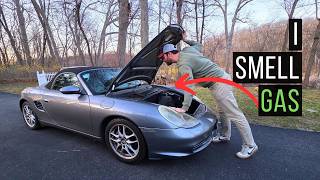
I'm smelling gas near the battery tray of my 987 Cayman; could this be related to P0455?
Can I replace just the purge valve on my Cayman, or do I need the whole hose assembly?
Why does the gas pump nozzle click off prematurely when I try to fill up my Cayman?
Where is the charcoal canister located on the 2006-2012 Cayman?
Is the P0455 issue common to the Boxster as well?
Helpful Videos
Used OEM Parts in Stock
New Aftermarket Parts Available


The information in this article is provided for general reference and educational purposes only. Vehicle specifications, procedures, and part compatibility can vary by production date, trim level, and region. Always consult your vehicle's factory service manual and verify part numbers before purchasing or performing repairs. Safety-critical components such as airbags, seat belts, and braking systems should be installed by a qualified professional.
- Porsche Cayman:
- 🧭 Diagnostic Flowchart
- 🎬 Helpful Videos
- 🛍️ Shop This Part
- What's Unique About the 2006-2012 Porsche Cayman
- Symptoms You May Notice
- Most Likely Causes
- Rare But Worth Checking
- Diagnosis Steps
- Parts You'll Likely Need
- Related Codes That Often Appear With This One
- Mechanic-Grade Diagnostic Values
- Scan Tool Commands That Help
- Wiring & Ground Locations
- Real Owner Repair Stories
- "I Checked Everything" — The Actual Cause
- When the Usual Fixes Don't Work
- OEM Part Supersession History
- Model Year Variations Within This Range
- Other Known Issues on This Vehicle
- Used vs. New Parts: Buying Guide for This Vehicle
- Real Owner Stories
- Porsche Boxster (986/987 platform)
- Porsche Cayman
- Porsche Boxster
- Related OBD-II Codes
- Frequently Asked Questions
- 🎟️ Get 5% Off