

P0455 on 2010-2016 Porsche Panamera: EVAP Large Leak Causes and Fixes
On a 2010-2016 Panamera, code P0455 is a large EVAP leak. While a loose gas cap is the first thing to check, the problem is often a failed EVAP purge valve solenoid or a faulty mechanical vacuum pump. A smoke test is the most effective way to find the leak's source.
- P0455 means a large leak has been detected in your Panamera's fuel vapor system.
- Always check the gas cap first; ensure it's tight and the seal is intact.
- If the gas cap isn't the issue, the most likely culprits on a Panamera are a faulty EVAP purge valve or a failed mechanical vacuum pump.
- A professional smoke test is the fastest and most reliable way to locate the source of the leak.
- You can continue to drive the car, but the issue should be addressed to pass emissions testing and prevent fuel odors.
What's Unique About the 2010-2016 Porsche Panamera
The Porsche Panamera (970 generation) uses a complex vacuum system that integrates with the EVAP system. Unlike simpler designs, a P0455 code on this platform can be caused by components beyond the typical hoses and valves, such as a failing engine-driven mechanical vacuum pump which is also tied into other vehicle functions like the brake booster. Forum discussions among Panamera and Cayenne owners frequently point to the EVAP purge valve (solenoid) and the vacuum pump itself as common failure points, often after ruling out the gas cap.
Symptoms You May Notice
- Check Engine Light is on.
- A 'Check Gas Cap' warning may appear on the dashboard.
- A faint fuel smell may be noticeable around the car, especially after being parked.
- In some cases, a constant clicking or ticking sound from the engine bay may be heard, which could be a faulty EVAP purge solenoid. One owner noted this sound, which he had mistaken for a bad lifter for a year, disappeared after replacing the valve.
- Difficulty filling the fuel tank completely without the pump nozzle shutting off prematurely.
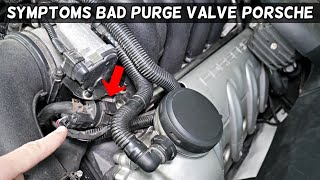
- Rough idle or stumbling immediately after refueling. This happens because a stuck-open purge valve allows a rush of fuel vapor into the intake manifold, overwhelming the engine. 🎬 Watch: Common symptoms of a failing purge valve explained.
- Replacing the gas cap repeatedly when the fault lies with another component like the purge valve or vacuum pump. Many owners replace the cap first, but the light returns.
- Replacing the charcoal canister based on a smoke test when the actual fault is an intermittent or internal leak in the vacuum pump that supplies the system.
Most Likely Causes
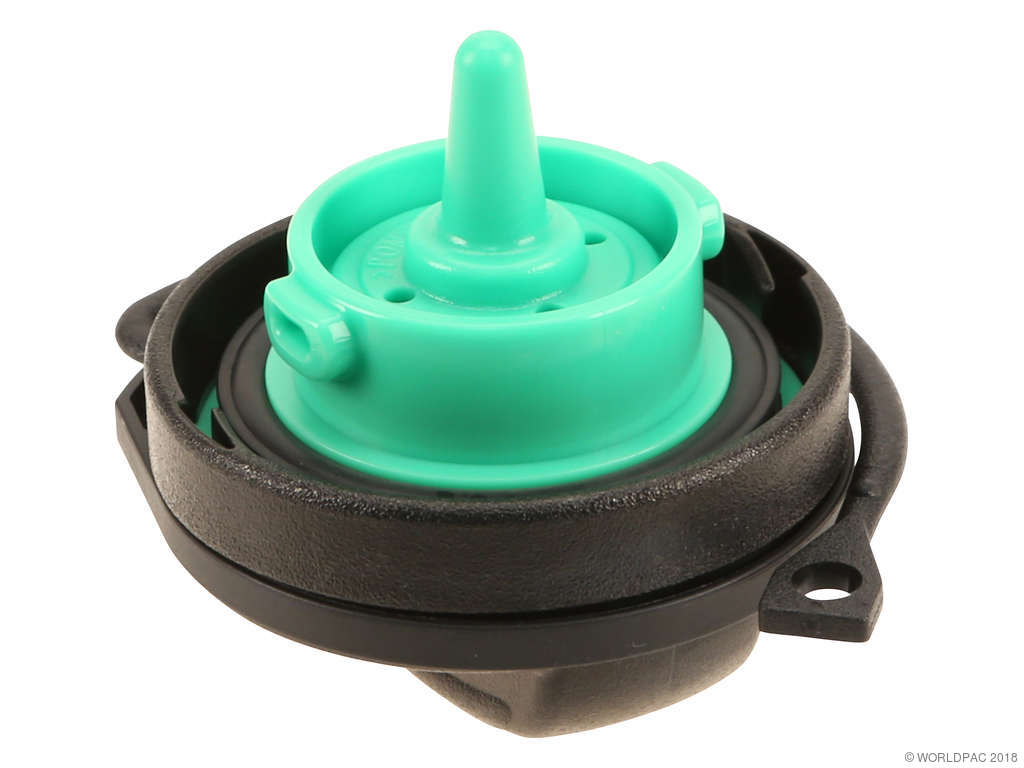
- Loose or Faulty Gas Cap 🔴 High Probability → Shop Fuel Tank Cap This is the most common cause for P0455 on any vehicle due to user error or simple wear of the cap's seal. Many owners replace this first, only to have the code return, indicating a different root cause.
How to confirm: Ensure the gas cap is tightened until it clicks. Inspect the cap's rubber O-ring for cracks, stiffness, or damage. If a 'Check Gas Cap' message appears even with a new cap, the problem is elsewhere.
Typical fix: Tighten the cap. If the seal is bad, replace the gas cap with a new OEM part.
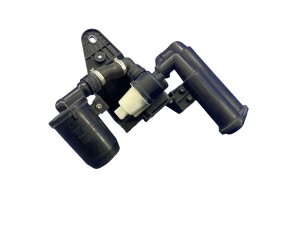
Est. part cost: $30-$60 - Faulty EVAP Purge Valve / Solenoid 🟡 Medium Probability → Shop Vapor Canister This solenoid, often made by Bosch, can fail internally, sticking open and creating a constant vacuum leak. Owners on Rennlist and other forums have reported this as a common fix for P0455, sometimes accompanied by rich running codes (P0172/P0175).
How to confirm: The valve is located in the engine bay. When the engine is running, a constant clicking may be heard. A smoke test will show smoke passing through the valve when it should be closed. You can also remove it and try to blow through it; if air passes, it has failed open.
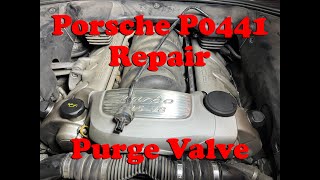
Typical fix: Replace the EVAP purge valve. It is located on the right side of the engine and is relatively easy to access. 🎬 See this real-time walkthrough of a V8 purge valve replacement. The OEM part is often a Bosch unit.
Est. part cost: $50-$120 - Failed Mechanical Vacuum Pump 🟡 Medium Probability The engine-driven vacuum pump, located at the back of the passenger-side cylinder head, can develop internal leaks. This prevents the EVAP system from holding vacuum during its self-test. This is a well-documented failure on both Panamera and the related Cayenne.
How to confirm: A technician can test the vacuum output at the pump and along the line; it should hold a steady -25 to -27 inHg. One owner on Rennlist provided a definitive diagnosis: after seeing fluctuating vacuum readings (1-5 inches), he replaced the pump. He then smoke tested the old pump off the car and saw smoke passing through to the cam side, confirming an internal leak.
Typical fix: Replace the mechanical vacuum pump. This is a more labor-intensive job due to its location at the rear of the engine.
Est. part cost: $250-$400 - Cracked or Disconnected EVAP Hoses ⚪ Low Probability Plastic and rubber hoses become brittle over time with exposure to heat and age, leading to cracks. One owner found a weathered vacuum line to the intake butterfly had failed.
How to confirm: A thorough visual inspection of all EVAP lines from the engine bay to the rear of the car. A smoke test is the most effective method, as it will make even small cracks visible.
Typical fix: Replace the damaged section of hose or the entire hose assembly.
Est. part cost: $20-$150 - Faulty Leak Detection Pump (LDP) ⚪ Low Probability → Shop Evaporative Emissions System Leak Detection Pump The LDP is an electronic pump that pressurizes the system for testing. It can fail electrically or develop leaks in its diaphragm.
How to confirm: The LDP is located near the charcoal canister in the rear passenger-side wheel well area. It can be tested with a Porsche-specific scan tool (like PIWIS) or diagnosed via a smoke test. Often accompanied by other codes like P2404 (EVAP Leak Detection Pump Sense Circuit / Reed Switch).
Typical fix: Replace the Leak Detection Pump.
Est. part cost: $150-$250
Rare But Worth Checking
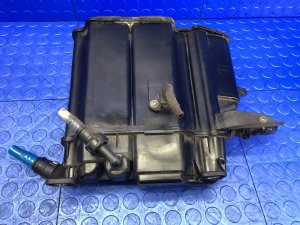
- Cracked Charcoal Canister: → Shop Vapor Canister The canister itself can be damaged by road debris or develop cracks from age, creating a large leak. This is often found during a smoke test after other common parts have been checked.
- Broken Nipple on Fuel Pump Assembly: → Shop Fuel Pump One owner on RennTech discovered the EVAP line nipple on the fuel pump assembly had completely broken off, causing a massive leak directly at the tank. This requires removing the rear seat to access the fuel pump.
- Torn line to the fuel pump: → Shop Fuel Pump One owner reported smelling gas and finding a small tear in the line that runs to the fuel pump, which resolved the P0455 code after being fixed.
Diagnosis Steps
- Check the Gas Cap: Remove and reinstall the gas cap, ensuring it clicks several times. Inspect the rubber seal for cracks or damage. If it looks worn, replace it with an OEM cap.
- Scan for Other Codes: Use an OBD-II scanner to check for other related codes (e.g., P0456, P2404, P0172/P0175) that can help pinpoint the faulty component.
- Inspect the EVAP Purge Valve: With the engine running, listen for a loud, constant clicking from the purge valve in the engine bay. A properly functioning valve should not be stuck open. You can test it by removing it and checking if air passes through.
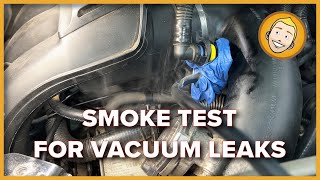
- Perform a Smoke Test: This is the most effective diagnostic step. A smoke machine forces low-pressure smoke into the EVAP system. Smoke will exit from any cracks or leaks, making them easy to see. 🎬 Watch: How to perform a professional smoke test for leaks. This can identify leaks in hoses, the charcoal canister, the LDP, or the tank itself.
- Test the Vacuum Pump: If a smoke test reveals no external leaks, the vacuum pump should be tested. A technician can measure its vacuum output to see if it's within spec (should be a steady -25 to -27 inHg). A faulty pump may leak internally, which can be confirmed by smoke testing the pump itself off the car.
- Inspect Components at the Rear: If the leak is traced to the rear of the vehicle, inspect the charcoal canister, Leak Detection Pump (LDP), and associated hoses in the passenger-side rear wheel well area.
Parts You'll Likely Need
- Gas Cap
(OEM #9P0-201-553)— This is the simplest and most common starting point for any P0455 code.
Trusted brands: Porsche (OEM)
OEM price range: $30-$60
Aftermarket price range: $20-$40 - EVAP Purge Valve / Solenoid
(OEM #948-110-020-74)— A very common failure point on the Panamera that causes a constant vacuum leak when it sticks open.
Trusted brands: Bosch (OEM supplier), Porsche (OEM)
OEM price range: $70-$120
Aftermarket price range: $40-$80 - Mechanical Vacuum Pump
(OEM #948-110-051-05)— Prone to internal failure, preventing the EVAP system from holding vacuum. A common cause if no external leaks are found.
Trusted brands: Porsche (OEM)
OEM price range: $250-$400
Aftermarket price range: $150-$250 - Leak Detection Pump (LDP)
(OEM #970-620-620-00)— Can fail and cause leaks or trigger codes, often in conjunction with P2404.
Trusted brands: Porsche (OEM)
OEM price range: $150-$250
Aftermarket price range: $100-$180
Related Codes That Often Appear With This One
- P0456 — Small EVAP Leak. Sometimes a system can have multiple small leaks that the computer interprets as one large leak, or the fault can be intermittent.
- P2404 — EVAP Leak Detection Pump Sense Circuit. This code points specifically to an issue with the LDP's internal switch, and often appears with P0455 if the LDP is the source of the leak.
- P0172 / P0175 — System Too Rich (Bank 1 / Bank 2). A stuck-open purge valve can cause unmetered fuel vapors to enter the engine, leading to a rich condition. A Rennlist user reported these codes appeared along with P0455, and all were resolved by replacing the faulty purge valve.
Mechanic-Grade Diagnostic Values
- EVAP Canister Purge Valve (Solenoid) Resistance — expected: 26 ± 4 Ohms at 20°C (68°F). Failure: A reading significantly outside this range indicates an internal electrical fault in the solenoid.
- Mechanical Vacuum Pump Output — expected: Steady vacuum of -25 to -27 inHg (inches of mercury).. Failure: A fluctuating reading, for example between 1-5 inHg, indicates an intermittent or failing pump.
- P0455 Leak Size Definition — expected: A leak equivalent to a hole diameter greater than 2 mm.. Failure: N/A
Scan Tool Commands That Help
- Porsche PIWIS Tester (II or III): Manual activation/closing of EVAP canister vent valve and purge valve. — This bidirectional control is used during a smoke test to isolate different parts of the EVAP system. By commanding a valve closed, a technician can check if the valve itself is leaking internally.
- Porsche PIWIS Tester (II or III): Short test 'tank leakage test' — This is an automated test routine that allows the vehicle to perform its own EVAP leak test on demand, rather than waiting for the specific drive cycle conditions to be met naturally.
- Porsche PIWIS Tester (II or III): Read all fault memories / View input/output values — Allows a technician to see the live status of sensors and switches within the EVAP system, which can help diagnose faulty components without removal.
Wiring & Ground Locations
- EVAP System Component Grounds — Various points on the chassis, engine block, and near fuse boxes. Specific locations are detailed in official Porsche wiring diagrams for the 2010-2016 Panamera.. A poor ground connection for the Leak Detection Pump (LDP), purge valve, or fuel tank pressure sensor can cause erratic behavior or a complete failure of the component, leading to false codes or an inability for the system to test itself properly. Voltage drop testing at ground points is a key step in diagnosing electrical faults.
Real Owner Repair Stories
- Rennlist user 'Trombone' (2011 Panamera Turbo) — P0455 (Large Leak) and P2404 (LDP Reed Switch) codes, 'Check Gas Cap' warning on dash.
❌ Tried (didn't work) Replacing the gas cap., Replacing the charcoal canister., Replacing the Leak Detection Pump (LDP)., Smoke testing the gas tank, fuel pump O-rings, and EVAP lines from front to back (all showed no leaks).
✅ What actually fixed it Replacing the mechanical vacuum pump. The faulty pump produced fluctuating vacuum (1-5 inHg instead of a steady -25 inHg). An internal leak was confirmed by smoke testing the old pump on a bench, where smoke passed through to the cam side. - Rennlist user 'Ciaka' (2013 Panamera Base, 95k miles) — P0455 code after every fuel fill-up, later accompanied by P0172 and P0175 (System Too Rich). Also had a persistent engine ticking noise mistaken for a bad lifter.
❌ Tried (didn't work) Replacing the gas cap., Replacing a weathered vacuum line on the intake manifold.
✅ What actually fixed it Replacing the EVAP purge valve (solenoid). The old valve had failed internally and was stuck open, confirmed by being able to blow air through it when removed. This fix resolved all codes, the ticking noise, and lowered the idle from 780 to ~610 RPM. - 6SpeedOnline user 'x X CLoud X x' (2010 Panamera TT) — P0455 code and a faint gas smell from the rear of the car.
❌ Tried (didn't work) Replacing the gas cap.
✅ What actually fixed it Found and repaired a small tear in the line that runs to the fuel pump and also replaced the charcoal canister.
"I Checked Everything" — The Actual Cause
- A common scenario for the Panamera is passing a standard EVAP smoke test but still having the P0455 code return. In at least one documented case, the root cause was an internal failure of the mechanical vacuum pump. The pump was leaking vacuum internally to the engine crankcase/camshaft area, which a standard smoke test of the EVAP lines would not detect. The issue was only found by directly measuring the pump's unstable vacuum output and then smoke testing the pump itself after removal.
Model Year Variations Within This Range
- 2014-2016 (970.2 Facelift): The Panamera S and 4S models switched from a 4.8L naturally aspirated V8 engine (970.1) to a 3.0L twin-turbo V6 engine (970.2). While the EVAP system functions the same, the physical routing of vacuum lines and component placement in the engine bay may differ.
- 2010-2016: Gasoline-only models and S E-Hybrid models use different vapor canisters and potentially other EVAP components. Parts are not interchangeable between powertrain types. Always verify part numbers against the vehicle's VIN.
Diagnostic Flowchart
Other Known Issues on This Vehicle
Issues unrelated to this code that are worth knowing about as an owner of this generation:
- Air Suspension Failure 🔴 High — Very common. Leaking air struts (air springs) or a failing compressor often leads to a 'Chassis System Fault' warning and the car sagging at one or more corners, especially after being parked.
- Camshaft Adjuster Bolt Failure 🔴 High — Affects 2010-2012 models with V8 engines. The original aluminum bolts can shear, leading to loss of engine timing, power loss (including brake booster vacuum), and potentially catastrophic engine damage. (Ref: NHTSA Recall Campaign AH08.)
- High-Pressure Fuel Pump (HPFP) Failure 🔴 High → Shop Fuel Pump — Common on DFI engines (V6 and V8). Symptoms include long crank times, rough idle, reduced engine power ('limp mode'), and fault codes like P1023 and P1026.
- Coolant Pipe Leaks 🟠 Medium — On earlier models, coolant pipes were affixed with epoxy that could fail over time, causing coolant leaks.
- Thermostat Housing & Water Pump Leaks 🟠 Medium — A widely reported issue on the first-generation Panamera, leading to coolant puddles under the car and potential overheating if not addressed.
Used vs. New Parts: Buying Guide for This Vehicle
When a used part is the smart pick: Simple, non-mechanical components like a gas cap or plastic EVAP lines from a low-mileage, accident-free donor vehicle can be a cost-effective option. A used charcoal canister can also be considered if it comes from a dry climate and shows no signs of physical damage or fuel saturation.
Donor-vehicle mileage cap: roughly under 50000 miles for the part to have meaningful remaining life.
What to inspect on the donor part:
- For hoses, inspect for any hardening, cracking, or swelling.
- For canisters, ensure there are no cracks in the plastic housing and that all nipples are intact.
- Verify the donor vehicle was not in a collision that could have stressed the components.
- Prefer parts from regions without extreme heat or cold, which accelerates plastic and rubber degradation.
OEM-only on this vehicle (don't cheap out):
- Mechanical Vacuum Pump: Due to its propensity for internal failure, an OEM pump is highly recommended. A forum member reported an aftermarket pump did not solve their issue, while an OEM one did.
- Leak Detection Pump (LDP): As an electromechanical part critical to the system's self-test, OEM is the safest choice to ensure compatibility and longevity.
Aftermarket brands forum-validated for this vehicle:
- Bosch: Bosch is the original equipment manufacturer for the EVAP purge valve. Buying the Bosch-branded part is identical to the Porsche part but typically costs less.
Brands owners have reported issues with on this vehicle:
- Unbranded/No-name vacuum pumps: Given the labor to replace this part, using a generic aftermarket pump is a high-risk choice that may not resolve the issue or could fail prematurely.
Real Owner Stories
Aggregated from forums and TSBs cited above. Mileages and costs reflect what owners reported in those sources.
2013 Porsche Panamera
Symptoms: A constant clicking or ticking sound from the engine bay that was mistaken for a bad lifter for an entire year.
What fixed it: Replacing the EVAP purge valve/solenoid.
Source hint: Rennlist thread titled '2013 p0455 evap code large leak and valve lifter noise'
2011 Porsche Panamera Turbo
Symptoms: P0455 code present; technician observed fluctuating vacuum readings between 1-5 inches instead of a steady hold.
What fixed it: Replacement of the mechanical vacuum pump after a smoke test confirmed smoke was passing through the pump to the cam side.
Source hint: Rennlist thread titled 'p0455 on my 2011 panamera turbo'
2011 Porsche Panamera
Symptoms: Large EVAP leak code P0455 and a weathered vacuum line found near the intake butterfly.
What fixed it: Replacing the weathered vacuum line.
Source hint: Rennlist thread titled 'p0455 large leak'
Related OBD-II Codes
Frequently Asked Questions
I hear a clicking sound from my Panamera's engine bay that sounds like a bad lifter; could this be related to P0455?
Why does my Panamera stumble or idle roughly right after I fill up the gas tank?
Is there a recall for the vacuum system issues on 2010-2012 Panamera V8 models?
Can a failure in the mechanical vacuum pump cause a P0455 'Large Leak' code?
Where is the Leak Detection Pump (LDP) located on the Panamera?
I replaced my gas cap but the P0455 code and 'Check Gas Cap' message returned. What should I check next?
Helpful Videos

Used OEM Parts in Stock
New Aftermarket Parts Available

The information in this article is provided for general reference and educational purposes only. Vehicle specifications, procedures, and part compatibility can vary by production date, trim level, and region. Always consult your vehicle's factory service manual and verify part numbers before purchasing or performing repairs. Safety-critical components such as airbags, seat belts, and braking systems should be installed by a qualified professional.
- Porsche Panamera:
- 🧭 Diagnostic Flowchart
- 🎬 Helpful Videos
- 🛍️ Shop This Part
- What's Unique About the 2010-2016 Porsche Panamera
- Symptoms You May Notice
- Most Likely Causes
- Rare But Worth Checking
- Diagnosis Steps
- Parts You'll Likely Need
- Related Codes That Often Appear With This One
- Mechanic-Grade Diagnostic Values
- Scan Tool Commands That Help
- Wiring & Ground Locations
- Real Owner Repair Stories
- "I Checked Everything" — The Actual Cause
- Model Year Variations Within This Range
- Other Known Issues on This Vehicle
- Used vs. New Parts: Buying Guide for This Vehicle
- Real Owner Stories
- 2013 Porsche Panamera
- 2011 Porsche Panamera Turbo
- 2011 Porsche Panamera
- Related OBD-II Codes
- Frequently Asked Questions
- 🎟️ Get 5% Off