

P0455 on 2019-2024 Subaru Ascent: EVAP Gross Leak Causes and Fixes
For a P0455 code on a 2019-2024 Subaru Ascent, the most likely cause is a loose or faulty gas cap. Before buying any parts, tighten the cap until it clicks and clear the code. The Check Engine Light may disable other systems like EyeSight, which is normal. If the light returns after a few drive cycles, a new OEM gas cap is an inexpensive and common fix.
- P0455 means your Ascent has a large leak in the fuel vapor recovery system.
- Always check the gas cap first. Ensure it's tight and the seal is intact. Replacing it is a cheap and very common fix.
- You can safely drive the vehicle with this code, but it will not pass an emissions inspection.
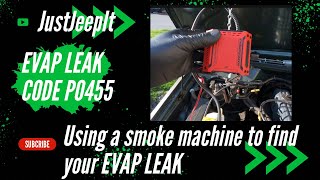
- If a new gas cap doesn't solve the problem, a smoke test is the most reliable way to find the leak, which could be a cracked hose or a faulty valve.
- There are no known, common pattern failures on the Ascent that cause this code, so a systematic diagnosis is required.
What's Unique About the 2019-2024 Subaru Ascent
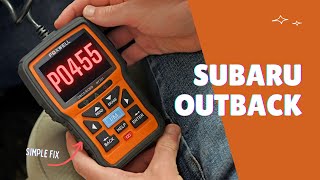
The 2019-2024 Subaru Ascent is the first generation of this model. For this platform, a P0455 code will almost always disable other driver-assist features like EyeSight and cruise control as a way to get the driver's attention; this is normal and will resolve once the code is cleared. 🎬 Watch: How to fix a P0455 and clear the light. While there are no widespread, documented patterns of a specific EVAP component failing that causes a P0455 code, owner forums confirm the loose gas cap is the most frequent trigger. Subaru has issued a TSB for a different EVAP code (P1449, clog detected) on this vehicle, but it is not directly related to a gross leak. Therefore, diagnosis should follow a general, logical path, starting with the gas cap.
Symptoms You May Notice
- Check Engine Light is on
- EyeSight, cruise control, and other driver aids are disabled
- A faint to strong smell of raw fuel, especially around the rear of the vehicle or when parked in a garage
- Gas cap warning on the dashboard (if applicable)
- Replacing the oxygen sensors. O2 sensors are not part of the EVAP system and will not cause a P0455 code.
- Immediately replacing expensive parts like the charcoal canister or vent valve before performing a smoke test to confirm the leak's location.
Most Likely Causes
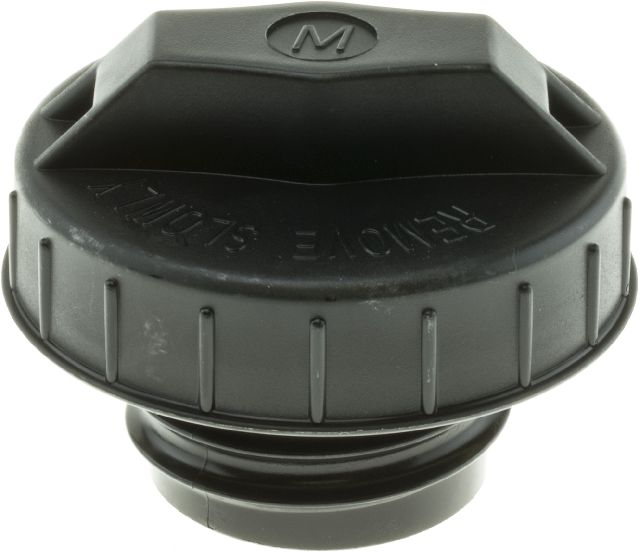
- Loose, Damaged, or Incorrect Gas Cap 🔴 High Probability → Shop Fuel Tank Cap This is the most common cause for a P0455 code on all modern vehicles, as the cap is frequently removed and its seal can wear out over time or be installed incorrectly. Forum discussions for the Ascent repeatedly point to a loose gas cap as the culprit.
How to confirm: Remove the gas cap and inspect the rubber O-ring or seal for cracks, stiffness, or damage. Ensure you are using a genuine OEM cap. Reinstall the cap, making sure it clicks at least once. Clear the code with a scanner or allow a few drive cycles for it to self-clear. The EVAP monitor test often runs after the vehicle has been parked for several hours.
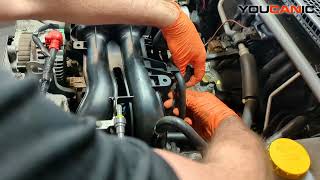
Typical fix: Replace the gas cap with a new, OEM part. 🎬 See a breakdown of common P0455 causes and fixes.
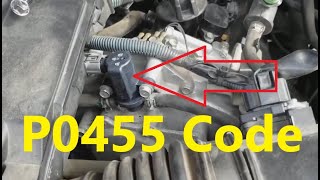
Est. part cost: $25-$40 - Cracked or Disconnected EVAP Hose 🟡 Medium Probability Rubber hoses can become brittle and crack due to age and exposure to heat and the elements. A large hose becoming disconnected, particularly at the purge valve in the engine bay or near the charcoal canister, would immediately cause a gross leak.
How to confirm: Visually inspect all accessible EVAP hoses running from the fuel tank area, to the charcoal canister, and to the purge solenoid in the engine bay. Look for obvious cracks or loose clamps. A smoke test is the most effective way to find a leak that isn't obvious.
Typical fix: Replace the cracked or damaged section of hose.
Est. part cost: $10-$50 - Faulty Canister Purge Valve (Solenoid) ⚪ Low Probability → Shop Vapor Canister This valve, typically located in the engine bay, can get stuck open, creating a constant leak from the EVAP system into the intake manifold. While not a widely reported failure on the Ascent specifically, it's a common failure point on many vehicles.
How to confirm: With the engine off, remove the valve and try to blow through it. If air passes through, it is stuck open and has failed. A professional can also command it open and closed with a scan tool to test its function. Sometimes a failing charcoal canister can send charcoal bits into the purge valve, causing it to stick.
Typical fix: Replace the canister purge valve.
Est. part cost: $40-$65 - Faulty Vent Valve / Solenoid ⚪ Low Probability This valve is normally open and closes to seal the system for pressure testing. If it fails to close or has a damaged seal, it will cause a leak. It is often located on or near the charcoal canister under the vehicle.
How to confirm: This part is harder to access. A smoke test will often show smoke exiting from a failed vent valve. It can also be tested for proper electrical and mechanical function once removed.
Typical fix: Replace the vent valve assembly.
Est. part cost: $170-$250
Rare But Worth Checking
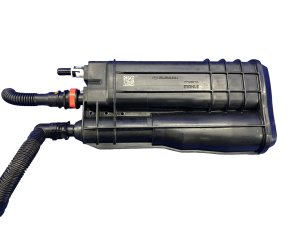
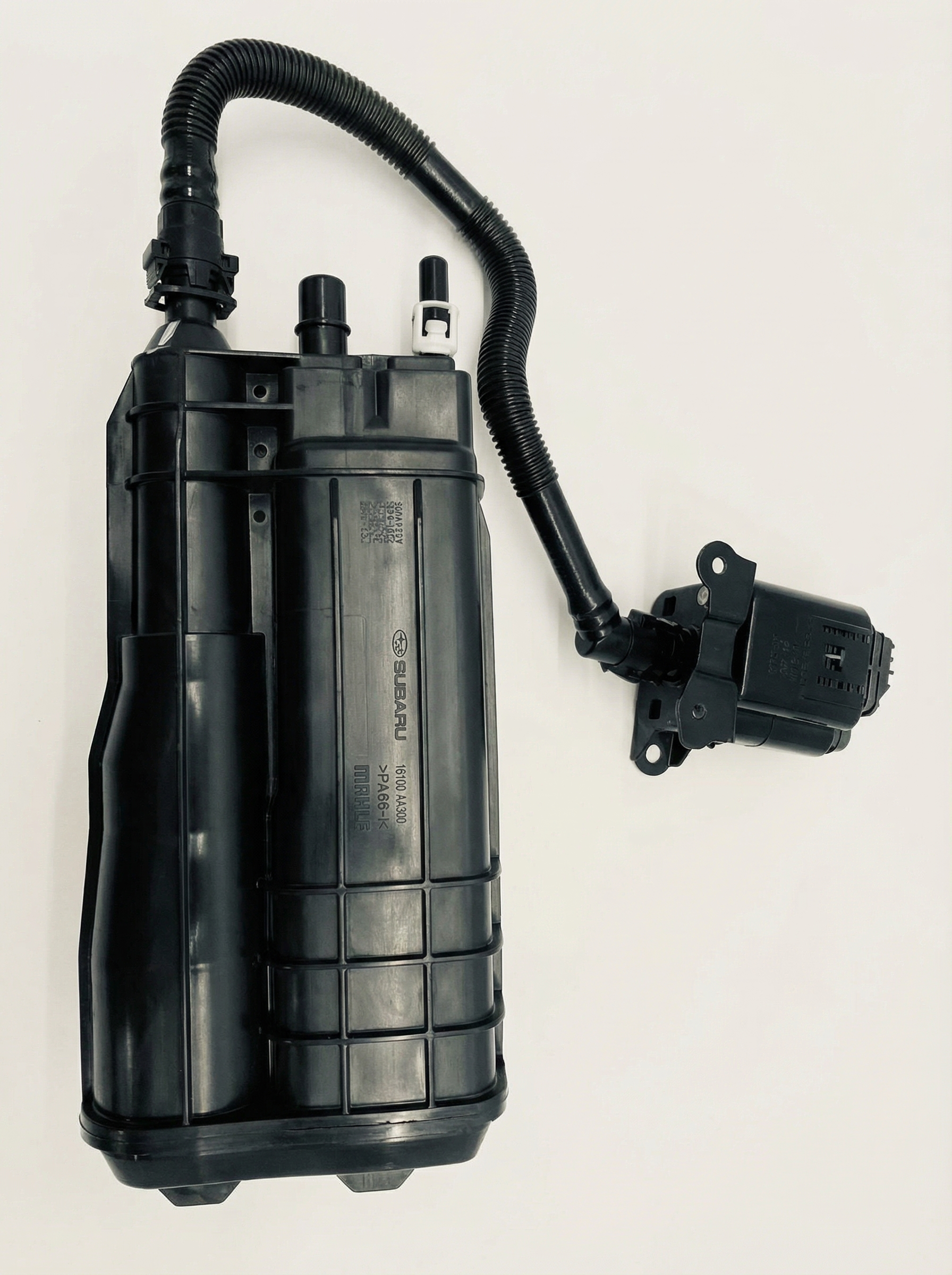
- Cracked Charcoal Canister: → Shop Vapor Canister The charcoal canister is a plastic box filled with activated charcoal, usually located under the vehicle near the fuel tank. Road debris or impact can crack the plastic housing, creating a large leak.
- Damaged Fuel Filler Neck: → Shop Fuel Filler Neck Rust or physical damage to the metal pipe leading to the gas tank can prevent the gas cap from sealing properly, causing a persistent leak code even with a new cap. One owner reported a service center had to bend the filler neck back into place to resolve the code.
Diagnosis Steps
- Read the code with an OBD-II scanner to confirm P0455 is the primary code. Note that other systems like EyeSight will be disabled.
- Inspect the gas cap. Remove it, check the seal for damage, and reinstall it, ensuring it clicks several times.
- Clear the code using the scanner. Alternatively, the light may go out on its own after several drive cycles (which may take a few days) if the gas cap was the issue.
- Drive the vehicle for a few days. The EVAP monitor often runs after a cold start under specific fuel level and temperature conditions. If the code does not return, the issue was a loose cap.
- If the code returns, replace the gas cap with a new OEM part, clear the code, and drive again.
- If the code persists, perform a visual inspection of all visible EVAP hoses, especially around the engine bay and near the charcoal canister underneath the vehicle. Look for obvious cracks, disconnections, or rot.
- If no visual faults are found, the most effective next step is to have the system professionally smoke tested. This involves injecting a harmless, visible vapor into the EVAP system. The vapor will escape from the point of the leak, making it easy to identify. 🎬 Watch: How to find an EVAP leak with a smoke tester.
- Based on the smoke test results, replace the identified leaking component, whether it's a hose, valve, or the canister itself.
Parts You'll Likely Need
- Fuel Filler Cap (Gas Cap)
(OEM #42031FJ000 (2019-2021), 42031FJ001 (2022-2024))— This is the most frequent cause of a P0455 code due to wear on the seal or improper installation.
Trusted brands: Subaru (OEM)
OEM price range: $25-$40
Aftermarket price range: $10-$25 - Vapor Canister Purge Valve (Engine Bay)
(OEM #16131AA100)— Can become stuck open, causing a constant vacuum leak from the EVAP system.
Trusted brands: Subaru (OEM), Denso
OEM price range: $40-$65
Aftermarket price range: $25-$50 - Vapor Canister Vent Valve / Solenoid Assembly
(OEM #42084SL05A)— This valve, located near the canister, can fail to close, preventing the system from sealing for its self-test.
Trusted brands: Subaru (OEM)
OEM price range: $170-$250
Aftermarket price range: $100-$180 - Vapor Canister (Charcoal Canister)
(OEM #42035XC00B)— Rarely fails on its own but can be cracked by road debris or impact, causing a large, un-repairable leak in the canister body.
Trusted brands: Subaru (OEM)
OEM price range: $110-$140
Aftermarket price range: $70-$100
Related Codes That Often Appear With This One
- P0456 — A P0456 (Small Leak) might appear intermittently before a component fails completely, leading to a P0455 (Gross Leak).
- P0441 — A P0441 (Incorrect Purge Flow) can sometimes accompany a P0455 if the leak is related to a malfunctioning purge valve.
- P0457 — This code specifically indicates an EVAP leak due to a loose or missing fuel cap, which is the most common cause of P0455.
Technical Service Bulletins (TSBs) & Recalls
- 11-205-25: While not for P0455, this TSB addresses a P1449 (EVAP Clog) on the 2019-2024 Ascent by replacing the drain filter assembly. It's a known EVAP system issue on the platform but not a direct cause of a gross leak.
Platform-Specific Known Issues
- On the Ascent, the appearance of a P0455 Check Engine Light will typically disable other unrelated systems like EyeSight, cruise control, and rear auto braking. This is a designed behavior to alert the driver and is not indicative of a failure in those systems.
Mechanic-Grade Diagnostic Values
- EVAP System Self-Test Graph (ELCM) — expected: When viewing the 'Evap System Absolute Pressure' on a scan tool during the forced self-test, a healthy system shows a graph with distinct phases: an initial pressure drop as the pump activates, a plateau as it measures reference pressure, a second sharp drop and hold as it pulls a vacuum on the sealed system, and a final return to the reference pressure level.. Failure: If the system cannot pull a vacuum (pressure doesn't drop significantly in phase 2) or the vacuum bleeds off immediately, it confirms a large leak consistent with P0455.
Hidden / Shadow Codes Worth Checking
- Mode $06 EVAP Monitor Data: Mode $06 provides raw test data from the EVAP system's non-continuous self-tests before a DTC is formally set. It can show test values for system pressure decay, allowing a technician to see if the system is borderline failing, even if the Check Engine Light is not yet on. (see via A professional OBD-II scan tool with Mode $06 capability is required. The data is presented as Test IDs (TID) and Component IDs (CID) which may need to be cross-referenced with service manual information for full interpretation.)
Scan Tool Commands That Help
- Subaru Select Monitor (SSM): Evaporative System Leak Test — This is the primary diagnostic step for EVAP codes on modern Subarus, to be used *before* a smoke test. It forces the vehicle's own Evaporative Leak Check Module (ELCM) to run its vacuum-based self-test on demand. Graphing the 'Evap System Absolute Pressure' during this 15-30 minute test reveals how the system is behaving and can confirm a large leak without introducing foreign substances.
- Professional Bidirectional Scan Tool: Purge Valve / Vent Valve Actuation — This command allows a technician to manually open and close the purge and vent solenoids. It is used to confirm if a valve is stuck. For example, after commanding the purge valve closed, a technician can try to blow through it; if air passes, the valve is faulty.
Real Owner Repair Stories
- YouTube user on 'Subaru Outback P0455 Code Fix!' (Subaru Outback (similar platform and systems to Ascent)) — Check Engine Light on, EyeSight disabled, RAB (Rear Auto Braking) disabled, flashing 'i' indicator on dash.
✅ What actually fixed it The gas cap was found to be completely loose and not threaded on. Tightening the gas cap and clearing the codes with a basic OBD-II scanner resolved all warning lights immediately. - NHTSA ODI #11637451 (Subaru Forester - cross-manufacturer reference) — An owner reported that after taking their vehicle to a dealership for diagnosis, the technician found error code P0455. In this instance, the technician found the gas cap was already secured, reset the code, and test drove the vehicle.
"I Checked Everything" — The Actual Cause
- On modern Subarus equipped with an Evaporative Leak Check Module (ELCM), the primary diagnostic step should be running the 'Evaporative System Leak Test' with a dealer-level scan tool, not a smoke test. Subaru explicitly warns that using a smoke machine can introduce oil residue that contaminates and damages the sensitive ELCM.
- A temporary seizure of the ELCM's internal pump can cause the self-test to fail and trigger a code, even with no physical leak present. This led Subaru to issue TSB 09-107-23 for the 2019-2023 Ascent, which provides an ECM software update to enhance the logic and prevent false detection of a seized pump related to code P2404.
- A faulty Fuel Tank Pressure (FTP) sensor can send incorrect readings to the ECM, causing it to believe there is a large leak when the system is perfectly sealed. A smoke test would pass because there is no physical leak to find.
OEM Part Supersession History
42031FJ000→42031FJ001— Updated part for newer model years.
Heads up: Part 42031FJ000 is for 2019-2021 models, while 42031FJ001 is for 2022-2024 models.42084fl17a, 42084fl17b, 42084fl17c→42084SL05A— Part consolidation and revision.
Model Year Variations Within This Range
- 2019-2021 vs 2022-2024: The OEM fuel filler cap part number changes. 2019-2021 models use 42031FJ000, while 2022-2024 models use the superseded part 42031FJ001.
- 2019-2023: Subaru issued TSB 09-107-23 for these model years, which involves an ECM reprogram with updated logic to prevent the false detection of a seized EVAP Leak Check Module (ELCM) pump. This suggests earlier software was more sensitive to this specific failure mode.
Diagnostic Flowchart
Other Known Issues on This Vehicle
Issues unrelated to this code that are worth knowing about as an owner of this generation:
- CVT Transmission Failure/Hesitation 🔴 High — Common in early (2019-2020) models. A recall (WRK-21 / NHTSA 21V955) was issued for a programming error that could cause the drive chain to slip and break, leading to a loss of power. Owners report shuddering, jerking, and hesitation. (Ref: Recall WRK-21 / NHTSA 21V955; TSB 16-140-23 (TCM Reprogram for Judder))
- Parasitic Battery Drain 🟠 Medium — Widespread across 2019-2022 models. Owners report dead batteries after the vehicle sits for short periods. A class-action lawsuit was filed alleging a design defect prevents the vehicle from entering a low-power sleep mode. (Ref: Class-action lawsuit (In re Subaru Battery Drain Products Liability Litigation))
- Power Rear Gate (Tailgate) Failure 🟠 Medium — Affects 2019-2024 models. The tailgate may fail to open, close, or latch properly. A TSB was issued for a drive unit design change. (Ref: TSB 12-265-25)
- PTC Heater Ground Bolt Fire Risk 🔴 High — Affects 2019-2022 models. An improperly fastened ground bolt for the PTC heater could melt and cause a fire. Owners were advised to park outdoors until the recall was performed. (Ref: Recall WRL-22)
- Low-Pressure Fuel Pump Failure 🔴 High → Shop Fuel Pump — Affects 2019-2020 models. The fuel pump could fail, leading to an engine stall while driving. (Ref: Recall WRG-21)
Used vs. New Parts: Buying Guide for This Vehicle
When a used part is the smart pick: Large, non-electronic, structural components like the charcoal canister body or the fuel filler neck can be sourced from a used vehicle to save money, provided they are from a low-mileage, non-corroded donor.
Donor-vehicle mileage cap: roughly under 60000 miles for the part to have meaningful remaining life.
What to inspect on the donor part:
- For a used charcoal canister, meticulously inspect the plastic housing for any hairline cracks, especially around the hose ports.
- For a fuel filler neck, check for any signs of rust, pitting, or physical deformation that could prevent a gas cap from sealing.
- Ensure all hose connection points on any used part are intact and not brittle.
OEM-only on this vehicle (don't cheap out):
- Fuel Filler Cap: Given its low cost and critical role in sealing the system, a new OEM cap is the most reliable choice to prevent recurring codes.
- Evaporative Leak Check Module (ELCM) / Leak Detection Pump: This is a sensitive electronic component. Buying used is risky due to unknown electrical history and potential for internal failure.
Aftermarket brands forum-validated for this vehicle:
- Denso (for Purge Valve)
- Dorman (for Purge Valve)
Real Owner Stories
Aggregated from forums and TSBs cited above. Mileages and costs reflect what owners reported in those sources.
2019-2024 Subaru Ascent
Symptoms: Check engine light came on after noticing the gas cap was loose.
What fixed it: Tightening the gas cap; however, another user in the same discussion noted a bent fuel filler neck caused the same code.
Source hint: r/SubaruAscent - 'Can someone help me diagnose this?'
2021 Subaru Ascent
Symptoms: Just purchased certified pre-owned; check engine light came on and disabled other vehicle features.
What fixed it: Tightening a loose gas cap and performing several drive cycles to reset the system.
Source hint: r/subaru - 'Just got a certified pre-owned 2021 Subaru ascent Monday and now the check engine light is on...'
Related OBD-II Codes
Frequently Asked Questions
Why did my EyeSight and cruise control stop working when the P0455 code appeared on my Subaru Ascent?
Does TSB 11-205-25 for the 2019-2024 Ascent fix the P0455 gross leak code?
Can a loose gas cap really cause a P0455 on a 2021 Subaru Ascent?
How many times should I click the gas cap on my Ascent to ensure it is sealed?
Will the P0455 code clear itself on my Subaru once I tighten the cap?
What should I check if a new OEM gas cap doesn't fix the P0455 code on my Ascent?
Helpful Videos
Used OEM Parts in Stock
New Aftermarket Parts Available


The information in this article is provided for general reference and educational purposes only. Vehicle specifications, procedures, and part compatibility can vary by production date, trim level, and region. Always consult your vehicle's factory service manual and verify part numbers before purchasing or performing repairs. Safety-critical components such as airbags, seat belts, and braking systems should be installed by a qualified professional.
- Subaru Ascent:
- 🧭 Diagnostic Flowchart
- 🎬 Helpful Videos
- 🛍️ Shop This Part
- What's Unique About the 2019-2024 Subaru Ascent
- Symptoms You May Notice
- Most Likely Causes
- Rare But Worth Checking
- Diagnosis Steps
- Parts You'll Likely Need
- Related Codes That Often Appear With This One
- Technical Service Bulletins (TSBs) & Recalls
- Platform-Specific Known Issues
- Mechanic-Grade Diagnostic Values
- Hidden / Shadow Codes Worth Checking
- Scan Tool Commands That Help
- Real Owner Repair Stories
- "I Checked Everything" — The Actual Cause
- OEM Part Supersession History
- Model Year Variations Within This Range
- Other Known Issues on This Vehicle
- Used vs. New Parts: Buying Guide for This Vehicle
- Real Owner Stories
- 2019-2024 Subaru Ascent
- 2021 Subaru Ascent
- Related OBD-II Codes
- Frequently Asked Questions
- 🎟️ Get 5% Off