

P0455 on 2018-2023 Subaru Crosstrek: EVAP Gross Leak Causes and Fixes
For a 2018-2023 Subaru Crosstrek, code P0455 is most often caused by a loose or faulty gas cap. Before buying any parts, tighten the cap until it clicks multiple times and check its seal. If the light returns after a few drive cycles, a new OEM gas cap is the next most likely fix, costing around $30-$40.
- Always check the gas cap first for a P0455 code. Tighten it until it clicks several times and inspect the seal.
- A new OEM gas cap is an inexpensive and highly effective next step if tightening the old one doesn't work. The OEM part number is 42031FJ000, which has been updated to 42031FJ001.
- The Check Engine Light will disable EyeSight and cruise control as a safety and attention-getting measure; this is normal for this code.
- If the gas cap is not the cause, a smoke test is the most reliable way to find the source of the large leak.
What's Unique About the 2018-2023 Subaru Crosstrek
On modern Subarus like the 2018-2023 Crosstrek, an EVAP code like P0455 will often disable other vehicle features such as cruise control and the EyeSight driver assist system. This is not a sign of a more serious problem but is designed to get the driver's attention to address the emissions issue promptly. The most frequent cause is overwhelmingly a simple gas cap issue, which owners often resolve themselves. After tightening a loose cap, the Check Engine Light may take a few days or several drive cycles to turn off as the system's monitor needs to run and pass its self-test. Notably, Subaru advises against using a traditional smoke machine as the first diagnostic step on these vehicles due to the sensitive Electronic Leak Check Module (ELCM); a scan tool-forced self-test is the recommended procedure.
Symptoms You May Notice
- Check Engine Light is on
- Cruise control and EyeSight systems may be disabled
- A faint smell of gasoline, particularly when parked or around the fuel filler area
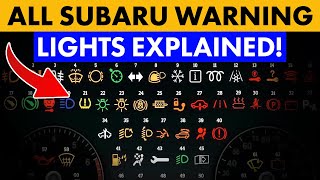
- A notification from the MySubaru app/Starlink system about the Check Engine Light 🎬 Watch: A guide to understanding your Subaru's dashboard warning lights.
- Replacing the charcoal canister when the problem is just a loose gas cap or a less expensive valve.
- Replacing O2 sensors or other unrelated emissions components before properly diagnosing the EVAP system.
- Assuming the disabled EyeSight/cruise control indicates a separate, more serious problem.
Most Likely Causes
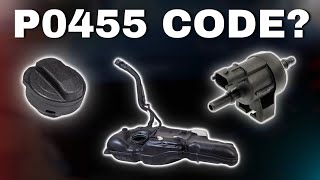
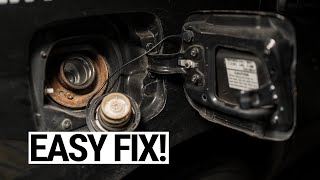
- Loose or Faulty Gas Cap 🔴 High Probability → Shop Fuel Tank Cap This is the most common cause for any vehicle, as the cap can be forgotten, not tightened correctly after refueling, or the seal can degrade over time. Numerous owner reports for the 2018+ Crosstrek confirm this as the first and most successful fix. 🎬 See this video for the most common causes of P0455 codes.
How to confirm: Ensure the gas cap is tightened until it clicks several times. Inspect the rubber seal on the cap for cracks, stiffness, or damage. If the cap was loose, the light may turn off on its own after a few days of driving or several drive cycles. An OBD-II scanner can clear the code immediately, but it will return if the fault isn't fixed.
Typical fix: Tighten the existing cap or replace it with a new one if the seal is bad or it no longer clicks when tightened. An OEM cap is strongly recommended.
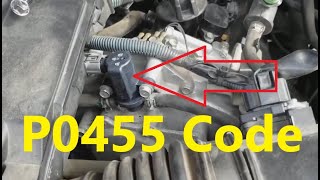
Est. part cost: $25-$45 - Faulty Canister Purge Valve (Solenoid) 🟡 Medium Probability → Shop Vapor Canister This valve controls the flow of fuel vapors to the engine and can become stuck open, creating a leak path. It's a common failure point on many modern vehicles and is located in the engine bay for easy access.
How to confirm: The valve is located in the engine bay, typically on the driver's side near the intake manifold. It can be removed and tested to see if air can be blown through it; it should be normally closed. A professional may use a scan tool to command it open and closed while observing system pressure. Resistance should be approximately 29-30 Ohms.
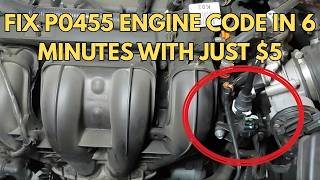
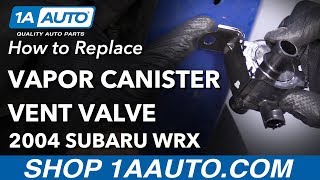
Typical fix: Replace the purge control solenoid valve. 🎬 Watch: Helpful tips for replacing your Subaru's purge valve.
Est. part cost: $40-$60 - Cracked or Disconnected EVAP Hoses ⚪ Low Probability Rubber hoses can become brittle and crack over time due to heat and age. A large leak is often a hose that has become completely disconnected from a component like the charcoal canister or purge valve.
How to confirm: Visually inspect all accessible EVAP system hoses, especially around the charcoal canister (near the fuel tank) and the purge valve (in the engine bay). A smoke test is the most effective way to find a leak that isn't visually obvious, but should be used with caution on these models.
Typical fix: Replace the cracked hose section or re-secure a disconnected hose.
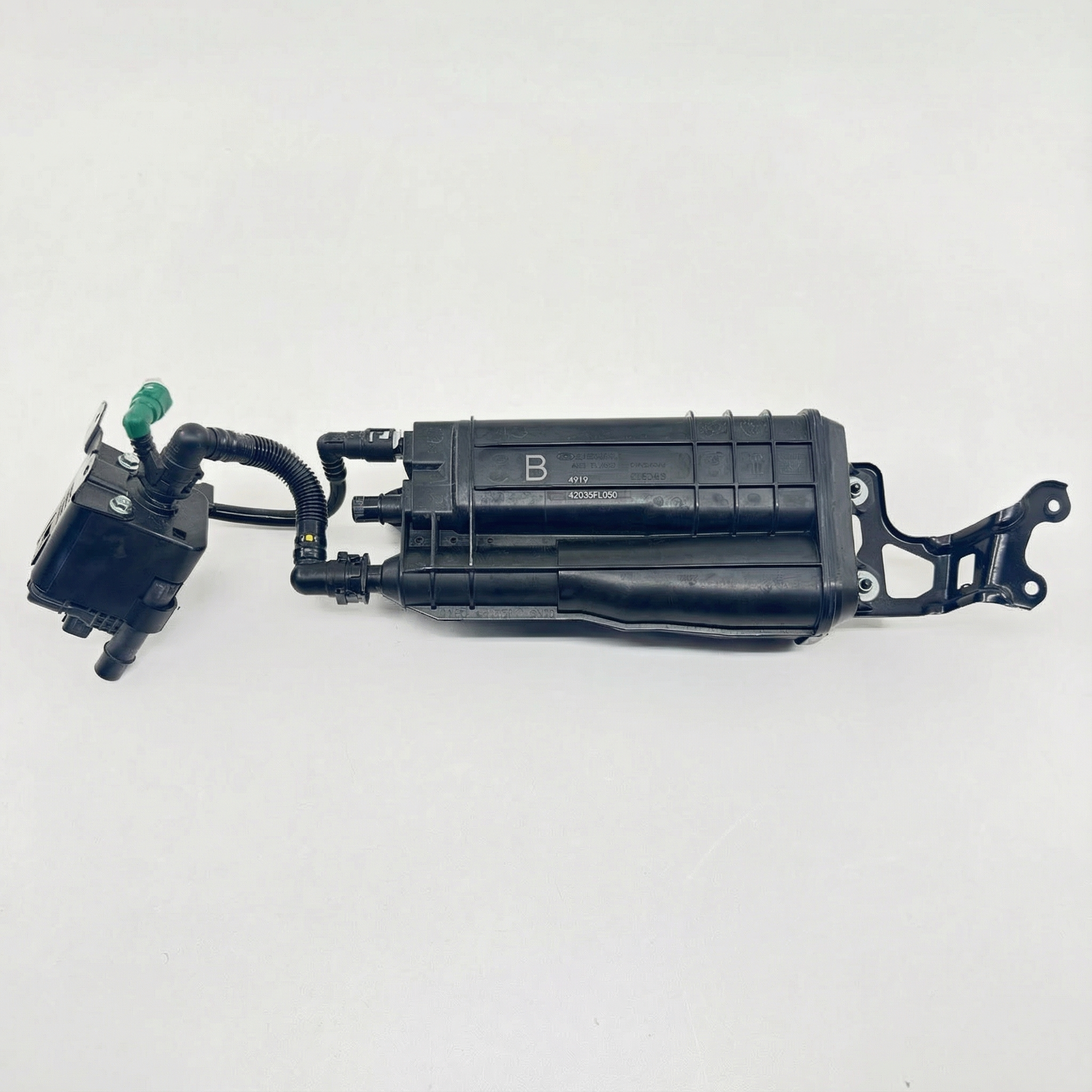
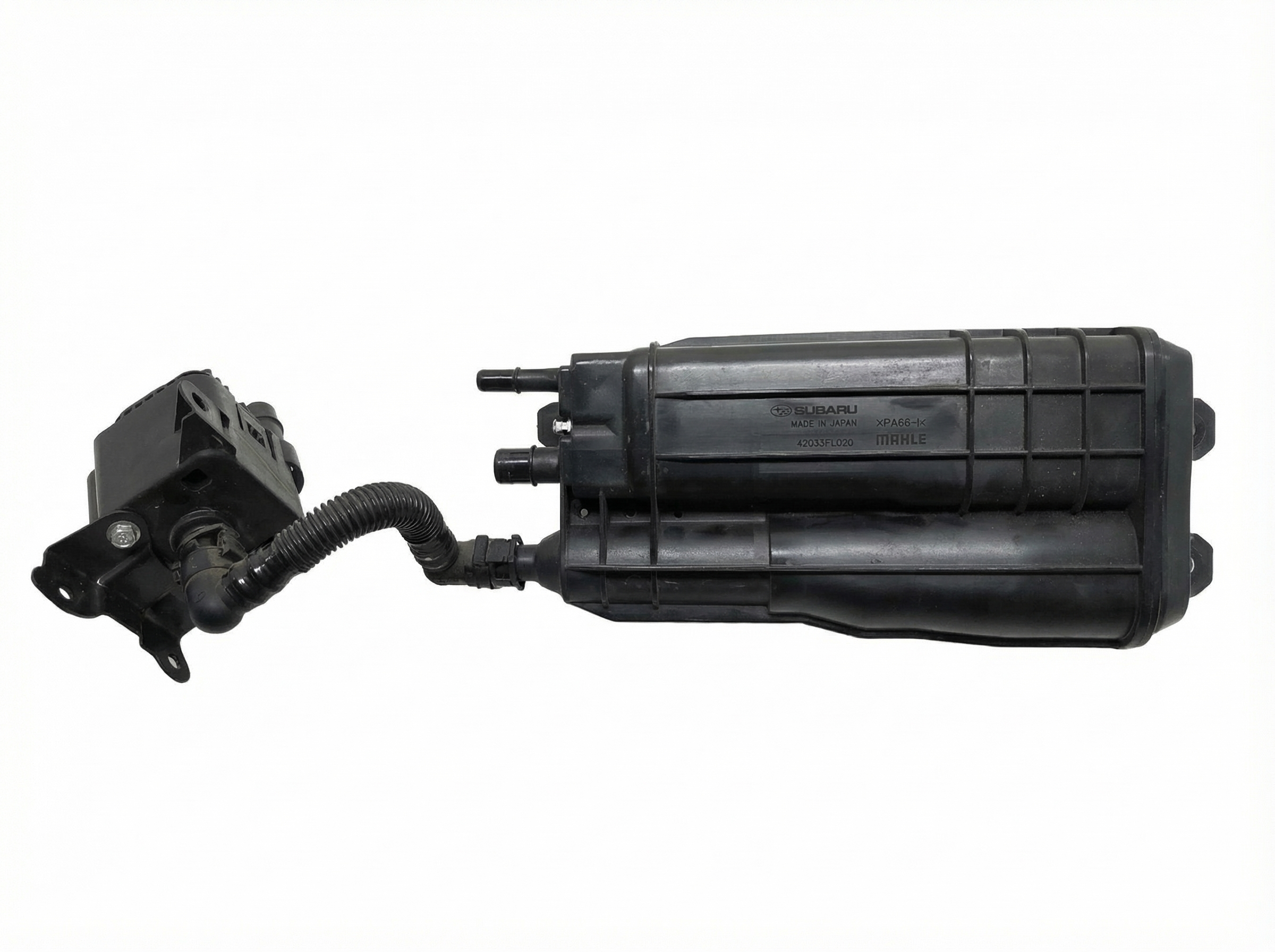
Est. part cost: $10-$50 - Faulty EVAP Vent Valve/Solenoid (or ELCM assembly) ⚪ Low Probability → Shop Vapor Canister
How to confirm: This valve is typically located near the charcoal canister at the rear of the vehicle. It is normally open and closes to seal the system for pressure testing. A diagnostic scan tool can command the valve to close for testing. If it's stuck open, it will cause a P0455. On some older Subarus, spiders have been known to build nests in the vent hose, causing blockages, though this is less documented for this specific model. The resistance of the drain valve motor within the assembly should be approximately 20-30 Ohms.
Typical fix: Replace the vent valve assembly (may be part of the ELCM).
Est. part cost: $30-$300
Rare But Worth Checking
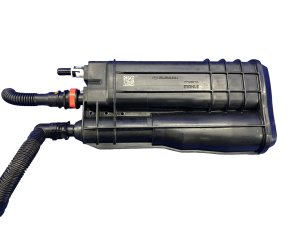
- Cracked Charcoal Canister: → Shop Vapor Canister This can happen from road debris impact or from consistently overfilling the fuel tank ('topping off'), which saturates the canister with liquid fuel and can cause it to fail.
- Leaking Fuel Tank or Filler Neck: → Shop Fuel Tank Rust or physical damage can cause a leak in the fuel tank or the pipe leading to it, which is part of the sealed EVAP system. This is less common on newer vehicles but possible, especially in regions that use road salt.
Diagnosis Steps
- Read the code with an OBD-II scanner to confirm P0455 is the primary code.
- Inspect the gas cap. Remove it, check the seal for damage, and reinstall it, ensuring it clicks at least 3 times. Many owners report this solves the issue.
- Clear the code with a scanner. If you don't have one, the light should go off on its own after several drive cycles (typically 2-3 days of mixed driving) if the gas cap was the only issue.
- If the code returns, perform a visual inspection of the EVAP system. Check the purge valve and its hoses in the engine bay for obvious cracks or disconnections.
- Inspect the area around the charcoal canister and vent valve, located near the fuel tank at the rear of the vehicle, for any damaged or disconnected hoses.
- If no visual faults are found, the preferred next step for this vehicle is to use a bidirectional scan tool (like the Subaru Select Monitor) to run the 'EVAP System Leak Test' service function. This is the manufacturer-recommended procedure before a smoke test.
- If a leak is still suspected and cannot be found, a smoke test can be performed. A mechanic will introduce pressurized smoke into the EVAP system via the service port. The leak will be revealed by wherever the smoke escapes.
- Based on the test results, test the specific component (purge valve, vent valve) for electrical integrity (resistance, voltage) before replacing it.
Parts You'll Likely Need
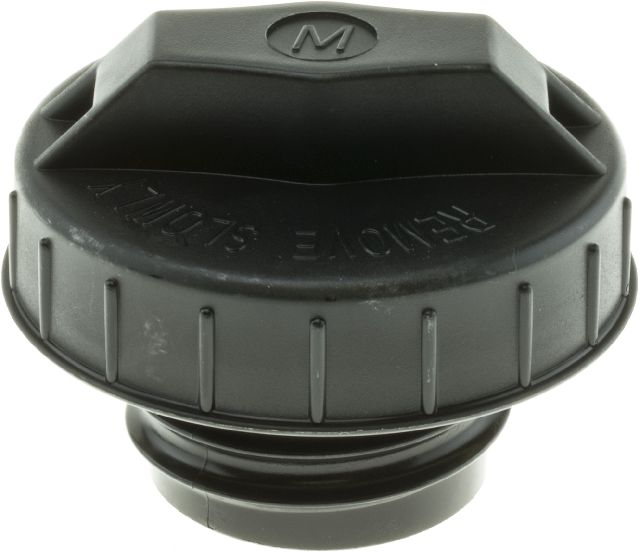
- Fuel Filler Cap
(OEM #42031FJ000 (superseded by 42031FJ001))— This is the most frequent and simplest fix. The seal wears out or the cap isn't tightened properly, causing a large leak. Owner forums are filled with success stories from just replacing the cap.
Trusted brands: Subaru (OEM), Gates, Motorad
OEM price range: $27-$40
Aftermarket price range: $15-$25 - Vapor Canister Purge Solenoid / Valve
(OEM #16131AA060, 16131AA080 (Varies by year/engine))— This valve is located in the engine bay and is a common failure point that can get stuck open, causing a constant leak. Part numbers may differ between 2.0L and 2.5L engines, and across model years.
Trusted brands: Subaru (OEM), Denso, Standard Motor Products
OEM price range: $40-$60
Aftermarket price range: $30-$50 - EVAP Vent Valve / Solenoid
(OEM #42084FJ030)— Located near the charcoal canister, this valve can fail and get stuck open, preventing the system from sealing during its self-test. Part number verification shows this fits earlier models, and may not be correct for all 2018-2023 Crosstreks. Later models may use an ELCM assembly like 42084FL231.
Trusted brands: Subaru (OEM)
OEM price range: $27-$40
Aftermarket price range: $20-$35
Related Codes That Often Appear With This One
- P0456 — A P0456 (Very Small Leak) might appear if a component is beginning to fail, which could eventually worsen and trigger a P0455 (Large Leak).
- P0457 — This code specifically points to a leak caused by a loose or missing fuel cap, which is a primary cause of P0455 as well.
Platform-Specific Known Issues
- { "title": "Owner Experience: Gas Cap Fixed P0455 on 2018 Crosstrek", "description": "An owner on the r/XVcrosstrek subreddit reported a P0455 code on their '18 Crosstrek with low miles that would appear after the car sat for a few days. Replacing the gas cap solved the problem completely." }
- { "title": "Owner Experience: Loose Gas Cap on 2023 Crosstrek", "description": "A user on Reddit with a 2023 model received a P0455 code, found the gas cap was slightly loose, and after tightening it, was advised the light would clear after a few drive cycles." }
Mechanic-Grade Diagnostic Values
- Purge Control Solenoid Valve Resistance — expected: 29-30 Ohms. Failure: A reading significantly outside this range, or an open circuit (infinite resistance), indicates a failed coil.
- EVAP Drain Valve (part of ELCM) Resistance — expected: 20-30 Ohms. Failure: An open circuit (no reading) indicates the internal motor is bad.
- Fuel Tank Pressure (FTP) Sensor Voltage (Key On, Engine Off) — expected: 1.4V to 1.5V (at atmospheric pressure). Failure: Voltage is stuck high or low and does not change when a vacuum or pressure is applied to the system.
Scan Tool Commands That Help
- Subaru Select Monitor (SSM) or equivalent: Evaporative System Leak Test — This is the manufacturer-recommended first diagnostic step after a visual inspection. It forces the vehicle's onboard leak detection system to run, which can confirm a leak without introducing smoke machine oil that could damage the ELCM.
- Subaru Select Monitor (SSM) or equivalent: Read Temporary Codes — To check for intermittent faults that may not set a permanent DTC but are stored temporarily. These codes can be cleared when the ignition is turned off, so they should be checked before cycling the key.
Wiring & Ground Locations
- EVAP System Wiring Diagram — Available in official factory service manuals or through professional diagnostic information systems.. A wiring diagram (e.g., PubNo: G1348BE for 2019 models) is essential for tracing circuits for the purge valve, vent valve/ELCM, and pressure sensor to check for opens, shorts, or bad grounds, but specific ground point locations are not easily isolated from general search results.
Real Owner Repair Stories
- Reddit user on r/XVcrosstrek (2018 Subaru Crosstrek) — Recurring P0455 code that would appear after the car sat for a few days.
❌ Tried (didn't work) Clearing the code without fixing the root cause.
✅ What actually fixed it Replacing the gas cap with a new one. - Reddit user on r/SubaruForester (similar platform) (2022 Subaru Forester) — P0455 code, Check Engine Light, EyeSight disabled.
❌ Tried (didn't work) Multiple checks and tightening of the gas cap.
✅ What actually fixed it The dealership performed a full diagnostic, found no leaks via vacuum test, and no issues with the purge valve. They cleared the code and concluded it must have been the gas cap not being tightened properly on a previous occasion. The code did not return. - Subaru Owner (NHTSA ODI #11637451) (Subaru Forester - similar platform) — An owner reported that after a P0455 code appeared, a dealership technician found the gas cap was already secured. The technician reset the code and test drove the vehicle to confirm the error did not immediately return.
"I Checked Everything" — The Actual Cause
- A Subaru Technical Service Information bulletin warns technicians that on late-model vehicles with an Electronic Leak Check Module (ELCM), a smoke test should not be the first step. The recommended procedure is to use a scan tool to force the system's self-test. If this test passes but a code is still present, it could point to an intermittent electrical issue or a component that fails only under specific conditions, rather than a static leak that smoke would reveal.
OEM Part Supersession History
42031FJ000→42031FJ001— Standard part revision/update for the fuel filler cap.42084FJ030 (Vent Valve)→N/A for this generation— This part is for the first-generation (GP) Crosstrek, ending in 2017.
Heads up: This part will not fit the 2018-2023 (GT) generation Crosstrek. The correct part is often an ELCM assembly, such as 42084FL231, but part number must be verified by VIN.
Model Year Variations Within This Range
- 2021-2023: The introduction of the optional 2.5L H4 engine (Sport and Limited trims) alongside the 2.0L H4 may result in different part numbers for EVAP components like the purge solenoid or hoses due to different engine bay layouts. Always verify parts by VIN.
- 2018-2021 vs 2022-2023: Part numbers for some emissions components, like the purge solenoid, may have changed during the model run. For example, some parts catalogs show 16131AA080 for 2018-2021 models, while other numbers may apply to later years.
Diagnostic Flowchart
Other Known Issues on This Vehicle
Issues unrelated to this code that are worth knowing about as an owner of this generation:
- Spontaneous Windshield Cracking 🟠 Medium — Widespread issue across multiple Subaru models of this era, including the Crosstrek. It has been the subject of class-action lawsuits. (Ref: A class-action settlement provides an extended warranty for qualifying cracks.)
- Premature Rear Wheel Bearing Failure 🟠 Medium — A howling or roaring noise from the rear of the vehicle, typically at highway speeds, is a common symptom. Failures can occur as early as 50,000-60,000 miles. (Ref: TSB 05-70-19 was issued for a defective rear wheel backing plate design causing the failure.)
- Parasitic Battery Drain / Weak Battery 🟡 Low — Owners report batteries dying unexpectedly, especially on hybrid models, but also noted on standard gasoline models. This is often attributed to the telematics unit (Starlink) or other modules not going to sleep properly. (Ref: Multiple TSBs have been issued related to battery testing and charging logic.)
- Starlink Infotainment System Glitches 🟡 Low — Very common reports of the head unit freezing, rebooting, becoming unresponsive to touch, or having Bluetooth connectivity issues. (Ref: Numerous software updates have been released by Subaru to address stability, with varying success.)
- Brake Light Switch Failure 🟠 Medium — A recall was issued for this problem on 2018-2019 models. A faulty switch could prevent the brake lights from illuminating and could also cause issues with the push-button start system. (Ref: Recall)
Used vs. New Parts: Buying Guide for This Vehicle
When a used part is the smart pick: For this repair, used parts are generally not recommended. The most common fixes (gas cap, valves) are relatively inexpensive to buy new. A used charcoal canister is risky as it could be saturated with fuel or have undetectable cracks. A used fuel filler neck from a non-rusty donor car could be a viable option if a new one is unavailable or too expensive.
Donor-vehicle mileage cap: roughly under 60000 miles for the part to have meaningful remaining life.
What to inspect on the donor part:
- For a fuel filler neck, inspect for any signs of rust, pitting, or damage, especially around the sealing surface and mounting brackets.
- For any electronic component like a valve, check for physical damage, cracked connectors, or signs of extreme heat exposure.
- Ensure the donor vehicle is from a similar climate (e.g., avoid parts from heavy salt-belt states if possible).
OEM-only on this vehicle (don't cheap out):
- Fuel Filler Cap: Aftermarket caps are notoriously hit-or-miss for creating a perfect seal. Given the low cost of an OEM cap, it is the strongly recommended choice to avoid repeat issues.
Aftermarket brands forum-validated for this vehicle:
- Denso (for Purge Valve)
- Dorman (for Purge Valve)
Brands owners have reported issues with on this vehicle:
- Unbranded or 'white-box' fuel caps and electronic solenoids from online marketplaces often have high failure rates.
Real Owner Stories
Aggregated from forums and TSBs cited above. Mileages and costs reflect what owners reported in those sources.
2018 Subaru Crosstrek — ~15000 miles
Symptoms: The P0455 code would appear specifically after the car sat for a few days.
What fixed it: Replacing the gas cap solved the problem completely.
Source hint: r/XVcrosstrek - Tech question: Code P0455: https://www.reddit.com/r/XVcrosstrek/comments/w1c83l/tech_question_code_p0455/
2023 Subaru Crosstrek
Symptoms: Check Engine Light came on; found the gas cap was slightly loose.
What fixed it: Tightening the gas cap and allowing the light to clear after a few drive cycles.
Source hint: r/Crosstrek - Check Engine Lights on! What is code P0455?: https://www.reddit.com/r/Crosstrek/comments/1693g09/check_engine_lights_on_what_is_code_p0455_what/
Subaru Forester (Similar Platform)
Symptoms: An owner reported a P0455 error code and took the vehicle to a dealership for diagnosis.
What fixed it: The technician found the gas cap was already secured, reset the code, and test drove the vehicle to confirm the fix. (NHTSA ODI #11637451)
Frequently Asked Questions
Why did my EyeSight and Cruise Control stop working when the P0455 code appeared on my Crosstrek?
Will the P0455 code on my 2023 Crosstrek clear itself if I just tighten the gas cap?
What is the specific electrical resistance for the purge valve on this model?
I heard spiders can cause EVAP issues; does this apply to the 2018+ Crosstrek?
Is there a specific test Subaru recommends for finding this leak before doing a smoke test?
What is the resistance specification for the drain valve motor in the ELCM assembly?
Helpful Videos
Used OEM Parts in Stock
New Aftermarket Parts Available


The information in this article is provided for general reference and educational purposes only. Vehicle specifications, procedures, and part compatibility can vary by production date, trim level, and region. Always consult your vehicle's factory service manual and verify part numbers before purchasing or performing repairs. Safety-critical components such as airbags, seat belts, and braking systems should be installed by a qualified professional.
- Subaru Crosstrek:
- 🧭 Diagnostic Flowchart
- 🎬 Helpful Videos
- 🛍️ Shop This Part
- What's Unique About the 2018-2023 Subaru Crosstrek
- Symptoms You May Notice
- Most Likely Causes
- Rare But Worth Checking
- Diagnosis Steps
- Parts You'll Likely Need
- Related Codes That Often Appear With This One
- Platform-Specific Known Issues
- Mechanic-Grade Diagnostic Values
- Scan Tool Commands That Help
- Wiring & Ground Locations
- Real Owner Repair Stories
- "I Checked Everything" — The Actual Cause
- OEM Part Supersession History
- Model Year Variations Within This Range
- Other Known Issues on This Vehicle
- Used vs. New Parts: Buying Guide for This Vehicle
- Real Owner Stories
- 2018 Subaru Crosstrek — ~15000 miles
- 2023 Subaru Crosstrek
- Subaru Forester (Similar Platform)
- Frequently Asked Questions
- 🎟️ Get 5% Off