

P0455 on 2014-2018 Subaru Forester: EVAP Large Leak Causes and Fixes
For a 2014-2018 Subaru Forester, code P0455 is most often caused by a loose or faulty gas cap. Before buying any parts, re-tighten the cap until it clicks and clear the code. If it returns, a new OEM gas cap is the next most likely fix, costing around $25-$40. Be aware that this code will disable EyeSight, cruise control, and other systems as an attention-getting measure.
- Always check the gas cap first. Ensure it is tight and the seal is intact before attempting any other repairs.
- Do not be alarmed by the numerous warning lights (EyeSight, Cruise, VDC); this is normal Subaru behavior for a Check Engine Light and does not indicate a separate failure.
- If a new gas cap does not solve the issue, a smoke test is the most effective next step to definitively locate the leak.
- The correct purge valve for the common 2.5L non-turbo engine is different from the one used in turbo models.
What's Unique About the 2014-2018 Subaru Forester
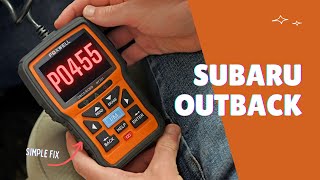
On modern Subarus like the 2014-2018 Forester, an EVAP code like P0455 will almost always trigger a cascade of other warnings, disabling features like EyeSight, cruise control, and X-Mode/Sport mode. This can be alarming but is standard Subaru behavior designed to get the driver's attention. 🎬 Watch: How a P0455 code triggers multiple dashboard warning lights. Owners frequently report these multiple warnings appearing simultaneously with the check engine light for this code.
Symptoms You May Notice
- Check Engine Light is on
- Disabling of EyeSight, cruise control, and other driver aids
- Flashing 'S' mode or other drive mode indicators
- Flashing 'Vehicle Dynamics Control' (VDC) / traction control light
- Flashing 'Hill Assist' light
- Possible faint fuel smell, especially when parked after a drive
- Immediately replacing the charcoal canister. The canister itself is a relatively durable component; the valves and hoses connected to it are much more likely to be the source of the leak.
Most Likely Causes
- Loose or Faulty Gas Cap 🔴 High Probability → Shop Fuel Tank Cap This is the most common cause across all vehicles, including the Forester. The seal on the cap can wear out, or the cap may simply not have been tightened properly after refueling. A dealer technician reported seeing this issue on 'about 2 vehicles a week' due to the single-click cap design being easy to undertighten. Subaru's own diagnostic flowchart for a similar EVAP code (P0442) lists the first step as ensuring a genuine Subaru gas cap is installed, highlighting its importance.
How to confirm: Remove the gas cap and inspect the rubber seal for cracks, dirt, or damage. Reinstall the cap, ensuring it clicks at least once. Clear the code and see if it returns after a few drive cycles. The EVAP monitor may require the fuel level to be between 1/4 and 3/4 full to run its self-test.
Typical fix: Tighten the cap. If the seal is bad or the code returns, replace the gas cap with a new OEM part.
Est. part cost: $25-$40 - Faulty Canister Purge Valve (Solenoid) 🟡 Medium Probability → Shop Vapor Canister This valve controls the flow of fuel vapors to the engine and is a common failure point on many vehicles. It can become stuck open, creating a constant leak path that the system detects during its self-test.
How to confirm: The valve is located in the engine bay. With the engine off, disconnect the valve and try to blow through it. If air passes through, it is stuck open and needs to be replaced. A professional can also command it open and closed with a scan tool to test its function.
Typical fix: Replace the canister purge valve.
Est. part cost: $40-$90 - Cracked or Disconnected EVAP Hoses ⚪ Low Probability Rubber hoses can become brittle and crack over time due to heat and age. A crack or disconnection in any of the EVAP lines will cause a large leak.
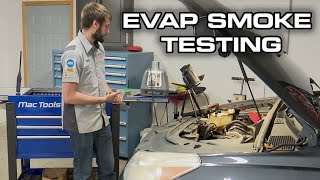
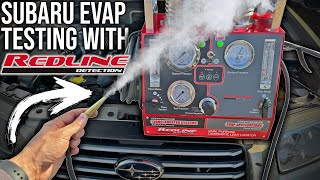
How to confirm: Visually inspect all accessible EVAP hoses in the engine bay and under the vehicle near the charcoal canister for obvious cracks or disconnections. A smoke test is the most effective way to find a leak that isn't visually apparent. 🎬 See a professional smoke test on a Subaru Forester EVAP system.
Typical fix: Replace the cracked or damaged section of hose.
Est. part cost: $10-$50 - Faulty Vent Valve / Leak Detection Pump ⚪ Low Probability → Shop Evaporative Emissions System Leak Detection Pump The vent valve assembly, located near the charcoal canister at the rear of the vehicle, seals the system for leak tests. If it fails to close or is otherwise damaged, a large leak is detected. These valves can fail electrically (open coil) or mechanically (stuck).
How to confirm: This component is more difficult to access and test. A mechanic would typically use a bi-directional scan tool to command the valve closed and then perform a smoke test to see if it is sealing properly. It can also be bench-tested by applying 12V power and checking if it closes (stops airflow) and by measuring the coil's resistance.
Typical fix: Replace the vent valve assembly.
Est. part cost: $100-$200
Rare But Worth Checking
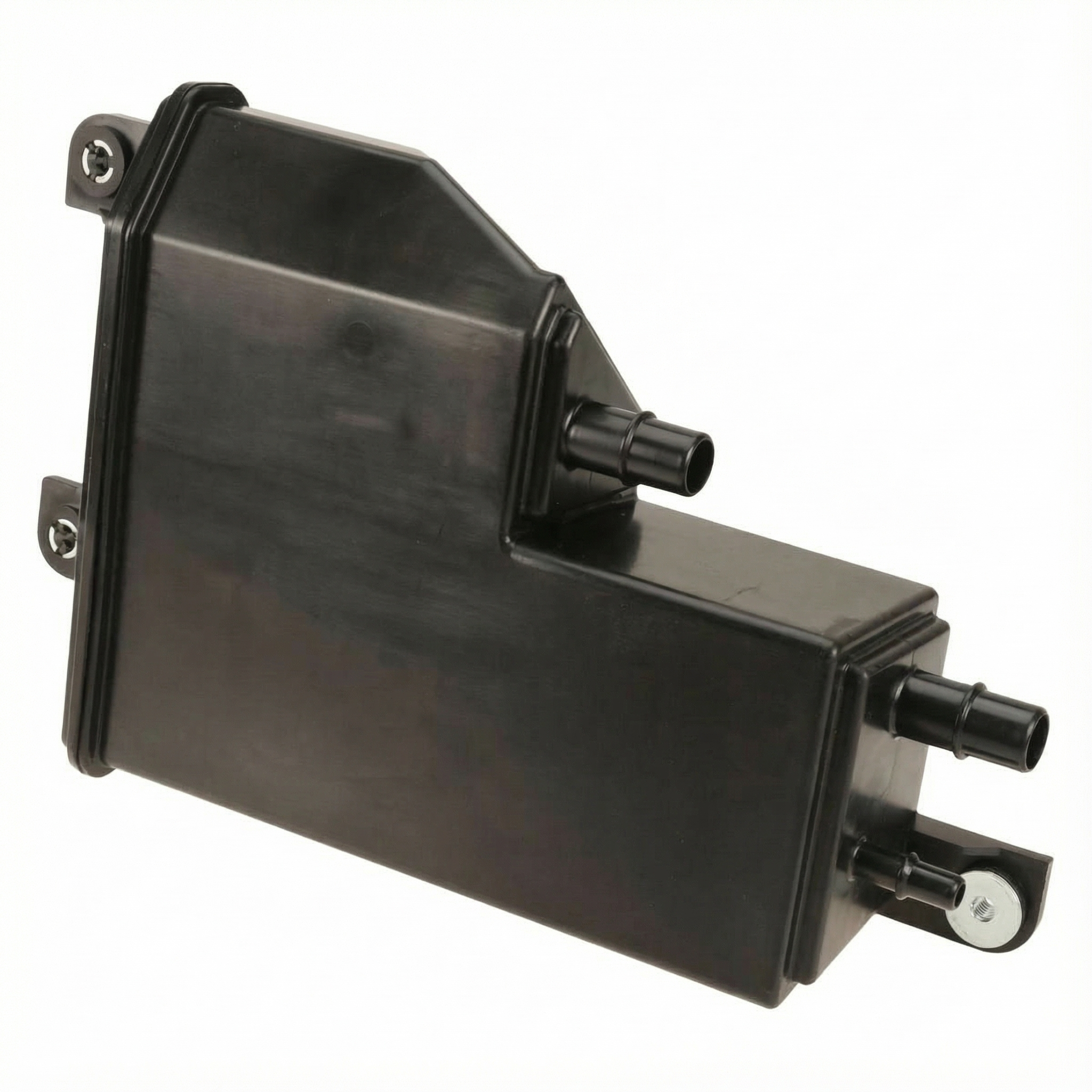
- Cracked Charcoal Canister: → Shop Vapor Canister The canister itself can be damaged by road debris or become saturated with fuel if the gas tank is habitually overfilled, leading to cracks and leaks.
- Leaking Fuel Filler Neck: → Shop Fuel Filler Neck Rust or corrosion on the metal filler neck (where the gas cap screws on) can create an imperfect seal, causing a P0455 code. This is a known issue on Subarus, particularly in salt-belt states where road salt accelerates corrosion.
- Spider Nest in Vent Hose: A classic, well-documented issue on older Subarus involves spiders building nests in the EVAP canister vent hose, causing a blockage. While less reported on the SJ generation, it is a known brand-specific quirk that can cause various EVAP codes.
Diagnosis Steps
- Read the code with an OBD-II scanner to confirm P0455 is present.
- Inspect the gas cap. Remove it, check the seal for damage, and reinstall it, ensuring it clicks securely. Ensure it is a genuine Subaru OEM cap, as aftermarket caps are a known source of issues.
- Clear the code using the scanner. Drive the vehicle for a few days, allowing the EVAP monitor to run. Note that the monitor typically runs only under specific conditions (e.g., fuel tank between 15% and 85% full, ambient temperature within a certain range). If the code does not return, the loose or non-OEM cap was the issue.
- If the code returns, consider replacing the gas cap with a new OEM part as a cheap and high-probability fix, even if it looks okay.
- If the code persists, perform a visual inspection of all visible EVAP hoses in the engine bay and under the vehicle for obvious cracks or disconnections.
- Test the purge valve in the engine bay. Disconnect it and attempt to blow through it. If air passes, the valve is stuck open and must be replaced. 🎬 Watch: A step-by-step walkthrough for fixing a P0455 large leak.
- If the cause is still not found, the next step is to perform a smoke test. This involves injecting pressurized smoke into the EVAP system's service port to find the source of the leak. This is the most reliable way to find cracked hoses, a faulty vent valve, a leaking filler neck, or a cracked charcoal canister.
Parts You'll Likely Need
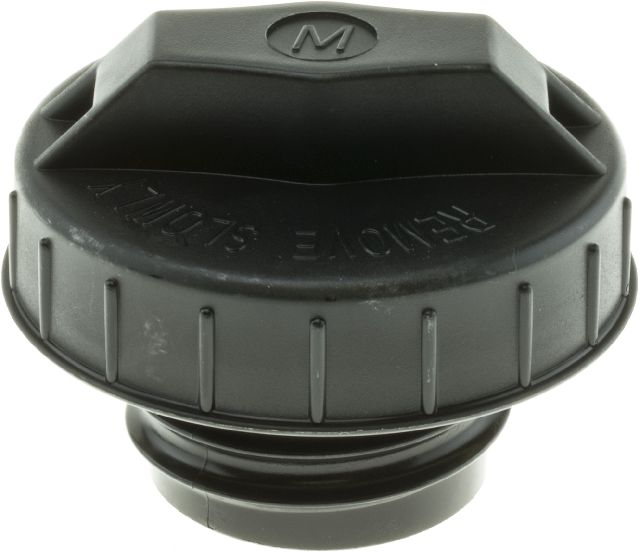
- Fuel Filler Cap
(OEM #42031FJ001 (supersedes 42031FJ000))— This is the most frequent cause of a P0455 code due to a worn seal or not being tightened correctly. The original part was superseded.
Trusted brands: Subaru (OEM)
OEM price range: $25-$40
Aftermarket price range: $15-$30 - Canister Purge Valve / Solenoid (2.5L Non-Turbo)
(OEM #16131AA060)— This valve is a common failure point that gets stuck open, causing a large leak. It is located in the engine bay and is relatively easy to replace. This part number is for the 2.5L non-turbo engine.
Trusted brands: Subaru (OEM), Denso, Dorman
OEM price range: $40-$60
Aftermarket price range: $30-$50
Related Codes That Often Appear With This One
- P0457 — This code specifically means 'EVAP System Leak Detected (Fuel Cap Loose/Off)', which is the most common cause of P0455. It may appear alongside or instead of P0455.
- P0441 — This code for 'Incorrect Purge Flow' can be triggered if the canister purge valve is stuck open or closed, which is also a potential cause for the P0455 large leak code.
- P0442 — This code indicates a small EVAP leak, as opposed to the large leak of P0455. The causes are the same, but the leak is smaller. It's possible for a deteriorating component to first cause a P0442 before worsening and triggering a P0455.
Technical Service Bulletins (TSBs) & Recalls
- No TSBs directly addressing code P0455 for this specific model were found during research. However, TSB 16-107-17R and others were issued to announce an extension of the CVT warranty to 10 years/100,000 miles due to reliability concerns, which is a significant issue for this platform.
Platform-Specific Known Issues
- The disabling of EyeSight, cruise control, VDC, and Hill Assist systems is a designed feature to alert the driver and is not a sign of a more serious problem. Resetting the check engine light will restore these functions.
Mechanic-Grade Diagnostic Values
- EVAP Vent Valve / Solenoid Coil Resistance — expected: 20–50 ohms. Failure: A reading of 0 ohms indicates a short circuit. An infinite or 'OL' reading indicates an open circuit (broken coil). Either requires replacement of the valve.
Scan Tool Commands That Help
- Subaru Select Monitor (SSMIII / SSM4): EVAP System Operation Check Mode / Activate Component — This function allows a technician to command individual EVAP components, like the purge valve and vent valve, to open or close. This is critical for diagnosis, such as closing the vent valve to seal the system before performing a smoke or pressure test to verify its operation without having to physically access and power the valve.
Wiring & Ground Locations
- Canister Purge Valve Connector — In the engine bay, on the canister purge valve/solenoid.. This is a 2-pin male connector. Damage to the connector or its wiring can prevent the purge valve from operating correctly, potentially causing it to remain open and trigger a P0455. Repair pigtails are available if the connector or wires are broken.
OEM Part Supersession History
42031FJ000→42031FJ001— Standard part update/revision.
Heads up: The new part number (42031FJ001) is the correct replacement for the original and is widely listed as fitting the 2014-2018 Forester.
Model Year Variations Within This Range
- 2017-2018: The 2017 model year marked a mid-generation refresh for the Forester. Changes included thicker door glass, improved door seals, an acoustic windshield, and minor styling updates. However, research indicates no significant changes were made to the EVAP system components or their operation that would alter the diagnosis of a P0455 code between the 2014-2016 and 2017-2018 models.
Diagnostic Flowchart
Other Known Issues on This Vehicle
Issues unrelated to this code that are worth knowing about as an owner of this generation:
- Excessive Oil Consumption 🔴 High — Very common, especially on 2014-2015 models with the 2.5L FB25 engine. Can start as early as 30,000-60,000 miles. Was the subject of a class-action lawsuit. (Ref: Subaru settled a lawsuit and initiated an oil consumption test and repair program for affected vehicles.)
- Lineartronic CVT Transmission Failure 🔴 High — Widespread enough that Subaru extended the warranty. Symptoms include shuddering, jerking, hesitation, or complete failure. Onset can range from 20,000 to over 120,000 miles. (Ref: Subaru extended the CVT warranty to 10 years / 100,000 miles for many vehicles, including the 2014-2018 Forester. See TSBs like 16-107-17R for details.)
- Fragile Windshields 🟠 Medium — Owners frequently report that the windshields are prone to cracking from minor impacts. This becomes a high-cost issue on models equipped with EyeSight, as the system requires recalibration after a windshield replacement.
- Rear Suspension Spring Failure 🟠 Medium — Rear coil springs can break. This was more common on the 2014 model year but has been reported on others in the generation. (Ref: A recall was issued for some vehicles for faulty rear suspension springs.)
Used vs. New Parts: Buying Guide for This Vehicle
When a used part is the smart pick: For larger, more expensive, non-electronic components like the fuel filler neck, a used part from a rust-free donor vehicle can be a cost-effective option. If the original is rusted, a clean used part is a viable repair.
Donor-vehicle mileage cap: roughly under 80000 miles for the part to have meaningful remaining life.
What to inspect on the donor part:
- For a fuel filler neck, inspect for any signs of rust, corrosion, or physical damage, especially on the sealing surface where the gas cap sits.
- For hoses, ensure the rubber is still pliable and shows no signs of cracking or brittleness.
- Verify the donor vehicle is from a region without heavy road salt use if possible.
OEM-only on this vehicle (don't cheap out):
- Fuel Filler Cap: Due to the system's sensitivity, it is highly recommended to use a genuine Subaru (OEM) gas cap. Aftermarket caps are a frequent cause of EVAP codes on these vehicles.
Aftermarket brands forum-validated for this vehicle:
- Denso (for Canister Purge Valve)
- Dorman (for Canister Purge Valve)
Brands owners have reported issues with on this vehicle:
- Stant (for Fuel Filler Cap): Mentioned specifically in a diagnostic video as a potential cause of EVAP codes on Subarus when an OEM cap is required.
Real Owner Stories
Aggregated from forums and TSBs cited above. Mileages and costs reflect what owners reported in those sources.
2021 Subaru Forester
Symptoms: P0455 code present; vehicle underwent 4 hours of diagnostics including a vacuum leak check and purge valve test with no faults found.
What fixed it: The dealer concluded the cause was an improperly tightened gas cap and cleared the code.
Source hint: https://www.reddit.com/r/SubaruForester/comments/p50z1c/p0455_code/
2025 Subaru Forester
Symptoms: P0455 code triggered by a loose gas cap.
What fixed it: Tightening the gas cap; a dealer technician noted they see about 2 vehicles a week with this specific issue due to the cap design.
Source hint: https://www.reddit.com/r/SubaruForester/comments/155l3u0/fyi_on_loose_gas_cap_new_2025_forester_generation/
Subaru Forester (Older Model)
Symptoms: EVAP codes triggered by a failure of the cap to seal against the mounting surface.
What fixed it: Addressing a rusted fuel filler neck that prevented the gas cap from sealing against the corroded surface.
Source hint: https://www.reddit.com/r/subaru/comments/fbr93w/rusted_filler_neck/
Documented NHTSA Reports
Subaru Forester
Symptoms: An owner reported taking their vehicle to a dealership for diagnosis where a technician found error code P0455.
What fixed it: According to NHTSA ODI #11637451, the technician found that the gas cap was secured, reset the code, and test drove the car to confirm the repair.
Related OBD-II Codes
Frequently Asked Questions
Why did my EyeSight, cruise control, and Hill Assist stop working when the P0455 code appeared on my Forester?
Does TSB 16-107-17R relate to my P0455 EVAP leak?
Should I use an aftermarket gas cap to fix this code on my Subaru?
How much fuel should be in my tank for the Forester to run its own EVAP self-test?
Is there a common reason why the gas cap causes P0455 so often on this model?
Could a rusted part under the car be causing this large leak code?
Helpful Videos
Used OEM Parts in Stock
New Aftermarket Parts Available


The information in this article is provided for general reference and educational purposes only. Vehicle specifications, procedures, and part compatibility can vary by production date, trim level, and region. Always consult your vehicle's factory service manual and verify part numbers before purchasing or performing repairs. Safety-critical components such as airbags, seat belts, and braking systems should be installed by a qualified professional.
- Subaru Forester:
- 🧭 Diagnostic Flowchart
- 🎬 Helpful Videos
- 🛍️ Shop This Part
- What's Unique About the 2014-2018 Subaru Forester
- Symptoms You May Notice
- Most Likely Causes
- Rare But Worth Checking
- Diagnosis Steps
- Parts You'll Likely Need
- Related Codes That Often Appear With This One
- Technical Service Bulletins (TSBs) & Recalls
- Platform-Specific Known Issues
- Mechanic-Grade Diagnostic Values
- Scan Tool Commands That Help
- Wiring & Ground Locations
- OEM Part Supersession History
- Model Year Variations Within This Range
- Other Known Issues on This Vehicle
- Used vs. New Parts: Buying Guide for This Vehicle
- Real Owner Stories
- 2021 Subaru Forester
- 2025 Subaru Forester
- Subaru Forester (Older Model)
- Documented NHTSA Reports
- Subaru Forester
- Related OBD-II Codes
- Frequently Asked Questions
- 🎟️ Get 5% Off