

P0455 on 2015-2021 Subaru WRX: EVAP Gross Leak Causes and Fixes
The P0455 code on a 2015-2021 Subaru WRX most often means the gas cap is loose, worn out, or missing. Before anything else, tighten the cap until it clicks and clear the code. If it returns, a new OEM gas cap (part #42031FJ001) costs around $30-$40 and is a 1/5 difficulty DIY fix. This code will also typically disable driver aids like EyeSight and cruise control.
- Always check your gas cap first for a P0455 code. Make sure it's tight (at least one click) and the seal is not damaged.
- If you need a new gas cap, it is highly recommended to use an OEM Subaru part (42031FJ001) as aftermarket caps can have sealing issues.
- The code will not clear itself immediately after tightening the cap; you must clear it with a scanner or drive for several days for the system to re-test.
- If the gas cap isn't the fix, the next most likely causes are the purge valve in the engine bay or a cracked hose, which is best found with a smoke test.
What's Unique About the 2015-2021 Subaru WRX
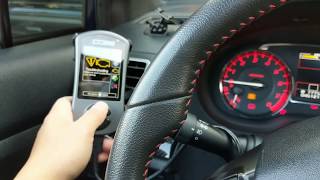
For the 2015-2021 (VA generation) WRX, the P0455 code is a very common and frequently discussed issue in owner communities. The vast majority of owner experiences point to the simplest of causes: the gas cap. While other EVAP components can fail, the gas cap seal is notoriously sensitive on this platform. A unique characteristic of modern Subarus is that an EVAP-related check engine light will also disable features like EyeSight, cruise control, and Sport mode (blinking 'S') as a safety measure 🎬 Watch: A WRX owner's experience with the P0455 code to get the driver's attention. Subaru's diagnostic logic for these models also uses a sophisticated Electronic Leak Check Module (ELCM), which performs vacuum self-tests to check system integrity.
Symptoms You May Notice
- Check Engine Light is on
- A noticeable smell of gasoline, especially around the rear of the car or near the fuel cap.
- Slight potential decrease in fuel economy over time.
- Disabling of EyeSight, cruise control, and other driver assistance systems.
- Immediately replacing the purge valve or other expensive components without first checking and replacing the gas cap.
- Replacing O2 sensors or other unrelated emissions parts.
Most Likely Causes
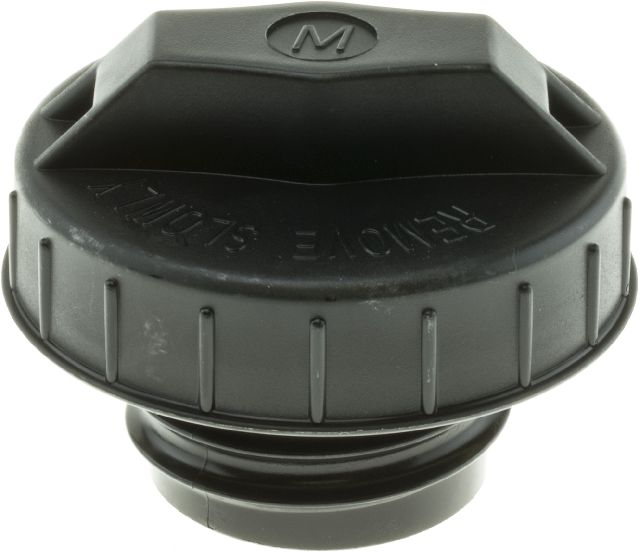
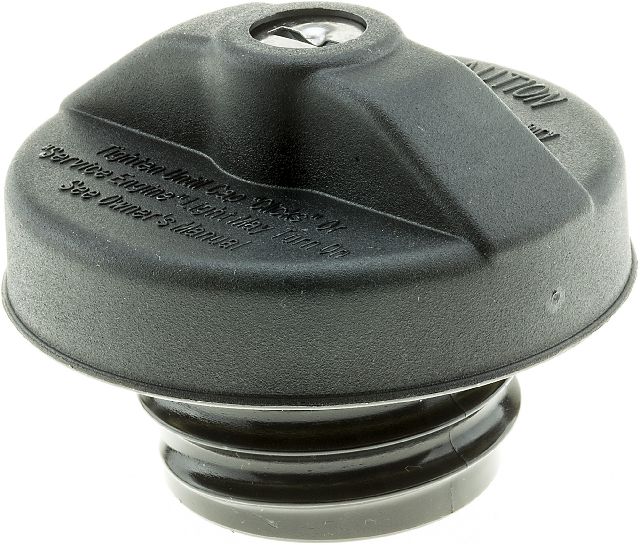
- Loose, Damaged, or Incorrect Gas Cap 🔴 High Probability → Shop Fuel Tank Cap The gas cap seal is the most common failure point for this code on the WRX, often due to simple wear, user error (not tightening until it clicks), or using a non-OEM cap that doesn't seal correctly. Many forum threads confirm that simply re-tightening or replacing the cap resolves the issue.
How to confirm: Inspect the gas cap for any visible cracks in the plastic or damage to the rubber O-ring seal. Ensure it is tightened at least one to three clicks. If the light returns after tightening and clearing the code, the cap seal is likely faulty. Even a tether caught under the seal can cause the leak.
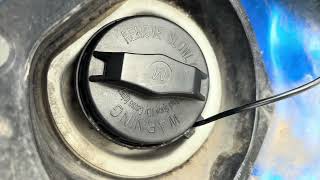
Typical fix: Replace the gas cap with a new OEM part. 🎬 See this breakdown of common P0455 causes and fixes Aftermarket caps are cheaper but are a frequent source of sealing issues.
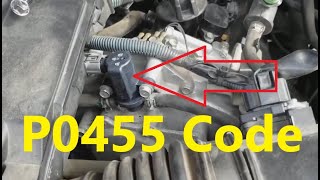
Est. part cost: $30-$45 - Faulty Purge Control Solenoid Valve 🟡 Medium Probability → Shop Vapor Canister Purge Solenoid This valve, located in the engine bay on the passenger side of the intake manifold, controls the flow of fuel vapors to the engine. It can get stuck open or closed, creating a leak path or blocking flow, which can trigger a P0455 code.
How to confirm: The valve is normally closed. With the engine off, remove the valve and try to blow through it. If air passes through, it is stuck open and needs replacement. A mechanic can also command it to open and close with a professional scan tool to test its function.
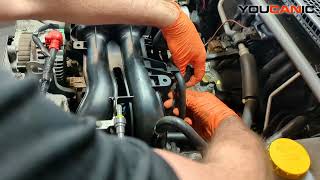
Typical fix: Replace the purge control solenoid valve. 🎬 Watch: How to replace the purge valve solenoid
Est. part cost: $40-$60 - Cracked or Disconnected EVAP Hoses ⚪ Low Probability The rubber hoses in the EVAP system can become brittle and crack over time due to heat and age. A connection can also come loose, especially around the charcoal canister or purge valve.
How to confirm: A visual inspection may reveal obvious cracks or disconnected lines. The most effective method is to have a mechanic perform a smoke test, which fills the EVAP system with a harmless, visible smoke to pinpoint the exact location of the leak.
Typical fix: Replace the cracked section of hose or reconnect the loose line.
Est. part cost: $10-$50 - Failed Canister Vent Valve / Solenoid ⚪ Low Probability → Shop Vapor Canister This valve, located near the charcoal canister at the rear of the vehicle, is normally open but closes to allow the system to be tested. If it fails to close, the system will report a large leak.
How to confirm: This component is best tested by a professional with a scan tool that can command the valve to close during a smoke test. If smoke escapes from the vent valve when it's commanded shut, it has failed.
Typical fix: Replace the canister vent valve.
Est. part cost: $50-$100
Rare But Worth Checking
- Cracked Charcoal Canister: → Shop Vapor Canister The canister itself can develop a crack from road debris impact or age, creating a large leak. This is uncommon but should be considered if a smoke test reveals smoke coming from the canister body itself.
- Damaged Fuel Filler Neck: → Shop Fuel Filler Neck Rust or damage to the metal neck where the gas cap seals can prevent a proper seal, even with a new cap. This is more common in areas with heavy road salt usage.
Diagnosis Steps
- Check the Gas Cap: Remove and reinstall your gas cap, ensuring you turn it until it clicks several times. If the cap looks worn, or the seal is cracked or stiff, replace it with an OEM part.
- Clear the Code: Use an OBD-II scanner to clear the P0455 code. Drive the vehicle for a few days to see if the Check Engine Light returns. If it doesn't, the loose cap was the issue. Note that the light may not turn off immediately after tightening the cap; a drive cycle is required.
- Visual Inspection: If the light returns, visually inspect the engine bay for any obvious issues. Look at the purge control solenoid valve (on the passenger side of the intake manifold) and follow its vacuum lines to check for cracks or disconnections.
- Inspect Under the Vehicle: Safely raise the vehicle and inspect the EVAP hoses running to and from the charcoal canister (located near the fuel tank, rear passenger side). Look for any signs of damage or loose connections.
- Professional Smoke Test: If no obvious issues are found, the most reliable next step is a professional smoke test. A mechanic will inject smoke into the EVAP system to find the source of the leak quickly and accurately.
- Advanced Diagnostics: Per Subaru's technical documents, a dealer or specialist may first run a system self-test using a scan tool before introducing smoke, as it can contaminate the Electronic Leak Check Module (ELCM) on newer models.
Parts You'll Likely Need
- Fuel Tank Filler Cap
(OEM #42031FJ001)— This is the most frequent cause of a P0455 code on the WRX. The seal wears out over time, preventing the system from holding pressure. Using an OEM cap is highly recommended as aftermarket versions are known to cause sealing issues.
Trusted brands: Subaru (OEM)
OEM price range: $30-$45
Aftermarket price range: $15-$30 - Purge Control Solenoid Valve
(OEM #42072VA000)— This is the second most common part to fail. It can get stuck open, creating a constant leak path. Note: Always verify the part number with your vehicle's VIN, as variations may exist.
Trusted brands: Subaru (OEM), Denso
OEM price range: $40-$60
Aftermarket price range: $25-$45
Related Codes That Often Appear With This One
- P0456 — P0456 indicates a 'small' EVAP leak. Sometimes a deteriorating component can trigger small and large leak codes at different times as the condition worsens.
- P0457 — This code specifically means 'Evaporative Emission System Leak Detected (Fuel Cap Loose/Off)'. It often appears alongside P0455 if the gas cap is the root cause.
Technical Service Bulletins (TSBs) & Recalls
- Subaru TechTIPS Newsletter (July 2016): While not a formal TSB, this document advises technicians to use a scan tool to perform a forced self-test of the EVAP system before using a smoke machine for diagnosis on late-model Subarus to avoid contaminating the ELCM.
Platform-Specific Known Issues
- Corroded EVAP Pipe Under Intake Manifold: In some cases, a metal EVAP pipe that runs underneath the intake manifold can corrode and develop a crack. This is difficult to see without a mirror and typically requires a smoke test to identify. One owner on Reddit confirmed this was the cause of their persistent P0455 after replacing other parts.
Scan Tool Commands That Help
- Subaru Select Monitor (SSM) or equivalent: Forced Self-Test of the Evaporative Emission System — This should be the first diagnostic step for any EVAP code on this vehicle, before using a smoke machine. The test forces the system to seal and measures pressure/vacuum to confirm a leak, and graphing the results can help pinpoint the issue.
- Bidirectional Scan Tool: Vent Valve (ELCM) ON/OFF Command — Used to isolate a faulty vent valve. A technician can command the valve closed and then perform a leak test (either with the system's pressure sensor or a smoke machine) to see if the valve is sealing properly.
- Bidirectional Scan Tool: Purge Valve ON/OFF Command — Used to test the function of the purge valve in the engine bay. A technician can command the valve to cycle while observing system pressure or vacuum to confirm it is opening and closing as expected.
Wiring & Ground Locations
- Purge Control Solenoid Valve Connector — In the engine bay, on the passenger side of the intake manifold.. The plastic connector housing for the purge valve can become brittle and break over time, leading to a poor electrical connection and malfunction of the valve, which can cause EVAP codes. Replacement connector kits are available.
- Canister Vent Valve / ELCM — At the rear of the vehicle, near the charcoal canister, which is located in the rear passenger side area, above the suspension.. This component and its wiring are exposed to the elements under the car. Corrosion on the connector or physical damage to the wiring can cause it to fail its self-test, triggering a P0455. The mounting hardware is also prone to heavy rust.
Real Owner Repair Stories
- Reddit user Acceptable-Tennis368 (2015 WRX) — Persistent P0455 code.
❌ Tried (didn't work) Not specified, but implied that common fixes did not work.
✅ What actually fixed it After performing a smoke test, the cause was found to be a corroded EVAP system pipe running under the intake manifold. The crack was on the lower part of the pipe and was only visible using a mirror. - Reddit user Blurrg_Rancher (2023 WRX (<1,500 miles)) — P0455 EVAP System Leak code appeared.
❌ Tried (didn't work) Initially assumed the gas cap was tight because they remembered tightening it until it clicked.
✅ What actually fixed it Before taking it to the dealer, the owner double-checked the gas cap and found it was actually loose. Tightening it and clearing the code resolved the issue. This highlights how easily user error can cause this specific code, even on a new vehicle. - NHTSA ODI #11637451 (Subaru Platform Mate) — An owner reported taking their vehicle to a dealership for a P0455 error code. The technician found that while the gas cap was secured, resetting the code and test driving was part of the initial diagnostic response.
"I Checked Everything" — The Actual Cause
- A persistent P0455 where common parts have been checked can be caused by a corroded metal EVAP pipe that runs under the intake manifold. A smoke test may not easily reveal this leak as the crack can be on the underside of the pipe, requiring a mirror and careful inspection of that specific, hard-to-see area to locate the escaping smoke.
When the Usual Fixes Don't Work
- While the gas cap and purge valve are the most common culprits, a notable number of owners have chased a P0455 code after replacing these parts. In one documented case, the final cause was a corroded metal EVAP pipe hidden under the intake manifold, which was only found during a smoke test by using a mirror to inspect the hard-to-reach area. This proves that if the simple fixes don't work, a thorough, professional smoke test is necessary before replacing more expensive components like the charcoal canister.
OEM Part Supersession History
42031FJ000→42031FJ001— Standard part revision or improvement by the manufacturer.
Model Year Variations Within This Range
- 2015-2021: This generation of Subaru uses an Electronic Leak Check Module (ELCM) as part of the vent valve assembly. Subaru technical guidance explicitly warns technicians NOT to use a smoke machine before running a scan tool self-test, as the oil in the smoke can contaminate and damage the sensitive ELCM. This is a critical diagnostic difference from older EVAP systems.
Diagnostic Flowchart
Other Known Issues on This Vehicle
Issues unrelated to this code that are worth knowing about as an owner of this generation:
- Throw-Out Bearing (TOB) Failure 🟠 Medium — Common issue, often presenting as a chirping or whirling noise when the clutch pedal is not depressed. Can occur at various mileages, some as low as 25,000 miles. (Ref: TSB 03-79-18R, 03-82-18)
- Clutch Fork / Pivot Failure 🟠 Medium — The stamped metal clutch fork is a known weak point, prone to cracking or the pivot point wearing through, especially with upgraded clutches. Failure leads to a soft or dead clutch pedal. Aftermarket forged or billet forks are a common upgrade.
- Carbon Buildup on Intake Valves 🟠 Medium — As a direct-injection (FA20DIT) engine, fuel does not wash over the intake valves, leading to carbon accumulation. This can cause stuttering and power loss. Walnut blasting is recommended every 40,000-60,000 miles to clean the valves.
- Clutch Pedal Assembly Squeak 🟡 Low — A persistent squeak from the clutch pedal assembly was common on earlier models. Subaru released a redesigned pedal assembly to fix the issue. (Ref: Related to TSB 03-79-18R)
Used vs. New Parts: Buying Guide for This Vehicle
When a used part is the smart pick: For larger, more expensive components that are not high-wear items, a used part can be a good value. This primarily applies to the charcoal canister assembly. If the canister itself is cracked, a used OEM unit from a reputable salvage yard is a viable option, provided it comes from a vehicle that was not in a rear-end collision.
Donor-vehicle mileage cap: roughly under 80000 miles for the part to have meaningful remaining life.
What to inspect on the donor part:
- For a charcoal canister, inspect the plastic housing for any cracks, especially around the mounting tabs and hose ports.
- Ensure all hose connection points are intact and not broken or brittle.
- If buying the attached vent valve/ELCM, check the electrical connector for corrosion or broken pins.
OEM-only on this vehicle (don't cheap out):
- Fuel Filler Cap: This is the most critical part to buy as OEM. Aftermarket gas caps are a well-documented cause of P0455 and other EVAP codes on Subarus due to improper sealing pressure and gasket design.
Aftermarket brands forum-validated for this vehicle:
- Purge Control Solenoid Valve: Denso is a known OEM supplier to Subaru and is a trusted aftermarket alternative.
Brands owners have reported issues with on this vehicle:
- Generic or no-name brand gas caps should be avoided.
Real Owner Stories
Aggregated from forums and TSBs cited above. Mileages and costs reflect what owners reported in those sources.
2015 Subaru WRX
Symptoms: Persistent P0455 code after replacing other parts.
What fixed it: Identified a corroded metal EVAP pipe located underneath the intake manifold via a smoke test.
Source hint: Reddit /r/WRX (2024) thread titled 'p0455_code_fix/'
2023 Subaru WRX (VB)
Symptoms: Check Engine Light for EVAP system leak.
What fixed it: Double-checked the gas cap and found it was loose; tightening it and clearing the code resolved the issue.
Source hint: Reddit /r/wrx_vb (2023) thread titled 'p0455_evap_system_leak/'
2017 Subaru WRX
Symptoms: P0455 code appeared immediately after refueling.
What fixed it: Tightening the gas cap properly.
Source hint: NASIOC / YouTube (2019) video by owner documenting P0455 after refueling
2021 Subaru Forester (Platform Mate)
Symptoms: P0455 code with all associated warning lights (EyeSight off, etc.).
What fixed it: The dealer concluded the gas cap was likely not tightened properly after finding no other leaks during testing.
Source hint: Reddit /r/SubaruForester (2023) thread titled 'p0455_code/'
Related OBD-II Codes
Frequently Asked Questions
Why did my EyeSight and cruise control stop working when the P0455 code appeared on my WRX?
Can I use an aftermarket gas cap to fix the P0455 leak on my 2015-2021 WRX?
Where is the purge control solenoid valve located on the FA20DIT engine?
Is there a specific TSB for diagnosing the EVAP system on newer WRX models?
I've replaced my gas cap but the P0455 code is still there. What else should I check on my WRX?
Helpful Videos
We Have This Part in Stock


The information in this article is provided for general reference and educational purposes only. Vehicle specifications, procedures, and part compatibility can vary by production date, trim level, and region. Always consult your vehicle's factory service manual and verify part numbers before purchasing or performing repairs. Safety-critical components such as airbags, seat belts, and braking systems should be installed by a qualified professional.
- Subaru WRX:
- 🧭 Diagnostic Flowchart
- 🎬 Helpful Videos
- 🛍️ Shop This Part
- What's Unique About the 2015-2021 Subaru WRX
- Symptoms You May Notice
- Most Likely Causes
- Rare But Worth Checking
- Diagnosis Steps
- Parts You'll Likely Need
- Related Codes That Often Appear With This One
- Technical Service Bulletins (TSBs) & Recalls
- Platform-Specific Known Issues
- Scan Tool Commands That Help
- Wiring & Ground Locations
- Real Owner Repair Stories
- "I Checked Everything" — The Actual Cause
- When the Usual Fixes Don't Work
- OEM Part Supersession History
- Model Year Variations Within This Range
- Other Known Issues on This Vehicle
- Used vs. New Parts: Buying Guide for This Vehicle
- Real Owner Stories
- 2015 Subaru WRX
- 2023 Subaru WRX (VB)
- 2017 Subaru WRX
- 2021 Subaru Forester (Platform Mate)
- Related OBD-II Codes
- Frequently Asked Questions
- 🎟️ Get 5% Off