

P0455 on 2008-2013 Toyota Highlander: EVAP Large Leak Causes and Fixes
For a 2008-2013 Toyota Highlander, code P0455 almost always means you have a loose, worn, or incorrect gas cap. Before any other repairs, tighten the cap or replace it with a new genuine OEM Toyota part for about $25-$40. This simple fix resolves the issue most of the time, and using aftermarket caps is a common cause of repeat failures.
- Always check the gas cap first for code P0455. Ensure it is tight and the seal is intact. Replacing it with a genuine Toyota cap is the cheapest and most likely fix.
- If the vehicle is difficult to start after refueling, the purge valve in the engine bay is the most probable cause.
- Do not habitually top off your fuel tank after the pump clicks off, as this can flood and ruin the expensive charcoal canister.
- If a new gas cap does not solve the problem, a professional smoke test is the fastest and most accurate way to find the source of the leak, saving time and money on guessing.
What's Unique About the 2008-2013 Toyota Highlander
On the second-generation (XU40) Highlander, the EVAP system components are generally robust, but like many vehicles, they are susceptible to age-related failures of rubber and plastic parts. The most common failure points follow a predictable pattern seen across many Toyota models of this era: the gas cap seal degrades, or the purge valve in the engine bay gets stuck. While some owners may eventually face a cracked charcoal canister or a rusted fuel filler neck (especially in salt-belt regions), these are far less common than the simpler fixes.
Symptoms You May Notice
- Check Engine Light is on
- A faint to strong smell of gasoline, particularly around the rear of the vehicle or near the gas cap.
- Difficulty starting the engine immediately after refueling (this strongly points to a faulty purge valve stuck open, which floods the engine with vapors).
- Slightly reduced fuel economy (often not noticeable by the driver).
- Gas pump nozzle clicks off repeatedly when trying to refuel (this can indicate a clogged charcoal canister or vent valve).
- Replacing the oxygen (O2) sensor. O2 sensors are not related to the EVAP system.
- Replacing the fuel injectors. While a stuck purge valve can affect the air-fuel mixture, the injectors themselves are rarely the cause of a P0455 code.
- Repeatedly replacing the gas cap with cheap aftermarket versions. Many owners chase the problem by trying multiple non-OEM caps, not realizing the cap itself is the issue due to poor fitment.
Most Likely Causes
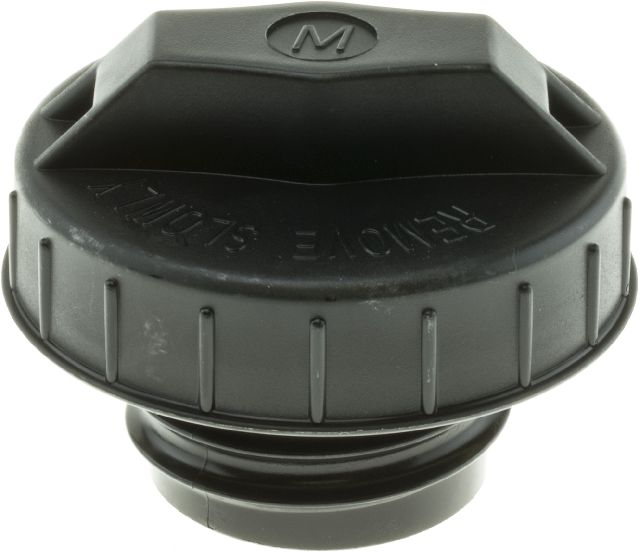
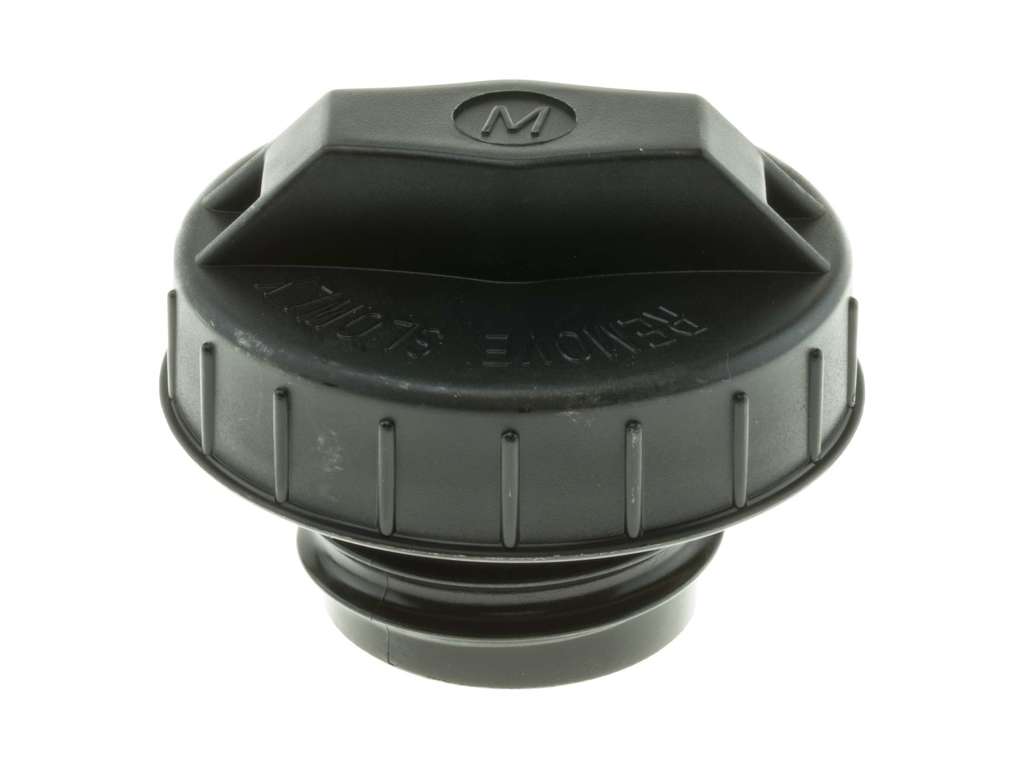
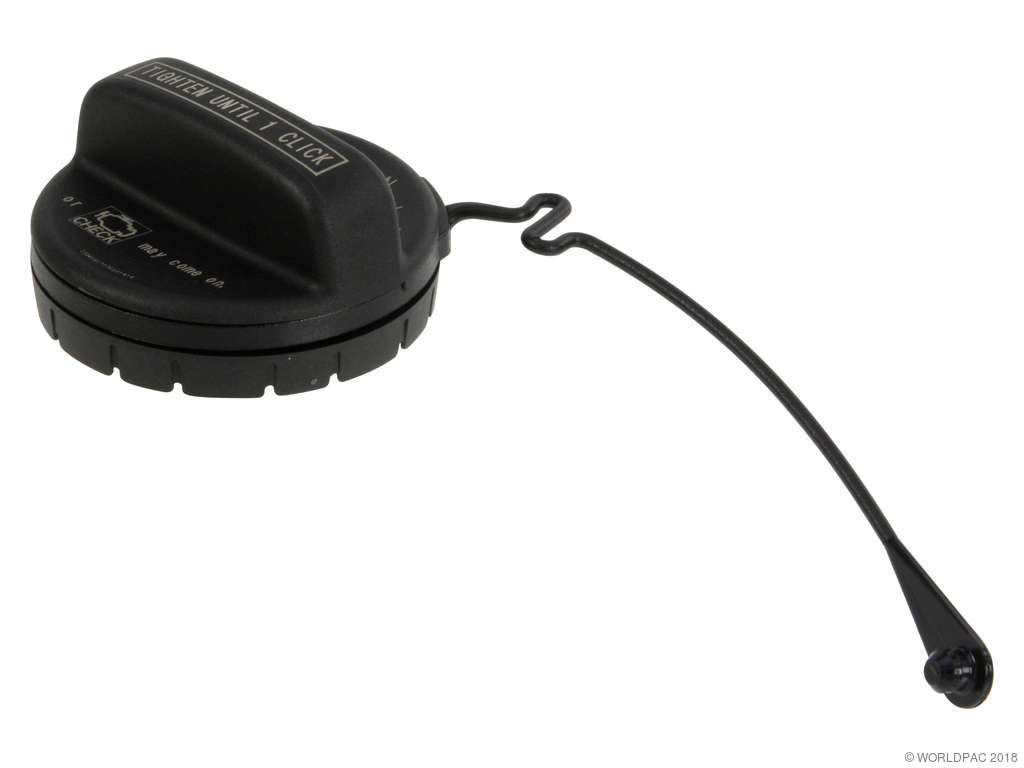
- Loose, Worn, or Incorrect Gas Cap 🔴 High Probability → Shop Fuel Tank Cap The rubber O-ring seal on the gas cap is the most frequently handled part of the sealed EVAP system. It degrades over time from exposure to fuel vapors and weather, losing its ability to create a perfect seal. Using non-OEM (aftermarket) caps is a very common reason for the code to persist or return, as their seals often don't meet Toyota's precise specifications. A manufacturer service bulletin, TSB Bulletin #T-SB-0086-16, notes that a "No Click" or "No Spring Return" condition from the fuel cap when seated can lead to P0455.
How to confirm: Ensure the cap is tightened until it clicks at least once. Remove the cap and inspect the rubber seal for cracks, stiffness, or deformities. If you have an aftermarket cap, it is the prime suspect.
Typical fix: Replace the gas cap. It is highly recommended to use a genuine OEM Toyota part to ensure a proper seal. Clear the code and drive for a few days to see if the light returns.
Est. part cost: $25-$40 - Faulty Vapor Canister Purge Valve (Purge Solenoid) 🟡 Medium Probability → Shop Vapor Canister This solenoid, located in the engine bay, cycles thousands of times and can become stuck open, creating a permanent leak path that the system detects as a large leak. This is a common failure on many Toyota models. NHTSA ODI #11415574 describes a case where an owner replaced the vapor canister purge solenoid and leak detection pump while troubleshooting P0455 and P0441.
How to confirm: The valve is located in the engine bay, usually on or near the intake manifold, with two hoses and an electrical connector. A key symptom is difficulty starting after filling the gas tank. You can remove the valve and try to blow through it; if air passes through, it is stuck open and faulty. A properly functioning valve is normally closed.
Typical fix: Replace the purge valve. This is a simple repair, typically involving one or two bolts, two hoses, and an electrical connector.
Est. part cost: $50-$100 - Cracked or Damaged Charcoal Canister ⚪ Low Probability → Shop Vapor Canister The plastic canister is located under the rear of the vehicle near the fuel tank and can be damaged by road debris. It can also be internally damaged by consistently overfilling the fuel tank, which floods the canister with liquid fuel instead of liquid vapor, ruining the charcoal pellets.
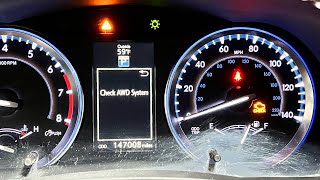
How to confirm: Visually inspect the canister for any visible cracks or damage. A fuel smell near the rear of the car is a strong indicator. Difficulty refueling can also point to a clogged canister. A smoke test is the most definitive way to confirm a leak from the canister body or its integrated vent valve. 🎬 See a mechanic diagnose an EVAP leak on a Highlander. 🎬 Watch: How to replace a rusted fuel filler neck.
Typical fix: Replace the entire charcoal canister assembly. This is more expensive and labor-intensive than a gas cap or purge valve.
Est. part cost: $300-$800 - Cracked or Disconnected EVAP Hoses ⚪ Low Probability The rubber hoses that connect the EVAP components can become brittle and crack with age and exposure to heat cycles, especially the hoses in the engine bay near the purge valve and under the car near the charcoal canister.
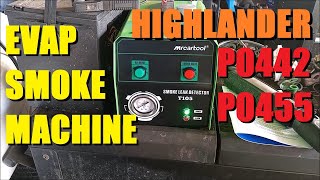
How to confirm: Visually inspect all accessible EVAP lines for obvious cracks or disconnected lines. The most effective method is to have a mechanic perform a smoke test, which forces smoke through the system and makes any leaks visible. 🎬 Watch: How to use a smoke machine to find leaks.
Typical fix: Replace the specific section of the cracked hose. Hoses are typically inexpensive, but labor for diagnosis can vary.
Est. part cost: $10-$50
Rare But Worth Checking
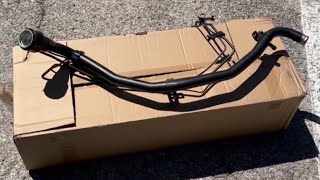
- Rusted or Damaged Fuel Filler Neck: → Shop Fuel Filler Neck In regions with heavy road salt use (the "Salt Belt"), the metal pipe leading to the gas tank can rust and develop pinhole leaks. A new gas cap will not fix this. TSB Bulletin #T-SB-0086-16 notes that in some vehicles, the fuel filler neck may be out of position, leading to a poor seal and a P0455 code. A smoke test will clearly show smoke escaping from the filler neck itself if this is the cause, as demonstrated in a YouTube video by Merry Frankster's Garage on a Highlander.
Diagnosis Steps
- Check the Gas Cap: This is the most common cause. Ensure your gas cap is tight and clicks when secured. If it's loose, tighten it, clear the code, and drive for a few days to see if the light returns.
- Inspect and Verify the Gas Cap: If tightening doesn't work, remove the cap and inspect the rubber O-ring for cracks, tears, or excessive hardness. Crucially, verify it is a genuine Toyota OEM part. If it's an aftermarket cap, replace it with an OEM one before any further diagnosis.
- Visual Inspection: Look under the hood for the purge valve and its connecting hoses. Check for obvious cracks or disconnected lines. Then, look under the rear of the vehicle near the spare tire for the charcoal canister and its hoses.
- Consider Purge Valve Symptoms: If you've had trouble starting the vehicle right after getting gas, the purge valve is a very likely suspect. You can test it by removing it and attempting to blow through it; air should not pass.
- Perform a Smoke Test: If the simple checks don't reveal the problem, the most effective next step is a professional smoke test. This test will pressurize the EVAP system with visible smoke, revealing the exact location of any leaks, whether from a hose, the canister, or a rusted fuel filler neck.
Parts You'll Likely Need
- Fuel Tank Cap (Non-Hybrid)
(OEM #77300-06040)— This is the most frequent cause of a P0455 code. The seal wears out over time, causing a large leak. Using an OEM part is critical for a proper seal, as aftermarket versions are known to cause persistent issues.
Trusted brands: Toyota (Genuine OEM)
OEM price range: $25-$40
Aftermarket price range: $15-$25 - Vapor Canister Purge Valve / Solenoid
(OEM #90910-12276)— A common failure point where the valve sticks open, causing a constant leak. Often associated with difficulty starting after refueling.
Trusted brands: Denso, Toyota (Genuine OEM)
OEM price range: $70-$110
Aftermarket price range: $40-$80 - Charcoal Canister Assembly (Non-Hybrid)
(OEM #77740-0E020)— This part can crack from age or road debris, or fail internally if the fuel tank is habitually overfilled. It is a less common but significant potential cause.
Trusted brands: Toyota (Genuine OEM)
OEM price range: $300-$450
Aftermarket price range: $200-$350
Related Codes That Often Appear With This One
- P0441 — This code for 'Incorrect Purge Flow' often appears with P0455 when the purge valve is stuck open or malfunctioning.
- P0456 — This code for a 'Small EVAP Leak' can sometimes precede a P0455 as a component's seal slowly degrades before failing completely. It can also appear alongside P0455.
Mechanic-Grade Diagnostic Values
- Purge Valve (VSV) Coil Resistance — expected: 23 to 26 ohms at 20°C (68°F). Failure: Resistance outside this range, or a reading of 10 MOhms or higher between a terminal and body ground, indicates a faulty valve.
- EVAP System Pressure during Techstream Test — expected: System should pull a vacuum between -15 and -20 mmHg during the test.. Failure: If the vacuum decays to ~0 mmHg too quickly, it indicates a leak. If the system cannot pull a sufficient vacuum, there is a large leak or a faulty pump/valve.
Hidden / Shadow Codes Worth Checking
- Mode 6, Test ID $81, Component ID $01: This refers to the EVAP monitor results for the 0.040" (large leak) test. A technician can view this data with an advanced scan tool to see the raw test values and limits before a full-blown DTC is set as 'permanent'. (see via Advanced OBD-II scan tool or Toyota Techstream software, under 'Mode 6 Data' or 'Monitor Status'.)
Scan Tool Commands That Help
- Toyota Techstream: Evaporative System Check (Automatic Mode) — This is a bidirectional function that forces the vehicle to run the entire EVAP leak test sequence without waiting for the natural 5-hour cold soak period. It manually activates the vent valve and leak detection pump to check for pressure decay, allowing a technician to verify a repair immediately.
- Toyota Techstream: Read Pending DTCs — After running the 'Evaporative System Check', if the test result is 'UNKNOWN', checking for pending DTCs can reveal if the system has a malfunction even if a permanent code has not yet been set.
Wiring & Ground Locations
- Main Body ECU Ground — The Main Body ECU, which is involved in controlling various systems, is located on the left side of the dash. Its ground points are critical for proper operation.. While not a common cause, a poor ground connection for the ECU or related components can cause erratic sensor readings and false codes. The ground distribution diagrams show multiple ground points in the left kick panel and behind the dash.
- Purge VSV Connector — Located in the engine bay, on or near the V-bank cover, connected to the purge valve.. This is the connector where a technician would perform resistance checks on the purge valve. A visual inspection for corrosion or damage here is a key diagnostic step.
- Charcoal Canister Electrical Connector — Under the rear of the vehicle, connected to the charcoal canister assembly which houses the vent valve and pressure sensor.. This connector provides power and signal lines for the vent valve and pressure sensor. Damage to this wiring from road debris or corrosion can trigger P0455 and other EVAP codes.
Real Owner Repair Stories
- Tacoma World Forum (similar EVAP system) (2003 Toyota Tacoma (similar EVAP components and logic)) — P0442 and P0456 (small and very small leaks)
❌ Tried (didn't work) Initial diagnosis was unclear.
✅ What actually fixed it The user performed a detailed Techstream EVAP test which isolated the leak to the charcoal canister assembly. The fuel tank held vacuum properly, but the combined tank-and-canister test showed a significant leak, confirming the canister was the source. - NHTSA ODI #10525700 — An owner reported a check engine light with codes P0441 and P0455. The repair involved replacing the fuel tank cap assembly, the fuel pipe sub-assembly, and the vacuum valve assembly at a dealership.
- NHTSA ODI #11331260 — A driver noted that their vehicle was not performing properly and a scanner revealed multiple codes including P0171, P0441, and P0455, alongside a noise indicating a bad fuel pump.
OEM Part Supersession History
77300-52030, 77300-52040→77300-06040— Standard part consolidation and design updates by Toyota over the years.
Diagnostic Flowchart
Other Known Issues on This Vehicle
Issues unrelated to this code that are worth knowing about as an owner of this generation:
- Rupturing VVT-i Oil Line (2GR-FE V6) 🔴 High — Common on early models (approx. 2008-2010) that were not serviced under a Limited Service Campaign (LSC). A rubber section of the oil line degrades and can burst, causing rapid and catastrophic oil loss, leading to engine seizure. (Ref: Toyota issued an LSC to replace the rubber/metal line with an all-metal version (Part No. 15772-31030). Many vehicles may still have the original faulty line.)
- Power Steering Rack and/or Hose Leaks 🟠 Medium — Fairly common as the vehicle ages. Leaks can develop from the seals in the steering rack itself or from the metal return lines which are prone to rusting.
- Water Pump Failure (2GR-FE V6) 🟠 Medium — The water pump is a known failure point, often starting as a slow coolant leak (visible as pink/red crust) from the weep hole before progressing.
- Ignition Coil Failure 🟡 Low — Occasional failures on high-mileage vehicles, leading to engine misfires (codes P0300-P0306), rough running, and a flashing check engine light.
Used vs. New Parts: Buying Guide for This Vehicle
When a used part is the smart pick: For expensive components like the charcoal canister assembly (OEM P/N 77740-0E020), a used part from a low-mileage, non-corroded donor vehicle can be a cost-effective option. Hoses and the fuel filler neck are also good candidates for used parts if they are in excellent condition.
Donor-vehicle mileage cap: roughly under 80000 miles for the part to have meaningful remaining life.
What to inspect on the donor part:
- For a charcoal canister, check for any visible cracks in the plastic housing.
- Shake the canister; excessive rattling can indicate the internal charcoal bed has broken apart.
- Look for any signs of liquid fuel saturation (stains or strong odor), which means the canister was ruined by overfilling and should be avoided.
- Inspect all hose ports for cracks or brittleness.
- For a fuel filler neck, ensure there is no significant rust, especially around the gas cap seal area and mounting brackets.
OEM-only on this vehicle (don't cheap out):
- Fuel Tank Cap: This is the most critical part to buy as a new, genuine OEM Toyota part. Aftermarket caps are a well-documented cause of persistent P0455 codes on this platform due to imprecise seals.
- Vapor Canister Purge Valve: While some aftermarket brands may work, the OEM part (or one from the original supplier, Denso) is highly recommended. The valve's precise calibration is critical, and aftermarket versions can fail to meet these specifications, leading to repeat codes.
Aftermarket brands forum-validated for this vehicle:
- Denso (for the Purge Valve, as they are often the original equipment manufacturer)
Brands owners have reported issues with on this vehicle:
- Stant (for gas caps, as reported by owners to cause EVAP codes even when new)
- Unbranded/generic purge valves from online marketplaces (often lack the precise calibration needed for Toyota's system).
Real Owner Stories
Aggregated from forums and TSBs cited above. Mileages and costs reflect what owners reported in those sources.
2012 Toyota Highlander
Symptoms: Check engine light came on with codes P0441, P0455, and P0456.
What fixed it: The community recommended checking for a loose or bad gas cap, purge valve, or charcoal canister as the most likely causes.
Source hint: Reddit r/Toyota - 'Check engine light codes P0441, P0455, P0456 on Highlander'
Toyota Highlander
Symptoms: The vehicle threw an EVAP code immediately after installing a brand new aftermarket Stant gas cap.
What fixed it: The issue was resolved by switching to a new OEM Toyota gas cap.
Source hint: Car Talk Community - 'Aftermarket Gas Cap'
Related OBD-II Codes
Frequently Asked Questions
I just bought a new gas cap for my Highlander but the P0455 code is still there. Why?
Why does my Highlander struggle to start only after I fill up the gas tank?
Is there a specific part number for the oil line issue mentioned for the 2008-2010 Highlander V6?
Can overfilling my gas tank cause a P0455 large leak code?
Where is the charcoal canister located on the 2008-2013 Highlander?
Why does the gas pump nozzle keep clicking off when I try to refuel my Highlander?
Helpful Videos
Used OEM Parts in Stock

New Aftermarket Parts Available


The information in this article is provided for general reference and educational purposes only. Vehicle specifications, procedures, and part compatibility can vary by production date, trim level, and region. Always consult your vehicle's factory service manual and verify part numbers before purchasing or performing repairs. Safety-critical components such as airbags, seat belts, and braking systems should be installed by a qualified professional.
- Toyota Highlander:
- 🧭 Diagnostic Flowchart
- 🎬 Helpful Videos
- 🛍️ Shop This Part
- What's Unique About the 2008-2013 Toyota Highlander
- Symptoms You May Notice
- Most Likely Causes
- Rare But Worth Checking
- Diagnosis Steps
- Parts You'll Likely Need
- Related Codes That Often Appear With This One
- Mechanic-Grade Diagnostic Values
- Hidden / Shadow Codes Worth Checking
- Scan Tool Commands That Help
- Wiring & Ground Locations
- Real Owner Repair Stories
- OEM Part Supersession History
- Other Known Issues on This Vehicle
- Used vs. New Parts: Buying Guide for This Vehicle
- Real Owner Stories
- 2012 Toyota Highlander
- Toyota Highlander
- Related OBD-II Codes
- Frequently Asked Questions
- 🎟️ Get 5% Off