

P0455 on 2004-2009 Toyota Prius: EVAP Large Leak Causes and Fixes
On a 2004-2009 Prius, the P0455 code is most often caused by a loose, worn, or incorrect gas cap. Before attempting any other repairs, ensure your gas cap is tight and the seal is intact. A genuine Toyota replacement cap is an inexpensive first step, costing around $25-$40, and is highly recommended over aftermarket options which are known to cause issues.
- P0455 indicates a large leak in the emissions vapor system, which is not a threat to the engine's mechanical health.
- Always check the gas cap first. Ensure it is tight and the seal is in good condition. Using a genuine Toyota cap is highly recommended.
- You can continue driving the car, but it will not pass an emissions inspection until the leak is repaired.
- If a new gas cap does not fix the issue, a professional smoke test is the most efficient way to find the source of the leak, which could be a cracked hose or a faulty canister.
What's Unique About the 2004-2009 Toyota Prius
The second-generation Prius (2004-2009) uses a unique bladder-style fuel tank, which differs from conventional rigid tanks. However, the EVAP system that monitors it operates on standard principles and is not unusually complex for this code. Owner experiences overwhelmingly confirm that the most common cause is a simple gas cap issue. This is often due to using a non-genuine or worn-out cap that fails to seal properly against the filler neck, a problem frequently cited on forums like PriusChat. A critical distinction exists between 2004-2005 and 2006-2009 models; their EVAP systems and ECU wiring are different, and swapping major components like the fuel tank between these ranges will cause persistent codes.
Symptoms You May Notice
- Check Engine Light is on
- A faint smell of fuel, particularly after refueling or when parked in a garage
- Failing a state emissions or smog test
- A gas cap that does not click when tightened or feels loose after clicking.
- Replacing the charcoal canister or purge valve before checking the gas cap. Always start with the simplest and most common cause.
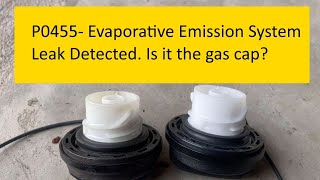
- Assuming a new aftermarket gas cap is good. Many forum users report that only the OEM Toyota cap solved their P0455 issue. 🎬 Watch: Why a gas cap is the first thing to check.
Most Likely Causes
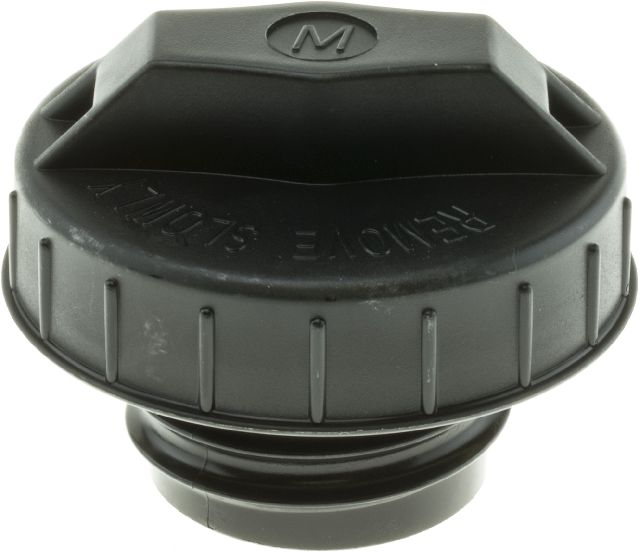
- Loose, Worn, or Incorrect Gas Cap 🔴 High Probability → Shop Fuel Tank Cap The gas cap seal is a simple rubber O-ring that degrades over time. Many owners on PriusChat report immediate issues after replacing the original with a non-OEM aftermarket cap that doesn't seal correctly. The pressure differential required by the EVAP system is sensitive, and only the genuine Toyota cap is designed to meet this specification reliably. Manufacturer service bulletin T-SB-0086-16 notes that a "no click" or "no spring return" condition from the fuel cap when seated can lead to P0455 and P0456 codes.
How to confirm: Inspect the gas cap for cracks or a hardened, brittle seal. Ensure it is tightened until it clicks at least once. If you have an aftermarket cap, try replacing it with a genuine Toyota part (OEM Part No. 77300-52030). A user on PriusChat improvised a leak test with a vacuum cleaner and found their aftermarket cap was leaking despite looking fine.
Typical fix: Replace the gas cap with a new, genuine OEM part.
Est. part cost: $25-$40 - Cracked or Disconnected EVAP Hoses 🟡 Medium Probability The rubber hoses connected to the charcoal canister and purge valve can become brittle and crack with age and exposure to under-hood and under-vehicle conditions. The connections to the canister, located at the rear of the vehicle, are a common failure point.
How to confirm: Visually inspect all accessible EVAP hoses in the engine bay (near the purge valve, under the airbox) and at the rear of the vehicle (around the charcoal canister) for visible cracks, rot, or loose connections. A professional smoke test is the definitive method to find a leak in a hose that isn't obvious visually.
Typical fix: Replace the cracked or broken section of hose.
Est. part cost: $10-$50 - Faulty Charcoal Canister Assembly ⚪ Low Probability → Shop Vapor Canister The plastic canister, located near the fuel tank, can be damaged by road debris or develop hairline cracks over time. The vent valve and leak detection pump are often integrated into this assembly and can also fail, creating a leak path. NHTSA ODI #11415574 describes a scenario where an owner replaced the leak detection pump and vapor canister purge solenoid, yet P0455 and P0441 codes persisted. Repeatedly 'topping off' the fuel tank after the pump clicks off can force liquid fuel into the canister, saturating the charcoal media and ruining it, which is an expensive and common owner-induced failure.
How to confirm: Visually inspect the canister for physical damage or cracks. A professional smoke test is the most effective way to confirm a leak from the canister body or an integrated valve. If a smoke test reveals smoke exiting the canister body itself, it must be replaced.
Typical fix: Replace the entire charcoal canister assembly.
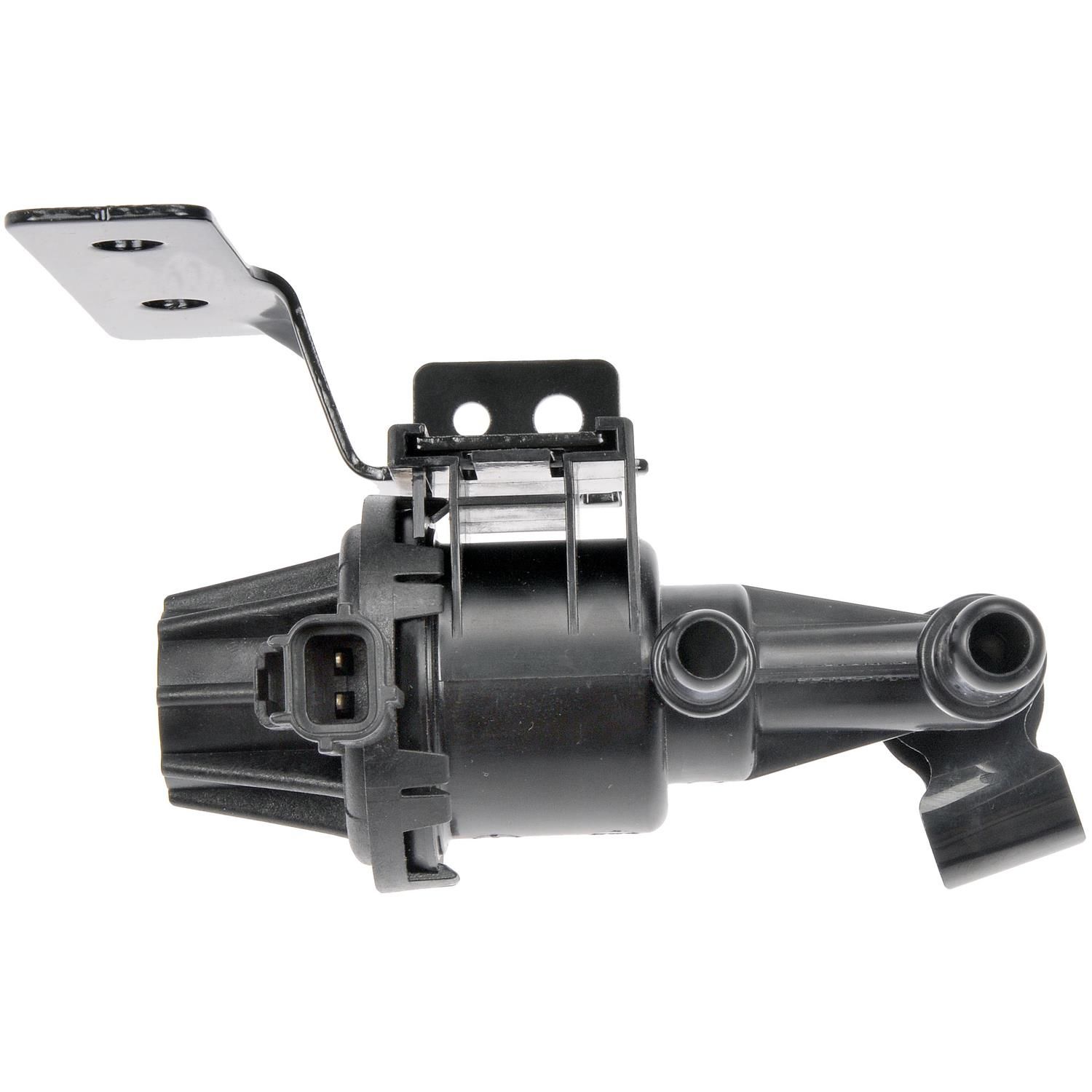
Est. part cost: $300-$500 - Faulty Purge Valve / Solenoid (VSV) ⚪ Low Probability → Shop Vapor Canister
How to confirm: The purge valve is located in the engine bay, typically under the air filter box. It is a normally closed valve. You can test it by removing it and trying to blow through it; if air passes, it is stuck open and faulty. A scan tool can also be used to command the valve to open and close to check for function. A stuck-open purge valve can sometimes cause a lean condition (P0171) in addition to the EVAP codes.
Typical fix: Replace the purge valve solenoid.
Est. part cost: $40-$90
Rare But Worth Checking
- Leaking Fuel Filler Neck: → Shop Fuel Filler Neck Rust or damage to the metal tube where the gas cap seals can prevent a good seal, even with a new cap. TSB Bulletin #T-SB-0086-16 notes that in some Toyota vehicles, the fuel filler neck may be out of position, leading to P0455 and P0456 codes.
- Faulty Vapor Pressure Sensor: It is uncommon for the sensor itself to fail, but if it does, it can incorrectly report a leak to the computer. This usually sets other specific sensor-related codes as well.
- Spiders or Insects in Vent Hoses: In some documented cases, spiders building webs inside the EVAP vent hoses can cause blockages or intermittent flow issues, leading to various EVAP codes.
Diagnosis Steps
- Read the code with an OBD-II scanner to confirm P0455 and check for any other related codes like P0441 or P0456.
- Inspect the gas cap. Remove it, check for cracks in the plastic or seal, and ensure it's a genuine Toyota part.
- Reinstall the gas cap, making sure to tighten it until it clicks several times. Clear the code with the scanner and drive for a few days (multiple drive cycles) to see if the light returns. The EVAP monitor test may not run immediately.
- If the light returns, purchase a new OEM Toyota gas cap (Part No. 77300-52030) as the next most likely and inexpensive step.
- If a new OEM cap does not fix the issue, perform a visual inspection of the EVAP system. Check the purge valve and its hoses in the engine bay for obvious cracks or damage.
- Raise the rear of the vehicle safely and inspect the charcoal canister (located near the fuel tank) and all connected hoses for cracks, damage, or loose fittings.
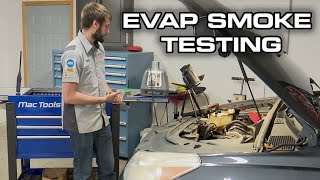
- If no visual faults are found, the most effective next step is a professional smoke test. A machine injects harmless, visible smoke into the EVAP system via the service port. Any leaks will be immediately visible as smoke escapes 🎬 See how to perform a professional EVAP smoke test. from the faulty component (hose, canister, valve, etc.).
- Based on the smoke test results, replace the faulty component.
- After the repair, clear the codes and perform a drive cycle to allow the EVAP monitor to run and confirm the fix.
Parts You'll Likely Need
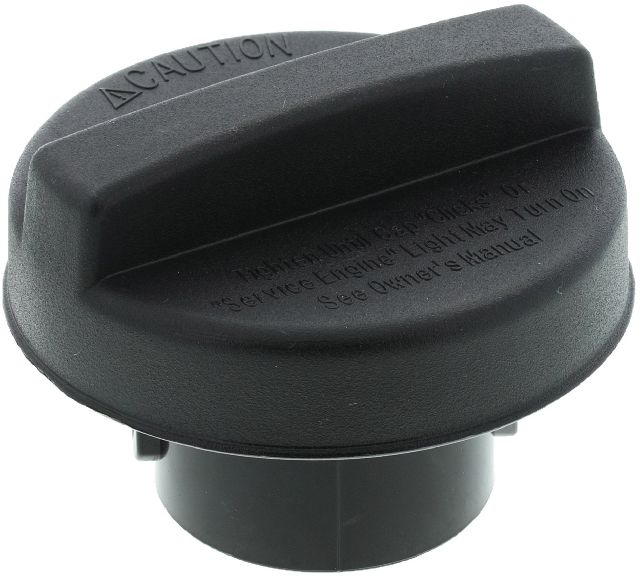
- Fuel Tank Cap
(OEM #77300-52030)— This is the most frequent cause of P0455. The original seal wears out, and aftermarket caps often don't seal correctly. The part has been superseded by 77300-06040.
Trusted brands: Toyota (Genuine)
OEM price range: $25-$40
Aftermarket price range: $10-$25 - Vapor Canister Purge Valve / Solenoid (VSV)
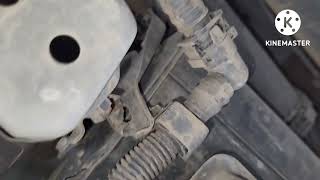
(OEM #90910-12276)— Can get stuck open, creating a constant leak path that the system detects as a large leak. It's located in the engine bay and is a relatively common failure point after the gas cap. 🎬 Watch this walkthrough on fixing P0441 and P0455 codes.
Trusted brands: Denso, Aisin, Standard Motor Products (SMP)
OEM price range: $70-$110
Aftermarket price range: $40-$90 - Charcoal Canister Assembly
(OEM #77740-47051)— The plastic housing can crack from age or impact, or the internal vent valve can fail. This is a less common but more expensive repair, typically only confirmed with a smoke test.
Trusted brands: Toyota (Genuine)
OEM price range: $400-$550
Aftermarket price range: $250-$400
Related Codes That Often Appear With This One
- P0441 — This code indicates 'Incorrect Purge Flow' and often appears with P0455 because a large leak can disrupt the system's ability to draw vapor from the canister correctly, confusing the flow sensor.
- P0456 — This code indicates a 'Very Small Leak'. It can sometimes appear alongside P0455 if the system has multiple leaks of different sizes or if the computer is having trouble differentiating the leak size.
- P0171 — System Too Lean. This can occasionally appear if the purge valve is stuck open, creating a vacuum leak that allows unmetered air into the intake manifold. NHTSA ODI #11331260 notes a case where P0171, P0441, and P0455 appeared together, with the owner reporting a lean fuel/air mixture.
Platform-Specific Known Issues
- Bladder Fuel Tank Nuance: → Shop Fuel Tank While the Gen 2 Prius has a flexible bladder-style fuel tank, this does not significantly complicate the diagnosis of a P0455 code. The EVAP system components (canister, valves, hoses) are external to the tank and operate conventionally. The primary diagnostic steps remain the same.
Mechanic-Grade Diagnostic Values
- Vapor Pressure Sensor Voltage at Atmospheric Pressure — expected: 2.9V to 3.7V with the system unsealed (e.g., gas cap off). A typical reading is ~3.33V.. Failure: Voltage significantly outside this range suggests a faulty sensor or wiring issue. The sensor operates on a 5V reference from the ECM.
- Purge Valve (VSV) Coil Resistance — expected: Approximately 30-38 Ohms at room temperature.. Failure: A much lower reading (short circuit) or infinite reading (open circuit) indicates a failed solenoid coil. Some cheap aftermarket valves measure 24-28 Ohms and can cause issues.
- Voltage at Purge Valve (VSV) Connector — expected: Battery voltage (~12V) with Key On, Engine Off.. Failure: No voltage points to a wiring issue, blown fuse, or a problem in the ECM driver circuit.
- Techstream Forced EVAP Test Vacuum Level — expected: The test should pull the system into a vacuum between -15 and -20 mmHg.. Failure: If the system cannot achieve this vacuum, a large leak is present. If the vacuum goes below -22 mmHg, the test may abort as a safety measure.
Scan Tool Commands That Help
- Toyota Techstream: Evaporative System Check (Utility) — This is a forced monitor test used to verify a repair without waiting for the long, multi-day drive cycle. It's found under 'Engine and ECT' -> 'Utility'. The test seals the system and runs the leak check, providing a pass/fail result in about 15 minutes.
- Toyota Techstream: Active Test: EVAP (Purge) VSV — This command manually cycles the purge valve in the engine bay. It's used to check for an audible 'click' confirming the solenoid is actuating. It can also be used with a smoke machine to see if the valve is sealing properly when commanded closed.
- Toyota Techstream: Active Test: Vent Valve / Canister Close Valve (CCV) — This command manually cycles the vent valve on or near the charcoal canister. It's essential for diagnosing a valve that is stuck open or closed. A technician can listen for a click or use a smoke machine to confirm it seals the system when commanded.
Wiring & Ground Locations
- Canister Pressure Sensor (at ECM) — At the Engine Control Module (ECM), which is behind the right side of the dashboard.. To test the sensor circuit directly at the computer, you can check for 4.5-5.5V between pins VCPP (C20-70) and EPPM (C20-94) with the ignition on. This verifies the ECM's reference voltage and ground for the sensor.
- General Ground Point Convention — Varies. Ground point codes start with a letter indicating location: 'E' for Engine Compartment, 'I' for Instrument Panel area, 'B' for Body.. A corroded or loose ground for any EVAP system component (valves, sensors) can cause erratic behavior and trigger false codes. Knowing the location convention helps locate the correct ground point from a wiring diagram.
Real Owner Repair Stories
- Atomic Auto Repair Blog (Gen 3 Prius (similar EVAP principle)) — P0441 and P0455 codes returned after replacing fuel tank assembly.
❌ Tried (didn't work) Replacing the fuel tank assembly., Performing a smoke test with the system static (no leaks found).
✅ What actually fixed it The technician used Techstream to activate the vent valve while listening with a stethoscope and heard a 'weak' click. A smoke test performed *while the valve was activated* revealed it was leaking internally past the leak detection pump. Replacing the faulty canister assembly (which included the valve) resolved the codes. - CARE YOUR CARS YouTube Channel (2005 Toyota Prius) — Check Engine Light with codes P0441 and P0455.
❌ Tried (didn't work) The owner had installed an aftermarket gas cap.
✅ What actually fixed it The video demonstrates that the aftermarket gas cap, despite clicking, did not seal correctly. Replacing it with a genuine Toyota OEM gas cap immediately resolved the issue and allowed the codes to be cleared. - PriusChat Forum User (2008 Toyota Prius, 70k miles) — Recurring Check Engine Light, fuel smell outside the car.
❌ Tried (didn't work) Replacing the gas cap.
✅ What actually fixed it The dealer diagnosed a bad charcoal canister. The user noted that this failure is commonly caused by habitually 'topping off' the fuel tank after the pump's first click, which forces liquid gasoline into the vapor-only canister and ruins it. The fix was to replace the canister and stop overfilling the tank. - NHTSA ODI #10525700 — An owner reported a check engine light with codes P0441 and P0455. The dealership resolved the issue by replacing the fuel tank cap assembly, the fuel pipe sub-assembly, and the vacuum valve assembly.
"I Checked Everything" — The Actual Cause
- A common scenario is a smoke test showing no leaks, yet the P0455 code persists. This often points to a component that fails functionally rather than physically leaking. A prime example is a weak or sticking vent valve on the charcoal canister. It may hold pressure during a static test but fail to seal properly when activated by the ECM during the self-test cycle. Diagnosis requires using a bidirectional scanner like Techstream to command the valve closed while smoke testing to see if it leaks under actuation.
- If a smoke test is clean, the Fuel Tank Pressure (FTP) sensor itself could be faulty. It might be sending incorrect voltage readings to the ECM, falsely indicating a leak when the system is perfectly sealed. This is diagnosed by checking the sensor's voltage against known specifications at atmospheric pressure and under vacuum.
OEM Part Supersession History
77740-47050→77740-47050— No supersession found. This part number has remained consistent for the entire 2004-2009 model range.77300-52030→77300-06040— Part consolidation and design update by Toyota.
Heads up: The new part number is the correct service replacement and is fully compatible.
Model Year Variations Within This Range
- 2004-2005 vs. 2006-2009: The fuel tank design and EVAP system components/wiring differ between these two sub-generations. A 2006-2009 system includes a leak detection pump as part of the canister assembly. Swapping a fuel tank or ECU between these ranges will result in persistent EVAP diagnostic trouble codes due to the incompatibility.
Diagnostic Flowchart
Other Known Issues on This Vehicle
Issues unrelated to this code that are worth knowing about as an owner of this generation:
- Combination Meter Failure 🟠 Medium — Common at higher mileage (>100k miles) or in cold weather. The digital dashboard can go completely dark, though the car remains drivable. (Ref: Toyota issued TSB T-SB-0172-09 and a subsequent warranty enhancement program (9 years/unlimited miles) for this issue.)
- Inverter Coolant Pump Failure 🔴 High — A very common failure for this generation, which can cause the hybrid system to shut down. Triggers code P0A93. (Ref: Subject to multiple recalls and service campaigns (e.g., Safety Recall C0U) for replacement.)
- Excessive Oil Consumption 🟠 Medium — Many 1NZ-FXE engines begin to consume significant oil (e.g., 1 quart per 1000-2000 miles) after 100,000 miles, often attributed to stuck/clogged piston oil control rings. (Ref: No official recall, but widely discussed in owner forums. Some owners report success with 'piston soak' procedures using solvents.)
- HID Headlight Flickering/Failure 🟡 Low — On models equipped with HID headlights, the bulbs are known to flicker or fail intermittently as they near the end of their life, which can be mistaken for a more serious electrical issue. (Ref: Toyota issued TSBs (e.g., T-SB-0030-08, T-SB-0374-09) and a Customer Support Program to address the issue and reduce the cost of replacement bulbs.)
- ABS Actuator/Pump Failure 🔴 High — The ABS pump/actuator assembly can fail at higher mileage, leading to loud, frequent pump operation, warning lights, and a potential loss of hydraulic braking assist. It is an expensive repair.
Used vs. New Parts: Buying Guide for This Vehicle
When a used part is the smart pick: For high-cost items like the charcoal canister assembly, a used part from a low-mileage donor car can offer significant savings. However, it is a gamble, as the part could be damaged or saturated with fuel. It is a reasonable choice if the seller guarantees it came from a car without EVAP codes.
Donor-vehicle mileage cap: roughly under 80000 miles for the part to have meaningful remaining life.
What to inspect on the donor part:
- Ask the seller if the donor vehicle had any check engine lights or EVAP-related codes.
- Visually inspect the canister for any cracks, especially around the hose ports and mounting tabs.
- Ensure all electrical connectors and hose nipples are intact and not broken.
- Avoid parts from vehicles that show signs of significant rear-end collision damage.
OEM-only on this vehicle (don't cheap out):
- Gas Cap: This is the number one part where aftermarket versions are known to cause P0455. The cost savings are minimal, and the diagnostic headache is significant. Always buy a genuine Toyota gas cap.
Aftermarket brands forum-validated for this vehicle:
- Standard Motor Products (SMP): Often cited as a reliable aftermarket option for EVAP components like purge valves and canisters.
- Denso / Aisin: These are original equipment manufacturers for Toyota, so their parts are equivalent to genuine Toyota parts but may be available for less cost.
Brands owners have reported issues with on this vehicle:
- Generic, unbranded, or 'white-box' gas caps and solenoids from online marketplaces are frequently reported to have incorrect specifications (e.g., resistance) or poor sealing ability, causing codes to return.
Real Owner Stories
Aggregated from forums and TSBs cited above. Mileages and costs reflect what owners reported in those sources.
2006 Toyota Prius
Symptoms: Had P0455 when the gas cap was lost; after replacing it, the code returned along with P0441.
What fixed it: The owner initially replaced a lost gas cap, but the return of codes suggested a more serious issue requiring further EVAP investigation.
Source hint: reddit r/prius
2008 Toyota Prius
Symptoms: Received error codes P0441 and P0455 simultaneously.
What fixed it: Senior forum members advised ensuring a genuine Toyota gas cap was used and tightened properly as the first step.
Source hint: PriusChat.com Thread 'I just got a Prius, and now 2 error codes P0441 P0455...'
2004-2009 Toyota Prius
Symptoms: EVAP codes triggered after refueling habits.
What fixed it: Replacement of the charcoal canister was required because it became saturated with liquid fuel from topping off the tank.
Source hint: PriusChat.com
Related OBD-II Codes
Frequently Asked Questions
Can I use an aftermarket gas cap from a local auto parts store to fix P0455 on my Gen 2 Prius?
I have a habit of 'topping off' my gas tank; could this be causing my P0455 code?
Does the bladder-style fuel tank in the 2004-2009 Prius make P0455 harder to diagnose?
Is there a TSB for the dashboard going dark while I'm dealing with these EVAP codes?
Could a faulty purge valve cause other engine codes besides P0455?
Helpful Videos

Used OEM Parts in Stock

New Aftermarket Parts Available


The information in this article is provided for general reference and educational purposes only. Vehicle specifications, procedures, and part compatibility can vary by production date, trim level, and region. Always consult your vehicle's factory service manual and verify part numbers before purchasing or performing repairs. Safety-critical components such as airbags, seat belts, and braking systems should be installed by a qualified professional.
- Toyota Prius:
- 🧭 Diagnostic Flowchart
- 🎬 Helpful Videos
- 🛍️ Shop This Part
- What's Unique About the 2004-2009 Toyota Prius
- Symptoms You May Notice
- Most Likely Causes
- Rare But Worth Checking
- Diagnosis Steps
- Parts You'll Likely Need
- Related Codes That Often Appear With This One
- Platform-Specific Known Issues
- Mechanic-Grade Diagnostic Values
- Scan Tool Commands That Help
- Wiring & Ground Locations
- Real Owner Repair Stories
- "I Checked Everything" — The Actual Cause
- OEM Part Supersession History
- Model Year Variations Within This Range
- Other Known Issues on This Vehicle
- Used vs. New Parts: Buying Guide for This Vehicle
- Real Owner Stories
- 2006 Toyota Prius
- 2008 Toyota Prius
- 2004-2009 Toyota Prius
- Related OBD-II Codes
- Frequently Asked Questions
- 🎟️ Get 5% Off