

P0455 on 2013-2018 Toyota RAV4: EVAP Large Leak Causes and Fixes
For a 2013-2018 Toyota RAV4, code P0455 almost always means the gas cap is loose, worn, or an incorrect aftermarket part. Before doing anything else, tighten the cap and inspect its seal. A new OEM gas cap is the cheapest and most likely fix, costing around $25-$40. If a new OEM cap doesn't resolve the issue, the next most common culprits are the purge valve (VSV) in the engine bay or, less frequently, a cracked charcoal canister near the fuel tank.
- P0455 indicates a large leak in the EVAP system, but it is not a mechanically dangerous issue and you can continue to drive the vehicle.
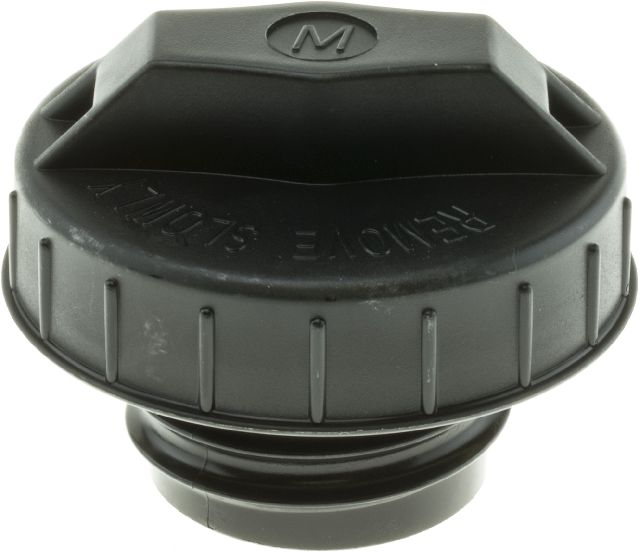
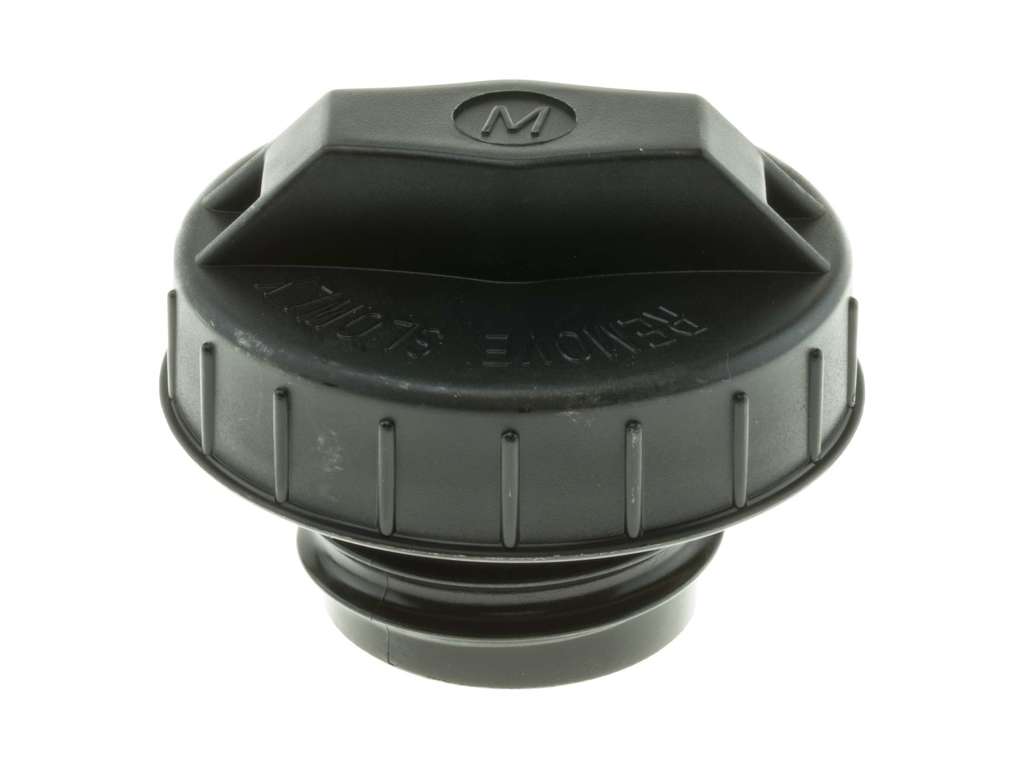
- Always check the gas cap first. Ensure it is tight and the seal is not cracked. Replacing it with a genuine Toyota cap (part #77300-06040) is the most common and cheapest fix.
- Do not use cheap aftermarket gas caps; they are a frequent cause of this code persisting after a 'fix'.
- If a new OEM gas cap does not resolve the issue, the next most likely causes are the purge valve in the engine bay or a cracked hose/canister at the rear.
- A professional smoke test is the fastest and most accurate way to find the leak if it is not the gas cap.
What's Unique About the 2013-2018 Toyota RAV4
The fourth-generation RAV4 (XA40) is generally reliable, and like most Toyotas, the P0455 code is very frequently traced back to the simplest cause: the gas cap. While other components can fail, owner and technician reports for this specific generation consistently point to the gas cap as the primary culprit, often after a non-OEM replacement was used. A diagnostic video specifically for the 2013-2018 RAV4 confirmed a faulty gas cap was the cause of both P0455 and P0441 codes after a smoke test revealed the leak. 🎬 Watch: Diagnostic video for P0455 and P0441 on this RAV4 A unique, though less common, issue reported by some owners involves spiders building webs inside the charcoal canister's vent hose, which can cause blockages and trigger EVAP codes.
Symptoms You May Notice
- Check Engine Light is on.
- A faint smell of gasoline, particularly near the rear of the vehicle or gas cap.
- In rare cases, a rough idle or difficulty starting immediately after refueling if the purge valve is stuck open.
- Replacing the fuel tank pressure sensor. This sensor rarely fails in a way that causes a P0455 code without also setting a sensor-specific code (like P0452).
- Using a cheap, aftermarket gas cap. Many owners report that the P0455 code persists until a genuine Toyota OEM cap is installed, as aftermarket versions often fail to seal correctly.
Most Likely Causes
- Loose, Incorrect, or Worn Gas Cap 🔴 High Probability → Shop Fuel Tank Cap This is the most common cause for P0455 on virtually all vehicles, including the RAV4. The rubber seal on the cap degrades over time, and many aftermarket caps do not seal to Toyota's specific pressure requirements, leading to persistent codes. Forum users frequently report that only a genuine Toyota cap will solve the problem after an aftermarket one failed. Manufacturer Bulletin #T-SB-0086-16 notes that some vehicles may exhibit a "No Click" or "No Spring Return" condition from the fuel cap even when it appears seated.
How to confirm: Ensure the cap is tightened until it clicks several times. Remove it and inspect the rubber O-ring for cracks, dirt, or signs of being flattened or worn. A diagnostic smoke test will show smoke leaking from the cap area if it is faulty. The easiest confirmation is to replace it with a new, genuine Toyota part.
Typical fix: Replace the gas cap with a new OEM part.
Est. part cost: $25-$40 - Faulty Vapor Canister Purge Valve (VSV) 🟡 Medium Probability → Shop Vapor Canister The purge valve, or Vapor Switching Valve (VSV) in Toyota terminology, can get stuck open, creating a constant vacuum leak that the system interprets as a large leak. This is a common failure point after the gas cap has been ruled out. NHTSA ODI #11415574 describes a case where an owner replaced the vapor canister purge solenoid and leak detection pump, yet the P0455 and P0441 codes persisted.
How to confirm: The valve is located in the engine bay and is relatively easy to access. 🎬 Watch: How to replace the purge valve A stuck-open valve may cause a rough idle right after refueling. With the engine off, you can remove the valve and try to blow through it; if air passes, it is stuck open and faulty. A smoke test will reveal smoke passing through the valve into the intake when it should be closed.
Typical fix: Replace the purge valve.
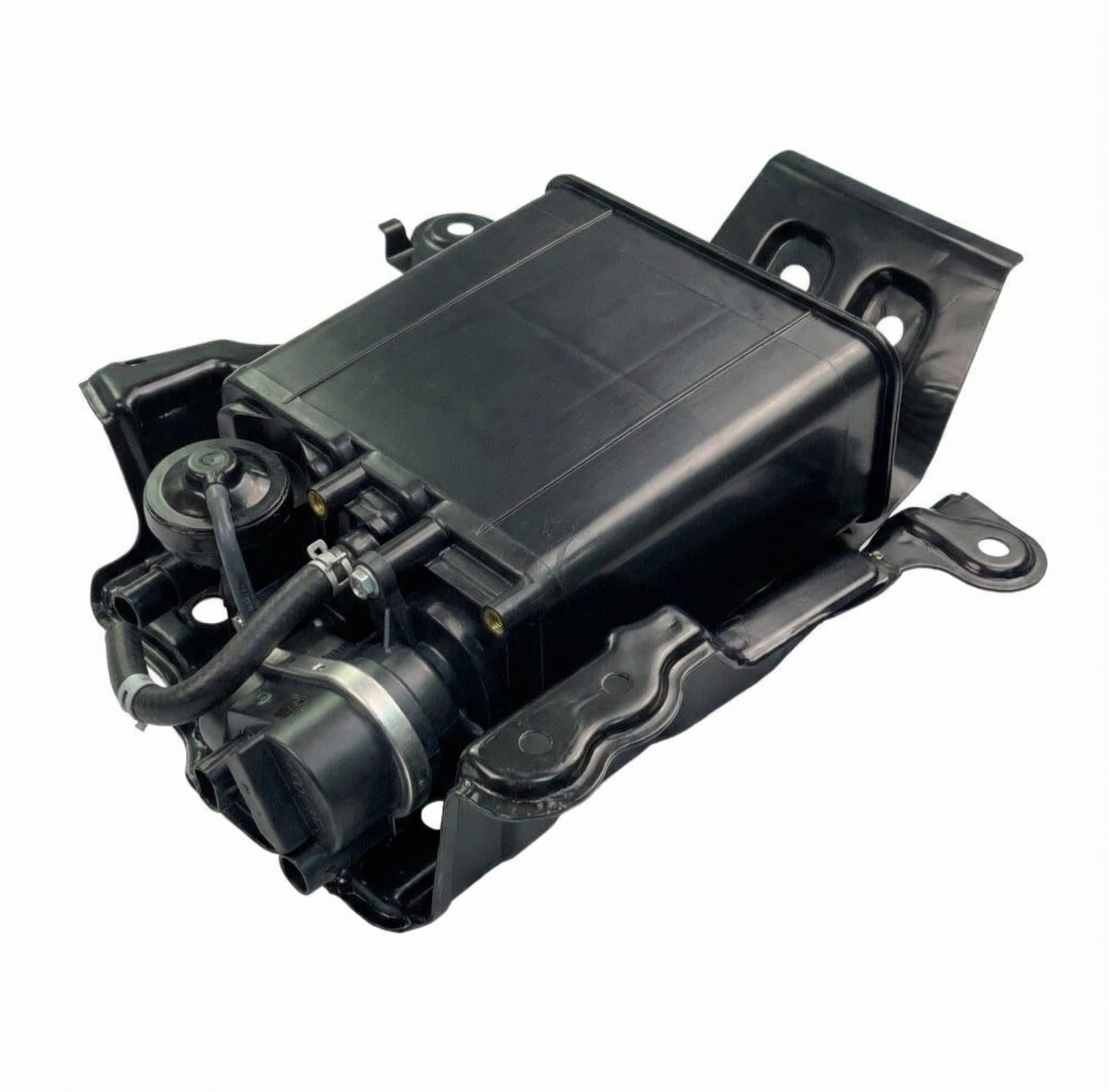
Est. part cost: $40-$90 - Cracked or Damaged Charcoal Canister ⚪ Low Probability → Shop Vapor Canister The canister is a plastic box located near the fuel tank. It can be damaged by road debris or develop cracks due to age, leading to a large leak. In some cases, spiders have been known to build nests in the vent lines, causing a blockage that can also trigger EVAP codes.
How to confirm: A visual inspection may reveal obvious cracks or damage. A smoke test is the most definitive method, as smoke will pour out of any cracks in the canister housing or vent lines.
Typical fix: Replace the charcoal canister assembly.
Est. part cost: $380-$600 - Cracked or Disconnected EVAP Hoses ⚪ Low Probability Rubber hoses can become brittle, crack, or disconnect over time, especially those connected to the purge valve in the engine bay or around the charcoal canister at the rear of the vehicle.
How to confirm: Visually inspect all accessible EVAP hoses for obvious cracks, loose connections, or deterioration. A smoke test will quickly pinpoint the location of a leaking hose.
Typical fix: Replace the damaged section of hose.
Est. part cost: $10-$50
Rare But Worth Checking
- Rusted Fuel Filler Neck: → Shop Fuel Filler Neck While more common on the previous generation RAV4 (2006-2012) in salt-belt regions, rust can still cause perforations in the filler neck on newer models, creating a large leak. Bulletin #T-SB-0086-16 notes that in some vehicles, the fuel filler neck may be out of position, leading to a failure to seal properly.
- Rodent Damage: Mice and other rodents can chew on the plastic and rubber EVAP lines, creating leaks. One owner of a 2021 RAV4 reported this issue leading to P0455 and P0441 codes, resulting in a costly repair quote because the damaged line was part of a larger assembly.
Diagnosis Steps
- Read the code with an OBD-II scanner to confirm P0455 is present. Note any other codes, such as P0441.
- Inspect the gas cap. Ensure it is tight and clicks when secured. Remove the cap and check the rubber seal for any cracks, dirt, or damage.
- If the gas cap is suspect, replace it with a new OEM Toyota cap. Clear the codes and drive for a few days to see if the light returns. The EVAP monitor may take several drive cycles to run its test.
- If the code returns, perform a visual inspection of the EVAP system. Check the purge valve and its connected hoses in the engine bay for cracks or loose fittings.
- Visually inspect the charcoal canister and all associated hoses under the rear of the vehicle for any obvious cracks or damage.
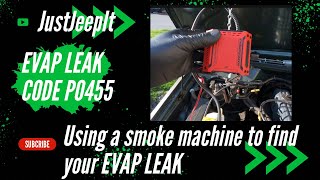
- If no obvious issues are found, the most effective next step is a professional smoke test. This involves injecting vaporous smoke into the EVAP system's service port. The smoke will escape from the location of the leak, making it easy to identify. 🎬 See how to find an EVAP leak with a smoke tester
- Based on the smoke test results, replace the identified faulty component (e.g., purge valve, canister, hose, or filler neck).
- After the repair, clear the trouble codes and perform a drive cycle to ensure the fix was successful and the Check Engine Light remains off.
Parts You'll Likely Need
- Fuel Tank Cap
(OEM #77300-06040)— This is the most frequent cause of P0455. The seal wears out over time, and using a genuine OEM part is highly recommended to ensure a proper seal. This part number supersedes previous versions 77300-52030 and 77300-52040.
Trusted brands: Toyota (OEM)
OEM price range: $25-$40
Aftermarket price range: $10-$25 - Vapor Canister Purge Valve
(OEM #90910-TC001)— This valve can get stuck open, causing a large leak. It is a common failure point after the gas cap and is located in the engine bay for relatively easy access. This part number supersedes the original part number 90910-12276.
Trusted brands: Denso, Aisin, Toyota (OEM)
OEM price range: $60-$90
Aftermarket price range: $30-$60 - Charcoal Canister Assembly
(OEM #77740-0R020)— The plastic housing of the canister can crack from age or impact, or the integrated vent valve can fail, causing a large leak that requires replacement of the entire assembly. This part fits 2013-2018 RAV4 models.
Trusted brands: Toyota (OEM)
OEM price range: $380-$600
Aftermarket price range: $250-$450
Related Codes That Often Appear With This One
- P0441 — Stands for 'Incorrect Purge Flow.' This code often appears with P0455 when the purge valve is stuck open, as this condition causes both a large leak and incorrect flow. NHTSA ODI #11331260 notes a Toyota owner experiencing P0441 and P0455 simultaneously, alongside symptoms of poor engine performance.
- P0456 — Stands for 'EVAP System Leak Detected (Small Leak).' A small leak from a deteriorating gas cap seal or a tiny crack in a hose can eventually worsen and become a large leak, triggering P0455.
Technical Service Bulletins (TSBs) & Recalls
- S-SB-0030-09 Rev1: While for an older Scion tC, this TSB addresses P0455 combined with P0441/P0456 and details a diagnostic procedure starting with the gas cap, which is relevant to the general Toyota diagnostic strategy.
- T-SB-0117-17: This TSB is for some 2017-2018 Corolla models but is relevant as it addresses P0455 caused by spiders building webs in the EVAP canister vent hose. This is a known, albeit strange, issue across several Toyota models and could potentially affect the RAV4.
- Bulletin #T-SB-0086-16: This bulletin addresses instances where the fuel cap may fail to click or spring back when seated, potentially leading to P0455 and P0456 codes. It also notes that the fuel filler neck may be out of position in some vehicles.
Platform-Specific Known Issues
- A Reddit user with a 2012 RAV4 (Gen 3, but with the same 2.5L engine and similar EVAP components) documented their troubleshooting for P0455 and P0441. They tried a new aftermarket gas cap which did not solve the issue, then checked the purge valve hoses and found small cracks. Their experience highlights the importance of using a genuine Toyota gas cap and inspecting hoses carefully.
Mechanic-Grade Diagnostic Values
- Purge Valve (VSV) Solenoid Resistance — expected: 15 to 30 Ohms. Failure: A reading outside this range (e.g., open circuit or short) indicates a faulty solenoid coil.
- Fuel Tank Pressure Sensor Voltage (via Scan Tool) — expected: Approximately 2.5V - 3.5V with the gas cap off (atmospheric pressure). Voltage should change when pressure or vacuum is applied.. Failure: A fixed voltage that doesn't change, or a voltage stuck at 0V or 5V, suggests a sensor or wiring fault. However, this usually sets a separate sensor-specific code.
Hidden / Shadow Codes Worth Checking
- Mode $06, Test ID $81: This is not a separate code but a monitor within the OBD-II system for EVAP leak checks (0.040" leak). A 'FAIL' result for this Test ID confirms the condition that sets P0455. Advanced scanners can view this data. (see via An OBD-II scan tool that supports Mode $06 data.)
Scan Tool Commands That Help
- Toyota Techstream: Active Test: EVAP System Check (Manual or Automatic Mode) — This is the dealer-level, comprehensive function to force the vehicle's EVAP monitor to run. It automatically sequences the purge valve, vent valve, and pressure sensor to test for leaks, confirming a repair without waiting for multiple drive cycles.
- Toyota Techstream: Active Test: Control the Purge VSV — This allows a technician to manually command the purge valve ON/OFF. It's used during a smoke test to isolate the valve. With the valve commanded closed (OFF), no smoke should pass through it.
- Toyota Techstream: Active Test: Activate the VSV for Vent Valve — This command closes the normally-open canister vent valve to seal the system for a smoke test. If smoke is injected and escapes from the vent filter/outlet with this active, the vent valve is faulty and not sealing.
Real Owner Repair Stories
- Reddit user on r/Rav4 (2012 RAV4 2.5L (Gen 3, but highly relevant components)) — Check Engine Light, 4WD, and Trac lights on with codes P0455 and P0441.
❌ Tried (didn't work) Applying vaseline to the original gas cap O-ring., Replacing the gas cap with a new, non-Toyota OEM part from an auto parts store.
✅ What actually fixed it The user's diagnosis was ongoing, but their experience strongly reinforces the common misdiagnosis of using an aftermarket gas cap, which failed to resolve the code. The next steps involved inspecting the charcoal canister's purge valve, highlighting the diagnostic path after a gas cap fails to be the fix. - YouTube - 'Car Nut' (2016 Toyota RAV4) — Check Engine Light with multiple EVAP codes: P2401, P2402, P043F, P043E.
❌ Tried (didn't work) The video directly diagnoses the issue without showing failed attempts.
✅ What actually fixed it The entire charcoal canister assembly (Part No. 77740-0R020) was replaced. The video explains that when the integrated leak detection pump or sensors on the canister fail, they often trigger a group of codes, and the entire assembly must be replaced as a unit. This is a common failure mode on this platform. - NHTSA ODI #10525700 — An owner reported a check engine light with codes P0441 and P0455. The dealership repair involved replacing the fuel tank cap assembly, the fuel pipe sub-assembly, and the vacuum valve assembly to resolve the issue.
"I Checked Everything" — The Actual Cause
- In some cases, a smoke test may not reveal a leak if the failure is intermittent or related to a component that only fails under specific conditions (e.g., a vent valve that doesn't seal properly only when commanded by the ECU). A technician reported a case on a 2017 RAV4 where the vent solenoid on the charcoal canister was leaking intermittently. Using a scan tool to command the vent valve closed (Active Test) while smoke testing revealed the leak, whereas a simple smoke test might have missed it.
OEM Part Supersession History
77740-42080, 77740-0R010, 77740-0R011→77740-0R020— Component revisions and improvements to the canister assembly, including the integrated leak detection pump and valves.
Heads up: While earlier part numbers may physically fit, it is critical to use the latest superseded part number (77740-0R020) for a 2013-2018 RAV4 to ensure compatibility with the vehicle's software and electrical connections.
Model Year Variations Within This Range
- 2013-2018: The EVAP system on the 4th generation RAV4 did not use a traditional leak detection pump (LDP) like the previous generation. Instead, it uses an engine vacuum-based system with a canister assembly that includes an integrated vent valve and pressure sensor. This means diagnostics differ from the older XA30 models, which had a separate LDP.
Diagnostic Flowchart
Other Known Issues on This Vehicle
Issues unrelated to this code that are worth knowing about as an owner of this generation:
- Torque Converter Shudder 🟠 Medium — Common on 2013-2015 models. Occurs intermittently between 25-50 mph, feeling like driving over rumble strips. (Ref: T-SB-0023-15 (later revised and covered under warranty enhancement ZH1, which has since expired).)
- VVT-i Cam Gear "Cold Start Rattle" 🟡 Low — Can occur on 2AR-FE engines, typically near 100,000 miles. A brief rattle/grind for 1-2 seconds on a cold start. Toyota often considers this non-critical if it's brief. (Ref: T-SB-0041-13 (for related engines))
- Battery Hold-Down Short Circuit Risk 🔴 High — Affects all 2013-2018 models. Certain replacement 12V batteries have incorrect top dimensions, allowing them to shift and short against the hold-down bracket. (Ref: Recall 23TA10 / NHTSA 23V-700)
- Noisy Rear Brakes 🟡 Low — Some 2013-2015 models may exhibit a grinding noise from rear brakes at low speeds. (Ref: T-SB-0037-15)
- AWD Coupling Noise/Vibration 🟡 Low — Some AWD models may experience noise or abnormal operation from the rear differential coupling. (Ref: T-TT-0659-21 Rev)
Used vs. New Parts: Buying Guide for This Vehicle
When a used part is the smart pick: A used charcoal canister assembly from a low-mileage, non-salt-belt donor vehicle can be a cost-effective option, as a new OEM unit is expensive. Hoses and the fuel filler neck are also good candidates for used parts if they are in excellent condition.
Donor-vehicle mileage cap: roughly under 60000 miles for the part to have meaningful remaining life.
What to inspect on the donor part:
- For charcoal canisters, check the plastic housing for any signs of cracking, stress marks (white lines), or heat damage.
- Inspect all hose connection nipples to ensure they are not brittle or broken.
- For fuel filler necks, check thoroughly for any rust, especially around welds and mounting brackets.
- Verify the donor vehicle is from a dry, southern climate to minimize the risk of rust and plastic degradation.
OEM-only on this vehicle (don't cheap out):
- Fuel Tank Cap: Aftermarket caps are a notorious cause of persistent P0455 codes on Toyotas due to improper sealing pressure. Always use a genuine Toyota OEM cap (77300-06040).
Aftermarket brands forum-validated for this vehicle:
- Denso or Aisin for the Purge Valve (VSV), as they are the original equipment manufacturers for Toyota.
Brands owners have reported issues with on this vehicle:
- Generic, unbranded, or 'white-box' gas caps and electrical sensors. Stick to OEM or OEM-supplier brands for EVAP components to avoid compatibility issues.
Real Owner Stories
Aggregated from forums and TSBs cited above. Mileages and costs reflect what owners reported in those sources.
2012 Toyota RAV4 2.5L
Symptoms: Check engine light on with codes P0455 and P0441. The owner attempted to fix it with an aftermarket gas cap, but the light remained.
What fixed it: After the aftermarket cap failed, the owner inspected the purge valve hoses and found small cracks. Replacing the damaged hoses resolved the issue.
Source hint: Reddit - r/rav4club: EVAP codes P0455 / P0441
NHTSA ODI #11415574
Symptoms: The vehicle displayed multiple codes including P0441, P0455, P1604, P1605, and P0171.
What fixed it: The owner replaced the leak detection pump and the vapor canister purge solenoid, though they noted these repairs did not initially resolve the issue, suggesting deeper diagnostic needs for these specific code clusters.
Related OBD-II Codes
Frequently Asked Questions
I bought an aftermarket gas cap for my RAV4 but the P0455 code is still there. Why?
Can spiders really cause a P0455 large leak code on a 2017-2018 RAV4?
Why does my RAV4 struggle to start or idle roughly only after I fill up the gas tank?
Is there a TSB for EVAP codes like P0455 that applies to the 2.5L engine in my RAV4?
Where is the charcoal canister located on the 2013-2018 RAV4?
How can I tell if my RAV4's purge valve (VSV) is bad without a scanner?
Helpful Videos

Used OEM Parts in Stock
New Aftermarket Parts Available


The information in this article is provided for general reference and educational purposes only. Vehicle specifications, procedures, and part compatibility can vary by production date, trim level, and region. Always consult your vehicle's factory service manual and verify part numbers before purchasing or performing repairs. Safety-critical components such as airbags, seat belts, and braking systems should be installed by a qualified professional.
- Toyota RAV4:
- 🧭 Diagnostic Flowchart
- 🎬 Helpful Videos
- 🛍️ Shop This Part
- What's Unique About the 2013-2018 Toyota RAV4
- Symptoms You May Notice
- Most Likely Causes
- Rare But Worth Checking
- Diagnosis Steps
- Parts You'll Likely Need
- Related Codes That Often Appear With This One
- Technical Service Bulletins (TSBs) & Recalls
- Platform-Specific Known Issues
- Mechanic-Grade Diagnostic Values
- Hidden / Shadow Codes Worth Checking
- Scan Tool Commands That Help
- Real Owner Repair Stories
- "I Checked Everything" — The Actual Cause
- OEM Part Supersession History
- Model Year Variations Within This Range
- Other Known Issues on This Vehicle
- Used vs. New Parts: Buying Guide for This Vehicle
- Real Owner Stories
- 2012 Toyota RAV4 2.5L
- NHTSA ODI #11415574
- Related OBD-II Codes
- Frequently Asked Questions
- 🎟️ Get 5% Off