

P0455 on 2004-2012 Volvo S40: EVAP Gross Leak Causes and Fixes
The P0455 code on a 2004-2012 Volvo S40 indicates a large leak in the evaporative emissions system. The most common and easiest fix is to check and tighten or replace the gas cap. If that doesn't solve it, the next likely culprits are a faulty EVAP purge valve in the engine bay or the Leak Detection Pump (LDP) located near the rear wheel.
- Always check the gas cap first for code P0455. It's the most common and cheapest fix.
- If the gas cap isn't the issue, the EVAP purge valve is the next most likely culprit and is relatively easy to test and replace.
- A smoke test is the most reliable way to find the leak if it's not the gas cap or purge valve.
- This code will not stop you from driving but will cause an automatic failure on an emissions test.
What's Unique About the 2004-2012 Volvo S40
The 2004-2012 Volvo S40 (P1 platform) uses a fairly standard EVAP system, but owner experiences suggest that beyond the universal gas cap issue, the purge valve and, notably, the Leak Detection Pump (LDP) are common failure points. Unlike some vehicles where specific hoses are notorious for cracking, on this S40, the electronic components themselves are more frequently discussed as the root cause. The LDP, located behind the passenger-side rear wheel well liner, is a particularly common culprit that often gets replaced after initial checks for the gas cap and purge valve prove fruitless. Diagnosis almost always requires a smoke test to pinpoint the exact source of the leak if it's not one of these common components. Volvo also uses its own diagnostic trouble codes, and a P0455 may be accompanied by a Volvo-specific code like ECM-433B (Leak diagnostic unit, pump. Signal missing), which points directly to a problem with the LDP circuit.
Generation note: The 2004 model year was a transition. This guide primarily covers the second-generation Volvo S40, built on the P1 platform, which was sold from mid-2004 through 2012. First-generation models sold in early 2004 have different EVAP system components and layouts.
Symptoms You May Notice
- Check Engine Light is on
- A noticeable smell of fuel, especially around the rear of the car or near the gas cap.
- No noticeable impact on drivability or engine performance in most cases.
- Gas pump nozzle clicks off repeatedly when refueling (can be a symptom of a blocked canister or vent valve).
- Replacing the oxygen sensors. O2 sensors are not related to the EVAP system.
- Replacing the fuel injectors. While fuel-related, injectors will not cause an EVAP leak code.
Most Likely Causes
- Loose, Damaged, or Incorrect Gas Cap 🔴 High Probability → Shop Fuel Tank Cap This is the most common cause for a P0455 code on any vehicle, as the cap seal can degrade over time or the cap may not have been tightened properly after refueling.
How to confirm: Ensure the gas cap is tightened until it clicks at least once. Inspect the rubber seal on the cap for cracks, stiffness, or damage. A worn or corroded fuel filler neck can also prevent a good seal.
Typical fix: Tighten or replace the gas cap.
Est. part cost: $15-$40 - Faulty EVAP Leak Detection Pump (LDP) 🔴 High Probability → Shop Vapor Canister This component, also called the EVAP Leak Detection Assembly, is responsible for pressurizing the system for tests. It is a very common failure point on the P1 platform, often failing internally and creating a leak condition. Many owners report this as the final fix after replacing other parts. A related Volvo-specific code is ECM-433B.
How to confirm: The LDP is located behind the rear passenger-side wheel well liner. A smoke test is the most effective way to confirm a leak from the pump itself. A scan tool may also point to a faulty pump circuit. A Volvo-specific TSB (RTJ-16629) was issued for improving leakage diagnostics which may be relevant. Using a Volvo-specific scanner like VIDA, you can run a 'Quick test of fuel tank' to activate the LDP and check system sealing.
Typical fix: Replace the Leak Detection Pump.
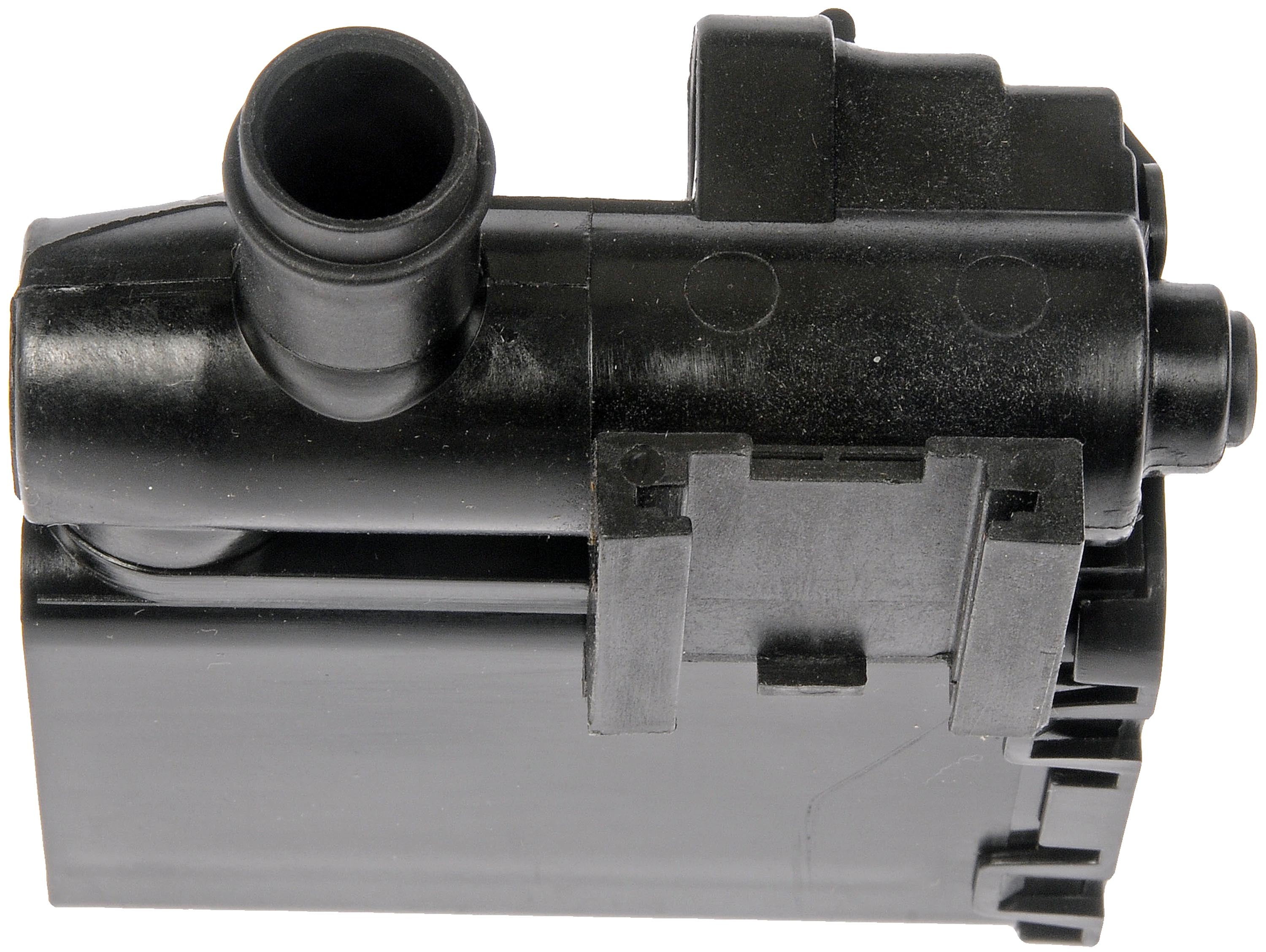
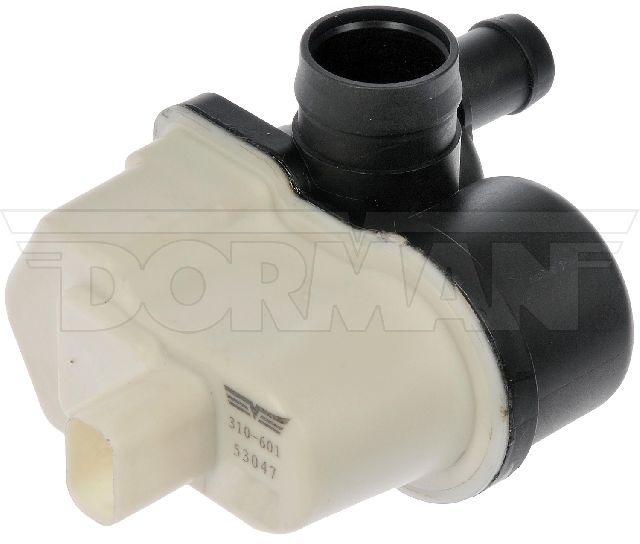
Est. part cost: $90-$250 - Faulty EVAP Purge Valve 🟡 Medium Probability → Shop Vapor Canister The purge valve (solenoid) can get stuck open, creating a constant vacuum leak within the EVAP system. This is a frequently reported failure point on this platform.
How to confirm: The purge valve is normally closed. It is located in the engine bay near the intake manifold. Disconnect the valve and attempt to blow through it. If air passes through, it is stuck open and needs to be replaced. With the engine running, you can also disconnect the hose from the valve leading to the canister and check for vacuum; there should be none at idle with the valve de-energized.
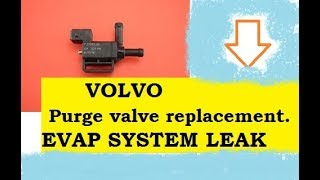
Typical fix: Replace the EVAP purge valve. 🎬 Watch: How to diagnose and replace the purge solenoid valve.
Est. part cost: $50-$100 - Faulty EVAP Vent Valve / Solenoid ⚪ Low Probability → Shop Vapor Canister
How to confirm: The vent valve is normally open and closes to seal the system for testing. It can get stuck or fail to close. It is usually located on or near the charcoal canister by the fuel tank. A smoke test is the most effective way to confirm a leak at the vent valve, as smoke will exit if it fails to close when commanded by a scan tool.
Typical fix: Replace the EVAP vent valve/solenoid.
Est. part cost: $60-$120 - Cracked or Disconnected EVAP Hoses ⚪ Low Probability Over time, the plastic and rubber hoses in the EVAP system can become brittle and crack, especially those near the engine or exposed under the car.
How to confirm: Perform a thorough visual inspection of all accessible EVAP lines from the engine bay to the fuel tank. A smoke test is the definitive method to find hairline cracks or hidden leaks.
Typical fix: Replace the cracked section of hose.
Est. part cost: $10-$50
Rare But Worth Checking
- Cracked Charcoal Canister: → Shop Vapor Canister The plastic housing of the charcoal canister can develop cracks from road debris or age, creating a large leak. This is usually found during a smoke test. Replacement can be difficult as it is located above the rear subframe.
- Leaking Fuel Tank Filler Neck: → Shop Fuel Tank Corrosion or damage to the metal filler neck where the gas cap seals can prevent a proper seal, even with a new cap. A visual inspection for rust or pitting is necessary.
- Cracked Fuel Tank Seam: → Shop Fuel Tank While less common on the S40, other Volvo models have demonstrated that a large EVAP leak can be caused by a crack at a seam of the gas tank, as noted in NHTSA ODI #10714113.
Diagnosis Steps
- Check the Gas Cap: This is the simplest and most common fix. Ensure it is present, tightened until it clicks multiple times, and inspect the rubber seal for cracks or deformities. Clear the code and drive for a few days to see if it returns.
- Visual Inspection: Carefully inspect all visible EVAP hoses and components. Look in the engine bay near the intake manifold for the purge valve and its connections. Look underneath the car near the rear wheels for the charcoal canister and Leak Detection Pump. Check for any obvious cracks, damage, or loose connections.
- Test the Purge Valve: Locate the purge valve in the engine bay. Disconnect its electrical connector. It should be closed. Try to blow air through it. If air passes, the valve is stuck open and must be replaced.
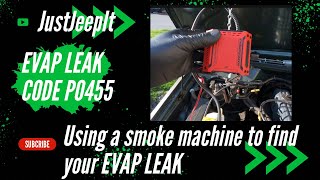
- Perform a Smoke Test: 🎬 See how to find a P0455 leak using a smoke tester. This is the most effective method for finding leaks. A smoke machine is connected to the EVAP service port (often in the engine bay). The system is filled with a harmless, visible smoke under low pressure. Smoke will escape from the point of the leak, whether it's a hose, the LDP, the canister, or the filler neck.
- Inspect the Leak Detection Pump (LDP): During the smoke test, pay close attention to the LDP, located behind the passenger-side rear wheel well liner. This is a very common failure point on P1 Volvos and may be the source of the leak.
- Check for TSBs: Check for Technical Service Bulletins from Volvo. TSB RTJ-16629 was released to address improvements in leakage detection diagnostics for P0455 codes on 2003-2008 models.
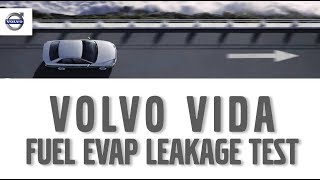
- Use a Volvo-Specific Scan Tool (VIDA): 🎬 Watch: Using VIDA to perform a fuel system leakage test. If available, use VIDA to run the 'Quick test of fuel tank'. This function commands the EVAP system components to seal the system and run a pressure test, reporting back 'System fine', 'Minor leak', or 'Major leak'. It can also check for Volvo-specific codes like ECM-433B that pinpoint the LDP.
Parts You'll Likely Need
- Fuel Cap
(OEM #31392044)— This is the most frequent cause of a P0455 code due to a worn seal or improper tightening.
Trusted brands: Volvo (OEM), Stant, Gates
OEM price range: $30-$45
Aftermarket price range: $15-$25 - EVAP Leak Detection Pump
(OEM #30792830)— A very common failure point on this platform. The pump, located behind the rear passenger wheel well, fails internally, causing a persistent large leak code. Often the final solution after other parts are tried.
Trusted brands: Bosch (OEM supplier, P/N 0261222019), Volvo (OEM), Dorman
OEM price range: $200-$280
Aftermarket price range: $90-$180 - EVAP Purge Valve / Solenoid
(OEM #31319575)— A common failure point on this platform, it gets stuck open, causing a large, permanent leak in the system.
Trusted brands: Bosch, Volvo (OEM), Dorman
OEM price range: $80-$120
Aftermarket price range: $40-$70
Related Codes That Often Appear With This One
- P0442 — This code indicates a small EVAP leak. You might see this code intermittently before the leak worsens and triggers the P0455 for a large leak.
- P0171 — If the EVAP purge valve is stuck open, it can create a vacuum leak that allows unmetered air into the intake manifold, causing a lean condition (too much air, not enough fuel) and triggering a P0171 code.
- ECM-433B — This is a Volvo-specific code indicating 'Leak diagnostic unit, pump. Signal missing.' It points directly to an electrical fault or failure of the Leak Detection Pump (LDP), a very common cause of P0455 on this platform.
Technical Service Bulletins (TSBs) & Recalls
- RTJ-16629 (May 15, 2009): Titled 'Leakage detection diagnostics improvements to remedy DTC's', this TSB applies to 2003-2008 models and provides updated diagnostic information for dealers to better troubleshoot EVAP leak codes like P0455.
Platform-Specific Known Issues
- Leak Detection Pump (LDP) Failure is Highly Common: → Shop Evaporative Emissions System Leak Detection Pump On the P1 platform (S40/V50/C30/C70), the Leak Detection Pump (Bosch/Volvo P/N 30792830) is a frequent cause of the P0455 code. Many owners on forums like SwedeSpeed report chasing the code by replacing the gas cap and purge valve, only to find the LDP was the true culprit. It is located behind the passenger-side rear wheel well liner and can be diagnosed with a smoke test.
Hidden / Shadow Codes Worth Checking
- ECM-433B: Leak diagnostic unit, pump. Signal missing. This is a Volvo-specific code that points directly to an electrical fault with the Leak Detection Pump (LDP) or its circuit. It is a strong indicator that the LDP is the cause of the P0455 code. (see via A Volvo-specific scan tool like VIDA is required to read these manufacturer-specific ECM codes.)
Scan Tool Commands That Help
- Volvo VIDA: Quick test of fuel tank — This is a guided diagnostic function used to command the EVAP system to seal itself and run a leak test. The tool activates the LDP and monitors pressure, returning a result of 'System fine,' 'Minor leak,' or 'Major leak.' This is a definitive way to confirm a leak exists without a smoke machine.
Wiring & Ground Locations
- Ground Point 31/7 — In the first-generation S40 (through early 2004), a relevant ground point is 31/7.. A poor ground connection for EVAP system components, such as the LDP or valves, can cause them to malfunction and trigger fault codes. While wiring diagrams for the P1 platform are complex, ensuring chassis grounds are clean and secure is a critical diagnostic step if electrical faults are suspected.
- Central Electronic Module (CEM) — Located behind the glove box/left end of the dash on P1 platform cars.. The CEM controls many body and chassis functions and is a central hub for communication and power distribution. While not a direct cause, faults in the CEM or its wiring can lead to bizarre electrical issues, including problems with emissions components it communicates with or provides power to.
Real Owner Repair Stories
- Volvo Forums user 'hordezla' (Unknown year Volvo, likely S70/V70 based on forum section) — Persistent P0455 code, failed emissions inspection.
❌ Tried (didn't work) Replaced the purge valve., Dropped the fuel tank to inspect the charcoal canister and hoses, which all appeared fine.
✅ What actually fixed it The user was advised to try replacing the gas cap next, as it's a very possible cause for a gross leak, and to perform a smoke test if that failed. The final resolution was not posted in the thread, but it highlights the common diagnostic path of replacing parts before confirming the leak source. - NHTSA ODI #10714113: An owner reported a check engine light with code P0455 and a "large leak no flow" condition. A certified repair facility verified the cause was a crack at a seam of the gas tank.
OEM Part Supersession History
Unknown→30792830— This is the current and most commonly cited part number for the Leak Detection Pump / Vapor Canister assembly on this platform.
Heads up: Part number 30792830 is for SULEV vehicles. Part number 30792831 is for ULEV vehicles with AWD. It is critical to verify the vehicle's emissions standard via the under-hood sticker before ordering.
Model Year Variations Within This Range
- 2004-2012: The most significant variation is not by year, but by the emissions standard the vehicle was built to meet: ULEV (Ultra-Low Emission Vehicle) or SULEV (Super Ultra-Low Emission Vehicle). This affects the charcoal canister and LDP assembly. The parts are not interchangeable, and installing the wrong one will cause persistent EVAP codes. The vehicle's standard must be verified from the sticker under the hood before ordering parts.
Diagnostic Flowchart
Other Known Issues on This Vehicle
Issues unrelated to this code that are worth knowing about as an owner of this generation:
- Clogged PCV / Oil Filter Housing Diaphragm 🔴 High — Common after 80,000 miles. A torn diaphragm in the oil filter housing (which contains the PCV system) creates a loud whistling or howling noise at idle.
- Leaking Sunroof Drains 🟠 Medium — Frequently occurs due to clogged drain tubes, causing water to leak into the front footwells (A-pillar drains) or rear passenger floor. Can lead to mold and electrical problems.
- Central Electronic Module (CEM) Failure 🔴 High — Can cause a wide range of bizarre, intermittent electrical issues, including non-starting, instrument cluster failure, and lighting problems. Often caused by water intrusion from clogged sunroof drains.
- Worn Upper Engine and Transmission Mounts 🟠 Medium — The passenger-side upper engine torque mount and the transmission mount are common wear items, leading to vibrations at idle and clunking noises.
- Fuel Pressure Sensor Failure 🟠 Medium — A failing sensor on the end of the fuel rail can cause hard starting, stalling, and poor performance under acceleration.
Used vs. New Parts: Buying Guide for This Vehicle
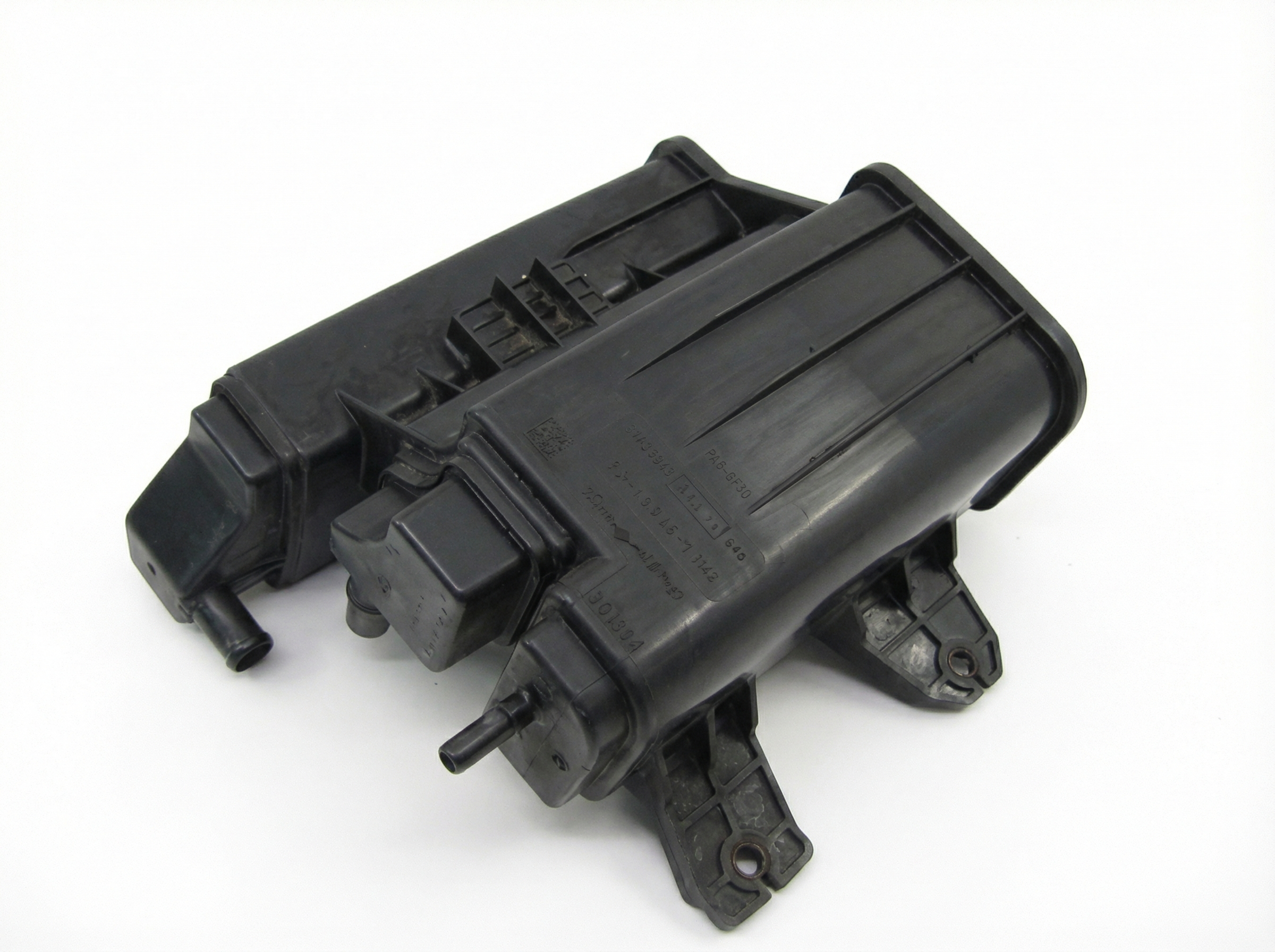
When a used part is the smart pick: A used charcoal canister or Leak Detection Pump (LDP) assembly can be a smart choice, as new OEM parts are expensive and direct-fit aftermarket options are limited. Given that these are often plastic components not subject to typical wear, a part from a lower-mileage, accident-damaged donor car can be a great value.
Donor-vehicle mileage cap: roughly under 100000 miles for the part to have meaningful remaining life.
What to inspect on the donor part:
- Verify the part number on the used component EXACTLY matches your original part or the number specified by a VIN search.
- Thoroughly inspect the plastic housing for any cracks, especially around hose ports and mounting tabs.
- Check for signs of damage from road debris or impact.
- Ensure all electrical connectors are intact and free of corrosion.
OEM-only on this vehicle (don't cheap out):
- Leak Detection Pump (LDP) / Charcoal Canister Assembly
Aftermarket brands forum-validated for this vehicle:
- Bosch (Often the OEM supplier for the LDP and purge valve)
Brands owners have reported issues with on this vehicle:
- Unbranded, 'white-box' electronic components like purge valves or LDPs may have a high failure rate.
Real Owner Stories
Aggregated from forums and TSBs cited above. Mileages and costs reflect what owners reported in those sources.
2005 Volvo V50
Symptoms: Owner documented a long-term struggle with P0455 and P0442 codes. They initially replaced the gas cap and the purge valve, but the codes persisted.
What fixed it: Replacing the Leak Detection Pump (LDP) finally resolved the leak condition.
Source hint: SwedeSpeed Forums: 'P0455 and P0442 Evap Leak Saga'
2004-2012 Volvo S40 — ~85000 miles
Symptoms: Check engine light on with a major leak code; owner found that the LDP (Bosch/Volvo P/N 30792830) had failed internally.
What fixed it: Replacement of the Leak Detection Pump assembly located behind the passenger-side rear wheel well liner.
Source hint: vehicle_specific_issues: 'Leak Detection Pump (LDP) Failure is Highly Common'
Related OBD-II Codes
Frequently Asked Questions
Is there a Volvo technical service bulletin for P0455 on my 2006 S40?
I've replaced my gas cap and purge valve, but the P0455 code keeps coming back. What else should I check?
Why does the gas pump nozzle keep clicking off when I try to fill up my S40?
What is the Volvo-specific code that corresponds to a faulty Leak Detection Pump?
Can I use a standard OBD-II scanner to diagnose this, or do I need something special?
Where is the EVAP purge valve located on the S40?
Helpful Videos
Used OEM Parts in Stock
New Aftermarket Parts Available


The information in this article is provided for general reference and educational purposes only. Vehicle specifications, procedures, and part compatibility can vary by production date, trim level, and region. Always consult your vehicle's factory service manual and verify part numbers before purchasing or performing repairs. Safety-critical components such as airbags, seat belts, and braking systems should be installed by a qualified professional.
- Volvo S40:
- 🧭 Diagnostic Flowchart
- 🎬 Helpful Videos
- 🛍️ Shop This Part
- What's Unique About the 2004-2012 Volvo S40
- Symptoms You May Notice
- Most Likely Causes
- Rare But Worth Checking
- Diagnosis Steps
- Parts You'll Likely Need
- Related Codes That Often Appear With This One
- Technical Service Bulletins (TSBs) & Recalls
- Platform-Specific Known Issues
- Hidden / Shadow Codes Worth Checking
- Scan Tool Commands That Help
- Wiring & Ground Locations
- Real Owner Repair Stories
- OEM Part Supersession History
- Model Year Variations Within This Range
- Other Known Issues on This Vehicle
- Used vs. New Parts: Buying Guide for This Vehicle
- Real Owner Stories
- 2005 Volvo V50
- 2004-2012 Volvo S40 — ~85000 miles
- Related OBD-II Codes
- Frequently Asked Questions
- 🎟️ Get 5% Off