

P0455 on 2018-2024 Volvo XC60: EVAP Large Leak Causes and Fixes
For the 2018-2024 Volvo XC60, a P0455 code is most often caused by a faulty EVAP purge valve, especially if a P0171 (lean) code is also present. The second most likely cause is debris in the capless fuel filler opening. Expect to pay $100-$200 for a new purge valve.
- Do not assume the cause is a loose 'gas cap'; this vehicle doesn't have one. Start by cleaning the capless fuel filler opening.
- If you also have a P0171 'System Too Lean' code, the EVAP purge valve is the most likely culprit.
- If you own a 2019 or 2020 model, check with a Volvo dealer to see if your vehicle is covered by Service Action S10066 for a faulty purge pipe.
- While you can drive the car, the issue should be fixed to pass an emissions test and prevent releasing fuel vapors into the environment.
What's Unique About the 2018-2024 Volvo XC60
Unlike many vehicles where a loose gas cap is the top cause for P0455, the 2018-2024 XC60 has a capless fuel filler. This shifts the focus to other parts. On this specific platform (Volvo's SPA), a faulty EVAP purge valve is a very common culprit, often failing in a way that also causes a P0171 lean code. Additionally, some 2019-2020 models were subject to a Volvo service action (S10066) to replace a faulty dual purge pipe that could trigger an EVAP-related check engine light.
Symptoms You May Notice
- Check Engine Light is on
- A faint smell of fuel, particularly around the rear of the vehicle
- Message on the driver display about the fuel cap, even though it is capless
- Slightly rough idle or starting issues after refueling (if the purge valve is stuck open)
- In some cases, no symptoms other than the Check Engine Light.
- Replacing the gas cap. This vehicle does not have a traditional, removable gas cap, so this common fix for other cars does not apply.
Most Likely Causes
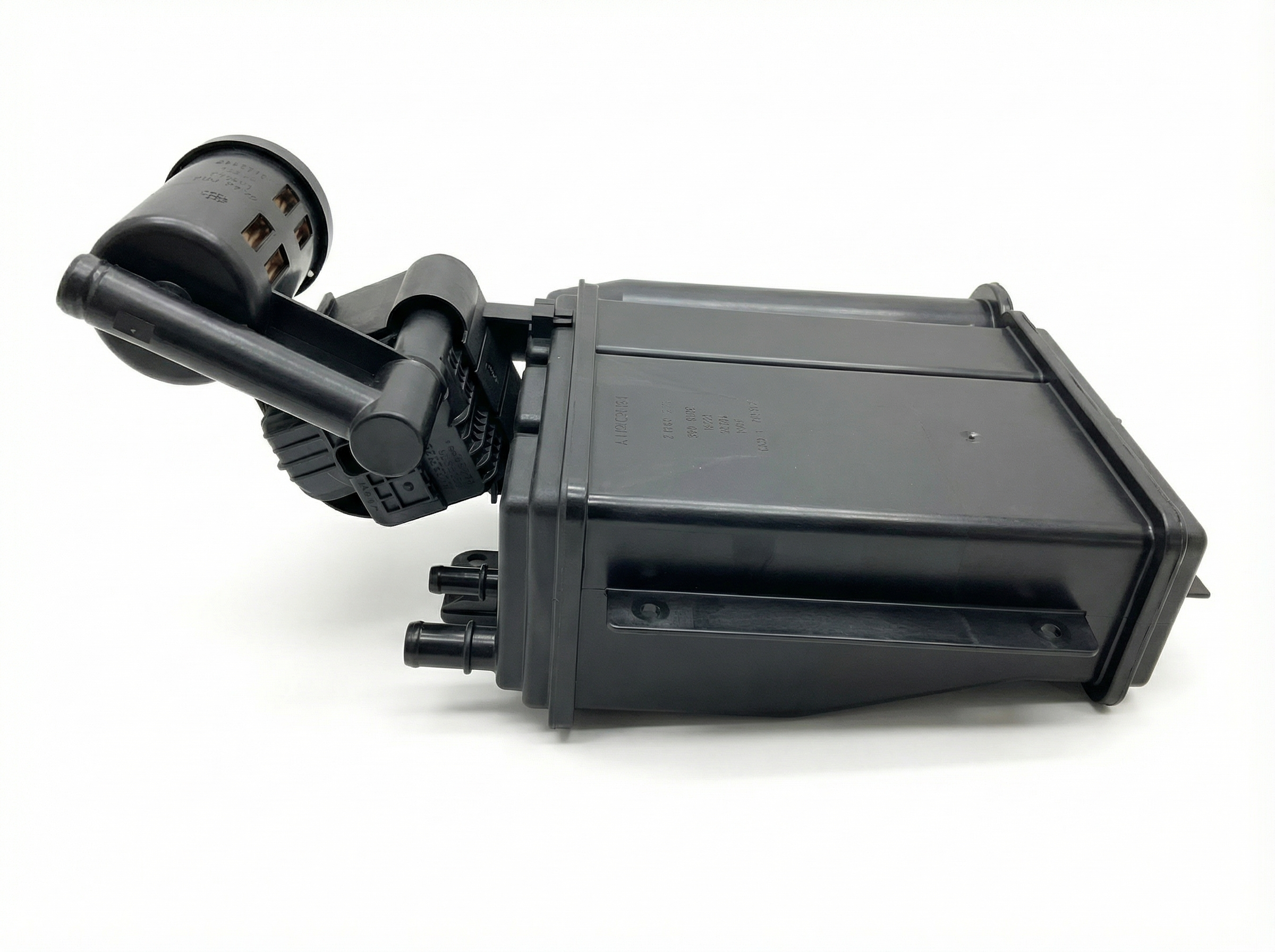
- Faulty EVAP Purge Valve 🔴 High Probability → Shop Vapor Canister This is a frequently reported failure point on Volvo's SPA platform. The valve can get stuck open, causing both the P0455 and often a P0171 (System Too Lean) code because it creates a vacuum leak into the intake manifold. Forum discussions for the XC90 and XC60 consistently point to this as the primary cause when both codes are present.
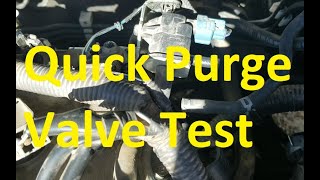
How to confirm: With the engine running, disconnect the EVAP line from the purge valve. If you can feel suction from the valve's port with the electrical connector unplugged, it is stuck open and needs to be replaced. A normally functioning valve should be closed with no power applied.
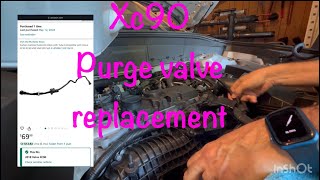
Typical fix: Replace the EVAP purge valve. It is typically located in the engine bay and is a relatively simple replacement. 🎬 See this walkthrough for replacing the purge valve.
Est. part cost: $100-$200 - Debris in Capless Fuel Filler Neck 🟡 Medium Probability → Shop Fuel Filler Neck The capless system relies on a spring-loaded flap to seal. Dirt, dust, or even spider webs can prevent this flap from closing completely, creating a large leak.
How to confirm: Visually inspect the fuel filler opening. Carefully clean the sealing flap and the surrounding area with a clean cloth. Ensure the flap moves freely and seats properly.
Typical fix: Thoroughly clean the fuel filler opening. If the flap is damaged or the neck is deformed, the entire fuel filler neck assembly must be replaced.
Est. part cost: $0 for cleaning, $200-$350 for a replacement filler neck. - Faulty Dual Purge Pipe (2019-2020 Models) 🟡 Medium Probability Volvo issued Service Action S10066 for a known defect in the dual purge check valve on 2019-2020 XC60s and other SPA models, which can trigger a check engine light for the EVAP system. This action covered nearly 100,000 vehicles in the US.
How to confirm: A Volvo dealership can check if your vehicle's VIN is covered under Service Action S10066. The issue is internal to the pipe assembly.
Typical fix: Replace the dual purge pipe assembly as per the instructions in the service action. Part numbers vary by engine and build week, and include 32312085, 32312087, and 32312088.
Est. part cost: $0 if covered by the service action. - Cracked or Disconnected EVAP Hose ⚪ Low Probability The plastic EVAP lines, especially those running over the engine, can become brittle and crack over time. A Reddit user with a 2019 XC60 T6 reported that replacing two EVAP pipes over the engine resolved their P0455 and P0171 codes after a smoke test failed to find a leak.
How to confirm: A visual inspection of all accessible EVAP lines between the engine, charcoal canister, and fuel tank may reveal a crack or disconnection. The most effective method is to have a mechanic perform a smoke test, which fills the system with visible vapor to pinpoint the source of the leak.
Typical fix: Replace the cracked hose or reconnect the separated line.
Est. part cost: $20-$100
Rare But Worth Checking
- Faulty EVAP Leak Detection Pump (LDP): → Shop Vapor Canister This pump pressurizes the system for the leak test. While it can fail, it's less common than the purge valve. A failure here might set other specific LDP codes (like P2400 or P2402), but it can also contribute to a P0455. The part is also called a Fuel Vapor Detection Pump.
- Cracked Charcoal Canister: → Shop Vapor Canister The canister is located near the fuel tank and can be damaged by road debris. A crack in the canister body will cause a large leak. This is usually found during a smoke test.
- Faulty Fuel Tank Pressure Sensor: → Shop Fuel Tank This sensor reports the system pressure to the ECM. If it provides incorrect data, the computer may falsely believe there is a leak. This failure will often be accompanied by other specific sensor-related DTCs, such as P0452.
- Fuel Tank Seam Leak: → Shop Fuel Tank While rare on newer models, a manufacturer reference (NHTSA ODI #10714113) for a different Volvo model describes a P0455 code caused by a leak at a seam of the gas tank, which was verified as a crack by a repair facility.
Diagnosis Steps
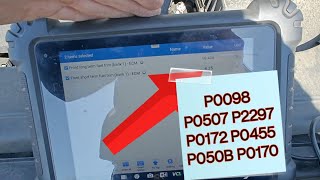
- Read all codes stored in the ECM. Note if P0171 is present alongside P0455, as this strongly points to the purge valve.
- Carefully inspect the capless fuel filler opening for any dirt, debris, or damage. Clean it thoroughly and ensure the flap seals correctly.
- If P0171 is present, proceed to test the EVAP purge valve. Locate it in the engine bay, start the engine, and disconnect the vapor line and electrical connector. If suction is felt at the valve's port, it is stuck open and is faulty.
- If the purge valve seems okay, a visual inspection of all accessible EVAP hoses is the next step. Pay close attention to the plastic lines running over the engine.
- For 2019-2020 models, contact a Volvo dealer with your VIN to see if Service Action S10066 for the dual purge pipe applies to your vehicle.
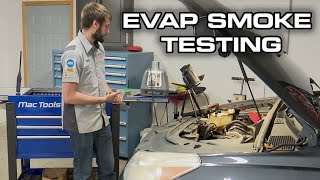
- If no obvious cause is found, the most reliable next step is a professional smoke test. A mechanic will use a scan tool to command the system's vent valve closed and then pump smoke into the EVAP system to find the exact location of the leak. 🎬 Watch: How to perform a professional EVAP smoke test.
Parts You'll Likely Need
- EVAP Purge Valve / Solenoid
(OEM #31478982 (supersedes 31372681))— This is the most frequently reported cause of P0455 on the 2018-2024 XC60, especially when a P0171 code is also present.
Trusted brands: Bosch, Genuine Volvo
OEM price range: $120-$180
Aftermarket price range: $70-$150 - Evaporative Emissions System Leak Detection Pump
(OEM #32363457 (replaces 31372293))— This pump is what the car uses to test the system for leaks. If it fails, it can lead to an incorrect P0455 code. It is also referred to as the Fuel Vapor Detection Pump.
Trusted brands: Genuine Volvo, Bosch
OEM price range: $240-$330
Aftermarket price range: $150-$220 - Fuel Filler Neck
(OEM #32242545)— If the sealing flap on the capless filler system is damaged or fails to seal, it will cause a large leak. Cleaning should be attempted before replacement.
Trusted brands: Genuine Volvo
OEM price range: $220-$280
Related Codes That Often Appear With This One
- P0171 — A P0171 (System Too Lean) code is very commonly seen with P0455 on this vehicle. It strongly suggests the EVAP purge valve is stuck open, allowing unmetered air into the engine's intake manifold, which leans out the air-fuel mixture. Multiple owner forums confirm this specific code combination points directly to a failed purge valve.
Technical Service Bulletins (TSBs) & Recalls
- S10066 - Service Action: Malfunction in the Dual Purge check valve on 2019-2020 models.
- Technical Journal TJ 34588.2.0 - Related to high oil consumption on some Volvo engines, which led to piston ring redesign.
- Technical Journal TJ 34246 - Guideline for diagnosing brake noise on SPA platform vehicles.
Platform-Specific Known Issues
- Service Action S10066: Affects some 2019-2020 models for a faulty dual purge check valve/pipe that can trigger an EVAP DTC. The fix is a replacement of the pipe assembly.
Mechanic-Grade Diagnostic Values
- Fuel Tank Pressure (FTP) Sensor Signal Voltage — expected: Approximately 2.5V with the ignition on, engine off, and the fuel filler neck open (at atmospheric pressure).. Failure: A reading of 5V indicates a potential issue with the sensor or wiring, as the ECM is seeing the full reference voltage. A reading that doesn't change when vacuum is applied may indicate a stuck sensor.
- Fuel Tank Pressure (FTP) Sensor Reference Voltage — expected: Approximately 5V on the reference wire at the sensor connector with the key on, engine off.. Failure: No voltage indicates a wiring issue or a problem with the Engine Control Module (ECM).
Scan Tool Commands That Help
- Volvo VIDA: Advanced > Quick test of fuel tank — This function initiates a system leak test on demand. The tool will command the necessary valves and run the leak detection pump, providing a result like 'System Fine,' 'Minor Leak,' or 'Major Leak,' which directly confirms the P0455 condition without waiting for a full drive cycle.
- Volvo VIDA: EVAP Purge Valve Activation — This bidirectional control allows a technician to command the purge valve to open and close while monitoring fuel trim data or listening for a click. This helps verify if the solenoid is electrically functional and not mechanically stuck, a common failure mode.
Wiring & Ground Locations
- EVAP Valve (Purge Valve) — On older, similar Volvo models (like the 2012 XC60), the EVAP valve is located on the left rear of the engine. While the exact location on the 2018+ SPA platform may differ slightly, it will be in the engine bay, connected to the intake manifold.. Knowing the general location is critical for performing the primary diagnostic check for a stuck-open valve, which is the most common cause of P0455 with P0171.
- Ground Connections (General) — General wiring diagrams for Volvos show multiple key ground points, such as near the base of the 'B' pillar (G6, G15) and in the engine compartment.. A poor ground connection for the Leak Detection Pump (LDP) or Fuel Tank Pressure sensor could cause erroneous readings, leading to a false P0455 code. While not a common cause, it's a possibility if direct component replacement fails to solve the issue.
Real Owner Repair Stories
- Reddit user on r/MechanicAdvice (2019 Volvo XC90 T6 (SPA Platform, same as XC60)) — Check Engine Light with codes P0455 and P0171 stored.
❌ Tried (didn't work) The owner first tested the EVAP purge valve and confirmed it was stuck open, pulling vacuum when it should have been closed.
✅ What actually fixed it The dealership replaced two EVAP pipes that run over the top of the engine. This resolved both the P0455 and P0171 codes. - Reddit user on r/Volvo (2019 Volvo XC60 T6) — Check Engine Light with codes P0455 and P0171.
❌ Tried (didn't work) A mechanic performed a smoke test and found no leaks.
✅ What actually fixed it The story is unresolved, but the mechanic's next step was to replace the purge solenoid, indicating that even with a clean smoke test, the valve was the primary suspect. - NHTSA ODI #10714113 — An owner reported a P0455 code for a large leak with no flow. A certified repair facility verified the cause was a crack at a seam of the gas tank.
"I Checked Everything" — The Actual Cause
- In a case involving a 2019 XC60 T6 with P0455 and P0171, a mechanic's smoke test revealed no leaks. The next diagnostic step suggested was replacing the purge solenoid, implying the valve can fail intermittently or in a way not easily detected by a static smoke test.
- A 2019 XC90 T6 owner reported that the final fix for their P0455 and P0171 codes was the replacement of two EVAP pipes over the engine. This suggests these pipes can develop cracks that are hard to spot or only open under specific temperature/vibration conditions, potentially being missed during a standard smoke test.
When the Usual Fixes Don't Work
- While a stuck purge valve is the most common cause, especially with a P0171 code, there is a confirmed owner report where the final fix was replacing two brittle plastic EVAP pipes that run over the engine. This occurred even after a smoke test performed by a mechanic failed to find a leak, highlighting a key diagnostic trap.
OEM Part Supersession History
31372681→31478982— Standard part revision by the manufacturer, likely for improved reliability or a minor design change.31372293→32363457— Standard part revision for the Leak Detection Pump / Fuel Vapor Detection Pump.
Model Year Variations Within This Range
- 2019-2020: These model years were subject to Volvo Service Action S10066 for a potentially faulty dual purge check valve/pipe assembly that could cause EVAP codes. Later models would have the corrected part from the factory.
Diagnostic Flowchart
Other Known Issues on This Vehicle
Issues unrelated to this code that are worth knowing about as an owner of this generation:
- Excessive Oil Consumption 🔴 High — Primarily affects earlier 2.0L four-cylinder engines (approx. 2013-2016) due to piston ring design. Less common on 2018+ models but still reported. (Ref: TJ 34588.2.0 describes the issue and piston ring replacement procedure. Volvo offered an extended warranty for affected vehicles.)
- Brake Squeal and Judder 🟡 Low — Common complaint across the SPA platform, especially at low speeds. Often related to brake pad compound or rotor glazing. (Ref: TJ 34246 provides a diagnostic guideline for brake noise issues. TJ 36202 addresses vibration/shudder while braking.)
- Infotainment System Glitches / Blank Screen 🟠 Medium — Owners report issues with the Sensus touchscreen freezing, going blank, or being laggy. A major recall was issued for a blank rearview camera image. (Ref: Recall R10320 (NHTSA 25V282000) was issued for the rearview camera failing to display, fixable with a software update.)
- Premature 12V Battery Drain / Electrical Gremlins 🟠 Medium — Reports of batteries dying prematurely and random electrical warnings, sometimes linked to infotainment or other modules not going to 'sleep'.
- Power Tailgate Failure 🟠 Medium — Common on 2017-2019 models, where the tailgate motor fails or the lifting arms break/separate from the vehicle. (Ref: A recall was issued in 2019 for the tailgate lifting arm.)
Used vs. New Parts: Buying Guide for This Vehicle
When a used part is the smart pick: For this vehicle, used parts like the charcoal canister or fuel filler neck can be a cost-effective choice, as they are not high-wear items and their condition can be visually inspected. A used part from a low-mileage, rear-end collision donor vehicle is ideal.
Donor-vehicle mileage cap: roughly under 60000 miles for the part to have meaningful remaining life.
What to inspect on the donor part:
- For a fuel filler neck, inspect the sealing flap for smooth operation and check for any cracks or deformation in the plastic.
- For a charcoal canister, ensure there are no visible cracks in the housing and that all hose connection ports are intact.
- Check for excessive rust or corrosion on any metal components, indicating a vehicle from a harsh climate.
OEM-only on this vehicle (don't cheap out):
- EVAP Purge Valve / Solenoid: Given that this is a very common failure point and aftermarket versions can have questionable reliability, sticking with a Genuine Volvo or OEM-supplier (like Bosch) part is highly recommended to ensure a lasting repair.
- Leak Detection Pump (LDP): This is a sensitive electronic and mechanical component. An OEM part is recommended to avoid diagnostic headaches and ensure it communicates correctly with the ECM.
Aftermarket brands forum-validated for this vehicle:
- Bosch (Often the OEM supplier for Volvo electronics)
Brands owners have reported issues with on this vehicle:
- No-name, unbranded electronic parts from online marketplaces should be avoided, as their quality control and longevity are often poor.
Real Owner Stories
Aggregated from forums and TSBs cited above. Mileages and costs reflect what owners reported in those sources.
2019 XC60 T6
Symptoms: Check engine light with codes P0455 and P0171. A smoke test was performed but failed to find a leak.
What fixed it: Replacing two EVAP pipes located over the engine resolved the issue.
Source hint: r/Volvo & r/MechanicAdvice thread titled 'P0455 large evap system leak p0171 bank 1 too lean'
2019 XC90 T6
Symptoms: Large EVAP system leak (P0455) and Bank 1 Too Lean (P0171) codes occurring simultaneously.
What fixed it: Replacing the two EVAP pipes running over the engine.
Source hint: r/Volvo & r/MechanicAdvice thread titled 'P0455 large evap system leak p0171 bank 1 too lean'
2018 XC60
Symptoms: P0455 code for a large EVAP leak.
What fixed it: The forum suggested a smoke test to identify the leak, noting that front pipes, the filter, and the pump are common failure points on this model.
Source hint: forum-volvo.com (Polish Volvo forum)
Related OBD-II Codes
Frequently Asked Questions
My 2019 XC60 has a Check Engine Light for the EVAP system; is there a specific service action for this?
I have both P0455 and P0171 on my XC60 T6. What is the most likely culprit?
My driver display is showing a message about the fuel cap, but my 2018-2024 XC60 is capless. Why?
What part numbers are involved in the dual purge pipe repair for the 2019-2020 models?
Can I test the purge valve myself before buying a replacement?
Is there a known issue with the EVAP lines over the engine on the XC60?
Helpful Videos
We Have This Part in Stock

The information in this article is provided for general reference and educational purposes only. Vehicle specifications, procedures, and part compatibility can vary by production date, trim level, and region. Always consult your vehicle's factory service manual and verify part numbers before purchasing or performing repairs. Safety-critical components such as airbags, seat belts, and braking systems should be installed by a qualified professional.
- Volvo XC60:
- 🧭 Diagnostic Flowchart
- 🎬 Helpful Videos
- 🛍️ Shop This Part
- What's Unique About the 2018-2024 Volvo XC60
- Symptoms You May Notice
- Most Likely Causes
- Rare But Worth Checking
- Diagnosis Steps
- Parts You'll Likely Need
- Related Codes That Often Appear With This One
- Technical Service Bulletins (TSBs) & Recalls
- Platform-Specific Known Issues
- Mechanic-Grade Diagnostic Values
- Scan Tool Commands That Help
- Wiring & Ground Locations
- Real Owner Repair Stories
- "I Checked Everything" — The Actual Cause
- When the Usual Fixes Don't Work
- OEM Part Supersession History
- Model Year Variations Within This Range
- Other Known Issues on This Vehicle
- Used vs. New Parts: Buying Guide for This Vehicle
- Real Owner Stories
- 2019 XC60 T6
- 2019 XC90 T6
- 2018 XC60
- Related OBD-II Codes
- Frequently Asked Questions
- 🎟️ Get 5% Off