

P0456 on 2004-2011 Audi A6 3.2L: Causes and Fixes for a Very Small EVAP Leak
For a P0456 code on a C6 Audi A6, the most common causes are a loose or faulty gas cap or a failing EVAP purge valve (N80). Start by inspecting and tightening the gas cap, ensuring the filler neck is clean. If that doesn't work, the N80 valve (Bosch P/N: 06E906517A) is an inexpensive and easy part to replace yourself.
- P0456 is not a serious code and will not affect how your car drives.
- Always start with the simplest fix: inspect and tighten the gas cap. If the seal is cracked, replace it with an OEM part.
- The second most likely culprit is the EVAP Purge Valve (N80), which is cheap and very easy to replace on the 3.2L V6 engine.
- If these simple fixes don't work, a professional smoke test is the best way to find the leak without guessing and replacing unnecessary parts.
- Check with an Audi dealer about TPI 2020900, as a simple software update might be the required fix.
What's Unique About the 2004-2011 Audi A6
On this generation of Audi A6 (C6), and its platform mates with the 3.2L FSI engine (A4, A5, Q5), the P0456 code is frequently tied to one of two simple components: the gas cap or the N80 EVAP purge valve. While other leaks are possible, these two parts are responsible for a majority of cases reported by owners. Audi has also issued Technical Service Bulletins (TSBs) for similar models related to sensitive leak detection sensors and software, indicating the system can be prone to flagging minor issues. For the 3.2L V6 FSI engine, the N80 valve is conveniently located on top of the engine under the plastic cover and is very easy to access and replace.
Symptoms You May Notice
- Check Engine Light is on.
- A faint fuel smell, possibly near the rear of the car or by the gas cap (this is rare for a very small leak, but possible).
- Difficulty starting the car immediately after refueling (a less common symptom, often associated with a stuck-open purge valve).
- Rough or shaky idle in some cases if the N80 valve is stuck open, creating a vacuum leak.
- Replacing the fuel tank pressure sensor without proper diagnosis. This sensor is rarely the cause of a leak code unless other pressure sensor-specific codes are also present.
- Immediately assuming a complex leak exists before thoroughly checking the gas cap seal, cleaning the filler neck, and testing the N80 purge valve, which are the most common and simple fixes.
Most Likely Causes
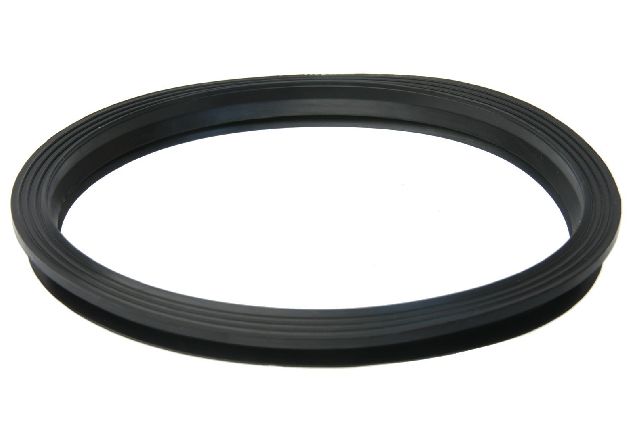
- Loose or Faulty Gas Cap 🔴 High Probability → Shop Fuel Tank Cap The gas cap seal is a precision-molded O-ring that can crack and degrade over time. Aftermarket caps are a notorious cause of this code as they often use incorrect seal materials or thread pitch, preventing a perfect seal. Dirt or rust on the fuel filler neck can also prevent even a new OEM cap from sealing.
How to confirm: Remove the gas cap and inspect the rubber seal for any cracks, brittleness, or damage. Use a clean cloth to wipe the sealing surface of the fuel filler neck to remove any dirt or corrosion. Ensure the cap clicks at least three times when tightened.
Typical fix: First, clean the filler neck. If the code returns, replace the gas cap. 🎬 Watch: Two simple DIY methods to fix a P0456 code. It is highly recommended to use a Genuine Audi OEM cap, as many owners report that aftermarket caps from brands like Stant or other parts store brands fail to fix the issue.
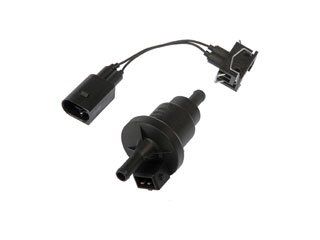
Est. part cost: $25-$50 for OEM - Faulty EVAP Purge Valve (N80 Valve) 🟡 Medium Probability → Shop Vapor Canister The N80 valve on these engines can get stuck open or closed, or develop a small internal leak, which the system detects as a system leak. It's a very common failure point on this platform, often causing P0456 or P0441.
How to confirm: The valve is located on the top of the engine, under the plastic cover. With the engine off, disconnect the valve's electrical connector and remove it. Try to blow through it. It should be completely closed when no power is applied. If you can blow any air through it, it has failed and must be replaced.
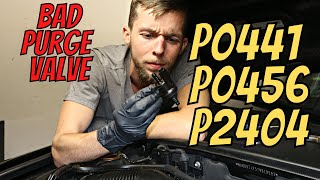
Typical fix: Replacement of the N80 valve is straightforward. It involves removing the engine cover, an electrical connector, and two spring clamps for the hoses. The part is inexpensive and the job takes only a few minutes. 🎬 Watch: Step-by-step guide to replacing the N80 purge valve.
Est. part cost: $20-$50 - Cracked or Disconnected EVAP Hoses ⚪ Low Probability The plastic and rubber hoses in the EVAP system, especially those in the engine bay, can become brittle and crack with age and exposure to engine heat.
How to confirm: Visually inspect all accessible EVAP lines in the engine bay and around the charcoal canister for any visible cracks or loose connections. A professional smoke test is the most effective way to find a hairline crack that isn't obvious.
Typical fix: Replace the cracked section of hose. Small screw-type clamps can be used to replace the original one-time-use clamps.
Est. part cost: $10-$30
Rare But Worth Checking
- Faulty Leak Detection Pump (LDP): → Shop Evaporative Emissions System Leak Detection Pump The LDP, located behind the right-rear wheel well liner near the charcoal canister, pressurizes the system for leak tests. It can fail internally or the vacuum lines leading to it can crack. Diagnosis often requires a smoke test or using a scan tool like VCDS to run the EVAP test sequence.
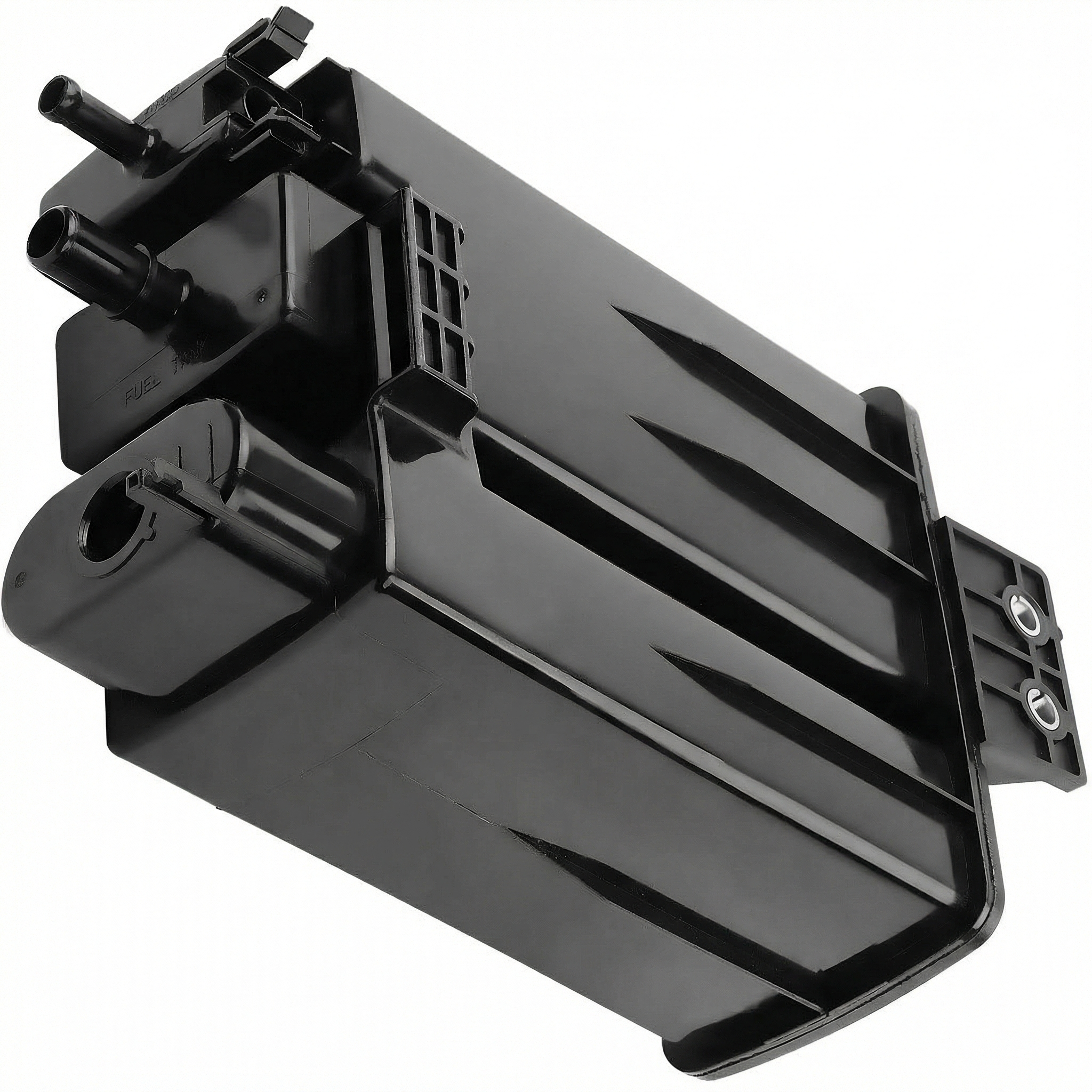
- Leaking Charcoal Canister: → Shop Vapor Canister The plastic housing of the charcoal canister can develop hairline cracks over time. This is usually found only with a smoke test. Failure is often accelerated by habitually 'topping off' the fuel tank, which floods the canister with liquid fuel and ruins the charcoal media.
- Cracked Fuel Tank Filler Neck: → Shop Fuel Tank Though rare, the metal filler neck where the gas cap seals can develop rust or cracks, creating a leak that a new cap cannot fix. This is typically found via a smoke test where smoke will be seen escaping from around the filler neck area.
Diagnosis Steps
- Read the code with an OBD-II scanner to confirm P0456 is the primary code.
- Inspect the gas cap. Remove it, check the seal for cracks. Crucially, use a cloth to wipe the metal rim of the fuel filler neck clean of any dirt or rust.
- Reinstall the gas cap, ensuring it is tightened until it clicks at least three times. Clear the code with the scanner.
- Drive the vehicle for several days to see if the Check Engine Light returns. The EVAP monitor runs under specific conditions (often with 15-85% fuel level, after the car has sat overnight), so it may take time.
- If the light returns, purchase and install a new, Genuine OEM Audi gas cap. Do not use an aftermarket cap. Clear codes and drive again.
- If the light still returns, locate the N80 Purge Valve on top of the 3.2L engine. Remove it and try to blow air through it. If air passes through, it has failed and needs to be replaced.
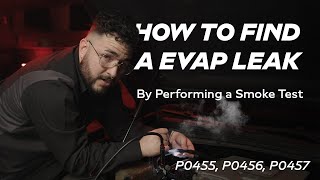
- If the gas cap and purge valve are confirmed good, the next step is a professional smoke test. This involves feeding low-pressure smoke into the EVAP system's service port to visually pinpoint the location of the tiny leak. 🎬 See how a smoke machine quickly pinpoints hidden EVAP leaks.
- A smoke test will reveal leaks in hoses, the charcoal canister, the Leak Detection Pump (LDP), or the fuel tank filler neck that are otherwise impossible to find.
Parts You'll Likely Need
- Fuel Tank Cap
(OEM #4F0201550F (Verify by VIN))— This is the most frequent cause. The seal wears out, but more importantly, aftermarket caps are notorious for not sealing correctly and continuing the problem. An OEM cap is a critical diagnostic step.
Trusted brands: Audi (OEM) - Highly Recommended
OEM price range: $40-$50
Aftermarket price range: $15-$30 - EVAP Purge Valve (N80 Valve)
(OEM #06E906517A)— A very common failure point on this platform that gets stuck open, causing a leak. It's an easy and inexpensive DIY replacement.
Trusted brands: Bosch (OEM supplier, P/N 0280142431), Audi (Genuine)
OEM price range: $30-$50
Aftermarket price range: $15-$30 - Leak Detection Pump (LDP)
(OEM #7L8906271A (Verify by VIN))— If the gas cap and N80 valve are not the cause, the LDP is another potential culprit, though less common. It can develop internal leaks or the housing can crack.
Trusted brands: Bosch, Audi (OEM)
OEM price range: $100-$150
Aftermarket price range: $70-$120
Related Codes That Often Appear With This One
- P0441 — This code for 'Incorrect Purge Flow' often appears with P0456 when the N80 purge valve is failing, as the valve is responsible for both sealing the system and managing vapor flow.
- P0442 — P0442 indicates a 'Small Leak Detected', whereas P0456 indicates a 'Very Small Leak'. Seeing either code points to the same set of potential problems, just with a different leak size threshold. The diagnostic process is identical.
Technical Service Bulletins (TSBs) & Recalls
- TPI 2020900: Mentions a potential ECM software update for the Audi A6 (4F) with the 3.2L V6 FSI engine to correct a software problem causing P0456.
- Audi TSB 2040924/1 (for other models): Provides a diagnostic procedure for P0456 when an LDP is suspected, involving pressure hold tests. While not for the A6 specifically, the diagnostic logic is informative for a technician.
Platform-Specific Known Issues
- Audi issued TSB 2020900 for some 3.2L V6 FSI engines in the A6 (4F/C6) which addresses a software issue that can cause this DTC. A dealer may need to perform a flash update on the ECM.
- Later model Audis (2012+) have known issues with the NVLD pressure sensor (G400) becoming contaminated and causing a false P0456 code, as detailed in TSB 2071199 and 2035073. While these TSBs don't explicitly cover the 2004-2011 range, the principle of a sensitive sensor causing the code is relevant.
- In very rare cases, after all other components have been tested, a faulty Engine Control Module (ECM) can incorrectly report P0456. One owner on a forum reported that replacing the ECM was the ultimate fix for a persistent P2404 code (a related LDP circuit fault) after all other parts were replaced.
Mechanic-Grade Diagnostic Values
- N80 Purge Valve (06E906517A) Coil Resistance — expected: 15 to 25 Ohms. Failure: A reading outside this range indicates a faulty coil. However, some forum users have noted that even new, functioning OEM valves can read slightly outside the Bentley manual spec of 22-30 Ohms, making the functional 'blow-through' test more reliable.
- Leak Detection Pump (LDP) Harness Voltage — expected: 12V at Pin 3 of the LDP connector with key on.. Failure: No voltage suggests a wiring or fuse issue upstream of the pump.
- VCDS Measuring Block 070, Field 1 (N80 Duty Cycle) — expected: Should show activity, often between 10-25% during normal operation after the engine is warm.. Failure: A value stuck at 0% or 100% could indicate a problem with the valve or its control circuit.
Scan Tool Commands That Help
- VCDS (VAG-COM): Engine (01) -> Basic Settings -> Group 071 — This command initiates the EVAP system leak test (short trip). The engine must be cold. It will run the Leak Detection Pump (LDP) to pressurize the system and check for pressure loss. The results will display as 'System OK' or 'System NOT OK', or it may abort. This is the primary way to force the car to test the EVAP system without waiting for the natural drive cycle monitor to run.
- VCDS (VAG-COM): Engine (01) -> Basic Settings -> Group 070 — This function tests the N80 purge valve flow. It can be used to confirm if the N80 valve is opening and closing correctly on command from the ECM.
- VCDS (VAG-COM): Engine (01) -> Output Tests — This allows a technician to cycle through and individually activate various components, including the N80 purge valve and the Leak Detection Pump (LDP). This is useful for confirming that a component is capable of activating (e.g., you can hear the N80 valve click) when commanded by the ECM, helping to isolate a wiring issue from a failed component.
Wiring & Ground Locations
- Engine Ground Stud — On a bolt for the oil filter housing. A small brown ground wire from the main harness attaches here.. A poor ground connection at this point can cause erratic behavior or failure of engine-mounted sensors and solenoids, including the N80 purge valve. This specific ground is noted by owners as being easily missed or forgotten during engine work.
- Earth Connection 131 — In the engine compartment wiring harness, on the left longitudinal member.. This is a primary grounding point for the engine harness which includes wiring for EVAP system components like the N80 valve. Corrosion or a loose connection here can cause various electrical faults.
- N80 Valve Connector — Two-pin connector on the N80 valve, located on top of the engine.. Pin 1 is typically power (Red/Green wire) from a fuse, and Pin 2 is the ground signal from the ECM (Red/White wire). Checking for 12V at Pin 1 (key on) and a pulsing ground at Pin 2 with the engine running (using a noid light) can diagnose a wiring or ECM driver issue.
Real Owner Repair Stories
- AudiWorld Forums User (2006 Audi A6 Avant 3.2L) — Persistent P2404 (EVAP Leak Detection Pump Sense Circuit) and related EVAP codes.
❌ Tried (didn't work) Replaced N80 purge valve (both Bosch and OEM), Checked LDP resistance (was in spec), Ran VCDS Group 071 test (would pass when cold, fail when warm), Replaced LDP, Replaced relevant relays (J757), Traced and tested all related wiring for resistance and continuity
✅ What actually fixed it Replacing the Engine Control Module (ECM). The user concluded that after replacing every other component in the system, the fault was internal to the ECM, which was incorrectly reporting the sensor data. - NHTSA ODI #11317923 — An owner reported finding P0456 (Very Small Leak Detected) and P190F00 (Coolant Pump for Charge Pressure Cooler) after running an OBD reader personally and at a mechanic.
- NHTSA ODI #10275363 — A report describes a diagnostic fault code related to the tank ventilation system being identified. The owner isolated the P0456 (16840) tank ventilation system pinhole leak code to the fuel tank, noting the complexity of the ventilation system.
OEM Part Supersession History
06E906517→06E906517A— Revision update for improved reliability or manufacturing process change.
Heads up: The 'A' revision is the standard replacement and is fully compatible. The Bosch OEM equivalent is part number 0280142431.
Model Year Variations Within This Range
- 2009-2011: The Audi A6 C6 received a facelift for the 2009 model year, which included cosmetic changes like LED daytime running lights and updated taillights. However, research indicates no significant changes were made to the 3.2L FSI engine's EVAP system design or the common causes for P0456. The N80 valve, LDP, and gas cap remain the primary culprits across the entire 2004-2011 range.
Diagnostic Flowchart
Real Owner Stories
Aggregated from forums and TSBs cited above. Mileages and costs reflect what owners reported in those sources.
2008 Audi A6 3.2
Symptoms: Check Engine Light was on, scanned to find P0456.
What fixed it: Replacing the N80 purge valve (part number 06E 906 517A) fixed the code after a brand new OEM gas cap failed to resolve the issue.
Source hint: AudiWorld Forums thread titled 'N80 Purge Valve for 08 A6 3.2'
2007 Audi A6 3.2
Symptoms: Check engine codes P0456, P0441, and P2404 (noted as P244), accompanied by hard starting, rough idling, and poor engine performance.
What fixed it: Changing out the EVAP purge valve, which was stuck open/closed.
Source hint: YouTube comment by 'Coleman'
Related OBD-II Codes
Frequently Asked Questions
Does TSB 2020900 apply to my 2004-2011 Audi A6 3.2L?
I replaced my gas cap with one from an auto parts store, but the P0456 code came back. What should I do?
How can I test the N80 purge valve on my 3.2L V6 FSI?
Why is my A6 3.2L having difficulty starting after refueling with a P0456 code?
Could a faulty Engine Control Module (ECM) cause a P0456 code on my Audi A6?
Are there other Audi models that share this exact P0456 issue?
Helpful Videos
![How to Fix P0456 Engine Code in 3 Minutes [2 DIY Methods / Only $4.44]](https://img.youtube.com/vi/v_QDSjd1-Lw/mqdefault.jpg)
Used OEM Parts in Stock
New Aftermarket Parts Available


The information in this article is provided for general reference and educational purposes only. Vehicle specifications, procedures, and part compatibility can vary by production date, trim level, and region. Always consult your vehicle's factory service manual and verify part numbers before purchasing or performing repairs. Safety-critical components such as airbags, seat belts, and braking systems should be installed by a qualified professional.
- Audi A6:
- 🧭 Diagnostic Flowchart
- 🎬 Helpful Videos
- 🛍️ Shop This Part
- What's Unique About the 2004-2011 Audi A6
- Symptoms You May Notice
- Most Likely Causes
- Rare But Worth Checking
- Diagnosis Steps
- Parts You'll Likely Need
- Related Codes That Often Appear With This One
- Technical Service Bulletins (TSBs) & Recalls
- Platform-Specific Known Issues
- Mechanic-Grade Diagnostic Values
- Scan Tool Commands That Help
- Wiring & Ground Locations
- Real Owner Repair Stories
- OEM Part Supersession History
- Model Year Variations Within This Range
- Real Owner Stories
- 2008 Audi A6 3.2
- 2007 Audi A6 3.2
- Related OBD-II Codes
- Frequently Asked Questions
- 🎟️ Get 5% Off