

P0456 on 2009-2017 Audi Q5: Causes and Fixes for Small EVAP Leaks
On a 2009-2017 Audi Q5, code P0456 is most often caused by a faulty or loose gas cap. If replacing the gas cap doesn't solve the issue, the next most likely culprits are a failed EVAP purge valve (N80) or a faulty leak detection pump (LDP). A smoke test is the most reliable way to find the leak if the gas cap isn't the cause.
- P0456 on a 2009-2017 Audi Q5 means a very small leak has been detected in the emissions system.
- Always start with the simplest and most common fix: check that the gas cap is tight and inspect its seal for cracks. Replacing the gas cap is an inexpensive first diagnostic step.
- If a new gas cap doesn't resolve the issue, the next most likely parts to fail are the EVAP purge valve (N80) in the engine bay or the Leak Detection Pump (LDP) near the rear wheel.
- While you can continue to drive the car, the check engine light will remain on and you will not be able to pass an emissions inspection until the leak is repaired.
- If you can't find the leak visually, a smoke test performed by a mechanic is the most efficient way to locate the source of the small leak.
What's Unique About the 2009-2017 Audi Q5
For the B8 generation of Audi vehicles, which includes the 2009-2017 Q5, a P0456 code is a very common issue as the cars age. While the gas cap is a frequent cause, these models are also known for issues with the Leak Detection Pump (LDP) and the N80 purge valve. The LDP is a vacuum-driven pump that pressurizes the system for the self-test, and its internal sensor can drift or the pump itself can develop a leak, triggering a false code. Some owners have reported persistent issues that are difficult to diagnose, sometimes leading to the replacement of multiple EVAP system components before the root cause is found.
Generation note: The 2009-2017 Audi Q5 covers the first generation (B8/8R). A facelift occurred in 2012, but the core EVAP system components and common issues related to P0456 are largely consistent across this entire year range.
Symptoms You May Notice
- Check Engine Light is on.
- A faint smell of gasoline, particularly around the rear of the vehicle or near the engine bay.
- Slightly reduced fuel economy (though often not noticeable).
- Difficulty refueling (the gas pump clicks off before the tank is full), which can point to a clogged charcoal canister.
- Rough idle or RPM dips, sometimes occurring only after the engine is warm or right after refueling, which can point to a stuck-open N80 purge valve.
- Replacing the charcoal canister immediately. A P0456 code is a *small* leak, and while the canister can fail, it's less likely to be the cause than the gas cap, purge valve, or LDP.
- Replacing the fuel tank pressure sensor. While possible for it to fail, it is uncommon and would typically set other specific sensor-related codes.
Most Likely Causes
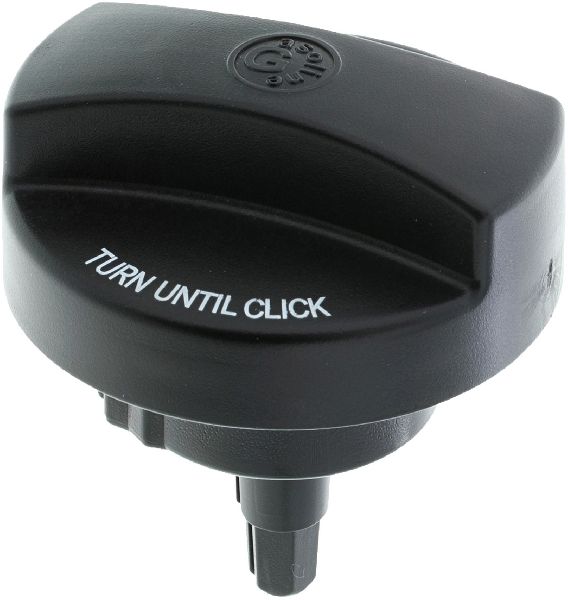
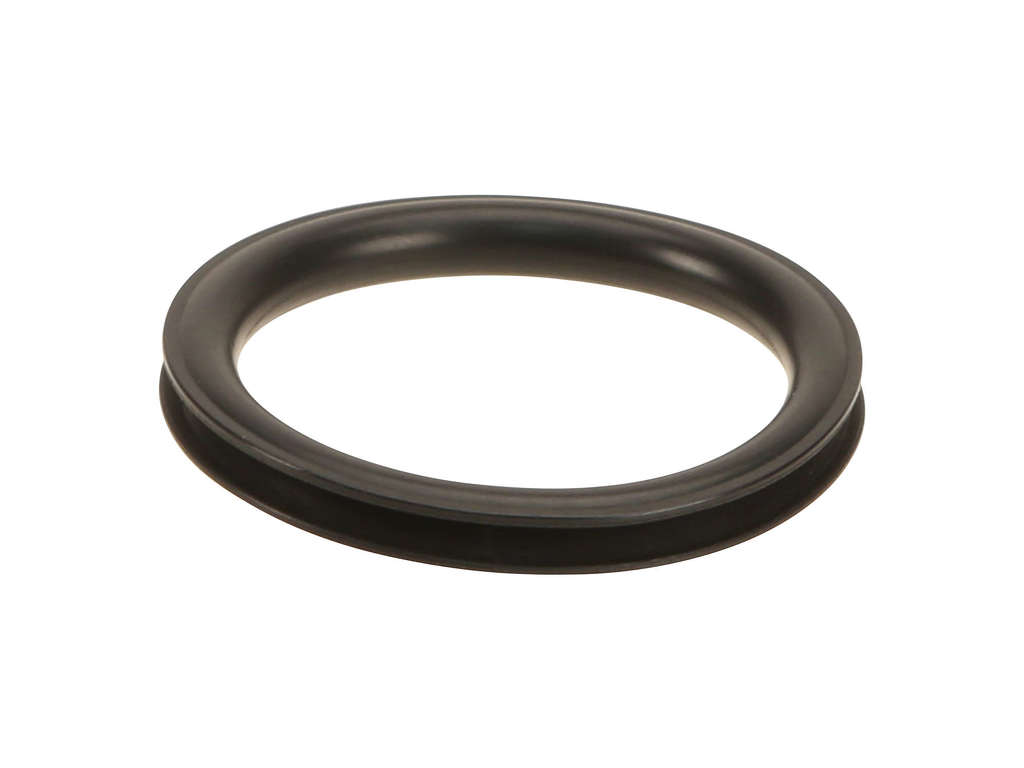
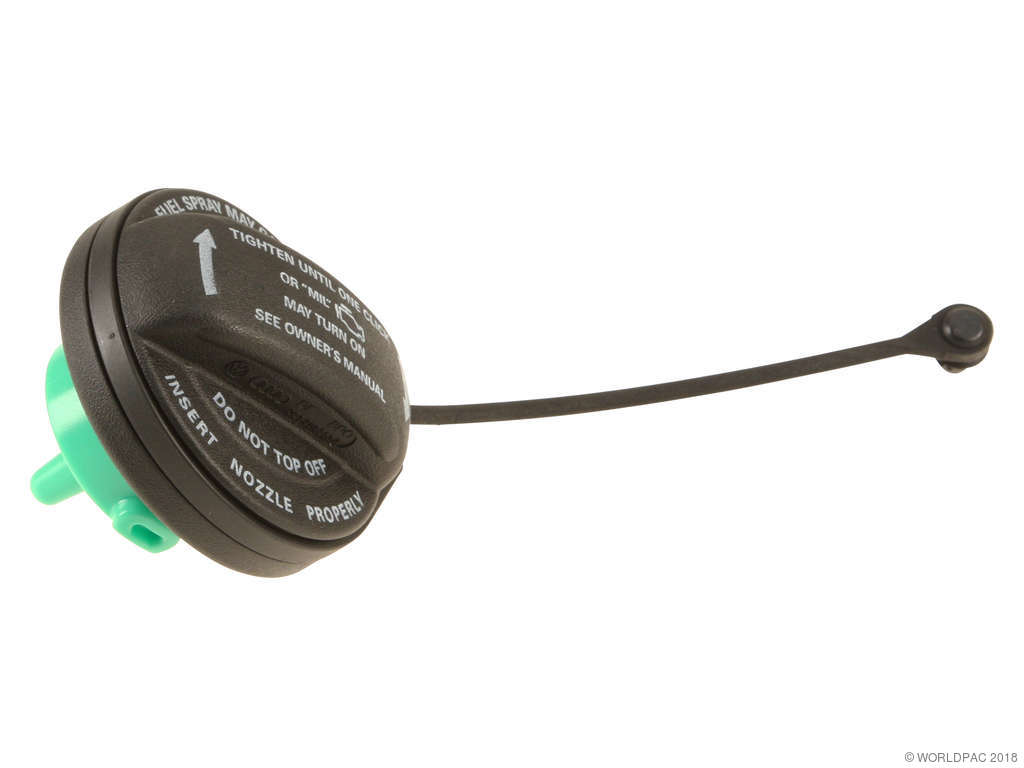
- Loose or Faulty Gas Cap 🔴 High Probability → Shop Fuel Tank Cap The gas cap seal is made of rubber that can crack and degrade over time, preventing a proper seal. This is the most common and easiest-to-fix cause for a P0456 code. Even invisible micro-cracks can be enough to trigger the code.
How to confirm: Inspect the gas cap's rubber O-ring for any visible cracks, brittleness, or damage. Ensure the cap is tightened until it clicks at least once. If the seal looks worn, it's best to replace it. Wiping the filler neck rim and the cap seal clean can sometimes help.
Typical fix: Replace the gas cap. It's highly recommended to use a Genuine OEM or high-quality OEM supplier (like Febi Bilstein) cap, as some cheaper aftermarket alternatives may not seal correctly and can cause the code to persist.
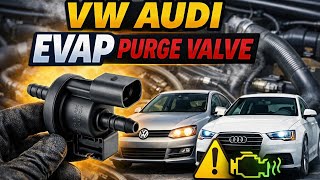
Est. part cost: $20-$60 - Failed EVAP Purge Valve (N80 Valve) 🟡 Medium Probability → Shop Vapor Canister The purge valve can get stuck open or closed, or develop a small internal leak, which is a common failure point on many VW and Audi models of this era. Carbon particles from the charcoal canister can also travel to the valve and cause it to stick.
How to confirm: The N80 valve is located in the engine bay, often on the passenger side near the firewall or intake manifold. When the engine is off, the valve should be closed. You can disconnect the hose and try to blow through it; if air passes, the valve is stuck open and needs replacement. A stuck-open valve can also cause a rough idle, especially after filling the gas tank.
Typical fix: Replace the N80 purge valve. It's a relatively simple DIY job. Ensure the arrow on the new valve points toward the engine (in the direction of flow).
Est. part cost: $40-$100 - Failed Leak Detection Pump (LDP) 🟡 Medium Probability → Shop Evaporative Emissions System Leak Detection Pump The LDP is responsible for pressurizing the EVAP system to test for leaks. These pumps can fail, their internal sensors can drift out of calibration, or they can develop hairline cracks in their plastic housing, causing false leak codes.
How to confirm: This component is typically located near the charcoal canister by the rear passenger-side wheel well, accessible by removing the wheel liner. Diagnosis often requires a scan tool capable of running the EVAP system self-test (like VCDS). A professional will use a smoke machine to pinpoint the leak if the pump itself is suspected.
Typical fix: Replace the Leak Detection Pump.
Est. part cost: $60-$150 - Cracked or Disconnected EVAP Hoses ⚪ Low Probability Plastic and rubber hoses become brittle with age and exposure to heat cycles, leading to small cracks that can cause a leak. The lines connected directly to the N80 valve or the LDP are common places to check.
How to confirm: A visual inspection of all accessible EVAP lines in the engine bay and under the vehicle may reveal obvious cracks or loose connections. A smoke test is the most effective way to find a small hose leak, as the cracks can be nearly invisible.
Typical fix: Replace the damaged section of hose.
Est. part cost: $10-$40
Rare But Worth Checking
- Cracked Charcoal Canister: → Shop Vapor Canister While not the most common cause for a *small* leak code, the canister can develop hairline cracks. It's more often associated with refueling issues or larger leak codes. Overfilling the gas tank is a primary cause of canister failure, as it can saturate the charcoal with liquid fuel.
- Leaking Fuel Tank Filler Neck: → Shop Fuel Tank Rust or damage to the filler neck where the gas cap seals can prevent a proper seal, even with a new cap. This is less common but should be inspected if other fixes fail.
- Cracked Fuel Tank Seam: → Shop Fuel Tank In a documented case, a user found a leak on the plastic seam at the top of the fuel tank itself, which was only discoverable by pressurizing the system and was not leaking any liquid fuel. This is a very rare but possible cause requiring tank removal and repair.
Diagnosis Steps
- Read the code with an OBD-II scanner to confirm it is P0456.
- Inspect the gas cap. Ensure it is tight. Remove it and check the rubber seal for any cracks or signs of wear. Clean the cap seal and filler neck rim. If in doubt, replace it with an OEM part as it's an inexpensive first step.
- Clear the code with the scanner and drive the vehicle for a few days. The EVAP monitor runs only under specific conditions (e.g., engine cold, fuel tank between 1/4 and 3/4 full), so it may take several drive cycles for the light to return.
- If the light returns, perform a visual inspection of the EVAP purge valve (N80) and its hoses in the engine bay. Look for any obvious cracks or damage.
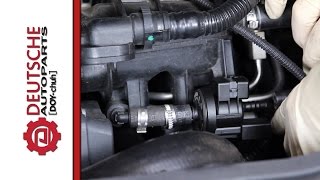
- Test the purge valve. With the engine off, disconnect the hoses and attempt to blow through it. If air passes, the valve is faulty 🎬 Watch: How to clean and fix a stuck N80 valve. and needs to be replaced.
- If the purge valve is good, locate the Leak Detection Pump (LDP) and charcoal canister near the rear wheel well. Inspect the pump and all connected hoses for visible damage or cracks.
- If the source of the leak is still not found, the most effective next step is to have a professional perform a smoke test. This involves injecting a harmless, visible smoke into the EVAP system to quickly identify the location of the small leak. This can reveal tiny cracks in hoses, the LDP housing, or the charcoal canister.
- For advanced DIYers, a scan tool like VCDS can be used to manually run the EVAP system basic settings test (Group 071) to check system pressure and help isolate the leak.
Parts You'll Likely Need
- Fuel Tank Cap
(OEM #8K0201550N)— This is the most frequent cause of a P0456 code. The seal degrades over time, causing a small leak. This part number supersedes older versions like 8K0-201-550-C and 8K0-201-550-F.
Trusted brands: Genuine Audi, Febi Bilstein
OEM price range: $45-$65
Aftermarket price range: $20-$35 - EVAP Purge Valve (N80)
(OEM #06E906517A)— A common failure item that gets stuck open, creating a constant small leak in the system and potentially causing rough idle. It is used across a wide range of VW/Audi vehicles.
Trusted brands: Bosch (OEM supplier), Genuine Audi
OEM price range: $80-$120
Aftermarket price range: $40-$70 - Leak Detection Pump (LDP)
(OEM #8K0906253N)— This pump is used to test the system and is a known failure point on this platform, either by failing mechanically or its sensor drifting. Other compatible part numbers may include 8K0906253J or 8K0906253L.
Trusted brands: Genuine Audi, Bosch
OEM price range: $120-$180
Aftermarket price range: $60-$100
Technical Service Bulletins (TSBs) & Recalls
- 01 16 51 / 2040924/1: Outlines diagnostic steps for DTC P0456, focusing on testing the Leak Detection Pump (LDP) and EVAP system for pressure drops.
Platform-Specific Known Issues
- TSB 2040924/1 - Diagnostic Procedure for P0456: A Technical Service Bulletin (TSB) 2040924/1 exists for DTC P0456. It outlines a detailed diagnostic procedure for technicians to follow, involving pressure testing the system with a specific tool (KLI9210) to differentiate between a leak in the LDP versus a leak elsewhere in the EVAP system. The procedure involves monitoring pressure drop over a 6-minute interval. If the pressure holds when the LDP is isolated, the TSB advises replacing the LDP. If it still drops, it recommends finding the leak with a smoke test.
Mechanic-Grade Diagnostic Values
- N80 Purge Valve Resistance — expected: 22.0 to 30.0 Ohms between terminals 1 and 2.. Failure: A reading outside this range indicates a faulty valve coil.
- N80 Purge Valve Connector Voltage — expected: Approximately 12V (battery voltage) at pin 1 with key on.. Failure: No voltage suggests a wiring or fuse issue (Fuse 5 on fuse panel B, SB5).
Hidden / Shadow Codes Worth Checking
- Permanent DTC: After clearing a P0456, the code may remain as a 'permanent' DTC in the ECU memory. This type of code cannot be erased with a simple 'clear codes' command. It will only be cleared by the ECU automatically after the vehicle successfully completes the internal EVAP monitor test on its own, which can take multiple drive cycles under specific conditions. (see via Visible with most modern OBD-II scanners after a standard code clear has been attempted.)
Scan Tool Commands That Help
- VCDS (VAG-COM): Basic Settings - Group 071 (IDE00744 on newer interfaces) — To manually initiate the EVAP system leak test. The test will pressurize the system and report back 'System OK' or 'Small Leak', helping to confirm the presence of a leak without waiting for the automatic monitor to run.
- VCDS (VAG-COM): Output Tests - N80 Valve — To manually cycle the N80 purge valve. You should hear an audible clicking from the valve as it actuates. This confirms the ECU can command the valve and that the solenoid is mechanically functioning, though it does not test for a seal.
Wiring & Ground Locations
- N80 Valve Power Source — The N80 valve receives power from Fuse 5 on Fuse Panel B (SB5) in the engine compartment.. If the N80 valve shows no voltage and isn't operating, this fuse should be checked before replacing the valve.
- N80 Valve Ground Signal — The ground for the N80 valve is provided by the Engine Control Module (ECM) at pin 49 of the T94 connector.. A break in the wire between the N80 connector (pin 2) and the ECM can prevent the valve from operating, causing related EVAP codes.
- Ground Connection 12 — In the engine compartment, on the left side, between the shock absorber strut and the water drainage box.. This is a primary ground point in the engine bay that serves multiple components. A corroded or loose connection here can cause erratic behavior in various engine electronics, including EVAP system sensors and solenoids.
- Ground Connection 687 — On the center tunnel, on the left side.. This ground point is relevant for components located towards the middle and rear of the vehicle. A poor connection could potentially affect the Leak Detection Pump (LDP) or its associated wiring.
Real Owner Repair Stories
- AudiWorld Forums user 'LarryR914' (2011 Q5) — Persistent P0456 code for a couple of months.
❌ Tried (didn't work) Replacing gas cap, Replacing purge valve (N80)
✅ What actually fixed it Found a hose near the charcoal canister (located below the passenger's seat area) that was not fully seated. Pushing the hose in until it clicked resolved the code. - YouTube user 'Fix it Angel' (Audi Q5 (year not specified, but B8 platform)) — Recurring P0456 code after a long time and many miles between appearances.
❌ Tried (didn't work) Clearing the code with a basic scanner (code would return after ~150 miles), Replacing gas cap, Replacing N80 purge valve
✅ What actually fixed it After dropping the fuel tank, a small air leak was discovered on a plastic seam at the very top of the fuel tank itself. The leak was not dripping fuel but was found by pressurizing the system. The seam was repaired with JB Weld, which resolved the leak and the code.
"I Checked Everything" — The Actual Cause
- In one documented case, a persistent P0456 was caused by a hairline crack in a seam on the top of the plastic fuel tank. This type of leak is extremely difficult to find with a standard smoke test because the smoke may not be visible without dropping the tank, and it only leaks vapor under specific pressure conditions. The owner only found it after all other components were replaced and the tank was removed for inspection.
OEM Part Supersession History
8K0906253A, 8K0906253C, 8K0906253E, 8K0906253J, 8K0906253L→8K0906253N— Standard design revisions and improvements by the manufacturer over the production lifespan.
Heads up: While all listed part numbers are generally interchangeable for this application, it is always recommended to install the latest revision (N) when replacing the Leak Detection Pump (LDP) to benefit from the most recent design updates.
Diagnostic Flowchart
Other Known Issues on This Vehicle
Issues unrelated to this code that are worth knowing about as an owner of this generation:
- 2.0T TFSI Excessive Oil Consumption 🔴 High — Very common on pre-facelift (2009-2012) models. Can start as early as 40,000-60,000 miles. Caused by faulty piston rings and/or a failed PCV valve (oil separator). (Ref: A class-action lawsuit led to an extended warranty program for this issue, but it has since expired. Repair involves new piston rings and pistons.)
- 2.0T TFSI Timing Chain Tensioner Failure 🔴 High — Affects early EA888 engines (approx. 2009-2013). The original tensioner can fail without warning, causing the chain to jump teeth, leading to catastrophic engine damage. Failure can occur between 70,000-120,000 miles. An updated tensioner part resolves the issue.
- Intake Valve Carbon Buildup 🟠 Medium — Common to all direct-injection engines on this platform (2.0T, 3.2L, 3.0T). Causes misfires, rough idle, and loss of performance, typically noticeable after 60,000-80,000 miles.
- Water Pump / Thermostat Housing Leaks 🟠 Medium — The plastic water pump and thermostat housing assembly is prone to cracking and leaking coolant. This is a common failure item across all engine types, often occurring between 60,000 and 100,000 miles.
Used vs. New Parts: Buying Guide for This Vehicle
When a used part is the smart pick: For this repair, used parts are generally not recommended. The primary culprits are rubber seals (gas cap), electronic solenoids (N80 valve), and plastic pumps with sensitive internal sensors (LDP), all of which degrade with age and heat cycles. A used part may have the same underlying issue or a very short remaining service life.
Donor-vehicle mileage cap: roughly under 40000 miles for the part to have meaningful remaining life.
What to inspect on the donor part:
- If considering a used hose, ensure it is still pliable and shows no signs of cracking or hardening.
- For a charcoal canister, ensure there are no visible cracks in the housing and no loose charcoal rattling inside.
OEM-only on this vehicle (don't cheap out):
- Fuel Tank Cap: Due to the sensitivity of the EVAP system test, many aftermarket gas caps do not seal to the precise tolerance required, leading to a persistent P0456 code. Using a Genuine Audi or the OEM supplier (e.g., Febi Bilstein) is critical.
- Leak Detection Pump (LDP): The internal sensor is calibrated specifically for the system. Aftermarket versions can have calibration or quality control issues, leading to false codes. Sticking with a Genuine or OEM supplier (Bosch) part is highly advised.
Aftermarket brands forum-validated for this vehicle:
- Bosch (OEM supplier for N80 valve and LDP)
- Febi Bilstein (OEM-quality supplier for gas cap)
Brands owners have reported issues with on this vehicle:
- Unbranded, low-cost gas caps from online marketplaces.
- No-name electronic components like purge valves or LDPs, as their internal seals and electronics often lack the durability and precise calibration of OEM parts.
Real Owner Stories
Aggregated from forums and TSBs cited above. Mileages and costs reflect what owners reported in those sources.
2010 Audi Q5 3.2L
Symptoms: Check engine light for P0456 and poor MPG.
What fixed it: The owner performed a step-by-step diagnosis starting with the gas cap and N80 valve.
Source hint: AudiWorld Forums - "Help! P0456 on my Audi Q5 3.2 2010 Premium Plus"
2010 Audi S4 (B8 platform)
Symptoms: Check engine light P0456.
What fixed it: Replacement of the gas cap with a new OEM cap due to a cracked seal.
Source hint: YouTube - "P0456 CHECK ENGINE LIGHT CODE FIX on my Supercharged 2010 Audi B8 S4"
Audi Q5 2.0T — ~150000 miles
Symptoms: Small EVAP leak code P0456 on a high-mileage vehicle.
What fixed it: A rare cracked seam on the top of the fuel tank, discovered after pressurizing the system.
Source hint: YouTube - "P0456 Evap small leak check engine light story 2.0t Audi VW..."
Related OBD-II Codes
Frequently Asked Questions
Is there a specific diagnostic procedure I should follow for P0456 on my Audi Q5?
Can I use any gas cap to fix the P0456 code on my Q5?
Where is the N80 purge valve located on the 2009-2017 Audi Q5?
Why does my Q5 have a rough idle only after I fill up the gas tank?
How do I find the Leak Detection Pump (LDP) on my Audi Q5?
Can I use VCDS to diagnose this small EVAP leak?
Helpful Videos
Used OEM Parts in Stock


New Aftermarket Parts Available


The information in this article is provided for general reference and educational purposes only. Vehicle specifications, procedures, and part compatibility can vary by production date, trim level, and region. Always consult your vehicle's factory service manual and verify part numbers before purchasing or performing repairs. Safety-critical components such as airbags, seat belts, and braking systems should be installed by a qualified professional.
- Audi Q5:
- 🧭 Diagnostic Flowchart
- 🎬 Helpful Videos
- 🛍️ Shop This Part
- What's Unique About the 2009-2017 Audi Q5
- Symptoms You May Notice
- Most Likely Causes
- Rare But Worth Checking
- Diagnosis Steps
- Parts You'll Likely Need
- Technical Service Bulletins (TSBs) & Recalls
- Platform-Specific Known Issues
- Mechanic-Grade Diagnostic Values
- Hidden / Shadow Codes Worth Checking
- Scan Tool Commands That Help
- Wiring & Ground Locations
- Real Owner Repair Stories
- "I Checked Everything" — The Actual Cause
- OEM Part Supersession History
- Other Known Issues on This Vehicle
- Used vs. New Parts: Buying Guide for This Vehicle
- Real Owner Stories
- 2010 Audi Q5 3.2L
- 2010 Audi S4 (B8 platform)
- Audi Q5 2.0T — ~150000 miles
- Related OBD-II Codes
- Frequently Asked Questions
- 🎟️ Get 5% Off