

P0456 on 2010-2016 Audi S4: Causes and Fixes for a Very Small EVAP Leak
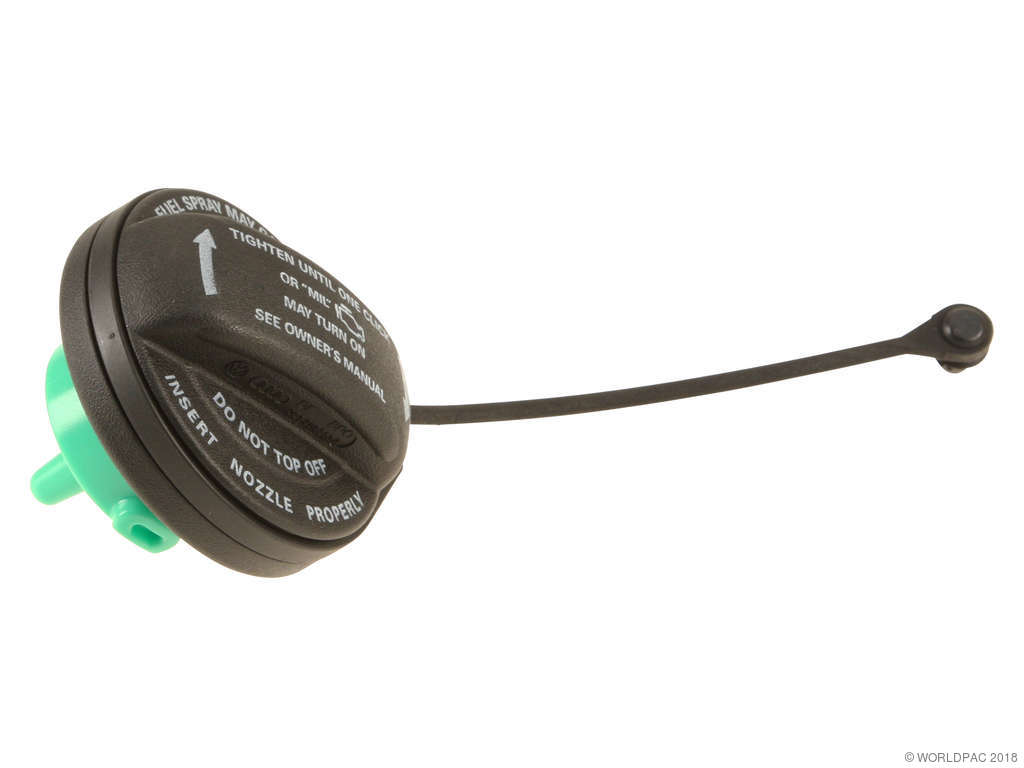
For a 2010-2016 Audi S4, code P0456 is most often caused by a failing gas cap. Before attempting more complex repairs, inspect and tighten the cap. If the seal is cracked or worn, a new OEM cap, part number 8K0201550N, costs around $50 and often resolves the issue. If the cap doesn't fix it, the N80 purge valve is the next most likely culprit.
- P0456 is not a serious code and will not affect how your Audi S4 drives.
- The most likely cause is a loose or failing gas cap. Always check this first.
- When replacing the gas cap, use an OEM part to ensure a proper seal.
- If a new gas cap doesn't fix the issue, the next most likely culprit is the N80 EVAP Purge Valve.
- A smoke test is the most effective way to find a leak if the gas cap and purge valve are not the cause.
What's Unique About the 2010-2016 Audi S4
The B8 and B8.5 generation Audi S4, like many Audis of this era, is known for the P0456 code appearing as the vehicle ages. While the causes are typical for any EVAP system, owners frequently report that the first and most common point of failure is the gas cap seal, which degrades over time. Another common culprit on these platforms is the N80 EVAP Purge Valve, which can get stuck or fail electronically. Some TSBs for related models also mention that the NVLD pressure switch can erroneously detect a leak, sometimes requiring a part replacement or software update to fix.
Generation note: The 2010-2016 range covers the B8 (2010-2012) and B8.5 (2013-2016) generations of the Audi S4. The 3.0T engine and its associated EVAP system, along with the common failure points for this code, are largely identical across both generations. Minor mechanical updates were made in the B8.5, but they don't significantly alter the diagnosis for this specific code.
Symptoms You May Notice
- Check Engine Light is on.
- No noticeable impact on vehicle performance or drivability.
- A faint smell of fuel in rare cases, though this is more common with larger EVAP leaks.
- Replacing the charcoal canister or other expensive EVAP components before thoroughly checking the gas cap and performing a smoke test. The issue is very often a simple and cheap fix.
- Using a cheap aftermarket gas cap that does not seal properly, leading to the belief that the gas cap was not the original problem.
Most Likely Causes
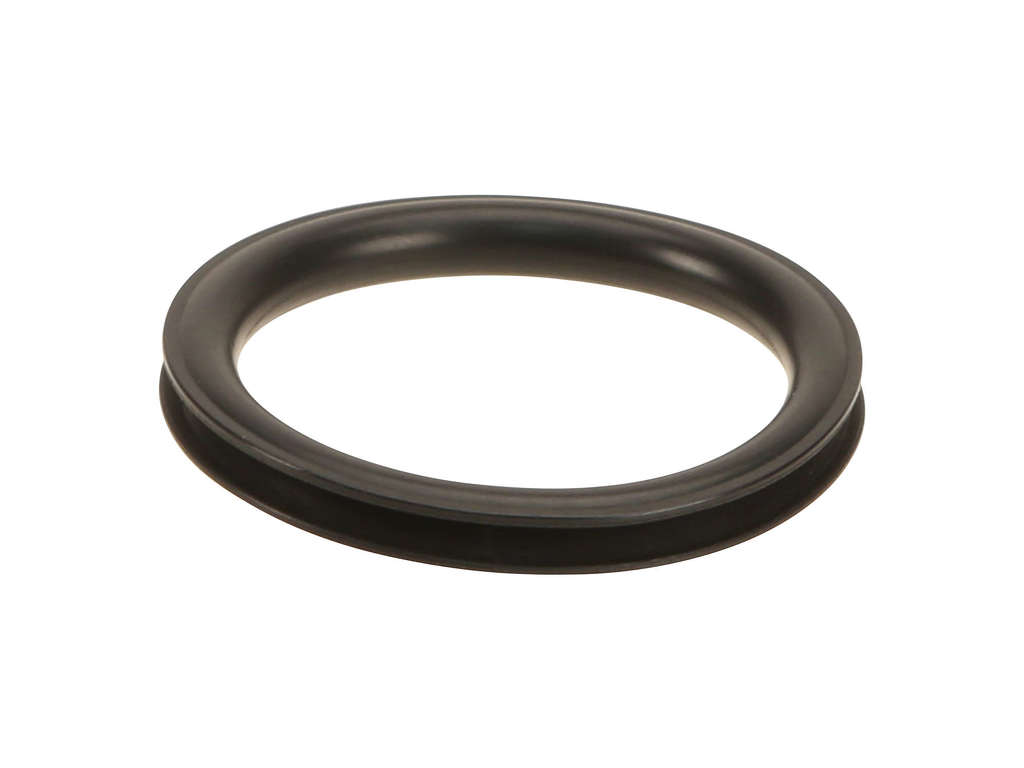
- Loose or Failing Gas Cap 🔴 High Probability → Shop Fuel Tank Cap The rubber O-ring on the gas cap seal cracks and deteriorates with age and exposure to fuel vapors, preventing a proper seal. This is the most frequently reported fix by owners on forums and in repair videos. The tether holding the cap can also break, leading to the cap being lost or not tightened properly.
How to confirm: First, ensure the cap is tightened until it clicks multiple times. Inspect the rubber seal for any visible cracks, brittleness, or deformities. Clean the sealing surface on the fuel filler neck. If the code returns after clearing, the cap is the most likely suspect. Many owners recommend replacing it as the first step, even if it looks okay, due to the low cost and high probability.
Typical fix: Replace the gas cap with a new OEM part (Part No. 8K0201550N). It is highly recommended to use an OEM cap, as some aftermarket caps may not seal correctly and can cause the code to return.
Est. part cost: $40-$60 - Faulty EVAP Purge Valve (N80) 🟡 Medium Probability → Shop Vapor Canister The N80 valve is a solenoid that controls the flow of fuel vapors to the engine. It's a common failure item on many VW/Audi products from this era, often getting stuck open or failing electronically. Its constant cycling leads to eventual wear.
How to confirm: The valve is normally closed when the engine is off. You can remove it and try to blow through it; if air passes, it's stuck open. A definitive diagnosis often requires a smoke test to see if smoke passes through the valve when it is commanded shut. It can also be tested with a capable scan tool by activating it and listening for a click. The internal resistance should be between 22 and 30 Ohms.
Typical fix: Replace the N80 purge valve. It is located in the engine bay, mounted to the intake manifold, and is a relatively straightforward replacement. 🎬 See how to replace the N80 purge valve yourself. The OEM part is made by Bosch.
Est. part cost: $25-$75 - Cracked or Disconnected EVAP Hoses ⚪ Low Probability Plastic and rubber hoses in the engine bay and around the fuel tank can become brittle and crack over time due to heat cycles and age. A specific user on AudiWorld found a hose near the charcoal canister had become disconnected, which resolved their P0456 code after being reconnected.
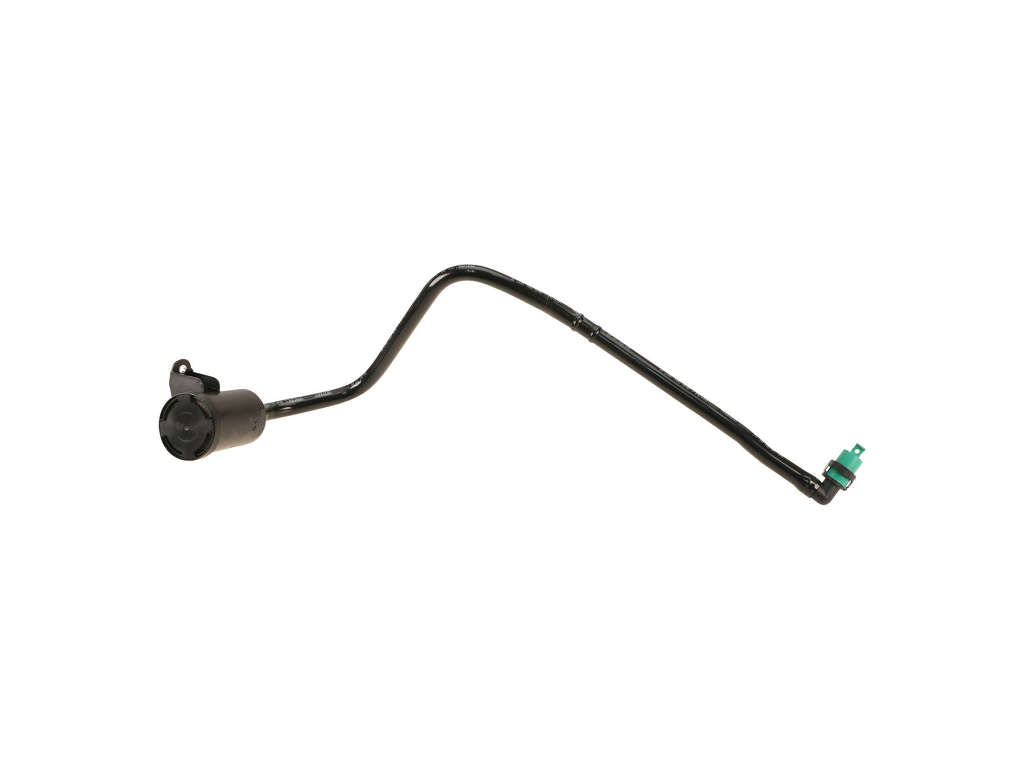
How to confirm: A visual inspection may reveal obvious cracks or loose connections. The most effective method is to have a smoke test performed, which will force smoke through the EVAP system and make any leaks visible.
Typical fix: Replace the specific section of cracked hose or re-secure the connection. This can range from a simple clamp to replacing a pre-formed hose assembly.
Est. part cost: $10-$100
Rare But Worth Checking
- Faulty Leak Detection Pump (LDP) or NVLD Switch: → Shop Evaporative Emissions System Leak Detection Pump A Technical Service Bulletin (TSB) for some Audi models indicates the NVLD (Natural Vacuum Leak Detection) pressure switch can fail and falsely report a leak. In other cases, the LDP itself, located near the rear passenger wheel well, can develop an internal leak or suffer from wiring damage. This usually requires advanced scan tools to perform system tests and is less common than the gas cap or N80 valve.
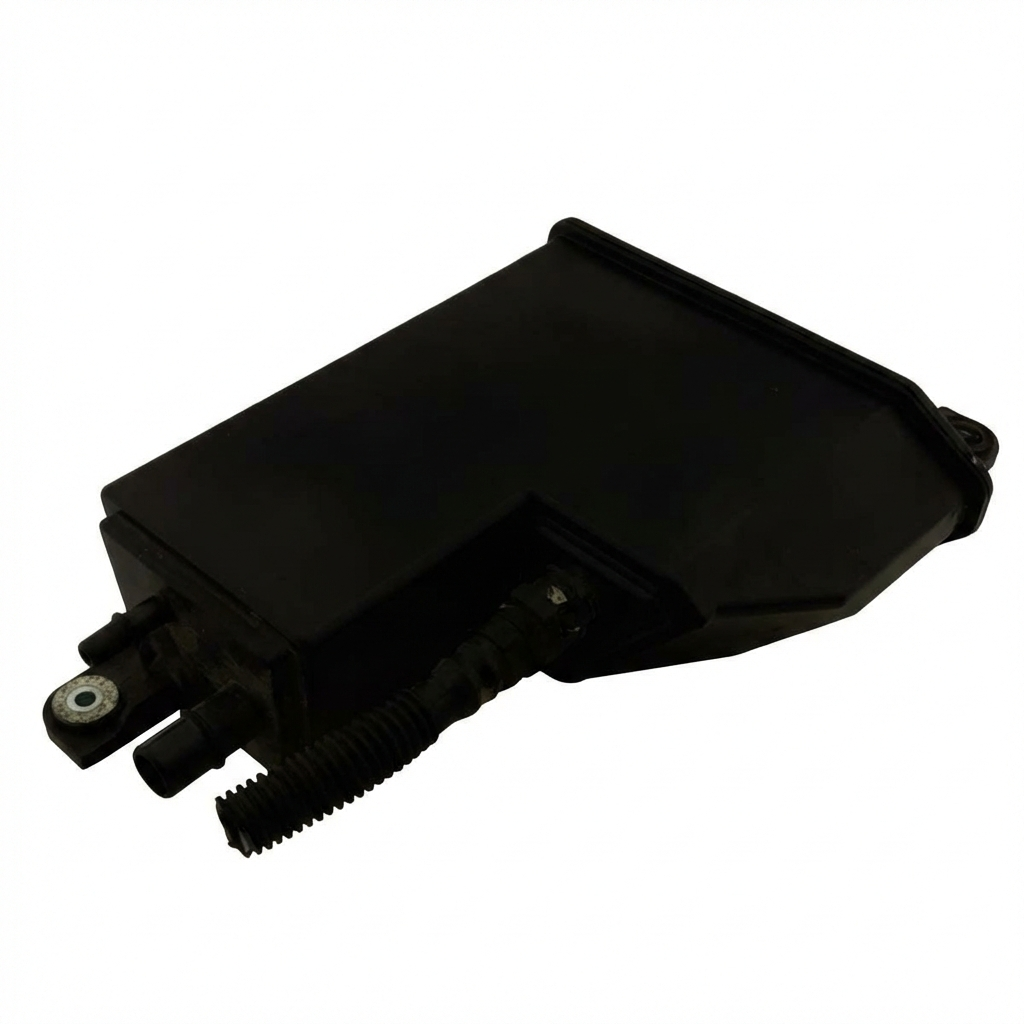
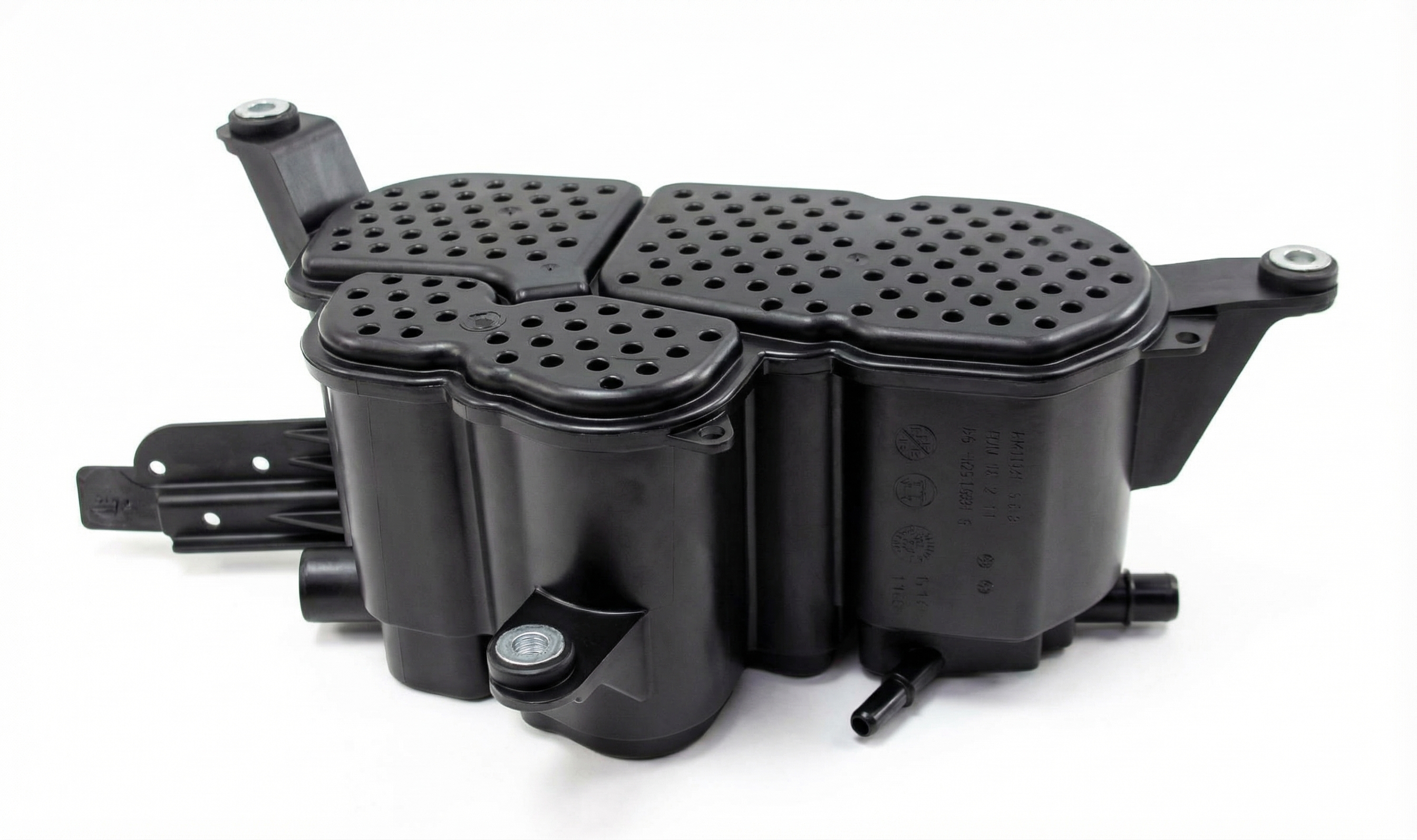
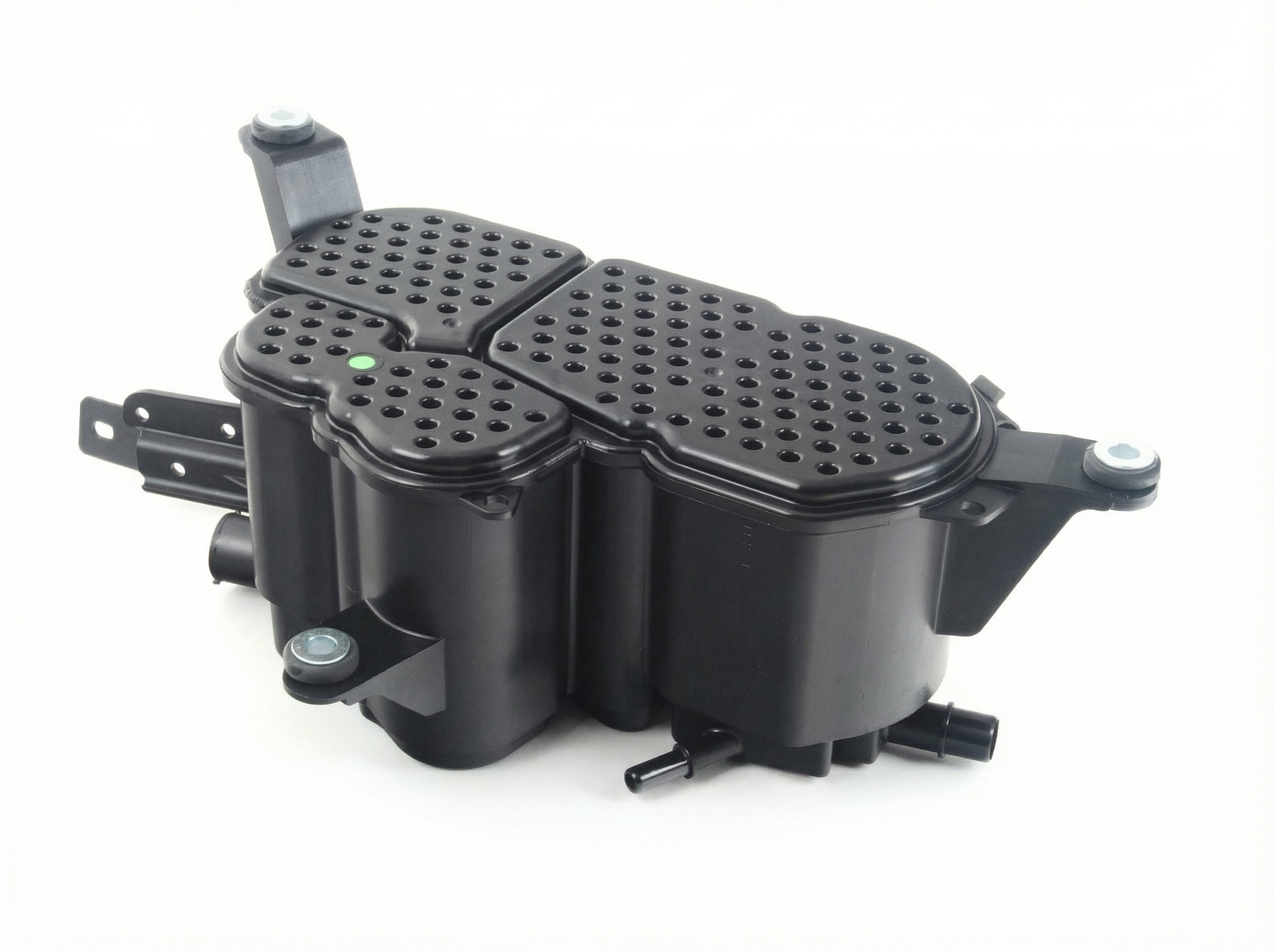
- Cracked Charcoal Canister: → Shop Vapor Canister The charcoal canister can develop cracks, especially if the vehicle has sustained an underbody impact. It is located under the car, typically near the fuel tank. A smoke test is the best way to identify a leak from the canister body itself.
Diagnosis Steps
- Verify the presence of code P0456 with an OBD-II scanner.
- Inspect the gas cap. Remove it, check the rubber seal for cracks or damage, and clean the sealing surface on the fuel filler neck.
- Reinstall the gas cap, ensuring it clicks several times to confirm it is tight.
- Clear the code with the OBD-II scanner.
- Drive the vehicle for several days (multiple drive cycles) to see if the Check Engine Light returns. The EVAP monitor runs under specific conditions, so it may take time.
- If the light returns, replace the gas cap with a new OEM part (8K0201550N). This is an inexpensive and highly probable fix. One owner confirmed the light stayed off for over 700 miles after this fix.
- If the code persists after replacing the gas cap, the next step is to inspect and test the EVAP Purge Valve (N80) in the engine bay.
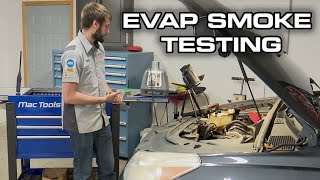
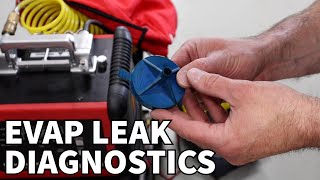
- For a definitive diagnosis of other components, a smoke test is required. This involves injecting smoke into the EVAP service port and looking for smoke escaping from cracked hoses, the charcoal canister, or other connections. 🎬 Watch: How to perform a smoke test for EVAP leaks.
- Based on the smoke test results, replace the leaking component (e.g., N80 valve, hose, charcoal canister, leak detection pump).
Parts You'll Likely Need
- Fuel Filler Cap
(OEM #8K0201550N)— This is the most common cause of a P0456 code on this vehicle due to the seal degrading over time. It supersedes older part numbers like 8K0201550F and 8T0201550B.
Trusted brands: Audi Genuine, Febi Bilstein
OEM price range: $50-$60
Aftermarket price range: $20-$30 - EVAP Purge Valve (N80)
(OEM #06E906517A)— A common failure point on VW/Audi engines of this era that can get stuck open, causing a small leak code. This part is often manufactured by Bosch for Audi.
Trusted brands: Bosch, Audi Genuine
OEM price range: $60-$80
Aftermarket price range: $25-$50
Related Codes That Often Appear With This One
- P0441 — This code for 'Incorrect Purge Flow' often points directly to a faulty N80 purge valve, which can also cause the P0456 leak code if it's stuck partially open.
- P0455 — This indicates a 'Large EVAP Leak'. If you see both, it could mean a component has failed completely, such as a gas cap left off or a major hose disconnection.
Technical Service Bulletins (TSBs) & Recalls
- TPI 2035073/12 (October 29, 2015): Mentions that for some Audi models, the NVLD pressure switch may erroneously detect a very small leak, requiring replacement of the sensor and filter. While not specific to the S4, it's a known issue in the family.
Platform-Specific Known Issues
- Owner Experience: Gas Cap Solves the Problem After Multiple Attempts: → Shop Fuel Tank Cap On AudiWorld forums, a 2010 S4 owner with 83k miles reported the P0456 code would return every 500 miles despite re-tightening the cap and clearing the code. This points to the gas cap seal being worn out and needing replacement, a very common story for this platform. 🎬 Watch: A 2010 S4 owner fixes his P0456 code.
- Owner Experience: The Disconnected Hose: An owner of a 2011 Q5 (a platform mate with a similar EVAP system) on AudiWorld forums chased a P0456 code. After replacing the gas cap and purge valve with no success, they found a hose to the charcoal canister located under the car was not fully seated. Pushing it in until it 'clicked' resolved the code.
Mechanic-Grade Diagnostic Values
- N80 (EVAP Purge Valve) internal resistance — expected: 22.0 to 30.0 Ohms. Failure: A reading outside this range indicates a faulty valve coil.
- N80 (EVAP Purge Valve) connector voltage — expected: Battery voltage at Pin 1 (power) when the starter is briefly operated or engine is running. Pin 2 is the ground signal from the ECM.. Failure: No voltage at Pin 1 suggests a problem with the power supply, likely the Fuel Pump Relay or associated fuse.
- Leak Detection Pump (LDP) V144 internal resistance — expected: Between Pin 1 and 3: 640-720 Ohms. Between Pin 2 and 3: 15-17 Ohms.. Failure: Readings outside these specific ranges point to a failed LDP.
Scan Tool Commands That Help
- VCDS (VAG-COM): Engine -> Basic Settings -> Group 070 (or 071) — To initiate the full EVAP system leak test sequence. This is crucial for verifying a repair and helping the readiness monitor to set without extensive driving.
- VCDS (VAG-COM): Engine -> Output Tests -> EVAP Leak Detection Pump (V144) — To directly command the LDP to activate. A clicking or buzzing sound confirms the pump is receiving the signal and is not electrically dead. This helps isolate a wiring/ECM issue from a failed pump.
- VCDS (VAG-COM): Engine -> Output Tests -> EVAP Canister Purge Regulator Valve (N80) — To cycle the N80 valve. You should hear the valve clicking. This test confirms the valve's solenoid is responding to ECM commands.
Wiring & Ground Locations
- N80 Valve Connector — In the engine bay, connected to the N80 valve on the intake manifold.. Testing for voltage at Pin 1 and ground signal at Pin 2 is a key step in diagnosing a non-responsive N80 valve, differentiating a bad valve from a wiring or ECM problem.
- Leak Detection Pump (LDP) Connector — Behind the rear passenger-side wheel well liner.. This 3-pin connector is the diagnostic point for the LDP. Pin 3 should have battery voltage, while Pins 1 and 2 are control/feedback lines to the ECM. Damage to this harness is common due to its location.
- J757 - Engine Component Power Supply Relay — In the engine compartment electronics box (E-box), under the plenum panel/cowl.. On some models, this relay supplies power to the LDP. If the LDP has no power at its connector, this relay and its associated fuse are primary suspects.
Real Owner Repair Stories
- AudiWorld Forums user 'LarryR914' (2011 Audi Q5 (similar B8 platform)) — Persistent P0456 code for a couple of months.
❌ Tried (didn't work) Replacing gas cap, Replacing purge valve (N80)
✅ What actually fixed it The user located the charcoal canister under the car (below passenger side) and found a hose that was not fully seated. Pushing the hose in until it 'clicked' resolved the code.
OEM Part Supersession History
8T0201550B, 8K0201550C, 8K0201550F→8K0201550N— Updated design to improve sealing and longevity of the rubber gasket.
Model Year Variations Within This Range
- 2013-2016 (B8.5): The B8.5 facelift introduced revised aesthetics (headlights, bumpers, grille), an updated MMI system, and electromechanical steering instead of hydraulic. While there were minor mechanical revisions to the DSG and rear suspension, the 3.0T engine and the core EVAP system components (N80, LDP, Canister, Gas Cap) remained fundamentally the same, meaning the diagnosis for P0456 is identical between B8 and B8.5.
Diagnostic Flowchart
Other Known Issues on This Vehicle
Issues unrelated to this code that are worth knowing about as an owner of this generation:
- DSG (S-Tronic) Mechatronic Failure 🔴 High — More common on earlier B8 models (2010-2012), but can occur at any mileage, typically over 60k miles. Symptoms include harsh shifting, delayed gear engagement, and warning lights.
- Water Pump & Thermostat Failure 🟠 Medium — A very common failure item, often occurring between 60k-100k miles. Early B8 models (2010-2012) used a plastic pump that was more prone to failure; later models had an improved design. Failure leads to coolant leaks.
- Carbon Buildup on Intake Valves 🟠 Medium — As a direct-injected engine, carbon buildup is inevitable and typically requires cleaning every 60k-80k miles to restore performance and prevent misfires.
- PCV Valve Failure 🟡 Low — The PCV (Positive Crankcase Ventilation) valve, integrated into the oil separator on top of the engine, can fail and cause excessive oil consumption or a high-pitched squeal. More common on 2010-2012 models with the original plastic design.
- Timing Chain Tensioner Wear 🟡 Low — While the 3.0T is known for its robust timing system compared to the 2.0T and 4.2L V8, a brief rattle on cold starts can indicate tensioner wear at higher mileage (100k+ miles). Outright failure is rare.
Used vs. New Parts: Buying Guide for This Vehicle
When a used part is the smart pick: For this specific repair, buying used parts is generally not recommended. The primary failure points are rubber and plastic components (gas cap seal, hoses, valve diaphragms) that degrade with age and heat cycles. A used part from a donor vehicle is likely to have similar wear and a short remaining lifespan.
Donor-vehicle mileage cap: roughly under 40000 miles for the part to have meaningful remaining life.
What to inspect on the donor part:
- For a gas cap, inspect the rubber O-ring for any signs of cracking, dryness, or compression; it should be soft and pliable.
- For an N80 valve or LDP, there are no reliable visual cues. Failure is typically internal.
OEM-only on this vehicle (don't cheap out):
- Fuel Filler Cap: Strongly recommended to use a Genuine Audi part (8K0201550N). Aftermarket caps are notorious for not sealing to the exact pressure specifications required by the sensitive Audi EVAP system, often causing the P0456 code to return.
Aftermarket brands forum-validated for this vehicle:
- Bosch: For the EVAP Purge Valve (N80), Bosch is the original equipment manufacturer (OEM) for Audi. A Bosch-branded part is identical to the Genuine Audi part but without the Audi logo, often at a lower cost.
Brands owners have reported issues with on this vehicle:
- Generic/unbranded fuel caps from online marketplaces should be avoided as they are a common source of recurring P0456 codes.
Real Owner Stories
Aggregated from forums and TSBs cited above. Mileages and costs reflect what owners reported in those sources.
2010 Audi S4 3.0T — 83000 miles
Symptoms: The P0456 code would return every 500 miles despite re-tightening the cap and clearing the code.
What fixed it: Replacing the gas cap seal/unit as it was worn out.
Source hint: AudiWorld Forums - 'Got my first CEL today, P0456 - EVAP System Leak'
2011 Audi Q5 3.0T
Symptoms: Chased a P0456 code unsuccessfully after replacing the gas cap and purge valve.
What fixed it: Found a hose to the charcoal canister located under the car was not fully seated and pushed it in until it 'clicked'.
Source hint: AudiWorld Forums - 'P0456 - Evaporative Emission System Leak Detected (very small leak)'
Related OBD-II Codes
Frequently Asked Questions
What is the specific OEM part number for the gas cap on my 2010-2016 Audi S4?
Does TPI 2035073/12 apply to the P0456 code on my Audi?
Where is the N80 purge valve located on the S4, and how can I test it?
I've tightened my gas cap but the P0456 code keeps returning on my 2010 S4. What should I do?
Could a disconnected hose cause this code on my S4?
How long does it take for the Check Engine Light to go off after a repair?
Helpful Videos
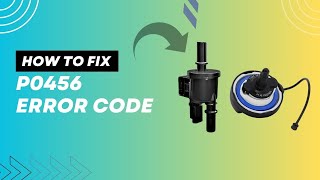
![How to Fix P0456 Engine Code in 7 Minutes [7 DIY Methods / Only $3.44]](https://img.youtube.com/vi/njt81AALI3U/mqdefault.jpg)
Used OEM Parts in Stock
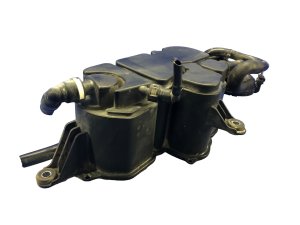

New Aftermarket Parts Available


The information in this article is provided for general reference and educational purposes only. Vehicle specifications, procedures, and part compatibility can vary by production date, trim level, and region. Always consult your vehicle's factory service manual and verify part numbers before purchasing or performing repairs. Safety-critical components such as airbags, seat belts, and braking systems should be installed by a qualified professional.
- Audi S4:
- 🧭 Diagnostic Flowchart
- 🎬 Helpful Videos
- 🛍️ Shop This Part
- What's Unique About the 2010-2016 Audi S4
- Symptoms You May Notice
- Most Likely Causes
- Rare But Worth Checking
- Diagnosis Steps
- Parts You'll Likely Need
- Related Codes That Often Appear With This One
- Technical Service Bulletins (TSBs) & Recalls
- Platform-Specific Known Issues
- Mechanic-Grade Diagnostic Values
- Scan Tool Commands That Help
- Wiring & Ground Locations
- Real Owner Repair Stories
- OEM Part Supersession History
- Model Year Variations Within This Range
- Other Known Issues on This Vehicle
- Used vs. New Parts: Buying Guide for This Vehicle
- Real Owner Stories
- 2010 Audi S4 3.0T — 83000 miles
- 2011 Audi Q5 3.0T
- Related OBD-II Codes
- Frequently Asked Questions
- 🎟️ Get 5% Off