

P0456 on 2019-2025 BMW X7: EVAP Very Small Leak Causes and Fixes
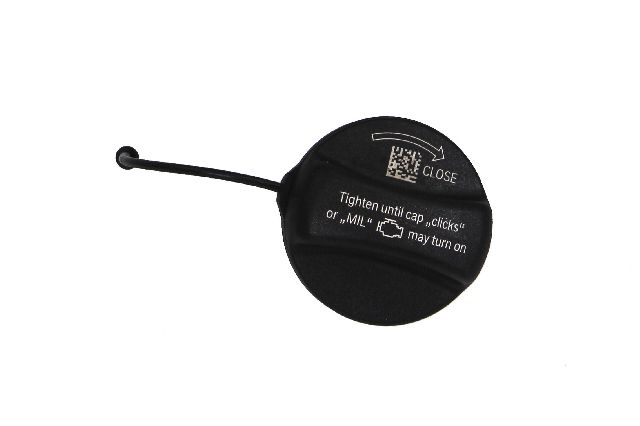
On a 2019-2025 BMW X7, code P0456 is most often caused by a loose or faulty gas cap. Before attempting any other repairs, ensure the gas cap is tightened until it clicks. If the light returns, a new OEM gas cap (part #16117222391) is an inexpensive next step (~$30-$50). If the cap doesn't fix it, the next most likely culprits are the fuel tank vent valve (purge valve) or the DMTL pump.
- P0456 is not a serious code and will not affect how your X7 drives.
- Always check the gas cap first. Ensure it's tight and the seal is not cracked. This resolves the issue in a high number of cases.
- Do not immediately buy expensive parts. The diagnostic process for this code should follow a sequence from cheapest/easiest to most complex: gas cap, purge valve, then a smoke test to find the true source of the leak.
- If you need to replace parts, using OEM or reputable OE-supplier brands like Bosch is recommended for emissions components to ensure proper function.
- Avoid topping off your fuel tank after the pump clicks off, as this can damage the charcoal canister and lead to EVAP system problems.
What's Unique About the 2019-2025 BMW X7
The BMW X7 (G07) uses a sophisticated Diagnostic Module Tank Leakage (DMTL) pump to pressurize the fuel system for leak detection, a common setup on modern BMWs. Unlike older systems, the most frequent cause is often very simple: an improperly tightened gas cap, which is a common owner experience documented on video for the X7. While the underlying components are similar to other BMWs on the CLAR platform like the X5 (G05), accessing parts like the DMTL pump near the rear passenger-side wheel well requires removing the fender liner, which can be a more involved job on a large SUV. The specific purge valve part number can also differ between the inline-6 (B58) and V8 (N63) engine options. The 2023 LCI (Life Cycle Impulse) update introduced new engines with 48V mild-hybrid systems, which could lead to variations in EVAP components or software logic compared to pre-LCI models.
Symptoms You May Notice
- Check Engine Light is on
- No noticeable impact on drivability or fuel economy
- A faint fuel odor near the rear of the vehicle (rare for a very small leak, but possible)
- Replacing the charcoal canister when the actual fault is a much cheaper component like the gas cap or purge valve.
- Replacing O2 sensors, which are not related to the EVAP system.
Most Likely Causes
- Loose or Worn Fuel Cap 🔴 High Probability → Shop Fuel Tank Cap This is the most common reason for this code across all vehicles, including the X7. The cap may not have been tightened enough after refueling, or the rubber O-ring seal can dry out and crack over time.
How to confirm: Remove the fuel cap and inspect the rubber seal for any cracks, stiffness, or visible damage. Reinstall the cap, ensuring you turn it until it makes several audible clicks. Clear the code and drive for a few days to see if it returns, as the EVAP monitor runs its self-test under specific conditions, often after being parked.
Typical fix: Replace the fuel cap with a new OEM part (P/N: 16117222391). Aftermarket caps are sometimes reported to not seal correctly.
Est. part cost: $30-$50 - Faulty Fuel Tank Vent Valve (Purge Valve) 🟡 Medium Probability → Shop Fuel Tank This solenoid valve is located in the engine bay and cycles frequently. Over time, it can fail to seal completely, creating a small leak path. This is a common failure item on many modern engines, including the BMW B58 used in the X7 xDrive40i.
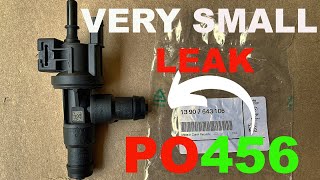
How to confirm: The valve is normally closed. With the engine off, disconnect the valve and try to blow through it. If air passes through, the valve is stuck open and faulty. A professional diagnosis would involve using a scan tool to command the valve open and closed while monitoring system pressure. A video on a G05 X5 with the B58 engine shows this exact part being replaced for P0456.
Typical fix: Replace the fuel tank vent valve. For the B58 engine, a common part is Bosch 13907643106.
Est. part cost: $50-$100 - Failed Leak Detection Pump (DMTL / NVLD) 🟡 Medium Probability → Shop Evaporative Emissions System Leak Detection Pump The DMTL pump itself or its internal changeover valve can fail, causing the system to incorrectly report a leak. This component is located in the rear passenger-side wheel well, exposed to the elements, and is a known failure point on many BMW platforms.
How to confirm: This is difficult to confirm without a BMW-specific scan tool (like ISTA) to activate the pump and run a system test. A professional shop would typically perform a smoke test; if no leaks are found elsewhere and the purge valve is good, the DMTL pump is the likely culprit.
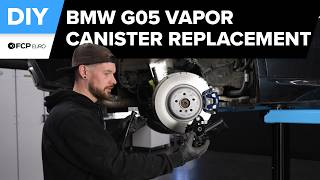
Typical fix: Replace the DMTL pump assembly. This requires removing the rear wheel and fender liner for access. 🎬 See this walkthrough for replacing the NVLD module
Est. part cost: $150-$250 - Cracked or Disconnected EVAP Hoses ⚪ Low Probability Plastic and rubber hoses can become brittle with age and exposure to engine heat, leading to hairline cracks that are often invisible.
How to confirm: A visual inspection of all accessible EVAP lines in the engine bay and near the charcoal canister may reveal obvious damage. However, a very small leak is often invisible and requires a smoke test to locate precisely.
Typical fix: Replace the specific hose that is found to be leaking.
Est. part cost: $20-$80
Rare But Worth Checking
- Cracked Charcoal Canister: → Shop Vapor Canister This is uncommon but can be caused by physical damage from road debris or by repeatedly 'topping off' the fuel tank, which forces liquid gasoline into the canister that is only designed for vapor.
- Faulty Fuel Tank Pressure Sensor: → Shop Fuel Tank While less common, the sensor that reports pressure data to the computer can fail, sending incorrect information and causing the computer to falsely believe there is a leak. This may sometimes be accompanied by other fault codes.
Diagnosis Steps
- Read the code with an OBD-II scanner to confirm P0456 is present.
- Inspect the fuel cap for tightness and the condition of its rubber seal. Tighten it until it clicks several times.
- Clear the fault code using the scanner.
- Drive the vehicle for several days, including some overnight stops. The EVAP self-test often runs after the vehicle has been parked for a period.
- If the Check Engine Light returns, re-scan the codes. If P0456 is back, proceed with further diagnosis.
- Consider replacing the gas cap with a new OEM part (16117222391) as it's a very common, inexpensive fix.
- Visually inspect the Fuel Tank Vent Valve (Purge Valve) in the engine bay and its connected hoses for any visible cracks or damage.
- If possible, test the purge valve to see if it's stuck open by attempting to blow through it with the vehicle off.
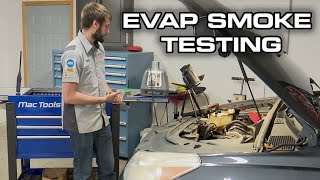
- If the above steps do not identify the issue, the most effective next step is a professional smoke test. This involves injecting pressurized, UV-dyed smoke into the EVAP system to pinpoint the exact location of the leak. 🎬 Watch: How to perform a professional EVAP smoke test
- Based on the smoke test, replace the identified leaking component, which could be a hose, the DMTL pump, or the charcoal canister.
Parts You'll Likely Need
- Fuel Cap
(OEM #16117222391)— This is the most frequent and simplest cause. The seal wears out or the cap is not properly secured. It is the first and cheapest part to replace.
Trusted brands: BMW (Genuine OEM)
OEM price range: $30-$50
Aftermarket price range: $15-$30 - Fuel Tank Vent Valve (Purge Valve)
(OEM #13907643106 (For B58 Engine))— This is a common failure point that creates a small leak in the engine bay. It is relatively accessible and a likely candidate after the gas cap.
Trusted brands: Bosch, BMW (Genuine OEM)
OEM price range: $70-$110
Aftermarket price range: $40-$80 - Leak Detection Pump (DMTL)
(OEM #16137475446 (Verify by VIN, may supersede 16138485646))— The pump module that pressurizes the system for testing can fail, leading to false leak codes. It's a common BMW issue, often the culprit if the gas cap and purge valve are good.
Trusted brands: Bosch, BMW (Genuine OEM)
OEM price range: $180-$260
Aftermarket price range: $100-$160
Related Codes That Often Appear With This One
- P0442 — This code indicates a 'small leak,' whereas P0456 indicates a 'very small leak.' They point to the same type of failure, just with a different measured leak rate. You may see one or the other depending on the severity of the leak at the time of the test.
- P0172 — System Too Rich (Bank 1). This can occasionally appear with P0456 if the purge valve is stuck open, allowing un-metered fuel vapors to be constantly drawn into the engine, creating a rich fuel mixture. A G05 X5 owner documented this exact code combination. 🎬 Watch: Fixing P0456 and P0172 codes on a B58 engine
Technical Service Bulletins (TSBs) & Recalls
- While no specific TSB for P0456 on the G07 was found, TSBs for other BMW models with similar EVAP systems often point to the DMTL/NVLD pump as a potential cause requiring diagnosis.
Mechanic-Grade Diagnostic Values
- Fuel Tank Vent Valve (Purge Valve) Coil Resistance — expected: Approximately 27-29 Ohms. Failure: A significantly higher reading (e.g., 190 Ohms or more) or an open circuit (infinite resistance) indicates a failed solenoid coil.
Hidden / Shadow Codes Worth Checking
- 2A17 / 2A18: These are BMW-specific codes for DMTL system faults. 2A17 indicates a general system fault, while 2A18 (equivalent to P240A) points specifically to an open circuit in the DMTL pump's heater element. These codes strongly suggest the issue is with the DMTL pump or its wiring, not a physical leak elsewhere. (see via BMW-specific scan tools like ISTA, or advanced aftermarket scanners (e.g., Foxwell, Autel).)
- 191C02: Tank ventilation system, 2nd discharge point: malfunction. This code can appear on B58 engines and points to an issue within the EVAP system, potentially related to the purge valve or associated lines. (see via BMW-specific scan tools.)
- 118002: Mixture control: mixture too rich. While not a direct EVAP code, this can be set alongside P0456 if the purge valve is stuck open, allowing unmetered fuel vapor into the intake. (see via BMW-specific scan tools.)
Scan Tool Commands That Help
- ISTA (Integrated Service Technical Application): EVAP System Test Plan (ABL) — This is the dealer-level procedure to diagnose any EVAP code, including P0456. The test plan guides the technician through a sequence of checks, automatically activating the purge valve and DMTL pump to check their function and seal the system. It then monitors pressure to confirm if a leak is present and can help differentiate between a component failure and a physical leak.
- Advanced Aftermarket Scanners (Autel, etc.): Purge Valve Activation / DMTL Pump Activation — Many high-end scanners offer bidirectional control to manually command the purge valve and DMTL pump on and off. This is used to test individual components. For example, a technician can command the purge valve closed and then apply vacuum to see if it holds, confirming its sealing ability without removing it from the vehicle.
Wiring & Ground Locations
- DMTL Pump Connector (X1714 on older models, similar on G07) — At the DMTL pump, located in the rear passenger-side wheel well area, attached to the charcoal canister.. The wiring harness to the DMTL pump is exposed to road spray and debris from the rear wheel. On other BMW platforms, this has led to corrosion inside the connector or chafed wires, causing DMTL-related fault codes even when the pump itself is good. A visual inspection of the connector for green/white corrosion or damaged wires is a critical step if DMTL codes are present. On an older E92, pin 4 was Red/White (power) and other pins were for ground-switched activation of the pump, heater, and valve.
Real Owner Repair Stories
- Bimmerpost G05 X5 Forum User (2019+ BMW X5 (G05) with 61,000 miles) — Check Engine Light with code P0456.
❌ Tried (didn't work) Replacing the gas cap with a new OEM part.
✅ What actually fixed it The user was advised that the next logical steps were to inspect/replace the fuel tank vent valve (purge valve) or the DMTL pump, as the gas cap did not resolve the issue. The thread did not have a final confirmation but highlights a common diagnostic path. - Bimmerpost X3 (F25) Forum User (2013 BMW X3 xDrive35i with 131,000 miles) — Persistent P0456 code, preventing the vehicle from passing a smog check.
❌ Tried (didn't work) Replacing the gas cap with an aftermarket part.
✅ What actually fixed it The issue was resolved by replacing the NVLD (the BMW term for the DMTL pump assembly) located in the rear passenger wheel well. After replacement and driving about 50 miles, the permanent code cleared.
"I Checked Everything" — The Actual Cause
- On an E46 M3 with P0456, a smoke test was performed and the system appeared sealed. However, the technician noticed that the electrical connector socket on the DMTL pump itself was leaking a minuscule amount of smoke/pressure. Even a brand new replacement pump exhibited a tiny leak from the same spot, but it was small enough not to trigger the code after replacement. This indicates the pump's internal seal can fail and create a leak path through the electrical pins, which would not be found by a standard smoke test looking for cracked hoses.
Model Year Variations Within This Range
- 2023-2025 (LCI Models): The 2023 Life Cycle Impulse (LCI) introduced significant changes, including new engines (e.g., B58TU2) with a 48V mild-hybrid system and a move to iDrive 8. While the fundamental EVAP system principle remains, engine-mounted components like the purge valve, its associated plumbing, and the DME software logic for running the EVAP monitor test may differ from the 2019-2022 pre-LCI models. This could lead to different part numbers or diagnostic procedures for LCI vehicles.
Diagnostic Flowchart
Other Known Issues on This Vehicle
Issues unrelated to this code that are worth knowing about as an owner of this generation:
- Air Suspension Failure 🔴 High — Common, especially on earlier 2019-2020 models. Can manifest as sagging on one corner, compressor failure codes, or a harsh ride. Failures can include leaking air struts/bags, faulty valve blocks, or overworked compressors.
- Transfer Case Problems (Jerking/Shattering) 🟠 Medium — More common on 2019-2021 models. Owners report jerking or shuddering on acceleration as the transfer case struggles to distribute power. Preventative fluid changes are often recommended by owners.
- N63 V8 Engine Oil Consumption & Leaks 🔴 High — Affects V8 models (xDrive50i, M50i, M60i). The N63 engine family has a history of issues like leaking valve cover gaskets, high oil consumption, and problems related to its 'hot-V' turbo layout which can degrade plastic and rubber components.
- 48V Mild-Hybrid System Battery Issues 🟠 Medium → Shop Vehicle Battery — Some owners of mild-hybrid models report issues with the 48V battery system, which can lead to starting problems or other electrical faults. The main 12V batteries (AGM and/or Lithium) are also expensive consumables, sometimes needing replacement sooner than expected.
- Software Glitches / iDrive Issues 🟡 Low — Especially prevalent on early 2019-2020 models. Symptoms include the iDrive system freezing or rebooting, driver assistance features failing, or failed over-the-air updates.
- Integrated Brake System Recalls 🔴 High — Subject to multiple recalls. Faults can lead to a loss of power brake assist or improper function of ABS and DSC systems. (Ref: NHTSA RECALL 25V837000 and others.)
Used vs. New Parts: Buying Guide for This Vehicle
When a used part is the smart pick: For this repair, used parts are generally not recommended for the electronic components. However, a used charcoal canister could be a cost-effective option if it's confirmed to be the point of failure (e.g., physical cracking), as they are durable passive components.
Donor-vehicle mileage cap: roughly under 60000 miles for the part to have meaningful remaining life.
What to inspect on the donor part:
- For a charcoal canister, inspect for any cracks or signs of physical damage.
- Ensure the donor vehicle was not in a collision near the rear wheel where the canister is located.
- Avoid parts from regions with heavy road salt usage, as associated components may have corrosion.
- Turn the canister upside down; if any charcoal pellets or fuel pours out, it is bad.
OEM-only on this vehicle (don't cheap out):
- Fuel Cap: Aftermarket gas caps are notoriously unreliable and often do not seal to BMW's strict tolerances, causing the P0456 code to persist. Always use a Genuine BMW cap.
- DMTL Pump / Purge Valve: While reputable OEM suppliers like Bosch are excellent, avoid no-name, cheap aftermarket electronic valves and pumps. Their internal seals and solenoids may fail prematurely or not meet the precise specifications required by the BMW DME, leading to a quick return of the fault code.
Aftermarket brands forum-validated for this vehicle:
- Bosch (Often the original OEM supplier for these parts)
Brands owners have reported issues with on this vehicle:
- Unbranded or 'white-box' gas caps and electronic solenoids from online marketplaces.
Real Owner Stories
Aggregated from forums and TSBs cited above. Mileages and costs reflect what owners reported in those sources.
2019-2022 BMW X7
Symptoms: Check Engine Light with code P0456.
What fixed it: Tightening a loose gas cap.
Source hint: YouTube: A video specific to the BMW X7 (2019-2022) showed the P0456 code being resolved simply by tightening a loose gas cap. URL: https://www.youtube.com/watch?v=3-LzYFkWLwA
2019-2023 BMW X5 (G05) B58
Symptoms: P0456 and P0172 codes present.
What fixed it: Replacement of the fuel tank breather (purge) valve.
Source hint: YouTube: A detailed DIY video on a G05 X5 with the B58 engine shows the replacement of the fuel tank breather (purge) valve to fix codes P0456 and P0172.
2019-2023 BMW X5 (G05) — 61000 miles
Symptoms: Persistent P0456 code even after replacing the OEM gas cap.
What fixed it: Diagnosis suggested looking at the purge valve or DMTL pump next.
Source hint: Bimmerpost (G05 X5 Forum): A user with a G05 X5 at 61k miles reported a persistent P0456 even after replacing the OEM gas cap. URL: https://g05.bimmerpost.com/forums/showthread.php?t=2024801
2018-2023 BMW X3 (G01)
Symptoms: Failed a smog check due to a permanent P0456 code that remained after replacing the gas cap.
What fixed it: Owner was considering the leak diagnosis module (DMTL/NVLD) as the next step.
Source hint: Bimmerpost (G01 X3 Forum): A user with a persistent P0456 failed a smog check due to the permanent code, even after replacing the gas cap. URL: https://x3.bimmerpost.com/forums/showthread.php?t=1982041
Related OBD-II Codes
Frequently Asked Questions
Is there a specific TSB for the P0456 code on my BMW X7 (G07)?
Which gas cap part number should I use for my 2019-2025 BMW X7 to fix a P0456 code?
Where is the Leak Detection Pump (DMTL) located on the X7 if I need to inspect it?
I have an X7 xDrive40i with the B58 engine; is there a specific part known to cause this small leak?
Can I just tighten my gas cap to fix the P0456 code on my X7?
How does the X7 run its EVAP self-test to clear the P0456 code?
Helpful Videos
Used OEM Parts in Stock
New Aftermarket Parts Available

The information in this article is provided for general reference and educational purposes only. Vehicle specifications, procedures, and part compatibility can vary by production date, trim level, and region. Always consult your vehicle's factory service manual and verify part numbers before purchasing or performing repairs. Safety-critical components such as airbags, seat belts, and braking systems should be installed by a qualified professional.
- BMW X7:
- 🧭 Diagnostic Flowchart
- 🎬 Helpful Videos
- 🛍️ Shop This Part
- What's Unique About the 2019-2025 BMW X7
- Symptoms You May Notice
- Most Likely Causes
- Rare But Worth Checking
- Diagnosis Steps
- Parts You'll Likely Need
- Related Codes That Often Appear With This One
- Technical Service Bulletins (TSBs) & Recalls
- Mechanic-Grade Diagnostic Values
- Hidden / Shadow Codes Worth Checking
- Scan Tool Commands That Help
- Wiring & Ground Locations
- Real Owner Repair Stories
- "I Checked Everything" — The Actual Cause
- Model Year Variations Within This Range
- Other Known Issues on This Vehicle
- Used vs. New Parts: Buying Guide for This Vehicle
- Real Owner Stories
- 2019-2022 BMW X7
- 2019-2023 BMW X5 (G05) B58
- 2019-2023 BMW X5 (G05) — 61000 miles
- 2018-2023 BMW X3 (G01)
- Related OBD-II Codes
- Frequently Asked Questions
- 🎟️ Get 5% Off