

P0456 on 2005-2010 Chevrolet Cobalt: EVAP Very Small Leak Causes and Fixes
For a 2005-2010 Chevrolet Cobalt, code P0456 is most often caused by a loose or worn-out gas cap. If tightening or replacing the gas cap doesn't work, the next most common failures are the EVAP purge valve on the engine or the vent solenoid near the fuel tank. This is a very common code across the GM Delta platform, affecting the Pontiac G5 and Chevy HHR as well.
- P0456 is a non-critical code that indicates a very small leak in the fuel vapor system and will not affect how the car drives.
- Always start with the simplest and most common fix: inspect, clean, and tighten the gas cap. If it's old, replace it with a quality part.
- If the gas cap isn't the issue, the next most likely culprits are the EVAP purge valve (on the engine) or the vent solenoid (under the car near the tank).
- While you can visually inspect hoses, finding a very small leak often requires a professional smoke test to be certain.
What's Unique About the 2005-2010 Chevrolet Cobalt
The Chevrolet Cobalt from this era uses a fairly standard GM EVAP system, shared across the entire GM Delta platform, including the Pontiac G5, Saturn Ion, and Chevrolet HHR. As a result, these vehicles all share the same common failure points for P0456. Owner experiences across these platforms consistently point to the gas cap, purge valve, and vent solenoid as the primary culprits. There are no unique design flaws specific to the Cobalt itself, but rather a pattern of component failure common to this family of GM vehicles.
Symptoms You May Notice
- Check Engine Light is on.
- A faint fuel smell, possibly near the rear of the car or by the gas cap.
- Vehicle will fail an emissions or smog test.
- Remote start may be disabled if the Check Engine Light is active.
- Replacing the O2 sensors. O2 sensors are not part of the EVAP system and will not cause a P0456 code.
- Replacing the catalytic converter. This is an expensive exhaust component and is unrelated to the fuel vapor system.
- Assuming a P0171 (System Too Lean) code is unrelated. A stuck-open purge valve can cause both a P0456 and a P0171 by allowing unmetered air (fuel vapor) into the intake manifold at idle.
Most Likely Causes
- Loose or Faulty Gas Cap 🔴 High Probability → Shop Fuel Tank Cap The gas cap seal is a simple rubber O-ring that can dry out, crack, or get dirty over time, preventing a proper seal. This is the most common cause for any EVAP leak code and is frequently cited by Cobalt owners as the first and easiest fix.
How to confirm: Inspect the gas cap for any visible cracks or damage to the rubber seal. Ensure it is tightened until it clicks at least once. Clean the cap and the fuel filler neck sealing surface. If the cap is old or looks worn, replacement is a cheap and effective first step.
Typical fix: Replace the gas cap. It is highly recommended to use an OEM or high-quality aftermarket cap (like ACDelco GT284) as poorly made caps can fail to seal correctly.
Est. part cost: $15-$30 - Faulty EVAP Purge Valve Solenoid 🟡 Medium Probability → Shop Vapor Canister This solenoid, located on the driver's side of the engine near the intake manifold, controls the flow of fuel vapors to the engine. It's a high-cycle part that can get stuck slightly open, creating a small leak path that the system detects.
How to confirm: With the engine off, disconnect the valve and try to blow through it. It is normally closed, so if air passes through, it has failed. You can also use a scan tool to monitor EVAP system pressure while commanding the valve closed to confirm the leak.
Typical fix: Replace the purge valve solenoid. It is mounted on the engine and is easily accessible, held by one bolt and two hose connections. This is a very common DIY repair. 🎬 Watch: How to test and replace the purge valve solenoid.
Est. part cost: $25-$50 - Faulty EVAP Vent Valve Solenoid 🟡 Medium Probability → Shop Vapor Canister Located near the charcoal canister at the rear of the vehicle (above the rear axle), this valve is exposed to road debris, salt, and moisture. Corrosion and dirt can cause it to fail or prevent it from closing completely, causing a leak during the system self-test.
How to confirm: A scan tool can command the valve closed to test it. A definitive diagnosis often requires a smoke test to see if smoke escapes from the vent valve when it should be sealed. Visually inspect for heavy rust or damage. The coil resistance can be checked with a multimeter; a reading of 15-30 Ohms is expected.
Typical fix: Replace the vent valve solenoid. It is located near the EVAP canister under the rear of the car. Access involves raising the vehicle safely. On some Cobalts, the rear subframe may need to be slightly lowered for better access.
Est. part cost: $30-$60 - Cracked or Disconnected EVAP Hoses ⚪ Low Probability The rubber and plastic lines in the EVAP system can become brittle and crack with age and exposure to heat cycles, especially at connection points to the purge valve, canister, and fuel tank.
How to confirm: A visual inspection may reveal obvious cracks or loose connections, particularly at fittings. However, a very small leak often requires a smoke test to pinpoint the exact location, as hairline cracks are difficult to see.
Typical fix: Replace the damaged section of hose. Ensure the replacement hose is rated for fuel vapor.
Est. part cost: $10-$40
Rare But Worth Checking
- Leaking Charcoal Canister: → Shop Vapor Canister The plastic housing of the charcoal canister itself can develop hairline cracks over time, creating a very small leak. This is usually found with a smoke test.
- Faulty Fuel Tank Pressure (FTP) Sensor: → Shop Fuel Tank While uncommon, the sensor that measures pressure in the system can fail and give false readings, tricking the computer into thinking there is a leak when there isn't one. This usually sets other codes as well, such as P0452 or P0453.
- Cracked Fuel Filler Neck: → Shop Fuel Filler Neck The metal pipe leading from the gas cap to the tank can rust and develop pinhole leaks, especially in areas where road salt is used. This is often found during a smoke test.
Diagnosis Steps
- Check the Gas Cap: Remove, inspect the seal for cracks or damage, and reinstall it, ensuring it clicks several times. Clear the code and drive for a few days to see if it returns. If the cap is old, consider replacing it with a quality OEM part as a cheap first step.
- Visual Inspection: Carefully inspect all accessible EVAP hoses and lines in the engine bay and under the car near the fuel tank. Look for any visible cracks, damage, or loose connections, especially at the purge solenoid and canister.
- Inspect Purge Valve: Locate the purge valve on the driver's side of the engine. Disconnect it and attempt to blow through it. If air passes, the valve is stuck open and must be replaced. This is a very common failure point.
- Inspect Vent Valve: Locate the vent valve near the charcoal canister at the rear of the car. Check its electrical connection and look for obvious signs of corrosion or physical damage from road debris.
- Smoke Test: If the leak is not obvious, the most effective diagnostic method is a smoke test. A mechanic will introduce pressurized, non-toxic smoke into the EVAP system. The smoke will escape from the location of the leak, making it easy to spot. This is the definitive way to find tiny leaks in hoses, the canister, or the fuel filler neck. 🎬 Watch: How to find tiny leaks using a smoke machine.
Parts You'll Likely Need
- Gas Cap
(OEM #ACDelco GT284)— This is the most frequent cause of a P0456 code due to its seal wearing out over time.
Trusted brands: ACDelco, Gates
OEM price range: $20-$35
Aftermarket price range: $15-$25 - EVAP Vapor Canister Purge Valve
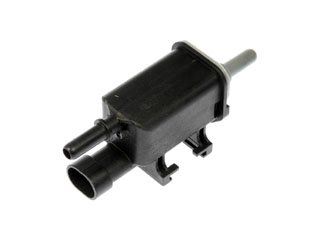
(OEM #ACDelco 214-1680 (GM 12597567))— This valve, located on the engine, commonly fails by sticking slightly open, causing a persistent small leak.
Trusted brands: ACDelco, Dorman 911-082
OEM price range: $30-$50
Aftermarket price range: $20-$40 - EVAP Vapor Canister Vent Solenoid
(OEM #ACDelco 214-2149 (GM 22963841))— Located under the car, this valve is exposed to the elements and can fail or stick, preventing the EVAP system from sealing properly for its test.
Trusted brands: ACDelco, Dorman 911-030
OEM price range: $40-$70
Aftermarket price range: $30-$50
Related Codes That Often Appear With This One
- P0442 — This code indicates a 'small leak', whereas P0456 indicates a 'very small leak'. They point to the same type of failure, just with a different severity. Seeing both could suggest an intermittent leak that is changing in size.
- P0449 — This code specifically points to an electrical fault in the EVAP vent solenoid circuit. If you see P0449 along with P0456, it's a very strong indicator that the vent solenoid or its wiring is the root cause. 🎬 See this step-by-step guide for replacing the vent valve solenoid.
- P0496 — This code indicates 'EVAP Flow During a Non-Purge Condition', which almost always points to a purge valve that is stuck open. This can also be interpreted by the system as a leak, triggering P0456.
Technical Service Bulletins (TSBs) & Recalls
- While no specific TSB for P0456 on the Cobalt is widely cited, related recalls for fuel system components exist. GM Recall 09226 addresses cracked fuel pump modules in certain hot-weather states, which could present as an EVAP leak. GM Recall 10023 for the power steering motor is unrelated but a critical issue for owners.
Platform-Specific Known Issues
- Vent Solenoid Location and Access: The vent solenoid is mounted to a bracket on the EVAP canister, which sits above the rear axle beam. On some models, especially those in rust-prone areas, the bolts holding the bracket can be seized. Some owners report that slightly lowering the rear of the subframe (by loosening the rear bolts) can provide much-needed clearance to access and replace the solenoid without a major struggle.
Mechanic-Grade Diagnostic Values
- Fuel Tank Pressure (FTP) Sensor Voltage — expected: 1.3-1.7 Volts with the gas cap removed (at atmospheric pressure). Voltage increases as vacuum increases.. Failure: A reading of 0V or near 5V (e.g., 4.8V) with the sensor plugged in indicates a failed sensor or circuit issue. A reading that does not change when pressure/vacuum is applied is also a failure.
- EVAP Vent Valve Solenoid Coil Resistance — expected: Approximately 15-30 Ohms.. Failure: An open circuit (infinite resistance) or a shorted circuit (near zero Ohms) means the solenoid coil has failed and the part must be replaced.
- EVAP Purge Valve Solenoid Coil Resistance — expected: Typically 15-30 Ohms, similar to the vent solenoid.. Failure: An open or shorted reading on a multimeter indicates a failed coil.
Hidden / Shadow Codes Worth Checking
- Mode $06, Test ID $3C: This is not a DTC, but a monitor ID within the generic OBD-II data that tracks the EVAP system leak test for a 0.020" leak (the same test that triggers P0456). Technicians can view the raw test value and compare it to the system's maximum and minimum limits. A test value that is very close to the failure limit, even if it passes, can indicate a marginal component or intermittent leak that will soon cause the Check Engine Light to return. (see via A professional scan tool with Mode $06 capabilities. The data is found under "Non-Continuous Tests" or a similar menu.)
Scan Tool Commands That Help
- Tech2 / GDS2 (GM Dealer Scan Tool): EVAP Service Bay Test — This function allows a technician to manually run the entire EVAP leak test sequence on demand. It will command the vent valve closed, the purge valve closed, and monitor the FTP sensor to see if the system holds vacuum. This is the definitive way to confirm if a leak is currently present without waiting for the ECU to run the test on its own.
- Tech2 / GDS2 / High-End Bidirectional Scan Tool: EVAP Purge/Seal — This command seals the EVAP system by closing the vent solenoid and allows the technician to command the purge solenoid on and off. It's used to check the function of both solenoids and to see if the system can build and hold vacuum when the purge valve is activated.
- Tech2 / GDS2 / High-End Bidirectional Scan Tool: Vent Solenoid On/Off — This allows for individual testing of the vent solenoid. A technician can command it closed and then apply smoke or low pressure to the EVAP service port to confirm the valve is sealing correctly. If smoke exits the vent with the valve commanded closed, the valve is faulty.
Wiring & Ground Locations
- EVAP Vent Solenoid Connector — At the EVAP canister, located above the rear axle beam, toward the driver's side.. This connector and its wiring are exposed to road salt and moisture. Wires, especially the ground control wire from the PCM, can corrode and break, often inside the insulation right at the connector, causing an open circuit that triggers P0449 and can contribute to P0456 if the valve fails to close properly.
- EVAP Purge Solenoid Connector — On the driver's side of the engine, mounted to the cylinder head or intake manifold area.. Less prone to corrosion than the rear connector, but can be affected by engine heat, causing brittle wires or connector clips. A poor connection here can prevent the purge valve from operating correctly.
- G305 (example ground) — There are multiple grounds, but a key one for rear components is often located in the rear of the vehicle, on the frame rail or near the fuel tank sending unit.. While the vent and purge solenoids are typically controlled by the PCM providing a ground path, the overall system relies on clean chassis grounds. A corroded main body or engine ground can cause floating voltages and unpredictable behavior in sensor readings, including the FTP sensor, potentially leading to a false P0456.
Real Owner Repair Stories
- Reddit user in r/MechanicAdvice (2008 Chevrolet Cobalt) — Persistent P0453 (Fuel Tank Pressure Sensor High Input), which can be related to EVAP blockage issues that also cause P0456.
❌ Tried (didn't work) Replaced fuel tank pressure sensor (multiple times), Replaced vent valve solenoid, Replaced purge valve, Replaced gas cap, Cleaned charcoal canister and filter
✅ What actually fixed it The user was still diagnosing, but the next planned step was replacing the electrical connector pigtail for the FTP sensor, followed by replacing the EVAP lines themselves on the suspicion of an internal clog not visible from the outside. This highlights that after all common components are replaced, the wiring and the physical lines are the next culprits. - Cobalt SS Network forum (2006 Chevy Cobalt LT) — Check engine light with codes P0455 (Large Leak) and P0446 (Vent Control Malfunction).
❌ Tried (didn't work) Replaced Purge Valve, Replaced Vent Valve, Replaced Gas Cap
✅ What actually fixed it The user did not report a final fix in the thread, but the experience of replacing all three common parts without resolving the issue points toward a less common problem like a cracked line, faulty FTP sensor, or a wiring issue, which is valuable context for others.
"I Checked Everything" — The Actual Cause
- A common scenario where a smoke test passes is an intermittent failure of the vent or purge solenoid. The solenoid may function correctly when tested cold but fail to seal properly once it reaches operating temperature, causing a leak that only appears during certain driving conditions. The ECU then flags the code, but the fault isn't present when the technician performs the test in the bay.
- Another possibility is a faulty Fuel Tank Pressure (FTP) sensor. The sensor itself might be providing an inaccurate reading to the ECU, making the computer believe there is a leak when the system is perfectly sealed. The ECU commands the test, sees a pressure change that it interprets as a leak (due to the bad sensor data), and sets the P0456 code, even though a smoke test will show no leaks.
OEM Part Supersession History
GM 12597567 (Purge Valve)→GM 12735397— Standard part evolution, possibly for improved durability or manufacturing efficiency. The function remains identical.GM 25932571 (Vent Solenoid)→ACDelco 214-2149 is the common service part number. GM has had several redesigns for other vehicles, but for the Cobalt, this remains the standard replacement style.— Part consolidation and minor updates.
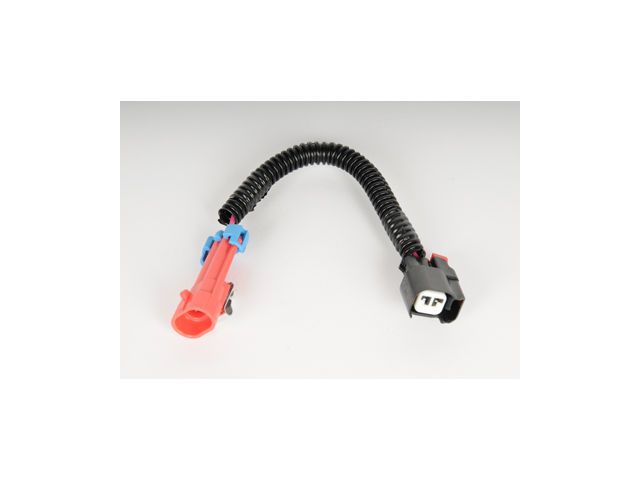
Heads up: Some aftermarket vent solenoids may come with a pigtail adapter harness because the connector on the new part is different from the OEM car harness. This is normal and the adapter must be used.
Model Year Variations Within This Range
- 2005-2007 vs 2008-2010: The Fuel Tank Pressure (FTP) sensor location and part number may differ. On earlier models, it was more commonly integrated with the fuel pump module, while on later models, it is more consistently located on the EVAP canister itself. Part numbers for the canister also vary by year and emissions package (Federal vs. California).
- 2006-2007: Some 2006-2007 models with specific emissions packages (NT7, NU1) may use a specific EVAP canister (ACDelco 19259320) that requires a separate harness (19257603) to be ordered with it if replacing the entire canister assembly.
Diagnostic Flowchart
Other Known Issues on This Vehicle
Issues unrelated to this code that are worth knowing about as an owner of this generation:
- Ignition Switch Failure 🔴 High — Extremely widespread, affecting all 2005-2010 models. Led to a massive recall (GM Recall No. 14113). (Ref: The switch can move out of the 'Run' position due to key weight or jarring, causing engine stall and disabling airbags, power steering, and brakes.)
- Electric Power Steering (EPS) Motor Failure 🔴 High — Very common across all model years, leading to a recall (GM Recall No. 10023). (Ref: Results in a sudden loss of power steering assist, making the vehicle very difficult to steer at low speeds. A 'Power Steering' message appears on the DIC.)
- Corroding Fuel Lines 🟠 Medium — Affects 2008-2010 models most, especially in rust belt states. Investigated by NHTSA. (Ref: Fuel lines located near the rear driver's side wheel well are prone to corrosion, which can lead to fuel leaks and a strong fuel smell.)
- Cracked Fuel Pump Module Port 🟠 Medium → Shop Fuel Pump — Common enough to warrant a safety recall (GM Recall No. 09226) for certain vehicles in hot climates (AZ, CA, FL, NV, TX). (Ref: The plastic supply or return port on the fuel pump module can crack, causing a fuel leak and odor.)
- Timing Chain Tensioner Wear (2.2L Ecotec) 🟠 Medium — A known issue, particularly on earlier models or those with poor oil change history. Onset can be around 100,000 miles. (Ref: A failing tensioner causes a rattling or ticking noise from the engine, especially on cold starts. If ignored, it can lead to the timing chain skipping teeth, causing engine damage.)
Used vs. New Parts: Buying Guide for This Vehicle
When a used part is the smart pick: For a P0456 repair, sourcing a used EVAP charcoal canister from a low-mileage donor car can be a cost-effective choice, as the canister itself is a passive component that rarely fails unless physically cracked. Other large, non-electronic components like the fuel filler neck could also be sourced used if in good condition.
Donor-vehicle mileage cap: roughly under 80000 miles for the part to have meaningful remaining life.
What to inspect on the donor part:
- For a charcoal canister, inspect the plastic housing thoroughly for any hairline cracks or signs of impact.
- Check all plastic nipples and hose connections to ensure they are not brittle or broken.
- Avoid parts from vehicles that show heavy corrosion on the undercarriage, as this suggests the solenoids and connectors will also be in poor condition.
OEM-only on this vehicle (don't cheap out):
- Gas Cap: While not expensive, cheap aftermarket gas caps are a frequent cause of EVAP codes. Stick with an OEM ACDelco cap for this vehicle to ensure a proper seal.
Aftermarket brands forum-validated for this vehicle:
- ACDelco (OEM)
- Dorman (For solenoids and some canisters)
- Standard Motor Products (SMP) (For sensors and solenoids)
Brands owners have reported issues with on this vehicle:
- No-name, unbranded electronic parts (solenoids, sensors) from online marketplaces. These often have high failure rates and may not meet the precise calibration needed for the EVAP system test.
Real Owner Stories
Aggregated from forums and TSBs cited above. Mileages and costs reflect what owners reported in those sources.
2005-2010 Chevrolet Cobalt
Symptoms: Check Engine Light active and a faint fuel smell near the rear of the car.
What fixed it: Replacing the gas cap with an ACDelco GT284 after inspecting the rubber O-ring seal for cracks.
Source hint: cobaltss.net thread titled 'help'
2005-2010 Chevrolet Cobalt
Symptoms: Small EVAP leak detected; owner found the purge valve was stuck slightly open.
What fixed it: Replaced the EVAP purge valve solenoid located on the driver's side of the engine near the intake manifold.
Source hint: cobaltss.net thread titled 'help'
Related OBD-II Codes
Frequently Asked Questions
Why won't my remote start work on my 2005-2010 Chevrolet Cobalt?
Could the fuel pump recall on my Cobalt be causing this P0456 code?
I'm having trouble reaching the vent valve on my Cobalt; do I have to remove the axle?
What specific gas cap should I buy for my Cobalt to fix a P0456?
Is there a simple way to test the purge valve on my 2.2L Ecotec engine?
Are there other common Cobalt recalls I should be aware of while fixing this?
Helpful Videos
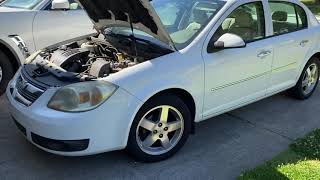
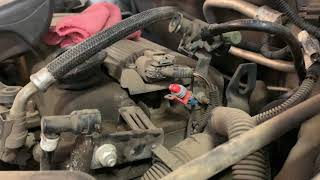

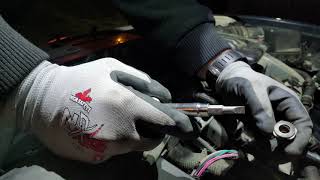
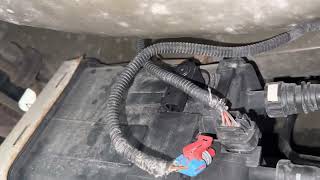
![How to Fix P0456 Engine Code in 3 Minutes [2 DIY Methods / Only $4.44]](https://img.youtube.com/vi/v_QDSjd1-Lw/mqdefault.jpg)
Used OEM Parts in Stock
New Aftermarket Parts Available


The information in this article is provided for general reference and educational purposes only. Vehicle specifications, procedures, and part compatibility can vary by production date, trim level, and region. Always consult your vehicle's factory service manual and verify part numbers before purchasing or performing repairs. Safety-critical components such as airbags, seat belts, and braking systems should be installed by a qualified professional.
- Chevrolet Cobalt:
- 🧭 Diagnostic Flowchart
- 🎬 Helpful Videos
- 🛍️ Shop This Part
- What's Unique About the 2005-2010 Chevrolet Cobalt
- Symptoms You May Notice
- Most Likely Causes
- Rare But Worth Checking
- Diagnosis Steps
- Parts You'll Likely Need
- Related Codes That Often Appear With This One
- Technical Service Bulletins (TSBs) & Recalls
- Platform-Specific Known Issues
- Mechanic-Grade Diagnostic Values
- Hidden / Shadow Codes Worth Checking
- Scan Tool Commands That Help
- Wiring & Ground Locations
- Real Owner Repair Stories
- "I Checked Everything" — The Actual Cause
- OEM Part Supersession History
- Model Year Variations Within This Range
- Other Known Issues on This Vehicle
- Used vs. New Parts: Buying Guide for This Vehicle
- Real Owner Stories
- 2005-2010 Chevrolet Cobalt
- 2005-2010 Chevrolet Cobalt
- Related OBD-II Codes
- Frequently Asked Questions
- 🎟️ Get 5% Off