

P0456 on 2016-2019 Chevrolet Cruze: EVAP Small Leak Causes and Fixes
For a 2016-2019 Chevy Cruze, code P0456 is most often caused by a faulty EVAP purge valve or a loose/worn gas cap. The purge valve is a common failure point on this platform and is a relatively inexpensive and easy part to replace. Before purchasing a purge valve, owners should check with a GM dealer for potential coverage under Special Coverage Programs N192210240 or N232395300.
- P0456 on a 2016-2019 Cruze is a minor issue that won't stop you from driving.
- Always check that the gas cap is tight and its seal is intact before buying any parts.
- The most likely part to have failed is the EVAP purge valve (solenoid) located on the engine.
- A faulty purge valve can be confirmed at home by removing it and trying to blow through it; it should be sealed shut.
- If the gas cap and purge valve are good, the leak is likely in a hose or the vent valve, which is best found using a professional smoke test.
What's Unique About the 2016-2019 Chevrolet Cruze
The 2016-2019 second-generation Cruze, particularly models with the 1.4L turbo engine, is known for issues with its EVAP components. While a loose gas cap is a universal cause, the EVAP purge valve solenoid is a very frequent point of failure on this specific platform. The failure is so common that General Motors issued Special Coverage Programs (e.g., N192210240, N232395300) which extend the warranty for this specific part to 15 years or 150,000 miles on some vehicles. Owners and technicians often point to this valve as the primary culprit after ruling out the gas cap. Additionally, GM has investigated issues with the EVAP vent system on these models due to potential water or ice blockage in the lines, which can affect system performance and trigger related codes.
Symptoms You May Notice
- Check Engine Light is on
- A faint smell of gasoline may be present, especially around the fuel filler area after refueling.
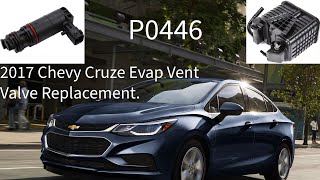
- Difficulty starting or a long crank time immediately after refueling 🎬 Watch: Common symptoms and how to replace the purge valve. (a classic symptom of a stuck-open purge valve).
- No noticeable impact on drivability or fuel economy in most cases.
- Replacing the fuel tank pressure (FTP) sensor. While an FTP sensor can fail, it is much less common than a faulty purge valve or gas cap for this specific code.
- Immediately replacing the charcoal canister without performing a smoke test. The canister is expensive and usually not the source of the leak itself.
- Replacing the EVAP vent valve when the charcoal canister itself is clogged. A diagnostic video showed a 2017 Cruze with a clogged aftermarket canister causing an EVAP code, which could be misdiagnosed as a bad valve.
Most Likely Causes
- Faulty EVAP Purge Valve / Solenoid 🔴 High Probability → Shop Vapor Canister This is a widely documented failure point on the 1.4L GM engine used in the Cruze and its platform mates (Sonic, Trax, Encore). The valve's internal rubber diaphragm can tear or it can get stuck slightly open, creating a small leak path. The high failure rate prompted GM to issue warranty extensions for this part on many vehicles.
How to confirm: Disconnect the purge valve (located on the engine) and attempt to blow through it. When unpowered, it should be completely sealed. If air passes through, it has failed. A stuck-open valve will also often trigger code P0496.
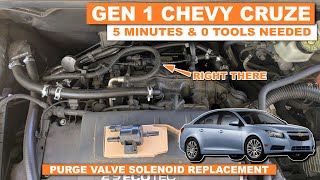
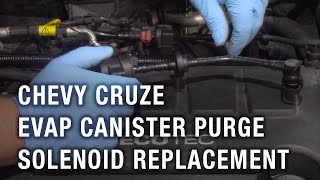
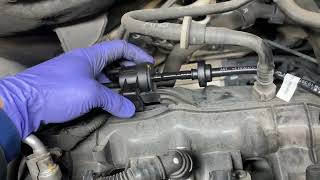
Typical fix: Replace the purge valve. It is mounted on the intake manifold with two hoses and one electrical connector, making for a quick DIY job.
Est. part cost: $25-$60 - Loose or Worn Gas Cap 🔴 High Probability → Shop Fuel Tank Cap
How to confirm: Ensure the gas cap is tightened until it clicks several times. Inspect the rubber O-ring seal on the cap for cracks, stiffness, or damage.
Typical fix: Tighten the cap. If the seal is damaged, replace the gas cap. It is highly recommended to use a quality OEM (ACDelco) or equivalent part, as some aftermarket caps are known to cause sealing issues.
Est. part cost: $15-$30 - Faulty EVAP Vent Valve / Solenoid 🟡 Medium Probability → Shop Vapor Canister The vent valve is located near the charcoal canister at the rear of the vehicle, making it susceptible to road debris, dirt, and moisture, which can cause it to stick open.
How to confirm: A scan tool that can command the valve to close is needed for a definitive test. A smoke test is the most reliable method and will reveal a leak at the vent valve if it is stuck open.
Typical fix: Replace the EVAP vent valve. This requires safely raising the rear of the vehicle 🎬 See this walkthrough for replacing the rear EVAP vent valve. for access.
Est. part cost: $30-$70 - Cracked or Disconnected EVAP Hose ⚪ Low Probability
How to confirm: Visually inspect all accessible EVAP lines in the engine bay and around the charcoal canister for small cracks, especially at connection points. A smoke test is the most effective way to find a hairline crack in a hose.
Typical fix: Replace the damaged section of hose.
Est. part cost: $5-$25
Rare But Worth Checking
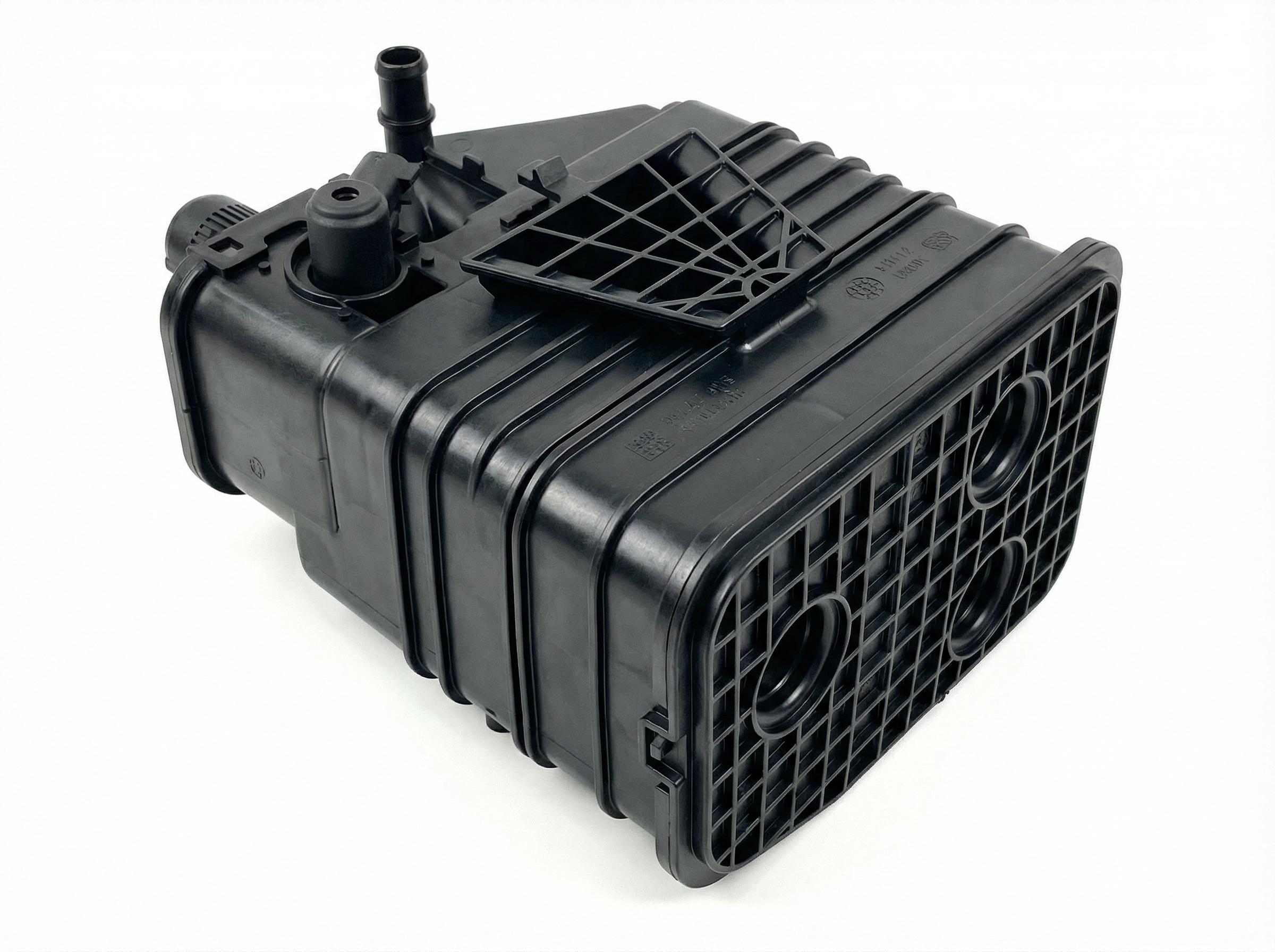
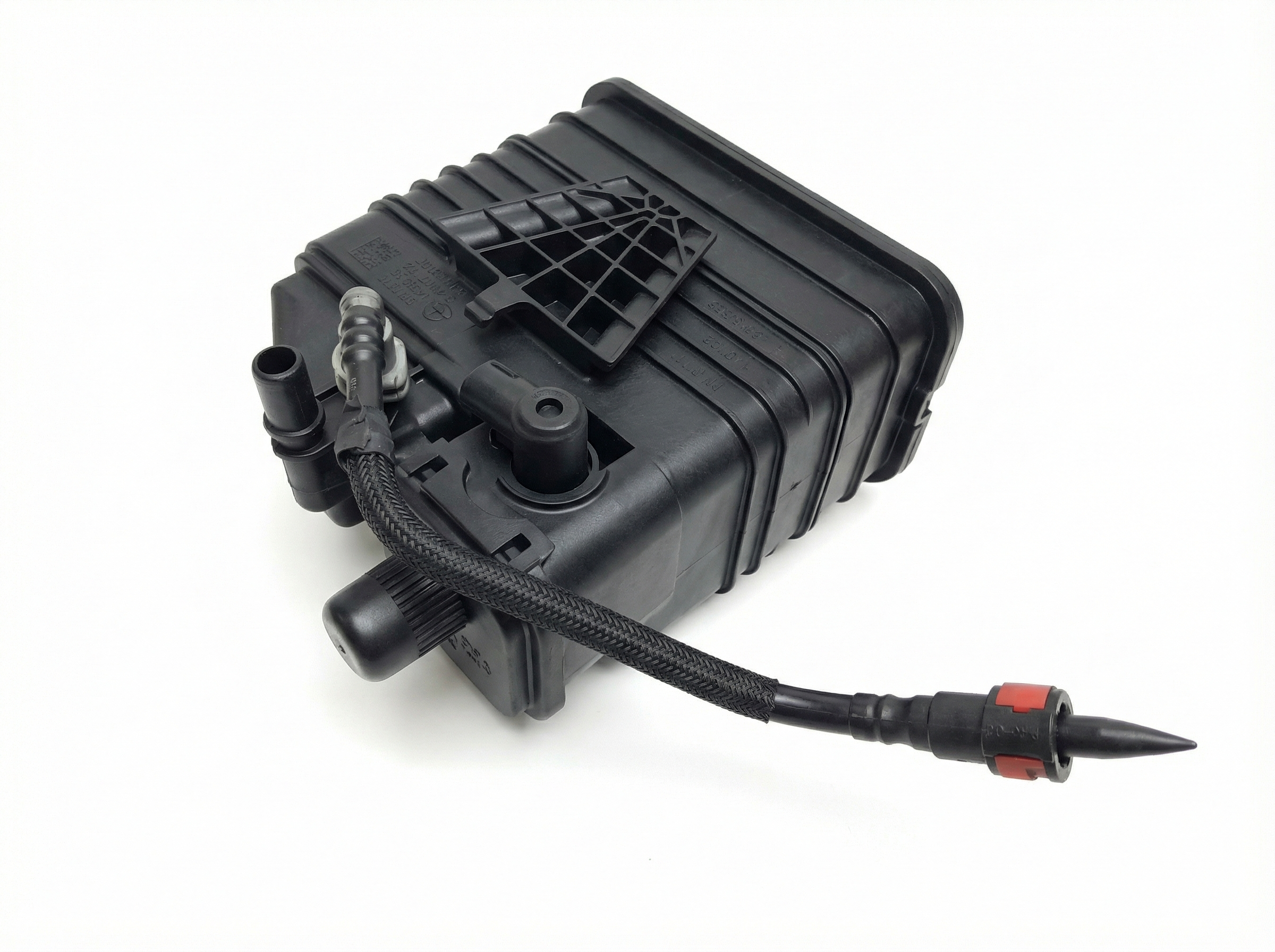
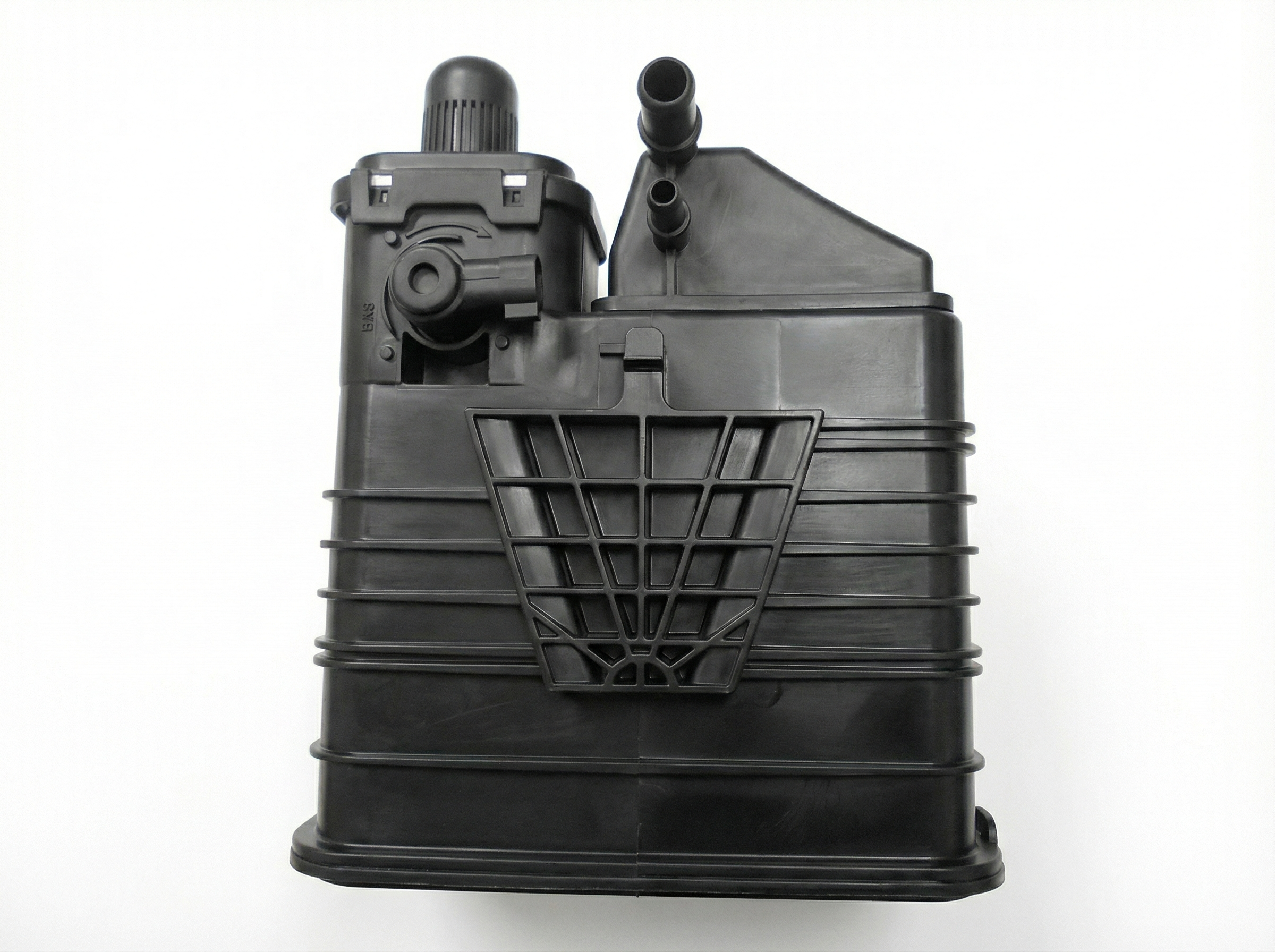
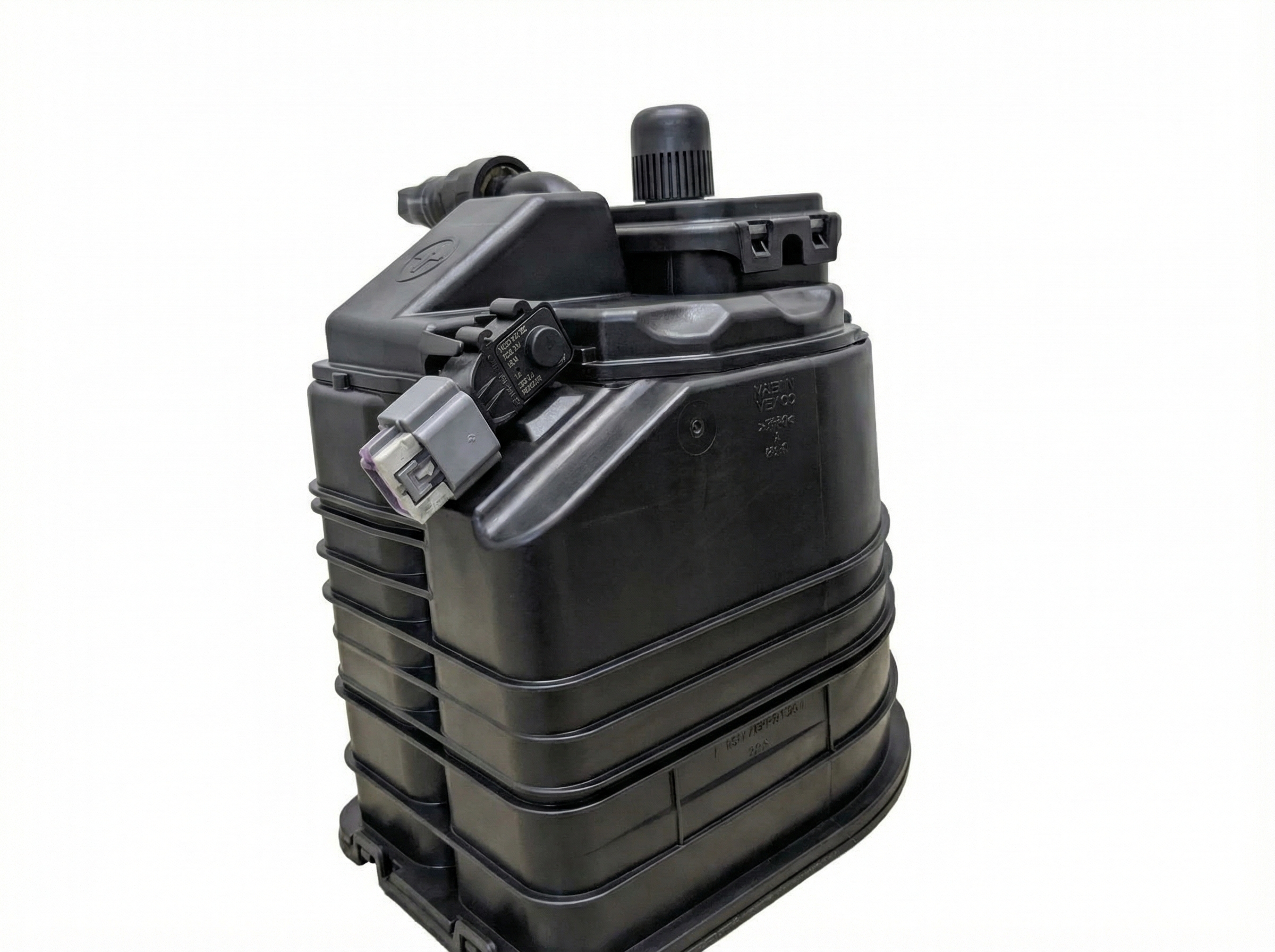
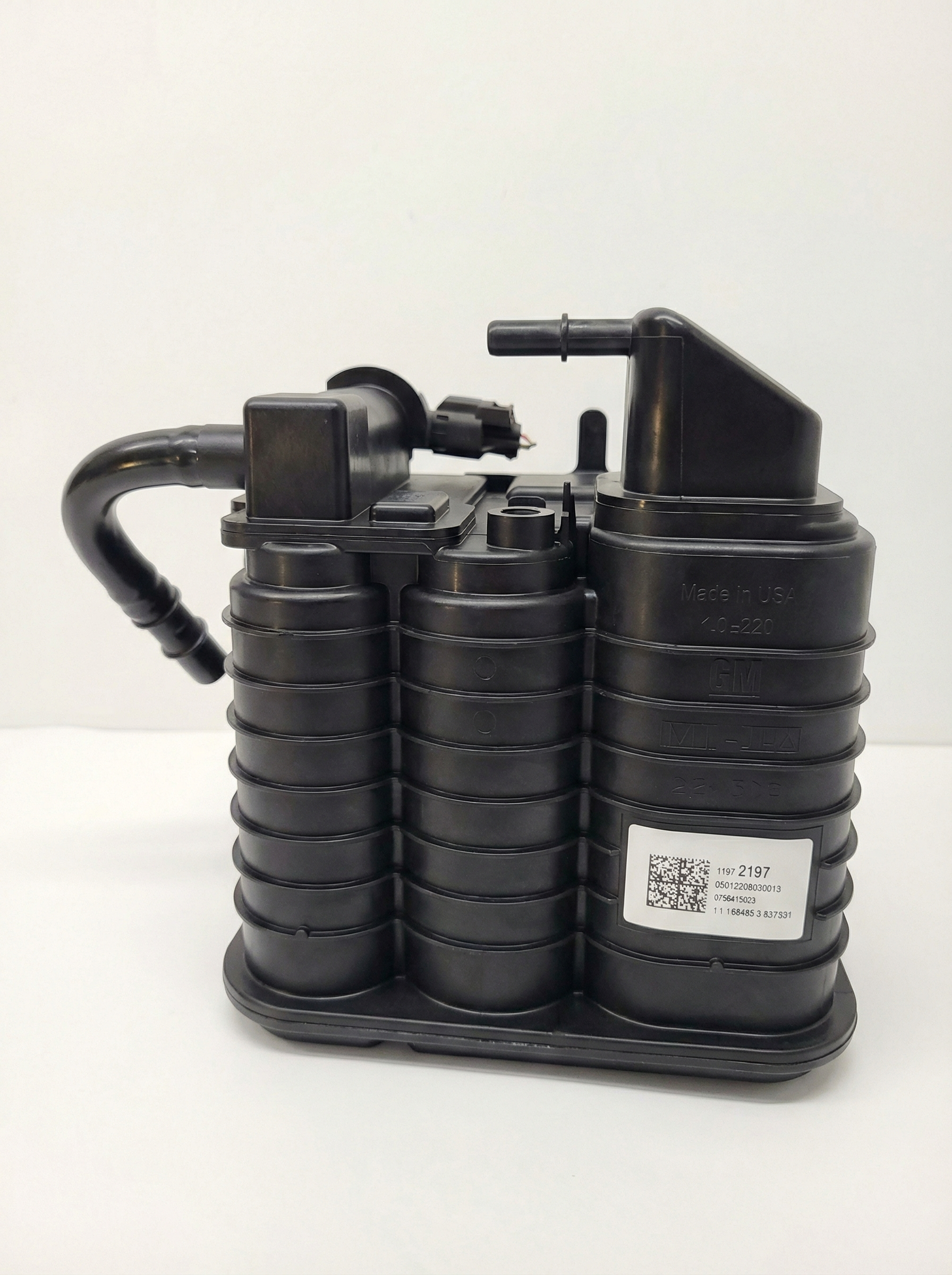
- Cracked Charcoal Canister: → Shop Vapor Canister The plastic body of the canister can develop a hairline crack, creating a leak. This is usually found only with a smoke test.
- Damaged Fuel Filler Neck: → Shop Fuel Filler Neck Rust or damage on the rim of the filler neck can prevent even a new gas cap from sealing properly.
- Cracked Fuel Tank or Pump Sealing Surface: → Shop Fuel Tank In rare cases, especially in areas with road salt, corrosion can damage the fuel tank where the fuel pump module seals, causing a persistent small leak that is very expensive to fix.
Diagnosis Steps
- Check the Gas Cap: Remove and reinstall the gas cap, ensuring it clicks multiple times. Inspect the rubber seal for any signs of cracking or wear. If it looks worn, replacement with an OEM cap is a cheap and easy first step.
- Clear the Code & Check for Warranty: Use an OBD-II scanner to clear the code. Before performing repairs, call a GM dealership with your VIN to check if your vehicle is covered under Special Coverage N192210240 or N232395300 for a free purge valve replacement.
- Drive Cycle: Drive the vehicle for several days to see if the code returns. The EVAP monitor often runs only under specific conditions (e.g., certain fuel level, overnight cooldown), so the light may not come back on immediately.
- Inspect the Purge Valve: Locate the EVAP purge valve on the engine. Disconnect the electrical connector and hoses. Try to blow through the valve. If any air passes through, the valve is faulty and must be replaced. This is the most likely culprit after the gas cap.
- Visual Inspection: Carefully inspect all visible EVAP hoses and lines in the engine bay for obvious cracks, loose connections, or signs of deterioration.
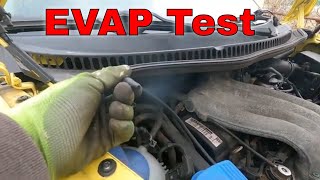
- Professional Smoke Test: If the above steps do not reveal the cause, the most effective next step is a smoke test. A mechanic will inject low-pressure smoke into the EVAP system for a fee typically between $100-$200. 🎬 Watch: How a professional smoke test finds hidden EVAP leaks. The smoke will escape from the location of the leak, making even tiny cracks in hoses, the canister, or seals visible.
- Inspect Vent Valve: During the smoke test, pay close attention to the vent valve (near the charcoal canister) to see if smoke is leaking from it, indicating it is stuck open.
Parts You'll Likely Need
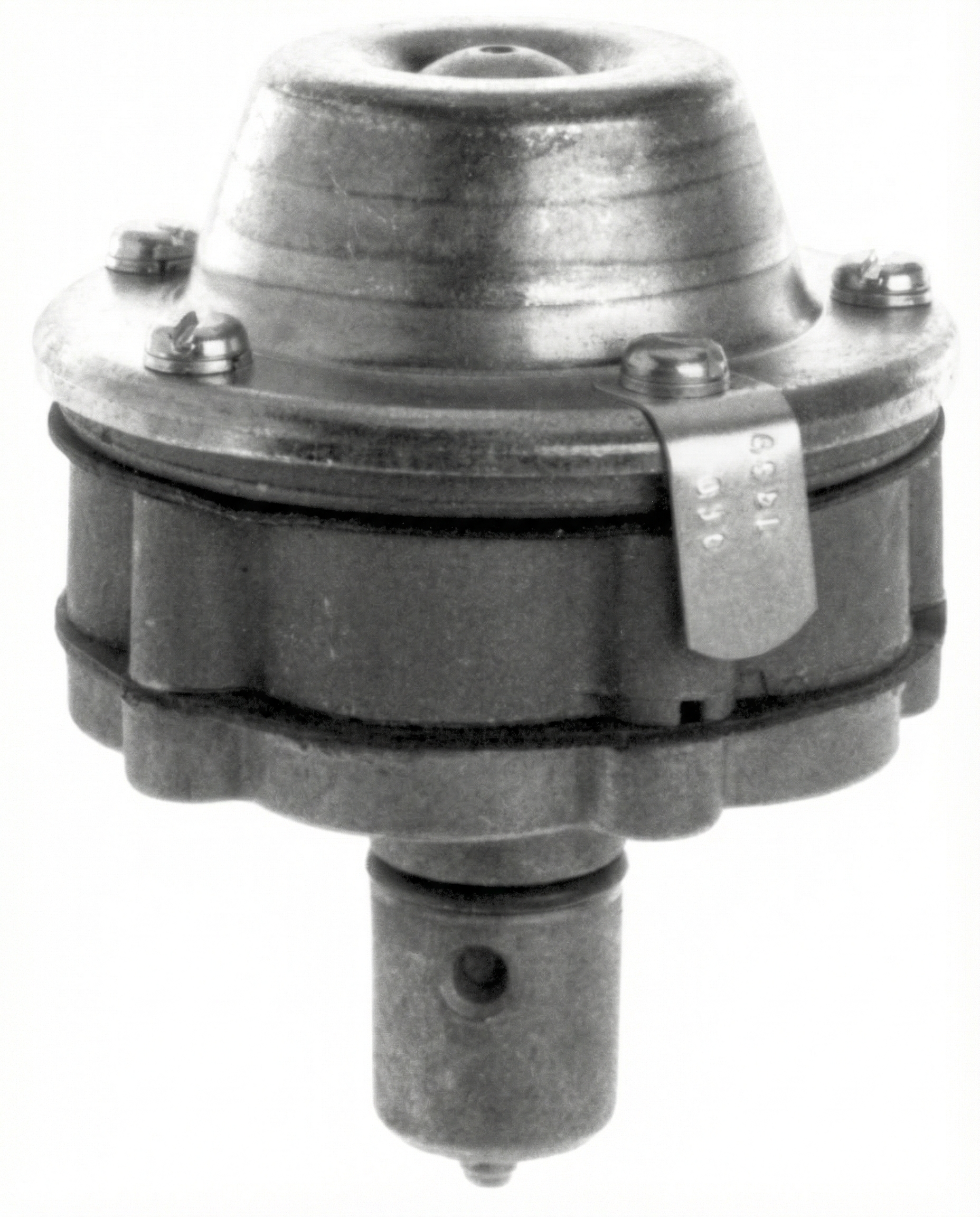
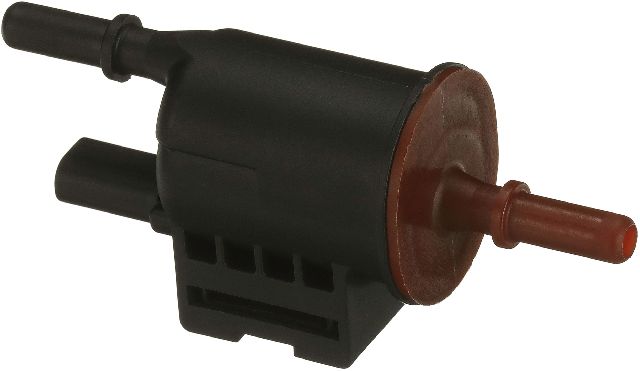
- Vapor Canister Purge Valve
(OEM #ACDelco 12690512 (supercedes 12632174))— This is the most common failure part for a P0456 code on this vehicle after the gas cap has been ruled out. It is a known high-failure item across the entire GM 1.4L platform.
Trusted brands: ACDelco (GM Genuine), Dorman, TRQ
OEM price range: $35-$60
Aftermarket price range: $25-$45 - Fuel Cap
(OEM #ACDelco GT364 (20971566))— A worn seal on the gas cap is a very common cause for small EVAP leaks across all vehicles. Using an OEM cap is recommended for a reliable seal.
Trusted brands: ACDelco, Stant
OEM price range: $20-$30
Aftermarket price range: $15-$25 - Vapor Canister Vent Valve
(OEM #ACDelco 84524035 (or Dorman 911-140))— This valve can stick open due to contamination, causing a persistent small leak, though it is less common than the purge valve.
Trusted brands: ACDelco, Dorman, Standard Motor Products
OEM price range: $45-$70
Aftermarket price range: $25-$50
Related Codes That Often Appear With This One
- P0442 — P0442 indicates a medium-sized EVAP leak. If the source of the P0456 leak worsens over time, it can eventually trigger a P0442.
- P0496 — P0496 indicates 'EVAP Flow During a Non-Purge Condition,' which is almost always caused by a purge valve that is stuck open. A purge valve that is stuck slightly open can cause either a P0496 or a P0456, and seeing them together strongly points to a faulty purge valve.
Technical Service Bulletins (TSBs) & Recalls
- Special Coverage N232395300
- Special Coverage N192210240
- TSB PIE0453
- TSB 17-NA-233
Platform-Specific Known Issues
- GM Special Coverage Program N232395300: For certain 2020 models with the 1.4L LUV engine (including platform mates Sonic/Trax), this extends the purge valve warranty to 15 years or 150,000 miles due to a high rate of valves failing to close completely.
- GM Special Coverage Program N192210240: An earlier program extending the purge valve warranty for other model years, often to 10 years/120,000 miles. Owners should always check their VIN with a dealer.
- GM TSB PIE0453: An older Engineering Information bulletin for the 2016-2018 Cruze to investigate DTC P0446 (EVAP Vent System Performance), which involved checking for water and ice in the EVAP canister fresh air line. This indicates a known sensitivity in the vent system design that could contribute to valve failure or blockages.
Mechanic-Grade Diagnostic Values
- EVAP Purge Solenoid Valve Coil Resistance — expected: Typically 20-30 Ohms. A specific value for the OEM part is not published, but it should not be an open circuit (infinite resistance) or a short circuit (near zero resistance).. Failure: A reading of infinite resistance (open) or near 0 Ohms (short) indicates a failed solenoid coil.
- EVAP System Service Bay Test Prerequisites — expected: Fuel level between 15% and 85%; Engine Coolant Temperature (ECT) below 70°C (158°F).. Failure: The scan tool test will refuse to run if these conditions are not met.
Scan Tool Commands That Help
- GDS2 (GM Dealer Software) or equivalent high-end bidirectional scanner: EVAP Service Bay Test — This is an automated, engine-running test to verify the integrity of the entire EVAP system after a repair or to confirm a leak. It commands the valves and monitors the fuel tank pressure sensor to check for pressure bleed-off.
- GDS2 or equivalent: EVAP Purge/Seal — Allows the technician to manually command the EVAP Purge Solenoid on/off and seal the system by closing the Vent Solenoid. This is used with a smoke machine to isolate leaks.
- GDS2 or equivalent: EVAP Purge Solenoid Valve Control — Allows for manually commanding the purge valve open by a certain percentage (e.g., 0-100%) to test its function and its effect on fuel trims and engine vacuum.
- GDS2 or equivalent: EVAP Vent Solenoid Valve Control — Allows for manually commanding the vent valve open or closed. A technician can command it closed and then introduce smoke to see if the valve is leaking internally. An audible click should be heard when commanded.
Wiring & Ground Locations
- EVAP Purge Valve Connector — On the EVAP purge valve, mounted on the intake manifold behind the engine.. The connector is a 2-pin setup. One pin receives ignition voltage whenever the key is in the 'On' position. The other pin is the control circuit, which the Engine Control Module (ECM) pulses to ground to open the valve. A poor connection or damaged wire here would typically set a circuit code (e.g., P0443), but intermittent connection issues could potentially affect valve operation.
- EVAP Vent Valve Ground (e.g., G3xx series) — Typically located on the chassis or frame rail in the rear third of the vehicle, near the fuel tank and charcoal canister.. The vent valve requires a solid ground to function when commanded by the ECM. While a specific ground point like 'G302' or 'G401' for the 2016-2019 Cruze requires a factory wiring diagram to pinpoint, corrosion at this rear-mounted ground is a possible cause for intermittent vent valve failure (P0446), which can be related to small leak codes.
Real Owner Repair Stories
- Reddit user in /r/cruze (Chevrolet Cruze (Gen2 implied)) — Check Engine Light on.
❌ Tried (didn't work) The initial problem was a P0456 (small leak), for which the user replaced the common-fail EVAP purge valve. This cleared the light temporarily.
✅ What actually fixed it A couple of months later, the Check Engine Light returned with a P0455 (large leak) code. When removing the gas cap, a large release of pressure/fumes was noted. This symptom (pressure buildup) points away from a leak and towards a venting problem, with the community suggesting the next logical part to fail or diagnose is the EVAP vent valve/solenoid located at the rear of the car near the charcoal canister.
OEM Part Supersession History
12632174 (and others)→12690512— Updated design to improve durability and prevent common failure modes (sticking open, diaphragm tearing).
Heads up: None. The new part number (12690512) is the correct direct replacement for the original and is compatible with all 2016-2019 1.4L Cruze models.
Model Year Variations Within This Range
- 2017-2019: A hatchback model was introduced in 2017, and a 1.6L diesel engine option became available. However, for the mainstream 1.4L gasoline engine, the EVAP system components and common P0456 causes (purge valve, gas cap) remain consistent across the entire 2016-2019 model year range.
Diagnostic Flowchart
Real Owner Stories
Aggregated from forums and TSBs cited above. Mileages and costs reflect what owners reported in those sources.
Chevrolet Cruze
Symptoms: Check engine light came on with a P0456 code on their mother's vehicle.
What fixed it: Replaced the EVAP purge valve.
Source hint: Reddit r/cruze
Second-generation Chevrolet Cruze
Symptoms: Check engine light illuminated with EVAP codes P0456 and P0496.
What fixed it: Replaced the EVAP purge valve, which is noted as a very common fix for this platform.
Source hint: CruzeTalk.com
2017 Buick Encore 1.4L Turbo — 66000 miles
Symptoms: Check engine light illuminated with code P0496 on this platform mate.
What fixed it: Successfully fixed by replacing the purge valve solenoid.
Source hint: Reddit r/buickencore
Related OBD-II Codes
Frequently Asked Questions
Is the purge valve covered under warranty for my 2016-2019 Chevrolet Cruze?
Why is my Cruze hard to start after getting gas with code P0456?
Does TSB PIE0453 apply to my P0456 code?
How can I test the purge valve on my 1.4L Cruze at home?
Should I replace the gas cap with an aftermarket one to fix P0456?
My Cruze has P0456 and P0496 together. What does this mean?
Helpful Videos

Used OEM Parts in Stock
New Aftermarket Parts Available



The information in this article is provided for general reference and educational purposes only. Vehicle specifications, procedures, and part compatibility can vary by production date, trim level, and region. Always consult your vehicle's factory service manual and verify part numbers before purchasing or performing repairs. Safety-critical components such as airbags, seat belts, and braking systems should be installed by a qualified professional.
- Chevrolet Cruze:
- 🧭 Diagnostic Flowchart
- 🎬 Helpful Videos
- 🛍️ Shop This Part
- What's Unique About the 2016-2019 Chevrolet Cruze
- Symptoms You May Notice
- Most Likely Causes
- Rare But Worth Checking
- Diagnosis Steps
- Parts You'll Likely Need
- Related Codes That Often Appear With This One
- Technical Service Bulletins (TSBs) & Recalls
- Platform-Specific Known Issues
- Mechanic-Grade Diagnostic Values
- Scan Tool Commands That Help
- Wiring & Ground Locations
- Real Owner Repair Stories
- OEM Part Supersession History
- Model Year Variations Within This Range
- Real Owner Stories
- Chevrolet Cruze
- Second-generation Chevrolet Cruze
- 2017 Buick Encore 1.4L Turbo — 66000 miles
- Related OBD-II Codes
- Frequently Asked Questions
- 🎟️ Get 5% Off