

P0456 on 2007-2009 Chrysler Aspen: EVAP Small Leak Causes and Fixes
For a 2007-2009 Chrysler Aspen, code P0456 is most often caused by a failed EVAP System Integrity Monitor (ESIM) attached to the charcoal canister. This component fails internally, making it undetectable by a smoke test. Replacing the ESIM is a common and simple DIY fix, costing around $30-$40 for the part.
- For P0456 on a 2007-2009 Aspen, don't just assume it's the gas cap. The most likely culprit is the EVAP System Integrity Monitor (ESIM).
- You can quickly check the ESIM by removing it and shaking it. If it doesn't rattle, it's bad.
- The second most likely cause is the purge valve, which is hidden on the firewall near the brake booster, not in the open as on similar Dodge trucks.
- If you replace the gas cap, use an OEM Mopar part to avoid potential sealing issues with aftermarket caps.
- A smoke test may not find the problem if the ESIM or purge valve has failed internally.
What's Unique About the 2007-2009 Chrysler Aspen
On this generation of Chrysler SUV and its platform-mate, the Dodge Durango, the P0456 code is very frequently traced back to a specific component: the Evaporative System Integrity Monitor (ESIM). Unlike a simple hose leak, the ESIM can fail internally without any visible external signs, often causing a persistent code even after a smoke test shows no leaks. Owners often replace the gas cap first, only to find the problem is this relatively inexpensive but critical sensor 🎬 Watch: This quick video shows the most common Aspen fix. located on the charcoal canister.
Symptoms You May Notice
- Check Engine Light is on
- "GAS CAP" message on the instrument cluster display
- A faint fuel smell near the rear of the vehicle (less common)
- Replacing the gas cap multiple times when the actual fault is the ESIM. Many owners report that a new gas cap does not fix the P0456 code or the 'GAS CAP' message on their Aspen.
Most Likely Causes
- Failed EVAP System Integrity Monitor (ESIM) 🔴 High Probability → Shop Evaporative Emissions System Leak Detection Pump The ESIM contains a delicate, weighted switch that detects pressure changes. This switch is a known failure point on many Chrysler products of this era, including the Aspen and Durango, failing electrically or mechanically without creating an external leak a smoke test would find. The internal mechanism can get stuck, leading the computer to believe there is a leak.
How to confirm: Locate the ESIM on the EVAP canister (under the vehicle, near the driver's side frame rail, in front of the gas tank). Remove it by disconnecting the electrical plug, hose, and twisting it counter-clockwise about a quarter turn. A functioning ESIM should make a rattling sound from the internal weights when shaken; if it is silent or the internal component is visibly broken, it has failed.
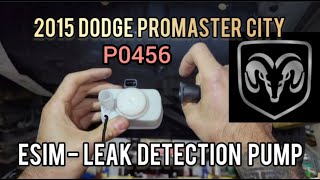
Typical fix: Replace the ESIM and the corresponding O-ring/seal. This is a simple twist-off, twist-on part. 🎬 Watch: How to remove and replace the ESIM unit. The removal process involves depressing a small plastic tab to allow the unit to rotate.
Est. part cost: $30-$50 - Faulty EVAP Canister Purge Valve/Solenoid 🟡 Medium Probability → Shop Vapor Canister The purge valve can become stuck partially open due to carbon buildup or wear, creating a constant small vacuum leak that the system detects. It's a common failure item on many vehicles.
How to confirm: The purge valve is located on the firewall, tucked away near the brake booster, making it hard to see. Disconnect the valve and attempt to blow through it. When unpowered, it should be closed, and no air should pass through. If you can blow through it, it is stuck open and needs replacement.
Typical fix: Replace the purge valve. Access is tight due to its location on the firewall. One owner documented the successful replacement on a 2007 Aspen, confirming it resolved the code.
Est. part cost: $25-$50 - Loose or Faulty Gas Cap 🟡 Medium Probability → Shop Fuel Tank Cap
How to confirm: First, ensure the gas cap is tightened until it clicks several times. Inspect the cap's rubber O-ring for cracks, dryness, or damage. If the seal is compromised, the cap cannot hold pressure. A smoke test may also indicate a leak at the cap.
Typical fix: Tighten or replace the gas cap. It is highly recommended to use an OEM Mopar gas cap, as some aftermarket caps are known to cause sealing issues and may not resolve the code.
Est. part cost: $15-$30 - Cracked or Disconnected EVAP Hoses ⚪ Low Probability
How to confirm: Visually inspect all accessible EVAP hoses running from the fuel tank, to the charcoal canister, and up to the purge valve in the engine bay. Look for brittle, cracked, or disconnected lines, especially at connection points. The most definitive method is to have a mechanic perform a smoke test, which fills the system with visible vapor to pinpoint the exact location of any leak.
Typical fix: Replace the damaged section of hose and secure it with clamps.
Est. part cost: $10-$40
Rare But Worth Checking
- Cracked Charcoal Canister: → Shop Vapor Canister While not common, the plastic housing of the charcoal canister can develop hairline cracks over time, creating a small leak. This would typically be found during a smoke test and may be related to TSB 25-003-07 where loose charcoal can damage other components.
- Leaking Fuel Filler Neck: → Shop Fuel Filler Neck Corrosion or damage to the metal tube leading to the gas tank can cause a leak. This is usually accompanied by a fuel smell during refueling and is found with a smoke test. There was a recall on the fuel filler neck for some Aspens which could cause fuel spit-back, and subsequent work in this area could potentially lead to EVAP leaks if not sealed correctly.
Diagnosis Steps
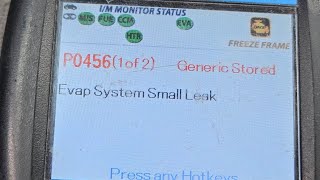
- Read the code with an OBD-II scanner to confirm P0456 is present.
- Inspect the gas cap. Remove it, check the seal for damage, and retighten it until it clicks multiple times. Clear the code and drive for a few days to see if it returns.
- If the code returns, locate the EVAP System Integrity Monitor (ESIM) on the charcoal canister under the vehicle, along the driver's side frame rail.
- Disconnect the electrical plug and hose, then press the release tab and twist the ESIM counter-clockwise to remove it. Shake the ESIM. If it does not rattle, it has likely failed and needs to be replaced.
- If the ESIM seems okay, locate the purge valve on the engine firewall, near the brake booster. Disconnect it and try to blow through it. If air passes, the valve is stuck open and must be replaced.
- If the above steps do not reveal the cause, the next step is a professional smoke test to find hairline cracks in hoses, the charcoal canister, or the fuel filler neck.
Parts You'll Likely Need
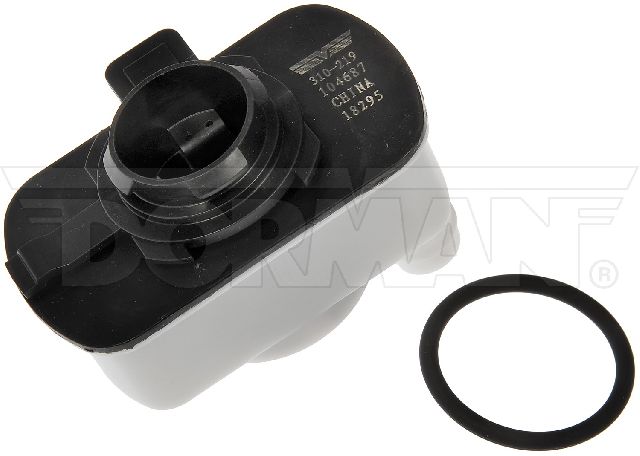
- EVAP System Integrity Monitor (ESIM) / Leak Detection Switch
(OEM #04861959AA (superseded by 04861959AB, 04861959AC, 04861959AD))— This is the most common failure point for the P0456 code on the Chrysler Aspen. It fails internally, causing a persistent code that a smoke test won't find.
Trusted brands: Mopar, Dorman (p/n 310-219), Standard Motor Products (SMP)
OEM price range: $30-$45
Aftermarket price range: $25-$40 - ESIM Seal / Gasket
(OEM #52129436AA)— This seal should be replaced anytime the ESIM is removed to ensure a proper seal on the charcoal canister. Some new ESIMs do not include it.
Trusted brands: Mopar
OEM price range: $5-$10
Aftermarket price range: $3-$8 - Vapor Canister Purge Valve / Solenoid
(OEM #04891739AB (supersedes 4891739AA))— This valve can stick open, causing a small, continuous leak. It's a frequent cause after the gas cap and ESIM have been ruled out.
Trusted brands: Mopar, Bosch, Dorman (p/n 911-202)
OEM price range: $35-$60
Aftermarket price range: $20-$40 - Fuel Cap
(OEM #52124512AA)— A worn-out seal on the gas cap is a simple and common cause for all EVAP codes. Always check this first. Using an OEM cap is strongly recommended.
Trusted brands: Mopar, Stant
OEM price range: $20-$30
Aftermarket price range: $10-$20
Related Codes That Often Appear With This One
- P0457 — This code specifically means "EVAP System Leak Detected (Fuel Cap Loose/Off)". It often appears alongside P0456 if the system suspects the gas cap is the primary issue or if the ESIM failure mimics a gas cap leak.
- P0455 — This code indicates a large EVAP leak. A component like the ESIM or purge valve can fail intermittently, sometimes triggering a small leak code (P0456) and other times a large leak code (P0455).
Technical Service Bulletins (TSBs) & Recalls
- 25-003-07 - DTC P0456 - Evaporative System Small Leak Due To Loose Charcoal From Canister
- 18-009-09 - Flash: Drivability Improvements (Addresses erroneous EVAP codes)
- Bulletin #1809223 - Notes that P0456 may be set alongside P0440, P0441, or P0455 and involves reprogramming the PCM.
- Bulletin #1804823 - References the use of the wiTECH Small Leak Verification Test (SLVT) specifically for diagnosing P0456.
- Bulletin #18-089-24 - Suggests using the wiTECH Small Leak Verification test (SLVT) to determine if a leak is present when P0456 is found with catalyst efficiency codes.
Platform-Specific Known Issues
- A Technical Service Bulletin (TSB 25-003-07) was issued for the 2007 Aspen for code P0456. It notes that loose charcoal from a deteriorating canister can contaminate the EVAP system, potentially causing the ESIM or other valves to malfunction. If charcoal particles are found when removing the ESIM, the entire charcoal canister may need replacement.
- Another TSB (18-009-09) involves a PCM software update that can address erroneously set EVAP codes, including P0456, by adjusting the sensitivity of the leak detection monitor.
Mechanic-Grade Diagnostic Values
- ESIM Switch Voltage (Scan Tool Data) — expected: Approximately 4.5 volts when the switch is open (system not pressurized).. Failure: Voltage does not change from 4.5V when vacuum is applied, or reads 0V, indicating a circuit or switch issue. The switch should close (voltage drops) at approximately 1 inch of water column pressure.
- Purge Solenoid State Test — expected: No air should pass through the valve when it is unpowered (electrically disconnected).. Failure: If you can blow air through the valve when it is disconnected, it is stuck partially open and is faulty.
Scan Tool Commands That Help
- Chrysler WiTech or equivalent professional scan tool: EVAP Monitor Test / ESIM Forced Monitor Test — This function forces the PCM to run the EVAP leak test on demand, rather than waiting for specific drive cycle conditions. It is used to verify a fix without having to drive the vehicle for several days. A technician can run the test, see if it passes or fails, and check for pending codes immediately.
- Chrysler WiTech or equivalent professional scan tool: Purge Solenoid Actuation — This bidirectional control allows a technician to command the purge solenoid open (typically in 10% increments) while the engine is running. It is used to verify the solenoid's electrical circuit and mechanical operation. When activated, a change in engine RPM or fuel trims should be observed.
Wiring & Ground Locations
- G113 / G114 — Located at the left front of the engine compartment.. These are primary grounds for the engine control system. A poor connection here could cause erratic sensor readings and phantom codes, although it's not a primary suspect for a lone P0456.
- G208 — Located in the left kick panel area, inside the cabin.. This ground serves various interior and data line components. While not directly tied to the EVAP system, verifying major grounds is good practice when electrical issues are suspected.
- ESIM Connector — On the ESIM itself, mounted to the charcoal canister under the driver's side of the vehicle.. This 2-pin connector provides power and ground for the ESIM's internal switch. Corrosion or damage to these pins or wires can cause the PCM to lose its signal from the switch, mimicking a component failure.
Real Owner Repair Stories
- YouTube user Cams C. (2007 Chrysler Aspen) — Check Engine Light with code P0456 (very small EVAP leak).
❌ Tried (didn't work) The owner noted that in past experiences, tracing lines for a leak was time-consuming and often fruitless.
✅ What actually fixed it The owner went straight to replacing the EVAP canister purge valve, which was hidden on the firewall near the brake booster. After replacement and a 25+ mile drive cycle, the check engine light did not return, confirming the fix. - ChryslerForum.com user (2007 Chrysler Aspen) — "gascap" message on the dash, plus codes P0456 and P0457.
❌ Tried (didn't work) Replacing the gas cap (twice)., Having a smoke test performed, which found no leaks.
✅ What actually fixed it The owner replaced the entire vapor canister assembly because the ESIM was not sold separately at the time. This resolved both the codes and the dash message. Another user in the same thread later confirmed that replacing just the ESIM (which became available separately) also solved their identical issue. - NHTSA ODI #11281463 — An owner reported a gasoline odor and a check engine light with code P0456 upon starting the vehicle.
- NHTSA ODI #11076128 — A driver experienced a P0456 code for a small leak and reported that the vehicle would shut down, despite no visible leaks being found.
"I Checked Everything" — The Actual Cause
- A very common scenario for the Chrysler Aspen is for a professional smoke test to show no visible leaks, yet the P0456 code persists. The root cause is an internal mechanical or electrical failure of the Evaporative System Integrity Monitor (ESIM). The ESIM's job is to detect pressure changes via a weighted switch; this switch can get stuck or fail electronically without creating an external leak path for smoke to escape. Technicians and owners often confirm this by replacing the ESIM, which resolves the code.
OEM Part Supersession History
04861959AA→04861959AB, 04861959AC, and finally 04861959AD.— Standard part revisions to improve reliability and address failure modes.
Heads up: The latest part number, 04861959AD, is specified as the correct service replacement for the original and is widely compatible with many Chrysler/Dodge/Jeep vehicles from this era and beyond. There are no known incompatibilities when using the newest revision on an older vehicle like the Aspen.
Model Year Variations Within This Range
- 2008-2009: For 2008, an upgraded 4.7L V8 was introduced. For 2009, the 5.7L Hemi V8 received a power increase and a Hybrid model was offered. However, the fundamental design of the ESIM-based EVAP system that is central to the P0456 code remained consistent across all engine options for the 2007-2009 model years.
Diagnostic Flowchart
Real Owner Stories
Aggregated from forums and TSBs cited above. Mileages and costs reflect what owners reported in those sources.
2007 Chrysler Aspen 5.7
Symptoms: Intermittent P0456 check engine light.
What fixed it: Still diagnosing; an ESIM forced monitor test failed, pointing to the ESIM as the likely culprit after replacing the purge valve and gas cap did not work.
Source hint: Reddit r/MechanicAdvice
2008 Chrysler Aspen
Symptoms: Check engine light with code P0456 that returned days after being cleared.
What fixed it: Unresolved in the thread; replacing the ESIM did not fix the issue.
Source hint: Chrysler Forum
Chrysler Aspen
Symptoms: P0456 and P0457 codes present.
What fixed it: Other users confirmed the ESIM was the likely culprit after the owner replaced the gas cap twice and performed a smoke test with no success.
Source hint: ChryslerForum.com thread titled 'EVAP codes...'
Related OBD-II Codes
Frequently Asked Questions
Is there a Technical Service Bulletin (TSB) for the 2007 Chrysler Aspen regarding code P0456?
Can a software update fix the P0456 code on my 2007-2009 Chrysler Aspen?
Why is the ESIM a common cause for P0456 on the Chrysler Aspen?
My Aspen's instrument cluster says 'GAS CAP' and I have a P0456 code. Does this mean my gas cap is definitely bad?
Does it matter what kind of gas cap I buy for my Chrysler Aspen to fix P0456?
Does the Dodge Durango have the same P0456 issues as the Chrysler Aspen?
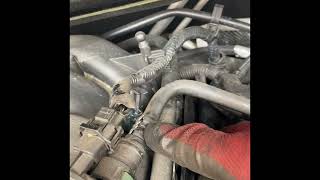
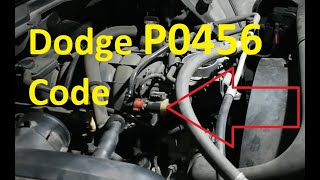
Helpful Videos
Used OEM Parts in Stock
New Aftermarket Parts Available


The information in this article is provided for general reference and educational purposes only. Vehicle specifications, procedures, and part compatibility can vary by production date, trim level, and region. Always consult your vehicle's factory service manual and verify part numbers before purchasing or performing repairs. Safety-critical components such as airbags, seat belts, and braking systems should be installed by a qualified professional.
- Chrysler Aspen:
- 🧭 Diagnostic Flowchart
- 🎬 Helpful Videos
- 🛍️ Shop This Part
- What's Unique About the 2007-2009 Chrysler Aspen
- Symptoms You May Notice
- Most Likely Causes
- Rare But Worth Checking
- Diagnosis Steps
- Parts You'll Likely Need
- Related Codes That Often Appear With This One
- Technical Service Bulletins (TSBs) & Recalls
- Platform-Specific Known Issues
- Mechanic-Grade Diagnostic Values
- Scan Tool Commands That Help
- Wiring & Ground Locations
- Real Owner Repair Stories
- "I Checked Everything" — The Actual Cause
- OEM Part Supersession History
- Model Year Variations Within This Range
- Real Owner Stories
- 2007 Chrysler Aspen 5.7
- 2008 Chrysler Aspen
- Chrysler Aspen
- Related OBD-II Codes
- Frequently Asked Questions
- 🎟️ Get 5% Off