

P0456 on 2020 Dodge Journey: Causes and Fixes for Small EVAP Leaks
For a 2020 Dodge Journey, P0456 almost always points to a loose gas cap, a faulty EVAP purge valve, or a bad ESIM switch on the charcoal canister. Start by tightening or replacing the gas cap with an OEM Mopar part; if that fails, the purge valve and ESIM switch are common, well-documented failure points and are relatively inexpensive to replace.
- P0456 means your Journey has a very small leak in the emissions system; it is safe to drive but will fail an emissions test.
- Always check the gas cap first. Make sure it's tight. If it's old, replace it with an OEM Mopar cap for about $30.
- If the gas cap isn't the issue, the next most likely causes are the purge valve in the engine bay or the ESIM switch on the charcoal canister under the rear of the vehicle.
- Before replacing many parts, be aware that a dealership software update has been known to fix this code on the Journey platform.
- A smoke test is the most reliable way to find the exact location of a leak if it's not one of the common components.
What's Unique About the 2020-2020 Dodge JOURNEY
On the Dodge Journey and its platform mates (like the Jeep Patriot and Chrysler 200), the EVAP system uses an Evaporative System Integrity Monitor (ESIM) switch instead of an older style Leak Detection Pump (LDP). This ESIM switch is a very common failure point that can get stuck, rattle when shaken, or fail electronically, causing a P0456 code even if no physical leak exists. Additionally, several Technical Service Bulletins (TSBs) for the platform, such as #18-081-17 and #18-080-17, confirm that this code can sometimes be triggered by overly sensitive PCM software logic, requiring an update from a dealership rather than a part replacement.
Diagnostic Flowchart
Tap your situation to follow the diagnostic path that matches what you're seeing on this vehicle.
Symptoms You May Notice
- Check Engine Light is on.
- A "Check Gas Cap" or "gascap" message may appear on the instrument cluster. [NHTSA ODI #11065743, 30]
- A faint fuel smell may be noticeable, though this is less common with a small leak.
- In rare cases, a rough idle after refueling can be caused by a stuck-open purge valve.
- Replacing the O2 sensors. O2 sensors are part of the exhaust system and are not related to the EVAP system; they will not cause a P0456 code.
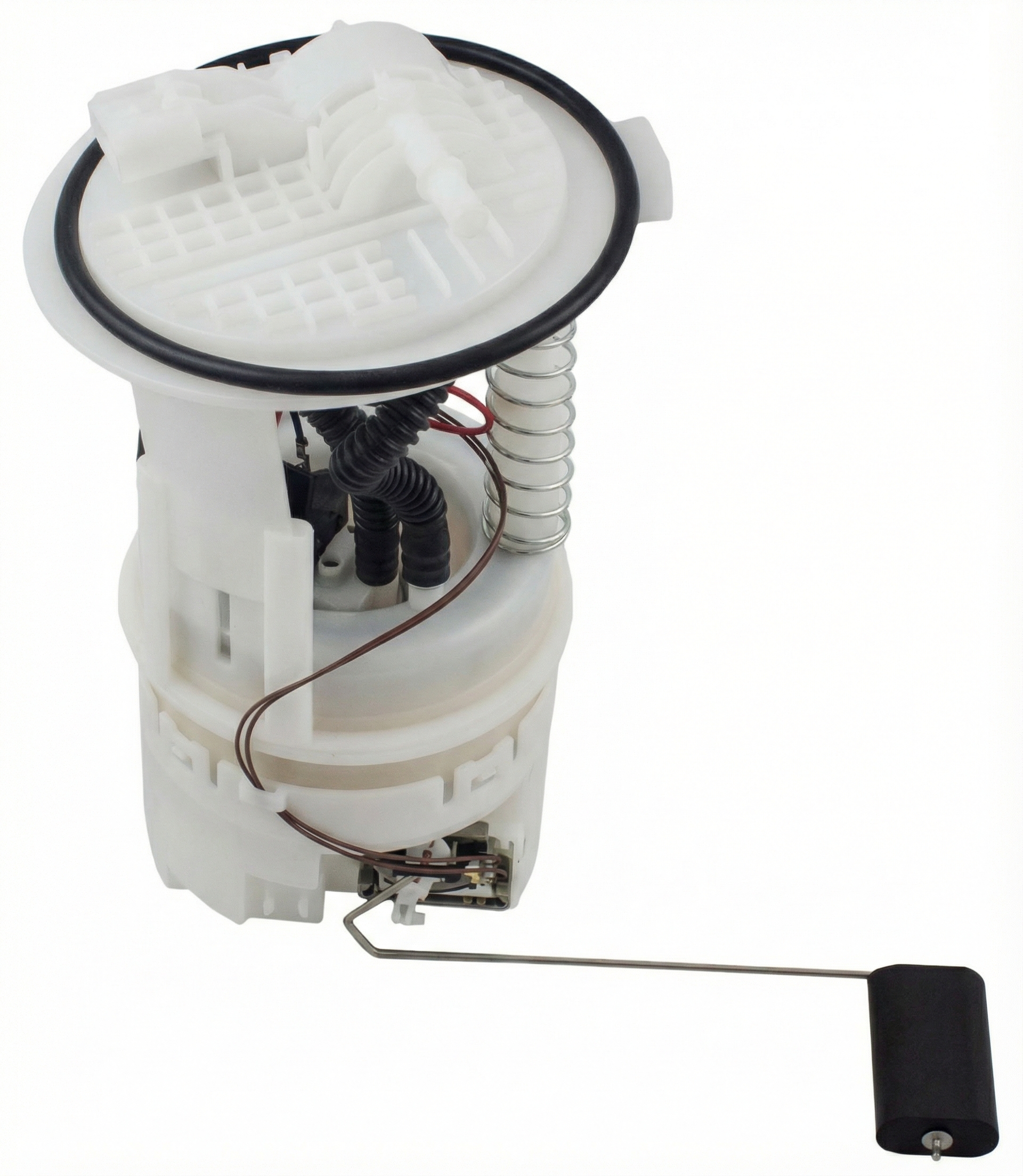
- Replacing the fuel pump. While a bad fuel pump gasket could theoretically cause a large leak, it's an extremely uncommon cause for a small leak code like P0456. All other EVAP components should be tested first.
Most Likely Causes
- Loose or Faulty Gas Cap 🔴 High Probability → Shop Fuel Tank Cap The gas cap seal is a rubber component that wears out, hardens, or cracks over time, losing its ability to maintain a perfect seal. This is the most common cause for any EVAP leak code. Aftermarket caps are a frequent source of this code, as their seals or threading may not match OEM specifications precisely.
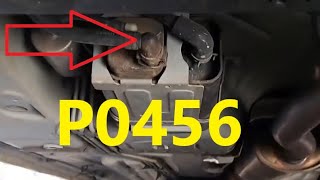
How to confirm: Inspect the gas cap for cracks or damage to the rubber O-ring. Ensure it is tightened until it clicks at least three times. If the cap looks worn, replacement is a cheap and effective first step. 🎬 Watch: Two simple DIY methods to fix the P0456 code. Also, inspect the fuel filler neck for rust or debris that could prevent a seal.
Typical fix: Replace the gas cap. It is highly recommended to use an OEM Mopar part (P/N: 52030433AB), as many owners in forums report that aftermarket caps failed to fix the issue.
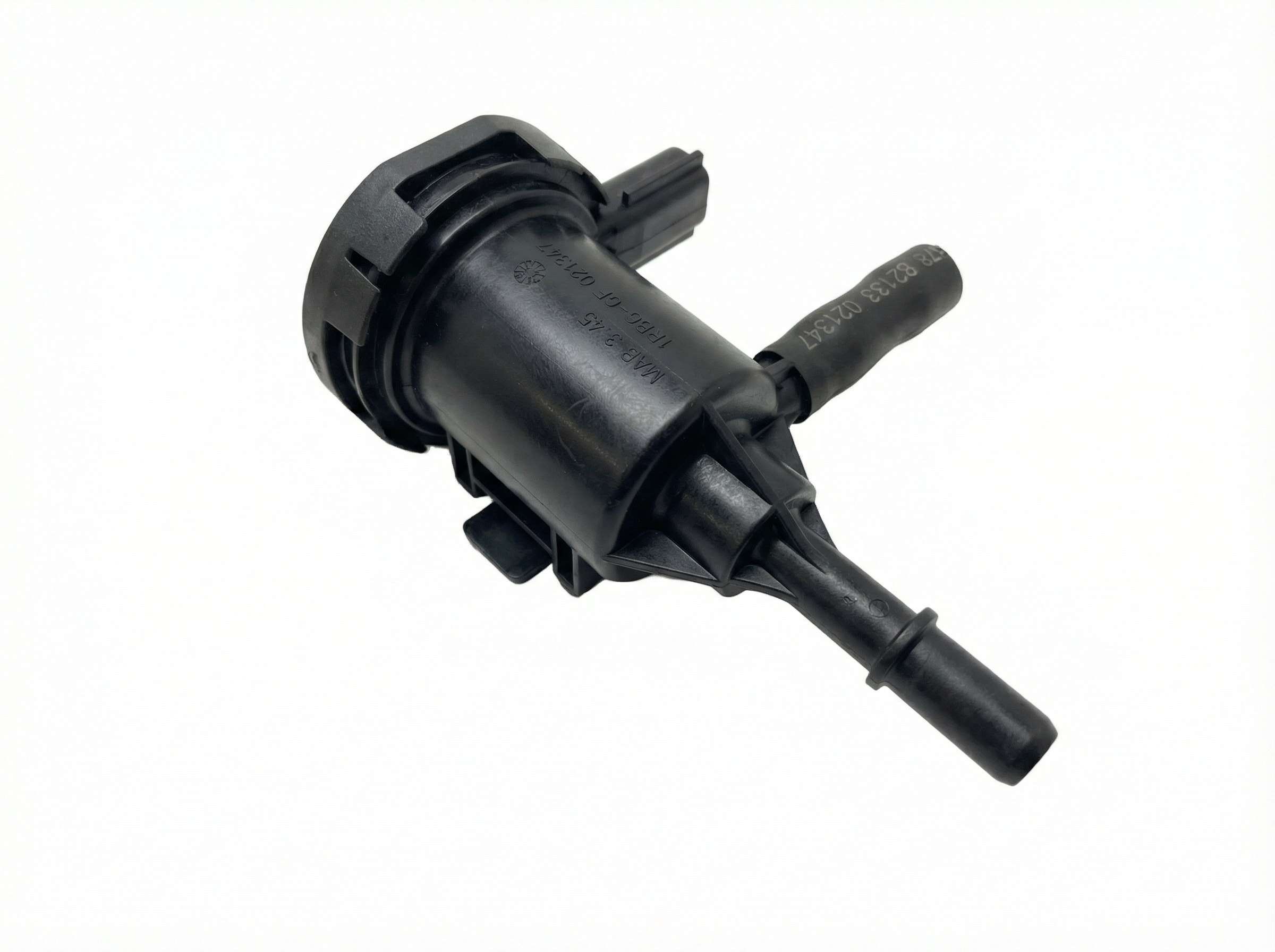
Est. part cost: $20-$40 - Faulty EVAP Purge Valve/Solenoid 🟡 Medium Probability → Shop Vapor Canister This valve controls the flow of fuel vapors from the charcoal canister to the engine. It can become stuck slightly open due to carbon buildup or wear, creating a small, constant leak path that the system detects during its self-test.
How to confirm: The valve is located in the engine bay, often near the back corner. With the engine off, disconnect the valve and try to blow through it; if any air passes, it is stuck open and faulty. A scan tool can also command the valve closed to check if it holds a vacuum.
Typical fix: Replace the purge valve. This is a straightforward repair involving disconnecting two hoses and an electrical connector. The OEM Mopar part number is 04891731AC. 🎬 Watch: How to locate and replace the purge solenoid.
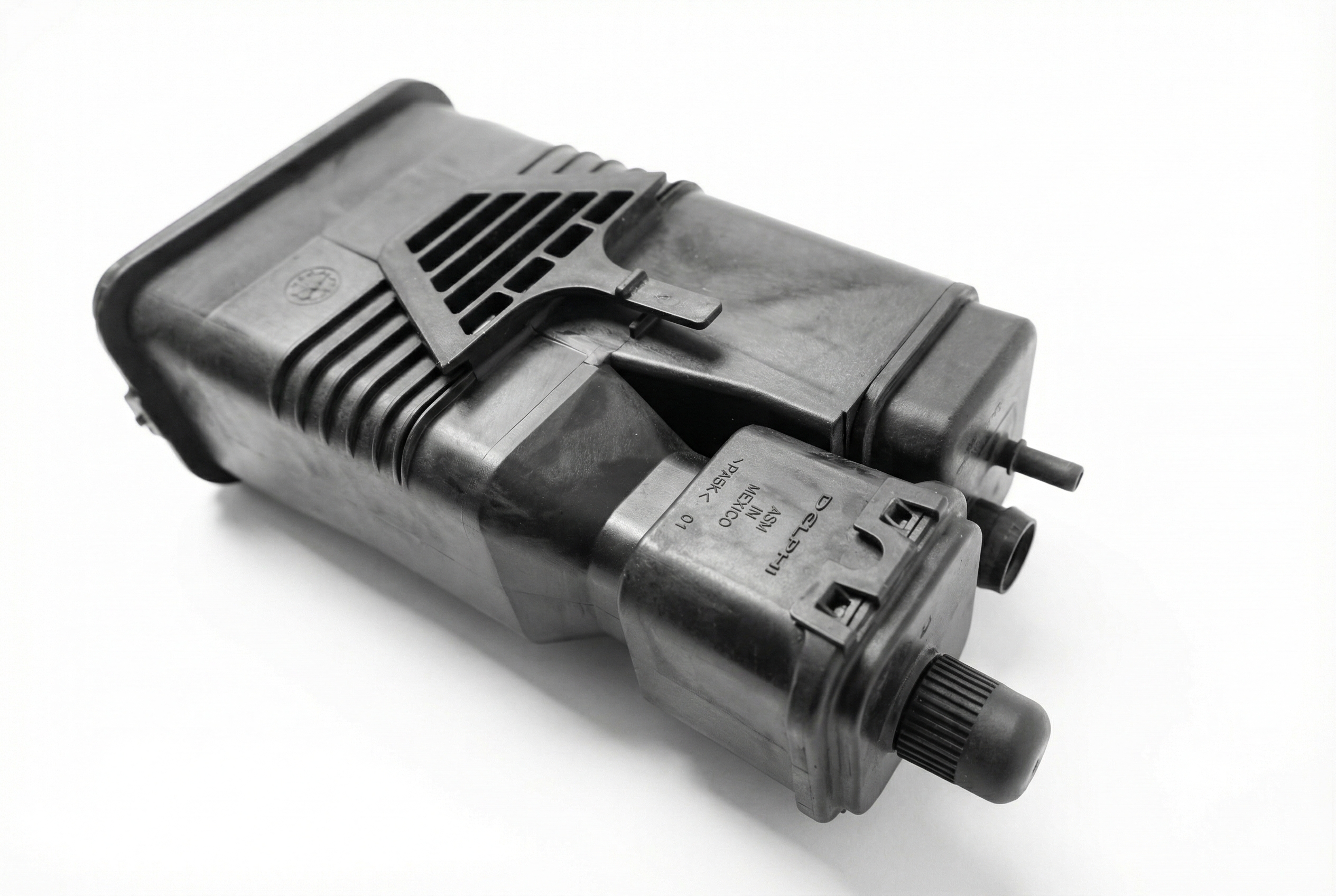
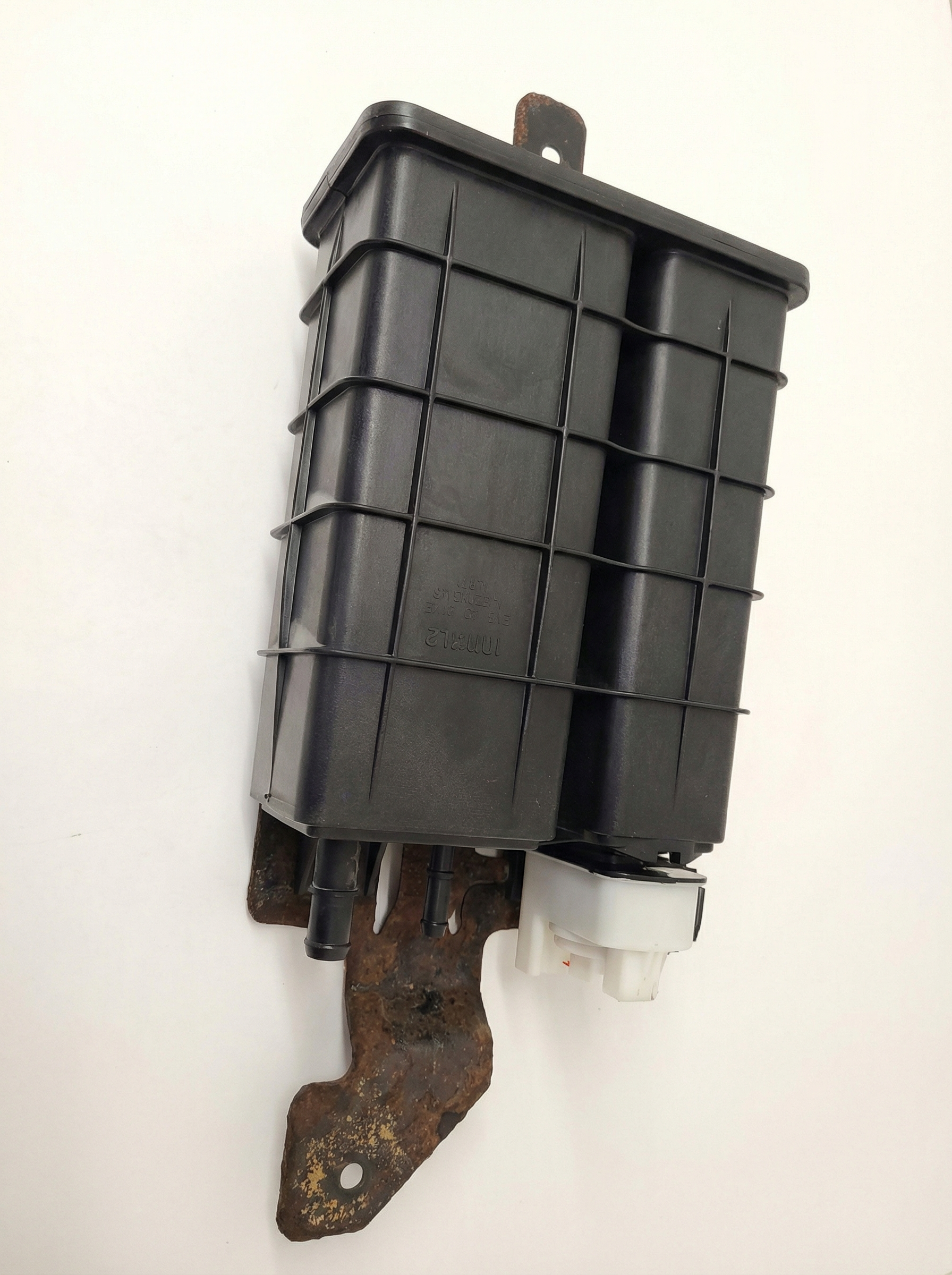
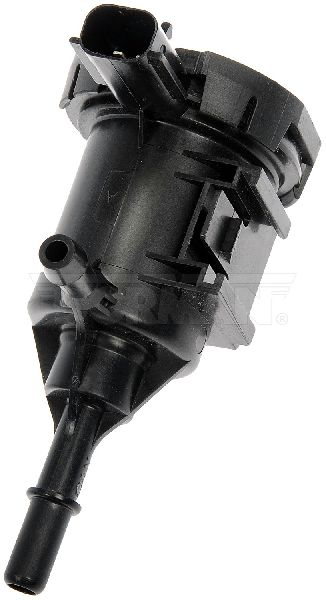
Est. part cost: $25-$60 - Faulty Evaporative System Integrity Monitor (ESIM) Switch 🟡 Medium Probability → Shop Vapor Canister This component, mounted directly on the charcoal canister, is a notorious high-failure part on many Dodge/Chrysler/Jeep vehicles. It can get stuck, fail electronically, or the internal plunger can become loose (rattles when shaken), falsely reporting a leak to the PCM.
How to confirm: The ESIM is located on the charcoal canister, under the vehicle near the spare tire. Diagnosis often involves replacing the part after ruling out the gas cap and purge valve. A smoke test that shows no external leaks strongly points to an internal failure of the ESIM.
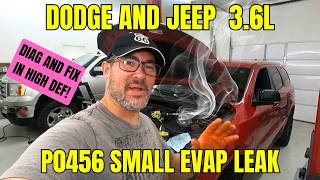
Typical fix: Replace the ESIM switch. This involves lowering the spare tire for access, disconnecting one hose and an electrical connector, and twisting the switch (usually counter-clockwise) to remove it from the canister. 🎬 See a mechanic diagnose and fix this small leak. The OEM Mopar part number is often 4861962AD.
Est. part cost: $30-$70 - Outdated Powertrain Control Module (PCM) Software ⚪ Low Probability Multiple TSBs, including #18-081-17 and #18-080-17, were issued for the Dodge Journey platform and its relatives, indicating that the original software logic for detecting EVAP leaks was overly sensitive. This could cause a P0456 code to be set when no physical leak is present.
How to confirm: A Dodge dealership or a qualified shop with a wiTECH scan tool can check the current software calibration of the PCM against the latest available version from the manufacturer to see if an update is available for the vehicle's VIN.
Typical fix: Flash the PCM with the latest manufacturer software. This must be done by a dealer or a properly equipped independent shop.
Est. part cost: $0 (if under warranty) - $200 - Cracked or Disconnected EVAP Hose ⚪ Low Probability Rubber and plastic EVAP lines can become brittle and crack over time due to age and heat exposure, creating small leaks. Common areas are near the engine or at connection points on the charcoal canister.
How to confirm: A visual inspection of all accessible EVAP lines in the engine bay and under the vehicle may reveal obvious cracks or loose fittings. The definitive method is to use a smoke machine, which fills the system with vaporized smoke, making any leak visible.
Typical fix: Replace the damaged section of the hose or the entire hose assembly.
Est. part cost: $10-$50
Rare But Worth Checking
- Cracked Charcoal Canister: → Shop Vapor Canister The plastic housing of the canister itself can develop a hairline crack, creating a leak. This is usually found with a smoke test after all other common components have been checked and confirmed to be working.
- Leaking Fuel Filler Neck: → Shop Fuel Filler Neck Corrosion or rust on the metal tube where the gas cap seals can prevent a proper seal, even with a brand new OEM cap. This is more common in regions that use road salt. A visual and physical inspection of the filler neck for pitting or rust is necessary.
Diagnosis Steps
- Check the Gas Cap: Remove, inspect the seal for cracks or wear, and reinstall it, making sure it clicks several times. Clear the code. If it returns, replace the cap with a new OEM Mopar part (P/N: 52030433AB). Many issues are solved here.
- Visual Inspection: Inspect the EVAP hoses in the engine bay, especially around the purge valve, for any obvious cracks, disconnections, or signs of wear.
- Inspect/Test the Purge Valve: Locate the purge valve in the engine bay. With the engine off, remove it and try to blow through it. If any air passes, the valve is stuck open and needs to be replaced.
- Inspect Under the Vehicle: Lower the spare tire to gain access to the charcoal canister and the ESIM switch. Check the hoses connected to the canister for damage. The ESIM is a common failure point and is the next logical part to replace if the cap and purge valve are good.
- Check for PCM Update: Before performing more invasive tests, consider having a dealer check if your vehicle has any open TSBs or requires a PCM software update, as TSBs like #18-081-17 show this can be a software-only fix.
- Perform a Smoke Test: If the leak source is still not found, the most effective diagnostic step is a smoke test. A machine injects smoke into the EVAP system via the service port. The leak will be revealed by where the smoke escapes. This is the official dealer method, referred to as the 'Small Leak Verification Test (SLVT)' in TSB #1804823. [NHTSA TSB #1804823, 1]
Parts You'll Likely Need
- Fuel Cap
(OEM #52030433AB)— This is the most common cause of P0456 due to the rubber seal wearing out. Using an OEM Mopar cap is highly recommended as aftermarket versions are known to cause this code.
Trusted brands: Mopar
OEM price range: $25-$40
Aftermarket price range: $15-$25 - EVAP Purge Valve / Solenoid
(OEM #04891731AC)— A very common failure point. It gets stuck slightly open, creating a small leak path that the system detects.
Trusted brands: Mopar, Bosch
OEM price range: $40-$70
Aftermarket price range: $30-$60 - Evaporative System Integrity Monitor (ESIM) Switch
(OEM #4861962AD)— A notorious high-failure part on this platform. It fails internally, causing the PCM to believe there is a leak even when the system is perfectly sealed.
Trusted brands: Mopar
OEM price range: $30-$70
Aftermarket price range: $25-$50
Related Codes That Often Appear With This One
- P0455 — Indicates a large EVAP leak. A component failure can start as a small leak (P0456) and worsen over time to become a large leak (P0455), or both can be set if the ESIM fails.
- P0441 — Indicates incorrect purge flow. This code often appears with P0456 when the purge valve is the root cause, as a stuck valve affects both flow and sealing. TSB #18-081-17 for a related model year lists both codes as being potentially resolved by a PCM update.
- P0457 — Indicates a leak specifically detected after refueling (loose gas cap). This code strongly points to a faulty gas cap or a problem with the fuel filler neck seal.
Technical Service Bulletins (TSBs) & Recalls
- TSB #1804823: 'wiTECH Small Leak Verification Test (SLVT) - P0456-EVAP SYSTEM SMALL LEAK' - This TSB provides the official dealer diagnostic procedure for finding small leaks using a smoke machine.
- TSB #18-081-17: 'Flash: Powertrain Diagnostic and System Enhancements' - For 2015 models, this TSB indicates a PCM software update can resolve P0456, often along with P0441, among other codes.
- TSB #18-080-17: Similar to the above, this TSB for 2016 models also lists a PCM flash to correct an erroneous P0456 code. [NHTSA TSB #18-080-17]
Platform-Specific Known Issues
- A known issue, documented in TSB #S2025000004, involves customer complaints of the check engine light for code P0456 on 2020 models.
- Older TSBs for the same platform (e.g., #18-080-17, #18-081-17) indicate that a PCM software update can resolve false P0456 codes. It's worth checking if the vehicle's software is up to date before replacing multiple parts.
Mechanic-Grade Diagnostic Values
- EVAP Purge Solenoid Resistance — expected: Approximately 14.4 Ohms. Failure: A reading significantly outside this range, or an open/infinite reading, indicates a faulty internal coil.
- EVAP Purge Solenoid Connector Voltage — expected: 11-12 Volts DC (with key on, engine off). Failure: No voltage suggests a problem with the wiring harness or the PCM, not the solenoid itself.
- ESIM Switch Operation (Pressure) — expected: When refueling, pressure builds to ~0.5 inches of water, at which point the large check valve in the ESIM unseats to vent pressure.. Failure: A failure to vent can cause refueling issues; a failure to seal can cause leak codes.
- ESIM Switch Operation (Vacuum) — expected: During system cooldown, vacuum pulls the small check valve off its seat to allow fresh air in. During a self-test, vacuum pulls the diaphragm inward, closing the switch.. Failure: If the switch fails to close under vacuum during a test, it will falsely report a leak.
Scan Tool Commands That Help
- wiTECH: Small Leak Verification Test (SLVT) — This is the mandatory factory procedure for P0456. It must be run before repairs to verify the leak and after repairs to confirm the fix, as a simple road test will not complete the monitor quickly. [NHTSA TSB #1804823, 6, 13]
- wiTECH / Professional Scan Tool: Actuate Evaporative Purge Valve Solenoid Duty Cycle — This command allows a technician to manually cycle the purge solenoid while testing the control circuit for proper voltage and ground signals from the PCM.
- Star SCAN / Professional Scan Tool: Force ESIM Switch Closed Monitor — This function forces the specific monitor for the ESIM switch to run, allowing a technician to test the switch's ability to close under vacuum without waiting for a natural drive cycle.
Wiring & Ground Locations
- Engine Block Ground — On the engine block, often on the side near the starter motor and below the airbox.. A poor engine block ground can cause a variety of electrical issues and sensor faults. While not a direct cause, ensuring the main engine grounds are clean and tight is a foundational step in diagnosing any electrical fault, including those in the emissions system.
- Passenger Side Engine Mount Ground — A ground strap connecting the body chassis (near the coolant reservoir) to the passenger-side engine mount.. This ground point is part of the main grounding scheme for components in the engine bay. A loose or corroded connection here could potentially affect the operation of nearby solenoids and sensors, including the EVAP purge solenoid.
Real Owner Repair Stories
- DodgeForum.com user (2014 Dodge Journey) — Check engine light with code P0456 and a 'check gas cap' message.
❌ Tried (didn't work) Replacing the gas cap., Removing and testing the EVAP purge solenoid (it tested OK).
✅ What actually fixed it The ESIM switch (also called vapor leak detection pump) located on the charcoal canister was found to be stuck open. Replacing the ESIM switch resolved the code and message. - YouTube channel 'Fix It All' (2011 Dodge Journey 3.6L with 135,000+ miles) — Check engine light with codes P0455 (large leak) and P0456 (small leak).
❌ Tried (didn't work) Replacing the gas cap with a new OEM Mopar part., Replacing the EVAP purge valve and its associated vacuum harness.
✅ What actually fixed it After the initial parts failed to fix the codes, the final repair shown in the video was replacing the ESIM (Evaporative System Integrity Module) on the charcoal canister.
"I Checked Everything" — The Actual Cause
- A common scenario for the Dodge Journey is a persistent P0456 code even when a smoke test shows no leaks in the system. This is a classic symptom of an electronically failed ESIM switch. The EVAP system is mechanically sealed, so no smoke escapes, but the ESIM switch fails to correctly signal the system's integrity to the PCM, which continues to set the code. The fix is to replace the ESIM switch.
OEM Part Supersession History
4861962AA, 4861962AB, 4861962AC, 4891685AA, 4891685AB→4861962AD— Part has been revised and updated by the manufacturer over time to improve reliability.
Heads up: The newest part number, 4861962AD, is the correct direct replacement for all previous versions on this platform.52124512AA→52030433AB— Part number consolidation and potential design updates by the manufacturer.68056826AA, AB, AC, AD, AE, AF→68056826AG— This is the part number history for the entire vapor canister assembly for 2011-2020 models.
Heads up: The 2020 Journey uses this later-style canister, which is different from the one used on 2009-2010 models.
Model Year Variations Within This Range
- 2011-2020: The 2011-2020 Dodge Journey uses an updated vapor canister (current P/N 68056826AG) and associated EVAP system design compared to the earlier 2009-2010 models. The 2020 model falls into this later group.
Helpful Videos
![How to Fix P0456 Engine Code in 3 Minutes [2 DIY Methods / Only $4.44]](https://img.youtube.com/vi/v_QDSjd1-Lw/mqdefault.jpg)
Used OEM Parts in Stock

New Aftermarket Parts Available



The information in this article is provided for general reference and educational purposes only. Vehicle specifications, procedures, and part compatibility can vary by production date, trim level, and region. Always consult your vehicle's factory service manual and verify part numbers before purchasing or performing repairs. Safety-critical components such as airbags, seat belts, and braking systems should be installed by a qualified professional.
- Dodge JOURNEY:
- 🧭 Diagnostic Flowchart
- 🎬 Helpful Videos
- 🛍️ Shop This Part
- What's Unique About the 2020-2020 Dodge JOURNEY
- Symptoms You May Notice
- Most Likely Causes
- Rare But Worth Checking
- Diagnosis Steps
- Parts You'll Likely Need
- Related Codes That Often Appear With This One
- Technical Service Bulletins (TSBs) & Recalls
- Platform-Specific Known Issues
- Mechanic-Grade Diagnostic Values
- Scan Tool Commands That Help
- Wiring & Ground Locations
- Real Owner Repair Stories
- "I Checked Everything" — The Actual Cause
- OEM Part Supersession History
- Model Year Variations Within This Range
- 🎟️ Get 5% Off