

P0456 on 2013-2017 Dodge Viper: EVAP Small Leak Causes and Fixes
On a 2013-2017 Dodge Viper, code P0456 is often caused by a loose gas cap or the need for a powertrain software update as specified in a factory TSB for 2013-2014 models. Always check the gas cap is tight and its seal is clean before suspecting other parts. If the cap is not the issue, the TSB reflash is the next most likely solution, followed by a faulty ESIM switch.
- For the 2013-2017 Viper, always check the gas cap first for a P0456 code; it's a simple and common fix. Use an OEM Mopar cap.
- Be aware of TSB #18-065-16, which indicates a software update is the correct fix for many 2013-2014 models.
- If the gas cap and TSB don't apply or fix the issue, the next most likely culprit is a faulty ESIM, not necessarily a physical leak.
- A professional smoke test is the most effective way to locate the source of a physical EVAP leak if one truly exists.
- The vehicle is safe to drive with this code, but it will not pass an emissions inspection until the issue is resolved.
What's Unique About the 2013-2017 Dodge VIPER
For the Dodge Viper, particularly the 2013-2014 model years, a P0456 code doesn't always mean a physical part has failed. Dodge issued a Technical Service Bulletin (TSB #18-044-14, later superseded by #18-065-16) indicating that the code could be triggered by overly sensitive software. In these cases, the fix is a simple software reflash performed by a dealership with a wiTECH scan tool, not a parts replacement. This is a critical first check for any owner of these model years experiencing this code.
Diagnostic Flowchart
Tap your situation to follow the diagnostic path that matches what you're seeing on this vehicle.
Symptoms You May Notice
- Check Engine Light is illuminated.
- A faint fuel smell may be noticeable, though this is less common with a small leak.
- The message 'gASCAP' may appear in the instrument cluster on some Dodge vehicles, although this is not consistently reported on the Viper. 🎬 Watch: Understanding P0456 causes, symptoms, and common repairs
- Replacing the charcoal canister or purge valve before checking the gas cap and verifying if a PCM software update is available.
- Replacing the gas cap with a non-OEM aftermarket part, which often fails to seal correctly and does not resolve the code.
Most Likely Causes
- Powertrain Control Module (PCM) Software Update Needed 🔴 High Probability A specific TSB (#18-044-14, updated by #18-065-16) was issued for 2013-2014 Vipers to correct software logic that could falsely trigger this code. This is a known issue acknowledged by the manufacturer.
How to confirm: A Dodge dealership or a qualified shop with access to OEM software (wiTECH) can check if the vehicle's PCM has the latest update by referencing the TSB.
Typical fix: Reprogramming (flashing) the PCM with the new software. This is a dealer-only procedure.
Est. part cost: $0 - Loose or Faulty Gas Cap 🔴 High Probability → Shop Fuel Tank Cap This is the most common cause for P0456 across all makes and models. The cap's rubber seal can degrade, or the filler neck sealing surface can accumulate dirt, preventing a proper seal. Aftermarket caps are a frequent source of this code.
How to confirm: Ensure the cap is tightened until it clicks several times. Inspect the cap's seal (O-ring) for cracks, dirt, or damage. Clean the fuel filler neck lip where the seal makes contact.
Typical fix: Tighten or replace the gas cap. It is strongly recommended to use a genuine OEM Mopar cap (Part No. 52030433AB) for a reliable seal.
Est. part cost: $25-$50 - Faulty Evaporative System Integrity Monitor (ESIM) 🟡 Medium Probability → Shop Vapor Canister Like many Chrysler products of this era, the Viper uses an ESIM to detect EVAP leaks. This component is known to fail internally, causing it to report a leak when none exists. It contains weights and a diaphragm switch that can stick or fail over time.
How to confirm: After ruling out the gas cap and TSB, this is the next most likely part. A smoke test that shows no leaks points to a faulty ESIM, as the ESIM itself is the component reporting the (false) leak. It is located on the charcoal canister, typically accessible by removing the right rear wheel and inner fender liner.
Typical fix: Replace the ESIM and its O-ring seal. It must be installed in the correct vertical orientation to function.
Est. part cost: $30-$60 - Cracked or Disconnected EVAP Hose ⚪ Low Probability Rubber and plastic hoses can become brittle and crack over time due to heat and age. A user on the Viper Club of America forums noted this possibility, especially after the car sits in high heat.
How to confirm: A visual inspection may reveal obvious cracks or disconnected lines. A professional smoke test is the most reliable method to find small, hard-to-see leaks.
Typical fix: Replace the damaged section of hose.
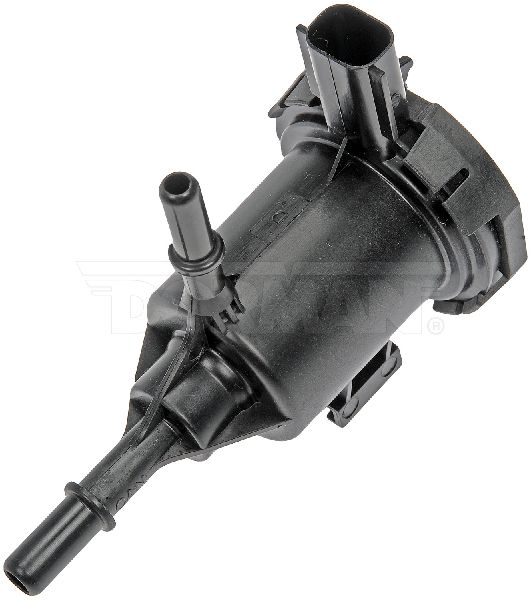
Est. part cost: $15-$100 - Faulty EVAP Purge Valve/Solenoid ⚪ Low Probability → Shop Vapor Canister The purge valve can get stuck slightly open, creating a leak path that the PCM detects during its self-test. While a possible cause, it is less common than the gas cap or ESIM on this platform.
How to confirm: With the valve disconnected, it should be closed and not allow air to pass through. A scan tool can also be used to command the valve open and closed to test its function.
Typical fix: Replace the purge valve. The Mopar part number appears to be 4891731AC.
Est. part cost: $40-$120
Rare But Worth Checking
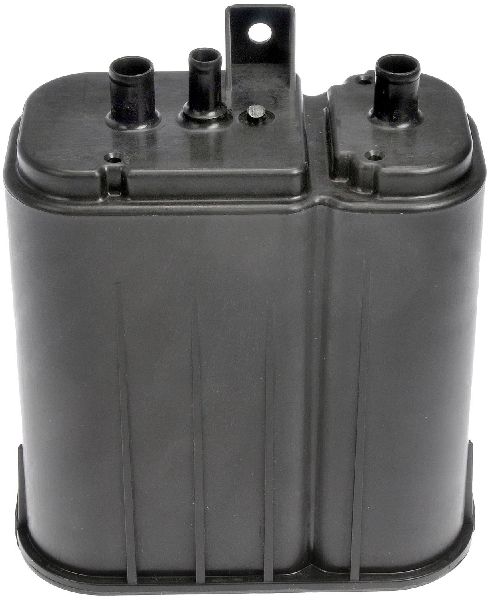
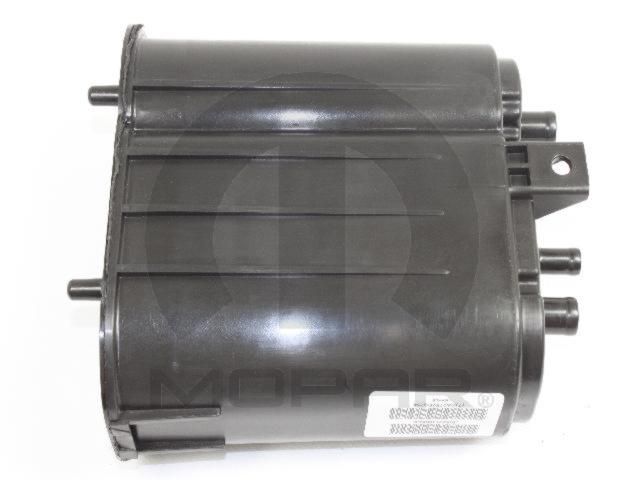
- Cracked EVAP Charcoal Canister: → Shop Vapor Canister The canister housing can develop small cracks from road debris or age, creating a leak. This is usually found only with a smoke test and is an uncommon failure.
Diagnosis Steps
- Check for any available Technical Service Bulletins (TSBs). For 2013-2014 models, TSB #18-065-16 (which supersedes #18-044-14) is highly relevant.
- Inspect the gas cap. Remove it, clean the filler neck sealing surface, check the cap's seal for damage, and reinstall it, ensuring it clicks multiple times. Consider replacing it with a genuine Mopar cap (52030433AB) as a low-cost first step.
- Clear the code with an OBD-II scanner and drive for a few days. The EVAP monitor runs under specific conditions (e.g., fuel level between 15-85%, ambient temperature changes), so the light may not return immediately.
- If the light returns, consult a dealership to confirm if the reflash from TSB #18-065-16 is applicable and has been performed. This is a very common fix for 2013-2014 models.
- If the TSB is not applicable or has been done, the next step is a professional smoke test. This involves injecting harmless, visible smoke into the EVAP system and watching for where it escapes, pinpointing the exact location of the leak. 🎬 See how to perform a professional smoke test for leaks
- If a smoke test reveals no leaks, the Evaporative System Integrity Monitor (ESIM) is the most likely failed component. It can be faulty even if no smoke is leaking from its housing.
Parts You'll Likely Need
- Fuel Filler Cap
(OEM #52030433AB)— This is the most frequent and simplest fix for a P0456 code. The seal can wear out, the filler neck can be dirty, or the cap may not have been tightened correctly. Using an OEM Mopar cap is critical.
Trusted brands: Mopar
OEM price range: $30-$50
Aftermarket price range: $15-$30 - Evaporative System Integrity Monitor (ESIM)
(OEM #4861959AB)— This is a common failure point on modern Chrysler/Dodge vehicles. It can fail internally and falsely report a leak. If a smoke test shows no leaks, the ESIM is the prime suspect. 🎬 Watch this walkthrough on replacing a faulty ESIM unit
Trusted brands: Mopar, Standard Motor Products
OEM price range: $30-$60
Aftermarket price range: $20-$40 - EVAP Purge Valve/Solenoid
(OEM #4891731AC)— This valve can stick open, causing a small, persistent leak in the system. It's a possible cause but less frequent than the gas cap or ESIM.
Trusted brands: Mopar, Dorman
OEM price range: $60-$90
Aftermarket price range: $40-$80
Related Codes That Often Appear With This One
- P0300 — A manufacturer TSB (#18-065-16) for the 2013-2014 Viper notes that P0456 can appear alongside a P0300 Multiple Cylinder Misfire code. The TSB addresses both with a single PCM software update. Some early Gen V Vipers also had engine issues related to manufacturing debris that could cause misfires.
Technical Service Bulletins (TSBs) & Recalls
- 18-044-14: The original TSB recommending a PCM software update to fix false P0456 codes on 2014 models.
- 18-065-16: Supersedes the previous TSB, expands the scope to 2013-2014 models, and also addresses a P0300 misfire code with the same software update.
- 1804823: References the specific dealer diagnostic test (wiTECH Small Leak Verification Test) used to confirm a P0456 leak.
Platform-Specific Known Issues
- A significant number of 2013-2014 Vipers may trigger a P0456 code due to overly sensitive software logic in the Powertrain Control Module (PCM). Dodge issued Technical Service Bulletin #18-065-16 to address this, recommending a software update rather than parts replacement as the primary fix.
- Owners on forums have confirmed the success of both replacing the gas cap with an OEM part and getting the TSB reflash to solve the P0456 code, reinforcing this diagnostic order.
Mechanic-Grade Diagnostic Values
- ESIM Switch State Voltage (Key On, Engine Off) — expected: Approximately 5 volts at the signal wire with the connector unplugged (open circuit).. Failure: Incorrect or no voltage may indicate a wiring or PCM issue. Shorting the signal wire to ground should change the status on a scan tool to 'Closed', verifying the circuit.
- wiTECH Small Leak Verification Test (SLVT) Pressure Drop — expected: After the test pulls a vacuum, the fuel tank pressure should not drop below -200 Pascals over a five-minute period.. Failure: If the pressure reading rises (loses vacuum) and drops below -200 Pa, it confirms a small leak is present in the system.
- ESIM Switch Function (Bench Test) — expected: The switch is normally open. Applying light pressure to the port where the canister connects should cause the switch to close, creating continuity between the two electrical pins. Applying light vacuum to the other side should also cause the switch to close.. Failure: If the switch does not change state (from open to closed) when pressure or vacuum is applied, it is internally faulty.
Scan Tool Commands That Help
- wiTECH (or equivalent high-end scan tool): Small Leak Verification Test (SLVT) — This is the manufacturer-mandated test to run first when diagnosing P0456. It automates the process of creating a vacuum in the tank and monitoring for decay using the fuel tank pressure sensor, providing a definitive pass/fail result for the presence of a small leak.
- wiTECH (or equivalent bidirectional scan tool): Purge Solenoid Actuation / EVAP System Test — This allows a technician to command the purge solenoid open and closed while the engine is running. It is used to verify the solenoid is not stuck open (which would cause a leak) by monitoring changes in short-term fuel trims and O2 sensor readings.
Wiring & Ground Locations
- Main Engine Ground — On older (Gen 3) Vipers, the main engine ground wire is located on the passenger side of the engine block, bolting to one of the engine mount bolts and attaching to a stud on the inside of the frame rail near the engine mount. This location is likely similar for Gen V.. While not a primary cause, a poor engine or chassis ground can cause erratic behavior in various electronic modules and sensors, including the PCM and those related to the EVAP system.
"I Checked Everything" — The Actual Cause
- A very common diagnostic path for a P0456 on this platform is that a technician will perform a smoke test and find no visible leaks. In these cases, the fault is not a physical leak in a hose or the tank, but rather one of two other issues: 1) The Evaporative System Integrity Monitor (ESIM) itself has failed internally and is falsely reporting a leak to the PCM, or 2) The PCM software is too sensitive and requires the reflash outlined in TSB #18-065-16 for 2013-2014 models. If a smoke test is clean, the next step should be checking for the TSB and then suspecting the ESIM.
When the Usual Fixes Don't Work
- While general automotive advice for P0456 almost always starts with 'check the gas cap,' experienced Dodge technicians report that on vehicles of this era using an ESIM, the ESIM itself is a more frequent cause of the code than the gas cap or filler neck seal. A user on Reddit claiming to be a Dodge service advisor for over 10 years stated, 'It is hardly ever the gas cap,' and that replacing the ESIM and its seal is the common fix. This suggests that while the gas cap/filler neck should be inspected, the ESIM should be a primary suspect if the issue is not immediately obvious.
OEM Part Supersession History
4861959AB (and 4861959AA, 4861959AC)→04861959AD— Standard part revision and improvement by the manufacturer.
Heads up: The newer part number 04861959AD is the correct service replacement for the older versions.
Model Year Variations Within This Range
- 2013-2014: These model years are subject to TSB #18-065-16, which indicates the P0456 code may be caused by overly sensitive PCM software logic. The fix is a software reflash, not a part replacement. This is less likely to be the cause on 2015-2017 models.
- 2013-2017: The Gen V Viper uses a capless fuel filler system. Unlike traditional systems, there is no removable gas cap to check. The seal is part of the filler neck assembly. A leak here is possible but less common than other causes.
Helpful Videos
We Have This Part in Stock


The information in this article is provided for general reference and educational purposes only. Vehicle specifications, procedures, and part compatibility can vary by production date, trim level, and region. Always consult your vehicle's factory service manual and verify part numbers before purchasing or performing repairs. Safety-critical components such as airbags, seat belts, and braking systems should be installed by a qualified professional.
- Dodge VIPER:
- 🧭 Diagnostic Flowchart
- 🎬 Helpful Videos
- 🛍️ Shop This Part
- What's Unique About the 2013-2017 Dodge VIPER
- Symptoms You May Notice
- Most Likely Causes
- Rare But Worth Checking
- Diagnosis Steps
- Parts You'll Likely Need
- Related Codes That Often Appear With This One
- Technical Service Bulletins (TSBs) & Recalls
- Platform-Specific Known Issues
- Mechanic-Grade Diagnostic Values
- Scan Tool Commands That Help
- Wiring & Ground Locations
- "I Checked Everything" — The Actual Cause
- When the Usual Fixes Don't Work
- OEM Part Supersession History
- Model Year Variations Within This Range
- 🎟️ Get 5% Off