

P0456 on 2014-2016 Fiat 500L: EVAP Small Leak Causes and Fixes
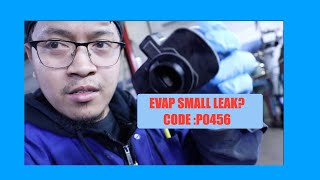
This code indicates a small leak in the evaporative emissions system, equivalent to a pinhole around 0.02 inches. The most common and cheapest first step is to inspect and tighten the gas cap. If that doesn't work, the next most likely culprits on the 500L and its platform mates are the EVAP purge valve or the EVAP System Integrity Module (ESIM) switch.
- P0456 means a small leak has been detected in the emissions system designed to control fuel vapors.
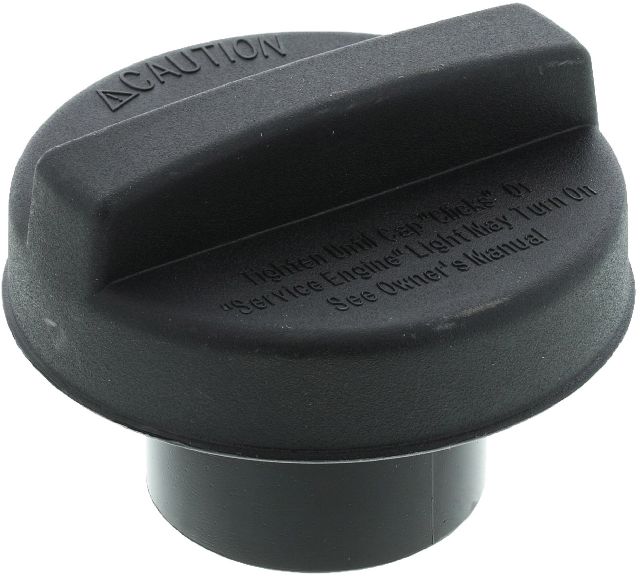
- Always start with the simplest and cheapest fix: check that your gas cap is tight and its seal is intact. Replace it if it's cracked or worn.
- The second most likely culprit is a faulty EVAP purge valve, a common failure item on these cars.
- You can safely drive the car with this code, but it will not pass an emissions inspection until it is fixed.
- If simple checks don't find the problem, a smoke test is the most reliable way to find the source of the small leak.
What's Unique About the 2014-2016 Fiat 500L

For the Fiat 500L and other vehicles using the 1.4L MultiAir engine like the Dodge Dart and Jeep Renegade, the EVAP system components are known for specific failure patterns. While the causes are similar to other vehicles, owners and technicians frequently report that the purge valve and the ESIM (Evaporative System Integrity Monitor) switch are common failure points that can cause a persistent P0456 code even after checking the gas cap. Fiat also issued TSBs that outline specific diagnostic procedures using their proprietary wiTECH scan tool to verify small leaks, and in some cases, PCM software updates to improve EVAP system diagnostics, indicating a simple visual inspection may not always be sufficient.
Diagnostic Flowchart

Tap your situation to follow the diagnostic path that matches what you're seeing on this vehicle.
Symptoms You May Notice
- Check Engine Light is on
- A faint smell of gasoline, particularly after refueling or while the A/C is running.
- Difficulty starting the engine or a rough idle if the purge valve is stuck open, creating a vacuum leak.
- Replacing the oxygen (O2) sensors. O2 sensors are not part of the EVAP system and will not cause a P0456 code.
- Replacing the catalytic converter. This is a very expensive and unrelated repair.
- Assuming the gas cap is the only possible cause and not investigating further when the code returns.
Most Likely Causes

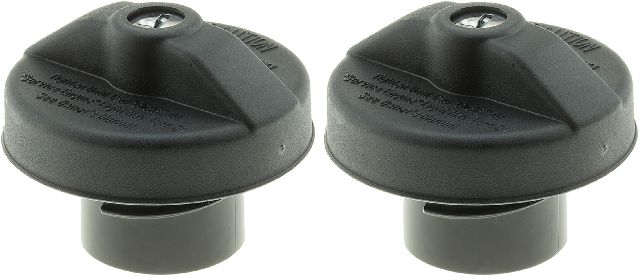
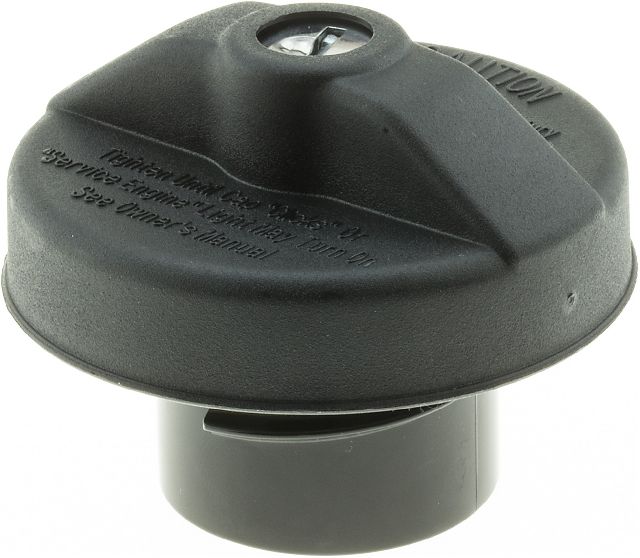
- Loose, Worn, or Incorrect Gas Cap 🔴 High Probability → Shop Fuel Tank Cap The gas cap seal is a simple rubber O-ring that can dry out, crack, or get dirty over time, preventing a proper seal. This is the most common cause for P0456 on almost all vehicles and the easiest first step. However, many Fiat owners report this is not the final fix.
How to confirm: Remove the gas cap and inspect the rubber seal for any cracks, tearing, or brittleness. Ensure it is tightened until it clicks at least once. Clean any dirt from the cap and the filler neck sealing surface with a cloth.
Typical fix: Tighten the cap. If the seal is damaged, replace the entire gas cap. It's a cheap and easy first step. Using an OEM Mopar cap is often recommended as some aftermarket caps may not seal correctly.
Est. part cost: $15-$40 - Faulty EVAP Purge Valve/Solenoid 🟡 Medium Probability → Shop Vapor Canister The purge valve is an electromechanical part that cycles frequently and can get stuck slightly open, creating a small leak path. Forum and video evidence for the Fiat 500 and Dodge Dart with the same engine confirm this is a very common failure item. A stuck-open valve can also cause rough idle or starting issues.
How to confirm: With the engine off, disconnect the purge valve and try to blow through it. It should be normally closed and not allow any air to pass. 🎬 Watch: How to test and replace the purge valve. If air passes, it is faulty. A professional can also command it open and closed with a scan tool while monitoring fuel tank pressure data; a faulty valve will often show an immediate drop in vacuum after being commanded closed.
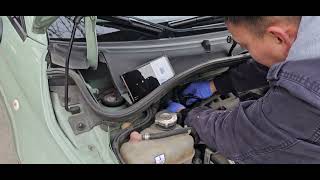
Typical fix: Replace the purge valve. It is typically located on or near the intake manifold in the engine bay and is accessible for DIY replacement, often taking less than 20 minutes.
Est. part cost: $40-$90 - Faulty EVAP Leak Detection Pump (LDP) or ESIM Switch 🟡 Medium Probability → Shop Vapor Canister This component, often called an ESIM (Evaporative System Integrity Monitor) on FCA vehicles, is another high-failure item. It is responsible for pressurizing the system for the self-test. The internal mechanism can fail, or the O-ring sealing it to the charcoal canister can degrade and leak. This is a well-documented issue on platform-mates like the Dodge Dart and Jeep Renegade.
How to confirm: This component is located on the charcoal canister, accessible by removing the rear passenger-side wheel and fender liner. A smoke test is the best confirmation. Some owners report that a faulty ESIM will rattle when shaken, while a new one will not, though this is not a definitive test.
Typical fix: Replace the ESIM. It twists about a quarter-turn into the canister. It is often recommended to replace the O-ring seal at the same time, or it may come with the new part.
Est. part cost: $30-$60 - Cracked or Disconnected EVAP Hoses ⚪ Low Probability The plastic and rubber hoses in the EVAP system can become brittle with age and exposure to engine heat, leading to small cracks, especially at connection points or plastic fittings. A TSB for other FCA vehicles points to a split in a specific purge valve hose as a cause for P0456.
How to confirm: Visually inspect all accessible EVAP lines running from the engine bay to the charcoal canister near the fuel tank. Look for obvious cracks, loose fittings, or damage. A professional smoke test is the most effective way to find a leak that isn't visible.
Typical fix: Replace the cracked section of hose or secure the loose connection. Small hose sections are inexpensive.
Est. part cost: $10-$40
Rare But Worth Checking
- Cracked EVAP Charcoal Canister: → Shop Vapor Canister The canister itself can develop hairline cracks from age or impact from road debris. This is less common than a valve or hose failure but can be found with a smoke test. Topping off the fuel tank after the pump clicks off can also flood the canister with liquid fuel, damaging it.
- Leaking Fuel Filler Neck: → Shop Fuel Filler Neck Rust or damage to the metal tube leading to the gas tank can cause a leak that prevents the system from sealing. On the related Dodge Dart, distortion of the filler neck from over-tightening the gas cap 🎬 Watch: Quick tips for P0456 on the Dodge Dart platform. has been identified as a specific cause of P0456.
Diagnosis Steps

- Read the code with an OBD-II scanner to confirm P0456 is the active code.
- Inspect the gas cap. Remove it, check the seal for damage, and clean both the seal and the filler neck. Reinstall it and ensure it clicks several times.
- Clear the code with the scanner. Drive the vehicle for a few days, including some overnight stops, to allow the EVAP monitor to run its self-test.
- If the light returns, perform a thorough visual inspection of all visible EVAP hoses and connections in the engine bay and under the car near the fuel tank. Look for any cracks, brittleness, or loose fittings.
- Locate the EVAP purge valve in the engine bay. With the engine off, disconnect it and attempt to blow through it. If air passes, the valve is stuck open and must be replaced.
- If the purge valve is good, the next logical step for this platform is to inspect the ESIM switch. This requires safely jacking up the rear of the vehicle and removing the passenger-side rear wheel and fender liner to access the charcoal canister.
- If the above steps do not reveal the issue, the most effective next step is a professional smoke test. This involves feeding a low-pressure, high-density smoke into the EVAP system and watching for where it escapes. 🎬 See how a smoke machine pinpoints small EVAP leaks. This will pinpoint the exact location of the leak.
Parts You'll Likely Need
- Gas Cap
(OEM #52030380AB)— This is the most frequent initial suspect for a P0456 code due to its simple seal wearing out. It's the cheapest and easiest part to replace first.
Trusted brands: Mopar, Stant
OEM price range: $25-$40
Aftermarket price range: $15-$25 - Vapor Canister Purge Valve
(OEM #04627182AA)— This valve is a very common failure point on Fiat/Mopar vehicles, often getting stuck partially open and creating a small leak.
Trusted brands: Mopar, Dorman, Standard Motor Products
OEM price range: $60-$90
Aftermarket price range: $40-$70 - EVAP System Integrity Module (ESIM)
(OEM #04861959AD)— Also called a leak detection pump, this part attaches to the charcoal canister and frequently fails on FCA platforms, causing a small leak that triggers P0456.
Trusted brands: Mopar, Dorman
OEM price range: $40-$60
Aftermarket price range: $20-$40
Related Codes That Often Appear With This One
- P0455 — A large leak was detected. A component failure can sometimes be intermittent or worsen, causing the system to log both small and large leak codes.
- P0441 — This is a code for incorrect purge flow, often seen when the purge valve is malfunctioning (e.g., stuck open), which can cause both a leak and improper flow when commanded by the ECM.
- P0457 — This code specifically indicates a leak detected due to a loose or missing fuel cap, which is a primary cause of P0456 as well. Both codes can be triggered by a faulty ESIM module on related vehicles.
Technical Service Bulletins (TSBs) & Recalls
- Bulletin #1804823 (2014 EQUIPMENT, dated 2023-04-15): "wiTECH Small Leak Verification Test (SLVT) - P0456-EVAP SYSTEM SMALL LEAK"
- Bulletin #18-044-21 (for Jeep Renegade 1.4L): Recommends a PCM software update to improve diagnostics for several EVAP codes, including P0456.
- Bulletin #25-002-15 REV. B (for Jeep/Dodge): Identifies a split in the purge valve vapor hose as a specific cause for P0455/P0456 on some 2015 models.
Platform-Specific Known Issues
- Fiat issued Technical Service Bulletin (TSB) #1804823, which describes a specific diagnostic routine called the 'Small Leak Verification Test (SLVT)' using the wiTECH scan tool to accurately diagnose P0456.
- TSB 18-044-21 for the related Jeep Renegade with the same 1.4L engine involves a PCM software update to improve EVAP system diagnostics for P0456, suggesting software could be a factor.
Mechanic-Grade Diagnostic Values
- EVAP Purge Valve Solenoid Resistance — expected: 30-48 Ohms at room temperature (approx. 68°F / 20°C).. Failure: An open circuit (infinite resistance) or a short (near-zero resistance) indicates a failed coil.
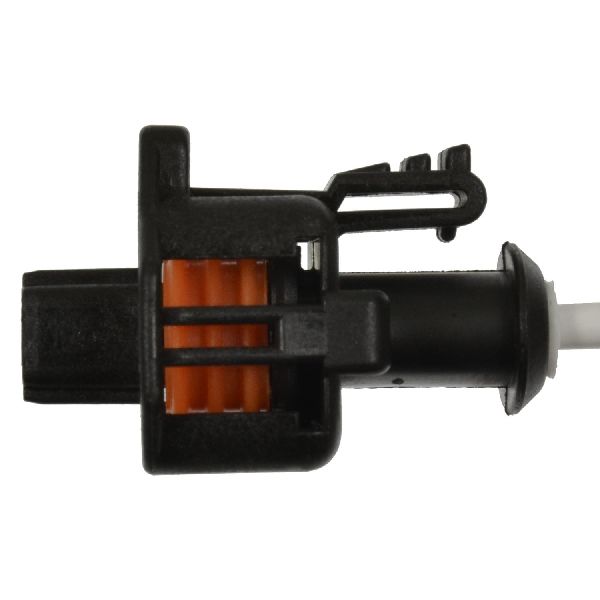
- EVAP Purge Valve Connector Voltage — expected: Approximately 12V (battery voltage) on one of the two pins with Key On, Engine Off.. Failure: No voltage suggests a wiring or fuse issue upstream of the valve.
- Live Scan Tool Data: Fuel Tank Pressure — expected: When the engine starts, the pressure (vacuum) should change in a controlled manner as the purge valve is commanded open by the ECM. With the engine off, the system should hold a vacuum.. Failure: If vacuum immediately jumps to a high negative value on startup and drops to zero instantly when the engine is shut off, it indicates the purge valve is stuck open.
- Forced EVAP System Leak Test (Advanced Scanner) — expected: System should be pressurized to ~3 kPa and hold pressure.. Failure: A pressure drop of 0.5–2 kPa over a 15-minute period confirms a small leak consistent with P0456.
Scan Tool Commands That Help

- wiTECH (Dealer Tool): Small Leak Verification Test (SLVT) — This is the manufacturer-specified routine to confirm a P0456 leak after initial visual checks are complete, as mentioned in TSB #1804823.
- AlfaOBD / iCarsoft CR Pro+: Enhanced EVAP Leak Test / EVAP System Test — These aftermarket tools can run similar tests to the dealer tool, commanding the vent and purge solenoids closed and monitoring pressure decay to verify a leak without a smoke machine.
Wiring & Ground Locations
- G3022a — Located in the right kick panel area.. A poor ground connection for body or chassis-related modules can cause erratic sensor readings or behavior in various systems, including emissions components.
- G3042a — Located at the right 'D' pillar (the rearmost roof support pillar).. This ground point is near the rear of the vehicle where the charcoal canister, ESIM, and fuel tank are located. A fault here could directly impact the EVAP system components.
Real Owner Repair Stories
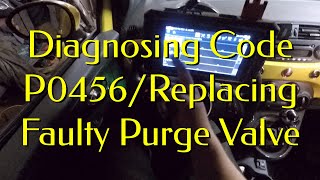
- YouTube channel 'JDMTEK Productions' (2015 Fiat 500) — Check Engine Light with code P0456.
❌ Tried (didn't work) Gas cap was inspected and confirmed to be good.
✅ What actually fixed it The technician monitored live fuel tank pressure data and saw the vacuum immediately spike on startup and drop to zero on shutdown. This indicated the purge valve was stuck open. Replacing the EVAP purge valve resolved the issue, confirmed by watching the live data show a correct, gradual pressure change with the new part. - Reddit user 'Canon_Cowboy' (Unknown year Chrysler/Dodge/Jeep vehicle) — Check Engine Light with code P0456.
❌ Tried (didn't work) Initially tried tightening the gas cap and clearing the code.
✅ What actually fixed it The user replaced the EVAP purge valve. After clearing the code, the light stayed off, and they confirmed a year later that the problem never returned.
"I Checked Everything" — The Actual Cause
- In a documented case on a similar 1.4L MultiAir engine, a vehicle passed a smoke test with no external leaks found. The issue persisted and was ultimately traced to a faulty purge solenoid. The solenoid passed an electrical resistance test (reading 48 ohms), but it was mechanically failing to seal when de-energized, creating an internal leak path back into the intake manifold that a smoke test would not show.
OEM Part Supersession History
4861959AA, 4861959AB, 4861959AC→04861959AD— Component revision and improvement over time. The multiple supersessions suggest FCA has updated the design of the ESIM to improve reliability.
Heads up: The newest part number, 04861959AD, is the correct service replacement for all previous versions.
Model Year Variations Within This Range
- 2014-2016: Core engine and EVAP system components remained largely unchanged during this period. These models pre-date the Security Gateway Module (SGW) that was introduced on the 2017 500L, making them fully accessible to powerful aftermarket diagnostic tools like AlfaOBD without needing a bypass module.
Helpful Videos
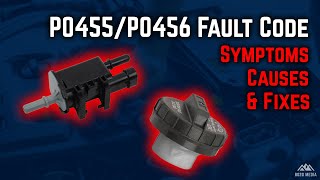
We Have This Part in Stock


The information in this article is provided for general reference and educational purposes only. Vehicle specifications, procedures, and part compatibility can vary by production date, trim level, and region. Always consult your vehicle's factory service manual and verify part numbers before purchasing or performing repairs. Safety-critical components such as airbags, seat belts, and braking systems should be installed by a qualified professional.
- Fiat 500L:
- 🧭 Diagnostic Flowchart
- 🎬 Helpful Videos
- 🛍️ Shop This Part
- What's Unique About the 2014-2016 Fiat 500L
- Symptoms You May Notice
- Most Likely Causes
- Rare But Worth Checking
- Diagnosis Steps
- Parts You'll Likely Need
- Related Codes That Often Appear With This One
- Technical Service Bulletins (TSBs) & Recalls
- Platform-Specific Known Issues
- Mechanic-Grade Diagnostic Values
- Scan Tool Commands That Help
- Wiring & Ground Locations
- Real Owner Repair Stories
- "I Checked Everything" — The Actual Cause
- OEM Part Supersession History
- Model Year Variations Within This Range
- 🎟️ Get 5% Off