

P0456 on 2016-2018 Fiat 500X: EVAP System Small Leak Causes and Fixes
P0456 on a 2016-2018 Fiat 500X indicates a small leak in the evaporative emissions system. The most common cause is a loose or faulty gas cap. If replacing the cap doesn't work, the next most likely culprits are a faulty EVAP purge valve or a bad seal on the EVAP System Integrity Module (ESIM) near the charcoal canister. Both the purge valve and ESIM O-ring are well-documented, high-failure-rate items on this platform.
- P0456 is a minor issue that won't stop you from driving, but it will cause an emissions test failure.
- Always start diagnosis by checking the gas cap. It's the most common cause and the cheapest fix.
- If a new gas cap doesn't solve the problem, the EVAP purge valve and the ESIM seal on the charcoal canister are the next most likely culprits on a Fiat 500X.
- Do not habitually top off your fuel tank after the pump clicks off, as this can damage the charcoal canister and lead to expensive repairs.
- If simple fixes fail, a smoke test is the most reliable method to find the exact location of the leak without guessing and replacing unnecessary parts.
What's Unique About the 2016-2018 Fiat 500X
The Fiat 500X shares its platform and many components with the Jeep Renegade, and both are known for specific EVAP system issues. While the gas cap is a common starting point for any vehicle, many 500X and Renegade owners find the problem lies with other components like the purge valve or, most notably, the Evaporative System 🎬 See a walkthrough of the ESIM and O-ring repair. Integrity Module (ESIM) O-ring. This O-ring is a widely-known failure point that degrades and creates the exact small leak that triggers P0456. Additionally, TSB #18-042-19 for the 500X groups this EVAP code with seemingly unrelated engine timing codes (P0340, P0016), which can indicate the need for a powertrain control module (PCM) software update in specific scenarios where no physical leak is found.
Diagnostic Flowchart
Tap your situation to follow the diagnostic path that matches what you're seeing on this vehicle.
Symptoms You May Notice
- Check Engine Light is on
- A faint smell of fuel, particularly around the gas cap area or rear of the vehicle, though this is not always present.
- A 'Check Gas Cap' or similar message may appear on the dashboard.
- In rare cases, owners on forums report hearing a slight hissing sound near the engine bay if a vacuum line is cracked or disconnected.
- Replacing the charcoal canister when only the attached ESIM O-ring is leaking.
- Repeatedly replacing the gas cap when the leak is elsewhere, such as the purge valve or a cracked hose.
- Assuming the car needs a smoke test before performing the simple, free checks of the gas cap and purge valve.
Most Likely Causes
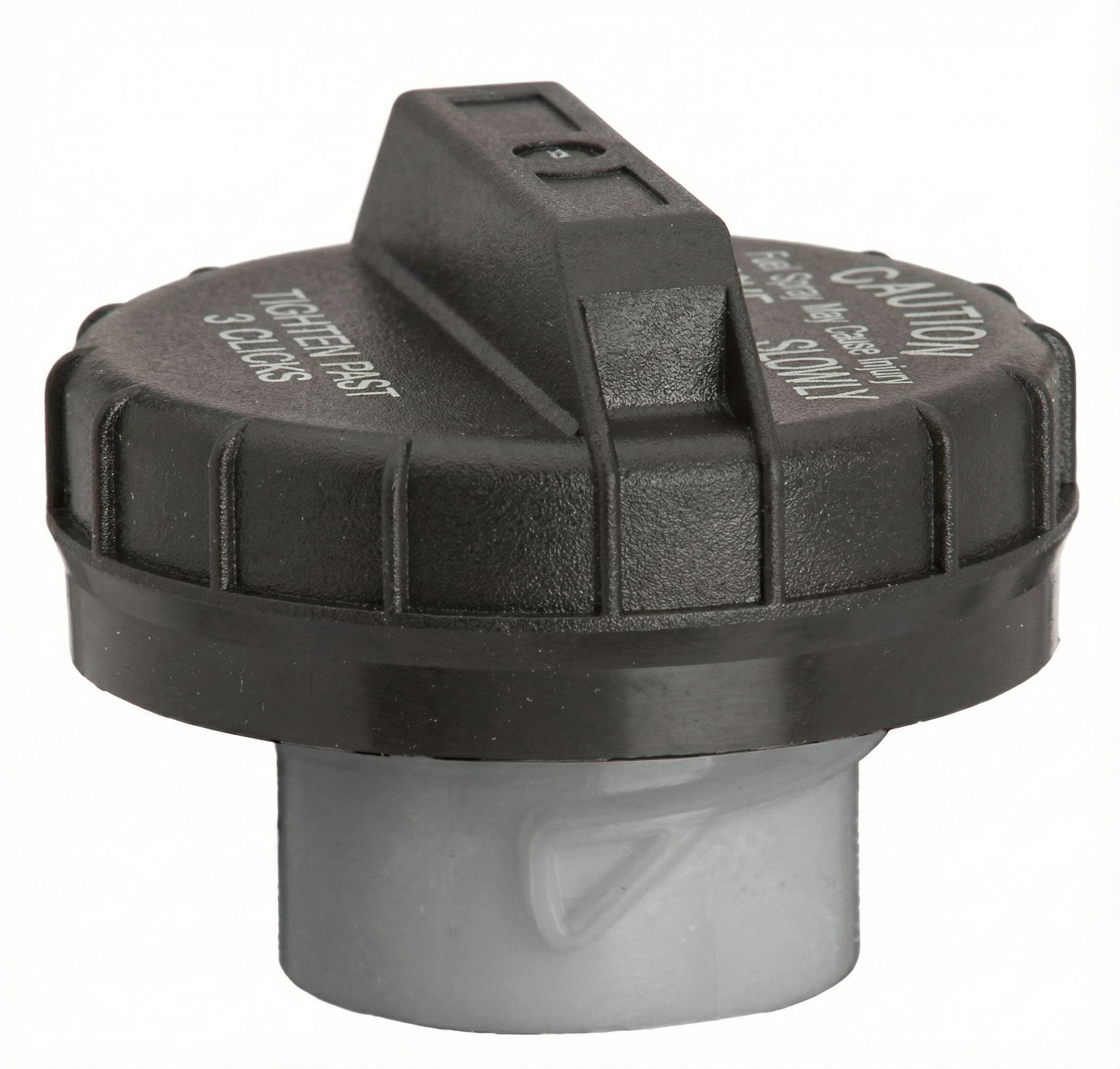
- Loose or Faulty Gas Cap 🔴 High Probability → Shop Fuel Tank Cap The gas cap seal is a simple rubber O-ring that can crack, stiffen, or degrade over time, preventing a proper seal. This is the most common and easiest-to-fix cause for any P0456 code and should always be the first step. Using an incorrect or low-quality aftermarket cap can also cause sealing issues.
How to confirm: Remove the gas cap and inspect the rubber seal for any visible cracks, stiffness, or damage. Ensure it is tightened until it clicks at least once. If the seal looks worn, it's suspect.
Typical fix: First, try re-tightening the cap and clearing the code. If it returns, replace the gas cap with a new, high-quality OEM Mopar part to ensure a perfect seal.
Est. part cost: $25-$45 - Faulty EVAP Purge Valve/Solenoid 🟡 Medium Probability → Shop Vapor Canister The purge valve is an electromechanical part that is constantly working and can fail by getting stuck open, creating a small leak path. This is a frequently reported failure on Fiat and Jeep platforms. A Reddit user with a 2016 500X confirmed replacing the purge valve and canister solved their P0456 code.
How to confirm: The valve is normally closed when the engine is off. Disconnect the valve and try to blow through it. If air passes through, it is stuck open and faulty. A mechanic can also command it open and closed with a scan tool while monitoring system pressure.
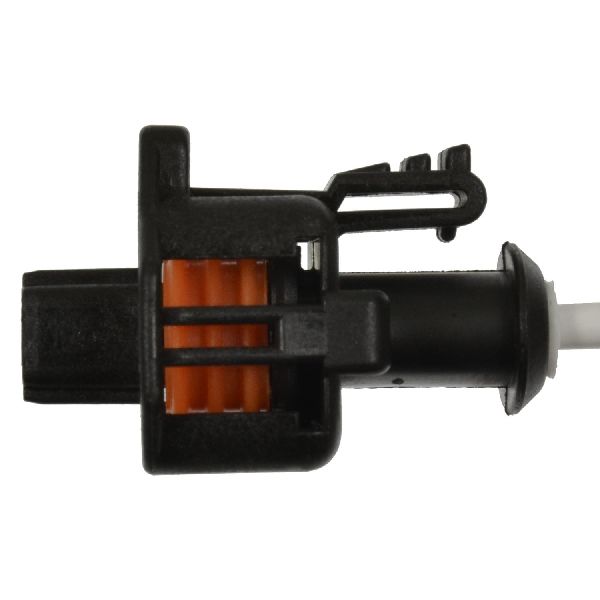
Typical fix: Replace the purge valve. It is typically located on or near the intake manifold in the engine bay, with two hoses and an electrical connector.
Est. part cost: $40-$90 - Leaking EVAP System Integrity Module (ESIM) or O-ring 🔴 High Probability → Shop Vapor Canister The ESIM, also known as a leak detection pump, attaches to the charcoal canister. The O-ring that seals the module to the canister is a widely-known failure point on the shared Fiat 500X/Jeep Renegade platform. It flattens and degrades over time, creating a small leak. This is arguably as common, if not more so, than a faulty gas cap on these specific vehicles.
How to confirm: A smoke test is the most effective method. Smoke is injected into the EVAP system, and a leak will be visible at the ESIM/canister connection point. The ESIM is located near the rear passenger-side wheel; access may require removing the wheel and wheel well liner. The module is removed with a counter-clockwise twist.
Typical fix: In many cases, only the O-ring needs to be replaced. However, the ESIM itself can also fail. Given the high failure rate and labor to access it, many owners replace both the ESIM and its O-ring at the same time. The O-ring is often sold separately.
Est. part cost: $10-$20 (O-ring), $50-$100 (ESIM) - Cracked or Disconnected EVAP Hose ⚪ Low Probability Rubber and plastic hoses can become brittle and crack over time due to heat cycles in the engine bay and exposure under the vehicle. A small crack in any of the EVAP system lines will cause this code.
How to confirm: A thorough visual inspection of all EVAP lines from the engine bay to the fuel tank may reveal obvious cracks. However, a smoke test is the most reliable way to find a small hose leak.
Typical fix: Replace the cracked section of the hose or the entire hose assembly.
Est. part cost: $10-$50
Rare But Worth Checking
- Cracked Charcoal Canister: → Shop Vapor Canister This is most often caused by habitually overfilling the fuel tank ('topping off'), which forces liquid fuel into the canister and damages the charcoal media. A crack in the canister's plastic housing can also occur, but is less common than ESIM failure.
- Cracked Fuel Filler Neck: → Shop Fuel Filler Neck The plastic neck where the gas cap seals can develop a hairline crack, causing a persistent leak even with a new cap. This has been noted on related platforms and can be difficult to diagnose without a smoke test.
- Powertrain Control Module (PCM) Software: TSB #18-042-19 indicates that P0456 can appear with unrelated codes (P0340, P0016), and the fix may be a PCM software update. This should be considered if other diagnostic steps do not find a physical leak, especially if these other specific codes are also present.
Diagnosis Steps
- Check the gas cap. Remove it, inspect the seal for cracks or damage, and reinstall it, ensuring it clicks multiple times. Clear the code and drive for a few days to see if it returns.
- If the code returns, perform a visual inspection of all accessible EVAP hoses and lines in the engine bay for obvious cracks, damage, or disconnections. Pay close attention to the lines connected to the purge valve.
- Locate the EVAP purge valve in the engine bay. With the engine off, disconnect it and attempt to blow through it. If air passes, the valve is stuck open and must be replaced.
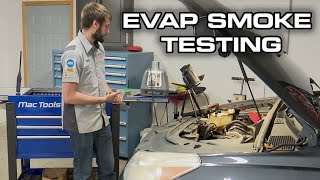
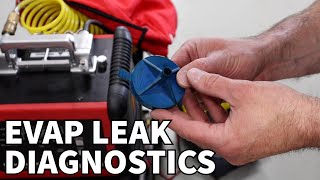
- If the above steps do not reveal the issue, the most effective next step is a professional smoke test. A machine injects vaporized smoke into the EVAP system, and any leaks will be visible as smoke escapes.
- During the smoke test, pay close attention to the charcoal canister and the attached ESIM (rear passenger wheel well area), as the O-ring seal is a very common failure point on this vehicle.
- Also check the fuel filler neck for smoke, as a small crack can be the cause.
- If no leaks are found, consider having a dealership check for any available PCM software updates, especially if other codes like P0340 or P0016 are present. [Bulletin #18-042-19]
Parts You'll Likely Need
- Gas Cap
(OEM #52030377AB)— This is the most common failure point for a P0456 code. The seal wears out over time, causing a leak. It's the cheapest and easiest part to replace first. Using an OEM Mopar cap is highly recommended.
Trusted brands: Mopar
OEM price range: $30-$45
Aftermarket price range: $15-$25 - Vapor Canister Purge Valve
(OEM #04627182AA)— This valve can get stuck open, creating a constant small leak in the system. It's a very common failure point after the gas cap has been ruled out.
Trusted brands: Mopar, Standard Motor Products, Dorman
OEM price range: $70-$99
Aftermarket price range: $40-$65 - EVAP System Integrity Module (ESIM)
(OEM #04861959AD)— The module itself or, more commonly, its O-ring seal is a known weak point on this platform, frequently causing a small leak. Accessing it requires removing the rear wheel and liner, so it's often diagnosed with a smoke test.
Trusted brands: Mopar
OEM price range: $50-$100
Aftermarket price range: $35-$70
Related Codes That Often Appear With This One
- P0440 — General EVAP System Failure. This can be triggered along with a specific leak code like P0456. [Bulletin #08-010-16 REV. D]
- P0441 — EVAP Purge System Performance. This often points directly to a malfunctioning purge valve, which can also be the source of the small leak. [Bulletin #08-010-16 REV. D]
- P0455 — EVAP System Large Leak. A component failure can sometimes be intermittent or worsen, causing the system to detect both small and large leaks at different times. [Bulletin #08-010-16 REV. D, 5]
- P0457 — EVAP System Leak Detected (Fuel Cap Loose/Off). This code specifically points to a leak characteristic of a loose cap, which can be triggered alongside a P0456 if the fault is intermittent or at the filler neck.
Technical Service Bulletins (TSBs) & Recalls
- Bulletin #1804823: Mentions the specific dealer diagnostic test for P0456, the 'wiTECH Small Leak Verification Test (SLVT)'.
- Bulletin #18-042-19: Links P0456 with P0340 (Camshaft Position Sensor) and P0016 (Crankshaft/Camshaft Timing Misalignment), suggesting a potential software-related issue.
- Bulletin #08-010-16 REV. D: Lists P0456 along with other common EVAP codes (P0440, P0441, P0455, P0452) that may appear together.
Platform-Specific Known Issues
- ESIM O-Ring Degradation: The O-ring sealing the ESIM to the charcoal canister is a primary culprit for P0456 on the 500X and its platform-mate, the Jeep Renegade. It flattens and cracks, creating a leak. A smoke test will quickly reveal this. The repair involves accessing the canister behind the rear passenger wheel well liner.
- Purge Valve Failure: → Shop Vapor Canister The purge valve (solenoid) located in the engine bay is another common failure. It gets stuck open, creating a leak path. This can be tested by removing it and trying to blow through it; if air passes, it's faulty.
Mechanic-Grade Diagnostic Values
- EVAP Purge Control Solenoid Valve Resistance — expected: Approximately 30 Ohms at 68°F (20°C). Failure: A reading of infinite resistance (open circuit) or a very high reading indicates a faulty solenoid coil.
Scan Tool Commands That Help
- wiTECH: Small Leak Verification Test (SLVT) — This is the manufacturer-specified diagnostic routine to command the EVAP system into a self-test mode to confirm the presence of a small leak after initial checks have failed. It is referenced in TSB #1804823 and #18-089-19.
Real Owner Repair Stories
- Reddit user Ok-Computer5408 (2016 Fiat 500X) — Check engine light with code P0456.
❌ Tried (didn't work) The user did not specify what other parts were tried first, but sought advice before going to a mechanic.
✅ What actually fixed it The user reported that they had to replace the PURGE VALVE and the CANISTER to resolve the code.
OEM Part Supersession History
4861959AA, 4861959AB, 4861959AC, 52855827AA, 52855827AB→04861959AD— Part has been revised and updated by the manufacturer over time. The latest part number is typically the most robust version.
Helpful Videos
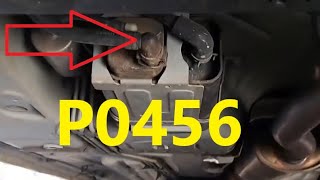
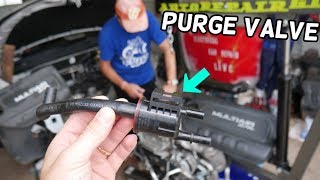

![How to Fix P0456 Engine Code in 7 Minutes [7 DIY Methods / Only $3.44]](https://img.youtube.com/vi/njt81AALI3U/mqdefault.jpg)
Used OEM Parts in Stock
New Aftermarket Parts Available


The information in this article is provided for general reference and educational purposes only. Vehicle specifications, procedures, and part compatibility can vary by production date, trim level, and region. Always consult your vehicle's factory service manual and verify part numbers before purchasing or performing repairs. Safety-critical components such as airbags, seat belts, and braking systems should be installed by a qualified professional.
- Fiat 500X:
- 🧭 Diagnostic Flowchart
- 🎬 Helpful Videos
- 🛍️ Shop This Part
- What's Unique About the 2016-2018 Fiat 500X
- Symptoms You May Notice
- Most Likely Causes
- Rare But Worth Checking
- Diagnosis Steps
- Parts You'll Likely Need
- Related Codes That Often Appear With This One
- Technical Service Bulletins (TSBs) & Recalls
- Platform-Specific Known Issues
- Mechanic-Grade Diagnostic Values
- Scan Tool Commands That Help
- Real Owner Repair Stories
- OEM Part Supersession History
- 🎟️ Get 5% Off