

P0456 on 2008-2012 Ford Escape: Causes and Fixes for Small EVAP Leak
For a 2008-2012 Ford Escape, code P0456 is most often caused by a faulty canister purge valve or a dirty/leaky capless fuel filler neck. The purge valve is a common, inexpensive DIY fix, with the part costing around $30-$75. Always check and clean the capless fuel filler neck first before replacing parts.
- Start with the easiest and cheapest fix: thoroughly clean the capless fuel filler neck using the vehicle's provided funnel and a clean cloth.
- The most probable faulty part is the canister purge valve in the engine bay. It can be tested in minutes with the engine running by checking for vacuum at its port when unplugged.
- If you also have codes P1450, P2196, or P2198, the canister purge valve is almost certainly the culprit.
- This is a very common and manageable DIY repair; most owners can replace the purge valve with basic tools.
- Be aware of this platform's other major issues, such as transmission failures and severe rust in the rear wheel wells, which can be more costly than this EVAP code.
What's Unique About the 2008-2012 Ford Escape
The 2008-2012 Ford Escape uses a capless "Easy Fuel" system, which eliminates the traditional gas cap. This capless filler neck is a frequent source for the P0456 code, as its spring-loaded seal can become contaminated with dirt or debris, preventing a proper seal. Beyond the filler neck, the canister purge valve is a very common failure point on this platform, often getting stuck open and causing a constant small vacuum leak that the system detects.
Symptoms You May Notice
- Check Engine Light is on
- Possible faint fuel odor (rare)
- No noticeable impact on drivability
- Stalling or rough idle immediately after refueling
- Replacing the fuel tank pressure sensor. This sensor is what reports the leak, but it is rarely the cause of the leak itself.
Most Likely Causes
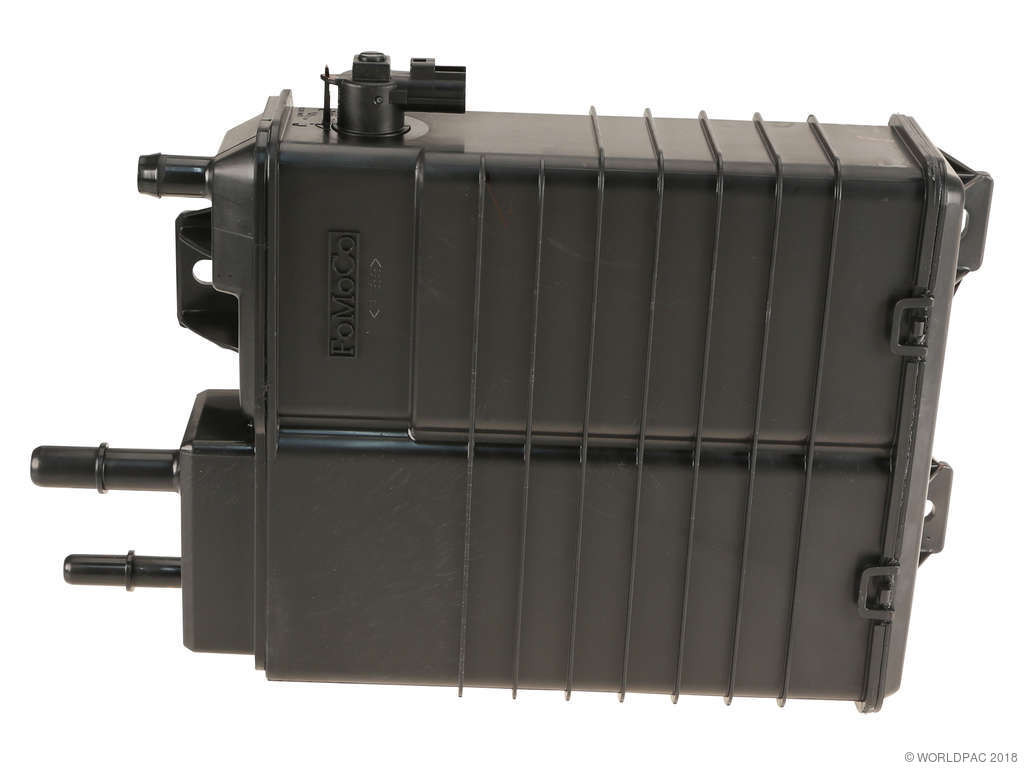
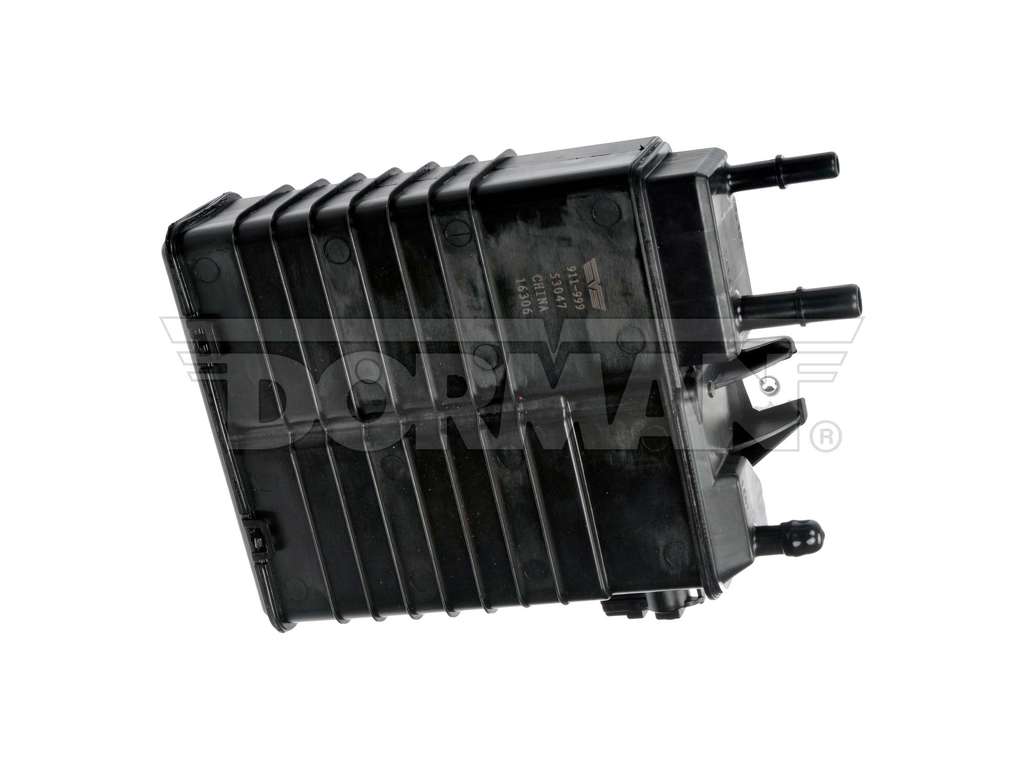
- Faulty Canister Purge Valve 🔴 High Probability → Shop Vapor Canister This specific part has a high failure rate across many Ford models of this era. It fails by getting stuck partially or fully open, allowing un-metered vacuum into the EVAP system when it should be sealed.
How to confirm: With the engine running for a minute, disconnect the EVAP hose from the purge valve. There should be absolutely no vacuum present at the valve's port when the electrical connector is unplugged. If you feel suction with your finger or a vacuum gauge shows a reading (e.g., 18-19 inHg), the valve is stuck open and is bad. You can also try to blow through the valve when it's removed; if air passes, it has failed.
Typical fix: Replace the canister purge valve. It is located in the engine bay, typically held by two 8mm bolts, and is accessible for DIY replacement in under 30 minutes. 🎬 See this walkthrough for testing and replacing the purge valve.
Est. part cost: $30-$75 - Dirty or Faulty Capless Fuel Filler Neck 🟡 Medium Probability → Shop Fuel Filler Neck The "Easy Fuel" system's seal is exposed to the elements and can accumulate dirt, dust, or corrosion, preventing the spring-loaded flap from sealing correctly.
How to confirm: Visually inspect the fuel filler opening for any debris. Use the specific funnel that came with the vehicle to work the mechanism open and closed 10-15 times. Clean the sealing area with a clean cloth and a solvent like isopropyl alcohol or silicone lubricant. 🎬 Watch: How to properly clean the Easy Fuel filler neck. Do not use harsh chemicals like brake cleaner.
Typical fix: Thoroughly clean the sealing surface of the filler neck. If cleaning does not work or the neck is visibly damaged or cracked, it must be replaced.
Est. part cost: $0 for cleaning, $60-$160 for a replacement neck assembly. - Cracked or Disconnected EVAP Hose ⚪ Low Probability Over time, rubber and plastic hoses can become brittle and crack, especially in the engine bay or under the vehicle where they are exposed to heat and road debris. The connections to the purge valve or canister are common places to check.
How to confirm: The most effective method is a professional smoke test. This involves injecting low-pressure, vaporized smoke into the EVAP system's service port and watching for where it escapes. A visual inspection may reveal obvious cracks on accessible hoses.
Typical fix: Replace the cracked or damaged section of the hose.
Est. part cost: $10-$50 - Faulty EVAP Vent Solenoid ⚪ Low Probability → Shop Vapor Canister This component, located near the charcoal canister by the fuel tank, can fail by not closing properly during the system self-test. However, it is a much less common failure for a P0456 code than the engine-bay-mounted purge valve on this platform.
How to confirm: Requires testing the solenoid's operation with a scan tool or by applying 12V power and checking if it opens and closes correctly. A smoke test can also reveal a leak at the solenoid if it's stuck open.
Typical fix: Replace the vent solenoid.
Est. part cost: $40-$80
Rare But Worth Checking
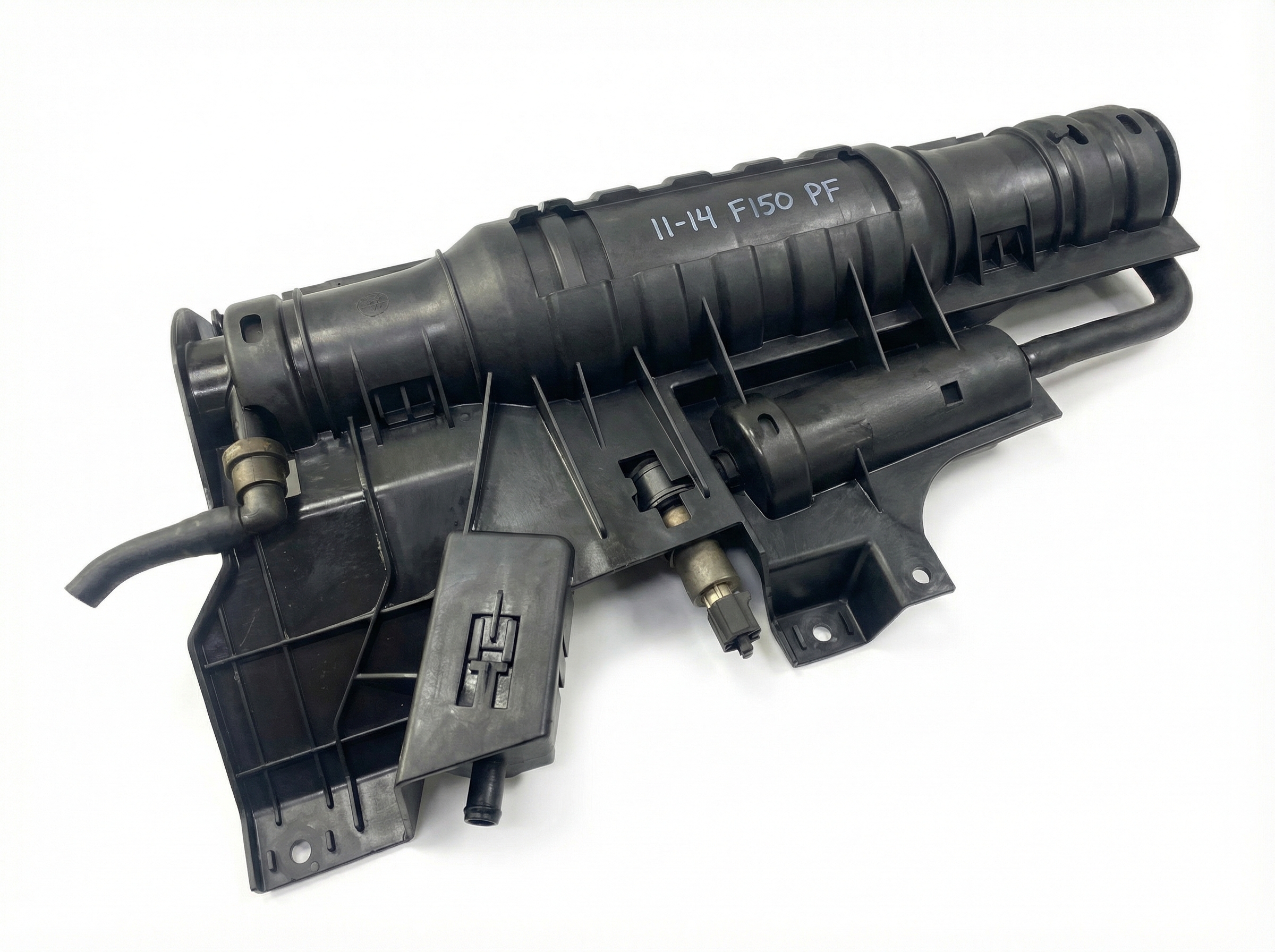
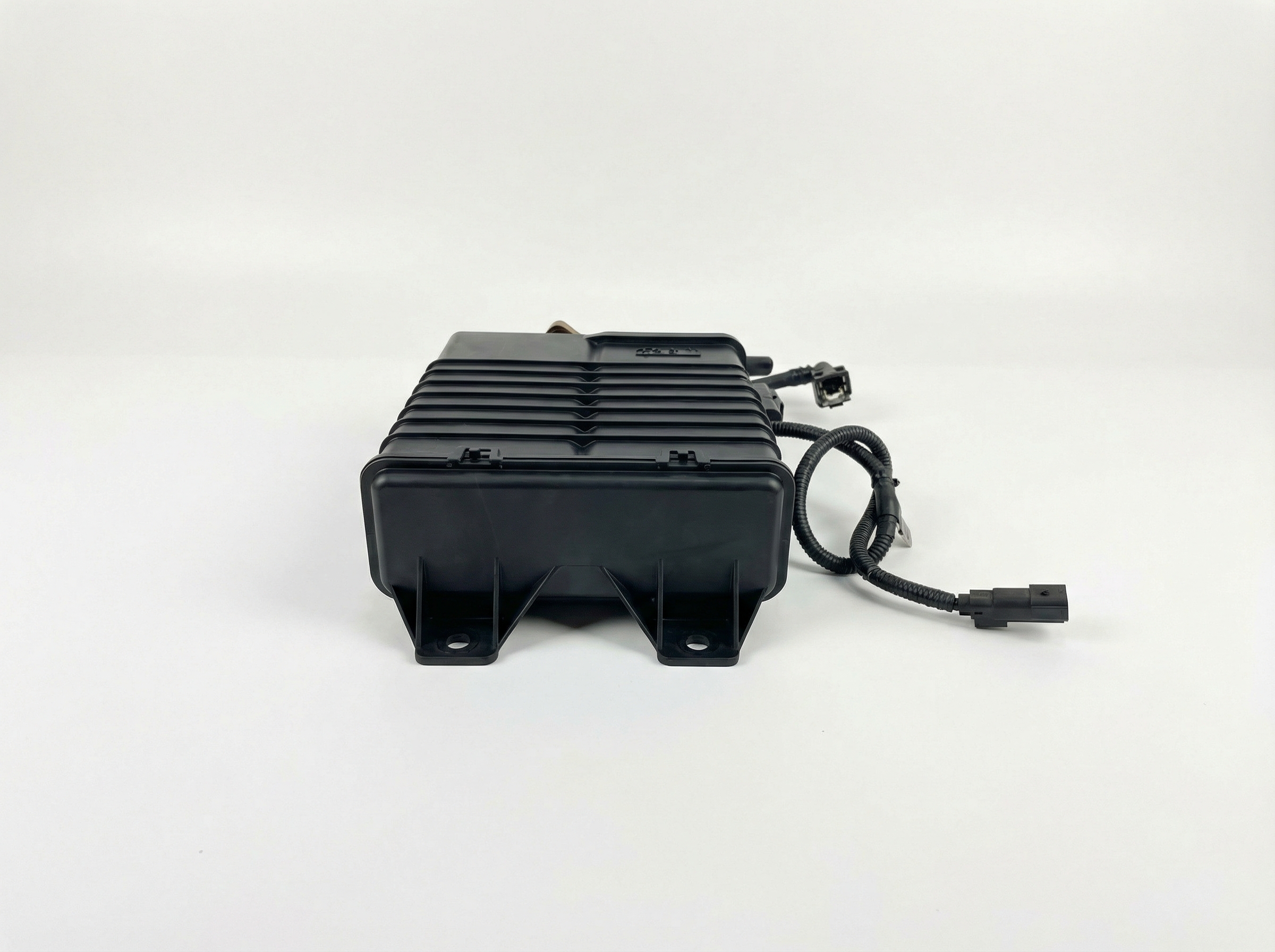
- Cracked Charcoal Canister: → Shop Vapor Canister While not common, a physical impact from road debris or age can cause the plastic body of the charcoal canister to crack, creating a leak. This would typically be found during a smoke test.
Diagnosis Steps
- Verify the code with a scanner.
- Inspect the capless fuel filler neck for debris. Clean it thoroughly with a rag and the vehicle's fuel funnel to ensure the seal is clean and moving freely.
- Reset the code and drive for a few days. If the code returns, proceed to the next step.
- Locate the canister purge valve in the engine bay. Start the engine and let it run for at least a minute to allow the system to cycle.
- Disconnect the vapor line from the purge valve. Place your finger over the port on the valve itself.
- Unplug the electrical connector from the purge valve. If you still feel vacuum suction on your finger (or a gauge reads vacuum), the valve is stuck open and must be replaced. A good valve will have zero vacuum when unplugged.
- If the purge valve tests good, the next step is a professional smoke test to find the physical leak in the EVAP system's hoses, vent valve, or charcoal canister.
Parts You'll Likely Need
- Vapor Canister Purge Valve / Solenoid
(OEM #8U5Z-9C915-B (supersedes 5L8Z-9C915-AA))— This is the most frequent cause of P0456 on this vehicle. It gets stuck open, creating a leak condition. The original part number has been updated by Ford.
Trusted brands: Motorcraft, Dorman, Standard Motor Products
OEM price range: $75-$100
Aftermarket price range: $30-$60 - Fuel Filler Neck
(OEM #8U5A-9B327-AD (example, verify by VIN))— The capless system's seal can fail or the entire plastic neck can crack, causing a persistent small leak that cleaning won't fix.
Trusted brands: Ford (Genuine OE), Dorman, Spectra Premium
OEM price range: $250-$400
Aftermarket price range: $60-$160
Related Codes That Often Appear With This One
- P1450 — This code means 'Unable to Bleed Up Fuel Tank Vacuum' and is often caused by a purge valve that is stuck open, creating excessive vacuum that the system cannot overcome. It's a classic pairing with P0456 pointing directly to the purge valve.
- P2196 / P2198 — These codes indicate 'O2 Sensor Signal Stuck Rich'. A stuck-open purge valve can allow extra, un-metered fuel vapors into the engine, causing it to run rich and triggering these codes alongside the P0456.
- P0451 — This code relates to the EVAP system switch or sensor performance and is frequently documented alongside P0456 in owner reports.
Technical Service Bulletins (TSBs) & Recalls
- TSB 10-1-3: Applies to 2009 Escape Hybrid models for P0456, P0442, or P1450. It provides diagnostic guidance for the EVAP system but does not pinpoint a single part, unlike TSBs for other models.
- Bulletin #SSM 50306: Notes that for some Ford vehicles exhibiting P0456 and P0496, returned EVAP canister purge valves were found to be fully functional, suggesting careful diagnosis before replacement.
- Bulletin #SSM 46525: Describes how vehicles may exhibit an illuminated MIL with P0456 and P1450, potentially accompanied by a rough idle or slow fuel fill concern.
- Bulletin #16-0075: Highlights that some vehicles may exhibit a fluctuating RPM after refueling when P0456 and P1450 are stored in the PCM memory.
Platform-Specific Known Issues
- The plastic fuel filler neck has been reported by some owners to be fragile and can break during normal refueling, which would require replacement and could cause this code.
- A Reddit user on r/fordescape reported a dealer fix for P0456 on a similar model cost $350 after being quoted $450, illustrating typical dealer repair costs for this issue.
Mechanic-Grade Diagnostic Values
- Canister Purge Valve (Solenoid) Resistance — expected: 15 to 40 Ohms. Failure: A reading of infinite ohms (open circuit) or near zero ohms (short circuit) indicates a failed internal coil.
- Fuel Tank Pressure (FTP) Sensor Voltage (Key On, Engine Off) — expected: Approximately 2.5V - 2.7V at atmospheric pressure (system vented).. Failure: Voltage stuck high (near 5.0V) or low (near 0.0V), or voltage not decreasing as vacuum is applied during a system test.
- Canister Purge Valve Connector Power — expected: Battery voltage (~12V) on one pin with the key on.. Failure: No voltage suggests a problem with the power supply from the fuse box (fuse 5 in some models) or wiring.
- Mode $06 EVAP Monitor Test (0.020" leak) — expected: The test value reported by the PCM should be below the maximum calibrated limit.. Failure: If the scan tool shows the test value exceeds the maximum limit, it confirms the PCM is correctly detecting a leak and the fault is not with the sensor's rationality.
Scan Tool Commands That Help
- Ford IDS (or FORScan/High-End Bidirectional Scanner): EVAP System Test (On-Demand Self Test) — This command forces the PCM to run the entire EVAP leak test sequence immediately, rather than waiting for specific driving conditions. It's used to verify a repair has been successful without needing a multi-day drive cycle.
- Ford IDS (or FORScan/High-End Bidirectional Scanner): Vapor Management Valve (Purge Valve) Command — Allows the technician to manually command the purge valve open and closed while monitoring the Fuel Tank Pressure (FTP) sensor. If the valve is commanded closed but vacuum still builds in the tank (FTP voltage drops), it confirms the valve is mechanically stuck open.
- Ford IDS (or FORScan/High-End Bidirectional Scanner): Canister Vent Valve Command — Allows the technician to manually command the normally-open vent valve to close, sealing the system. This is a required step for both the on-demand self-test and for performing a smoke test to check for physical leaks.
Wiring & Ground Locations
- Canister Purge Valve Connector — In the engine bay, connected to the purge valve, often near the intake manifold.. The power wire is typically Brown/Yellow (BRN/YEL) and the control wire from the PCM is Gray/Blue (GRY/BLU). Checking for ~12V on the power side and for a grounding signal on the control side is critical for diagnosis.
- Canister Vent Solenoid Connector — Under the vehicle, near the charcoal canister by the fuel tank.. The power wire is typically Green/Blue (GRN/BLU). A loss of power or ground signal here will prevent the vent from closing, causing an immediate leak test failure.
- G401 — Rear of the vehicle, often described as being on the left side near the liftgate or fuel tank area.. This is a common ground point for rear-mounted components, including the EVAP vent solenoid and Fuel Tank Pressure sensor. Corrosion or a loose connection at this ground can cause erratic sensor readings or solenoid failure.
- G109 / G110 — In the engine compartment, typically on the firewall or front corner.. These are primary engine bay grounds. While less specific to the EVAP system, a poor connection here can cause a wide range of PCM and sensor issues, including those that might indirectly trigger an EVAP code.
Real Owner Repair Stories
- YouTube channel 'KIT'S Auto and Truck Repair' (2011 Ford Escape (engine not specified, but likely 2.5L or 3.0L)) — Check Engine Light with codes P0456 and P2196 (O2 Sensor Stuck Rich).
❌ Tried (didn't work) Replaced canister purge valve, Replaced canister vent valve
✅ What actually fixed it The power supply wire to the canister vent solenoid was broken somewhere in the harness. The mechanic ran a new power wire from a known-good power source (the purge valve power wire) back to the vent solenoid to restore its function, which resolved the code. - NHTSA ODI #11643510: An owner reported that their vehicle was stalling more frequently, and diagnostic codes P0456, P0451, and P1450 were retrieved.
- NHTSA ODI #11505015: An owner reported that the vehicle stalled after refueling, and a mechanic retrieved the error code P0456.
"I Checked Everything" — The Actual Cause
- In a documented case on a 2011 Escape, the vehicle passed a smoke test because the canister vent solenoid was not receiving power and therefore could not be commanded closed to seal the system for the test. The actual fault was a broken power wire in the harness leading to the vent solenoid. The smoke simply escaped through the normally-open vent valve, leading the technician to initially suspect the valve itself was faulty, when in fact it was never being told to close.
OEM Part Supersession History
5L8Z-9C915-AA→8U5Z-9C915-B (also sold as Motorcraft CX2626)— Updated design for improved durability and reliability.
Model Year Variations Within This Range
- 2008-2012: The canister purge valve and general EVAP system layout are very similar between the 2.5L I4 and 3.0L V6 engines, and they share the same common failure points for P0456. Part numbers for the purge valve are generally the same across both engines for this generation.
Diagnostic Flowchart
Other Known Issues on This Vehicle
Issues unrelated to this code that are worth knowing about as an owner of this generation:
- 6F35 Transmission Failure 🔴 High — Commonly reported, particularly in 2008-2009 models, often occurring at higher mileage. Can manifest as harsh shifting, slipping, or complete failure. (Ref: While various TSBs exist for shift quality, no widespread recall for outright failure was issued for this generation.)
- Electronic Power Steering (EPAS) Failure 🔴 High — Widespread enough to trigger a recall (14S05). Owners report a sudden loss of power assist, sometimes intermittently, making the vehicle difficult to steer. (Ref: Ford Recall 14S05 was issued to address the torque sensor in the EPAS system, though some owners report issues persisting post-repair.)
- Rear Shock Tower Rust 🔴 High — A very common issue in regions using road salt. The upper mount for the rear shock absorber rusts through the wheel well, causing the shock to detach from the body. (Ref: No recall was issued, but the problem is widely documented in owner forums and repair videos. Aftermarket patch panels are available for repair.)
- Cracked Front ABS Tone Ring 🟠 Medium — Common issue where the ABS tone ring on the front axle shafts cracks, causing the ABS and Traction Control lights to illuminate.
Used vs. New Parts: Buying Guide for This Vehicle
When a used part is the smart pick: For larger, more expensive components like the fuel filler neck assembly, a used part from a junkyard can be a cost-effective option, provided it's from a vehicle in a dry climate to minimize corrosion risk. Electronic components like solenoids and sensors are generally not recommended to be purchased used due to their unknown remaining lifespan.
Donor-vehicle mileage cap: roughly under 80000 miles for the part to have meaningful remaining life.
What to inspect on the donor part:
- For a fuel filler neck, inspect the spring-loaded flap for smooth operation and ensure the sealing surface is free of deep scratches or corrosion.
- Check the plastic body of the neck for any visible cracks or stress marks, especially around mounting points.
- If possible, source parts from vehicles in southern/dry climates to avoid issues with rust and plastic brittleness common in salt-belt regions.
Aftermarket brands forum-validated for this vehicle:
- Motorcraft (OEM)
- Standard Motor Products (SMP)
- Dorman (often provides design improvements, like easier-to-use hose clips)
Brands owners have reported issues with on this vehicle:
- Some forum users have reported that very low-cost, unbranded purge valves from online marketplaces may have poor fitment or premature failure. One user noted a Ford technician advised against aftermarket brands due to connector fitment issues, though others have used brands like Dorman successfully.
Real Owner Stories
Aggregated from forums and TSBs cited above. Mileages and costs reflect what owners reported in those sources.
2008 Ford Escape
Symptoms: Intermittent P0456 code.
What fixed it: The consensus fix identified was either cleaning the 'gas cap' (capless neck) or replacing the faulty canister purge valve.
Source hint: Reddit - r/fordescape - 2008 Escape code p0456
2011 Ford Escape 2.5L
Symptoms: Small EVAP leak code P0456; testing showed the purge valve held ~19 inHg of vacuum while unplugged.
What fixed it: Replacement of the canister purge valve after confirming it was stuck open using a vacuum gauge.
Source hint: YouTube - Ford Escape P0456 Small Evap Leak by The G Automotive and More
2009 Ford Escape 3.0L V6
Symptoms: P0456 code present; owner demonstrated testing the purge valve for failure.
What fixed it: Replacement of the canister purge valve.
Source hint: YouTube - How to test / replace Ford Escape P0456 Evap Purge Valve
2008-2012 Ford Escape (General)
Symptoms: P0456 code; owner sought dealer repair.
What fixed it: Dealer repair of the EVAP system.
Cost: $350-$450
Source hint: vehicle_specific_issues
Related OBD-II Codes
Frequently Asked Questions
Does TSB 10-1-3 apply to my 2009 Ford Escape Hybrid regarding the P0456 code?
I have a 2008 Escape with a P0456; could the 'Easy Fuel' capless system be the problem?
How can I tell if the canister purge valve is the cause of the P0456 on my Escape?
Is the P0456 code related to the common rear shock tower rust on this generation Escape?
Can I use brake cleaner to clean the capless fuel filler neck on my 2011 Escape?
Is the purge valve on my Ford Escape the same as the one on a Mazda Tribute?
Helpful Videos

Used OEM Parts in Stock

New Aftermarket Parts Available


The information in this article is provided for general reference and educational purposes only. Vehicle specifications, procedures, and part compatibility can vary by production date, trim level, and region. Always consult your vehicle's factory service manual and verify part numbers before purchasing or performing repairs. Safety-critical components such as airbags, seat belts, and braking systems should be installed by a qualified professional.
- Ford Escape:
- 🧭 Diagnostic Flowchart
- 🎬 Helpful Videos
- 🛍️ Shop This Part
- What's Unique About the 2008-2012 Ford Escape
- Symptoms You May Notice
- Most Likely Causes
- Rare But Worth Checking
- Diagnosis Steps
- Parts You'll Likely Need
- Related Codes That Often Appear With This One
- Technical Service Bulletins (TSBs) & Recalls
- Platform-Specific Known Issues
- Mechanic-Grade Diagnostic Values
- Scan Tool Commands That Help
- Wiring & Ground Locations
- Real Owner Repair Stories
- "I Checked Everything" — The Actual Cause
- OEM Part Supersession History
- Model Year Variations Within This Range
- Other Known Issues on This Vehicle
- Used vs. New Parts: Buying Guide for This Vehicle
- Real Owner Stories
- 2008 Ford Escape
- 2011 Ford Escape 2.5L
- 2009 Ford Escape 3.0L V6
- 2008-2012 Ford Escape (General)
- Related OBD-II Codes
- Frequently Asked Questions
- 🎟️ Get 5% Off