

P0456 on 2009 Ford Escape Hybrid: Causes and Fixes for a Small EVAP Leak
For a 2009 Ford Escape Hybrid, a P0456 code is most often caused by a dirty or faulty capless fuel filler neck or a bad canister purge valve. First, try cleaning the fuel filler inlet with the supplied funnel and a clean cloth. If that doesn't work, the purge valve is the next likely culprit, costing around $40-$80 for the part. Check for applicability of TSB 10-1-3 for early production models.
- Start with the easiest and cheapest fix: thoroughly clean the capless fuel filler inlet and its seal.
- If the code returns, the canister purge valve is the most likely mechanical failure. It's affordable and relatively easy to replace.
- If your Escape Hybrid was built before April 2009, investigate TSB 10-1-3 with a dealer, as a simple software update could be the fix.
- Do not buy a gas cap; this vehicle does not use one.
What's Unique About the 2009-2009 Ford Escape Hybrid
The 2009 Escape Hybrid has two specific points of interest for this code. First, it uses a capless 'Easy Fuel' filler neck which is a known source of leaks if the seal becomes contaminated with dirt, dust, or debris, preventing the spring-loaded flap from sealing correctly. Second, Ford issued Technical Service Bulletin (TSB) 10-1-3 for 2009 Escape Hybrids built on or before April 6, 2009, which could exhibit code P0456 (along with P0442 or P1450) due to a software issue requiring a PCM re-calibration. This is a unique diagnostic path compared to models where the issue is almost always a physical part failure.
Symptoms You May Notice
- Check Engine Light is on
- A 'Check Fuel Fill Inlet' message may appear on the dashboard
- Faint smell of gasoline, particularly around the fuel filler area or after parking
- Possible rough idle or stalling immediately after refueling (if the canister purge valve is stuck open)
- Replacing the gas cap. The 2009 Ford Escape Hybrid has a capless fuel system, so there is no gas cap to replace. The issue lies with the filler neck's internal seal. Owners unfamiliar with the system may waste time looking for a non-existent part.
Most Likely Causes
- Dirty or Faulty Capless Fuel Filler Inlet 🔴 High Probability The 2009 Escape uses an early version of the 'Easy Fuel' capless system. The filler neck is exposed to road debris, which can contaminate the spring-loaded seal and prevent it from closing properly, creating a small leak. This is a very common issue across many Ford products with this system.
How to confirm: Visually inspect the fuel filler inlet for dirt, debris, or corrosion. The spring-loaded flap should move freely and seal tightly. A smoke test will definitively show a leak from this area if present.
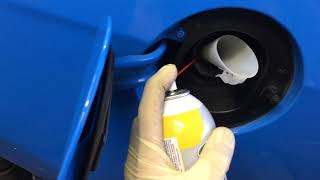
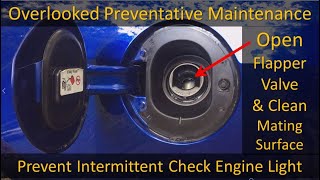
Typical fix: Use the vehicle's emergency fuel funnel (usually located with the jack) to work the flap open and closed several times. Clean the sealing surface with a clean cloth and isopropyl alcohol. Some owners 🎬 Watch: How to clean the Easy Fuel inlet properly. report success spraying a small amount of WD-40 or silicone lubricant while working the flap to clean and lubricate the seal. If cleaning doesn't work, the entire fuel filler neck assembly 🎬 Watch: Step-by-step guide to replacing the fuel filler neck. must be replaced.
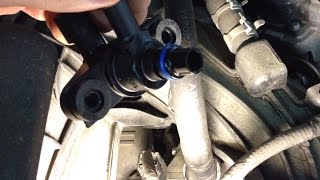
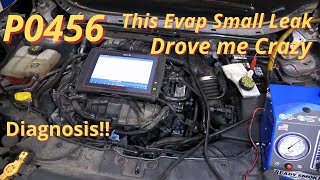
Est. part cost: $5 for cleaning supplies, $150-$250 for a replacement filler neck assembly (e.g., Motorcraft 8M6Z-9034-C). - Faulty Canister Purge Valve 🔴 High Probability → Shop Vapor Canister This is a very common failure item on many Ford vehicles from this era, including the Escape. The valve, which is normally closed, can get stuck partially open, creating a constant small vacuum leak that the PCM detects during its self-test. This can also cause a P1450 code. 🎬 See a mechanic diagnose a tricky P0456 leak. NHTSA ODI #11618443 describes a similar Ford diagnosis where a canister purge valve was stuck open, causing excessive vacuum in the fuel vapor system.
How to confirm: With the engine running, disconnect the electrical connector from the purge valve, then disconnect the vapor line leading from it. If you can feel vacuum suction from the valve's port with your finger, it is stuck open and faulty. The valve should only have vacuum when commanded open by the PCM.
Typical fix: Replace the canister purge valve. It is located on the driver's side of the engine bay, mounted to the firewall. It has two hoses and an electrical connector. The OEM part number is often Motorcraft CX2221 (Ford 9U5Z-9C915-H).
Est. part cost: $40-$80 - PCM Calibration Issue (TSB 10-1-3) 🟡 Medium Probability Specifically for 2009 Escape Hybrids built on or before April 6, 2009, Ford identified that the original PCM software could be too sensitive and incorrectly set codes P0442, P0456, or P1450.
How to confirm: A Ford dealership or a qualified shop with access to Ford's technical resources can check the vehicle's build date and determine if TSB 10-1-3 applies and has not been performed by checking the vehicle's service history.
Typical fix: The PCM must be reprogrammed (re-flashed) with updated software. This must be done by a dealer or a shop with the appropriate Ford-specific diagnostic tools (like IDS).
Est. part cost: $0 (labor cost only, typically 1 hour) - Cracked or Disconnected EVAP Hoses/Lines ⚪ Low Probability Over time, the rubber and plastic lines that make up the EVAP system can become brittle from age and engine heat cycles, leading to small cracks or loose connections, particularly at fittings. Manufacturer TSB #TSB 25-2308 notes that on some Ford platforms, P0456 can be caused by a chaffing or rubbing condition between the fuel vapor canister line and the air vent hose.
How to confirm: A visual inspection may reveal obvious cracks, but a definitive diagnosis requires a smoke test. A mechanic forces low-pressure smoke into the EVAP system (usually via a service port) and looks for where it escapes.
Typical fix: Replace the cracked hose or secure the loose connection. Small sections of hose are inexpensive.
Est. part cost: $10-$50
Rare But Worth Checking
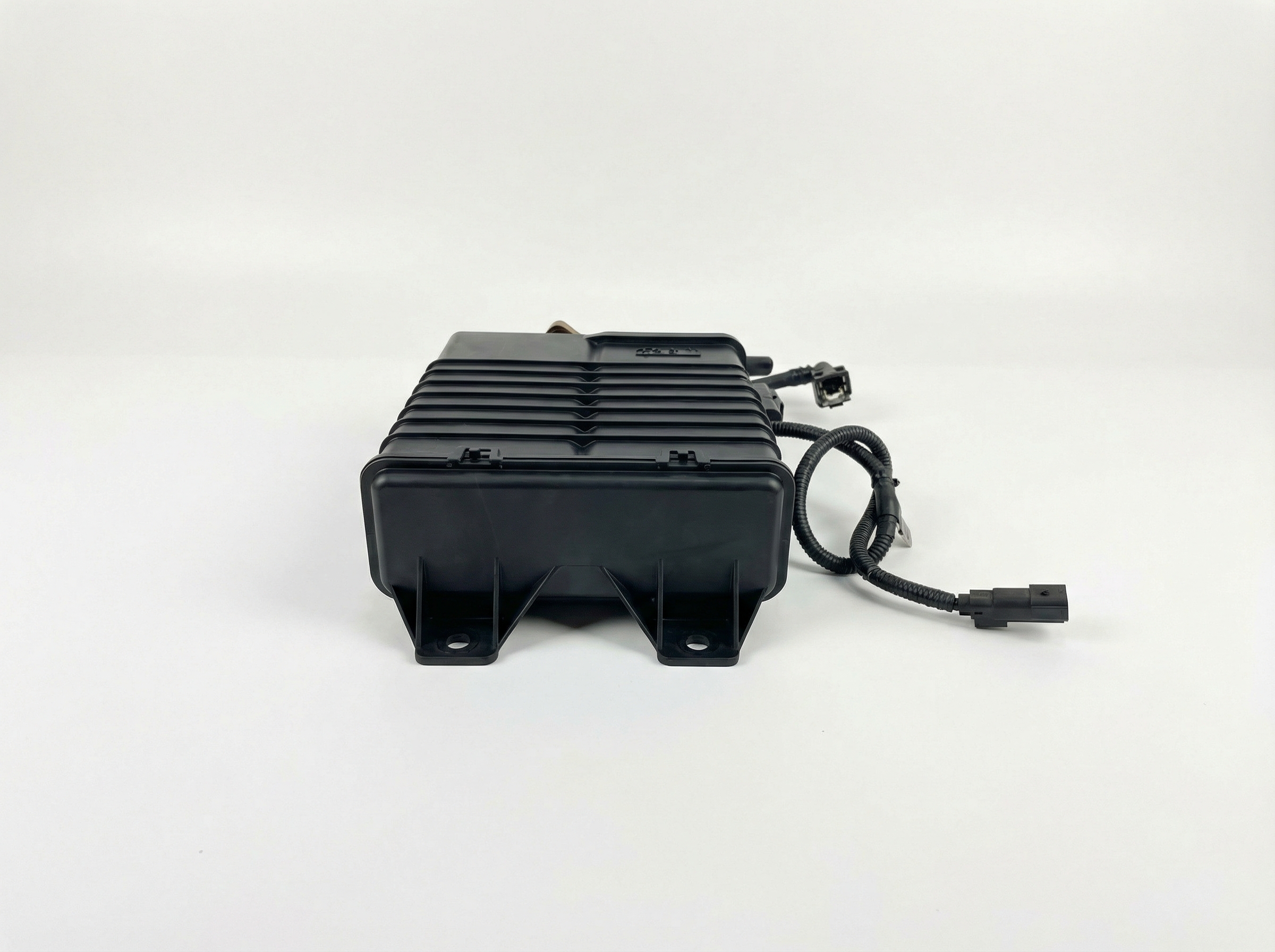
- Leaking Charcoal Canister: → Shop Vapor Canister The plastic housing of the charcoal canister itself can develop hairline cracks over time, causing a small leak. This is usually found with a smoke test after all other common causes have been ruled out.
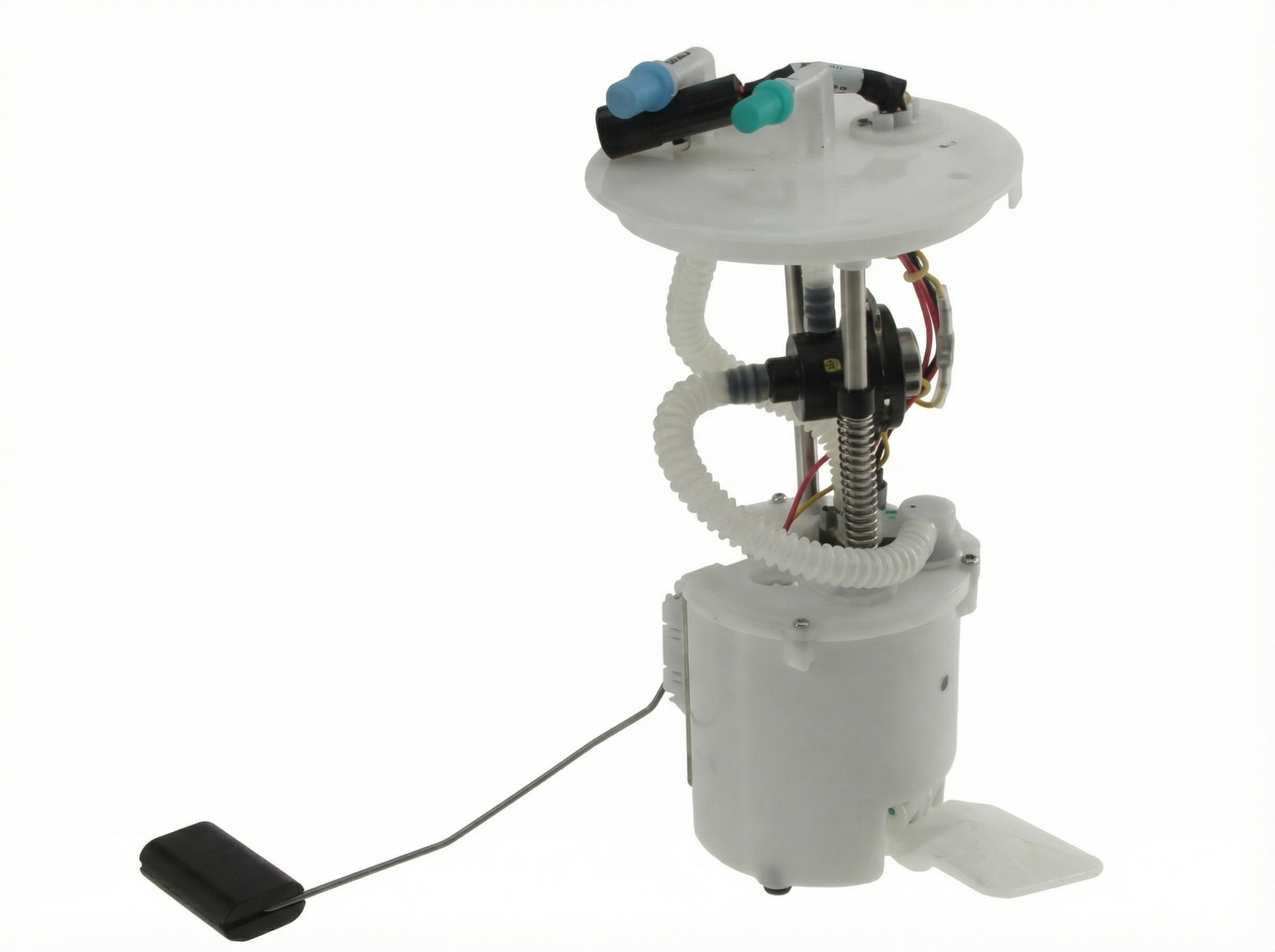
- Faulty Fuel Tank Pressure (FTP) Sensor: → Shop Fuel Tank While uncommon, the sensor that monitors EVAP system pressure can fail and send incorrect data to the PCM, tricking it into thinking there is a leak. This often sets other codes as well and is typically diagnosed after a smoke test finds no leaks.
- Faulty EVAP Vent Solenoid: → Shop Vapor Canister Located near the charcoal canister, this valve is normally open and closes to seal the system for testing. If it fails to seal completely due to debris or wear, it can cause a small leak code. It is less likely to fail than the purge valve on the engine.
- Wiring Harness Issues: Manufacturer Bulletin #SSM 51247 notes that multiple EVAP codes, including P0456, can sometimes be caused by issues at a wiring harness connection on the driver's side lower frame area.
Diagnosis Steps
- Read the code with an OBD-II scanner to confirm P0456 is present and check for other codes like P1450, P0442, or P2196.
- Thoroughly inspect the capless fuel filler inlet for any dirt or debris. Use the vehicle's emergency funnel to cycle the internal flap 10-20 times. Clean the seal with a cloth and a suitable solvent/lubricant like WD-40 or silicone spray.
- Clear the code and drive for a few days to see if it returns. The EVAP monitor runs under specific conditions (e.g., certain fuel level, ambient temperature), so it may take time.
- If the code returns, test the canister purge valve. With the engine running, disconnect the power and the outlet hose. If vacuum is felt at the valve's port, it is stuck open and needs to be replaced.
- If your vehicle was built on or before 04/06/2009, contact a Ford dealer with your VIN to see if TSB 10-1-3 (PCM reflash) applies and has ever been performed.
- If the purge valve is good and the TSB doesn't apply or has been done, the next step is a professional smoke test to locate the source of the leak, which could be a cracked hose, a faulty charcoal canister, or the fuel filler neck itself.
Parts You'll Likely Need
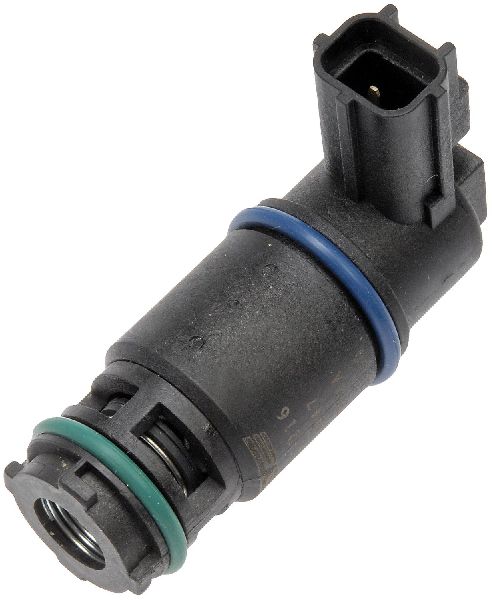
- Canister Purge Valve / Solenoid
(OEM #9U5Z-9C915-H (Motorcraft CX2221))— This is a very frequent failure point on this platform. It gets stuck open, causing a constant small leak that triggers the P0456 code and can cause stalling after refueling.
Trusted brands: Motorcraft, Dorman, Standard Motor Products
OEM price range: $60-$100
Aftermarket price range: $40-$80 - Fuel Filler Neck
(OEM #8M6Z-9034-C)— If the internal seal of the capless system is damaged or worn beyond what cleaning can fix, the entire assembly must be replaced to ensure a proper seal. A smoke test will confirm a leak in this location.
Trusted brands: Motorcraft, Dorman
OEM price range: $200-$300
Aftermarket price range: $150-$250
Related Codes That Often Appear With This One
- P1450 — Stands for 'Unable to Bleed Up Fuel Tank Vacuum'. This code is very commonly seen with a failing canister purge valve that is stuck open, as it creates a vacuum in the tank that the system can't release. TSB 10-1-3 also applies to this code.
- P0442 — This indicates a 'Medium EVAP Leak'. It can appear alongside P0456 if the leak is intermittent or on the borderline between small and medium. TSB 10-1-3 also covers this code for the Escape Hybrid.
- P2196 — Stands for 'O2 Sensor Signal Biased/Stuck Rich Bank 1 Sensor 1'. A stuck-open purge valve can pull unmetered fuel vapors into the intake, causing a rich condition that this sensor detects. Fixing the P0456 by replacing the purge valve often resolves this code as well.
Technical Service Bulletins (TSBs) & Recalls
- 10-1-3
- TSB 25-2308
- SSM 51247
Platform-Specific Known Issues
- TSB 10-1-3: Some 2009 Escape Hybrids built before April 6, 2009 may set a P0456 code due to a PCM software error, which can be corrected by a dealer reflash.
- The 'Easy Fuel' capless filler neck on this model is a frequent source of EVAP codes due to dirt contamination, a more common starting point for diagnosis than on vehicles with traditional gas caps.
Mechanic-Grade Diagnostic Values
- Fuel Tank Pressure (FTP) Sensor Voltage, Key On Engine Off (KOEO) — expected: 2.6V to 2.65V. Failure: A significant drop in voltage immediately after starting the engine can indicate a purge valve that is stuck open, pulling the tank into a vacuum.
- Fuel Tank Pressure (FTP) Sensor Reading during Purge — expected: -2.0 to -4.0 inches of H2O. Failure: A reading greater than -8.0 in. H2O can indicate a restriction in the EVAP lines or a faulty vent solenoid.
- Canister Purge Valve Solenoid Resistance — expected: No specific Ohm value was found in searches, as functional testing (vacuum check) is the primary diagnostic method.. Failure: An open circuit or short to ground would indicate electrical failure, but mechanical failure (sticking) is more common.
Hidden / Shadow Codes Worth Checking
- Mode $06, Test ID $81 (TID $81): This is not a DTC, but a non-continuous monitor test result for the 0.040" (medium) leak test. While P0456 is for a 0.020" leak, observing the test values for the medium leak test can provide clues about the system's ability to hold pressure. (see via A professional scan tool capable of reading Mode $06 data. The tool will display a test value and a maximum allowable limit; if the value exceeds the limit, the test has failed.)
- Mode $06, Test ID $82 (TID $82): This is the non-continuous monitor for the 0.020" (small) leak test, which directly corresponds to the P0456 code. The PCM seals the system and monitors pressure decay over time. (see via A professional scan tool with Mode $06 capability. A test value exceeding the PCM's calibrated maximum limit indicates a failure that will set the P0456 code.)
Scan Tool Commands That Help
- Ford IDS (Integrated Diagnostic System): EVAP System Test — This is a guided functional test that commands the canister vent and purge solenoids to seal the system, pulls a vacuum, and monitors the FTP sensor for decay. It allows a technician to manually run the same test the PCM performs automatically, confirming a leak exists before starting a smoke test.
- Ford IDS (or equivalent professional scan tool): Manual control of Canister Vent Valve/Solenoid — To manually command the vent valve closed. This is a required step before introducing smoke into the system for a leak test, ensuring the system is sealed from the vent side.
- Ford IDS (or equivalent professional scan tool): Manual control of Vapor Management Valve (Purge Valve) — Allows the technician to duty-cycle the purge valve on and off to verify its electrical operation and listen for an audible click. It can also be used to see its effect on fuel trims and FTP sensor readings in real-time.
Wiring & Ground Locations
- G104 — Left front of the engine compartment.. This is a major ground point for various engine components. While not directly tied only to the EVAP system, a poor connection here can cause erratic behavior in multiple sensors and solenoids controlled by the PCM.
- EVAP Canister Vent Control Solenoid Connector — On the EVAP canister, which is typically located near the fuel tank under the rear of the vehicle.. This connector provides power and ground to the vent solenoid. Corrosion or damage to the connector or wiring can prevent the solenoid from closing properly to seal the system for a leak test.
- Canister Purge Valve Connector — On the purge valve itself, located on the driver's side of the engine bay near the firewall.. Provides power and the control signal from the PCM. A visual inspection for corrosion or pushed-out pins is a quick check if the valve is not responding to scan tool commands.
Real Owner Repair Stories
- YouTube video by 'KIT'S Auto and Truck Repair' (Ford Escape (year not specified, but similar platform) with capless fuel system) — Check Engine Light with codes P0456 (small EVAP leak) and P2196 (O2 sensor stuck rich).
❌ Tried (didn't work) The technician first suspected the common capless fuel filler neck leak, but a smoke test showed it was sealing properly.
✅ What actually fixed it The smoke test revealed that smoke was passing through the (normally closed) canister purge valve and entering the intake manifold. This indicated the purge valve was stuck open, causing both the EVAP leak code and the rich condition code. Replacing the canister purge valve fixed the issue. - YouTube video by 'Ford Tech Makuloco' (2010 Ford Escape (similar platform and components)) — Check Engine Light with code P0456.
❌ Tried (didn't work) Initial scan and confirmation of the code.
✅ What actually fixed it The technician demonstrated the two most common causes. The primary fix shown was a faulty canister purge valve. With the engine running, he disconnected the electrical connector and felt for vacuum on the valve's port; the presence of vacuum confirmed it was stuck open and leaking. Replacing the purge valve resolved the leak. - NHTSA ODI #11467635 — An owner reported experiencing a transmission fault warning and stalling while running, with codes P1450, P0456, and P144A stored, indicating a restricted or blocked emission system purge vapor line.
- NHTSA ODI #11537486 — One owner reported struggling to turn the vehicle on after a fill-up. A dealership inspection found codes P0496 and P0456, leading to a recommendation to replace the VMV (purge valve) and charcoal canister.
"I Checked Everything" — The Actual Cause
- A stuck-open canister purge valve can sometimes be missed during a smoke test if the technician isn't specifically checking for smoke exiting into the intake manifold. The primary test for a stuck-open purge valve is to disconnect its electrical connector with the engine running and feel for vacuum at the valve's port; if vacuum is present, the valve is bad, regardless of smoke test results for other parts of the system.
OEM Part Supersession History
9U5Z-9C915-H→9U5Z-9C915-J— Standard part revision by the manufacturer, likely for improved durability or material changes.
Heads up: The new part number (9U5Z-9C915-J) is a direct replacement for the old one (-H) and is fully compatible.8M6Z-9034-C→CL8Z-9034-A— Part number updated for later model years but maintains compatibility with the 2009 model.
Heads up: CL8Z-9034-A is listed as a replacement for the 2009-2012 Escape, indicating it supersedes the original part number for the 2009 model.
Model Year Variations Within This Range
- 2009 models built on or before April 6, 2009: These early production models may have overly sensitive PCM software that can trigger P0456, P0442, or P1450 codes without a physical leak. The fix is a PCM re-calibration per TSB 10-1-3, not a part replacement.
Diagnostic Flowchart
Other Known Issues on This Vehicle
Issues unrelated to this code that are worth knowing about as an owner of this generation:
- HVAC Blend Door Actuator Failure 🟠 Medium — Very common. Owners report a clicking or 'percolating' sound from the dash, or inability to control temperature on one or both sides.
- Hybrid Battery Cooling Fan Failure 🔴 High → Shop Vehicle Battery — A known failure point as the vehicle ages. Can cause the engine to run constantly to cool the battery via the A/C system, or prevent the vehicle from starting.
- Motor Electronics Cooling System (MECS) Pump Failure 🔴 High — Common issue that can lead to a 'Stop Safely Now' warning and vehicle shutdown due to overheating of the hybrid power electronics. (Ref: Customer Satisfaction Program 12N03 covered some earlier models, but this remains a known issue for the 2009.)
- Rust on Rear Wheel Wells and Fenders 🟠 Medium — Common in regions that use road salt. The area around the rear wheel arches is prone to significant corrosion over time.
- eCVT Transmission Reliability 🟡 Low — Generally very reliable, but some owners report issues as the vehicles reach very high mileage. Not considered a widespread chronic problem.
Used vs. New Parts: Buying Guide for This Vehicle
When a used part is the smart pick: A used fuel filler neck assembly from a low-mileage, rust-free donor vehicle can be a cost-effective option, as it is a mechanical part without complex electronics. Hoses and the charcoal canister can also be sourced used, provided they are from a vehicle that did not have a failed purge valve.
Donor-vehicle mileage cap: roughly under 75000 miles for the part to have meaningful remaining life.
What to inspect on the donor part:
- For a fuel filler neck, inspect the internal spring-loaded flap for smooth operation and check the sealing surface for any pitting or damage.
- For a charcoal canister, ensure it feels light and does not slosh (which would indicate fuel saturation). Check all plastic nipples for cracks.
- Verify the donor vehicle is from a dry, non-salt-belt region to minimize corrosion and plastic brittleness.
OEM-only on this vehicle (don't cheap out):
- While not strictly 'OEM-only', using a Motorcraft canister purge valve is highly recommended. It is an electronic solenoid that is critical to system operation, and some aftermarket versions have been reported to have fitment or longevity issues.
Aftermarket brands forum-validated for this vehicle:
- Standard Motor Products (SMP) is often cited as a reliable aftermarket alternative for electronic sensors and valves.
- Dorman offers direct replacements for both the purge valve and filler neck, and is a widely available option, though some users report mixed quality on electronic parts compared to OEM.
Brands owners have reported issues with on this vehicle:
- Avoid unbranded, generic electronic parts like purge valves from online marketplaces, as their quality control and long-term reliability are often questionable.
Real Owner Stories
Aggregated from forums and TSBs cited above. Mileages and costs reflect what owners reported in those sources.
2009 Ford Escape Hybrid
Symptoms: Check Fuel Fill Inlet warning and P0456 code appearing due to dirt in the capless system.
What fixed it: Simple cleaning and lubrication of the capless fuel filler inlet seal.
Source hint: BobIsTheOilGuy.com
2009 Ford Escape Hybrid
Symptoms: P0456 code and 'Check Fuel Fill Inlet' message on the dashboard.
What fixed it: Using the vehicle's emergency funnel to work the flap open and closed several times to clear debris.
Source hint: Reddit (r/fordescape)
2009 Ford Escape Hybrid
Symptoms: PCM incorrectly setting EVAP codes despite no physical leak present.
What fixed it: PCM was reprogrammed (re-flashed) with updated software per TSB 10-1-3.
Source hint: TSB 10-1-3
Related OBD-II Codes
Frequently Asked Questions
Does TSB 10-1-3 apply to my 2009 Ford Escape Hybrid?
My dashboard says 'Check Fuel Fill Inlet' along with the P0456 code. What should I do first?
Can a faulty purge valve cause my Escape Hybrid to stall after I get gas?
What part number do I need if the cleaning procedure doesn't fix my capless filler neck?
Is the P0456 code related to the clicking sound I hear in my dashboard?
How can I tell if my purge valve is actually bad without a scanner?
Helpful Videos
Used OEM Parts in Stock

New Aftermarket Parts Available


The information in this article is provided for general reference and educational purposes only. Vehicle specifications, procedures, and part compatibility can vary by production date, trim level, and region. Always consult your vehicle's factory service manual and verify part numbers before purchasing or performing repairs. Safety-critical components such as airbags, seat belts, and braking systems should be installed by a qualified professional.
- Ford Escape Hybrid:
- 🧭 Diagnostic Flowchart
- 🎬 Helpful Videos
- 🛍️ Shop This Part
- What's Unique About the 2009-2009 Ford Escape Hybrid
- Symptoms You May Notice
- Most Likely Causes
- Rare But Worth Checking
- Diagnosis Steps
- Parts You'll Likely Need
- Related Codes That Often Appear With This One
- Technical Service Bulletins (TSBs) & Recalls
- Platform-Specific Known Issues
- Mechanic-Grade Diagnostic Values
- Hidden / Shadow Codes Worth Checking
- Scan Tool Commands That Help
- Wiring & Ground Locations
- Real Owner Repair Stories
- "I Checked Everything" — The Actual Cause
- OEM Part Supersession History
- Model Year Variations Within This Range
- Other Known Issues on This Vehicle
- Used vs. New Parts: Buying Guide for This Vehicle
- Real Owner Stories
- 2009 Ford Escape Hybrid
- 2009 Ford Escape Hybrid
- 2009 Ford Escape Hybrid
- Related OBD-II Codes
- Frequently Asked Questions
- 🎟️ Get 5% Off