

P0456 on 2022-2024 Ford Maverick: EVAP Small Leak Causes and Fixes
For a 2022-2024 Ford Maverick, code P0456 is most often caused by a faulty canister purge valve or a poor seal at the capless fuel filler. Before buying parts, inspect and clean the fuel filler opening. A faulty purge valve is a common DIY fix, but be aware of potential part back-orders. Ford TSB SSM 50306 advises against replacing the purge valve without performing a full system leak test first, as the part is often misdiagnosed.
- P0456 on a Maverick is a minor issue that won't stop you from driving, but it will cause a failed emissions test.
- Always start with the simplest fix: inspect and clean the capless fuel filler neck.
- The canister purge valve is a likely culprit, but Ford TSB SSM 50306 advises a full system test before replacing it to avoid misdiagnosis.
- Check the wiring harness near the fuel tank for chafing, as this has been a documented, though rare, cause of the code.
- Be prepared for potential parts delays, as some EVAP components for the Maverick have been on back-order.
What's Unique About the 2022-2024 Ford Maverick
The Ford Maverick, being a relatively new platform, has experienced some specific issues related to this common code. Owners on forums have reported significant back-orders for certain EVAP components like purge valves and specific hoses, leading to long repair times. Furthermore, Ford has issued a Technical Service Bulletin (SSM 50306) relevant to the 2022 Maverick, noting that canister purge valves are often replaced when they are not actually faulty, urging technicians to perform deeper diagnostics first. Some owners have also discovered unique problems, such as chafed wiring near the fuel tank, leading to a persistent P0456 code.
Symptoms You May Notice
- Check Engine Light is on.
- No noticeable impact on drivability or fuel economy.
- In some cases on related platforms, a stuck purge valve can cause difficulty starting immediately after refueling, but this is less commonly reported on the Maverick.
- Replacing the canister purge valve without proper testing. TSB SSM 50306 specifically warns against this, as returned parts often test as fully functional. A thorough system leak test using the Ford FDRS scan tool should be performed first to pinpoint the actual leak source.
Most Likely Causes
- Faulty Canister Purge Valve 🔴 High Probability → Shop Vapor Canister This is a common failure point on many modern Ford vehicles, including the Maverick's platform mates, the Bronco Sport and Escape. Forum discussions show Maverick owners having this part diagnosed as the problem by dealerships.
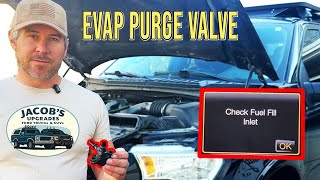
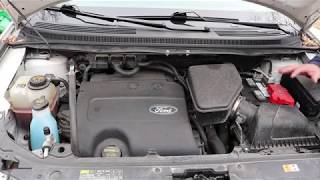
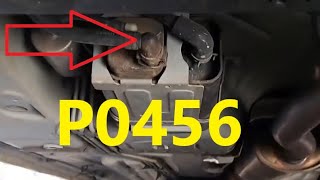
How to confirm: With the engine off, remove the purge valve (located in the engine bay) and try to blow through it. If air passes through, the valve is stuck open and has failed. A scan tool can also command the valve to open and close to check for response. Per a YouTube diagnostic video on a similar Ford, it may be necessary to cycle the valve multiple times with a scan tool to induce the failure, as it can be intermittent. 🎬 See this walkthrough on testing and replacing the purge valve.
Typical fix: Replace the canister purge valve. The OEM Motorcraft part number is LX6Z-9C915-A.
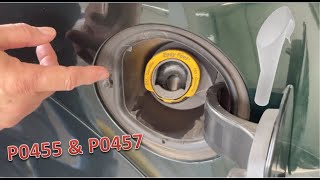
Est. part cost: $30-$60 - Debris or Poor Seal in Capless Fuel Filler Neck 🟡 Medium Probability → Shop Fuel Filler Neck The Maverick uses a capless 'Easy Fuel' system. Dirt, dust, or corrosion on the sealing flap can prevent it from closing properly, creating a small leak.
How to confirm: Visually inspect the metal flap inside the fuel filler neck for any debris, dirt, or damage. Ensure it moves freely and seals shut.
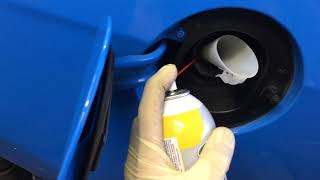
Typical fix: Clean the fuel filler opening with a clean cloth and the funnel provided with the vehicle 🎬 Watch: How to properly clean the Easy Fuel filler neck. to work the mechanism. Some owners of the platform-mate Bronco Sport suggest inserting the funnel for a minute to 'reset' the tank pressure and see if the code clears. Some mechanics recommend lightly scrubbing the metal sealing surface with a mild abrasive pad and applying a small amount of petroleum jelly to the seal to ensure a tight fit.
Est. part cost: $0 for cleaning, $100-$150 for a new filler neck assembly. - Cracked or Disconnected EVAP Hose 🟡 Medium Probability Hoses can become brittle over time or get damaged. One Maverick owner reported a specific EVAP system line (part number NZ6Z9D333A/H) was the cause, but the part was on national back-order.
How to confirm: A visual inspection may reveal obvious cracks, but the best method is a smoke test. A mechanic can pump low-pressure smoke into the EVAP system to see where it escapes.
Typical fix: Replace the damaged hose or secure the loose connection.
Est. part cost: $20-$100 depending on the hose length and complexity. - Worn or Corroded Fuel Tank Pressure Sensor Wiring ⚪ Low Probability → Shop Fuel Tank One owner on a Maverick forum discovered that the wiring harness for the fuel tank pressure sensor had rubbed against a felt liner, causing the wire to corrode and fail, triggering multiple EVAP codes including P0456.
How to confirm: Inspect the wiring harness leading to the fuel tank pressure sensor (located near the fuel tank) for signs of chafing, rubbing, or corrosion. This may require safely lifting the vehicle.
Typical fix: Repair the damaged section of the wire and protect the harness from further rubbing.
Est. part cost: $5-$15 for wire repair supplies.
Rare But Worth Checking
- Faulty Fuel Tank Pressure Sensor: → Shop Fuel Tank This sensor tells the computer the pressure in the EVAP system. While less common to fail than valves or hoses, it can send incorrect readings. It's often replaced during diagnosis but may not be the root cause.
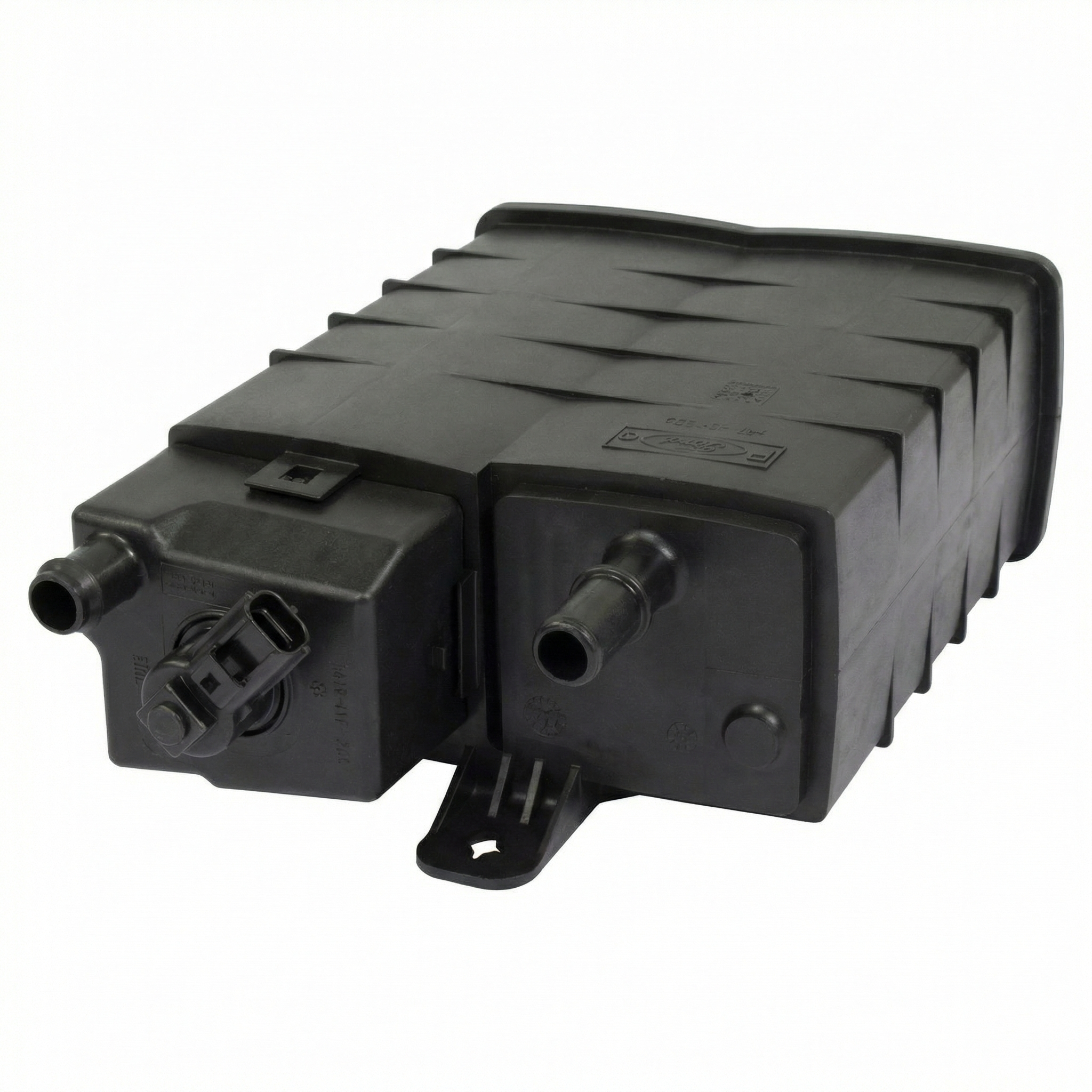
- Cracked Charcoal Canister: → Shop Vapor Canister The charcoal canister holds the fuel vapors. A crack in its plastic housing can cause a leak, though this is less common than hose or valve failures. Overfilling the fuel tank by 'topping off' can also saturate the canister with raw fuel, causing damage.
Diagnosis Steps
- Read the code with an OBD-II scanner to confirm P0456 and check for any other related codes.
- Visually inspect the capless fuel filler neck for debris, damage, or corrosion. Clean it thoroughly using the vehicle's supplied funnel and a clean rag.
- After cleaning, clear the code and drive for a few days to see if it returns. The EVAP monitor runs under specific conditions, so it may take time.
- If the code returns, inspect the canister purge valve in the engine bay. Remove it and test if it's stuck open by trying to blow through it. Remember the failure can be intermittent.
- Visually inspect all accessible EVAP hoses for obvious cracks, brittleness, or loose connections between the engine bay and the fuel tank.
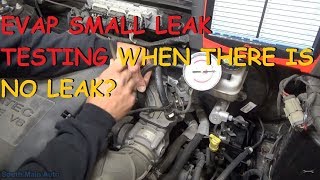
- If the leak source is not obvious, the most effective next step is a professional smoke test to pinpoint 🎬 Watch: What to check when you can't find the leak. the exact location of the small leak.
- While the vehicle is raised for a smoke test, inspect the wiring harness near the fuel tank for any signs of chafing or damage, as reported by other Maverick owners.
Parts You'll Likely Need
- Canister Purge Valve
(OEM #LX6Z-9C915-A)— This is a very common failure point for this code on Ford vehicles and has been diagnosed on the Maverick specifically.
Trusted brands: Motorcraft
OEM price range: $40-$70
Aftermarket price range: $25-$50 - Evaporative Emissions System Line
(OEM #NZ6Z9D333H)— A specific hose assembly that one owner reported was the cause of their P0456 code. Note that this part has experienced significant back-orders.
Trusted brands: Motorcraft
OEM price range: $50-$100
Related Codes That Often Appear With This One
- P0451 — This code indicates a problem with the Fuel Tank Pressure Sensor's performance. It can be triggered along with P0456 if a wiring issue or faulty sensor is the root cause.
- P0455 — This indicates a large EVAP leak. Seeing both P0455 and P0456 could mean an intermittent fault, like a purge valve that is sticking open sometimes, creating leaks of varying sizes.
- P1450 — Means 'Unable to Bleed Up Fuel Tank Vacuum.' On other Fords, this code often appears with P0456 when the canister purge valve is stuck open, causing excessive vacuum that the system cannot vent properly.
Technical Service Bulletins (TSBs) & Recalls
- SSM 50306: For 2022 Mavericks (and other models) with various EVAP codes including P0456. Ford notes that returned canister purge valves often test good, and advises technicians to perform a full EVAP system leak test using the FDRS scan tool before replacing parts.
Platform-Specific Known Issues
- Owners have reported long wait times and national back-orders for specific EVAP system components, including purge valves and hoses, which can significantly delay repairs.
- A documented case of the fuel tank pressure sensor wiring chafing against a felt liner under the truck points to a potential build-quality issue to check for.
- One owner on MaverickTruckClub.com reported a dealer quoted them ~$1,300 for a purge valve replacement and attempted to deny warranty coverage by blaming an aftermarket rust-proofing application.
Mechanic-Grade Diagnostic Values
- Fuel Tank Pressure (FTP) Sensor Voltage — expected: Approximately 2.5V with the gas cap off (at atmospheric pressure). A normal reading with the system sealed is typically between 1.3V and 1.7V.. Failure: A reading stuck high near 5.0V suggests a sensor or wiring issue. A reading stuck low near 0V can also indicate a fault.
Scan Tool Commands That Help
- Ford Diagnostic & Repair System (FDRS): EVAP System Leak Test — This is the manufacturer-specified procedure to run after initial visual checks fail. It automatically seals the system and uses the FTP sensor to measure pressure decay to pinpoint if a leak exists before replacing parts, as advised in TSB SSM 50306.
Wiring & Ground Locations
- General Ground Points — Forum members note multiple factory ground points in the engine compartment on the frame rails and several under the rear of the truck near the frame.. A poor ground for the Fuel Tank Pressure Sensor or other EVAP components could cause erroneous readings, leading to a false P0456 code. The chafed wire issue noted by an owner highlights the importance of inspecting harness routing near these grounds.
- Powertrain Control Module (PCM) Fuse — Located in the under-hood fuse box.. The PCM controls the entire EVAP system test. While a fuse failure is unlikely to cause just a P0456, checking for power to the control module is a fundamental step in diagnosing any electronic control issue.
Real Owner Repair Stories
- MaverickTruckClub.com user 'ChrisFe' (2023 Ford Maverick EcoBoost) — Check Engine Light with code P0456.
❌ Tried (didn't work) Initial diagnosis was difficult due to parts availability.
✅ What actually fixed it The root cause was identified as a faulty EVAP hose assembly. The user noted the part number was NZ6Z9D333A, which was on a significant backorder from Ford. This part has since been superseded by NZ6Z-9D333-H.
"I Checked Everything" — The Actual Cause
- In some cases on Ford vehicles, a P0456 code can persist even after a smoke test shows no leaks. The root cause can be electronic rather than a physical leak. A faulty Fuel Tank Pressure (FTP) sensor can send incorrect voltage signals to the PCM, tricking the computer into thinking a leak exists when the system is perfectly sealed. Another possibility is a wiring issue between a sensor and the PCM, which would not be revealed by a smoke test.
OEM Part Supersession History
NZ6Z-9D333-A (also NZ6Z-9D333-D, NZ6Z-9D333-G)→NZ6Z-9D333-H— Standard part revision and consolidation by the manufacturer.
Heads up: The newer part number NZ6Z-9D333-H should be used for all repairs, as it replaces the previous versions that were noted by owners to be on national backorder.
Model Year Variations Within This Range
- 2022-2024: No significant variations in the 2.0L EcoBoost EVAP system related to P0456 have been identified across these model years. Key components like the purge valve, charcoal canister, and hose assemblies share part numbers across the range.
Diagnostic Flowchart
Other Known Issues on This Vehicle
Issues unrelated to this code that are worth knowing about as an owner of this generation:
- 12V Battery Drain (Hybrid Models) 🔴 High → Shop Vehicle Battery — Widespread issue on 2022-2024 hybrids, often called 'Deep Sleep Mode'. Can occur intermittently from new. (Ref: SSM 53801, TSB 22-2340, Recall 23E09. Fixes involve software updates to the ABS or ACCM modules and potential battery replacement.)
- Hybrid Drivetrain Shudder/Lurching 🟠 Medium — Commonly reported on hybrid models, especially during low-speed operation or braking. Can appear within the first 5,000-10,000 miles. (Ref: TSBs exist for the same issue on the platform-mate Ford Escape, but Ford has been less proactive with the Maverick, often waiting for component failure.)
- Numerous Body and Safety Recalls 🟠 Medium — Multiple recalls have been issued for all model years (2022-2024) affecting a large number of vehicles. (Ref: Recalls include 23C41 (Rear Turn Signal), 24C08 (Incorrect Labels), and a major recall for taillight failure due to a Body Control Module (BCM) software issue.)
- 2.0L EcoBoost Coolant Intrusion 🟡 Low — This was a major issue on pre-2020 versions of this engine. The Maverick uses a redesigned block that has largely fixed the problem, but it remains a potential long-term concern for the engine family.
- Poor Interior Plastic Quality 🟡 Low — A very common owner complaint across all model years is that the interior plastic panels, particularly on the doors and center console, are very soft and scratch easily.
Used vs. New Parts: Buying Guide for This Vehicle
When a used part is the smart pick: For this code, used parts are generally not recommended due to the sensitive nature of the EVAP system. However, a purely structural component like a fuel filler neck assembly from a very low-mileage, collision-damaged vehicle could be a viable option if it is thoroughly inspected.
Donor-vehicle mileage cap: roughly under 20000 miles for the part to have meaningful remaining life.
What to inspect on the donor part:
- For hoses, ensure they are still pliable and show no signs of cracking or brittleness.
- For a filler neck, check that the sealing surface is perfectly clean, free of corrosion, and the internal flap mechanism moves freely.
- Avoid any electronic components like valves or sensors from a donor vehicle, as their remaining lifespan is unknown.
OEM-only on this vehicle (don't cheap out):
- Canister Purge Valve: This is an electromechanical part prone to failure; OEM (Motorcraft) is strongly recommended for reliability.
- Fuel Tank Pressure Sensor: As an electronic sensor, OEM parts ensure correct calibration and voltage signals to the PCM.
- Capless Fuel Filler Assembly: Aftermarket versions may not meet the precise sealing tolerances required, leading to persistent codes.
Brands owners have reported issues with on this vehicle:
- Generic/unbranded canister purge valves and fuel filler caps are frequently cited as causing EVAP codes on Ford vehicles due to improper sealing or calibration.
Real Owner Stories
Aggregated from forums and TSBs cited above. Mileages and costs reflect what owners reported in those sources.
2022 Ford Maverick — 3000 miles
Symptoms: Service Engine light on with codes P0456 and P0451.
What fixed it: The dealer diagnosed a bad purge valve, though they attempted to deny the warranty claim due to aftermarket undercoating.
Cost: $1,300-$1,300
Source hint: MaverickTruckClub.com - Thread 'Service Engine - EVAP Code P0456 @ 3k Miles'
2022 Ford Maverick
Symptoms: Check engine light for evap issue persisting for many months.
What fixed it: Replacement of a specific EVAP hose assembly (part number NZ6Z9D333A/H) which was on national back-order.
Source hint: MaverickTruckClub.com - Thread 'Check engine light for evap issue - still waiting on a fix after many months! Code P0456'
2021 Ford Bronco Sport
Symptoms: P0456 code triggered on the Maverick's platform-mate.
What fixed it: Replacing the purge valve with a part from RockAuto; the owner described it as a simple 15-minute DIY job.
Source hint: Reddit.com/r/BroncoSport thread about P0456
Related OBD-II Codes
Frequently Asked Questions
Does SSM 50306 apply to my 2022 Ford Maverick with a P0456 code?
Can I use the funnel that came with my Maverick to fix a P0456 code?
Is there a specific part number for the Maverick purge valve if I want to DIY the repair?
Why is my dealership quoting over $1,000 for a purge valve repair on my Maverick?
I've been told the EVAP part I need is on back-order; is this common for the Maverick?
Could a wiring issue cause a P0456 code on my Maverick?
Helpful Videos
We Have This Part in Stock

The information in this article is provided for general reference and educational purposes only. Vehicle specifications, procedures, and part compatibility can vary by production date, trim level, and region. Always consult your vehicle's factory service manual and verify part numbers before purchasing or performing repairs. Safety-critical components such as airbags, seat belts, and braking systems should be installed by a qualified professional.
- Ford Maverick:
- 🧭 Diagnostic Flowchart
- 🎬 Helpful Videos
- 🛍️ Shop This Part
- What's Unique About the 2022-2024 Ford Maverick
- Symptoms You May Notice
- Most Likely Causes
- Rare But Worth Checking
- Diagnosis Steps
- Parts You'll Likely Need
- Related Codes That Often Appear With This One
- Technical Service Bulletins (TSBs) & Recalls
- Platform-Specific Known Issues
- Mechanic-Grade Diagnostic Values
- Scan Tool Commands That Help
- Wiring & Ground Locations
- Real Owner Repair Stories
- "I Checked Everything" — The Actual Cause
- OEM Part Supersession History
- Model Year Variations Within This Range
- Other Known Issues on This Vehicle
- Used vs. New Parts: Buying Guide for This Vehicle
- Real Owner Stories
- 2022 Ford Maverick — 3000 miles
- 2022 Ford Maverick
- 2021 Ford Bronco Sport
- Related OBD-II Codes
- Frequently Asked Questions
- 🎟️ Get 5% Off