

P0456 on 2019-2025 Genesis G70: Causes and Fixes for Small EVAP Leaks
For a 2019-2025 Genesis G70, the P0456 code almost always points to a loose or faulty gas cap. Before buying any parts, tighten the cap until it clicks and clear the code. If it returns, a new OEM gas cap (Part No. 31010-3L600) is the most likely fix, costing around $25-$40. If that doesn't work, the canister purge valve is the next most common culprit.
- P0456 on a Genesis G70 means there's a very small leak in the fuel vapor system.
- Always start with the simplest fix: check that your gas cap is tight. If the light returns, a new OEM gas cap (P/N 31010-3L600) is the most likely solution.
- The vehicle is safe to drive, but you won't be able to pass an emissions inspection until the issue is resolved.
- If a new gas cap doesn't solve the problem, the canister purge valve is the next most likely part to check.
What's Unique About the 2019-2025 Genesis G70
For the 2019-2025 Genesis G70, the P0456 code follows the standard SAE definition 🎬 Watch: A quick overview of P0456 causes and fixes. and does not appear to have a unique, manufacturer-specific cause. Unlike some older Hyundai/Genesis models which had TSBs for sensitive computer logic, there are no widespread, documented issues or recalls for the G70 related to this specific EVAP leak code. The diagnostic process relies on standard procedures, starting with the simplest and most common culprits like the gas cap and purge valve, which is consistent with its platform-mate, the Kia Stinger.
Symptoms You May Notice
- Check Engine Light is illuminated.
- A faint smell of gasoline, particularly around the rear of the vehicle, may be noticeable in some cases.
- Slight decrease in fuel economy (rare and often unnoticed).
- In rare cases, a faulty purge valve associated with this code can cause a rough idle or difficulty starting after refueling.
- Replacing the oxygen (O2) sensors. O2 sensors are not part of the EVAP system and will not cause a P0456 code.
- Replacing the catalytic converter. This is an expensive and incorrect repair for an EVAP system code.
Most Likely Causes
- Loose or Faulty Gas Cap 🔴 High Probability → Shop Fuel Tank Cap The gas cap is the most frequently handled part of the EVAP system, and its seal can wear out or be compromised by dirt, leading to a leak. This is the most common cause for a P0456 code on virtually all modern vehicles, including the G70.
How to confirm: Remove the gas cap and inspect the rubber O-ring or seal for cracks, stiffness, or debris. Clean the seal and the fuel filler neck. Reinstall the cap, ensuring it clicks at least once. Clear the code and drive for a few days to see if it returns. It may take several drive cycles for the EVAP monitor to run its self-test.
Typical fix: Replace the gas cap with a new OEM part. It is highly recommended to use an original Genesis/Hyundai part (31010-3L600), as aftermarket caps are a common source of sealing problems.
Est. part cost: $25-$40 - Canister Purge Solenoid Valve (PCSV) Failure 🟡 Medium Probability → Shop Vapor Canister The purge valve is an electromechanical part that cycles frequently and can get stuck slightly open over time, creating a small leak path. This is a common failure point on many Hyundai/Kia products.
How to confirm: The purge valve is normally closed. With the engine off, disconnect the valve and try to blow through it. 🎬 See how to test for a stuck open purge valve. If air passes through, the valve is stuck open and has failed. A scan tool can also be used to command the valve to cycle while observing system pressure.
Typical fix: Replace the canister purge solenoid valve. This part is typically located in the engine bay, attached to the intake manifold, and is relatively easy to access and replace.
Est. part cost: $40-$80 - Cracked or Disconnected EVAP Hose ⚪ Low Probability Rubber hoses can become brittle and crack over time due to heat and age. A small, hard-to-see crack, especially at connection points near the engine or canister, can be enough to trigger a P0456 code.
How to confirm: A visual inspection of all accessible EVAP lines between the engine and the fuel tank may reveal obvious damage. The most reliable method is to have a professional perform a smoke test, which forces smoke into the EVAP system and makes even the smallest leak visible.
Typical fix: Replace the cracked section of hose or the entire hose assembly. Ensure connections are secure.
Est. part cost: $10-$50
Rare But Worth Checking
- Faulty EVAP Vent Valve: → Shop Vapor Canister Vent Valve This valve, located near the charcoal canister, can fail, but it's less common for a small leak than the purge valve. It's usually checked after the purge valve and gas cap have been ruled out.
- Cracked Charcoal Canister: → Shop Vapor Canister Physical damage to the plastic housing of the charcoal canister can cause a leak. This is uncommon without evidence of an impact to the underbody of the vehicle. A Kia Stinger owner with a persistent P0456 suspected a faulty canister.
- Corroded or Damaged Fuel Filler Neck: → Shop Fuel Filler Neck Rust or damage on the lip of the fuel filler neck where the gas cap seals can prevent a proper seal, even with a new cap. Lightly sanding the surface may resolve the issue.
Diagnosis Steps
- Confirm the P0456 code is present using an OBD-II scanner.
- Inspect the gas cap. Remove it, check the seal for damage, and ensure it is tightened until it clicks.
- Clear the code with the scanner. Drive the vehicle for several days to allow the EVAP monitor to run its self-test. If the light stays off, the issue was a loose cap.
- If the code returns, replace the gas cap with a new OEM part (Hyundai/Genesis P/N 31010-3L600). This is the most common fix and is an inexpensive next step.
- If the problem persists, locate and test the canister purge solenoid valve (PCSV) in the engine bay. Check if it's stuck open by attempting to blow through it when disconnected.
- Visually inspect all accessible EVAP hoses for cracks, especially at connection points.
- If no obvious cause is found, the most effective next step is a professional smoke test. This test will pressurize the system with smoke, revealing the exact location of any small leaks.
Parts You'll Likely Need
- Fuel Tank Cap
(OEM #31010-3L600)— This is the most frequent cause of a P0456 code due to wear on the seal or improper tightening. Using an OEM cap is critical for a proper seal. This part is widely used across many Hyundai and Kia vehicles.
Trusted brands: Hyundai/Genesis Genuine
OEM price range: $25-$40
Aftermarket price range: $15-$30 - Canister Purge Solenoid Valve
(OEM #28910-3L000)— This valve is a common failure point that can stick open, causing a persistent small leak that a new gas cap won't fix. Fitment appears to be the same for both 2.0T and 3.3T G70 models.
Trusted brands: Hyundai/Genesis Genuine, Bosch
OEM price range: $45-$70
Aftermarket price range: $30-$60
Related Codes That Often Appear With This One
- P0442 — This code indicates a 'small leak' (larger than P0456). If a very small leak worsens, this code may appear. They share the same set of potential causes.
- P0455 — This indicates a 'large leak'. It's less common to see with P0456, but could happen if a component fails catastrophically or if the gas cap is left off entirely.
- P0441 — This code for 'Incorrect Purge Flow' often points directly to a faulty canister purge solenoid valve (PCSV), which is also a common cause for P0456.
Platform-Specific Known Issues
- No specific widespread issues causing P0456 have been documented for the G70. The diagnostic path follows the general pattern for all modern cars: gas cap first, then purge valve, then smoke test.
- A Reddit user on r/kiastinger, the G70's platform mate, reported a persistent P0456 code that required multiple dealer visits, pointing to the fact that while the gas cap is the common fix, diagnosis can sometimes be tricky.
Mechanic-Grade Diagnostic Values
- Canister Purge Solenoid Valve (PCSV) Coil Resistance — expected: 15 - 30 Ohms. Failure: A reading that is significantly outside this range (e.g., infinite for an open circuit, or near zero for a short) indicates a faulty solenoid coil.
- Fuel Tank Pressure (FTP) Sensor Vacuum Decay Rate — expected: Less than 0.038 kPa/sec during an EVAP self-test.. Failure: A vacuum decay slope greater than this value (e.g., 0.038 ~ 0.06 kPa/sec) is interpreted by the ECM as a very small leak, triggering P0456.
Scan Tool Commands That Help
- Hyundai GDS (Global Diagnostic System): EVAP Leakage Test — This is the manufacturer-level bidirectional test used to verify a repair. After replacing a component, a technician runs this function, which commands the system to seal and then monitors the Fuel Tank Pressure (FTP) sensor to confirm the system can hold a vacuum and the leak is fixed.
Real Owner Repair Stories
- Reddit user on r/kiacarnivals (2025 Kia Carnival (low mileage)) — Persistent P0456 check engine light from nearly new.
❌ Tried (didn't work) Multiple dealer visits, Smoke test (passed, no external leaks found), Reseating and checking the gas cap
✅ What actually fixed it Replacement of the Fuel Tank Pressure Sensor (FTPS), OEM P/N 31435-2J000. The technician found the sensor was malfunctioning internally; its integrated one-way check valve was bleeding off pressure, creating a leak condition visible to the ECU but not to an external smoke test. - Reddit user on r/kiastinger (2021 Kia Stinger GT1 (platform mate)) — Recurring P0456 code.
❌ Tried (didn't work) Multiple dealer visits, Leak testing (passed initially), Replacement of the purge valve
✅ What actually fixed it The owner did not post a final resolution, but the thread is a high-value example of the diagnostic frustration that can occur when the cause is not a simple gas cap or easily identifiable leak, even for dealers. Other users suggested a bad gas cap seal or a vacuum leak in the charcoal canister itself.
"I Checked Everything" — The Actual Cause
- A known failure pattern on some Hyundai/Kia vehicles is an internal malfunction of the Fuel Tank Pressure Sensor (FTPS). The sensor's internal check valve can fail, bleeding off pressure and causing the ECU to detect a leak. This type of leak is internal to the sensor and will not be found by a standard EVAP smoke test, leading to a frustrating diagnosis where the system appears to be perfectly sealed.
- Technicians note that very small pinhole leaks in the fuel filler neck, caused by repeated impacts from a fuel nozzle, can sometimes be difficult to detect with a smoke test unless the area is thoroughly sprayed with soapy water during the test.
When the Usual Fixes Don't Work
- While the vast majority of P0456 codes are resolved by a gas cap or purge valve, there are documented cases where the root cause is more complex. In one instance involving a modern Kia, a persistent P0456 that passed multiple smoke tests was ultimately traced to an internal failure within the Fuel Tank Pressure Sensor (FTPS). The sensor itself was creating the leak condition reported by the ECU. This demonstrates that if standard diagnostic steps and smoke tests do not reveal a leak, the sensors that monitor the system should be tested for proper function, as they can be the source of the fault themselves.
OEM Part Supersession History
31010-3L500, 31010-2F500, 31010-2D600, 31010-2C800, 31010-2C700→31010-3L600— Standard part consolidation and design updates over many model years.
Heads up: The current part number 31010-3L600 is the correct and backward-compatible service part for a wide range of Hyundai/Genesis/Kia vehicles.
Model Year Variations Within This Range
- 2019-2025: The Canister Purge Solenoid Valve (PCSV) has different part numbers depending on the engine. The 2.0T engine typically uses P/N 28910-3L000, while the 3.3T engine uses P/N 28910-3L270. Always verify the correct part number with a VIN.
Diagnostic Flowchart
Other Known Issues on This Vehicle
Issues unrelated to this code that are worth knowing about as an owner of this generation:
- Premature Brake Rotor Warping/Vibration 🟠 Medium — Common complaint, especially on models with Brembo brakes. Owners report vibration under braking, sometimes within 20,000-30,000 miles. Often attributed to OEM pad deposits on rotors.
- Sunroof and/or Headliner Rattle 🟡 Low — A widely reported annoyance. Owners describe creaking or rattling noises from the sunroof assembly or overhead console, especially in warmer weather or on uneven roads. (Ref: Dealers have attempted fixes with varying success; some owners resort to DIY foam tape or lubrication solutions.)
- Turbocharger Oil Feed Line Leak (3.3T Engine) 🟠 Medium — The 3.3L twin-turbo V6 can develop oil leaks from the turbo oil feed line banjo bolt washers, causing a burning oil smell. This was subject to a recall. (Ref: Recall NHTSA ID: 24V191000 (Also listed as 22V-622))
- Infotainment Screen Delamination / Lag 🟡 Low — On pre-facelift (2019-2021) models, the anti-glare coating on the infotainment screen can bubble or delaminate. Some users also report system lag or slow boot times. (Ref: Often replaced under warranty if the vehicle is within the coverage period.)
- Paint Peeling/Chipping 🟠 Medium — Most notably on white and blue colored vehicles, some owners have experienced paint peeling in large flakes, a known issue on other Hyundai/Kia models as well.
- Fuel Pump Failure 🔴 High → Shop Fuel Pump — A subset of G70s were recalled because the fuel pump could fail, leading to a loss of drive power. (Ref: Recall NHTSA ID: 24V528000)
Used vs. New Parts: Buying Guide for This Vehicle
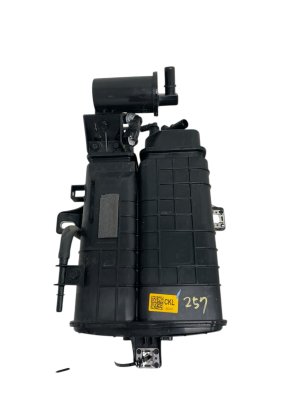
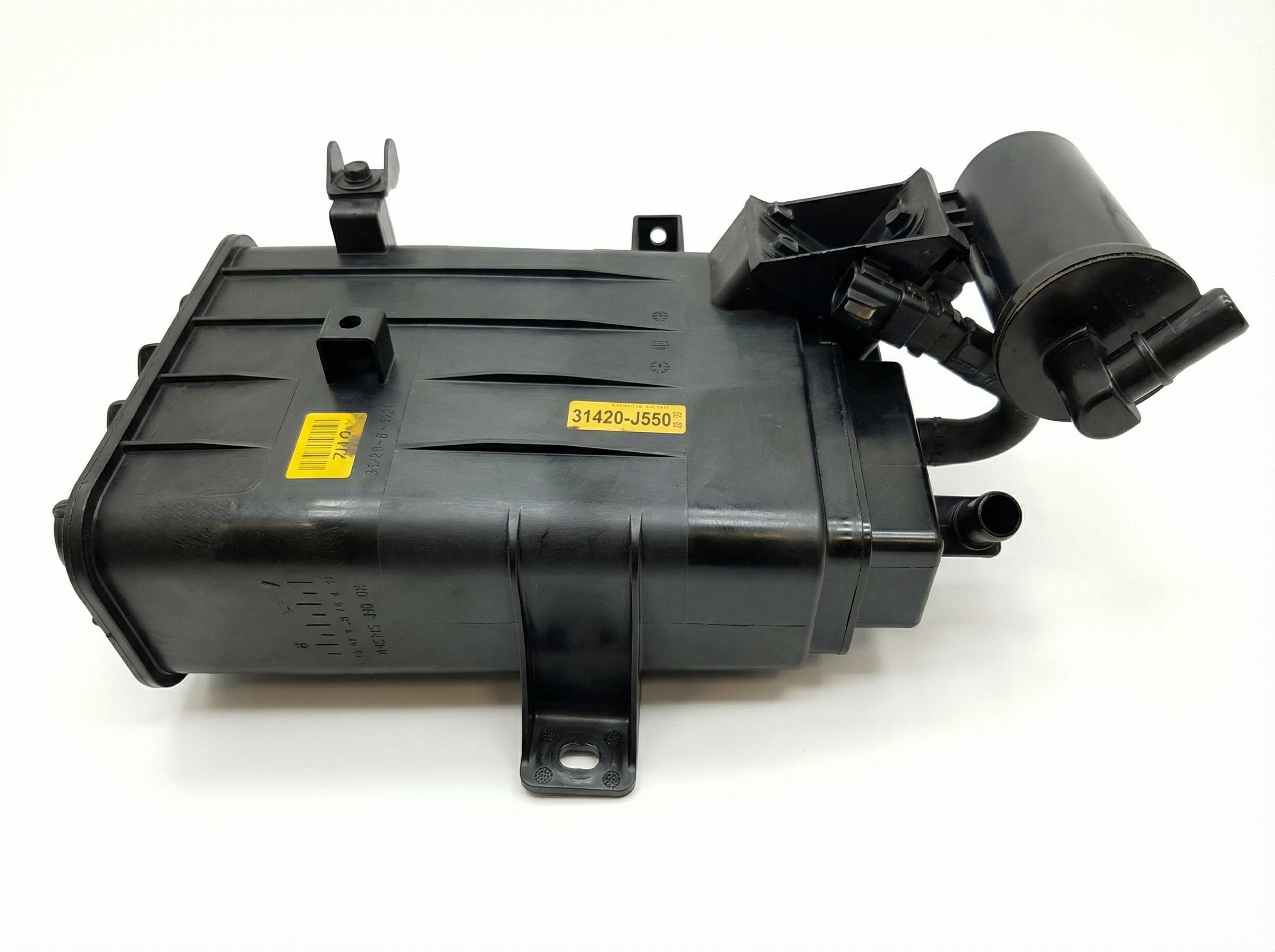
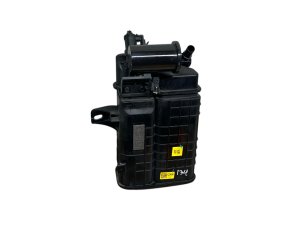
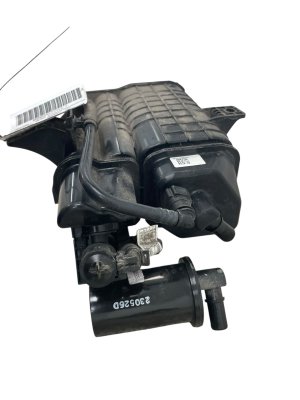
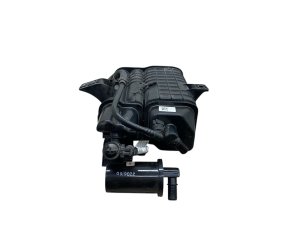
When a used part is the smart pick: For this repair, used parts are generally not recommended due to the nature of the components. However, if necessary, a complete charcoal canister assembly (P/N 31453-AA000) from a low-mileage, accident-free donor vehicle could be a cost-effective option if the original is physically damaged.
Donor-vehicle mileage cap: roughly under 40000 miles for the part to have meaningful remaining life.
What to inspect on the donor part:
- For a charcoal canister, ensure there are no visible cracks or damage to the plastic housing or hose ports.
- Gently shake the canister; there should be no sound of loose charcoal rattling inside.
- Verify the donor vehicle's mileage and ensure it's from a region without heavy road salt use to minimize corrosion on attached components.
OEM-only on this vehicle (don't cheap out):
- Fuel Cap: Aftermarket gas caps are a notorious cause of P0456 codes. Always use a genuine Hyundai/Genesis OEM cap (31010-3L600) to ensure a perfect seal.
- Canister Purge Solenoid Valve: While some aftermarket brands exist, the OEM valve is recommended for reliability and to avoid repeat repairs.
- Fuel Tank Pressure Sensor: As this is a sensitive electronic component critical for system monitoring, using a new OEM part is the safest choice to ensure accurate readings.
Aftermarket brands forum-validated for this vehicle:
- For this specific fault code, community and professional consensus strongly favors genuine OEM parts over aftermarket alternatives.
Brands owners have reported issues with on this vehicle:
- Generic, unbranded fuel caps from online marketplaces.
- Any aftermarket vent or purge solenoid that does not have a strong positive reputation in owner forums (a user on a related vehicle reported repeated failures of non-OEM vent solenoids).
Real Owner Stories
Aggregated from forums and TSBs cited above. Mileages and costs reflect what owners reported in those sources.
2021 Kia Stinger (Platform Mate)
Symptoms: Check engine light on for the 4th time; persistent EVAP leak code that was difficult to diagnose.
What fixed it: The owner noted the challenge of diagnosis when it is not a simple gas cap issue, requiring multiple dealer visits to resolve the persistent leak.
Source hint: r/kiastinger - Thread Title: 'Check engine light on for 4th time.'
Related OBD-II Codes
Frequently Asked Questions
Which specific gas cap should I buy for my Genesis G70 to fix a P0456 code?
Is there a recall for the 3.3T engine that might be related to smells or leaks?
Could my G70's P0456 code be caused by a faulty fuel pump?
Where is the Canister Purge Solenoid Valve located on the G70?
I have a P0456 and my G70 is hard to start after I get gas. What is the cause?
Is there a specific charcoal canister part number if mine is damaged?
Helpful Videos
![How to Fix P0456 Engine Code in 7 Minutes [7 DIY Methods / Only $3.44]](https://img.youtube.com/vi/njt81AALI3U/mqdefault.jpg)

Used OEM Parts in Stock
New Aftermarket Parts Available


The information in this article is provided for general reference and educational purposes only. Vehicle specifications, procedures, and part compatibility can vary by production date, trim level, and region. Always consult your vehicle's factory service manual and verify part numbers before purchasing or performing repairs. Safety-critical components such as airbags, seat belts, and braking systems should be installed by a qualified professional.
- Genesis G70:
- 🧭 Diagnostic Flowchart
- 🎬 Helpful Videos
- 🛍️ Shop This Part
- What's Unique About the 2019-2025 Genesis G70
- Symptoms You May Notice
- Most Likely Causes
- Rare But Worth Checking
- Diagnosis Steps
- Parts You'll Likely Need
- Related Codes That Often Appear With This One
- Platform-Specific Known Issues
- Mechanic-Grade Diagnostic Values
- Scan Tool Commands That Help
- Real Owner Repair Stories
- "I Checked Everything" — The Actual Cause
- When the Usual Fixes Don't Work
- OEM Part Supersession History
- Model Year Variations Within This Range
- Other Known Issues on This Vehicle
- Used vs. New Parts: Buying Guide for This Vehicle
- Real Owner Stories
- 2021 Kia Stinger (Platform Mate)
- Related OBD-II Codes
- Frequently Asked Questions
- 🎟️ Get 5% Off