

P0456 on 2008-2012 Infiniti EX35: EVAP Small Leak Causes and Fixes
This code means a very small leak is detected in the evaporative emissions system. The most common causes are a loose or faulty gas cap or a failing EVAP vent control valve O-ring. Start by tightening the gas cap; if that fails, the vent valve assembly at the rear of the vehicle is the next likely culprit. This is a well-documented issue on this platform.
- P0456 on an Infiniti EX35 indicates a very small leak in the fuel vapor system.
- Always start by checking the gas cap. Make sure it's tight and the seal is intact. This is the easiest and most common fix.
- If the gas cap is not the issue, the next most likely cause is a failed O-ring on the EVAP vent control valve, a known issue with a specific Infiniti TSB.
- While you can drive with this code, your vehicle will fail an emissions test, so it should be addressed.
- A smoke test is the most reliable way to diagnose the exact location of the leak if it's not the gas cap.
What's Unique About the 2008-2012 Infiniti EX35
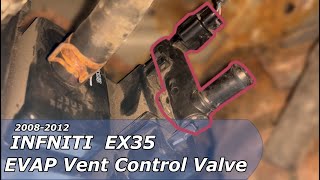
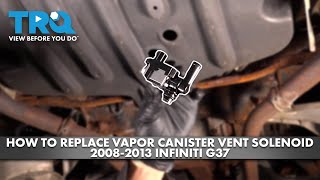
On this specific Infiniti platform (Nissan FM), the P0456 code is very frequently linked to two specific, documented failure points. The first is a simple loose fuel filler cap, as highlighted in manufacturer service bulletins. The second, and more unique issue, is the degradation of the O-ring for the EVAP vent control valve, located on the charcoal canister at the rear of the vehicle. Infiniti has issued a series of service bulletins (ITB17-042, ITB17-042b, ITB17-042c, ITB17-042d) detailing this exact failure. Initially, the fix was to replace only the O-ring, but later bulletins advised replacing the entire vent control valve assembly 🎬 Watch: How to replace the vent control valve on an EX35. as the O-ring was discontinued as a separate service part.
Diagnostic Flowchart
Tap your situation to follow the diagnostic path that matches what you're seeing on this vehicle.
Symptoms You May Notice
- Check Engine Light is on
- A 'Loose Fuel Cap' message may appear on the dash, sometimes intermittently for weeks before the Check Engine Light stays on.
- A faint fuel smell near the rear of the vehicle may be noticeable in rare cases.
- Some owners report a loss of power, though this is not a universally reported symptom and may be related to other underlying issues.
- Replacing the entire EVAP charcoal canister when only the vent valve or its O-ring is needed. Infiniti specifically issued TSBs to address the valve/O-ring, which is a much cheaper and simpler repair.
- Replacing parts without a smoke test. Owners on forums often report replacing the gas cap and purge valve, only for the code to return because the leak was at the rear vent valve O-ring.
Most Likely Causes
- Loose or Faulty Fuel Filler Cap 🔴 High Probability → Shop Fuel Tank Cap This is the most common cause for any vehicle. Infiniti TSB ITB09012F specifically reminds technicians to check this first for P0456. Forum users on MyG37 and Reddit frequently advise this as the first step.
How to confirm: Inspect the gas cap for any cracks or damage to the rubber seal. Ensure it is tightened until it clicks at least once. If the seal is worn or an aftermarket cap is being used, it may not seal properly. A new OEM cap is a cheap and easy way to eliminate this possibility.
Typical fix: Tighten or replace the fuel filler cap. It is highly recommended to use an OEM (Original Equipment Manufacturer) cap for a guaranteed proper seal. The OEM part number is often superseded; 17251-4BA0B is a common replacement.
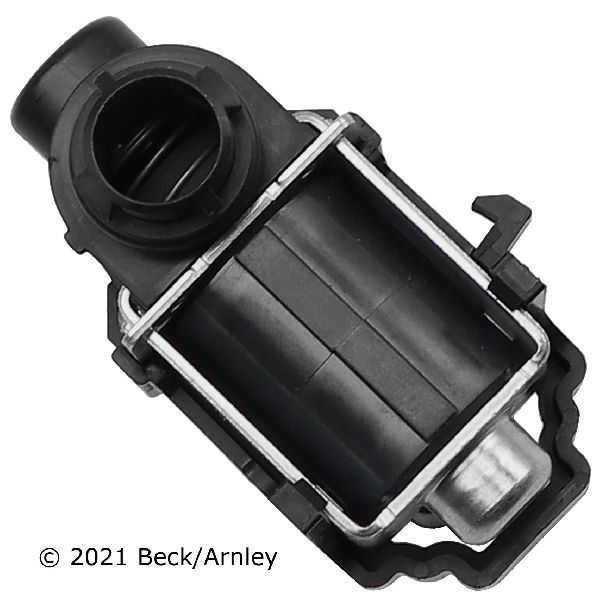
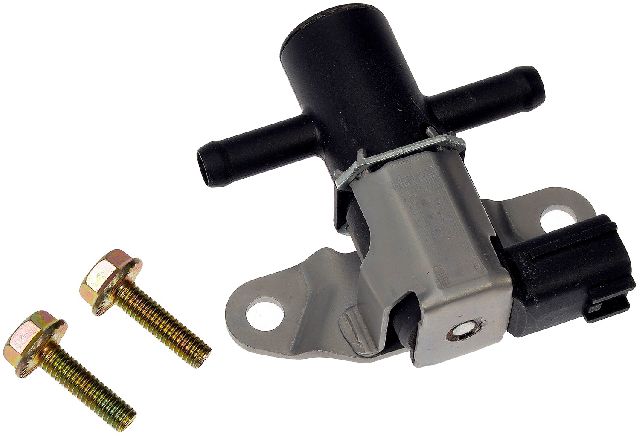
Est. part cost: $25-$50 - Failed EVAP Vent Control Valve or O-Ring 🔴 High Probability → Shop Vapor Canister Vent Valve Infiniti issued multiple Technical Service Bulletins (ITB17-042 series) for this failure on many models, including the EX35 (J50). The rubber O-ring where the valve mounts to the canister degrades, or the valve itself gets stuck from rust and debris, causing a small leak.
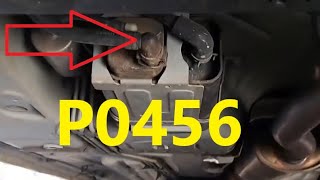
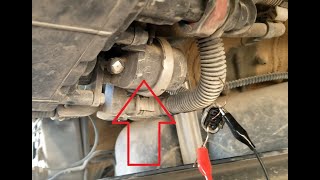
How to confirm: This is best confirmed with a smoke test, which will show smoke leaking from the point where the vent control valve inserts into the charcoal canister. The valve is located at the rear of the car, on the EVAP canister, which is behind a shield in the rear passenger-side wheel well area.
Typical fix: Per TSB ITB17-042b, the original fix was to replace only the O-ring. However, a later TSB (ITB17-042d) states the O-ring is no longer available separately and the entire vent control valve assembly must be replaced. The valve twists into the canister. Common part numbers include 14935-JF00B and its successors.
Est. part cost: $5-$15 (O-ring if found), $50-$100 (Valve Assembly) - Failed EVAP Canister Vent Control Valve 🟡 Medium Probability → Shop Vapor Canister Vent Valve This valve is located at the rear of the car and is exposed to road debris and moisture, which can cause it to fail or get stuck. It's a common failure item on many Nissan and Infiniti vehicles.
How to confirm: During a smoke test, a technician can command the valve closed with a scan tool. If smoke passes through the valve, it has failed. It can also be removed and tested for function; rust is often visible on failed units.
Typical fix: Replace the EVAP canister vent control valve. It twists into the EVAP canister. The OEM part number is commonly 14935-JF00B, 14935-JF00C, or similar.
Est. part cost: $50-$100 - Cracked or Disconnected EVAP Hoses ⚪ Low Probability Over time, the rubber hoses in the EVAP system can become brittle and develop small cracks, especially at connection points.
How to confirm: A visual inspection may reveal obvious cracks, but a smoke test is the most effective way to find hairline fractures in the hoses. Pay attention to the small hoses connecting to the canister and purge valve.
Typical fix: Replace the cracked section of the hose. An example part is Vapor Hose 14912JK25B.
Est. part cost: $10-$30
Rare But Worth Checking
- Faulty EVAP Purge Volume Control Solenoid Valve: → Shop Vapor Canister This valve is located in the engine bay. If it sticks slightly open, it can cause a leak that the system detects. While less common for a P0456, it can happen. A Reddit user with an EX35 replaced this part in their quest to solve the code.
- Cracked Charcoal Canister: → Shop Vapor Canister Physical damage to the canister housing can cause a leak. This is usually the result of an impact or road debris. A YouTube video on EX35 canister replacement notes that the bolts for the protective shield are prone to rusting and breaking, which could leave the canister vulnerable. The OEM part number is 14950-CG20B.
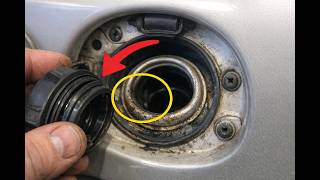
- Rusted Fuel Filler Neck: → Shop Fuel Filler Neck In regions where road salt is used, the metal filler neck where the gas cap seals can corrode. This corrosion creates a rough, uneven surface that prevents even a new gas cap from sealing properly, causing a small leak. A thorough cleaning of the filler neck sealing surface with a mild abrasive may be required.
Diagnosis Steps
- Check the gas cap. Ensure it is an OEM cap, is tightened until it clicks, and the seal is not cracked or worn. This is the cheapest and easiest first step.
- If the code returns, visually inspect accessible EVAP hoses in the engine bay and under the vehicle for obvious cracks or disconnections.
- The most effective diagnostic method is a smoke test. A machine injects vaporized smoke into the EVAP system service port.
- Focus the smoke test inspection on the rear of the vehicle, around the charcoal canister located behind the rear passenger-side wheel. You may need to remove a protective shield held on by 10mm bolts, which are known to rust and break.
- Pay close attention to the area where the vent control valve mounts to the canister. This is the most common leak point identified in TSB ITB17-042b. Smoke will be visible leaking from the valve's base.
- If a leak is found at the vent valve, the official fix per the latest TSB (ITB17-042d) is to replace the entire valve assembly. The valve is removed by pressing a tab, twisting counter-clockwise, and pulling it out.
- After the repair, clear the trouble code. The vehicle's computer will need to complete a drive cycle to re-run the EVAP system self-test and confirm the fix. This test often runs when the vehicle is off and the fuel tank is between 1/4 and 3/4 full.
Parts You'll Likely Need
- Fuel Filler Cap
(OEM #17251-4BA0B (supersedes previous numbers))— This is the most frequent and simplest cause of a P0456 code due to a worn seal or not being tightened properly.
Trusted brands: Infiniti OE
OEM price range: $25-$50
Aftermarket price range: $15-$30 - EVAP Canister Vent Control Valve
(OEM #14935-JF00B / 14935-JF00E (or superseding part))— This is the second most common failure. The valve itself can stick due to rust, or the integrated O-ring fails, causing a leak. This is a well-documented issue in Infiniti TSBs.
Trusted brands: Bosch, Hitachi, Infiniti OE
OEM price range: $80-$120
Aftermarket price range: $40-$80 - EVAP Vent Control Valve O-Ring
(OEM #16618-JF00A (Note: May no longer be serviced separately))— A known failure point documented in early versions of Infiniti TSB ITB17-042b, causing a small leak where the valve meets the canister. Later TSBs advise replacing the whole valve.
Trusted brands: Infiniti OE
OEM price range: $5-$15
Related Codes That Often Appear With This One
- P0442 — This code indicates a 'medium' EVAP leak. If the small leak from P0456 worsens, it may trigger a P0442.
- P0455 — This code indicates a 'large' EVAP leak. It often appears with P0456 if there are multiple leak points or if a component like the vent valve sticks wide open.
Technical Service Bulletins (TSBs) & Recalls
- ITB17-042b / ITB17-042c / ITB17-042d: The key bulletins for this issue. They identify a leak at the vent control valve O-ring as a primary cause for P0456 and detail the evolution of the repair from O-ring only to full valve assembly replacement.
- ITB09012F: Reminds technicians that a loose fuel fill cap is a primary and simple cause for P0456 and other EVAP codes.
- ITB13-044J / ITB13-044g: General information bulletins regarding EVAP leak codes P0442, P0455, and P0456, indicating these codes are frequently addressed together.
Platform-Specific Known Issues
- Infiniti issued TSB #ITB09012F, which specifically notes that a loose fuel filler cap can be the cause for P0456 on 2008-2011 models.
- Infiniti released a series of TSBs starting with ITB17-042, identifying a faulty O-ring on the EVAP vent control valve as a primary cause for P0456. The latest version, ITB17-042d, notes the O-ring is no longer sold separately and advises replacing the entire vent control valve assembly.
Mechanic-Grade Diagnostic Values
- EVAP Canister Vent Control Valve Solenoid Resistance — expected: 20 - 50 Ohms. Failure: A reading of 0 Ohms (short circuit) or infinite/OL (open circuit) indicates a failed solenoid coil.
- EVAP Canister Purge Volume Control Solenoid Valve Resistance — expected: 15 - 30 Ohms. Failure: A reading significantly outside this range indicates a damaged internal circuit requiring valve replacement.
- Fuel Tank Pressure (FTP) Sensor Voltage — expected: 0.5V - 4.5V. Failure: A voltage reading outside this range during the EVAP self-test can indicate a faulty sensor or a wiring issue, potentially tricking the PCM into logging a P0456 code.
Scan Tool Commands That Help
- Infiniti CONSULT-III plus: Active Test > Close Vent Control Valve — This command is used during a smoke test or pressure test to seal the EVAP system. The technician closes the valve and then introduces smoke or pressure to see if the system holds, which is critical for finding the leak source.
- Infiniti CONSULT-III plus: Active Test > PURG VOL C/V — This function allows a technician to manually operate the EVAP Canister Purge Volume Control Solenoid Valve. It's used to confirm if the valve is clicking and functioning electrically, or to check if it's stuck open or closed.
Wiring & Ground Locations
- EVAP Canister Vent Control Valve — Under the right rear of the vehicle, mounted on the EVAP charcoal canister.. This is the location of the most common mechanical failure point (the valve/O-ring) for P0456 on this vehicle. Accessing it requires removing a protective shield which is prone to rust.
- EVAP Canister Purge Volume Control Solenoid Valve — In the engine bay, near the intake manifold.. This valve is a less common but possible cause. Knowing its location in the engine bay allows for quick electrical and vacuum tests without lifting the vehicle.
- IPDM E/R (Intelligent Power Distribution Module Engine Room) — In the right rear of the engine compartment.. This module contains fuses and relays that supply power to EVAP system components like the purge and vent valves. An electrical fault for an EVAP code could originate here.
Real Owner Repair Stories
- Reddit user Canon_Cowboy (Vehicle with P0456 (model not specified but EVAP system is similar)) — Check Engine Light with code P0456.
❌ Tried (didn't work) Applying Vaseline to the gas cap O-ring (suggested by another user, but was not the original poster's issue).
✅ What actually fixed it The user confirmed that replacing the EVAP purge valve solved the problem. After replacing the part and disconnecting the battery to reset the ECU, the Check Engine Light stayed off. - YouTube user comment (Vehicle with P0456) — Check Engine Light with code P0456.
❌ Tried (didn't work) Replacing the purge valve., Replacing the gas cap.
✅ What actually fixed it After a smoke test which should have been the first step, the problem was identified as a leaking fuel filler neck.
"I Checked Everything" — The Actual Cause
- In some cases, a P0456 can be triggered by a faulty Fuel Tank Pressure (FTP) sensor providing incorrect data to the computer, making it think there is a leak when the system is actually sealed. If a smoke test reveals no leaks, testing the FTP sensor's voltage and output is a necessary next step.
OEM Part Supersession History
14935-AM60A→14935-AM60B, which was later superseded by the 14935-JF00x series (e.g., 14935-JF00B, 14935-JF00E)— Part design and material improvements to prevent sticking and sealing issues.
Heads up: While the newer JF00x series valves are often physically compatible with vehicles that used the AM60B, it is critical to use the part number specified for the vehicle's VIN. Infiniti issued service bulletins advising technicians to use the new style valve during any replacement.
Helpful Videos
![How to Fix P0456 Engine Code in 7 Minutes [7 DIY Methods / Only $3.44]](https://img.youtube.com/vi/njt81AALI3U/mqdefault.jpg)

![How to Fix P0456 Engine Code in 3 Minutes [2 DIY Methods / Only $4.44]](https://img.youtube.com/vi/v_QDSjd1-Lw/mqdefault.jpg)
Used OEM Parts in Stock
New Aftermarket Parts Available


The information in this article is provided for general reference and educational purposes only. Vehicle specifications, procedures, and part compatibility can vary by production date, trim level, and region. Always consult your vehicle's factory service manual and verify part numbers before purchasing or performing repairs. Safety-critical components such as airbags, seat belts, and braking systems should be installed by a qualified professional.
- Infiniti EX35:
- 🧭 Diagnostic Flowchart
- 🎬 Helpful Videos
- 🛍️ Shop This Part
- What's Unique About the 2008-2012 Infiniti EX35
- Symptoms You May Notice
- Most Likely Causes
- Rare But Worth Checking
- Diagnosis Steps
- Parts You'll Likely Need
- Related Codes That Often Appear With This One
- Technical Service Bulletins (TSBs) & Recalls
- Platform-Specific Known Issues
- Mechanic-Grade Diagnostic Values
- Scan Tool Commands That Help
- Wiring & Ground Locations
- Real Owner Repair Stories
- "I Checked Everything" — The Actual Cause
- OEM Part Supersession History
- 🎟️ Get 5% Off