

P0456 on 2011-2013 Infiniti M37: EVAP Small Leak Causes and Fixes
P0456 indicates a very small leak in the fuel vapor system. On the 2011-2013 M37, this is most often caused by a failed O-ring on the EVAP vent control valve, a known issue addressed by Infiniti in service bulletins. Before extensive diagnosis, check that the gas cap is tight. If the valve is the cause, the entire assembly must be replaced as the O-ring is no longer sold separately.
- P0456 on a 2011-2013 M37 is very frequently caused by a bad O-ring on the EVAP vent control valve.
- Always check that the gas cap is tight first, as it's the simplest possible fix.
- A smoke test is the best way to confirm the exact location of the leak before buying parts.
- According to the latest service bulletins, the fix is to replace the entire EVAP vent control valve, not just the O-ring.
What's Unique About the 2011-2013 Infiniti M37
While a loose gas cap is a common cause for P0456 on many vehicles, the Infiniti M37 (Y51 platform) and its relatives have a well-documented, specific failure point. Infiniti issued multiple Technical Service Bulletins (TSBs) because the O-ring on the EVAP vent control valve is prone to failing and causing this exact code. This means owners can often skip the guesswork and focus diagnosis on this specific component, which is located on the charcoal canister near the rear of the vehicle, typically accessible from underneath. Early TSBs advised replacing just the O-ring, but later revisions mandate replacing the entire valve assembly.
Diagnostic Flowchart
Tap your situation to follow the diagnostic path that matches what you're seeing on this vehicle.
Symptoms You May Notice
- Check Engine Light is on
- A "Loose Fuel Cap" message may appear on the dash, even if the cap is tight.
- A faint fuel smell may be noticeable, particularly around the rear of the vehicle.
- Loss of the 'hiss' sound when opening the gas cap, indicating the system is not holding pressure.
- In rare cases related to a clogged canister or stuck vent valve, difficulty fueling (the pump nozzle clicks off repeatedly).
- Replacing the gas cap when the true fault is the vent control valve O-ring. Many owners start with the gas cap, but on this specific vehicle, the TSB points to the O-ring as the more probable cause.
- Replacing the entire charcoal canister when only the vent control valve mounted on it is leaking. A smoke test should be used to pinpoint the exact leak source before replacing the expensive canister assembly.
Most Likely Causes
- Failing EVAP Vent Control Valve O-Ring 🔴 High Probability → Shop Vapor Canister Infiniti has issued multiple Technical Service Bulletins (e.g., ITB17-042E, ITB17-042D) specifically identifying this O-ring as the primary cause for P0456 on the M37 and many other models. The material degrades over time, losing its seal and causing a small leak where the valve mounts to the canister.
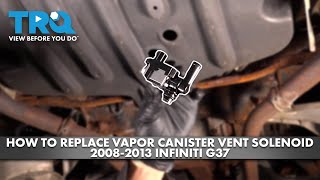
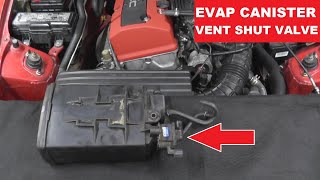
How to confirm: A smoke test is the most effective method. 🎬 See how to test and replace the vent shut valve A technician will introduce smoke into the EVAP system and look for it escaping from the area where the vent control valve mounts to the charcoal canister. This is the specific area of interest per the TSBs.
Typical fix: Initially, Infiniti recommended replacing only the O-ring. However, later bulletins like ITB17-042D advise replacing the entire vent control valve assembly, as the O-ring is no longer sold as a separate service part. The updated OEM part is the entire valve assembly.
Est. part cost: $80-$160 - Loose or Faulty Gas Cap 🟡 Medium Probability → Shop Fuel Tank Cap This is a common cause on all vehicles. The cap's seal can degrade over time, or it may simply not have been tightened correctly after refueling. It's a crucial part of the EVAP system seal.
How to confirm: First, ensure the cap is tightened until it clicks several times. If the code returns, inspect the cap's rubber gasket for cracks or damage. If it looks worn, replacement is a cheap and easy diagnostic step. Many owners try this first before discovering the TSB-related issue.
Typical fix: Replace the gas cap. Using a genuine OEM cap is recommended as some aftermarket caps may not seal correctly.
Est. part cost: $25-$45 - Cracked or Disconnected EVAP Hoses ⚪ Low Probability Rubber and plastic hoses can become brittle and crack with age and exposure to the elements. A user on a G37 forum found a rotted fuel vent return line near the filler neck was the cause after replacing other parts.
How to confirm: Visually inspect all accessible EVAP lines running from the fuel tank and charcoal canister to the engine bay. A smoke test will definitively reveal any cracks or loose connections.
Typical fix: Replace the damaged section of hose or secure a loose clamp.
Est. part cost: $5-$50 - Faulty EVAP Purge Valve ⚪ Low Probability → Shop Vapor Canister The purge valve (solenoid), typically located in the engine bay, 🎬 Watch: How to locate and replace the purge solenoid can fail by sticking open or closed. While less common for a *small* leak code like P0456, it is a possible cause.
How to confirm: A technician can command the valve to open and close with a diagnostic scan tool to check its operation. A smoke test can also determine if it is leaking when it should be closed. It should be normally closed with no power.
Typical fix: Replace the EVAP purge valve.
Est. part cost: $65-$205
Rare But Worth Checking
- Cracked EVAP Charcoal Canister: → Shop Vapor Canister While less common, the plastic body of the canister itself can develop hairline cracks, causing a small leak. This is typically found during a smoke test after all other components have been ruled out. Overfilling the fuel tank can saturate the canister with raw fuel, leading to its eventual failure.
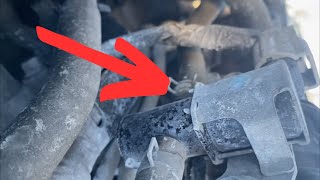
- Rusted Fuel Filler or Vent Line: In regions with road salt, the metal lines for the EVAP system, particularly the fuel vent return line near the filler neck, can rust through at mounting brackets, causing a leak. This was identified by a G37 owner as the root cause after other common parts were replaced.
Diagnosis Steps
- Check the gas cap. Remove it, inspect the seal for damage, and reinstall it, ensuring it clicks multiple times. Listen for a 'hiss' when opening it, the absence of which suggests a leak.
- Clear the code with an OBD-II scanner and drive for a few days to see if the light returns. The EVAP monitor often runs after the vehicle has sat for several hours.
- If the light returns, perform a thorough visual inspection of all accessible EVAP hoses and connections between the engine bay and the rear of the vehicle near the fuel tank. Pay special attention to lines near the filler neck for rust.
- The most definitive diagnostic step is to have a smoke test performed. This involves injecting low-pressure, UV-dyed smoke into the EVAP system's service port.
- Pay close attention to the area where the EVAP vent control valve mounts to the charcoal canister, as this is the most likely leak point according to Infiniti TSBs ITB17-042D and ITB17-042E.
- If smoke is seen leaking from the vent valve O-ring, replace the entire vent control valve assembly (Part No. 14935-JF00E or its successors).
- If no leak is found at the vent valve, trace the smoke to find the source, which could be a cracked hose, a faulty purge valve, the gas cap seal, or the canister itself.
Parts You'll Likely Need
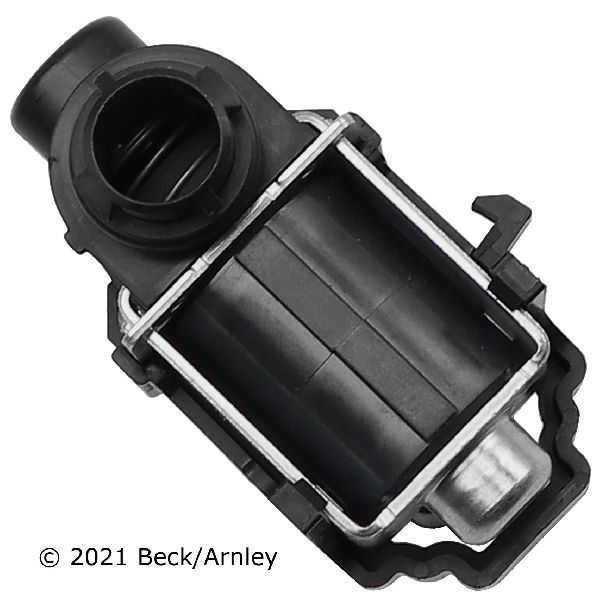
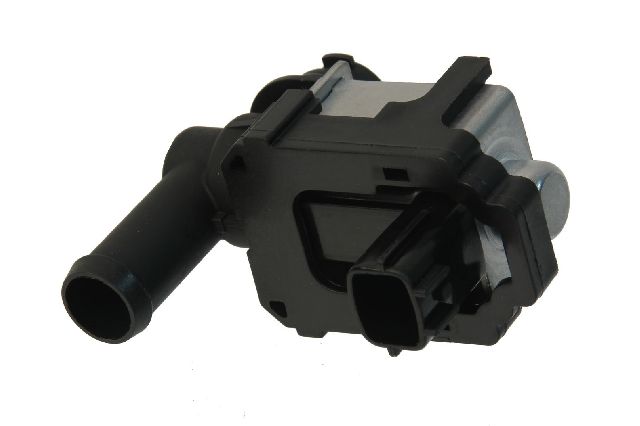
- EVAP Vent Control Valve
(OEM #14935-JF00E)— This is the most common failure point for P0456 on this vehicle, as identified in multiple Infiniti TSBs. The integrated O-ring fails, causing a small leak. Per TSB ITB17-042D, the entire valve must now be replaced.
Trusted brands: Genuine Infiniti/Nissan, Dorman
OEM price range: $80-$120
Aftermarket price range: $70-$100 - Fuel Cap
(OEM #17251-1LA0A (verify by VIN))— A worn or improperly tightened gas cap is a common cause for any EVAP code and is an inexpensive first step in diagnosis.
Trusted brands: Genuine Infiniti, Stant
OEM price range: $30-$45
Aftermarket price range: $15-$25 - EVAP Canister Purge Valve — Though less common for a small leak, this valve can fail and is another potential cause if the gas cap and vent valve are confirmed to be good.
Trusted brands: Bosch, Hitachi, Duralast
OEM price range: $150-$210
Aftermarket price range: $65-$130
Related Codes That Often Appear With This One
- P0442 — This code indicates a medium-sized EVAP leak. If the small leak from P0456 worsens over time (e.g., a crack in a hose grows), it may eventually trigger P0442.
- P0455 — This code indicates a large EVAP leak. It can occur if a component fails completely, such as a hose disconnecting or the vent valve sticking wide open.
Technical Service Bulletins (TSBs) & Recalls
- ITB17-042E: "DTC P0456 CAUSED BY EVAP LEAK AT VENT CONTROL VALVE O-RING"
- ITB17-042D: "INFINITI; DTC P0456 CAUSED BY EVAP LEAK AT VENT CONTROL VALVE O-RING"
- ITB17-042B: "INFINITI; DTC P0456 CAUSED BY EVAP LEAK AT VENT CONTROL VALVE O-RING"
- ITB13-044J: "EVAP LEAK DTC P0442, P0455, P0456 INFORMATION"
Platform-Specific Known Issues
- Infiniti Technical Service Bulletin ITB17-042E explicitly states that for a P0456 code not caused by a loose fuel cap, the cause is likely an EVAP leak at the vent control valve O-ring.
- An earlier version of the TSB, ITB17-042b, instructed technicians to replace only the O-ring. However, a later revision, ITB17-042D, updated the procedure to replace the entire vent control valve assembly, noting the O-ring was no longer available as a separate service part. This is a critical detail for DIY repair.
- Forum user reports on MyG37.com for the similar G37 model suggest that in salt-belt regions, it's worth inspecting the fuel vent return line that runs along the frame near the filler neck, as it can rust at a holding bracket and cause a small leak that is difficult to find.
Mechanic-Grade Diagnostic Values
- EVAP Canister Purge Volume Control Solenoid Valve Coil Resistance — expected: Approximately 30-36 Ohms at room temperature (55-70°F).. Failure: An open circuit (infinite resistance) or a very high reading indicates a failed coil.
- EVAP Canister Purge Volume Control Solenoid Valve Power Supply — expected: Battery voltage (~12V) at the harness connector with the key on, engine off.. Failure: No voltage suggests a wiring issue, blown fuse, or problem with the IPDM E/R (Intelligent Power Distribution Module Engine Room).
Scan Tool Commands That Help
- Infiniti CONSULT-III plus: WORK SUPPORT >> EVAP SYSTEM CLOSE — This function is used to command the EVAP system sealed for leak testing, either with the CONSULT's internal pressure sensor or in conjunction with an external smoke machine.
- Infiniti CONSULT-III plus: Active Test >> Close Vent Control Valve — This command manually closes the EVAP vent control valve to seal the system for a pressure test, allowing a technician to monitor pressure decay over time to confirm a leak.
Wiring & Ground Locations
- EVAP Canister Vent Control Valve — Under the rear of the vehicle, mounted on the EVAP charcoal canister.. This is the location of the most common leak source (the O-ring) and where to test the valve's electrical connector for power and ground.
- EVAP Canister Purge Volume Control Valve — In the engine bay, typically on or near the intake manifold.. This is a potential, though less common, leak source. Its connector can be tested for resistance and voltage.
- Ground Points (General) — Multiple grounding points are located on the driver's side of the engine bay.. Poor grounds can cause erratic behavior or failure of electrical components like the purge and vent valves. Cleaning these points can resolve intermittent electrical issues.
- IPDM E/R (Intelligent Power Distribution Module Engine Room) — Located in the right rear of the engine compartment.. This module contains fuses and relays that supply power to the EVAP system components. A fault here could cut power to a valve, causing a code.
Real Owner Repair Stories
- MyG37.com user 'donnielegault' (2012 Infiniti G37x (same platform/engine), 83,500 miles) — Persistent P0456 code, loss of 'hiss' sound when opening gas cap.
❌ Tried (didn't work) Replaced gas cap with OEM part, Replaced the EVAP canister (likely meant the vent control valve on the canister)
✅ What actually fixed it Found the fuel vent return line had rusted out at a holding bracket near the filler neck, causing the small leak. The user noted the part was discontinued and had to be repaired with a generic fuel line. - MyG37.com user 'josefah' (2011 Infiniti G37 Journey Sedan (same platform/engine)) — P0456 code after a smoke test indicated the EVAP canister had "lost suction".
❌ Tried (didn't work) Replaced gas cap
✅ What actually fixed it Upon inspecting the EVAP canister, the user found a hose was missing a clamp. Installing a new clamp on the hose fixed the leak, and the code did not return for over 8 years and 100k miles.
When the Usual Fixes Don't Work
- While the Infiniti TSBs are highly authoritative and point directly to the vent control valve O-ring, real-world owner reports show that this is not the only cause. In salt-belt regions, a rusted-through fuel vent line near the filler neck has been the confirmed cause after the more common parts (gas cap, vent valve) were already replaced. This highlights the importance of a comprehensive smoke test rather than immediately replacing the part mentioned in the TSB.
OEM Part Supersession History
14935-JF00A, 14935-JF00B, 14935-JF00C, 14935-JF00D→14935-JF00E, and later 14935-JF02C— Standard part evolution and updates by the manufacturer. The core issue addressed by the TSBs (the failing O-ring) led to the recommendation to replace the entire valve assembly.O-ring only (Part # not specified in TSBs)→Full Vent Control Valve Assembly— According to TSB ITB17-042D, the vent control valve O-ring is no longer available as a separate service part, mandating the replacement of the entire valve.
Heads up: Technicians can no longer order just the O-ring from Infiniti to perform the repair as described in older versions of the service bulletin.
Helpful Videos
Used OEM Parts in Stock

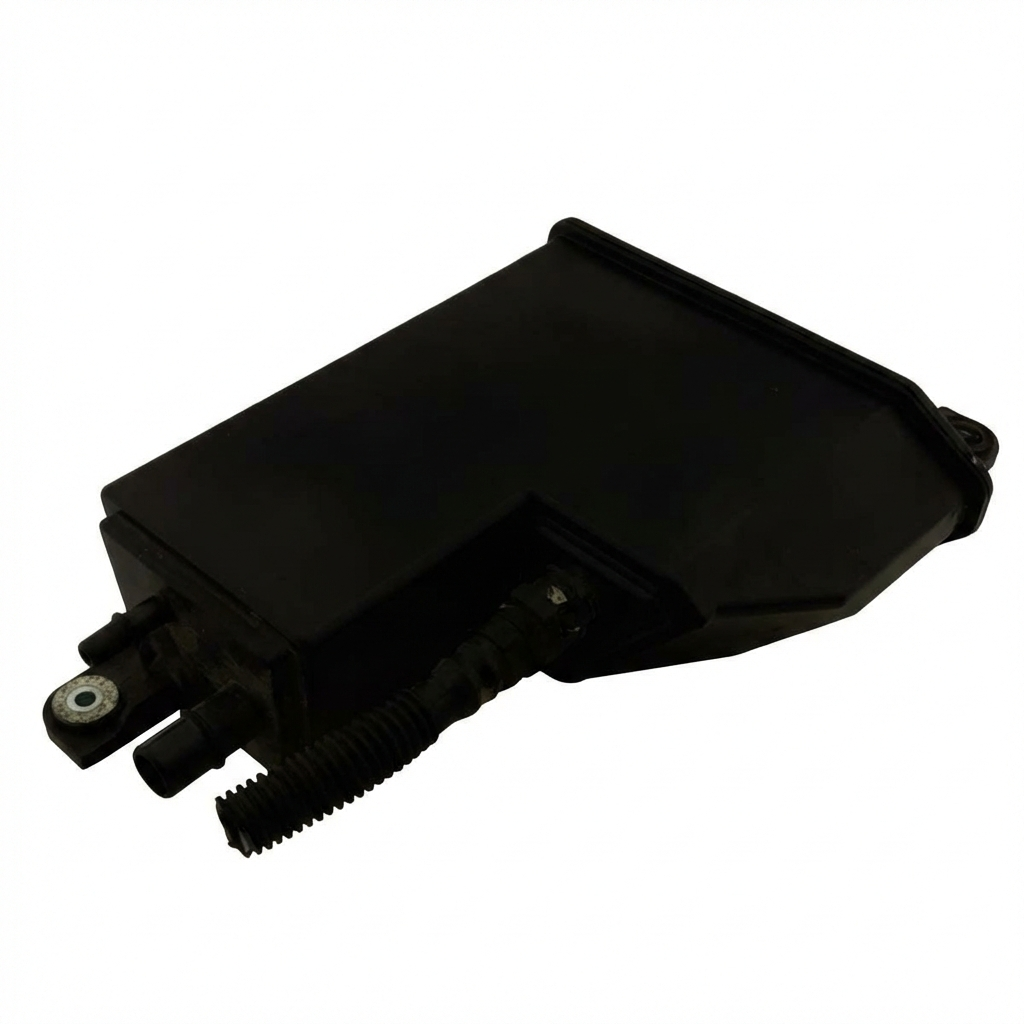
New Aftermarket Parts Available


The information in this article is provided for general reference and educational purposes only. Vehicle specifications, procedures, and part compatibility can vary by production date, trim level, and region. Always consult your vehicle's factory service manual and verify part numbers before purchasing or performing repairs. Safety-critical components such as airbags, seat belts, and braking systems should be installed by a qualified professional.
- Infiniti M37:
- 🧭 Diagnostic Flowchart
- 🎬 Helpful Videos
- 🛍️ Shop This Part
- What's Unique About the 2011-2013 Infiniti M37
- Symptoms You May Notice
- Most Likely Causes
- Rare But Worth Checking
- Diagnosis Steps
- Parts You'll Likely Need
- Related Codes That Often Appear With This One
- Technical Service Bulletins (TSBs) & Recalls
- Platform-Specific Known Issues
- Mechanic-Grade Diagnostic Values
- Scan Tool Commands That Help
- Wiring & Ground Locations
- Real Owner Repair Stories
- When the Usual Fixes Don't Work
- OEM Part Supersession History
- 🎟️ Get 5% Off