

P0456 on 2020-2023 Jeep Gladiator: EVAP Small Leak Causes and Fixes
P0456 on a Jeep Gladiator indicates a small leak in the evaporative emissions (EVAP) system. The most common and cheapest fix is to inspect, clean, and tighten the gas cap. If that doesn't work, the next likely culprits are a faulty EVAP purge valve or a cracked hose. In some cases, a simple software update or even a failing battery can be the root cause.
- P0456 means your Gladiator has a small emissions system leak. It's not dangerous and won't affect driving.
- Always check the gas cap first. Make sure it's tight and the seal is intact. This is the most common and cheapest fix.
- If the gas cap isn't the issue, the next most likely culprits are the EVAP purge valve in the engine bay or a cracked EVAP hose.
- A smoke test is the most reliable way to find the exact source of the leak if it's not obvious.
- Don't immediately replace expensive parts like the charcoal canister; the problem is usually a much simpler component.
What's Unique About the 2020-2023 Jeep GLADIATOR
The Jeep Gladiator (JT), sharing its platform with the Wrangler (JL), has a sensitive EVAP system. Forum discussions and technical service bulletins reveal that while the common causes apply, these vehicles can be prone to setting this code from minor issues. Due to its off-road nature, the underbody-mounted charcoal canister and its associated hoses are more susceptible to damage from rocks or debris, which can cause hard-to-find leaks. Manufacturer TSBs for the Gladiator repeatedly recommend a specific dealer-level diagnostic, the "wiTECH Small Leak Verification Test (SLVT)," suggesting a known pattern of issues that dealers are equipped to pinpoint accurately. TSB #18-048-23 explicitly states this test is mandatory for diagnosing P0456 and is the only way to confirm a fix in a single visit.
Diagnostic Flowchart
Tap your situation to follow the diagnostic path that matches what you're seeing on this vehicle.
Symptoms You May Notice
- Check Engine Light is on
- A faint fuel smell, particularly after parking in an enclosed space like a garage
- Slight decrease in fuel economy (rarely noticeable)
- Difficulty refueling (gas pump clicks off repeatedly) if the vent system is clogged.
- Hard starting immediately after refueling (rare).
- Replacing the charcoal canister when only a hose or valve is leaking.
- Replacing the fuel tank pressure sensor, which is less likely to cause a leak code than a mechanical failure like a bad valve or hose.
- Repeatedly replacing the gas cap with aftermarket versions instead of an OEM part, which often fails to seal correctly.
Most Likely Causes
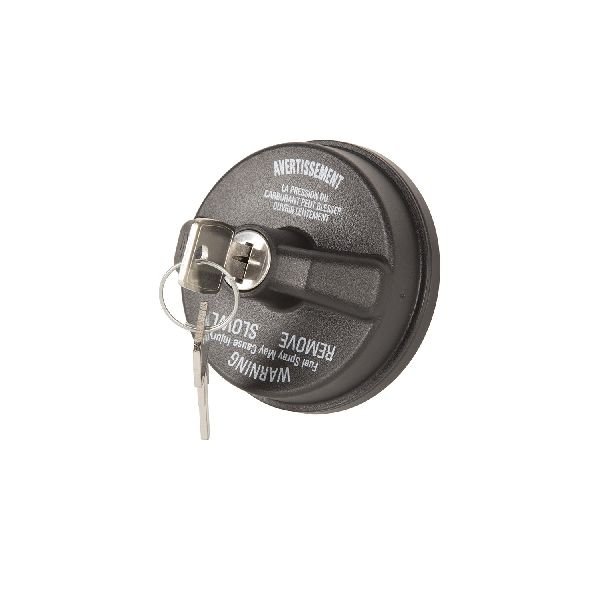
- Loose or Faulty Gas Cap 🔴 High Probability → Shop Fuel Tank Cap This is the most common cause for a P0456 code on any vehicle. The seal on the cap can wear out, or it may simply not have been tightened correctly. Forum users frequently report that even if the cap seems tight, the seal may be faulty. Aftermarket gas caps are a notorious source of this code as their seals may not match the OEM design.
How to confirm: Inspect the gas cap for any cracks in the plastic or damage to the rubber O-ring seal. Clean the sealing surface on both the cap and the fuel filler neck, as grit can prevent a proper seal. Ensure it is tightened until it clicks at least three times. The code may take a few drive cycles to clear after fixing.
Typical fix: Tighten the cap and clear the code. If it returns, replace the gas cap with a high-quality OEM Mopar part. One owner on a Jeep Gladiator forum noted the code appeared every time after filling up, and the dealer repeatedly blamed the gas cap.
Est. part cost: $25-$45 - Faulty EVAP Purge Valve/Solenoid 🟡 Medium Probability → Shop Vapor Canister The purge valve is an electromechanical part that cycles frequently and can get stuck partially open, creating a small leak. This is a common failure point mentioned by Gladiator and Wrangler owners, sometimes at very low mileage.
How to confirm: The valve is located in the engine bay on the passenger side of the intake manifold. It should be normally closed. You can test it by removing it and trying to blow through it; if air passes, it's faulty. A loud ticking noise from the valve can also indicate a problem.
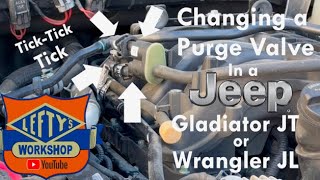
Typical fix: Replacement of the purge valve. This is a relatively simple DIY job. 🎬 Watch: Step-by-step guide to replacing your Gladiator's purge valve. A user on a Jeep forum had this part replaced under warranty to solve the code.
Est. part cost: $40-$70 - Cracked or Disconnected EVAP Hoses 🟡 Medium Probability The plastic and rubber hoses in the EVAP system can become brittle or get damaged, especially from off-roading. A small, hard-to-see crack in a hose is a very common cause.
How to confirm: Visually inspect all accessible EVAP lines, from the engine bay to the charcoal canister near the fuel tank. A smoke test is the most effective way to find a hard-to-see leak. One owner on YouTube found a pinhole leak in the canister itself, caused by kicked-up rocks, which was only visible during a smoke test.
Typical fix: Replace the damaged section of hose or the affected component (like the charcoal canister). In some cases, a simple patch with JB Weld on a canister can work for a small hole.
Est. part cost: $20-$100 - Faulty EVAP System Integrity Module (ESIM) ⚪ Low Probability → Shop Vapor Canister On many Chrysler/Jeep products, the leak detection module (ESIM) is a known failure point that can trigger P0456. It's the component that performs the pressure test and is mounted directly to the charcoal canister.
How to confirm: This component is difficult to diagnose without specific scan tools that can actuate the EVAP system test. It is often replaced after the gas cap and purge valve have been ruled out. One Wrangler owner replaced it as part of a lengthy troubleshooting process.
Typical fix: Replace the ESIM. It is located on the vapor canister underneath the vehicle.
Est. part cost: $50-$120
Rare But Worth Checking
- Cracked Charcoal Canister: → Shop Vapor Canister While the canister itself rarely fails internally, it can be damaged by road debris or during off-roading, causing a leak. A detailed YouTube video on a Wrangler JL showed a pinhole leak in the canister from a kicked-up stone, found only with a smoke machine. A visual inspection is worthwhile if you've recently been off-road.
- Leaking Fuel Filler Neck: → Shop Fuel Filler Neck Rust or damage to the metal tube leading to the gas tank can cause a leak. This is less common on newer vehicles like the Gladiator but is still possible. The sealing surface where the gas cap sits can become corroded or dirty, preventing a good seal.
- Low Battery Voltage: → Shop Vehicle Battery In a well-documented case on a 2019 Wrangler JL, a persistent P0456 code that survived replacing the gas cap, purge valve, and ESIM was ultimately resolved by replacing the aging main and auxiliary batteries. The theory is that low voltage caused a sensor in the EVAP system to malfunction and give a false positive reading. While some forum members dispute that a battery can directly cause an EVAP leak code, others have reported similar experiences where electrical issues trigger unrelated fault codes.
Diagnosis Steps
- Check the Gas Cap: Remove, inspect the seal for cracks or wear, and clean the filler neck sealing surface with a cloth. Reinstall the OEM cap, ensuring it clicks several times. Clear the code. It may take several drive cycles for the light to turn off if the issue is resolved.
- Visual Inspection: Carefully inspect all visible EVAP hoses and lines in the engine bay (passenger side) and around the fuel tank/charcoal canister area for obvious cracks, damage, or loose connections.
- Inspect Purge Valve: Locate the purge valve on the engine's intake manifold. Listen for a loud ticking. With the engine off, disconnect it and test if it's sealed by trying to blow through it. If air passes, it has failed.
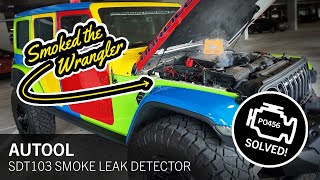
- Perform a Smoke Test: This is the definitive method for finding small leaks and is what the dealer's 'SLVT' test accomplishes. A smoke machine forces low-pressure smoke into the EVAP system through a service port. The leak will be revealed by the escaping smoke. 🎬 See how a smoke test pinpoints these tiny EVAP leaks. This can pinpoint tiny cracks in hoses or the charcoal canister that are otherwise invisible.
- Check Battery Health: If the vehicle is over 4-5 years old and other fixes fail, test the main and auxiliary batteries. 🎬 Watch: How replacing old batteries fixed one owner's persistent code. A Wrangler owner found that low voltage from old batteries was the ultimate cause of a persistent P0456 code.
- Advanced Diagnostics: If no leak is found, the issue could be with the vent valve, the ESIM/leak detection pump, or a software issue, which may require a dealer visit for a wiTECH scan and potential PCM flash per TSBs.
Parts You'll Likely Need
- Gas Cap
(OEM #68339342AC (replaces 68339342AB/AA for 3.6L Gas))— This is the most frequent cause of P0456 due to a worn seal or improper tightening. It's the cheapest and easiest part to replace first. Using an OEM part is highly recommended.
Trusted brands: Mopar
OEM price range: $30-$45
Aftermarket price range: $15-$25 - EVAP Purge Valve / Solenoid
(OEM #04627694AB)— This valve is in constant use and is a common failure point that gets stuck open, causing a small, persistent leak.
Trusted brands: Mopar, Dorman
OEM price range: $45-$70
Aftermarket price range: $25-$50 - EVAP System Integrity Module (ESIM)
(OEM #04861962AD)— This is the leak detection device itself. On Jeep platforms, it can fail and incorrectly report a leak or be the source of the leak. It is often the next part replaced after the cap and purge valve.
Trusted brands: Mopar
OEM price range: $50-$120
Aftermarket price range: $30-$60
Related Codes That Often Appear With This One
- P0455 — A P0455 (EVAP System Large Leak) code may appear alongside P0456 if the system has multiple leaks or if a small leak worsens over time. One owner reported a P0455 appearing with P0456 after months of troubleshooting, which was ultimately traced to a pinhole in the charcoal canister.
- P0457 — This code specifically means 'Leak Detected - Fuel Cap Loose/Off'. If you see this with P0456, the gas cap is almost certainly the culprit.
Technical Service Bulletins (TSBs) & Recalls
- Bulletin #18-048-23: wiTECH Small Leak Verification Test (SLVT) - P0456-EVAP SYSTEM SMALL LEAK. States the SLVT is mandatory for diagnosis and is the only way to confirm a fix in one visit.
- Bulletin #18-048-22: Flash: Powertrain Control Module (PCM) Updates. Lists P0456 as a potential code and instructs technicians to use the wiTECH SLVT to verify a leak if the code is present.
- Bulletin #1400522REVB: Lists P0456 with other EVAP leak codes (P0455, P04EC, P04EE).
- Bulletin #1802421: Mentions P0456 and advises using the wiTECH SLVT if present.
- Bulletin #18-053-20 REV. B: Mentions P0456 and advises using the wiTECH SLVT if present.
Platform-Specific Known Issues
- Multiple Technical Service Bulletins (TSBs) exist for the 2020-2023 Gladiator that mention P0456. TSB 18-048-23 makes it clear that the dealer's 'wiTECH Small Leak Verification Test (SLVT)' is a mandatory step in the diagnostic process and the only way to confirm a repair without waiting for multiple drive cycles.
- A Reddit thread with a Chrysler technician confirms P0456 is 'incredibly common' and can be a pain to track down due to system complexity and potential software glitches.
- Forum discussions on JeepGladiatorForum.com show owners receiving the code at very low mileage (as low as 130 miles and 1,400 miles), sometimes on brand new vehicles, suggesting potential manufacturing or assembly sensitivities.
Mechanic-Grade Diagnostic Values
- EVAP Purge Solenoid Coil Resistance — expected: Approximately 20-30 Ohms for a similar 3.6L Pentastar application.. Failure: A reading of infinite resistance (open circuit) or zero resistance (short circuit) indicates a failed solenoid coil.
Scan Tool Commands That Help
- wiTECH (Dealer-level Scan Tool): Small Leak Verification Test (SLVT) — This is a mandatory first step in diagnosing P0456 according to multiple Technical Service Bulletins. It must be run to verify a leak is present before replacing parts and must be run again after the repair to confirm the fix. A standard road test will not confirm the repair, as the monitor only runs after multiple specific drive cycles.
Wiring & Ground Locations
- Engine Bay Grounds — Next to the battery, against the top of the passenger side fender, there is a ground bridge with multiple ground studs.. The EVAP Purge Solenoid and other engine bay components of the EVAP system rely on a solid ground connection. A poor ground here could cause erratic behavior of the solenoid.
- Frame Grounds — On the frame rails above the spare tire, there are ground points on each side.. The charcoal canister, ESIM, and vent solenoid are located near the rear of the vehicle and may use these frame grounds. Corrosion or looseness at these points can cause intermittent failures of the leak detection system.
- Passenger Kick Panel Grounds — There are three ground points located in the passenger kick panel area.. Interior wiring related to the Powertrain Control Module (PCM) may use these grounds. While less likely to be the cause, a fault here could impact the PCM's ability to correctly interpret sensor data from the EVAP system.
Real Owner Repair Stories
- YouTube channel 'EvolvedJeepin' (2019 Jeep Wrangler JL Rubicon (platform-mate to the Gladiator)) — Persistent P0456 check engine light for over 6 months.
❌ Tried (didn't work) Replaced EVAP Purge Valve, Replaced ESIM module, Replaced Gas Cap
✅ What actually fixed it Replacing both the main and auxiliary batteries. The theory presented is that low voltage from the aging (4-5 year old) batteries caused a sensor in the EVAP system to give a false positive reading for a leak. - YouTube channel 'EvolvedJeepin' (follow-up video) (2019 Jeep Wrangler JL Rubicon) — The P0456 code returned, later joined by a P0455 (large leak) code.
❌ Tried (didn't work) Replaced Purge Valve, Replaced ESIM, Replaced Gas Cap, Replaced both batteries
✅ What actually fixed it A smoke test revealed a tiny, otherwise invisible pinhole leak on the charcoal canister itself, likely caused by a kicked-up rock. The owner patched the pinhole with JB Weld to solve the leak. - JeepGladiatorForum.com user (2023 Jeep Gladiator Willys with 130 miles) — P0456 check engine light on a brand new vehicle.
❌ Tried (didn't work) Tightening the gas cap.
✅ What actually fixed it The owner purchased a basic OBD-II reader and cleared the code. The light did not immediately return. This suggests the issue could have been a one-time event or a very intermittent fault, common on these sensitive systems.
"I Checked Everything" — The Actual Cause
- In a well-documented case on a platform-sharing 2019 Jeep Wrangler JL, a persistent P0456 code could not be solved by replacing the purge valve, ESIM, or gas cap. The owner did not perform a smoke test but instead replaced the main and auxiliary batteries, which resolved the code for a time, suggesting an electrical cause rather than a physical leak.
When the Usual Fixes Don't Work
- While the most common advice is to check for physical leaks, there are notable owner experiences where the root cause was purely electrical. In one case involving a Wrangler JL, after replacing nearly every component of the EVAP system (purge valve, ESIM, gas cap), the final solution was replacing the vehicle's aging main and auxiliary batteries. The P0456 code disappeared after the battery replacement, suggesting that low system voltage was causing a sensor to report a false leak. This highlights that if a smoke test comes back clean and common parts have been replaced, investigating the vehicle's overall electrical health is a valid next step.
OEM Part Supersession History
68339342AA, 68339342AB→68339342AC— Standard part revision and improvement by the manufacturer.4627694AA→04627694AB— Standard part revision for the EVAP Purge Valve.4861962AA, 4861962AB, 4861962AC→04861962AD— Multiple revisions of the EVAP System Integrity Module (ESIM), indicating ongoing design improvements to a common failure point.
Helpful Videos
Used OEM Parts in Stock
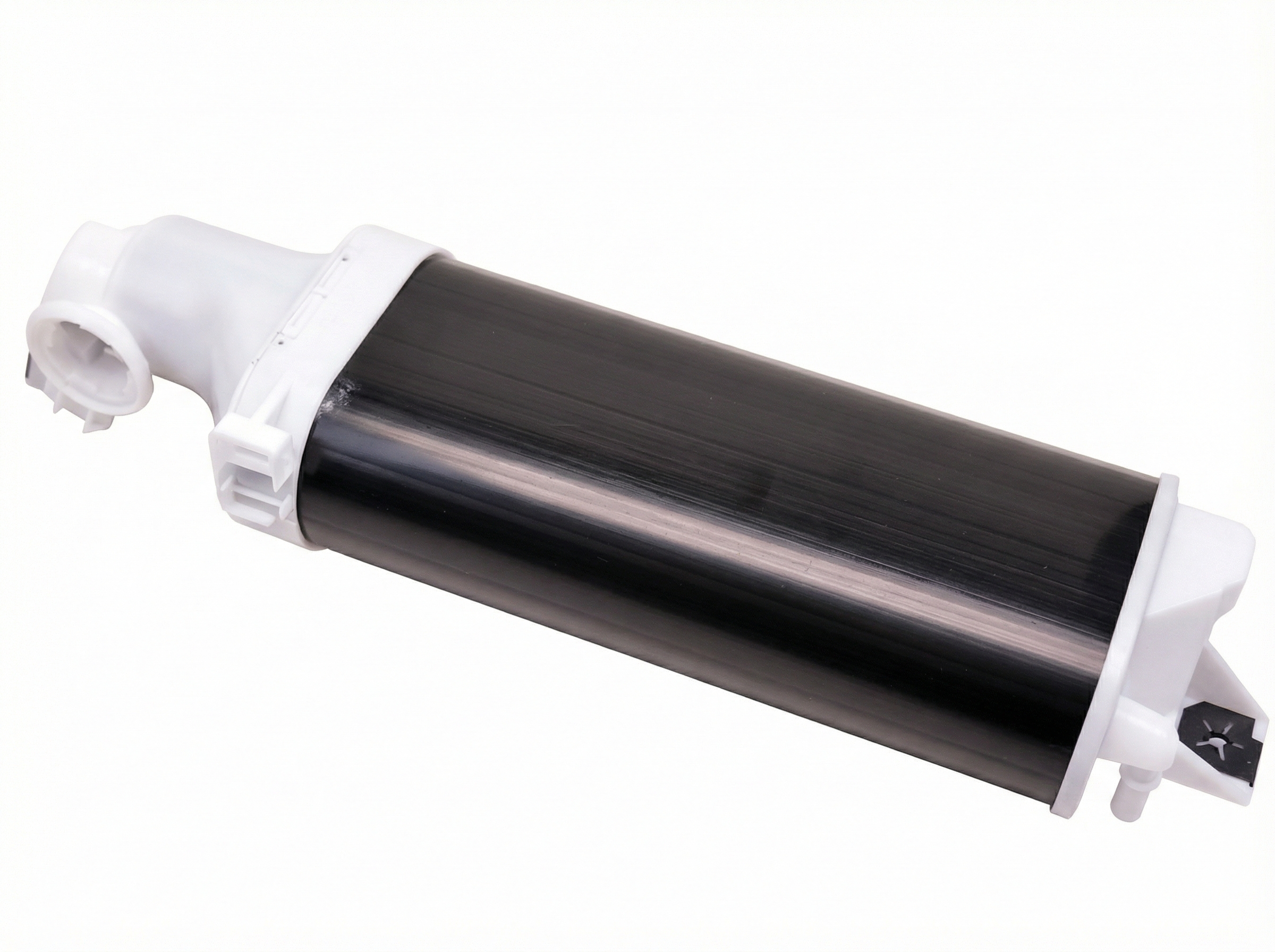
New Aftermarket Parts Available

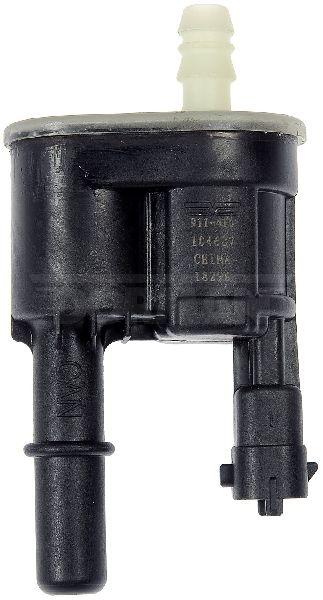

The information in this article is provided for general reference and educational purposes only. Vehicle specifications, procedures, and part compatibility can vary by production date, trim level, and region. Always consult your vehicle's factory service manual and verify part numbers before purchasing or performing repairs. Safety-critical components such as airbags, seat belts, and braking systems should be installed by a qualified professional.
- Jeep GLADIATOR:
- 🧭 Diagnostic Flowchart
- 🎬 Helpful Videos
- 🛍️ Shop This Part
- What's Unique About the 2020-2023 Jeep GLADIATOR
- Symptoms You May Notice
- Most Likely Causes
- Rare But Worth Checking
- Diagnosis Steps
- Parts You'll Likely Need
- Related Codes That Often Appear With This One
- Technical Service Bulletins (TSBs) & Recalls
- Platform-Specific Known Issues
- Mechanic-Grade Diagnostic Values
- Scan Tool Commands That Help
- Wiring & Ground Locations
- Real Owner Repair Stories
- "I Checked Everything" — The Actual Cause
- When the Usual Fixes Don't Work
- OEM Part Supersession History
- 🎟️ Get 5% Off