

P0456 on 2018-2023 Kia Stinger: Causes and Fixes for a Very Small EVAP Leak
For a 2018-2023 Kia Stinger, a P0456 code is most often caused by a loose or faulty gas cap. If tightening or replacing the cap doesn't work, the next most likely culprits are the canister purge valve (PCSV) or the canister close valve (CCV). A new OEM gas cap is about $25-$40, while valves can range from $50 to $120. A smoke test is the most reliable way to find the leak if the gas cap isn't the issue.
- Always check the gas cap first for a P0456 code. Ensure it's tight and the seal is in good condition.
- If the gas cap isn't the issue, the most likely culprits are the canister purge valve (in the engine bay) or the canister close valve (at the rear of the car).
- A professional smoke test is the most effective way to find the exact source of a small leak, preventing the unnecessary replacement of parts.
- While you can drive the car with this code, you will not pass an emissions test until the leak is repaired.
- In rare cases where no leak can be found, the Fuel Tank Pressure Sensor (FTPS) may be faulty.
What's Unique About the 2018-2023 Kia Stinger
While P0456 is a generic code, owner experiences with the Kia Stinger suggest it can be a persistent issue. Unlike some other Kia models where specific TSBs point to a single common failure part, the Stinger seems to follow a more traditional diagnostic path starting with the gas cap and moving to various valves and hoses. Some owners have reported recurring issues even after parts like the purge valve were replaced, indicating that a thorough diagnosis, often with a smoke machine, is crucial to pinpoint the exact leak source. In some cases where no leak is found, a faulty Fuel Tank Pressure Sensor (FTPS) has been the culprit.
Symptoms You May Notice
- Check Engine Light is on
- A faint fuel smell, particularly around the rear of the car or near the gas cap
- Disabled Idle Stop/Go (ISG) functionality
- Slightly reduced fuel economy over time
- Replacing the charcoal canister when only a valve is bad. The canister itself is often just a passive component; the valves attached to it are more likely to fail.
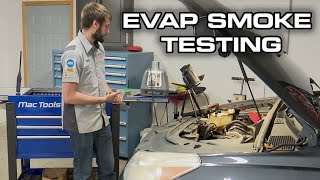
- Replacing multiple parts without performing a smoke test. A smoke test is the most efficient way to pinpoint the exact location of a small leak, saving time and money on unnecessary parts. 🎬 See how to perform a smoke test to find leaks
- Repeatedly replacing the purge valve when the leak is elsewhere. As owner experiences show, even if a purge valve seems faulty, the root cause could be another component.
Most Likely Causes
- Loose or Faulty Gas Cap 🔴 High Probability → Shop Fuel Tank Cap This is the most common cause for a P0456 on almost any vehicle, including the Stinger. The rubber O-ring on the cap can dry out, crack, get dirty, or simply not be tightened enough, preventing a proper seal.
How to confirm: First, ensure the gas cap is tightened until it clicks at least once. Remove the cap and inspect the rubber seal for any cracks, stiffness, or debris. Clean the seal and the filler neck sealing surfaces. Some owners have reported temporary success by applying Vaseline to the O-ring to improve the seal.
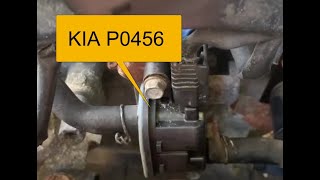
Typical fix: Clean the cap and filler neck sealing surfaces. If the seal is damaged or the cap is old, replace it with a new OEM part for the best seal. 🎬 Watch: Step-by-step guide to fixing a Kia P0456 code Aftermarket caps are sometimes known to cause sealing issues.
Est. part cost: $25-$40 - Faulty Canister Purge Valve (PCSV) 🟡 Medium Probability → Shop Vapor Canister The purge valve, which controls the flow of fuel vapors from the charcoal canister to the engine, can get stuck slightly open or fail internally, creating a small leak path. One Stinger owner reported a dealer identified a faulty purge valve that would release pressure when tapped, but replacing it did not solve the recurring code, highlighting the difficulty in diagnosis.
How to confirm: The valve is normally closed. With the engine off, disconnect the vapor line and try to blow through it; no air should pass. A mechanic can also command it open and closed with a scan tool to check its function. Tapping on the valve while a vacuum is applied can also reveal intermittent failures.
Typical fix: Replacement of the purge valve solenoid. It is typically located in the engine bay and is a relatively simple replacement with two hoses and an electrical connector.
Est. part cost: $50-$90 - Faulty Canister Close Valve (CCV) / Vent Valve 🟡 Medium Probability → Shop Vapor Canister This valve, located near the charcoal canister at the rear of the car, seals the EVAP system for pressure testing. If it fails to close completely or has a weak seal, it will cause a leak code. It is a common failure point on many modern vehicles.
How to confirm: A scan tool can command the valve to close. A smoke test is the most effective way to confirm a leak at the CCV; smoke will be seen exiting the valve's vent port when it should be sealed.
Typical fix: Replace the canister close valve. It is usually mounted on or near the charcoal canister.
Est. part cost: $70-$120 - Cracked or Disconnected EVAP Hoses ⚪ Low Probability Rubber hoses can become brittle and develop hairline cracks over time due to heat and age. A very small crack in any of the vapor lines between the tank, canister, and engine can trigger this code.
How to confirm: A visual inspection may reveal obvious cracks, but a smoke test is the definitive method. Smoke is injected into the EVAP system, and any leaks will be visible as smoke escapes from the cracked hose or loose connection.
Typical fix: Replace the specific section of cracked or damaged hose. Small hose sections are inexpensive.
Est. part cost: $10-$50
Rare But Worth Checking
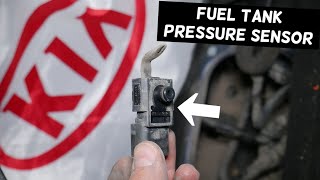
- Faulty Fuel Tank Pressure Sensor (FTPS): → Shop Fuel Tank When a smoke test reveals no external leaks, the FTPS itself can fail internally. A Reddit user with a Kia Carnival (which shares components with the Stinger) reported a persistent P0456 was resolved by replacing the FTPS after multiple failed smoke tests. The dealer found the sensor's internal check valve was bleeding off pressure. 🎬 Watch: How to locate and replace the fuel pressure sensor This is difficult to diagnose without a scan tool that can monitor live data or a technician familiar with this specific failure mode.
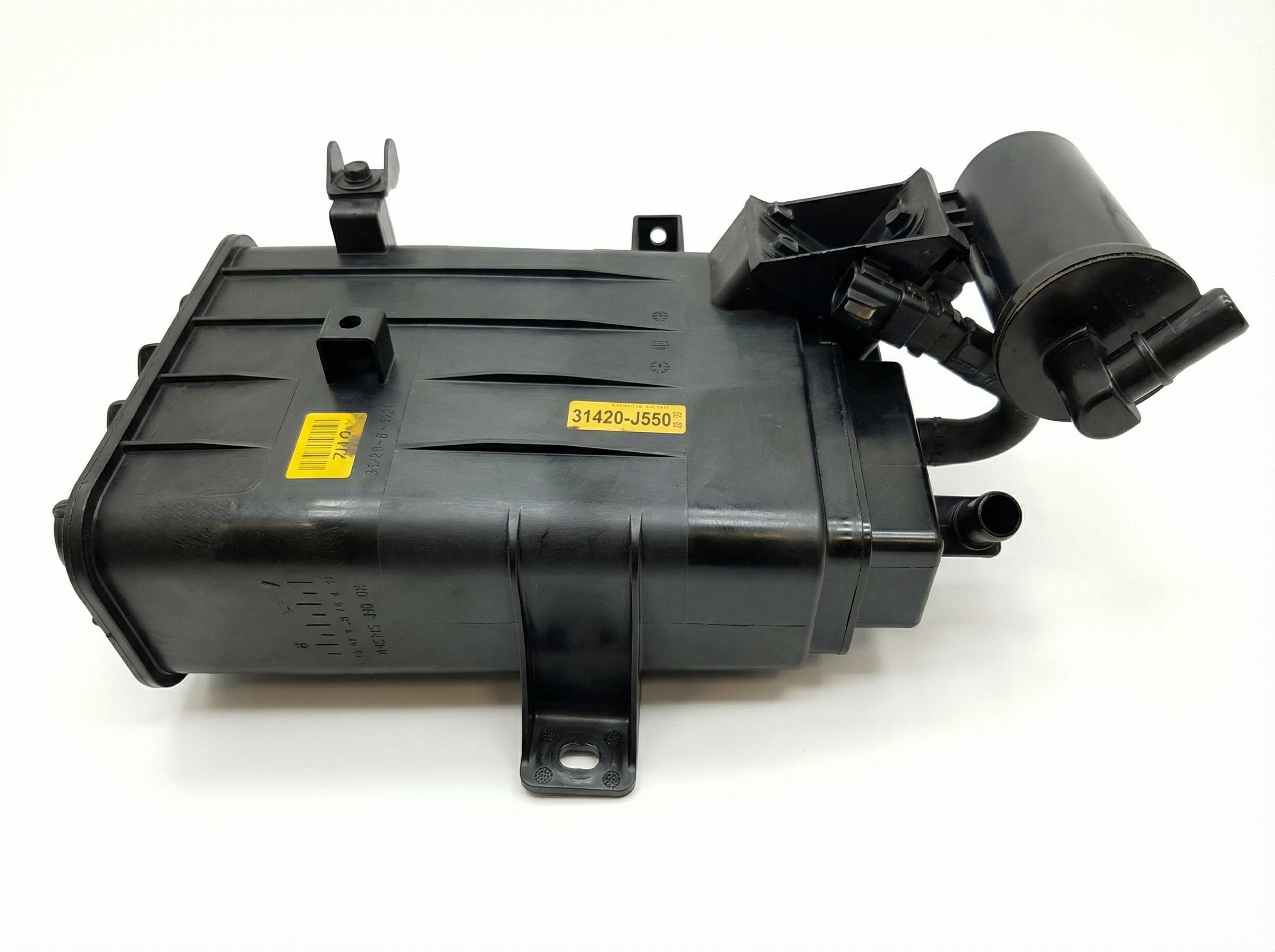
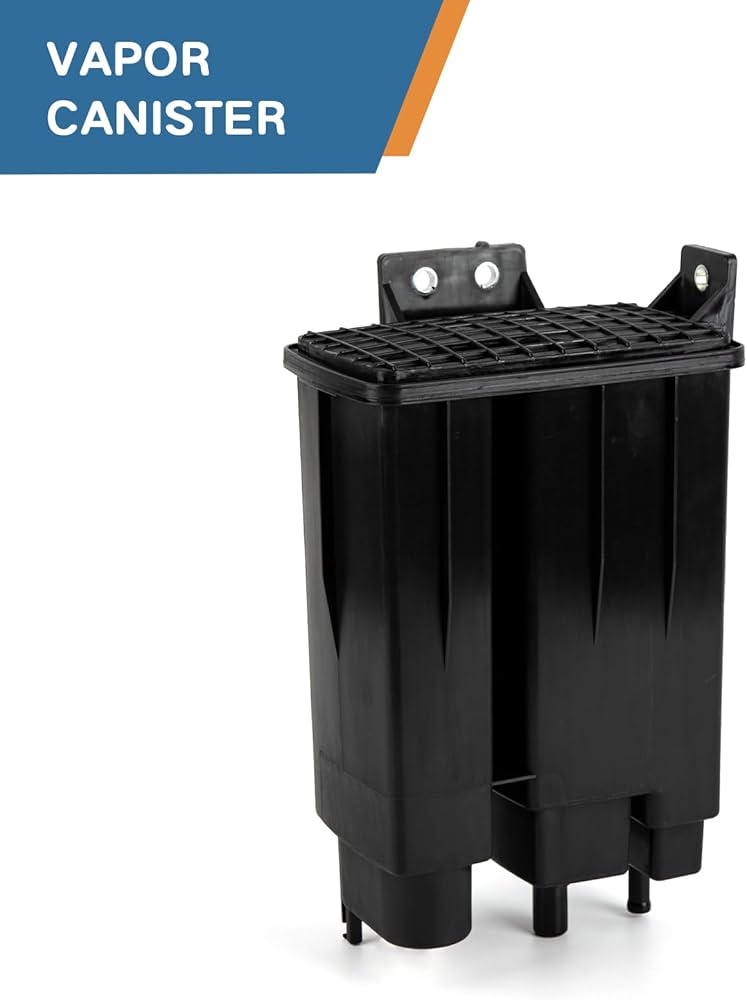
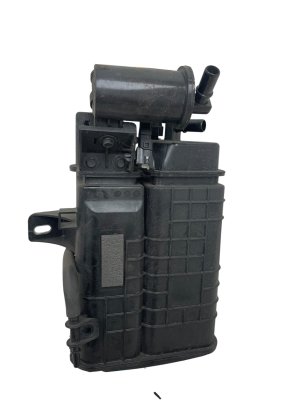
- Cracked Charcoal Canister: → Shop Vapor Canister The plastic housing of the charcoal canister can develop hairline cracks, causing a small leak. This is less common than valve failures but is a possibility, especially if the vehicle has sustained an impact from underneath.
- Leaking Fuel Filler Neck: → Shop Fuel Filler Neck Rust or damage to the fuel filler neck where the gas cap seals can create an imperfect surface, preventing a tight seal and causing a P0456 code. This can be difficult to spot and may not show up on a standard smoke test.
- Leaking Fuel Pump Seal: → Shop Fuel Pump The seal for the fuel pump assembly on top of the gas tank can degrade and cause a small vapor leak. This is an uncommon cause for P0456 but is a possibility. A smoke test should identify a leak in this area. Manufacturer service bulletin PS567_R2 notes that fuel pump seal damage can specifically cause DTC P0456.
Diagnosis Steps
- Read the code with an OBD-II scanner to confirm P0456 is the primary code present.
- Inspect the gas cap. Ensure it is tight (clicked at least once). Remove it and check the rubber seal for any cracks, dirt, or damage. Clean the seal and the filler neck.
- Clear the code using a scanner or by disconnecting the battery for 15 minutes. Drive the vehicle for a few days to see if the light returns. The EVAP monitor often runs after the vehicle has sat overnight with a specific fuel level (e.g., half a tank).
- If the light returns, perform a thorough visual inspection of all accessible EVAP hoses in the engine bay and under the vehicle for obvious cracks or loose connections.
- Locate the canister purge valve (PCSV) in the engine bay. With the engine off, disconnect the hoses and check if it's properly sealed (normally closed) by attempting to blow through it.
- If the above steps do not resolve the issue, the most reliable next step is to have a professional smoke test performed. This involves injecting pressurized smoke into the EVAP system to visually identify the source of the leak.
- Based on the smoke test results, replace the leaking component, which could be the canister close valve, a hose, the charcoal canister, or the gas cap seal.
- If a smoke test shows absolutely no leaks, the Fuel Tank Pressure Sensor (FTPS) should be investigated for an internal leak, as this specific failure mode will not be detected by a smoke test.
Parts You'll Likely Need
- Gas Cap
(OEM #31010-D3900)— This is the most frequent and easiest fix. The seal wears out over time, preventing the system from holding pressure.
Trusted brands: Kia (OEM)
OEM price range: $25-$40
Aftermarket price range: $15-$30 - Canister Purge Valve / Purge Control Solenoid Valve (PCSV)
(OEM #28910-3L000)— This valve can stick partially open, causing a persistent small leak. It's a common failure point for this code after the gas cap has been ruled out. This part number is listed for the 2018 Stinger 2.0L and also fits other Kia/Hyundai models.
Trusted brands: Kia (OEM), Dorman
OEM price range: $55-$80
Aftermarket price range: $30-$60 - Canister Close Valve (CCV)
(OEM #31430-B1500)— This valve is responsible for sealing the EVAP system for testing. If it fails to close completely, it will directly cause a leak code. This part fits 2018-2021 Stinger models with both 2.0L and 3.3L engines.
Trusted brands: Kia (OEM)
OEM price range: $80-$120
Aftermarket price range: $50-$90
Related Codes That Often Appear With This One
- P0455 (EVAP System Leak Detected - Large Leak): Can indicate a more severe version of the same root cause, like a very loose gas cap or a completely broken hose.
- P0441 (EVAP System Incorrect Purge Flow): Often points directly to a malfunctioning purge valve, a common cause of P0456.
Mechanic-Grade Diagnostic Values
- Fuel Tank Pressure Sensor (FTPS) Signal Voltage — expected: ~2.5V with Key On, Engine Off (KOEO) and gas cap removed (atmospheric pressure).. Failure: Voltage is stuck high (e.g., 5V), low (e.g., 0V), or does not change when pressure/vacuum is applied to the system.
- Fuel Tank Pressure Sensor (FTPS) 5V Reference — expected: ~5.0V at the sensor connector with Key On, Engine Off (KOEO).. Failure: No voltage or significantly lower voltage points to a wiring or PCM issue.
- Canister Purge Valve (PCSV) Coil Resistance — expected: General range is 15-30 Ohms. (Note: Not specific to Stinger, but a common range for this type of solenoid).. Failure: A reading far outside this range, or an open circuit (infinite resistance), indicates a failed coil.
Scan Tool Commands That Help
- Kia KDS / GDS (Dealer Scan Tool): Evap. Leakage Test — This is the manufacturer-specified automated procedure to run after initial checks (like the gas cap). It commands the EVAP valves to seal the system and performs an integrity test to verify if a leak is present before proceeding with a manual smoke test.
Wiring & Ground Locations
- EVAP System Components — The Canister Purge Valve (PCSV) is in the engine bay. The Charcoal Canister, Canister Close Valve (CCV), and Fuel Tank Pressure Sensor (FTPS) are located at the rear of the vehicle, near or on the fuel tank.. Knowing the physical location of components is essential for visual inspection of hoses and for testing individual parts like valves and sensors.
- Wiring Diagrams — Full system wiring diagrams, including ground distribution points, are available through paid technical information systems or by searching for 'Kia Stinger (CK) (year) Wiring Diagrams'.. A wiring diagram is crucial for diagnosing electrical faults, such as a loss of the 5V reference to the FTPS or a break in the signal wire to the PCSV or CCV, which can mimic a component failure.
"I Checked Everything" — The Actual Cause
- An internally failing Fuel Tank Pressure Sensor (FTPS) can have a faulty internal check valve that bleeds off pressure. The ECU interprets this as a system leak, but because the leak is internal to the sensor itself, no smoke will escape during a smoke test.
- A very small, hairline crack or pinhole in the fuel filler neck, often caused by repeated impacts from gas pump nozzles over years of use, can be the source of the leak. This type of leak can be difficult to detect with a smoke machine unless the technician specifically and thoroughly targets that area.
Technical Service Bulletins (TSBs) & Recalls
While the Stinger shares many components with other Kia models, several bulletins across the manufacturer's lineup highlight common P0456 failure modes and software fixes:
- ECM Logic Improvements: Kia has issued several bulletins, such as TSB Bulletin #TSB_ENG328 and TSB Bulletin #TSB_FUE057, which provide procedures to update the software logic of the Engine Control Module (ECM) to address MIL "ON" conditions specifically for DTC P0456.
- Vapor Leak Device (VLD): TSB Bulletin #TSB_FUE046 describes evaporative leak concerns with DTC P0456 that may require attention to the Vapor Leak Device (VLD) on related Kia fuel systems.
- Fuel Pump Seal: → Shop Fuel Pump As noted in TSB Bulletin #PS567_R2, damage to the fuel pump seal is a documented cause for DTC P0456 and P0442.
OEM Part Supersession History
31410-J5500 (Vapor Canister)→31410-J5550 (Vapor Canister)— Part design change corresponding with the 2022 model year facelift and introduction of the 2.5L engine.
Heads up: The 2018-2021 and 2022-2023 vapor canisters are NOT interchangeable. Installing the wrong one will cause EVAP system faults.31430-B1500 (Canister Close Valve)→31453-AA000 (Canister Close Valve)— Part change for 2022+ models.
Heads up: Part number 31430-B1500 is specified for 2018-2021 models. Part number 31453-AA000 is listed for 2023+ models, indicating they may not be interchangeable.28910-3L000 (Purge Control Valve)→28910-3L270 (Purge Control Valve)— Part variation, potentially specific to the 3.3L engine.
Heads up: While 28910-3L000 is widely listed, some sources specify 28910-3L270 for the 3.3L Stinger. It is critical to verify the correct part number for the specific vehicle's VIN to avoid fitment or function issues.
Model Year Variations Within This Range
- 2022-2023: The 2022 facelift introduced significant changes to the EVAP system. The vapor canister and canister close valve use different part numbers than the 2018-2021 models and are not backward compatible.
- 2018-2021 (2.0L Engine): Kia issued a Voluntary Emissions Service Campaign (SC279) for some of these models, which involved an ECM software update to improve emissions control logic. While not a direct fix for a leak, this update could affect how the EVAP system is monitored.
Diagnostic Flowchart
Other Known Issues on This Vehicle
Issues unrelated to this code that are worth knowing about as an owner of this generation:
- Left Turbocharger Oil Feed Pipe Leak (3.3T) 🔴 High — Common enough to trigger a recall (NHTSA ID 24V162000) for 2018-2023 models with the 3.3L engine. The pipe and hose assembly can deteriorate and leak oil onto hot engine components. (Ref: NHTSA RECALL 24V162000)
- High-Pressure Fuel Pump (HPFP) Failure 🔴 High → Shop Fuel Pump — A known issue across 2.0T and 3.3T engines, leading to recalls for stalling and loss of power. A recall (NHTSA ID 22V760000) addresses the fuel control valve plunger sticking inside the pump. (Ref: NHTSA RECALL 22V760000)
- Sunset Yellow Paint Chipping (2018) 🟡 Low — Specific to 2018 models with Sunset Yellow (S7Y) paint. A factory paint process error caused poor adhesion, leading to chipping. Kia issued a voluntary service campaign (SC166) to repaint affected vehicles. (Ref: Kia Service Campaign SC166)
- HECU (ABS Module) Fire Risk 🔴 High — A recall was issued for potential short circuits within the Hydraulic Electronic Control Unit (HECU), which could cause an engine compartment fire. This affected 2018-2021 Stinger models. (Ref: NHTSA RECALL 20V518000)
- Front Wiring Harness Damage (2018) 🔴 High — A recall for early 2018 models where the front wiring harness could contact a metal burr on the fender, potentially causing a short circuit and fire risk. (Ref: NHTSA RECALL 18V733000)
- Differential/Drivetrain Noise 🟡 Low — Some owners of both AWD and RWD models report humming, grinding, or clunking noises from the rear differential, especially during slow, tight turns. This is sometimes attributed to the OEM fluid lacking sufficient friction modifiers or normal LSD operation.
Used vs. New Parts: Buying Guide for This Vehicle
When a used part is the smart pick: Structural components like the charcoal canister housing or the fuel filler neck can be good candidates for used parts, provided they come from a low-mileage, accident-free donor vehicle. Visually inspect for any cracks or damage before purchasing.
Donor-vehicle mileage cap: roughly under 50000 miles for the part to have meaningful remaining life.
What to inspect on the donor part:
- Check for hairline cracks in any plastic housings, especially around hose connections.
- Ensure there is no significant rust or corrosion on metal components like the filler neck.
- Verify the part number on the donor part exactly matches the one being replaced, especially considering the 2022 model year changes.
OEM-only on this vehicle (don't cheap out):
- Gas Cap: Aftermarket gas caps are notoriously problematic and a frequent cause of P0456 codes. The cost savings are minimal compared to the diagnostic headache. Always use an OEM Kia cap.
- Fuel Tank Pressure Sensor (FTPS): As an electronic sensor critical for system monitoring, a new OEM part ensures accurate readings. The risk of getting a faulty or near-failure used sensor is high.
Brands owners have reported issues with on this vehicle:
- Generic/unbranded gas caps.
Real Owner Stories
Aggregated from forums and TSBs cited above. Mileages and costs reflect what owners reported in those sources.
2021 Kia Stinger GT1
Symptoms: Check engine light came on for the 4th time; the Idle Stop/Go (ISG) system was affected and stopped working.
What fixed it: The owner reported that even after the dealer replaced the purge valve, the code returned within 72 hours, highlighting that the purge valve is not always the definitive fix.
Source hint: r/kiastinger on Reddit thread titled 'Check engine light on for 4th time'
2018-2023 Kia (General Model)
Symptoms: Persistent P0456 code that passed a professional smoke test with no visible leaks.
What fixed it: Replacing the Fuel Tank Pressure Sensor (FTPS), part number 31435-2J000.
Source hint: r/kiacarnivals on Reddit thread titled 'P0456 code w/ check engine light'
2020 Kia Owner
Symptoms: The vehicle repeatedly entered limp mode. A dealership visit claimed the issue was an old P0456 code and that the car required a software update.
What fixed it: While the dealership suggested a software update, the owner reported the vehicle went back into limp mode the very next day, suggesting the P0456 may have been masking deeper issues. (NHTSA ODI #11681001)
Related OBD-II Codes
Frequently Asked Questions
Why is my Idle Stop/Go (ISG) system not working on my Kia Stinger along with the check engine light?
I have a 2021 Stinger GT1 and the dealer replaced the purge valve, but P0456 came back. What else could it be?
Is there a specific part number I should look for if my Stinger passes a smoke test but still shows P0456?
Can I use an aftermarket gas cap to fix the P0456 code on my Stinger?
Does the Genesis G70 share this EVAP leak issue with the Kia Stinger?
Helpful Videos
![[How-To] Kia Stinger GT V6 PCV Valve Replacement](https://img.youtube.com/vi/gBYHbwBy0i4/mqdefault.jpg)
Used OEM Parts in Stock
New Aftermarket Parts Available


The information in this article is provided for general reference and educational purposes only. Vehicle specifications, procedures, and part compatibility can vary by production date, trim level, and region. Always consult your vehicle's factory service manual and verify part numbers before purchasing or performing repairs. Safety-critical components such as airbags, seat belts, and braking systems should be installed by a qualified professional.
- Kia Stinger:
- 🧭 Diagnostic Flowchart
- 🎬 Helpful Videos
- 🛍️ Shop This Part
- What's Unique About the 2018-2023 Kia Stinger
- Symptoms You May Notice
- Most Likely Causes
- Rare But Worth Checking
- Diagnosis Steps
- Parts You'll Likely Need
- Related Codes That Often Appear With This One
- Mechanic-Grade Diagnostic Values
- Scan Tool Commands That Help
- Wiring & Ground Locations
- "I Checked Everything" — The Actual Cause
- Technical Service Bulletins (TSBs) & Recalls
- OEM Part Supersession History
- Model Year Variations Within This Range
- Other Known Issues on This Vehicle
- Used vs. New Parts: Buying Guide for This Vehicle
- Real Owner Stories
- 2021 Kia Stinger GT1
- 2018-2023 Kia (General Model)
- 2020 Kia Owner
- Related OBD-II Codes
- Frequently Asked Questions
- 🎟️ Get 5% Off