

P0456 on 2020-2022 Lincoln Aviator: EVAP Small Leak Causes and Fixes
On a 2020-2022 Lincoln Aviator, code P0456 often points to a wiring issue at connector C1198 or a faulty capless fuel filler neck, not just a bad part. Inspecting the wiring harness on the driver's side frame rail is a critical first step before replacing any components. This issue is also common on the Ford Explorer, which shares the same platform.
- Before buying any parts for a P0456 code on a 2020-2022 Aviator, inspect connector C1198 on the driver's side frame rail for corrosion.
- The second most likely cause is debris preventing the capless fuel filler neck from sealing properly. Clean it before further diagnosis.
- Do not automatically replace the purge valve; a TSB indicates it's often not the root cause on this vehicle.
- If the wiring and fuel filler neck are fine, a professional smoke test is the best way to find the tiny leak.
What's Unique About the 2020-2022 Lincoln AVIATOR
For the 2020-2022 Aviator and its Ford Explorer sibling, P0456 is frequently linked to specific manufacturing and design issues. Ford has issued technical service bulletins (TSBs), including the updated SSM 51247, that point directly to a wiring harness connector (C1198) on the driver's side frame as a common culprit for this and other EVAP codes. This connector's failure often causes an electrical fault that the PCM misinterprets as a physical leak, meaning a smoke test may pass with no leaks found. Another TSB warns that the canister purge valve is often replaced unnecessarily, as returned parts test fully functional. These platform-specific issues mean that unlike many other vehicles, the problem is often electrical or related to the capless fuel filler neck rather than a simple component failure.
Diagnostic Flowchart
Tap your situation to follow the diagnostic path that matches what you're seeing on this vehicle.
Symptoms You May Notice
- Check Engine Light is on
- A faint fuel smell (in rare cases)
- Remote start may not function
- Replacing the EVAP canister purge valve without first checking wiring or performing a smoke test. TSB SSM 50306 explicitly warns against this, as the issue is often elsewhere.
- Replacing EVAP components when the actual fault is electrical at connector C1198. A smoke test may show no leaks, yet the code persists because the Fuel Tank Pressure sensor is sending bad data due to the wiring issue.
Most Likely Causes
- Wiring Harness Issue at Connector C1198 🔴 High Probability TSBs SSM 50348 and the superseding SSM 51247 specifically identify this connector, located on the driver's side lower frame rail under the brake lines, as a weak point. Its location makes it vulnerable to moisture and corrosion, which disrupts the Voltage Reference (VREF) signals for multiple EVAP sensors that share wiring through this plug, tricking the PCM into thinking there's a leak.
How to confirm: Locate connector C1198 on the driver's side frame rail, underneath the driver's door area near the brake lines. Disconnect it and inspect for green or white corrosion, moisture, or damaged/loose pins. This should be done before replacing any parts, as even a perfect EVAP system can throw this code if C1198 is faulty.
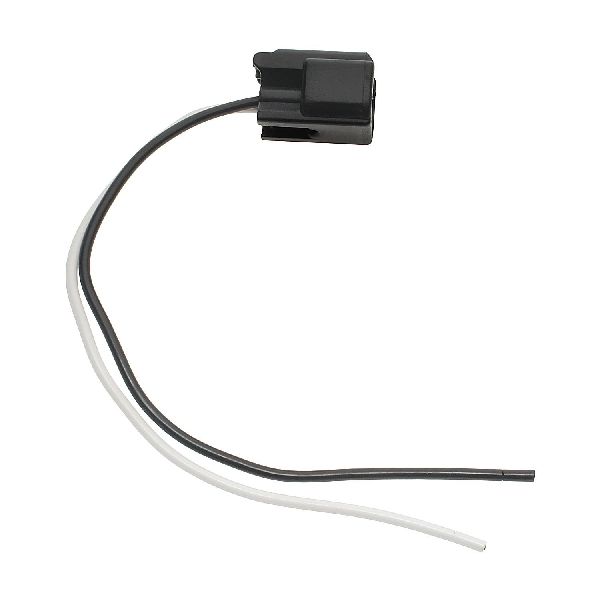
Typical fix: Clean the connector pins with an electrical contact cleaner and apply dielectric grease. If pins are damaged, the connector pigtail (Motorcraft WPT-1198) may need to be replaced.
Est. part cost: $0-$50 - Debris in Capless Fuel Filler Neck 🟡 Medium Probability → Shop Fuel Filler Neck The 'Easy Fuel' capless system can fail to seal if dirt, dust, or corrosion prevents the internal flap from closing completely, causing a small leak that the system detects.
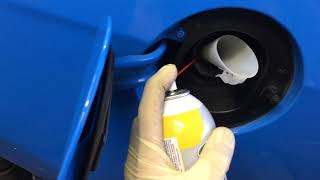
How to confirm: Visually inspect the fuel filler opening for any debris or damage. A common diagnostic step is to take the white plastic emergency fuel funnel that comes with the vehicle and insert and remove it from the filler neck several times to dislodge any debris and exercise the sealing flap. 🎬 Watch: How to properly clean the Easy Fuel filler neck.
Typical fix: Clean the filler neck opening with a clean cloth and the emergency funnel. If the sealing flap is damaged or worn, the entire fuel filler neck assembly may need replacement.
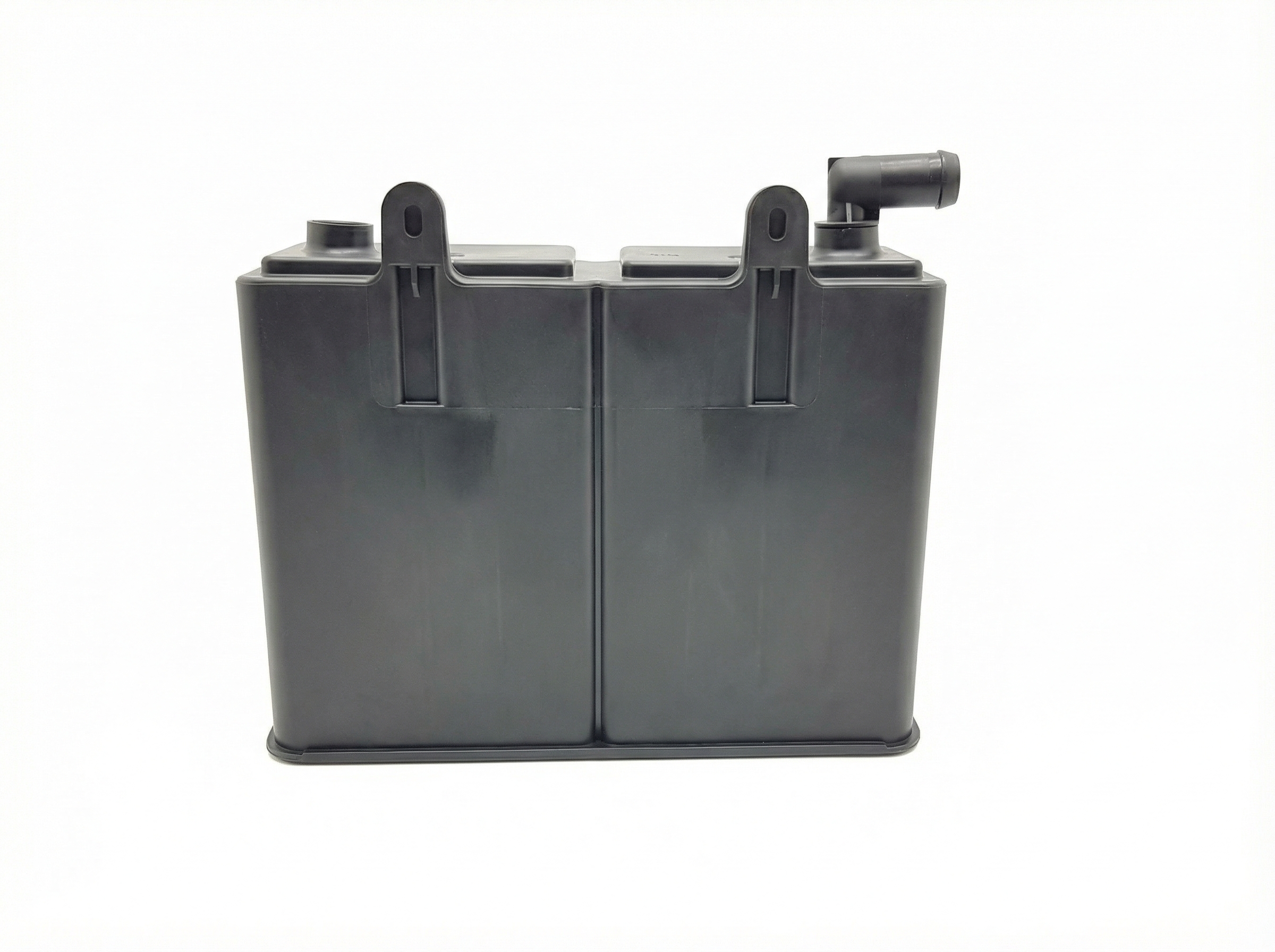
Est. part cost: $0-$250 - Faulty EVAP Canister Purge Valve ⚪ Low Probability → Shop Vapor Canister While a common cause on many vehicles, TSB SSM 50306 specifically warns that for this platform, returned purge valves often test as fully functional, suggesting it's frequently misdiagnosed. However, it can still fail by getting stuck slightly open, causing a leak.
How to confirm: With the engine off, remove the purge valve (located on the engine) and try to blow through it. It is a normally-closed valve, so if air passes through, it is faulty.
Typical fix: Replace the canister purge valve. The OEM part is often cited as Motorcraft CX-2627. 🎬 Watch: A quick guide to replacing the purge valve.
Est. part cost: $40-$100 - Cracked or Disconnected EVAP Hose ⚪ Low Probability
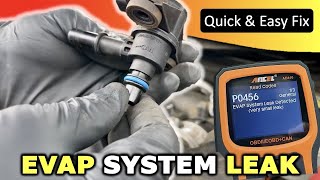
How to confirm: A visual inspection may reveal cracked or disconnected hoses, but a very small leak often requires a smoke test. A technician injects low-pressure smoke into the EVAP system and looks for where it escapes. 🎬 See this walkthrough on finding and fixing common EVAP leaks.
Typical fix: Replace the damaged section of hose.
Est. part cost: $10-$50
Rare But Worth Checking
- Detached Fuel Filler Hose: A specific recall (22C02) was issued for some 2022 Aviators where the fuel filler hose could detach, causing several EVAP codes including P0456, P0442, and P0455. While this should have been fixed by the dealer, it's a known possibility for this model year and may present if the recall was not performed.
Diagnosis Steps
- Read the code with an OBD-II scanner to confirm P0456 and check for any other related codes.
- Inspect the capless fuel filler neck. Use the white plastic funnel provided with the vehicle to cycle the internal flap 5-10 times, which can clear debris. Visually inspect the seal for damage.
- Locate connector C1198 on the driver's side lower frame rail, below the driver's door. Disconnect it and carefully inspect for any signs of corrosion (white or green powder), water damage, or bent/loose pins, as noted in TSB SSM 51247.
- If the connector is corroded, clean it with electrical contact cleaner and apply dielectric grease before reconnecting. If it is clean and dry, proceed to the next step.
- If no visual faults are found, the most effective next step is to have a professional smoke test performed. This will push smoke through the system and reveal the physical location of the very small leak, if one exists.
- Test the EVAP canister purge valve. Remove it from the engine and ensure no air can pass through it when it is unpowered (it is a normally-closed valve).
- If all other components test good, the issue may lie with the canister vent solenoid or the fuel tank pressure sensor itself.
Parts You'll Likely Need
- Fuel Filler Neck
(OEM #L1MZ-9034-X)— The capless 'Easy Fuel' system can fail to seal due to debris or wear, causing a small leak. Cleaning often works, but if the seal is damaged, replacement is necessary.
Trusted brands: Motorcraft
OEM price range: $150-$250
Aftermarket price range: $100-$180 - EVAP Canister Purge Valve
(OEM #Motorcraft CX-2627 (or superseding part number))— Though often misdiagnosed, this valve can stick slightly open and cause a small leak. It's a potential cause if wiring and the fuel filler neck are confirmed to be good.
Trusted brands: Motorcraft, Bosch, Standard Motor Products
OEM price range: $60-$100
Aftermarket price range: $40-$70 - Connector Pigtail (C1198)
(OEM #WPT-1198)— If the pins in connector C1198 are corroded beyond cleaning, this pigtail is needed to repair the harness.
Trusted brands: Motorcraft
OEM price range: $30-$50
Related Codes That Often Appear With This One
- P0455 — Indicates a large EVAP leak. Often appears with P0456 if the leak is intermittent or on the borderline between small and large. Also listed as a related code in the C1198 TSBs.
- P04F0 — Indicates an EVAP system leak on the vacuum side. TSBs SSM 50348 and SSM 51247 list this code as appearing alongside P0456 due to the C1198 connector issue.
- P0451 — Indicates a fault with the EVAP Fuel Tank Pressure Sensor. This sensor's wiring runs through connector C1198, so a fault there can trigger both codes.
- P0496 — Indicates incorrect purge flow. This code is also mentioned in TSBs SSM 50348, SSM 51247, and SSM 50306 as being related to the same underlying wiring or system issues.
Technical Service Bulletins (TSBs) & Recalls
- SSM 51247: Advises to inspect wiring connector C1198 for damage or pin fit issues before replacing parts for P0456 and other codes. Supersedes SSM 50348.
- SSM 50348: Advises to inspect wiring connector C1198 for damage or pin fit issues before replacing parts for P0456 and other codes.
- SSM 50306: Cautions against replacing the EVAP canister purge valve without proper diagnosis, as returned parts often test functional.
Platform-Specific Known Issues
- TSB SSM 51247: Supersedes SSM 50348. Points to the wiring harness connection at connector C1198 as a potential cause for P0456 and other EVAP codes. It advises inspecting this connector on the driver's side lower frame before replacing any parts.
- TSB SSM 50306: Warns that EVAP canister purge valves are often replaced unnecessarily and advises specific diagnostic tests be run before replacement.
- Recall 22C02: Affects some 2022 Aviators where the fuel filler hose could detach, leading to EVAP codes like P0456.
Mechanic-Grade Diagnostic Values
- Fuel Tank Pressure (FTP) Sensor Signal Voltage — expected: Approximately 2.5 - 2.7 Volts with Key On, Engine Off (KOEO) at atmospheric pressure.. Failure: A reading near 0V or 5V suggests an open or shorted circuit, potentially at connector C1198.
- Voltage Reference (VREF) at EVAP Sensor Connectors — expected: 5.0 Volts with Key On, Engine Off (KOEO).. Failure: A voltage reading significantly lower than 5.0V points to high resistance or a short, very likely within connector C1198.
- Mode $06 EVAP Leak Test Bleed-Up — expected: Value should be less than the failure threshold.. Failure: A bleed-up of more than 2.5 inches of H2O over a 30-second evaluation period (at 75% fuel level) will set a P0456 code.
Scan Tool Commands That Help
- Ford Diagnosis and Repair System (FDRS): Full System EVAP Leak Test (Path: TOOLBOX > PCM > PCM - Evap Emissions System Test) — To command a full, on-demand EVAP system leak test, as recommended by Ford TSB SSM 50306 before replacing any components.
- Ford Diagnosis and Repair System (FDRS): EVAP Purge Valve Leak Test (Path: TOOLBOX > PCM > Evap Emission System Toolbox > CPV Check) — To specifically test the canister purge valve for leaks, as recommended by Ford TSB SSM 50306 to avoid unnecessary replacement.
Wiring & Ground Locations
- Connector C1198 — On the driver's side lower frame rail, located underneath the brake lines near the electric brake booster (EBB).. This connector is a known weak point for corrosion and pin fitment issues per TSBs SSM 50348 and 51247. It carries the Voltage Reference (VREF) and signal wires for the Fuel Tank Pressure sensor. A fault here can send incorrect data to the PCM, triggering P0456 even with no physical leak.
- EVAP Purge Valve Connector — On the purge valve itself, located on top of the engine.. Pin 1 is Vehicle Power (VPWR) and Pin 2 is the control circuit from the PCM. Verifying voltage at Pin 1 and a signal at Pin 2 can differentiate a wiring fault from a failed purge valve.
- Wiring Diagram Cell 22-12 — In the official Ford/Lincoln wiring diagram manual.. TSB SSM 51247 specifically directs technicians to this cell to identify the pinouts for the three Voltage Reference (VREF) circuits that run through connector C1198, which is critical for diagnosing electrical faults causing P0456.
Real Owner Repair Stories
- YouTube channel 'Wes Barton' (2016 Ford Explorer (same platform)) — Check Engine Light with code P0456.
❌ Tried (didn't work) Initial diagnosis pointed towards a small EVAP leak.
✅ What actually fixed it The canister purge valve was faulty. The fix was confirmed by removing the old valve and blowing through it; air passed through, indicating it was stuck partially open. The new valve did not allow air to pass, confirming it was properly sealed. Replacing the valve resolved the code. - YouTube channel 'PNYprepper' (2018 Ford Explorer 2.3L (same platform)) — Check Engine Light with code P0456.
❌ Tried (didn't work) Replaced the purge valve harness.
✅ What actually fixed it After replacing a wiring component with no success, a smoke test was performed. The smoke test revealed the actual leak was from a cracked EVAP hose, which was then replaced to fix the issue.
"I Checked Everything" — The Actual Cause
- The most common scenario for this platform is a smoke test showing no leaks, yet the P0456 code persists. The root cause is often electrical, stemming from corrosion or poor pin fitment at connector C1198 on the driver's side frame rail. This fault disrupts the Fuel Tank Pressure (FTP) sensor's signal, causing the PCM to incorrectly log a leak code.
- An intermittently sticking canister purge valve can cause a P0456 code but may pass a single diagnostic check or even a smoke test. The valve can glitch and fail to seal only after being cycled multiple times. A technician might need to command the valve open and closed several times with a scan tool to replicate the failure.
OEM Part Supersession History
L1MZ-9034-AA, L1MZ-9034-C, L1MZ-9034-Q→L1MZ-9034-X— Part revision for the Fuel Filler Neck assembly.
Model Year Variations Within This Range
- 2020-2022: The wiring issue at connector C1198 is specifically called out for 2020-2022 models in TSBs SSM 50348 and 51247.
- 2022: A part change occurred for the Fuel Filler Neck (L1MZ-9034-X) for vehicles built after May 22, 2022. Additionally, some 2022 models were subject to recall 22C02 for a fuel filler hose that could detach, causing this code.
Helpful Videos
Used OEM Parts in Stock
New Aftermarket Parts Available


The information in this article is provided for general reference and educational purposes only. Vehicle specifications, procedures, and part compatibility can vary by production date, trim level, and region. Always consult your vehicle's factory service manual and verify part numbers before purchasing or performing repairs. Safety-critical components such as airbags, seat belts, and braking systems should be installed by a qualified professional.
- Lincoln AVIATOR:
- 🧭 Diagnostic Flowchart
- 🎬 Helpful Videos
- 🛍️ Shop This Part
- What's Unique About the 2020-2022 Lincoln AVIATOR
- Symptoms You May Notice
- Most Likely Causes
- Rare But Worth Checking
- Diagnosis Steps
- Parts You'll Likely Need
- Related Codes That Often Appear With This One
- Technical Service Bulletins (TSBs) & Recalls
- Platform-Specific Known Issues
- Mechanic-Grade Diagnostic Values
- Scan Tool Commands That Help
- Wiring & Ground Locations
- Real Owner Repair Stories
- "I Checked Everything" — The Actual Cause
- OEM Part Supersession History
- Model Year Variations Within This Range
- 🎟️ Get 5% Off