

P0456 on 2010-2013 Mazda 3: Causes and Fixes for a Very Small EVAP Leak
On a 2010-2013 Mazda 3, P0456 is almost always caused by a loose or worn-out gas cap. Before buying any parts, tighten the cap until it clicks multiple times, clear the code, and drive. If it returns, a new OEM gas cap is the most likely fix and costs around $25-$40. Aftermarket caps are a known cause of this code; stick with OEM. If the cap isn't the fix, the purge valve solenoid is the next most likely culprit.
- Start with the simplest and most likely solution: check, tighten, and if necessary, replace the gas cap with a genuine OEM part from Mazda.
- P0456 is an emissions-related code and does not indicate a mechanical problem that will affect driving safety or performance.
- Do not waste money on aftermarket gas caps, as they are a known cause of this code on Mazda vehicles.
- If a new OEM gas cap and a purge valve check don't solve the issue, a professional smoke test is the only efficient way to find the leak, which may be in a hard-to-access location.
What's Unique About the 2010-2013 Mazda 3
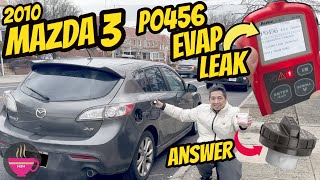
For the second-generation Mazda 3 (2010-2013), the P0456 code is so commonly linked to the gas cap that Mazda has issued multiple Technical Service Bulletins (TSBs) about it. The bulletins explain that users often don't tighten the cap sufficiently (at least one full turn or until multiple clicks are heard) to get a proper seal, causing the system to register a leak. While other parts can fail, the gas cap is the primary suspect by a wide margin. 🎬 Watch: A quick overview of P0456 on this Mazda model. This vehicle is built on the Ford C1 platform, and its platform-mate, the Ford Focus, also suffers from P0456, though on the Focus it is more commonly caused by a faulty purge valve which was subject to a recall.
Symptoms You May Notice
- Check Engine Light is on
- A faint fuel smell, particularly after the vehicle has been parked or near the gas cap area.
- No noticeable performance issues in most cases.
- Replacing the purge valve or other EVAP components before properly checking and replacing the gas cap with an OEM part.
- Using a cheap aftermarket gas cap which fails to seal correctly, leading to a persistent P0456 code and unnecessary further diagnosis.
- A mechanic performing a smoke test and finding no leaks, because the leak is intermittent or only occurs under specific conditions.
Most Likely Causes
- Loose, Worn, or Incorrect Gas Cap 🔴 High Probability → Shop Fuel Tank Cap Mazda TSBs 01-008/15 and 01-005/19 specifically call out improper tightening by customers as the most frequent cause. The rubber seal on the cap can also degrade over time. Furthermore, forum users repeatedly report that aftermarket gas caps fail to seal properly, making an OEM cap essential.
How to confirm: First, ensure the cap is tightened until it clicks at least two or three times. Clear the code. If it returns, inspect the cap's rubber seal for cracks, stiffness, or dirt. A definitive test requires a smoke machine or a dedicated gas cap tester. Some owners have found success cleaning the fuel filler neck sealing surface with a Scotch-Brite pad to remove grit or corrosion.
Typical fix: Replace the gas cap with a genuine OEM part from Mazda. Aftermarket caps are a frequent source of the problem and should be avoided.
Est. part cost: $25-$60 for OEM - Faulty Vapor Canister Purge Valve (Solenoid) 🟡 Medium Probability → Shop Vapor Canister This solenoid is located in the engine bay and cycles frequently, which can lead to it getting stuck slightly open over time, creating a small leak. A manufacturer service bulletin for related Mazda models, TSB Bulletin #SA-030-18, notes that this code may be caused by leakage detected from the catch tank unit at the purge valve.
How to confirm: The purge valve is normally closed. Disconnect it and try to blow through it; if any air passes, it's stuck open and needs replacement. You can also test it by applying 12V to its electrical connector and listening for a click. A scan tool can also command it open and closed while checking for vacuum.
Typical fix: Replace the purge valve solenoid. This is a relatively simple repair located in the engine compartment, typically held by one bolt and two hoses.
Est. part cost: $40-$90 - Cracked or Disconnected EVAP Hoses ⚪ Low Probability Hoses can become brittle and crack with age due to heat and exposure. A particularly common failure point on this model is a pre-formed rubber EVAP hose located above the rear subframe, which is difficult to see and access.
How to confirm: Visually inspect all accessible EVAP lines for obvious cracks, splits, or loose connections. A professional smoke test is the most effective way to find a small leak in a hose, especially the hard-to-reach ones near the fuel tank.
Typical fix: Replace the damaged section of the hose. For the specific hose above the subframe (Part No. BFD1-42-23X for SkyActiv models), the repair may require lowering the rear suspension for access.
Est. part cost: $10-$70 depending on the hose
Rare But Worth Checking
- Faulty Canister Vent Valve (Solenoid): → Shop Vapor Canister This valve is located at the rear of the vehicle near the charcoal canister. It can get stuck, but it's less common to fail than the purge valve. However, it is notoriously difficult to access on this model, often requiring the rear subframe to be lowered for replacement, a job documented by owners in videos. 🎬 Watch: A walkthrough of the difficult vent solenoid replacement process.
- Cracked Charcoal Canister: → Shop Vapor Canister The plastic body of the canister can develop hairline cracks from age or road debris impact, causing a small leak. This is usually found only with a smoke test. Replacement is labor-intensive as it also requires lowering the rear subframe.
- Corroded or Cracked Fuel Filler Neck: → Shop Fuel Filler Neck Rust or damage to the pipe leading to the gas tank can prevent even a new gas cap from sealing properly. This is more common in areas that use road salt and is often only found via a smoke test where smoke will be seen escaping from the filler neck area.
Diagnosis Steps
- Read the code with an OBD-II scanner to confirm P0456 is present.
- Check the gas cap. Remove it, inspect the seal for damage, and reinstall it, ensuring you turn it until it clicks at least three times. Clean the filler neck rim where the cap seals.
- If the code comes back, replace the gas cap with a new OEM part from a Mazda dealer. Do not use an aftermarket cap. This is the most common and cost-effective fix.
- If a new OEM gas cap does not resolve the issue, visually inspect the EVAP purge valve and its hoses in the engine bay for any obvious cracks or damage.
- Test the purge valve. With the engine off, disconnect the valve's hoses. Try to blow through it. If air passes, the valve is stuck open and must be replaced.
- If the gas cap and purge valve are confirmed good, the next step is a professional smoke test. This involves injecting low-pressure smoke into the EVAP system to visually locate the source of the tiny leak, which could be a hose (especially above the rear subframe), the charcoal canister, the vent valve, or the fuel filler neck.
Parts You'll Likely Need
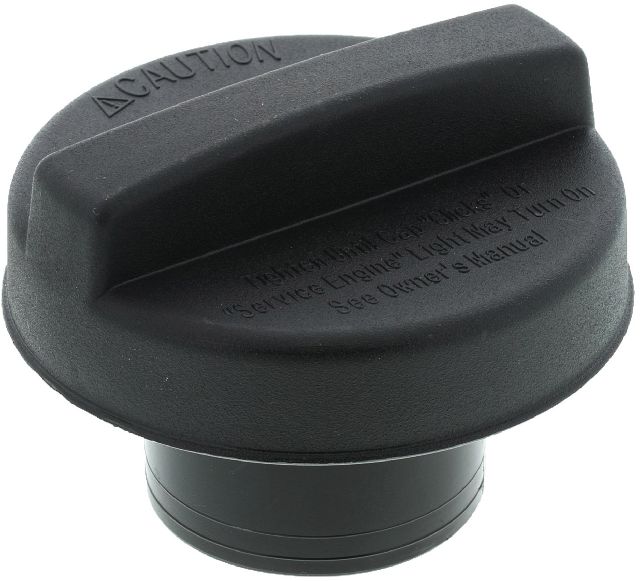
- Fuel Tank Cap
(OEM #KD35-42-250A (verify by VIN))— This is the most frequent cause of P0456 on this vehicle, as confirmed by Mazda TSBs and extensive owner reports. Aftermarket caps often do not seal correctly, making OEM a necessity.
Trusted brands: Mazda (OEM)
OEM price range: $25-$60
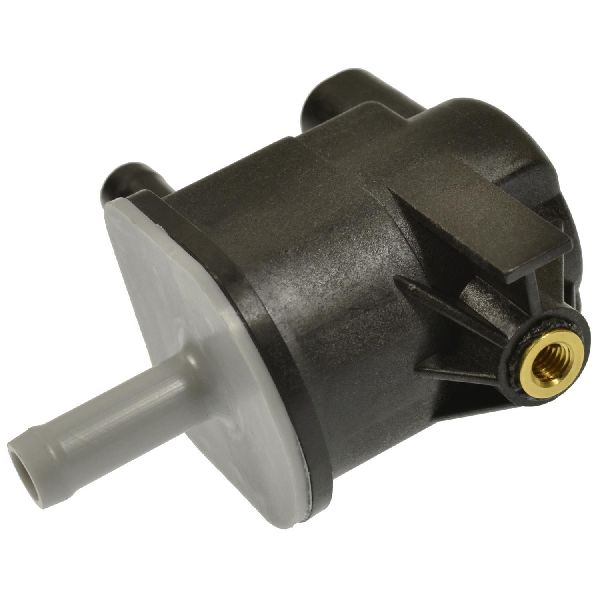
Aftermarket price range: $10-$25 - Vapor Canister Purge Valve / Solenoid
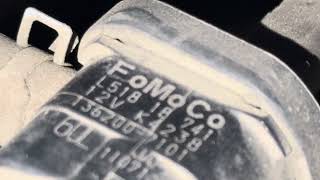
(OEM #L518-18-741)— The second most common failure point after the gas cap. It is a solenoid that can fail mechanically (stuck open) or electrically.
Trusted brands: Mazda (OEM), Bosch, Dorman
OEM price range: $65-$90
Aftermarket price range: $35-$80
Technical Service Bulletins (TSBs) & Recalls
- 01-005/19 - CHECK ENGINE LIGHT ON WITH DTC P0456: Supersedes previous bulletins, stating the most likely cause is the customer not closing the fuel cap completely. It provides detailed diagrams on the required turning angle to achieve a seal. Applies to 2011-2019 Mazda3.
- 01-014/14 - CHECK ENGINE LIGHT ON WITH DTC P0456: An earlier version of the TSB also pointing to an improperly closed fuel cap as the primary cause for 2011-2013 Mazda3 models.
- 01-002/18 - EVAP Leak Diagnostics: A general Mazda TSB providing a detailed flowchart for technicians to diagnose various EVAP leak codes, including P0456.
- TSB Bulletin #01-005-19-3548 - EVAP system leak detected (very small leak): This manufacturer bulletin notes that the concern is most likely the result of the customer not getting the fuel cap tight enough.
- TSB Bulletin #SA-030-18 - CHECK ENGINE light ON: This bulletin identifies that DTC P0456 for evaporative gas leakage may be caused by leakage detected from the catch tank unit at the purge valve.
Platform-Specific Known Issues
- Inaccessible Canister Vent Valve: → Shop Vapor Canister Owners and mechanics report that the canister vent valve, located near the charcoal canister, is extremely difficult to replace. It is positioned above the rear subframe, and access typically requires lowering the entire subframe assembly, a labor-intensive process.
- Cracked EVAP Hose Above Rear Subframe: A common, hard-to-find leak source is a specific shaped rubber EVAP hose located above the rear subframe. It is prone to cracking with age but is not visible without lowering the suspension. A smoke test is required to find it. One owner identified the part number as BFD1-42-23X for a SkyActiv model.
- Aftermarket Gas Cap Incompatibility: → Shop Fuel Tank Cap There are numerous owner accounts on forums like Reddit where replacing the gas cap with an aftermarket version failed to fix the P0456 code. The code was only resolved after purchasing and installing a genuine OEM Mazda gas cap.
Mechanic-Grade Diagnostic Values
- Vapor Canister Purge Valve Solenoid (L518-18-741) Resistance — expected: 30 to 38 ohms. Failure: A reading outside this range indicates a faulty solenoid coil.
- Vapor Canister Vent Valve Solenoid Resistance — expected: 20 to 30 ohms. Failure: A reading outside this range suggests the solenoid winding is damaged.
- Purge Valve / Vent Valve Connector Voltage — expected: One pin should have ~12V (battery voltage) with Key On, Engine Off.. Failure: Absence of 12V power points to a wiring or fuse issue, not a faulty valve.
- Mode $06, Test ID $3A (Evaporative System Leak Test - 0.020") — expected: The measured pressure decay value should be below the maximum threshold set by the manufacturer.. Failure: If the scan tool shows this test has failed or the value exceeds the maximum limit, it confirms the on-board diagnostic has detected the leak that triggers P0456.
Scan Tool Commands That Help
- Mazda IDS (or FORScan): EVAP System Leak Test — This is a guided, bidirectional test that commands the vent valve closed and modulates the purge valve to seal the system, then monitors the fuel tank pressure sensor for decay. It is the most precise way to confirm a leak and test valve function without manual testing.
- Mazda IDS (or FORScan): Active Command - Canister Vent (CV) Solenoid — This command is used during a smoke test to manually close the normally-open vent valve, sealing the system and allowing the smoke to pressurize it and reveal leaks.
Wiring & Ground Locations
- G06 — Located at the left rear of the engine.. This is a ground point for several engine components, including potentially the purge solenoid valve. A poor ground here could cause erratic operation of EVAP components in the engine bay.
- Purge Solenoid Valve Connector — On the right rear of the engine for the 2.5L engine.. This is the electrical connector for the purge valve. Technicians need to access its pins to test for 12V power and resistance of the valve itself.
Real Owner Repair Stories
- Reddit user redroom5 (2012 Mazda 3 SkyActiv) — Persistent P0456 code after replacing purge valve and charcoal canister.
❌ Tried (didn't work) Replacing the purge valve solenoid, Replacing the charcoal canister (done by dealer before purchase)
✅ What actually fixed it A low-pressure smoke test revealed a cracked and deteriorating shaped rubber EVAP hose located above the rear subframe. The part number was BFD1-42-23X. The fix required lowering the rear suspension for access. - Reddit user lyra1 (2014 Mazda 3 (similar EVAP design)) — P0456 code on and off for 5 years.
❌ Tried (didn't work) Replacing the gas cap twice, Replacing multiple other unspecified parts
✅ What actually fixed it A Mazda dealership diagnosis found cracks in the EVAP hose near the fuel tank. Replacing the hose cost $620 and permanently solved the code. - Reddit user 187hp (Friend's car with P0456) — P0456 code.
❌ Tried (didn't work) Cleaning gas cap area, Replacing gas cap
✅ What actually fixed it A smoke test revealed two small rust holes in the fuel filler neck. The repair cost was approximately $600 ($300 for the part, $300 for labor).
"I Checked Everything" — The Actual Cause
- A Reddit user with a 2012 Mazda 3 reported a recurring P0456 for two years despite a shop performing a smoke test that found no leaks. The user had already replaced the gas cap (multiple times) and the purge valve (twice). While no final fix was posted, the fact that the code disappeared for a month when a plastic bag was used to seal the gas cap suggests an intermittent or difficult-to-detect sealing issue at the filler neck, even with a new OEM cap.
- Another user reported having two shops perform smoke tests that found nothing. The eventual cause was determined to be a bad emission check valve, which can be intermittent and may not show a leak when static.
When the Usual Fixes Don't Work
- While the gas cap and purge valve are the most common fixes, there are numerous documented cases where neither solved the problem. In these instances, the ultimate cause was frequently a cracked EVAP hose, particularly the hard-to-access hose above the rear subframe on SkyActiv models (BFD1-42-23X) or cracks in hoses near the fuel tank. In some cases, rust perforation on the fuel filler neck was the culprit, a problem that can only be found with a smoke test. These repairs are significantly more labor-intensive and expensive than replacing the gas cap or purge valve.
OEM Part Supersession History
KD35-42-250→KD35-42-250A— Standard part revision, likely for improved sealing or material durability.
Heads up: While this is a supersession, it's critical to use an OEM cap (either the original or the new revision). Aftermarket caps are widely reported as incompatible and a primary cause of persistent P0456 codes.
Model Year Variations Within This Range
- 2012-2013: The introduction of the SkyActiv engine in 2012 brought some different EVAP components. Notably, a specific shaped rubber EVAP hose (Part No. BFD1-42-23X) located above the rear subframe is a known failure point on SkyActiv models.
- 2010-2013: The purge valve part number can differ by engine. The 2.5L engine typically uses L518-18-741, while some 2.0L engines may use a different part number. Always verify by VIN.
Diagnostic Flowchart
Real Owner Stories
Aggregated from forums and TSBs cited above. Mileages and costs reflect what owners reported in those sources.
2012 Mazda 3 SkyActiv
Symptoms: Check Engine Light with P0456 code, no performance issues. The code returned 200 miles after tightening the gas cap, and returned again after a shop replaced the purge valve solenoid.
What fixed it: A low pressure evap smoke test revealed a cracked shaped rubber evap line (Mazda P/N: BFD1-42-23X) deteriorating at both ends. Replaced DIY in about 4 hours on jack stands after lowering the rear suspension.
Source hint: reddit.com r/mazda3
2012 Mazda 3 — 70000 miles
Symptoms: Persistent check engine light with code P0456 for 2 years. Tried using a plastic bag on the cap as a temporary fix.
What fixed it: Chased the issue by replacing the gas cap three times (non-OEM then OEM) and the purge valve twice, highlighting that an OEM cap is critical to properly resolving the issue.
Source hint: Reddit r/AskMechanics - 'Mazda 3 - Code 0456 EVAP Leak won't go away'
Related OBD-II Codes
Frequently Asked Questions
Does TSB 01-005/19 apply to my 2012 Mazda 3 for the P0456 code?
I replaced my gas cap with one from an auto parts store, but the P0456 code came back. What should I do?
Where is the canister vent valve located on the 2010-2013 Mazda 3?
What is the specific EVAP hose that commonly cracks on SkyActiv models?
How can I test the purge valve solenoid on my Mazda 3?
Is the P0456 code on my Mazda 3 related to the Ford Focus purge valve recall?
Helpful Videos

We Have This Part in Stock


The information in this article is provided for general reference and educational purposes only. Vehicle specifications, procedures, and part compatibility can vary by production date, trim level, and region. Always consult your vehicle's factory service manual and verify part numbers before purchasing or performing repairs. Safety-critical components such as airbags, seat belts, and braking systems should be installed by a qualified professional.
- Mazda 3:
- 🧭 Diagnostic Flowchart
- 🎬 Helpful Videos
- 🛍️ Shop This Part
- What's Unique About the 2010-2013 Mazda 3
- Symptoms You May Notice
- Most Likely Causes
- Rare But Worth Checking
- Diagnosis Steps
- Parts You'll Likely Need
- Technical Service Bulletins (TSBs) & Recalls
- Platform-Specific Known Issues
- Mechanic-Grade Diagnostic Values
- Scan Tool Commands That Help
- Wiring & Ground Locations
- Real Owner Repair Stories
- "I Checked Everything" — The Actual Cause
- When the Usual Fixes Don't Work
- OEM Part Supersession History
- Model Year Variations Within This Range
- Real Owner Stories
- 2012 Mazda 3 SkyActiv
- 2012 Mazda 3 — 70000 miles
- Related OBD-II Codes
- Frequently Asked Questions
- 🎟️ Get 5% Off